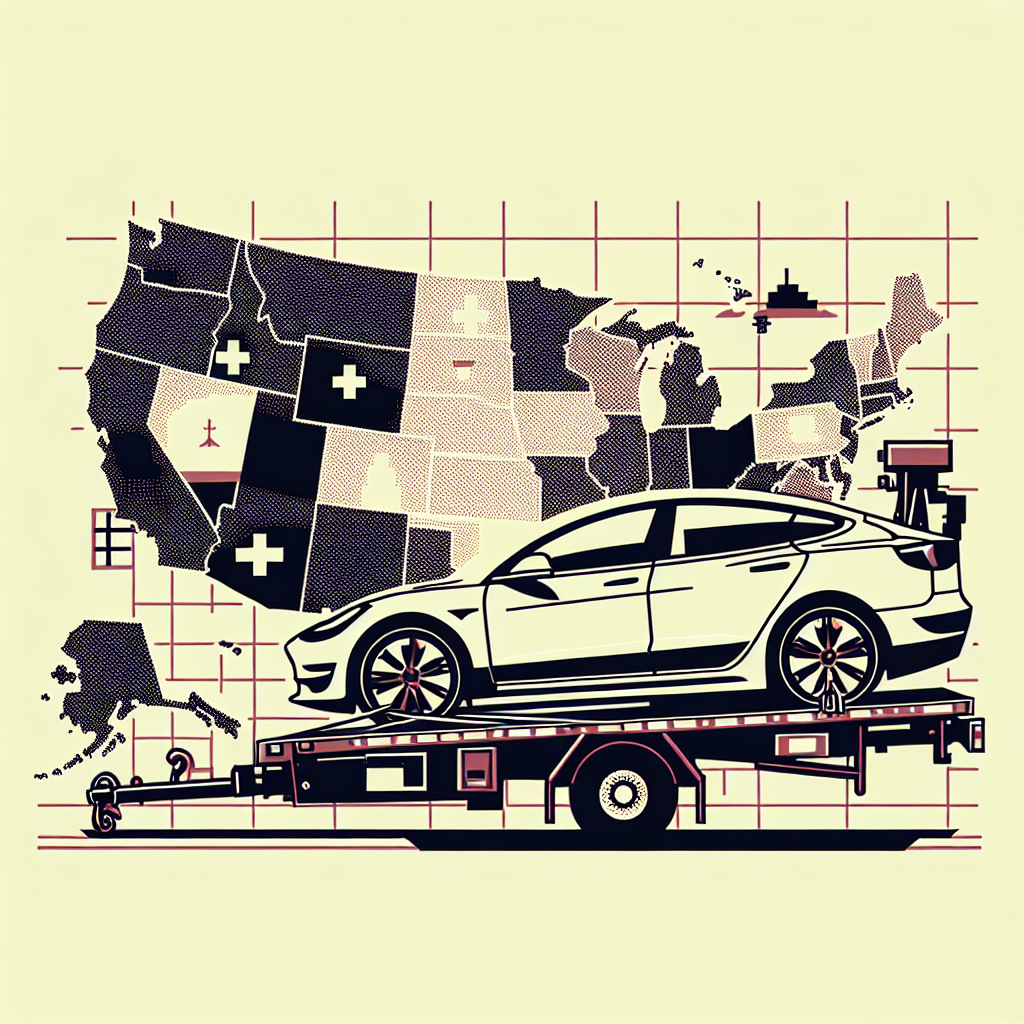
Tesla Launches Model 3 Tow Package in North America – Not a Tesla App | Analysis by Brian Moineau

Tesla Launches Model 3 Tow Package in North America - Not a Tesla App | Analysis by Brian Moineau

Tesla's Model 3 Tow Package: A New Road Ahead


Tesla has once again turned the wheels of innovation with the launch of a tow package for the 2024+ Model 3 in North America. This latest development opens up a new realm of possibilities for Tesla enthusiasts who have been longing for a vehicle that seamlessly combines sustainability with utility. As the electric vehicle (EV) market continues to grow, Tesla's latest offering highlights the company's commitment to expanding functionality without compromising its core values of performance and eco-friendliness.

The Evolution of Electric Towing


Towing capabilities in electric vehicles have traditionally been limited, primarily due to concerns about battery range and performance under load. However, Tesla's introduction of a tow package for the Model 3 is a significant step forward, addressing these concerns with their characteristic blend of technology and innovation. By enhancing the utility of the Model 3, Tesla is not just appealing to the eco-conscious urban driver but also to those who value versatility and adventure.

This move aligns with a broader trend in the automotive industry, where manufacturers are increasingly recognizing the need to cater to diverse consumer needs. Similar to Ford's electric F-150 Lightning, which boasts impressive towing capabilities, Tesla's Model 3 tow package makes it clear that EVs are not just for city commuting but are also ready for the open road and beyond.

A Nod to Sustainability


The launch of the Model 3 tow package also underscores Tesla's ongoing commitment to sustainability. As concerns about climate change and environmental impact grow, more consumers are looking for ways to reduce their carbon footprint without sacrificing functionality. Tesla's innovation in this space is a testament to the fact that ecological responsibility and practicality can go hand in hand.

This development is timely, considering the global push towards reducing carbon emissions. Initiatives such as the European Union's Green Deal and the Biden administration's focus on clean energy in the United States indicate a worldwide shift towards more sustainable practices. Tesla's advancements contribute to this narrative, offering consumers a tangible way to participate in the green movement.

A Pioneer in the EV Market


Tesla's CEO, Elon Musk, has often been at the forefront of technological advancements and environmental advocacy. Under his leadership, Tesla has not only revolutionized the automotive industry with its electric vehicles but has also consistently pushed the boundaries of what's possible. Musk's vision extends beyond just electric cars, encompassing a broader goal of sustainability through ventures like SolarCity and the development of battery technology.

As Tesla continues to innovate, it's worth noting how these advancements influence consumer behavior and drive competitors to elevate their own offerings. The introduction of the Model 3 tow package is a reminder of the dynamic nature of the automotive industry and Tesla's role as a catalyst for change.

Final Thoughts: The Road Ahead


With the launch of the Model 3 tow package, Tesla has once again demonstrated its ability to adapt and innovate in response to consumer demands and environmental challenges. This development not only enhances the versatility of Tesla's lineup but also reinforces its position as a leader in the EV market.

As we look to the future, it's exciting to imagine the possibilities that lie ahead for electric vehicles. From increased towing capabilities to advances in autonomous driving, the road is wide open for innovation. Tesla's latest offering is a bright indicator of where that road might lead—towards a more sustainable, versatile, and electrified world.

For more insights into Tesla's innovations and the broader trends in the EV market, feel free to explore additional resources and stay tuned for more updates in the ever-evolving world of technology.

Read more about AI in Business

Read more about Latest Sports Trends

Read more about Technology Innovations

Toyota says RAV4 is ‘100% electrified’ in 2026, but every one has a gas engine – Electrek | Analysis by Brian Moineau

Toyota says RAV4 is ‘100% electrified’ in 2026, but every one has a gas engine - Electrek | Analysis by Brian Moineau

The Electrified Illusion: Toyota's RAV4 and the Quest for a Greener Tomorrow

In the ever-evolving landscape of automotive innovation, it's not uncommon for manufacturers to paint a greener picture than reality dictates. Toyota, with its reputation for pioneering hybrid technology, has recently taken center stage with the announcement that its RAV4 will be “100% electrified” by 2026. However, there's a catch—every single one will still feature a gas engine. This announcement, covered in a recent Electrek article, highlights a broader trend in the industry: the art of appearing eco-friendly without fully committing to the electric revolution.

Toyota's Strategy: A Case of Mixed Signals

Toyota's strategy is intriguing, primarily because it seems to dance around the edges of full electrification. By labeling the RAV4 as “100% electrified,” Toyota is leveraging its hybrid technology, which combines internal combustion engines with electric motors, to create a middle ground. This tactic isn’t new; Toyota has been a leader in hybrid technology since the launch of the Prius over two decades ago. Yet in a world that is increasingly leaning towards fully electric solutions, such as Tesla's all-electric lineup or Ford's ambitious electric F-150 Lightning, Toyota's approach feels like a cautious step rather than a giant leap.

A Global Shift Towards Electrification

Globally, the automotive industry is seeing a significant shift towards electrification. European countries, for instance, are setting ambitious targets for phasing out internal combustion engines. Norway plans to sell only electric cars by 2025, and the UK aims to ban the sale of new petrol and diesel cars by 2030. In this context, Toyota’s announcement feels like a half-hearted attempt to keep up with the Joneses.

Meanwhile, other automakers are making bold moves. Volkswagen, for example, has committed substantial resources to become a leader in electric vehicles, with plans to invest over $86 billion in the development of electric and hybrid vehicles by 2025. These commitments are reshaping the industry and setting a new standard for what it means to be “electrified.”

The Consumer Dilemma: Deciphering Greenwashing

For consumers, this presents a dilemma: how to discern genuine sustainability from clever marketing. The term “100% electrified” suggests a complete shift away from fossil fuels, yet the continued reliance on gas engines implies otherwise. This is reminiscent of the phenomenon known as “greenwashing,” where companies exaggerate or misrepresent their environmental efforts to appeal to eco-conscious consumers.

The need for transparency is more critical than ever. Consumers are becoming increasingly savvy, demanding authenticity and tangible action rather than just words. The call for a greener planet echoes across all sectors, from fashion to food, and the automotive industry is no exception.

Final Thoughts: The Road Ahead

As Toyota navigates its path towards electrification, it stands at a crossroads. Will it continue to hedge its bets with hybrids, or will it embrace the electric future more wholeheartedly? The answer may well define its legacy in the era of sustainable mobility.

Ultimately, the journey toward a truly sustainable automotive industry requires bold moves and genuine commitment. As the world accelerates towards a greener future, the question remains: will Toyota lead the charge or be left in the rearview mirror? Only time will tell, but one thing is certain—the race is on, and the world is watching.

Read more about AI in Business

Read more about Latest Sports Trends

Read more about Technology Innovations

Ford and Tesla Are Best-Positioned for Trump’s Car Tariffs. These Companies Are the Worst. – Barron’s | Analysis by Brian Moineau

Ford and Tesla Are Best-Positioned for Trump’s Car Tariffs. These Companies Are the Worst. - Barron's | Analysis by Brian Moineau

Navigating the Tariff Tango: Ford, Tesla, and the Art of Automotive Adaptation

In the ever-evolving world of international trade, tariffs play a complex yet vital role, often acting as both a shield and a sword. Recently, the automotive industry has been thrust into the spotlight, with Ford and Tesla emerging as leaders in navigating the rocky terrain of Trump's car tariffs. But what makes these companies particularly adept, and which players are struggling to keep up?

Ford and Tesla: The Resilient Duo

Ford and Tesla have long been stalwarts of the American automotive industry, each with its unique approach to innovation and market adaptation. Ford, with its century-old legacy, has consistently demonstrated its ability to weather economic storms by leveraging its extensive global supply chain and deep-rooted brand loyalty. Tesla, on the other hand, has carved out its niche with cutting-edge electric vehicles (EVs) and an almost cult-like following.

Their positioning in this tariff tussle is no accident. Ford's extensive manufacturing operations in the U.S. afford it a cushion against import tariffs, while Tesla's focus on vertical integration—manufacturing many of its components in-house—gives it a similar edge.

The Stragglers in the Tariff Maze

While Ford and Tesla are well-positioned, other automotive giants find themselves in less favorable circumstances. Companies heavily reliant on imports for parts and vehicles face the brunt of tariffs. This can lead to increased costs, which may be passed on to consumers or absorbed, impacting profit margins.

Consider the case of European and Asian carmakers with significant production overseas. These companies may find themselves at a disadvantage, scrambling to adjust their supply chains or reconsidering their pricing strategies in the face of increased tariffs.

Global Echoes: A Broader Perspective

The automotive industry's challenges are a microcosm of larger global trade dynamics. The tariff situation echoes the ongoing discussions surrounding the U.S.-China trade war and the European Union's trade policies. These geopolitical tensions highlight the interconnected nature of global economies and the ripple effects of policy changes.

Furthermore, the push towards electric vehicles and sustainable energy is reshaping the industry landscape. As governments worldwide incentivize green technology, companies like Tesla are not only shielded from certain tariffs but are also poised to benefit from supportive policies.

Final Thoughts: Adapting to Change

In a world where change is the only constant, adaptability becomes the currency of success. Ford and Tesla's ability to navigate the complexities of tariffs is a testament to their strategic foresight and operational agility. As the automotive industry continues to evolve, companies must remain nimble, embracing innovation and sustainability to thrive.

In the grand tapestry of global trade, tariffs are but one thread. Yet, for the automotive industry, they serve as a powerful reminder of the importance of resilience, adaptability, and forward-thinking strategy. The road ahead may be fraught with challenges, but for those willing to adapt, the journey promises opportunity and growth.

Read more about AI in Business

Read more about Latest Sports Trends

Read more about Technology Innovations

Ford loses its last cheap vehicle to tariffs – TheStreet | Analysis by Brian Moineau

Ford loses its last cheap vehicle to tariffs - TheStreet | Analysis by Brian Moineau

Title: The End of an Automotive Era: Ford's Farewell to Affordability

As the automotive landscape shifts beneath our feet, one of the most iconic players in the game is waving goodbye to a chapter of its storied history. Ford, a name synonymous with American ingenuity and rugged reliability, is quietly bidding adieu to its last affordable vehicle, a casualty of the ever-evolving global trade environment and the relentless rise of tariffs. It's a poignant moment that marks the close of a bygone era, but it's also an opportunity to reflect on the wider implications in the world of business and trade.

The story here isn't just about a car; it's about the broader economic forces at play. For years, tariffs have been a tool wielded by governments to protect domestic industries and level the playing field. However, they can also lead to unintended consequences, such as increased production costs, which are inevitably passed down to consumers. Ford's decision to phase out its last cheap vehicle is a direct result of these pressures. It's a move that underscores the complex balancing act manufacturers must perform in a global market where politics and economics are as intertwined as the gears in a transmission.

This shift is not happening in isolation. Across the pond, European carmakers are grappling with their own challenges, from Brexit’s impact on supply chains to the push for greener, more sustainable vehicles. Meanwhile, in Asia, the rise of electric vehicle manufacturers like BYD and NIO is reshaping the competitive landscape, prompting traditional automakers to rethink their strategies. Ford's farewell to affordability is just one thread in a vast tapestry of change sweeping across the automotive industry.

Let's not forget the consumer in this equation. As Ford trims its lineup, the quest for affordable, reliable transportation becomes more challenging for many. It's a reminder of the delicate balance companies must maintain between innovation, profitability, and accessibility. For the average car buyer, this might mean turning to the burgeoning second-hand market or exploring alternative modes of transportation, such as ride-sharing services or public transit, which are themselves undergoing rapid transformation.

Consider this: Just as Ford is navigating these choppy waters, so too are countless other industries. The tech world, for instance, is contending with its own set of challenges, from supply chain disruptions to regulatory scrutiny. The recent semiconductor shortage is a perfect example of how interconnected and fragile our global systems have become. In a world where everything from cars to smartphones relies on these tiny chips, the ripple effects of such shortages are felt far and wide.

As we watch Ford pivot and adapt, it's clear that we are witnessing more than just the end of an era for a single automaker. We are observing the complex dance of globalization, where every step is influenced by a myriad of factors, from trade policies to technological advancements. It's a reminder that change is the only constant, and adaptability is the key to survival.

In closing, Ford's farewell to its last affordable vehicle is a moment of reflection not just for car enthusiasts, but for anyone interested in the dynamics of global business. It's a testament to the intricate web of forces that shape our world, and a call to all industries to remain agile and forward-thinking. As we move into this new chapter, let's keep our eyes on the road ahead and navigate these changes with resilience and optimism. After all, the journey is just as important as the destination.

Read more about AI in Business

Read more about Latest Sports Trends

Read more about Technology Innovations

Auto groups lobby Trump administration against parts tariffs in rare unified message – CNBC | Analysis by Brian Moineau

Auto groups lobby Trump administration against parts tariffs in rare unified message - CNBC | Analysis by Brian Moineau

Title: The Auto Industry's Unusual Alliance: When Competitors Rally for a Common Cause

In a rare show of unity, automotive giants and their allies have come together to send a loud and clear message to the Trump administration: tariffs on auto parts could spell trouble for U.S. automotive production. It’s not every day you see franchised dealers, suppliers, and nearly all major automakers singing the same tune, but these are no ordinary times.

Driving in the Same Lane

The proposed tariffs have driven these industry titans to form an alliance typically reserved for the racetrack rather than the boardroom. Facing the prospect of increased costs that could stifle innovation and lead to higher prices for consumers, the industry has collectively decided that enough is enough.

It's reminiscent of the time when Ford and General Motors, despite their fierce rivalry, joined forces during World War II to support the war effort. Today, it seems that the enemy is the potential economic fallout from tariffs, which could disrupt supply chains and increase production costs, ultimately driving vehicle prices higher and putting American jobs at risk.

A Global Perspective

The auto industry isn't just a domestic affair; it's a global network intricately woven together. The imposition of tariffs could lead to retaliatory measures from other countries, echoing the trade tensions we've seen in recent years. For instance, the trade war between the U.S. and China taught us that tit-for-tat tariffs can have widespread repercussions, from agricultural products to technology.

Furthermore, the auto industry is undergoing a transformative era with the rise of electric vehicles (EVs) and autonomous driving technology. Companies are investing billions in a race to dominate the future of transportation. Tariffs could slow down these advancements by diverting resources away from innovation and into dealing with increased costs.

Lessons from the Past

Historically, tariffs have been a double-edged sword. The Smoot-Hawley Tariff Act of 1930, for example, was intended to protect American industries during the Great Depression but instead contributed to a global economic downturn. While it's important to protect domestic industries, history has shown that isolationist policies can backfire, leading to unintended consequences.

Connecting the Dots

As the world grapples with challenges like climate change and the transition to renewable energy, the automotive industry plays a crucial role in reducing carbon emissions. The imposition of tariffs could hinder progress in this area, as companies may find it more difficult to invest in cleaner technologies.

Moreover, the global pandemic has already disrupted supply chains, highlighting the need for resilience and cooperation. Just as the world came together to develop vaccines and address COVID-19, the auto industry is demonstrating that collaboration is key to overcoming challenges.

Final Thoughts

The unified stance of the auto industry against parts tariffs is a testament to the power of collaboration in the face of adversity. It serves as a reminder that sometimes, even fierce competitors must come together to safeguard their collective future. As we navigate an ever-changing global landscape, the lessons learned from this alliance could serve as a blueprint for other industries facing similar challenges.

In the end, whether it's on the production line or the global stage, cooperation and open dialogue are essential for steering the world toward a prosperous and sustainable future. As the auto industry shifts gears, one thing is clear: together, they are stronger, and their message is one we should all heed.

Read more about AI in Business

Read more about Latest Sports Trends

Read more about Technology Innovations

Porsche’s next Taycan gets an infotainment upgrade — but no new CarPlay – The Verge | Analysis by Brian Moineau

Porsche’s next Taycan gets an infotainment upgrade — but no new CarPlay - The Verge | Analysis by Brian Moineau

Revving Up the Infotainment Game: Porsche's 2026 Taycan and the Age of Intelligent Autos

In a world where the line between automobiles and technology continues to blur, Porsche is shifting gears with its 2026 Taycan, 911, Panamera, and Cayenne models. The German automaker is set to launch a revitalized infotainment system, featuring Apps and Alexa integration. While it's a leap forward in the quest for a more connected driving experience, some enthusiasts might be left pondering why the new CarPlay hasn't made the cut.

Porsche, a brand synonymous with luxury and performance, is no stranger to innovation. The introduction of Alexa, Amazon's virtual assistant, into its lineup is a testament to the growing trend of voice-activated technologies in vehicles. As smart home devices become more prevalent, it was only a matter of time before the automotive industry followed suit. Alexa's integration will enable drivers to control their smart home devices, check the weather, or even manage their shopping lists—all without taking their hands off the wheel or their eyes off the road.

This shift towards a more digital driving experience is not just a Porsche phenomenon. Across the industry, manufacturers are racing to enhance their infotainment systems, often serving as a battleground for technological supremacy. Take Tesla, for instance, which has been a pioneer in equipping its vehicles with large touchscreen displays and over-the-air updates that keep their software fresh. Similarly, Ford's partnership with Google to infuse its vehicles with Android's ecosystem speaks volumes about this tech-driven arms race.

However, Porsche's decision to sidestep a new CarPlay integration raises questions. Apple's CarPlay is a beloved feature for many drivers, offering seamless connectivity to iPhones. It's possible that Porsche is holding its cards close to its chest, perhaps waiting for a more robust version of CarPlay, rumored to feature deeper integration with car hardware, to emerge.

The timing of Porsche's announcement is intriguing, given the broader context of the automotive world. We're witnessing an era where electric vehicles (EVs) are no longer niche, and autonomous driving is no longer a distant dream. As EV giants like Tesla, Rivian, and Lucid Motors continue to make headlines with their cutting-edge innovations, Porsche's move is a strategic effort to remain competitive in this rapidly evolving market.

Moreover, the inclusion of Alexa could be seen as a strategic alignment with Amazon, a company that has ventured into the auto industry through partnerships with companies like Rivian, to whom it has supplied delivery vans. This alliance hints at a future where automotive experiences are fully integrated with our digital lives, making the transition between home and car virtually seamless.

As we steer into this new frontier of intelligent automobiles, one can't help but wonder what the future holds. Will we see cars that are not only smart but also capable of learning and adapting to our habits? Perhaps the infotainment systems of tomorrow will be powered by AI, predicting our routes, preferences, and needs before we even realize them ourselves.

In conclusion, Porsche's infotainment upgrade is a reflection of the broader technological renaissance within the auto industry. While some may lament the absence of a new CarPlay, the integration of Alexa is a promising step towards a more connected and intuitive driving experience. As technology continues to accelerate at breakneck speed, it's an exciting time to be both a driver and a tech enthusiast. Here's to the road ahead—may it be as smart as it is thrilling.

Read more about AI in Business

Read more about Latest Sports Trends

Read more about Technology Innovations

Tesla Is Finished In Germany As 94% Surveyed Say They’d Never Buy Musk’s EVs – Forbes | Analysis by Brian Moineau

Tesla Is Finished In Germany As 94% Surveyed Say They’d Never Buy Musk’s EVs - Forbes | Analysis by Brian Moineau

Title: Tesla's German Dilemma: A Speed Bump or a Dead End?

In what might seem like a jarring speed bump on the Autobahn, a recent T-Online poll reveals that 94% of German respondents are turning their noses up at Tesla, refusing to consider purchasing an EV from the brand. The blame, it seems, falls squarely on the shoulders of its outspoken CEO, Elon Musk. While Tesla's electric vehicles have been praised for their innovation and performance, Musk’s polarizing actions and statements appear to be steering potential German buyers away from the brand.

Elon Musk: A Maverick or a Misstep?

Elon Musk is no stranger to controversy. From his bold statements on social media to his ambitious ventures like SpaceX and the Boring Company, Musk has always been a figure who dances to the beat of his own drum. Some admire him for his vision, while others criticize him for his unconventional methods and sometimes abrasive manner. In Germany, however, this maverick charm seems to have lost its allure.

Germans are known for their engineering prowess and have a long-standing love affair with car manufacturing giants like Volkswagen, BMW, and Mercedes-Benz. The idea that Tesla, a relatively new player, could dethrone these established brands was always a tall order. Add Musk’s antics, whether it’s his controversial tweets or his handling of the Twitter platform itself, and it’s no surprise that German consumers are hesitant.

A Global Reflection on Personal Branding

Musk’s predicament in Germany can be seen as a microcosm of a larger global issue: the impact of personal branding on business. In an age where CEOs are often as famous as the products they sell, the line between a company's image and its leader's persona is increasingly blurred. The tech world has seen similar instances, such as Facebook's Mark Zuckerberg facing scrutiny over privacy issues, affecting public perception of the platform.

Moreover, the rise of ethical consumerism means that buyers are looking beyond just the product. They want to align with brands that reflect their values. In Germany, where environmental consciousness is high, Musk's perceived unpredictability might clash with the country's methodical and principled approach to technology and innovation.

Broader Implications in the EV Market

Tesla’s struggles in Germany come at a time when the global EV market is rapidly expanding. More players are entering the arena, offering a variety of options for consumers. European manufacturers are ramping up their EV production, with companies like Volkswagen committing to an electric future. This competitive landscape means that Tesla can't rely solely on its early-mover advantage.

Final Thoughts

While the T-Online poll suggests a grim outlook for Tesla in Germany, it’s worth noting that public opinion can be as volatile as Musk’s Twitter feed. The brand’s ability to innovate and adapt might yet win back skeptical consumers. Perhaps this is just a temporary detour rather than a dead end for Tesla in Germany.

In the grand scheme of things, this scenario underscores the importance of aligning leadership behavior with brand values. As the automotive world continues to evolve, both Tesla and Musk may need to recalibrate their approach to navigate these dynamic and challenging roads ahead. In the end, it’s not just about the cars you make, but the journey you take—and how you’re perceived along the way.

Read more about AI in Business
Read more about Latest Sports Trends

Read more about Technology Innovations

Liam Lawson moving up at Red Bull | Generated by Blogacular


Liam Lawson’s Ascent: A New Chapter at Red Bull Racing

In the high-octane world of Formula 1, where milliseconds determine fate and fortune, the emergence of young talent is both a spectacle and a strategic necessity. Liam Lawson, the promising New Zealand driver, has recently made headlines with his pivotal promotion in the Red Bull Racing hierarchy. This development not only highlights Lawson’s burgeoning potential but also underscores Red Bull’s commitment to nurturing future champions.


The Journey to the Pinnacle

Liam Lawson’s journey to prominence is a testament to his relentless dedication and remarkable skill set. Having honed his craft in the Formula 2 circuit, Lawson has consistently demonstrated a rare blend of technical acumen and racing instinct. His performances have not only caught the eye of talent scouts but have also resonated with a global audience eager for the next generation of racing stars.

Lawson’s progression within the Red Bull Racing ecosystem is a strategic move that aligns with the team’s broader vision. Red Bull has a storied history of identifying and cultivating young talent, a philosophy that has yielded multiple world champions. Lawson’s elevation is a continuation of this tradition, reflecting the team’s confidence in his ability to deliver under pressure.


Technical Proficiency and Adaptability

One of Lawson’s standout attributes is his technical proficiency. In a sport where car setup and tire management can make or break a race, Lawson’s meticulous approach to these elements has set him apart from his contemporaries. His ability to adapt to different track conditions and optimize performance under varying circumstances is indicative of a seasoned driver well beyond his years.

Moreover, Lawson’s adaptability extends beyond the technical realm. His seamless transition from Formula 2 to the more demanding environment of Formula 1 is a testament to his mental fortitude and resilience. Lawson has shown an impressive capacity to learn and evolve, absorbing feedback and implementing it with precision—an essential trait for success at the highest level of motorsport.


The Strategic Implications for Red Bull

Red Bull Racing’s decision to elevate Lawson is not merely a gamble on potential; it is a calculated investment in the future. With seasoned drivers like Max Verstappen setting the benchmark, Lawson’s integration into the team dynamics offers a fresh perspective and an opportunity for growth. His presence adds depth to the team’s lineup, ensuring a robust competitive edge.

From a strategic standpoint, Lawson’s promotion is also a signal to the wider racing community. It underscores Red Bull’s commitment to innovation and excellence, reinforcing their position as a leader in developing racing talent. This move could potentially inspire other teams to revisit their talent development strategies, fostering a competitive environment that benefits the sport as a whole.


A Thoughtful Conclusion

As Liam Lawson embarks on this new chapter with Red Bull Racing, the motorsport world watches with bated breath. His journey is emblematic of a broader narrative within Formula 1—a narrative where talent, opportunity, and strategic foresight intersect to shape the future of racing. Lawson’s ascent is not just a personal triumph; it is a reflection of the evolving dynamics of the sport, where young drivers are no longer mere prospects but pivotal agents of change.

In conclusion, Liam Lawson’s rise within Red Bull Racing is a harbinger of exciting possibilities. It challenges conventional wisdom, suggesting that the future of Formula 1 lies in the hands of the young, ambitious, and technically gifted. As Lawson takes to the track, the world will be watching, not just to witness his individual success, but to see how his journey influences the broader landscape of Formula 1. Whether he becomes a world champion or a catalyst for change, Lawson’s story is one of potential realized and possibilities yet to be explored.

The Pokémon Company and Honda have produced a life-sized motorbike based on a Pokemon – Video Games Chronicle | Analysis by Brian Moineau

The Pokémon Company and Honda have produced a life-sized motorbike based on a Pokemon - Video Games Chronicle | Analysis by Brian Moineau

**Revving Up Nostalgia: The Pokémon and Honda Collaboration**

In the realm of nostalgic crossovers, few partnerships can capture the imagination quite like The Pokémon Company and Honda teaming up to create a life-sized motorbike based on a beloved Pokémon. It's as if Pikachu and the Motor City had a brainstorming session and out popped this electrifying concept bike. Fans in Japan will get an exclusive sneak peek at this fantastical fusion this weekend, and the rest of us are left to marvel at the delightful absurdity of it all.

**A Ride Down Memory Lane**

For anyone who grew up in the late '90s and early 2000s, Pokémon was more than just a game; it was a phenomenon. From trading cards to animated TV shows, the franchise captured hearts and imaginations worldwide. Fast forward to today, Pokémon remains a cultural juggernaut, evolving with the times while staying true to its roots. This collaboration with Honda is not just a nod to the past but a testament to the enduring appeal of the Pokémon universe.

**The Power of Collaboration**

Honda, known for its innovative engineering and sleek designs, brings a unique expertise to this collaboration. The concept bike is not merely a marketing gimmick but a celebration of creativity and craftsmanship. It's a reminder that when two seemingly disparate worlds collide, magic can happen. This is reminiscent of other cross-industry collaborations, such as LEGO's partnership with iconic brands like NASA and Adidas, which have similarly sparked joy and inspiration.

**Cultural Connections**

The timing of this collaboration is particularly interesting, given the recent resurgence of interest in nostalgic brands and pop culture memorabilia. With the rise of platforms like TikTok, younger generations are rediscovering and reinventing the cultural touchstones of the past. This bike is a physical embodiment of that trend, a symbol of how the old and the new can coexist and thrive together.

**A Global Phenomenon**

While this particular event is happening in Japan, the global reach of both Honda and Pokémon ensures that fans worldwide are eagerly watching. Pokémon's international influence is undeniable, with Pokémon GO still encouraging millions to explore their neighborhoods in search of virtual creatures. Similarly, Honda's vehicles, from motorcycles to electric cars, continue to shape the future of transportation globally.

**Final Thought**

In a world that often feels increasingly divided, collaborations like this remind us of the simple joys of creativity and imagination. Whether you're a die-hard Pokémon fan, a motorcycle enthusiast, or just someone who appreciates a good crossover, there's something universally appealing about this concept bike. It's a happy reminder that in the vast universe of possibilities, sometimes the most delightful ideas come from the most unexpected places.

For those in Japan this weekend, do take the opportunity to witness this unique creation. For the rest of us, let's revel in the anticipation and perhaps daydream about what other fantastical collaborations the future might hold. Whether it's a Pikachu-powered scooter or a Charmander-inspired hoverboard, the possibilities are as endless as our imaginations.

Read more about AI in Business

Read more about Latest Sports Trends

Read more about Technology Innovations

Ferrari reveal radical F1 changes for first Hamilton car – Racingnews365.com | Analysis by Brian Moineau

Ferrari reveal radical F1 changes for first Hamilton car - Racingnews365.com | Analysis by Brian Moineau

**Ferrari's New Frontier: A Bold Step with Hamilton in 2025**

In a move that has set the motorsport world abuzz with excitement, Ferrari has unveiled their bold new design for the 2025 Formula 1 season, which will be piloted by none other than the legendary Lewis Hamilton. This announcement, covered in detail by RacingNews365's technical analyst Paolo Filisetti, showcases Ferrari's commitment to innovation and their desire to reclaim their place at the pinnacle of Formula 1 glory.

### A Radical Redesign

Ferrari's 2025 car is not just an evolution of its predecessors but a revolutionary leap forward. The design changes are radical, aiming to optimize aerodynamics, reduce weight, and enhance overall performance. This aggressive approach highlights Ferrari's intent to break free from the constraints that have held them back in recent years. With Hamilton behind the wheel, the potential for this car is exhilarating.

One of the most striking features of the new design is the integration of advanced materials and technologies, which have been inspired by cutting-edge advancements in aerospace engineering. This aligns with the broader trend of industries, such as automotive and aviation, converging in their technological pursuits. As we see developments like the rise of electric vehicles and sustainable aviation fuel, it's exciting to witness how these innovations trickle down into sports like F1, where speed and efficiency reign supreme.

### Lewis Hamilton: The Perfect Driver for a New Era

Lewis Hamilton's move to Ferrari is a storyline that could have been scripted in Hollywood. With seven World Championships under his belt, Hamilton's career has been nothing short of extraordinary. His switch to Ferrari represents a new chapter, not only for him but for the team as well. Known for his relentless pursuit of excellence and his ability to extract every ounce of performance from a car, Hamilton is undoubtedly equipped to handle the radical changes Ferrari is implementing.

Beyond his prowess on the track, Hamilton has been an influential figure off it as well. His advocacy for diversity, sustainability, and social justice has made him a role model and a powerful voice in the sporting world. As he joins Ferrari, it will be interesting to see how he continues to leverage his platform to drive positive change, perhaps even influencing the iconic team’s culture and outreach.

### The Broader Context

Ferrari's ambitious redesign comes at a time when Formula 1 itself is undergoing significant transformations. The sport has been actively working to enhance sustainability, with initiatives like the introduction of biofuels and a push towards a net-zero carbon footprint by 2030. Ferrari’s innovative approach fits well within this framework, as they seek to balance performance with environmental responsibility.

Additionally, the world of motorsport is becoming increasingly competitive, with new teams and manufacturers entering the fray. Ferrari's bold moves are a clear indication that they are not content with resting on their laurels and are ready to face the challenges head-on.

### Final Thoughts

The unveiling of Ferrari's 2025 car is more than just a technical announcement; it's a statement of intent. With Lewis Hamilton at the helm, Ferrari is poised to embark on a new journey, one that promises to be thrilling for fans and formidable for competitors. As we look forward to the 2025 season, this partnership between Ferrari and Hamilton could very well redefine the landscape of Formula 1, blending tradition with innovation to create something truly spectacular.

In the end, whether you're a die-hard Ferrari fan, a Hamilton supporter, or just a casual observer, there's no denying that the future of Formula 1 looks incredibly exciting. Fasten your seatbelts, because 2025 is going to be a year to remember.

Read more about AI in Business

Read more about Latest Sports Trends

Read more about Technology Innovations

The top shots from F1 75 extravaganza at The O2 – Formula 1 | Analysis by Brian Moineau

The top shots from F1 75 extravaganza at The O2 - Formula 1 | Analysis by Brian Moineau

**Revving Up the Celebrations: The F1 75 Extravaganza at The O2**

Ladies and gentlemen, start your engines! The 75th season of Formula 1 has kicked off with a bang, or should we say, a roar at London's iconic The O2. In an event that was more red carpet than pit lane, all 20 drivers and their team principals gathered to unveil this year’s liveries in a dazzling display of speed and style. With thousands in attendance and even more tuning in from around the globe, this groundbreaking spectacle was nothing short of an automotive Oscars.

The glitz and glamour of the event were palpable, reminiscent of the grandeur of the Met Gala. However, instead of haute couture, this runway was all about horsepower. Each team presented their car liveries with the flair and drama that only F1 can deliver. From Mercedes' sleek silver to Ferrari's iconic red, the liveries were as much a statement of intent as they were a nod to the sport’s rich history.

As the drivers took to the stage, one couldn't help but draw parallels to another significant event happening just across the pond—the Super Bowl. Much like the NFL's biggest night, the F1 75 extravaganza was a celebration of talent, teamwork, and tenacity. Both events serve as reminders of how sport, in its various forms, has an unparalleled ability to unite us in anticipation and excitement.

Speaking of anticipation, one driver who has caught the eye of both fans and pundits alike is Lewis Hamilton. The seven-time world champion, who is no stranger to the spotlight, continues to be a central figure in F1. His influence extends beyond the track, as he uses his platform to advocate for diversity and inclusion in motorsport. Hamilton’s role in the F1 75 extravaganza was not just as a competitor, but as an ambassador for the sport’s future direction.

This celebration at The O2 also highlighted the remarkable evolution of F1 over the decades. From the cigar-shaped cars of the 1950s to today’s technological marvels, the sport has been on a constant journey of innovation. This mirrors the rapid advancements we see in other sectors, such as electric vehicles in the automotive industry. With sustainability becoming a focal point, F1 is also steering towards a greener future, aiming for net-zero carbon emissions by 2030.

In a world where innovation and tradition often find themselves at odds, the F1 75 extravaganza struck a harmonious chord. It honored the past while embracing the future, showcasing not just the cars, but the people and passion that fuel this sport. As the drivers gear up for another thrilling season, fans can look forward to more than just races; they can anticipate stories of rivalry, redemption, and remarkable feats of engineering.

In closing, the F1 75 extravaganza was more than just a celebration of a milestone; it was a testament to the enduring allure of Formula 1. As the engines roar and the lights go out on the starting grid, here’s to a season filled with speed, spectacle, and perhaps, a few surprises along the way. Buckle up, because this is going to be one exhilarating ride!

Read more about AI in Business

Read more about Latest Sports Trends

Read more about Technology Innovations

Why Don’t Turbocharged Cars Need Hood Scoops Anymore? – Jalopnik

If you're a car enthusiast like me, you may have noticed a trend in the automotive industry - the disappearance of hood scoops on turbocharged cars. Once a defining feature of high-performance vehicles, hood scoops are becoming a rare sight on modern turbocharged cars. But why is that?

According to a recent article on Jalopnik, the reason for the decline in hood scoops on turbocharged cars is due to advancements in technology. With improvements in turbocharging technology, manufacturers are able to design more efficient and compact turbochargers that don't require the additional cooling provided by hood scoops. This means that car designers can now achieve high levels of performance without the need for bulky and visually distracting hood scoops.

While some purists may lament the disappearance of hood scoops, it's clear that the evolution of turbocharging technology has opened up new possibilities for car design. As more and more cars are equipped with turbocharged engines, it's likely that we'll continue to see a decline in the use of hood scoops in the future.

But fear not, fellow car enthusiasts! Just because hood scoops are becoming less common doesn't mean that turbocharged cars are any less exciting. In fact, with advancements in turbocharging technology, cars are becoming faster, more efficient, and more fun to drive than ever before.

So next time you see a sleek turbocharged car zooming down the street without a hood scoop in sight, just remember that it's a sign of progress in the automotive world. And who knows, maybe one day we'll look back on hood scoops as a relic of a bygone era, replaced by even more cutting-edge technology.

In the meantime, let's enjoy the thrill of driving turbocharged cars, whether they have hood scoops or not. After all, it's the performance under the hood that truly matters.

Spy Shots: Porsche 718 Cayman EV Looks a Lot Like a Two-Door Taycan – Motor1

The automotive world is abuzz with excitement as new spy shots of the upcoming electric Porsche 718 Cayman have been released, showing a striking resemblance to the Taycan sedan. The sleek design and electric powertrain of the Cayman EV are sure to make it a formidable contender in the electric sports car market.

The similarities between the 718 Cayman EV and the Taycan are evident in the photos, with both vehicles featuring a low-slung profile and aggressive front grille. The two-door design of the Cayman EV gives it a sporty and dynamic look, further emphasizing its performance capabilities.

Porsche has been a pioneer in the electric vehicle market, with the Taycan receiving rave reviews for its performance and handling. The upcoming 718 Cayman EV is sure to build on this success, offering drivers a thrilling driving experience combined with zero emissions.

In a world where sustainability and performance are becoming increasingly important, the 718 Cayman EV represents a step forward in the evolution of electric sports cars. As governments around the world push for stricter emissions regulations, automakers like Porsche are leading the way in developing high-performance electric vehicles that are both environmentally friendly and exhilarating to drive.

With the release of the 718 Cayman EV on the horizon, Porsche is once again proving its commitment to innovation and excellence in the automotive industry. The future looks bright for electric sports cars, and the 718 Cayman EV is sure to be a standout in this rapidly growing market. Stay tuned for more updates on this exciting new addition to the Porsche lineup.