Bezos Not Buying Seahawks, Sale Looms | Analysis by Brian Moineau

The Seahawks are for sale — and Jeff Bezos isn’t buying them

You could feel it in the city air: confetti still in the gutters, fans wearing Super Bowl gear, and suddenly the franchise that Paul Allen saved in 1997 is officially on the market. The news has one obvious question trailing it everywhere — will a local billionaire swoop in and keep the team in familiar hands? Short answer, at least for now: not Jeff Bezos.

Why this feels like the end of an era (and the start of a new one)

  • The Paul G. Allen Estate has begun a formal sale process for the Seattle Seahawks, following Allen’s long-stated plan to eventually sell his sports holdings and funnel proceeds to philanthropy.
  • The timing — just after a Super Bowl victory — is dramatic. The team’s value is sky-high, ownership matters more than ever, and expectations from fans, civic leaders, and the NFL will shape how the sale unfolds.
  • Speculation raced immediately to familiar names tied to Seattle wealth and influence. Jeff Bezos — once a Seattle resident and a recent bidder (or at least an interested party) in other NFL ownership scenarios — was an obvious name to attach to the story. But one prominent media insider says he’s not pursuing a bid. (yardbarker.com)

What the “Bezos isn’t buying” update actually means

  • The reporting traces back to media insider Dylan Byers, who relayed that Bezos — who looked at the Washington Commanders sale in 2023 before stepping away — is not pursuing the Seahawks sale. That line quiets one of the louder rumors but doesn’t close the door on other potential deep-pocketed suitors. (yardbarker.com)
  • The Allen estate has engaged Allen & Company and Latham & Watkins to run the process. The NFL will need to approve any eventual buyer, and league approval can be both a speed bump and a gatekeeper for potential conflicts (media ownership, regional ties, league relationships). (spokesman.com)
  • Remember the broader context: NFL franchise prices have surged. The recent Commanders sale set a new floor above $6 billion, and valuations have only climbed since. The Seahawks — with a championship, a large market, and stable stadium lease — could attract a bidding range that surprises even veteran observers. (forbes.com)

The buyer puzzle — what teams, city, and fans should watch for

  • Financial firepower: Any credible offer will need multibillion-dollar capital, whether from a single billionaire or a consortium of investors.
  • Local optics and civic priorities: Seattleites care about the team staying in town. The Allen estate and the NFL will both factor in community ties, stadium lease terms (Lumen Field), and potential public reaction.
  • Conflicts and regulatory scrutiny: Potential buyers with ties to national media platforms, streaming rights, or technology companies can face closer league scrutiny — another reason some high-profile names (like Bezos) may opt out. (washingtonpost.com)
  • Philanthropic legacy: Because the proceeds are intended for charity, the estate’s mandate colors the process; it’s not merely a quick sale but a transfer intended to fuel philanthropy consistent with Paul Allen’s wishes. (fortune.com)

A practical timeline to watch:

  • The sale process was announced February 18, 2026; the estate expects the process to run through the 2026 offseason and will require NFL approval. Watch for an initial slate of bidders and then, several months later, a narrowed group and a finalist. (spokesman.com)

What this says about Bezos and billionaire ownership narratives

  • Bezos stepping back from a bid is not a moral judgment — it’s strategic. Buying an NFL franchise is a unique mix of emotional, civic, and business calculations. Previous interest (like in the Commanders) shows he’s willing to explore the option, but he’s also shown he’ll walk away if conditions aren’t right.
  • Fans’ reactions to billionaire owners are emotional and varied. Some want a civic steward with deep ties to the city; others prefer ownership groups that prioritize the bottom line, competitive roster-building, or community investment. The absence of a Bezos bid narrows one worry for many fans but opens speculation about who else will show up. (ca.sports.yahoo.com)

Things to keep an eye on next

  • Who officially enters the bidding (individuals and consortia).
  • How the estate prioritizes terms tied to philanthropy and community protections.
  • NFL signals on preferred ownership structures and any statements about keeping the team in Seattle.
  • Local reaction from civic leaders and season-ticket holders — their voice matters when a franchise’s location is considered.

Quick takeaways

  • The Seahawks are officially on the market as of February 18, 2026, per the Paul G. Allen Estate’s announcement. (spokesman.com)
  • Media insider reporting indicates Jeff Bezos is not pursuing a purchase of the Seahawks at this time. (yardbarker.com)
  • The sale will likely be complex and public, involving multi-billion-dollar valuations, NFL approval, and community scrutiny. (forbes.com)

My take

There’s a bittersweet poetry to this moment: a franchise saved by Paul Allen now cycles back into the market to fund the causes he cared about. Fans should brace for a months-long process full of rumor, namedropping, and armchair owners. But the practical part of me thinks a deal that keeps the team in Seattle and respects the philanthropic purpose behind the sale is the outcome most people — whether they cheer in the stands or work downtown — will quietly hope for.

Sources


Related update: We recently published an article that expands on this topic: read the latest post.

Related update: We recently published an article that expands on this topic: read the latest post.


Related update: We recently published an article that expands on this topic: read the latest post.


Related update: We recently published an article that expands on this topic: read the latest post.


Related update: We recently published an article that expands on this topic: read the latest post.

$10M Push for People-First AI | Analysis by Brian Moineau

A $10 Million Vote for People-First AI

The headline is crisp: the MacArthur Foundation is committing $10 million in aligned grants to the new Humanity AI effort — a philanthropic push that sits inside a much larger, $500 million coalition aiming to steer artificial intelligence toward public benefit. That money is more than a donation; it’s a signal. It says: the future of AI should be designed with people and communities in mind, not simply optimized for speed, scale, or shareholder returns.

Why this matters right now

We’re living through a rapid pivot: AI is no longer a niche research topic. It’s reshaping how people learn, how news is reported, how work gets organized, and how public decisions are made. That pace has created a glaring mismatch — powerful technologies rising faster than institutions, norms, or public understanding. Philanthropy’s new role here is pragmatic: fund research, build civic infrastructure, and support the institutions that translate technical advances into accountable public outcomes.

  • The $10 million from MacArthur is aimed at organizations working on democracy, education, arts and culture, labor and the economy, and security.
  • The broader Humanity AI coalition plans to direct roughly $500 million over five years, pooling resources across foundations to amplify impact and avoid duplicate efforts.

What the grants will fund (the practical pieces)

The initial MacArthur-aligned grants are deliberately diverse: universities, research centers, journalism networks, and civil-society groups. Expect funding to do things like:

  • Scale investigations into AI and national security.
  • Support public-interest journalism that holds AI systems and companies accountable.
  • Build tools and infrastructure for civil-society groups to use and audit AI.
  • Convene economists, policymakers, and labor experts to measure and prepare for AI’s workforce effects.
  • Create global forums that connect social science with technical development.

These are practical investments in the civic plumbing needed to make AI responsive to human values, not just technically impressive.

The larger context: philanthropy as a counterweight

Tech companies and venture capital continue to drive the research and deployment of large-scale AI models. That private momentum brings enormous benefits — and risks: concentration of power, opaque decision-making, cultural capture of creativity, and economic dislocation. A coordinated philanthropic effort does a few things well:

  • It funds independent research and watchdogs that companies and markets don’t naturally prioritize.
  • It supports public-facing education and debate so citizens and policymakers can participate knowledgeably.
  • It enables cross-disciplinary work (law, social science, journalism, the arts) that pure engineering teams rarely fund internally.

In short: philanthropy can nudge the ecosystem toward systems that are legible, accountable, and distributed.

Notable early recipients and what they signal

Several organizations receiving initial grants illuminate the strategy:

  • AI Now Institute — resources to scale work on AI and national security.
  • Brookings Institution’s AI initiative — support for policy-bridging research.
  • Pulitzer Center — funding to grow an AI Accountability Network for journalism.
  • Human Rights Data Analysis Group — building civil-society AI infrastructure.

These groups aren’t trying to beat companies at model-building. They’re shaping the social, legal, and civic frameworks needed to govern those models.

A few tough questions this effort faces

  • Coordination vs. independence: pooled efforts can avoid duplication, but philanthropies must protect grantee independence to ensure credible critique.
  • Speed vs. deliberation: AI moves fast. Can multi-year grant cycles and convenings keep pace with emergent harms?
  • Global reach: many harms and benefits are transnational. How will funding balance U.S.-centric priorities with global inclusivity?
  • Measuring success: outcomes like "better governance" or "safer deployment" are hard to measure, complicating evaluation.

Funding is an important lever — but it can’t substitute for good public policy and democratic oversight.

What this means for stakeholders

  • For policymakers: expect richer, evidence-based briefs and cross-disciplinary coalitions pushing for clearer rules and standards.
  • For journalists and civil-society groups: more resources to investigate, explain, and counter opaque AI systems.
  • For educators and labor advocates: funding and research to help design equitable integration of AI into classrooms and workplaces.
  • For the public: clearer communication and tools to engage in debates that will shape the rules governing AI.

How this fits into the broader timeline

This announcement is part of a wave of recent philanthropic attention to AI governance. Unlike earlier eras when foundations might have funded isolated tech projects, the Humanity AI coalition signals a coordinated, sustained investment across cultural, economic, democratic, and security domains — an acknowledgement that AI’s societal consequences are broad and interconnected.

What to watch next

  • The pooled Humanity AI fund’s grant-making priorities and application processes (timelines and transparency will be important).
  • Early outputs from grantees: policy proposals, investigative reporting, civic tools, and educational pilots.
  • Coordination with government and international bodies working on AI norms and regulation.

Key points to remember

  • MacArthur’s $10 million is strategically targeted to organizations that can shape AI governance, public understanding, and civic infrastructure.
  • Humanity AI represents a larger, collaborative philanthropic push (about $500 million over five years) to make AI development more people-centered.
  • The real leverage is in funding independent research, journalism, and civic tools — functions that markets alone poorly provide.
  • Success will depend on speed, global inclusion, measurable outcomes, and preserving independent critique.

My take

Investing in the institutions that translate technical advances into accountable social practice is a smart, necessary move. Technology companies are incentivized to move fast; funders like MacArthur can invest in pause—space for scrutiny, public education, and inclusive policymaking. That pause isn’t anti-innovation; it’s a buffer that lets societies choose what kinds of innovation they want.

If Humanity AI and its grantees keep their focus on measurable civic outcomes and maintain independence, this could be a turning point: philanthropy helping create the norms, tools, and institutions that ensure AI augments human flourishing rather than undermines it.

Sources


Related update: We recently published an article that expands on this topic: read the latest post.

Bobby Wagner: From Tackles to Service | Analysis by Brian Moineau

Bobby Wagner’s Moment: From Tackles to True Impact

There’s a scene I keep replaying: Bobby Wagner, eyes steady, voice low but shaking with gratitude, honoring the woman whose memory has shaped his life and work. On the evening the NFL handed out its Walter Payton Man of the Year award, the on-field legend who’s piled up tackles for more than a decade reminded everyone that greatness isn’t just measured in stats — it’s measured in service.

Why this matters right now

  • The Walter Payton NFL Man of the Year is the league’s highest honor for character and community impact, given to a player who combines on-field excellence with meaningful off-field contributions.
  • Bobby Wagner — a veteran linebacker now with the Washington Commanders — was named the 2025 Walter Payton Man of the Year during NFL Honors on February 5–6, 2026.
  • Wagner has been a finalist multiple times; this recognition crowns years of sustained community work and a personal campaign to turn family tragedy into public good.

Quick highlights from the night

  • Wagner accepted the award at NFL Honors and spoke about his mother, Phenia Mae, who died from stroke complications and inspired his charitable focus.
  • His FAST54 / Phenia Mae Fund partners with hospitals and health systems to raise stroke awareness, support patients, and provide resources for families.
  • The award includes a significant donation to the nonprofit of the winner’s choice, amplifying Wagner’s existing community investment.

The backstory: how tackles turned into a platform

Bobby Wagner’s football résumé is familiar to anyone who watches the league: multiple Pro Bowls and All-Pro nods, seasons stacked with 100-plus tackles, and a reputation as one of the most consistent linebackers of his generation. But the Man of the Year award spotlights a different arc — one that begins with a personal loss.

Wagner’s mother died young from stroke complications. He’s used that experience to build FAST54 and the Phenia Mae Fund, working with medical partners (including prominent children’s hospitals and health systems) to educate communities about stroke signs, provide financial assistance and increase access to care. Over time, his off-field initiatives expanded to include work on mental health, social justice, and local community programming in Washington, D.C., and beyond.

Repeated nominations for the Walter Payton award show this wasn’t a sudden pivot; it’s the long-tail effect of consistent engagement. Being a finalist multiple times before finally winning only reinforced the sense that Wagner’s community work had become as durable as his play on the field.

What the award signals for the league and the Commanders

  • It reinforces the NFL’s push to promote player-led social impact initiatives — not as PR moments, but as long-term investments linked to real partners and measurable outcomes.
  • For the Commanders, Wagner’s profile elevates the franchise’s community presence and connects fans to the human stories behind the roster.
  • For younger players, it sets a template: leverage visibility for causes with personal meaning, partner with credible institutions, and commit long-term.

Lessons in leadership from Wagner’s journey

  • Authenticity wins: Wagner’s work is rooted in personal experience, which gives the initiatives credibility and staying power.
  • Consistency matters: Small, repeated acts of service build toward recognition and, more importantly, real impact.
  • Use the platform: Athletic achievement creates access — Wagner turns that access into funding, awareness, and institutional partnerships.

What to watch next

  • The concrete effects of the prize donation — which nonprofit Wagner designates will receive the award’s funds, and how that money gets used locally.
  • How the Commanders amplify and scale Wagner’s initiatives within the D.C. area and in partnership with the NFL’s community programs.
  • Whether more veteran players follow Wagner’s model of sustained, personally rooted philanthropy rather than one-off campaigns.

My take

There’s something quietly radical about a superstar linebacker winning the NFL’s character award. It flips a stereotype: the game’s bruising, physical side and its softer side are not opposites but complements. Bobby Wagner’s story is a reminder that elite athletes can be fierce competitors and deeply committed civic leaders at once. That duality is increasingly the new standard — and Wagner earning the Walter Payton Man of the Year shows how far that standard has come.

Notable takeaways

  • Wagner was named the 2025 Walter Payton NFL Man of the Year during NFL Honors on Feb. 5–6, 2026.
  • His FAST54 / Phenia Mae Fund focuses on stroke awareness and patient support, born from the loss of his mother.
  • The award recognizes long-term, credible community impact paired with professional excellence.

Sources


Related update: We recently published an article that expands on this topic: read the latest post.


Related update: We recently published an article that expands on this topic: read the latest post.

Rafael Nadal gets farewell ceremony at French Open, which he won record 14 times – NBC Sports | Analysis by Brian Moineau

Rafael Nadal gets farewell ceremony at French Open, which he won record 14 times - NBC Sports | Analysis by Brian Moineau

Title: A Fond Farewell to the King of Clay: Rafael Nadal's Legacy at the French Open

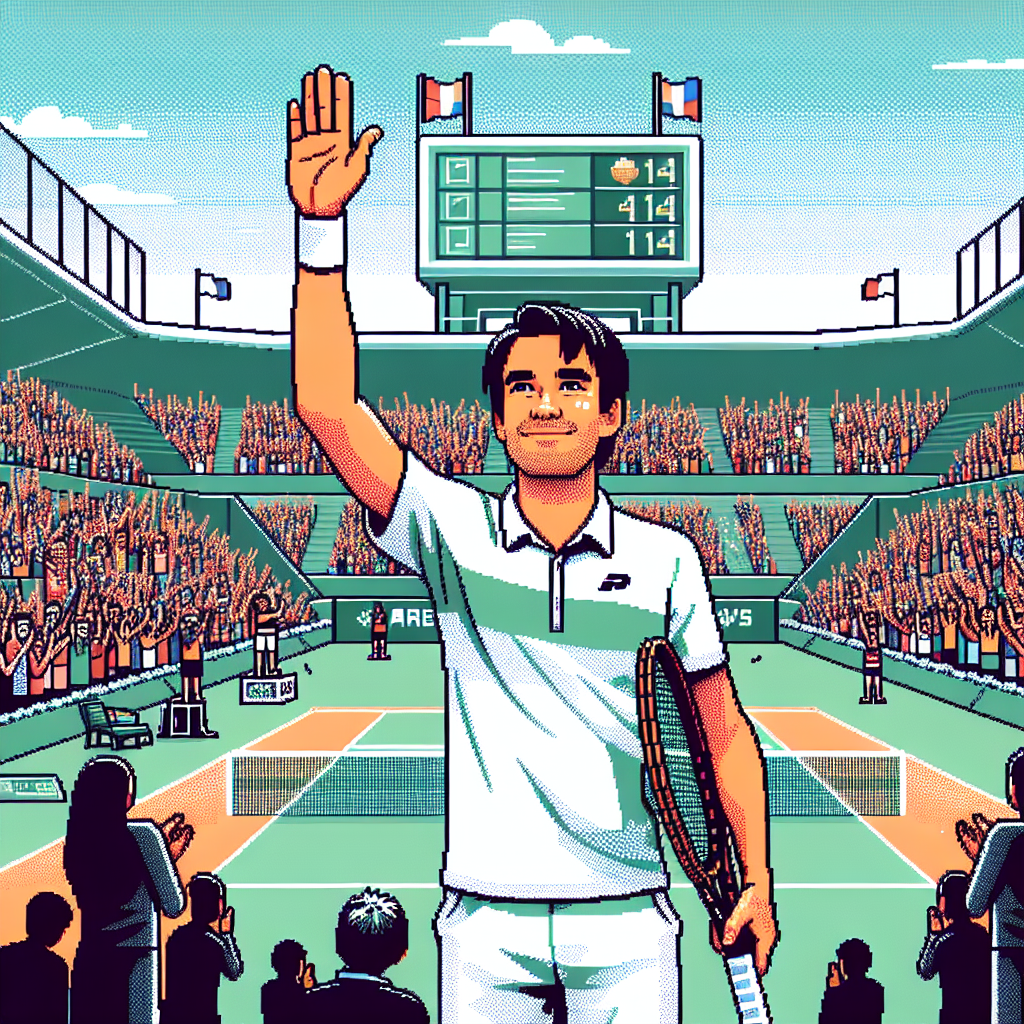
The red clay of Roland Garros has witnessed countless stories of triumph and agony, but none more profound than the saga of Rafael Nadal, affectionately known as the "King of Clay." On Sunday, the legendary Court Philippe-Chatrier, which Nadal has graced with his prowess 14 times, was the stage for a different kind of appearance. Instead of his usual commanding presence with a racket in hand, Nadal was honored by the French Tennis Federation, celebrating an unparalleled career that has become synonymous with the French Open.

A Career Like No Other


Rafael Nadal's journey at the French Open is nothing short of legendary. With 14 titles, he holds the record for the most wins at a single Grand Slam, a testament to his enduring tenacity and unparalleled skill on clay. His dominance is akin to Michael Phelps in the pool or Usain Bolt on the track—an athlete who has not just competed but redefined the sport.

Nadal's style of play—marked by relentless intensity, incredible topspin, and strategic brilliance—has made him a formidable opponent. Beyond his skills, it's his resilience and fighting spirit that have endeared him to fans worldwide. Through injuries and comebacks, Nadal has demonstrated a level of sportsmanship and humility that sets him apart.

A Global Sports Moment


Nadal's farewell ceremony is a reminder of the broader theme of transitions in sports. Recently, we've seen similar moments with Serena Williams at the US Open and Roger Federer at Wimbledon. These athletes have not just been champions but have transcended their sports, becoming global icons. Their retirements symbolize the end of an era, and they leave behind legacies that will inspire future generations.

In a world where change is constant, these stories provide comfort in tradition and excellence. They remind us of the human capacity for greatness and the enduring impact of passion and perseverance.

Connections Beyond Tennis


Nadal's influence extends beyond tennis. He has been a role model for many, demonstrating values like hard work, humility, and the importance of family. His foundation, the Rafa Nadal Foundation, focuses on social work and education for children and youth, emphasizing his commitment to giving back to the community.

In the context of world events, Nadal's career offers a narrative of hope and resilience. In times of uncertainty, such as during the global pandemic, sports figures like Nadal have provided inspiration and an escape. His story is one of overcoming obstacles, which resonates with many who have faced challenges in recent years.

Final Thoughts


Rafael Nadal's farewell ceremony at the French Open is more than a goodbye; it's a celebration of an extraordinary career and the indelible mark he's left on tennis and sports history. As we look to the future, we can only hope for athletes who bring the same passion, resilience, and integrity to their fields.

While the courts of Roland Garros may no longer echo with his victorious roars, Nadal's legacy will forever be etched into their red clay. As fans, we are grateful for the memories and the inspiration—a reminder that greatness is not just in winning but in the journey and impact left behind. Thank you, Rafa, for the memories. Here's to the next chapter.

Read more about AI in Business

Read more about Latest Sports Trends

Read more about Technology Innovations

Djokovic crashes out in opener at Monte Carlo – ESPN | Analysis by Brian Moineau

Djokovic crashes out in opener at Monte Carlo - ESPN | Analysis by Brian Moineau

Title: Djokovic's Monte Carlo Misstep: A Surprising Setback on the Road to 100

In the unpredictable realm of sports, even the titans occasionally stumble. Novak Djokovic, the Serbian tennis virtuoso with a trophy cabinet that resembles a mini-museum, faced an unexpected defeat at the Monte Carlo Masters, thwarting his quest for a centenary title. This surprising exit came at the hands of a familiar opponent, reminding us all that in sports, as in life, the past often has a way of coming back around.

A Familiar Face in an Old Foe

Djokovic's early departure from Monte Carlo is not just a headline but a narrative of resilience and rivalry. The player who dealt Djokovic this surprising blow was none other than a seasoned adversary, proving that experience and history can sometimes eclipse current form. This match reminded fans of the unpredictable nature of tennis, where rankings and past glories can be upended with a single game.

The Century Quest

Reaching 100 career titles is akin to scaling Mount Everest in the tennis world. It’s a milestone achieved by only a select few, with legends like Roger Federer and Jimmy Connors having already planted their flags at this summit. Djokovic’s journey towards this century mark has been a thrilling saga of triumphs and occasional tumbles. Each match, each point, contributes to this larger narrative of perseverance and excellence.

Connecting the Dots Beyond the Court

While Djokovic's setback might have shocked his fans, it’s a reminder of how even the greatest can face hurdles. This theme resonates beyond tennis. Consider the global shifts in leadership and governance we've witnessed recently. Just as Djokovic recalibrates his approach, world leaders are continually adjusting their strategies in response to new challenges, from climate change to economic upheavals.

Novak Djokovic: The Man Beyond the Racket

Djokovic is more than just his titles and aces. Known for his philanthropic efforts, particularly through the Novak Djokovic Foundation, he has shown a commitment to bettering lives off the court. His endeavors focus on education and early childhood development, demonstrating that his vision for success transcends tennis.

A Lighthearted Look at Setbacks

In sports, as in any field, setbacks are often the prelude to success. Djokovic’s loss in Monte Carlo is a playful reminder that even the best have off days—a universal truth that can be both humbling and humorous. It’s akin to watching a superhero fumble only to rise stronger, a narrative arc we see in blockbuster films and classic literature alike.

Final Thoughts

As Djokovic regroups and refocuses, tennis fans around the world will be watching eagerly. His journey towards a 100th title is far from over; it’s merely taken a scenic detour. This Monte Carlo mishap adds another chapter to his legendary career, a reminder that in sports, the story is as important as the score.

Whether Djokovic clinches his centenary title at the next tournament or several down the line, one thing remains clear: his career continues to inspire, entertain, and epitomize the spirit of resilience. So here’s to Novak Djokovic, the master of comebacks, as he turns the page and prepares for his next challenge.

Read more about AI in Business

Read more about Latest Sports Trends

Read more about Technology Innovations

Bill Gates offers to let anyone download the first operating system he and Paul Allen wrote 50 years ago – Fortune | Analysis by Brian Moineau

Bill Gates offers to let anyone download the first operating system he and Paul Allen wrote 50 years ago - Fortune | Analysis by Brian Moineau

Title: A Nostalgic Dive into the Digital Past: Bill Gates and the Original Operating System

---

In the ever-evolving landscape of technology, where the next big thing is always just around the corner, it's refreshing to pause and take a nostalgic look at the roots of our digital world. Recently, Bill Gates made an unexpected yet delightful move by offering everyone the opportunity to download the very first operating system he and Paul Allen wrote 50 years ago. Gates himself described this code as "the coolest I’ve ever written," a sentiment that echoes the profound impact this project had on the future of computing.

A Flashback to the Beginnings

Half a century ago, in an era where personal computers were still a figment of imagination, two young visionaries, Bill Gates and Paul Allen, embarked on a journey that would change the world. Their creation, a BASIC interpreter for the Altair 8800, laid the groundwork for Microsoft, which would go on to become a titan of the tech industry. This first foray into software development was not just a technical milestone but a cultural one; it signaled the dawn of the personal computing revolution.

The Code That Started It All

For those who are curious about the digital archeology of this early operating system, Gates's decision to release the code is a rare opportunity to glimpse into the primitive yet ingenious logic that powered the earliest personal computers. It’s a testament to the creativity and determination of two young minds who dared to dream big. In the context of today's technology, this code may seem rudimentary, but it was a building block that enabled the development of more sophisticated operating systems and applications.

Connecting the Past to the Present

While Gates's gesture is a nod to the past, it also invites reflection on the current state of technology and its rapid advancements. Today, we live in a world dominated by artificial intelligence, cloud computing, and quantum computing. Companies like Google and IBM are pushing the boundaries of what's possible, and the recent surge in AI-driven applications like ChatGPT and DALL-E has sparked both excitement and debate about the implications of these technologies.

Interestingly, this release comes at a time when other tech giants are also embracing open-source principles. For example, Tesla, under Elon Musk's leadership, has shared certain patents to encourage the development of electric vehicle technology. Such actions highlight a growing trend of collaboration and shared progress in the tech world.

Bill Gates: More Than Just a Tech Mogul

Bill Gates, known for co-founding Microsoft, is equally recognized for his philanthropy. Through the Bill & Melinda Gates Foundation, he has contributed significantly to global health, education, and poverty alleviation. His ability to pivot from being a tech entrepreneur to a global humanitarian exemplifies a multifaceted career path that many in the tech industry admire and aspire to emulate.

Final Thoughts

As we download this piece of history and examine the lines of code that sparked the personal computing era, it’s a reminder of how far we've come and the endless possibilities that lie ahead. Gates’s gesture is not just about celebrating a milestone from the past but also inspiring the next generation of innovators. In a world where technology continues to shape every aspect of our lives, revisiting the roots of our digital journey can provide valuable insights and inspiration for the future.

So, whether you're a seasoned programmer or a tech enthusiast, take a moment to explore this digital relic. Who knows? You might find the spark of inspiration for the next big breakthrough hidden within those early lines of code.

---

For those interested, you can access the code and dive into the past through the [link provided by Gates](

). Embrace the nostalgia and perhaps find your own piece of the future within this unique glimpse into the past.

Read more about AI in Business

Read more about Latest Sports Trends

Read more about Technology Innovations

Lindsey Vonn hooks a gate with her arm and doesn’t finish her opening race at skiing worlds – The Associated Press | Analysis by Brian Moineau

Lindsey Vonn hooks a gate with her arm and doesn’t finish her opening race at skiing worlds - The Associated Press | Analysis by Brian Moineau

**Title: Lindsey Vonn: The Indomitable Spirit on Slippery Slopes**

In the world of sports, few athletes embody resilience and tenacity like Lindsey Vonn. Recently, at the Alpine skiing world championships, Vonn, at the age of 40, showed up with her signature grit and determination, despite battling what seemed to be a cold or the flu. Unfortunately, her return to competitive skiing came to an abrupt halt when she hooked a gate with her arm during the super-G, causing her not to finish the race. Thankfully, she avoided injury, a testament to her skill and experience on the slopes.

Lindsey Vonn’s illustrious career has always been a tapestry of triumphs interwoven with challenges. From her record-breaking 82 World Cup victories to her tenacity in overcoming injuries, Vonn has been a beacon of inspiration. She has shown that setbacks are merely setups for comebacks—a philosophy she seems to live by both on and off the slopes.

Her recent race, though not completed, is a reminder of the unpredictability and thrill of skiing, much like the rollercoaster that is life. Vonn’s decision to compete despite feeling under the weather speaks volumes about her passion for the sport and her unwavering commitment to pushing boundaries. It’s reminiscent of other athletes who have competed through adversity, like Michael Jordan's famous "Flu Game" in the 1997 NBA Finals, where he played through illness to lead his team to victory.

Vonn’s story also resonates beyond the world of sports. It mirrors the larger narrative of resilience in our everyday lives, especially in the face of global challenges. Whether it’s tackling a pandemic or personal health battles, the spirit of pushing forward, as Vonn does, finds its place in every corner of life.

Moreover, Vonn's participation comes at a time when athletes across the globe are increasingly vocal about mental and physical health, a movement she herself has supported. Her presence on the slopes, even when not at her best, serves as a powerful message about the importance of perseverance and the courage to face whatever life throws at you.

Outside the realm of skiing, Vonn has also made strides in the world of business and philanthropy, continuously expanding her impact. She has been involved in endeavors ranging from her Lindsey Vonn Foundation, which supports young girls through scholarships and programs, to her work as an author and entrepreneur. Her multifaceted career is an example of how athletes can leverage their platforms for broader societal contributions.

In conclusion, while Lindsey Vonn’s recent race may not have ended as planned, her journey continues to inspire. It reminds us that life, much like skiing, is about navigating the gates, sometimes hooking them, but always moving forward with resilience and grace. As Vonn herself once said, “There's no such thing as too much snow,” and perhaps, no such thing as too many comebacks. Here's to Lindsey Vonn, the queen of the slopes, and to all of us who dare to ski the challenging terrains of life.

Read more about AI in Business

Read more about Latest Sports Trends

Read more about Technology Innovations