Fastest Payout Online Casino 2025: Lucky Creek Hailed Best Instant Withdrawal Casino – GlobeNewswire | Analysis by Brian Moineau

Fastest Payout Online Casino 2025: Lucky Creek Hailed Best Instant Withdrawal Casino - GlobeNewswire | Analysis by Brian Moineau

Lucky Creek Casino: Raising the Stakes in the World of Instant Gratification


In a world where convenience and speed are king, it seems only fitting that the online casino industry is racing to meet players' demands for instant gratification. Lucky Creek Casino has recently made headlines, as reported by GlobeNewswire, for setting a new industry benchmark in 2025 with the fastest payouts and instant withdrawals. For many players, waiting to access their winnings can be a frustrating experience, akin to waiting for the next season of a binge-worthy series. Lucky Creek has effectively eliminated this hurdle, ensuring that the thrill of the win doesn't fizzle out in wait time.

The Era of Instant Everything


Lucky Creek’s achievement is not just a win for casino enthusiasts but also a microcosm of a broader societal shift towards immediacy. Whether it’s food delivery apps promising meals at your door in under 30 minutes, or streaming services dropping entire seasons in one go, instant access is no longer a luxury but an expectation. The casino’s move reflects this trend, offering players not just games of chance but an end-to-end experience that respects their time.

The Technical Wizardry Behind Instant Withdrawals


Behind the scenes, achieving such rapid payouts is no small feat. It involves a seamless integration of advanced payment gateways, meticulous financial management, and robust cybersecurity measures, ensuring that transactions are not only fast but secure. This technical prowess is reminiscent of the innovations in fintech, where companies are constantly pushing the envelope to provide faster and more reliable services. Just as fintech has revolutionized the way we handle money, Lucky Creek's approach might redefine the standard for online casinos.

Connections to the Digital World


As we peer into other sectors, the push for speed and efficiency is palpable. Consider the rise of cryptocurrencies like Bitcoin and Ethereum, which promise rapid, decentralized transactions. While not without their challenges, they represent a shift towards quicker financial interactions that parallel what Lucky Creek is achieving within the casino realm. Moreover, the gaming industry, in general, is no stranger to these advancements, with esports and online gaming platforms continually optimizing to reduce latency and enhance player experience.

A Lighthearted Take on the Gambling Landscape


While the business side of things is undeniably impressive, one can't help but imagine the colorful characters who might frequent such a casino. Picture a suave secret agent cashing out his winnings after a high-stakes poker game, or a lucky amateur who finally hit the jackpot and is now living in a state of disbelief as their winnings land in their account before they finish their victory dance.

Final Thoughts


Lucky Creek Casino’s leap into the limelight as the fastest payout online casino of 2025 is a testament to the ever-evolving landscape of digital entertainment and financial technology. As industries continue to innovate and cater to our desire for speed, it will be fascinating to see which other sectors follow suit. Just like a well-played hand, timing is everything, and Lucky Creek seems to have hit the jackpot. Whether you're a seasoned gambler or a casual player, this development is sure to enhance the gaming experience, making the future of online casinos an exciting one to watch.

In the end, whether your game is blackjack, roulette, or slots, one thing is certain: Lucky Creek is dealing a new hand in the world of online gaming, and it’s a winning one.

Read more about AI in Business
Read more about Latest Sports Trends

Read more about Technology Innovations

Bitcoin’s price hits $97K, but network activity stalls: Should you be worried? – AMBCrypto | Analysis by Brian Moineau

Bitcoin’s price hits $97K, but network activity stalls: Should you be worried? - AMBCrypto | Analysis by Brian Moineau

Bitcoin's Price Soars to $97K: Should We Be Excited or Concerned About Dormant Network Activity?

In a world where digital assets continue to rewrite the rules of finance, Bitcoin has once again taken center stage by soaring to an unprecedented $97,000. This remarkable rally has left many investors and enthusiasts on cloud nine, reveling in the profits and potential of this digital gold. But, as with any story that seems too good to be true, there’s a twist—Bitcoin's on-chain activity has hit a standstill. So, should we be worried, or is this just another chapter in the unpredictable saga of cryptocurrency?

First, let's take a moment to appreciate the magnitude of Bitcoin's price surge. Just a few years ago, reaching such heights seemed like pure fantasy. The recent surge can be attributed to several factors, including increased institutional interest, global economic uncertainty, and the ever-present fear of inflation. Companies like Tesla and MicroStrategy have demonstrated significant confidence in Bitcoin, further legitimizing its status as a viable asset. In fact, Tesla's bold move to invest $1.5 billion in Bitcoin earlier this year sent ripples through the financial world, encouraging others to follow suit.

Yet, amidst this euphoria, the blockchain tells a different story. Despite the skyrocketing price, Bitcoin's network activity has hit a lull. Transactions are not growing at the same pace, and network congestion is noticeably absent. This dichotomy raises a pertinent question: is the high price sustainable if the underlying network activity doesn’t follow suit?

To understand this phenomenon, we need to dig a little deeper. Historically, Bitcoin's price and on-chain activity have shared a symbiotic relationship—when one rises, so does the other. However, the current scenario seems to deviate from this pattern. Several factors could be contributing to this anomaly. For one, the rise of the Lightning Network and other Layer 2 solutions might be diverting transaction activity off-chain, making the main network seem quieter than it actually is. Additionally, long-term holders, or "HODLers," might be sitting tight, reluctant to move their assets amidst market volatility.

Outside the realm of cryptocurrency, a similar pattern can be seen in other areas of the economy. Take the stock market, for example. Despite economic challenges posed by the COVID-19 pandemic, stock indices have reached record highs, largely fueled by stimulus measures and low interest rates. However, this growth hasn't always been reflective of the actual economic activity. This divergence between market perception and underlying fundamentals is a recurring theme in various sectors.

Returning to Bitcoin, it’s also worth considering the broader societal changes that could be impacting its network activity. The shift towards decentralized finance (DeFi) and non-fungible tokens (NFTs) could be diverting attention and transactions away from Bitcoin. Ethereum, for instance, has seen a surge in activity due to its smart contract capabilities, which Bitcoin currently lacks. As a result, some of the transactional energy that traditionally would have bolstered Bitcoin's network activity is now being channeled elsewhere.

So, should we be worried? The truth is, while the current scenario might be puzzling, it’s not necessarily a cause for alarm. Bitcoin has weathered many storms and emerged stronger each time. Its ability to adapt and evolve in the face of challenges is one of its greatest strengths. Moreover, the cryptocurrency landscape is vast and interconnected, with multiple factors influencing prices and activity at any given time.

In conclusion, while the discrepancy between Bitcoin’s price and network activity might raise some eyebrows, it’s important to keep perspective. This could be a temporary phase, driven by a confluence of external events and internal developments within the crypto ecosystem. Whether you're a seasoned Bitcoin enthusiast or a curious observer, it's crucial to stay informed and adaptable. As always in the world of cryptocurrency, expect the unexpected, and remember that in this digital age, the only constant is change.

Read more about AI in Business

Read more about Latest Sports Trends

Read more about Technology Innovations

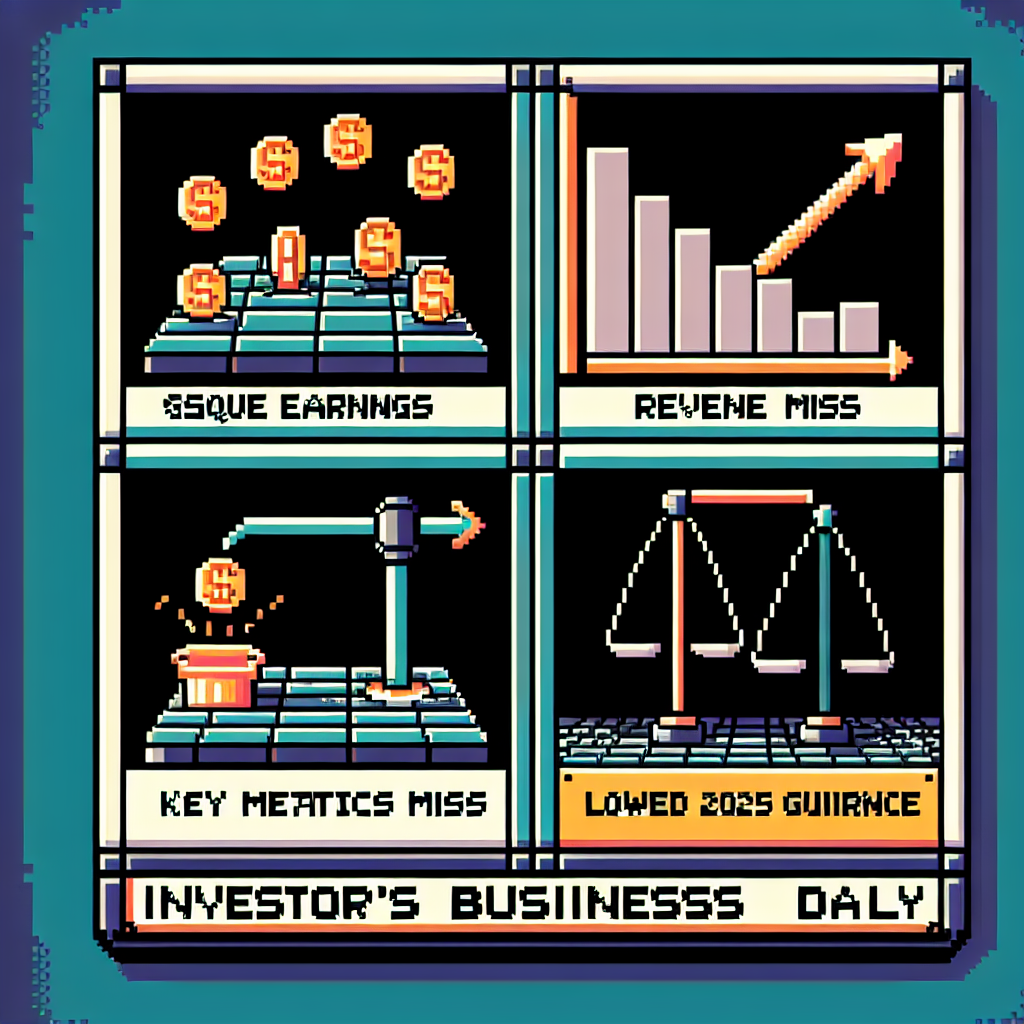
Square Earnings, Revenue, Key Metrics Miss In Q1. Payment Firm Lowers 2025 Guidance. – Investor’s Business Daily | Analysis by Brian Moineau

Square Earnings, Revenue, Key Metrics Miss In Q1. Payment Firm Lowers 2025 Guidance. - Investor's Business Daily | Analysis by Brian Moineau

A Rocky Start for Square: Navigating the Choppy Waters of Q1 Earnings


In the world of finance, a company’s earnings report can be akin to a blockbuster movie release. Investors wait with bated breath, analysts sharpen their pencils, and the market collectively holds its breath. The latest release from Square, the payments firm now known as Block, was met with quite a plot twist — a plunge in stock price following their Q1 earnings and revenue report that missed Wall Street estimates, alongside a lowered fiscal 2025 guidance.

A Slightly Bumpy Ride

Square has long been a darling of the fintech world, celebrated for its innovative approach to digital payments and its ability to empower small businesses. However, even the most visionary companies encounter turbulence. Block's recent earnings report, which revealed a less-than-stellar performance in the first quarter, sent shockwaves through the financial community.

The company’s revenue and earnings for Q1 fell short of expectations, leading to a swift reaction in the stock market with a significant drop in share prices. The lowered guidance for fiscal year 2025 added another layer of complexity to the narrative. But let’s not hit the panic button just yet. After all, even the best-laid plans can go awry — especially in a post-pandemic world where unpredictability has become the norm.

A Broader Context

To put Block’s situation in perspective, it’s essential to consider the broader economic landscape. The entire technology and financial sectors have been navigating a challenging environment marked by inflationary pressures, fluctuating consumer spending, and the ever-present specter of regulatory scrutiny. These factors have contributed to a notably volatile market, not just for Square but for many companies across the globe.

Interestingly, Block’s challenges come at a time when other sectors are experiencing their own ups and downs. For instance, as Block grapples with its financial forecasts, the automotive industry is facing supply chain disruptions, and the tech industry is battling chip shortages. It’s a reminder that unpredictability is a theme that resonates far beyond the boundaries of a single sector.

Innovating Through Adversity

Despite the current setback, it’s important to remember that Square, or Block, has always been a company that thrives on innovation. Under the leadership of Jack Dorsey, known for his forward-thinking approach and his role in co-founding Twitter, Square has consistently pushed the envelope. Whether it’s venturing into cryptocurrency with its Cash App or exploring decentralized finance, Block is not one to shy away from taking risks.

Moreover, as businesses worldwide adapt to new consumer behaviors and digital payment trends continue to evolve, Block has the opportunity to recalibrate and refine its strategies. The fintech landscape is constantly shifting, and those who adapt quickly can often emerge stronger.

Looking Ahead

So, what does the future hold for Square? While the immediate reaction might be one of concern, there’s a broader narrative to consider. Square is a company built on resilience and innovation, and these qualities will be crucial as it navigates the road ahead. The lowered guidance for 2025 might seem like a setback, but it also reflects a realistic assessment of the challenges and opportunities that lie in wait.

In conclusion, while Square’s Q1 earnings report might have missed the mark, it’s a reminder that business, much like life, is filled with ebbs and flows. The key is to stay the course, adapt to the changing tides, and continue to innovate. After all, as the saying goes, it's not about how many times you fall, but how many times you get back up that truly counts. So, here’s to Block — may it ride the waves of the future with the resilience and creativity it’s known for.

Read more about AI in Business

Read more about Latest Sports Trends

Read more about Technology Innovations

Spotify Stock Tumbles as Q1 Profit Comes Up Well Short of Estimates – Investopedia | Analysis by Brian Moineau

Spotify Stock Tumbles as Q1 Profit Comes Up Well Short of Estimates - Investopedia | Analysis by Brian Moineau

Title: Spotify's Financial Symphony Hits a Sour Note: A Lighthearted Take on a Tumble

Ah, Spotify. The beloved Swedish maestro of audio streaming, the platform that has soundtracked everything from our workouts to our workdays, has hit a bit of a discordant note in its financial symphony. Spotify's stock took a bit of a nosedive in premarket trading recently, after its first-quarter profit report struck a rather sour chord with investors. The profit fell significantly short of estimates, leaving many shareholders humming a mournful tune.

Now, before we grab our pitchforks and start a revolution against one of our favorite music streaming services, let’s take a step back and examine the bigger picture with a light heart. After all, even Beethoven had his off days!

A Symphony of Struggles

Spotify's financial misstep is a reminder that even giants can stumble. The company, which has been a trailblazer in revolutionizing how we consume music, faced challenges that are not entirely unique in the ever-evolving tech landscape. Much like Netflix's recent subscriber woes or Meta’s adventures in the metaverse, Spotify is navigating the turbulent waters of a post-pandemic world where consumer habits and technological advancements are in constant flux.

The Universal Language of Challenges

Let's put Spotify's financial hiccup into perspective by connecting it with some other global narratives. For instance, the tech industry as a whole has been grappling with changing economic conditions, supply chain disruptions, and fluctuating consumer confidence. Companies like Apple and Google have also had to adapt their strategies to remain competitive and relevant.

The music industry, too, is no stranger to these challenges. Artists and record labels are continually adapting to shifts in how music is consumed, monetized, and distributed. The rise of vinyl sales, for instance, shows a nostalgic return to physical media, even as digital streaming dominates the airwaves.

Keeping Our Playlist Light

Despite the financial setback, it's important to remember that Spotify continues to be a favorite among music lovers worldwide. With over 500 million users, it’s safe to say that Spotify has not lost its rhythm entirely. The platform continues to innovate with features like its personalized playlists, podcast expansions, and partnerships with high-profile artists.

Moreover, Spotify has consistently shown resilience. Remember when Taylor Swift famously pulled her catalog from Spotify, citing concerns about artist compensation? The platform bounced back, eventually wooing her and many other artists back into the fold. So, there's hope that Spotify will find its groove once again.

Final Thought: Adjusting the Tune

While Spotify's financial fumble might have caused some investors to wince, it's far from a death knell. In a world where change is the only constant, adaptability is key. As Spotify continues to fine-tune its strategy, perhaps it's worth remembering the words of another Swedish export, ABBA: "Take a chance on me."

In the grand concert of business, every company hits a few wrong notes. The true test is how they recover and harmonize moving forward. For now, let's keep our playlists light, our minds open, and trust that Spotify's next quarter will bring a more harmonious financial melody.

Read more about AI in Business

Read more about Latest Sports Trends

Read more about Technology Innovations

Buy now, pay later for fast food: Flexible spending option or a gamble? – WCPO 9 Cincinnati | Analysis by Brian Moineau

Buy now, pay later for fast food: Flexible spending option or a gamble? - WCPO 9 Cincinnati | Analysis by Brian Moineau

Title: Fast Food on Layaway? The Curious Case of Buy Now, Pay Later in the World of Burgers and Fries

In a world where convenience is king, the "buy now, pay later" (BNPL) trend is marching boldly into realms previously uncharted—fast food. Yes, you read that right. Thanks to platforms like DoorDash, you can now finance your impulse Big Mac and fries. But is this financial flexibility or a fast track to fiscal folly?

The Rise of BNPL: A Modern-Day Layaway

The concept of buy now, pay later isn't new. It's a modern twist on the old layaway plans our grandparents might have used to buy holiday gifts. However, its digital evolution has made it more accessible than ever. With the click of a button, consumers can defer payments on everything from sneakers to, now, fast food. The appeal is undeniable: instant gratification without immediate financial impact.

Fast Food Financing: A Smart Move?

While spreading out payments for big-ticket items like electronics or furniture might seem sensible, applying the same strategy to a $10 meal raises eyebrows. Proponents argue that BNPL offers valuable flexibility, especially in tough economic times. For someone short on cash, the ability to enjoy a meal without upfront payment can be a relief.

However, critics caution that this convenience can mask deeper financial pitfalls. Fast food isn’t a luxury; it's often a necessity. If someone needs to finance a meal, it might indicate broader financial instability. The risk is that BNPL could encourage spending beyond one’s means, leading to a cycle of debt over something as ephemeral as a burger.

Global Financial Trends: A Reflection

BNPL's expansion into fast food mirrors a broader global trend of micro-financing everyday expenses. With inflation on the rise and wages stagnating in many parts of the world, people are looking for ways to stretch their dollars further. According to a [2021 survey by Ascent](https://www.fool.com/the-ascent/research/buy-now-pay-later-statistics/), 36% of U.S. consumers used a BNPL service, with millennials making up the largest group of users. This shift highlights a growing reliance on credit-like services, even for daily needs.

The Domino Effect: More Than Just Pizza

Interestingly, DoorDash isn’t alone in this culinary credit experiment. Other delivery services and even some chain restaurants are exploring similar options, seeing BNPL as a way to boost sales and customer loyalty. But, as with any financial product, the devil is in the details. Late fees, interest rates, and the potential for overuse are real concerns.

A Lighter Side?

On a lighter note, the idea of financing fast food does add an amusing twist to our financial lexicon. Imagine explaining to your future self that your credit score took a hit because you just had to have that extra side of guacamole!

Final Thoughts

While BNPL for fast food might sound like the ultimate in indulgent convenience, it serves as a microcosm of contemporary financial challenges. As with any financial tool, the key lies in responsible use. For those considering this option, it’s crucial to weigh the short-term benefits against potential long-term consequences. After all, the true cost of a meal should be satisfaction, not regret.

In a world where you can finance French fries, let’s remember that the healthiest financial diets are often about balance and moderation. Happy munching, everyone!

Read more about AI in Business

Read more about Latest Sports Trends

Read more about Technology Innovations

How much has Elon Musk’s Doge cut from US government spending? – BBC | Analysis by Brian Moineau

How much has Elon Musk’s Doge cut from US government spending? – BBC | Analysis by Brian Moineau

Title: The Tale of Doge: How Elon Musk’s Financial Wizardry and a Meme Coin Affected US Government Spending

In a world where cryptocurrencies are as unpredictable as a cat on catnip, Elon Musk’s involvement with Dogecoin has once again sparked a wave of intrigue and speculation. BBC Verify recently delved into the audacious claim that Musk’s “Doge” might have somehow contributed to a reduction in US government spending. While the headline reads like a satirical piece from The Onion, experts have weighed in, offering a clearer picture of this curious financial narrative.

The Doge Factor: A Paw in Government Spending?

For those unacquainted, Dogecoin started as a joke—a meme coin featuring the Shiba Inu dog from a popular meme. However, with Musk’s penchant for Twitter antics and his public endorsements, Dogecoin has surged in popularity, leading to wild fluctuations in its value.

BBC Verify’s investigation into the claims of Dogecoin’s influence on government spending reveals a complex web of economic and psychological factors. On one hand, the speculative nature of cryptocurrencies like Dogecoin can lead to increased consumer spending, driven by the illusion of newfound wealth when the coin’s value rises. This, in turn, can boost tax revenues, theoretically allowing for more government spending without increasing deficits.

On the other hand, experts argue that attributing any substantial reduction in government spending to Dogecoin is a stretch. The US government’s fiscal policies are primarily driven by macroeconomic factors far beyond the influence of a single cryptocurrency, meme or not.

Elon Musk: The Modern-Day Midas of Memes

Elon Musk, CEO of Tesla and SpaceX, and self-proclaimed “Dogefather,” has a knack for turning the seemingly absurd into financial gold. His tweets alone have been known to send markets into a frenzy, illustrating the powerful confluence of social media influence and financial markets in the 21st century.

Outside the realm of cryptocurrencies, Musk’s ventures continue to shape the world. Tesla’s electric vehicles are accelerating the transition to sustainable energy, while SpaceX’s missions are pioneering the future of space travel. Despite his eccentric online persona, Musk’s impact on technology and the economy is undeniably profound.

A World of Financial Whimsy

Musk’s involvement with Dogecoin is just one example of the broader trend of internet culture intersecting with finance. In recent years, we’ve witnessed the rise of retail investors on platforms like Robinhood, the meme stock phenomenon with companies like GameStop, and the NFT craze—all fueled by the digital age’s democratization of information and market access.

These trends reflect a shifting landscape where traditional financial systems are being challenged and reimagined by a new generation of investors who are as comfortable with Reddit threads as they are with stock tickers.

Final Thoughts: A Memetic Legacy

While the idea of Dogecoin single-handedly slashing US government spending may be more fiction than fact, it encapsulates the whimsical yet impactful nature of modern finance. Elon Musk’s role in this narrative highlights the unpredictable power of influential figures in shaping economic discourse.

As we continue to navigate this brave new world, one thing is clear: the lines between finance, technology, and culture are becoming increasingly blurred. Whether Dogecoin will continue to hold its place in the spotlight or fade into meme history remains to be seen. Meanwhile, we can all sit back, enjoy the spectacle, and perhaps invest in a little Dogecoin—just for the fun of it.

Read more about AI in Business

Read more about Latest Sports Trends

Read more about Technology Innovations


Related update: We recently published an article that expands on this topic: read the latest post.

Bitcoin Rises to $90K for the First Time Since Early March – CoinDesk | Analysis by Brian Moineau

Bitcoin Rises to $90K for the First Time Since Early March - CoinDesk | Analysis by Brian Moineau

Bitcoin Hits $90K: A Cryptocurrency Comeback and Market Momentum

In a dazzling display of financial fireworks, Bitcoin has surged to $90,000, a level not seen since early March. The cryptocurrency's rise has coincided with a rally in U.S. equities, which gained over 1% on what traders are calling "Turnaround Tuesday." This harmonious dance between traditional markets and digital currencies highlights a renewed optimism in the financial landscape, but what exactly is fueling this upbeat atmosphere?

The backdrop to Bitcoin’s breakout is an intriguing tapestry of global economic factors. For one, the Federal Reserve's recent dovish stance has eased fears of aggressive interest rate hikes, providing a supportive environment for risk assets. Additionally, the U.S. economy has shown signs of resilience, with recent employment data surpassing expectations. These developments have buoyed investor sentiment, creating a ripple effect across various markets, including cryptocurrencies.

But Bitcoin's rise isn't just about macroeconomic trends. The digital currency has seen growing institutional interest, further cemented by the increasing integration of blockchain technology in mainstream financial systems. Companies like BlackRock and Fidelity continue to explore Bitcoin ETFs, a move that could usher in a new wave of investment from traditional sectors. This institutional confidence lends Bitcoin a credibility that was once elusive, especially during its earlier, more volatile years.

Outside the financial sphere, Bitcoin's resurgence mirrors a broader shift in global dynamics. For instance, the ongoing advancements in digital currencies have forced governments worldwide to consider their own central bank digital currencies (CBDCs). Countries like China are racing ahead with their digital yuan, while the European Central Bank is actively exploring a digital euro. These developments indicate that the world is inching closer to a future where digital currencies play a pivotal role in everyday transactions.

In the realm of technology, the rise of Bitcoin aligns with the growing interest in decentralized finance (DeFi) and non-fungible tokens (NFTs). These innovations have captured the imagination of both tech enthusiasts and investors, further blurring the lines between finance and technology. The boom in NFTs, for instance, has shown how blockchain technology can revolutionize industries beyond finance, including art, music, and entertainment.

While the cryptocurrency market is notorious for its volatility, this recent rally feels different. It reflects a maturation of the space, with Bitcoin acting as a bellwether for broader trends. Yet, as with any investment, caution is warranted. The road ahead may be paved with both opportunities and obstacles, as regulatory scrutiny intensifies and the global economic landscape continues to evolve.

In conclusion, Bitcoin's rise to $90,000 is more than just a headline – it's a testament to the shifting paradigms in finance and technology. As we navigate this brave new world, one thing is certain: the future of money is digital, and Bitcoin is leading the charge. Whether you're a seasoned investor or a curious onlooker, the unfolding narrative of cryptocurrency is one worth watching. After all, in the words of the legendary investor Warren Buffett, "Someone is sitting in the shade today because someone planted a tree a long time ago." Bitcoin's journey is just beginning, and its branches are reaching ever higher.

*For more insights on the intersection of finance and technology, stay tuned and keep exploring the possibilities that the digital future holds.*

Read more about AI in Business

Read more about Latest Sports Trends

Read more about Technology Innovations

Quince Made the Perfect Perfume Dupes – The Cut | Analysis by Brian Moineau

Quince Made the Perfect Perfume Dupes - The Cut | Analysis by Brian Moineau

The Art of Duping: Quince's New Fragrance Line Delivers Luxury at a Fraction of the Cost

In the ever-evolving world of fragrance, the quest for the perfect scent often leads us down the path of luxury brands, where a single bottle can cost a small fortune. However, Quince has recently disrupted this olfactory landscape with their launch of eight exquisite perfumes. As highlighted in an article by The Cut, these scents are crafted by the same expert perfumers behind prestigious brands, offering us a whiff of luxury without the hefty price tag.

The Duplication Revolution

Quince's approach is not just about creating affordable alternatives; it's about democratizing luxury. Each scent in their collection mirrors a high-end counterpart, complete with a bullet-point breakdown that compares them to their prestige brand equivalents. This transparency is refreshing in a market often shrouded in mystery and exclusivity.

This trend of high-quality dupes isn't just limited to fragrances. In the fashion industry, brands like Zara and H&M have long brought runway styles to the masses, making high fashion accessible to everyday consumers. Similarly, Quince is bridging the gap between luxury and affordability in the perfume world, proving that you don't need to break the bank to smell divine.

A Broader Context

The rise of dupe culture can be seen as part of a larger movement towards sustainability and conscious consumption. As more consumers become aware of the environmental and ethical implications of their purchases, affordable alternatives offer a way to indulge responsibly. By choosing dupes, consumers can reduce waste and opt for cruelty-free options, aligning their purchases with their values.

Moreover, this trend is resonating at a time when inflation and economic uncertainty have tightened many wallets. The ability to enjoy a touch of luxury without financial strain is appealing to a broad audience, echoing broader societal shifts towards practical yet indulgent consumerism.

Scent and Memory

Fragrances have a unique power to evoke memories and emotions, making them an intimate aspect of personal identity. By providing high-quality dupes, Quince allows individuals to express themselves through scent without compromise. This democratization of luxury is not just about cost but about accessibility to the emotional experiences tied to these fragrances.

Final Thoughts

Quince's foray into the world of perfume dupes is a testament to the changing tides in consumer culture. As they challenge the traditional hierarchy of luxury brands, they remind us that quality and affordability are not mutually exclusive. Whether you're a fragrance aficionado or a casual consumer, Quince offers a delightful invitation to explore the world of scent without limits.

In a world that often equates price with value, Quince is reminding us that true luxury is not about the cost of an item but the joy and confidence it brings to the wearer. As we navigate the complexities of modern living, perhaps it's time we all take a cue from Quince and embrace the art of duping with open (and pleasantly scented) arms.

Read more about AI in Business

Read more about Latest Sports Trends

Read more about Technology Innovations