
Moderna Settlement Clears Path for Growth | Analysis by Brian Moineau

A clean break for Moderna — and why investors cheered

It felt like a legal cloud that wouldn’t lift: years of headline-grabbing patent fights over the lipid nanoparticle (LNP) delivery systems that made mRNA COVID vaccines effective. On March 3–4, 2026 Moderna announced a settlement that resolves the high-profile litigation with Roivant/Genevant and Arbutus, and markets reacted quickly. Stocks jumped, balance-sheet math shifted, and a central question landed squarely on the table: does settling a legacy pandemic dispute free Moderna to focus on growth, or did the company just write a very large check for certainty?

Below I unpack the settlement, why traders liked it, and what long-term investors should consider next.

Fast summary you can scan

  • Deal headline: Moderna agreed to resolve global litigation with Genevant (Roivant subsidiary) and Arbutus for up to $2.25 billion, with $950 million payable upfront and up to $1.3 billion contingent on a separate appellate outcome. (globenewswire.com)
  • Market move: Moderna shares rose sharply on the news as the settlement removes a major legal overhang that had shadowed the company’s vaccine franchise. (wbur.org)
  • Structural win: The deal reportedly includes no future royalties for Moderna’s future vaccines, which investors saw as preserving long-term gross margins on the company’s infectious-disease portfolio. (bignewsnetwork.com)

Why the settlement mattered (beyond the headline number)

  • Legal overhangs are expensive even when you don’t pay them. For years the uncertainty around LNP patent claims added a risk premium to Moderna’s valuation. Removing that overhang makes future cash flows—and the odds of pipeline monetization—easier to model. (investing.com)
  • The structure is important: $950 million upfront (reported for Q3 2026 timing) and an additional contingent payment tied to an appeal. That means Moderna recognized a near-term charge while keeping a cap on potential future liability. Analysts quoted in coverage framed the payment as material but manageable relative to historical COVID-era revenues. (investing.com)
  • No ongoing royalties for future vaccine use is the strategic nugget. If accurate, Moderna buys freedom to use its platform across upcoming respiratory programs (COVID/flu combos, seasonal vaccines) without a royalty tax on each dose sold—valuable if those programs scale. (bignewsnetwork.com)

What the market priced in (and the immediate reaction)

  • Short-term: equity pop. Traders rewarded clarity; Moderna shares rallied after-hours and into the next session as the legal risk premium evaporated. Coverage noted moves of ~6–10% on the news. (wbur.org)
  • Mid-term: balance-sheet hit, but offset by clarity. Moderna expects to book a $950 million charge in Q1 2026 tied to the settlement; yet management forecasts year-end liquidity that still supports late-stage oncology and respiratory programs. Investors appear to prefer certainty and predictable cash needs over lingering legal risk. (barchart.com)

The investor dilemma: growth runway vs. legacy liabilities

  • Positive case:
    • Clears a multisided legal distraction so management can refocus on regulatory milestones (flu + COVID filings, other vaccine approvals) and clinical readouts. (investing.com)
    • No royalties on future vaccines preserves upside for profitable launches.
    • One-time charge is finite; it’s a controlled cost to eliminate open-ended litigation risk.
  • Cautionary case:
    • The headline figure is large. If contingent payments are triggered or additional litigation emerges (other LNP owners, or parallel suits), the total bill could rise.
    • Paying to end a dispute does not change execution risk on pipeline programs—regulatory setbacks, clinical failures, or slow uptake of new respiratory vaccines would still hurt valuation.
    • The settlement resolves one set of claims but doesn’t eliminate competition or broader IP fights (other players like Pfizer/BioNTech have had their own disputes). (statnews.com)

How different investor types might think about this

  • Short-term traders: the headline is a clean catalyst. The post-announcement rally reflects relief; momentum traders could ride the immediate volatility but should watch upcoming liquidity guidance and any analyst revisions.
  • Long-term investors: focus on the payoff—the settlement reduces a persistent tail risk. The more important drivers remain pipeline success, commercial uptake of future respiratory vaccines, and margin expansion without royalty burdens.
  • Risk-averse holders: analyze cash guidance and balance-sheet effects. Moderna indicated expected year-end liquidity projections that still fund development priorities even after the charge. Verify management’s updated guidance in the next reporting cycle. (barchart.com)

Big-picture takeaways for the biotech space

  • Patent wars over platform technologies (like LNPs) are costly—and their resolution reshapes competitive dynamics. When platform ownership is clarified, winners can invest in scale rather than legal defense.
  • Settlements can be strategically smart: paying to remove a multi-year uncertainty can unlock value that dwarfs the payment itself if it enables faster commercialization of high-margin products.
  • Investors should continue watching IP developments across the industry (including analogous suits involving other vaccine makers), since one settlement doesn’t reset the sector’s legal landscape. (statnews.com)

My take

Moderna’s settlement reads like a pragmatic corporate move: a meaningful but finite payment to replace open-ended legal risk with a cleaner runway for product development and commercialization. For long-term investors the key question is execution—can Moderna convert this clearer path into approved, widely adopted products (seasonal respiratory vaccines, oncology readouts, etc.) that justify the current valuation multiple? If the answer is yes, the settlement will look like a sensible insurance premium; if not, it will be an expensive but ultimately cosmetic fix.

Sources

(Note: this post was inspired by coverage of the Barron's business article headline and synthesized from non-paywalled reporting and the parties' press information cited above.)
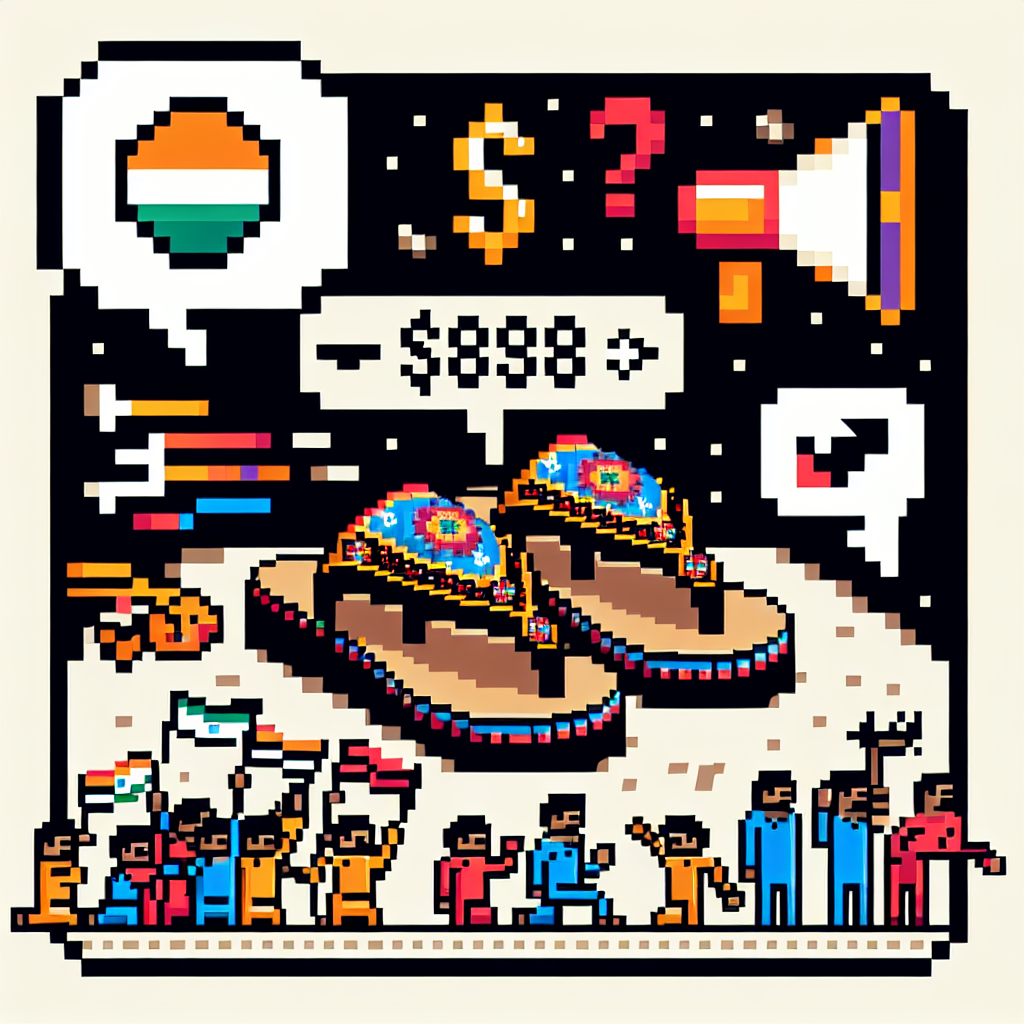
Prada, Kolhapuri Deal Sparks IP Debate | Analysis by Brian Moineau

A luxury sandal, a centuries‑old craft, and the price of inspiration

Prada's decision to sell a limited run of "Made in India" Kolhapuri‑style sandals for about $930 has reignited a conversation the fashion world keeps circling back to: where does inspiration end and appropriation begin? What started this year as a pair of tan leather sandals on a Milan runway—briefly billed as simply "leather footwear"—became a flashpoint after Indian artisans and commentators pointed out the clear resemblance to Kolhapuri chappals, the handmade sandals from Maharashtra and Karnataka. Prada has since acknowledged the Indian roots of the design and struck a deal to make 2,000 pairs in collaboration with state‑backed artisan bodies, with plans to sell them globally in February 2026. (feeds.bbci.co.uk)

Quick takeaways

  • Prada showcased sandals in Milan that closely resembled traditional Kolhapuri chappals, prompting accusations of cultural appropriation. (feeds.bbci.co.uk)
  • The brand responded by acknowledging the inspiration and signing agreements with two Indian, state‑backed leather development corporations to produce a limited run made in India — 2,000 pairs priced at roughly €800–€930 each — for global sale in February 2026. (reuters.com)
  • The collaboration promises artisan training, short residencies at Prada's academy, and an investment Prada says will run into "several million euros," but questions remain about profit sharing, pricing parity, and long‑term benefits for the craftspeople. (reuters.com)

Why this matters beyond a single product drop

Kolhapuri chappals are not a trendy motif invented last season. They have a long cultural history, a specific geographic origin (GI protection in India since 2019), and are made by artisans from marginalised communities who rely on this craft for livelihoods. When a global luxury house reproduces that aesthetic and ships it out of context—then prices it at nearly 100 times the local market value—voices in India rightly asked for attribution, accountability and a share of the upside. The debate touches on:

  • Cultural heritage and intellectual property: designs tied to communities and places raise questions about recognition and rights. (dw.com)
  • Economic fairness: local Kolhapuri chappals sell for a few dollars in India; Prada’s versions are priced like collectible luxury items. That gap fuels the sense of extraction. (livemint.com)
  • The power dynamics of taste: global brands can amplify or erase origin stories depending on how they choose to tell them. (feeds.bbci.co.uk)

What Prada has done — and what's still missing

The facts Prada and its critics are pointing to are straightforward:

  • Prada publicly acknowledged the Indian inspiration after the backlash and entered talks with local bodies. (feeds.bbci.co.uk)
  • It signed memoranda of understanding with two government‑linked leather industry corporations in Maharashtra and Karnataka to produce 2,000 pairs locally and to run training programs and exchanges. Prada says the project spans three years and includes artisan residencies in Italy. (reuters.com)
  • The launch is slated for February 2026 across 40 Prada stores and online, with each pair priced around €800–€930 (about $930). (reuters.com)

But several sticky issues remain:

  • Profit sharing and pricing: early reporting indicates artisans are being paid better for production work, yet initial agreements reportedly do not include a formal profit‑sharing clause. That leaves open whether artisans will see long‑term revenue proportional to the value their craft helps create. (timesofindia.indiatimes.com)
  • Attribution vs. agency: attribution alone—acknowledging that a design was inspired by Kolhapuri chappals—is not the same as centring the artisans’ perspectives or ceding decision‑making power about how their craft is represented and sold. (dw.com)
  • Scale and authenticity: producing luxury variants for a global market can raise interest and demand, but it can also shift the meaning of a craft and price out local buyers unless carefully managed. (livemint.com)

A timeline to keep in mind

  • June 2025: Prada presented sandals during Milan Fashion Week that reminded many observers of Kolhapuri chappals; social media outcry and industry criticism followed. (feeds.bbci.co.uk)
  • July–December 2025: Prada acknowledged the Indian inspiration and entered talks with Indian artisan bodies and the Maharashtra Chamber of Commerce. Reporting over late 2025 shows the company formalising agreements and planning the limited run and training programs. (feeds.bbci.co.uk)
  • February 2026: Planned global sale of the 2,000 "Made in India" sandals through 40 Prada stores and Prada.com. (reuters.com)

(Those are the dates reported by news outlets; some implementation details and legal agreements may be updated as the project proceeds.)

The broader industry lesson

Big fashion houses will continue to find inspiration in global crafts; the issue is governance. Brands can handle cultural sources in ways that either replicate extractive patterns or help sustain cultural economies. Meaningful models often include:

  • Co‑design and co‑ownership models that give artisans a seat at the table.
  • Transparent, long‑term revenue arrangements (royalties, profit‑shares, co‑brands).
  • Capacity building that respects local production rhythms and markets, not just upscale retooling for export. (timesofindia.indiatimes.com)

Prada’s announced training programs and residencies are notable steps — they could be transformative if implemented with clear, enforceable commitments to artisans’ economic rights and community representation. Without legally binding profit‑share or co‑ownership terms, though, such initiatives risk being framed as goodwill optics rather than structural change. (timesofindia.indiatimes.com)

My take

This moment is a test case. The optics of a heritage craft going from village markets to luxury boutiques—priced at hundreds of times its local value—will always make people uneasy. What matters is whether this ends as a story of appropriation amended with PR, or as a genuine transfer of value and visibility to the communities who stewarded the craft for generations. Prada’s move toward collaboration is better than silence or denial, but the proof will be in published, enforceable terms: transparent payments, profit‑sharing, design credit, and meaningful decision‑making by artisans and their organisations.

If brands want to borrow cultural capital, they must be prepared to share economic capital and power too. That’s not just ethical—it's smart business for a future in which consumers increasingly expect provenance, fairness, and traceability.

Final thoughts

Heritage crafts entering the global luxury ecosystem can create opportunity, but only when reciprocity is institutionalised rather than optional. We should watch the Prada‑Kolhapuri rollout closely between now and February 2026: will the partnership deliver durable income, training that translates into demand for local makers, and formal obligations to share value? If the answer is yes, this could be a model; if not, it will be another reminder that apology and attribution without structural change aren’t enough.

Sources

(Where paywalls or regional access apply, I prioritized reporting from Reuters and BBC for clarity and accessibility.)

When Halo Becomes a Weapon of Politics | Analysis by Brian Moineau

When a Sci‑Fi Icon Gets Drafted Into Real‑World Violence: Halo, AI and the Cost of Dehumanizing Rhetoric

There’s something gut‑level unnerving about seeing your favorite fictional world repurposed as a weapon. Imagine turning a beloved sci‑fi shooter — a series that millions grew up with — into a rallying cry to “destroy” people in the real world. That’s exactly what happened late October 2025 when U.S. government social posts used AI‑generated images of Halo to promote immigration enforcement, prompting sharp condemnation from the franchise’s original creators.

This post untangles why that matters beyond fandom: the mix of cultural icons, generative AI, and political messaging isn’t just tone‑deaf — it risks normalizing language and imagery that have historically enabled dehumanization.

Key takeaways

    • The Department of Homeland Security and related accounts posted AI‑generated Halo imagery with slogans like “Destroy the Flood,” a clear analogy that equated migrants with the Flood, Halo’s parasitic antagonist.
    • Halo veterans including Marcus Lehto and Jaime Griesemer publicly condemned the posts as “absolutely abhorrent” and “despicable,” arguing the Flood were never intended as an allegory for immigrant populations.
    • The incident spotlights two bigger issues: how generative AI makes it trivially easy to weaponize copyrighted cultural IP for political messaging, and how dehumanizing metaphors (comparing groups to parasites) have dangerous historical resonance.
    • Microsoft — owner of the Halo IP — remained publicly noncommittal at the time, raising questions about corporate responsibility when IP is co‑opted for political ends.

The image, the reaction, and why it hurt

Late October 2025, an X (formerly Twitter) post tied to Homeland Security shared imagery of Spartans — Halo’s armored super‑soldiers — driving a Warthog beneath the Halo ring world with the words “Destroy the Flood” and a recruitment angle for ICE. The Flood, within the Halo lore, are a parasitic scourge: an enemy that strips away identity and consumes worlds.

On the surface it reads like a meme. But the implication was unmistakable: equate migrants with parasitic invaders and you’ve reduced human beings to a threat to be annihilated. That’s why key figures behind Halo were enraged. Marcus Lehto said the co‑option “really makes me sick,” while Jaime Griesemer called the ICE post “despicable” and warned it should offend every Halo fan, regardless of politics. Their responses highlight a core point: creators don’t control every context in which their work appears, but many feel a responsibility to object when their art is used to promote harm.

Why copyrighted IP and generative AI are a combustible mix

    • Generative AI tools can produce plausible, polished imagery quickly, making it easy for actors — state or private — to fabricate visuals that look “official.”
    • Cultural IP carries built‑in emotional and persuasive power. A Master Chief figure is shorthand for heroism, conflict and legitimacy for millions of players; recontextualized, it lends those feelings to the message being pushed.
    • Copyright and trademark law offer some remedies, but enforcement is slow and messy — and companies may choose not to act for political or business reasons. At the time of the incident, Microsoft’s public response was limited, leaving creators and fans to push back in public forums.

Generative AI amplifies asymmetries: anyone with basic tools can create imagery that looks like a brand’s or franchise’s official output, then weaponize it online. That’s why the debate isn’t just about one meme — it’s about how we govern visual truth and the ethical limits of deploying cultural capital in politics.

The deeper danger of dehumanizing metaphors

Describing a human group as “parasites,” “insects,” or “the flood” isn’t new; it’s an old rhetorical device that historically precedes violence. Comparing people to sub‑human entities strips moral complexity and makes extreme measures seem plausible or even righteous. Many commentators pointed out that equating migrants with the Flood echoes dangerous dehumanizing language that has been used before to justify abuses.

This is why creators’ outrage matters beyond fandom: it’s a cultural guardrail. When original storytellers push back, they’re not just protecting brand image; they’re resisting a narrative that turns complex social issues into a binary, extermination‑style frame.

Corporate silence and responsibility

Microsoft — current owner of Halo — reportedly declined to comment beyond minimal statements at the time. That silence fuels frustration. If brand IP is repurposed for political messaging that many view as harmful, stakeholders expect clearer action: takedown requests, public distancing, or at least moral clarity from those who own the rights.

But corporate responses are complicated by legal, political and business calculations. The episode exposes tension between platform enforcement, IP owners, and the public interest — a debate that will only intensify as AI image‑making becomes routine.

A short reflection

We live in a moment when imagery moves fast and the line between fiction and political persuasion blurs easily. Cultural icons are powerful because they belong to communities of fans whose shared meanings are shaped, defended and debated. When those icons get hijacked in ways that dehumanize real people, creators’ and communities’ voices matter — not just for brand protection, but for the health of public discourse.

If you care about the soul of the stuff you love, it’s worth paying attention to how it’s used, and calling out when popular culture is enlisted to justify harm. The Halo incident isn’t only a controversy about a videogame — it’s a warning about how tools and symbols can be misused unless we set clearer norms and faster remedies.

Sources


Related update: We recently published an article that expands on this topic: read the latest post.


Related update: We recently published an article that expands on this topic: read the latest post.


Related update: We recently published an article that expands on this topic: read the latest post.


Related update: We recently published an article that expands on this topic: read the latest post.

Tencent quietly updates “slavish Horizon clone” Light of Motiram’s Steam page – Eurogamer | Analysis by Brian Moineau

Tencent quietly updates "slavish Horizon clone" Light of Motiram's Steam page - Eurogamer | Analysis by Brian Moineau

Title: The Art of Adaptation: Tencent and the Curious Case of Light of Motiram

In the ever-evolving world of video games, keeping up with the latest industry happenings can feel like trying to catch a digital butterfly in a storm. One minute, you're reading about groundbreaking advancements in AI, and the next, you're diving into the curious case of Tencent and its seemingly "slavish Horizon clone," Light of Motiram. The story, as reported by Eurogamer, has taken a new twist with Tencent quietly updating the game's Steam page, subtly removing, editing, and replacing key art. But what does this all mean in the grand tapestry of the gaming industry?

First, let's set the stage. Tencent, a behemoth in the tech industry, has its fingers in many pies, from social media to gaming giants like Riot Games and Epic Games. The company's upcoming adventure game, Light of Motiram, has been under the spotlight for its striking resemblance to Horizon Zero Dawn, a popular game from Guerrilla Games. The term "slavish clone" might sound harsh, but it's not uncommon in the gaming world to see titles heavily inspired by successful predecessors. After all, imitation is the sincerest form of flattery, right?

The quiet update to the Steam page might seem like a small footnote, but it speaks volumes about the broader dynamics at play. In a world where intellectual property rights are fiercely protected, Tencent's move could be seen as a strategic retreat or a repositioning to avoid potential legal skirmishes. It also underscores the delicate balance between drawing inspiration and crossing the line into imitation.

Interestingly, this isn't the first time we've seen major companies make such strategic pivots. Remember when Samsung and Apple were embroiled in their infamous patent wars? Or when Facebook (now Meta) faced backlash for its uncanny copying of Snapchat features? These instances highlight a recurring theme in tech and gaming: the thin line between innovation and imitation.

Beyond the corporate maneuvering, there's a cultural lens to consider. The global gaming landscape is increasingly interconnected, with ideas, aesthetics, and mechanics crossing borders and blending into new forms. Tencent's Light of Motiram, while controversial, is part of a larger dialogue about how games are developed and consumed in a globalized world.

This brings us to a broader conversation about creativity and originality in the digital age. In an era where information is abundant and ideas are easily accessible, how do creators ensure their work stands out? Perhaps the answer lies in embracing collaboration and celebrating the fusion of diverse influences, much like how musicians sample beats or filmmakers pay homage to classic cinema styles.

As we ponder these questions, it's worth noting the role of the gaming community. Gamers are not just passive consumers; they are vocal advocates, critics, and, at times, creators themselves. Their feedback and engagement can shape the direction of a game, pushing developers to innovate and refine.

In conclusion, the saga of Tencent and Light of Motiram is a reminder of the ever-changing nature of the tech and gaming industries. As companies navigate the fine line between inspiration and imitation, they must also consider the voices of the communities they serve. In the end, the art of adaptation is not just about changing key art on a Steam page—it's about evolving with integrity and creativity in a rapidly shifting world. So, as we watch this story unfold, let's keep our eyes peeled for the next chapter in this captivating digital narrative.

Read more about AI in Business

Read more about Latest Sports Trends

Read more about Technology Innovations

Chiefs, Pat Riley strike deal for use of “Three-Peat” – NBC Sports | Analysis by Brian Moineau

Chiefs, Pat Riley strike deal for use of "Three-Peat" - NBC Sports | Analysis by Brian Moineau

**Title: The Art of the "Three-Peat": Pat Riley's Trademark Triumph and Its Modern Echoes**

In the world of sports, a "three-peat" is a rare and coveted achievement, symbolizing not just dominance but also resilience across seasons. The term, often thrown around in locker rooms and sports bars, was immortalized by the legendary coach Pat Riley. After the Los Angeles Lakers cinched consecutive NBA titles in the late 1980s, Riley secured the trademark for "three-peat," a savvy business move that foreshadowed the modern commercialization of sports lexicon.

Fast forward to today, and the Kansas City Chiefs have struck a deal with Riley for the use of "three-peat," as reported by NBC Sports. This isn't just a transaction; it's a nod to the enduring legacy of a term that has transcended its origins. The Chiefs, led by the dazzling Patrick Mahomes and strategic mastermind Andy Reid, are on a quest to solidify their dynasty in the NFL. In doing so, they join a shortlist of teams across sports history that have not just aimed for greatness, but for sustained excellence.

Riley's foresight in trademarking "three-peat" was as strategic as his renowned defensive plays. Much like how Michael Buffer's "Let's get ready to rumble!" became a hallmark of boxing events, Riley's move underscores a narrative where sports and commerce intersect. Such intellectual property rights have become crucial in a time when branding can be as influential as the sport itself.

Beyond sports, Riley's trademark move parallels situations in other industries. Consider the tech world, where companies fiercely protect their patents as a form of competitive advantage. Or the fashion industry, where a logo becomes a statement piece. Riley's three-peat trademark is a testament to the power of foresight and the understanding that sports, like any other business, thrives on unique identifiers.

Pat Riley himself is an icon beyond the trademark. Known for his slicked-back hair and immaculate suits, Riley's persona is as much a part of NBA lore as his coaching achievements. His journey from player to coach to executive highlights a career defined by adaptability and vision. In the realm of NBA front offices, few have matched his ability to both lead teams and identify market opportunities.

As we watch the Chiefs navigate their season in pursuit of a three-peat, we are reminded of the cyclical nature of history and ambition. The term that Riley trademarked decades ago still serves as a beacon for teams striving for greatness. In a world where sports narratives captivate millions, the "three-peat" remains a golden standard, both on the field and in the annals of sports history.

**Final Thought:** Pat Riley's story is a reminder that sports are more than just games—they are about legacies. They are about the moments that transcend time and become etched in our collective memory. As the Chiefs aim for their own piece of history, they're not just chasing a championship; they're chasing a legacy that resonates with every aspiring athlete, every dedicated fan, and every visionary leader. After all, isn't that what a three-peat is truly about?

Read more about AI in Business

Read more about Latest Sports Trends

Read more about Technology Innovations