A Budget Quasi-Direct-Drive Motor Inpired By MIT’s Mini Cheetah – Hackaday | Analysis by Brian Moineau

A Budget Quasi-Direct-Drive Motor Inpired By MIT’s Mini Cheetah - Hackaday | Analysis by Brian Moineau

Title: Tinkering with Innovation: Exploring the Budget-Friendly Quasi-Direct-Drive Motor Inspired by MIT’s Mini Cheetah

When MIT unveils a new piece of technology, the world listens—eager to catch a glimpse of tomorrow’s innovations today. However, when they label something as “low-cost,” it often requires a pinch of salt, especially for the DIY enthusiasts and hobbyists among us. The recent Hackaday article, “A Budget Quasi-Direct-Drive Motor Inspired by MIT’s Mini Cheetah,” dives into this very conundrum, offering a fascinating look at how cutting-edge ideas can traverse from the ivory towers of academia to the cluttered workbenches of home hobbyists.

The Mini Cheetah’s Legacy


The Mini Cheetah, developed by MIT, is a marvel of robotics engineering—a nimble, four-legged robot that dances and flips with the grace of a mechanical gymnast. It’s been a source of inspiration for many, including the ambitious [Caden Kraft], who sought to democratize a piece of its technology: the quasi-direct-drive motor. But what exactly does “low-cost” mean in this context?

For MIT, low-cost might still stretch the budget for the average tinkerer. However, Kraft’s interpretation of affordability is a refreshing take, bridging the gap between high-tech innovation and practical accessibility. His work is a testament to the growing trend of making advanced technology available to the masses, a movement reminiscent of the open-source software revolution.

A Parallel in the Tech World


The drive to make technology more accessible is not new. We’ve seen similar trends with the Raspberry Pi, a low-cost, high-performance computer that’s found its way into classrooms, labs, and hobbyist projects around the world. Just as the Raspberry Pi has empowered individuals to explore computing and electronics without breaking the bank, Kraft’s initiative opens doors for aspiring roboticists and engineers to experiment with sophisticated motor designs.

The Broader Impact


This democratization of technology is happening at a critical time. As the world faces challenges like climate change and resource scarcity, empowering more people to innovate can lead to solutions that might otherwise remain undiscovered. Affordable technology can inspire a new generation of problem solvers who approach these global issues with fresh perspectives.

Moreover, the significance of these affordable innovations extends beyond individual projects. They can inspire educational advancements, enabling schools to provide hands-on learning experiences without the prohibitive costs often associated with high-tech equipment. Imagine a future where every high school has its own robotics club, building machines that can compete with the likes of MIT’s creations.

Final Thoughts


The journey from an MIT lab to a garage workshop is not just a physical one; it’s a shift in mindset. Innovations like the quasi-direct-drive motor highlight the importance of making technology accessible to all, fostering a culture where anyone with curiosity and determination can become an inventor.

As we continue to explore the intersection of high-tech and DIY, it’s crucial to support initiatives that break down barriers to entry. Whether it’s through open-source projects, educational outreach, or simply sharing knowledge, the more we democratize technology, the brighter our collective future becomes.

So here’s to the tinkerers, the dreamers, and the DIY pioneers—may your workbenches be ever cluttered, and your creations forever inspire.

Read more about AI in Business
Read more about Latest Sports Trends

Read more about Technology Innovations

Experts Alarmed by China’s Enormous Army of Robots – futurism.com | Analysis by Brian Moineau

Experts Alarmed by China's Enormous Army of Robots - futurism.com | Analysis by Brian Moineau

Title: China's Great Wall of Robots: Should We Be Alarmed or Impressed?

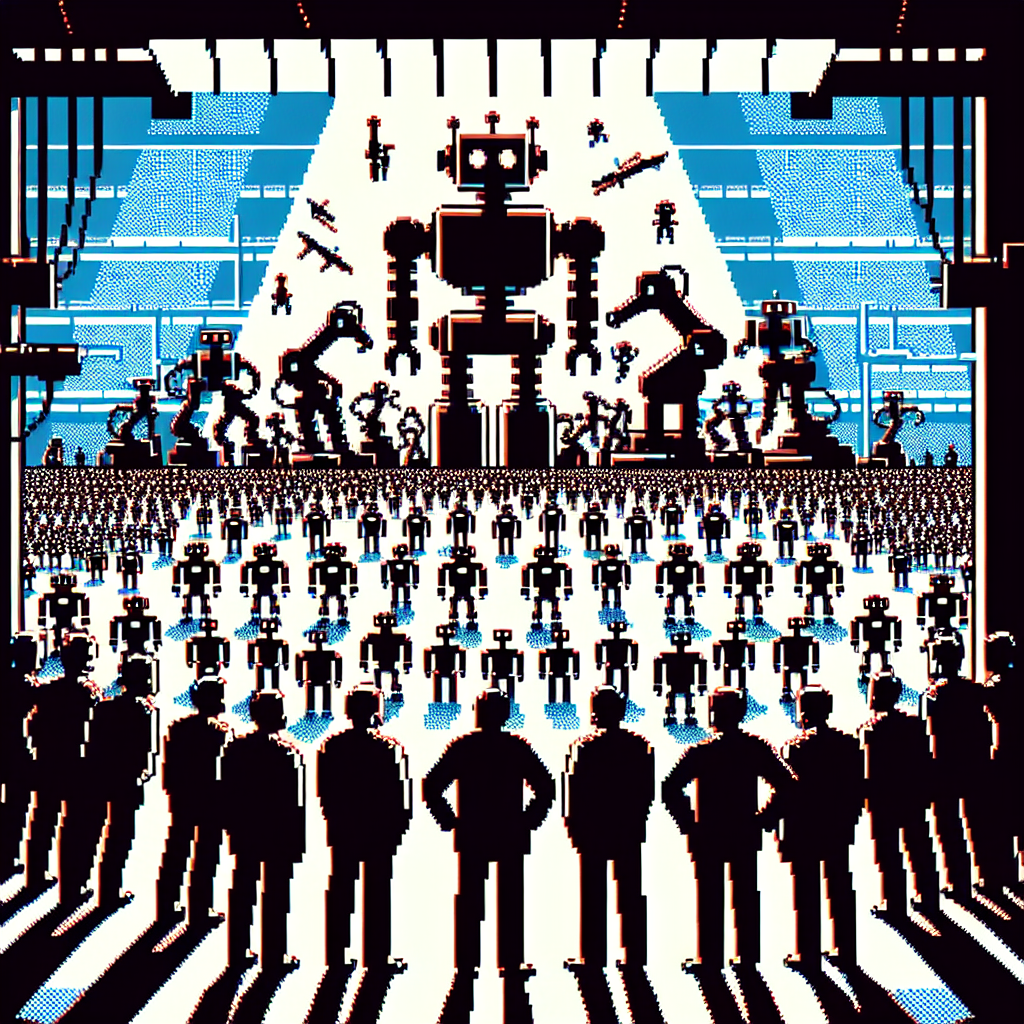
In a world where technology advances faster than you can say "artificial intelligence," China's latest robotic feat is both impressive and a tad unsettling. According to a recent Business article on futurism.com, China's manufacturing prowess has reached new heights, with over 276,000 robots coming online between 2022 and 2023. If you think that's a lot of robots, you're not alone—experts are sounding the alarm about this massive technological deployment.

What's Happening in China?


China has long been a global manufacturing hub, but its recent leap in robotics is setting new benchmarks. The country is now home to what can only be described as an army of robots, designed to outpace the rest of the world in production efficiency. While automation in manufacturing isn't new—think assembly lines and conveyor belts—China's scale of adoption is unprecedented. This raises an intriguing question: Is China leading us into a robotic utopia or a dystopian future?

The Global Robotics Race


China's rapid expansion in robotics isn't happening in a vacuum. As nations around the globe strive for technological innovation, robotics has become a key area of focus. For example, the United States has been exploring the use of AI and robotics in sectors like healthcare and defense. Meanwhile, Europe is making strides in ethical AI and sustainable automation, aiming to balance technological advancement with social responsibility.

The question of ethics is particularly pertinent. As robots take on more roles traditionally performed by humans, concerns about job displacement and privacy are mounting. According to a report by the World Economic Forum, "The Future of Jobs," automation could displace 85 million jobs by 2025, while also creating 97 million new roles. The challenge lies in ensuring that the workforce is prepared for this shift, and that the robots are used ethically and responsibly.

Connections to the Broader World


China's robotic revolution is part of a broader narrative about the changing nature of work and society. In the tech industry, giants like Amazon and Tesla are heavily investing in robotics to enhance operational efficiency. Even small startups are getting in on the action, using robots for everything from food delivery to elder care.

The rapid growth of robotics also ties into global supply chain dynamics. The COVID-19 pandemic exposed vulnerabilities in traditional supply chains, prompting companies to seek more resilient, automated solutions. China's robotics boom can be seen as a strategic move to fortify its position in global manufacturing and supply chain management.

A Final Thought


So, should we be alarmed or impressed by China's enormous army of robots? Perhaps a bit of both. On one hand, the scale and speed of China's robotic deployment is a testament to human ingenuity and the relentless pursuit of progress. On the other hand, it serves as a cautionary tale about the need for ethical considerations and global cooperation in the age of automation.

As we stand on the brink of a new robotic era, it's crucial to remember that technology should serve humanity, not the other way around. Whether China's robotic revolution leads to a brighter future or a more challenging one will depend on how we navigate this brave new world. In the meantime, let's keep our eyes on the horizon—and perhaps, just a little bit on the robots.

Read more about AI in Business

Read more about Latest Sports Trends

Read more about Technology Innovations

Stumbling and Overheating, Most Humanoid Robots Fail to Finish Half Marathon in Beijing – WIRED | Analysis by Brian Moineau

Stumbling and Overheating, Most Humanoid Robots Fail to Finish Half Marathon in Beijing - WIRED | Analysis by Brian Moineau

Title: The Great Robot Race: A Marathon of Dreams, Stumbles, and Overheating Circuits

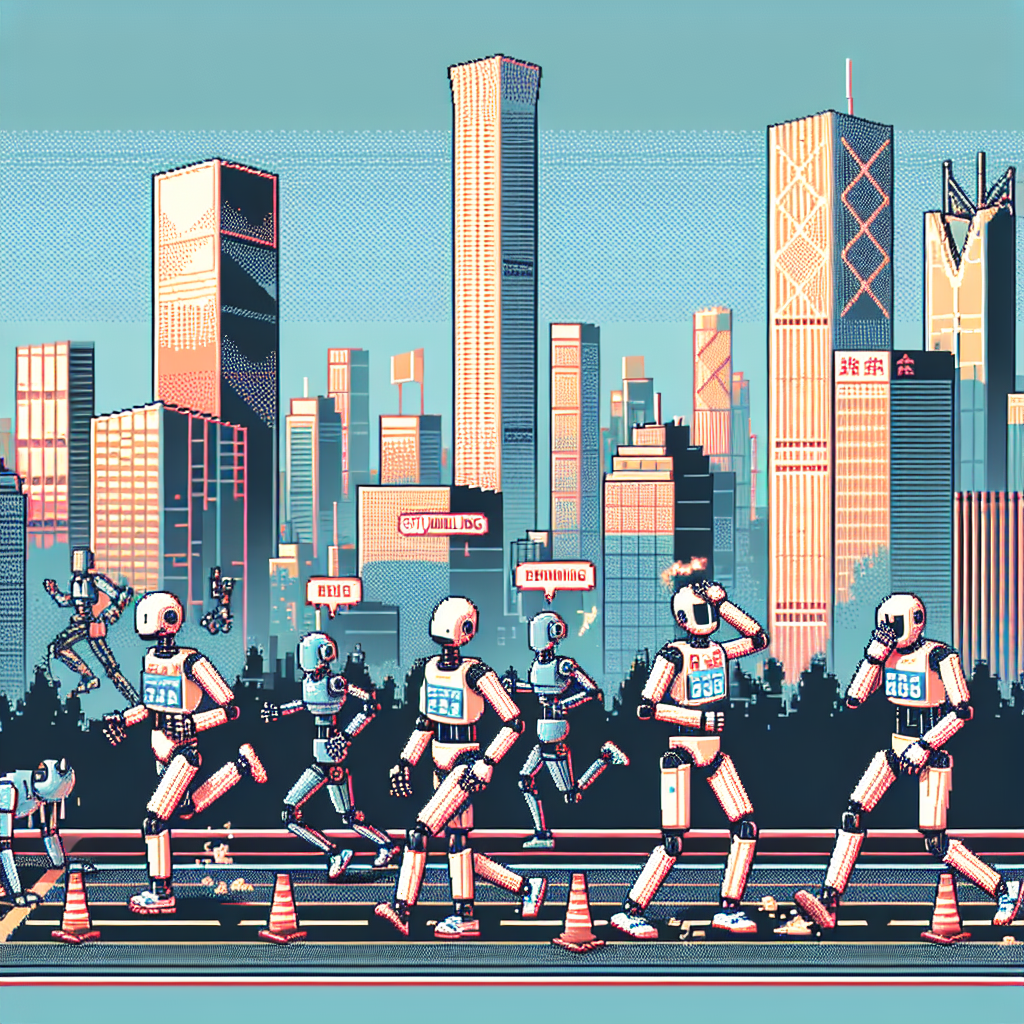
The air was charged with anticipation in Beijing as 21 humanoid robots lined up at the starting line of a half marathon, a spectacle that promised to be a blend of high-tech wizardry and athletic endurance. Yet, as the dust settled, only six of these mechanical marvels managed to cross the finish line. It was a scene reminiscent of an early Olympic event where the spirit of competition was met with unexpected challenges.

This ambitious endeavor was more than just a race; it was a testament to the rapid advancements and the existing limitations in robotics. While the event might not have been a resounding success in terms of completion rates, it certainly highlighted the potential of humanoid robots and the fascinating journey they’re on towards matching, or perhaps even surpassing, human capabilities.

Outrunning Expectations, One Stumble at a Time

In this marathon, the robots encountered hurdles that were less about physical obstacles and more about technical limitations. Issues like overheating and stability plagued many of the participants, serving as a stark reminder of the technological gap that still exists. Yet, this is not a failure—it’s an opportunity to learn and improve.

The race in Beijing is part of a broader narrative where robotics is continually pushing boundaries. In other parts of the world, robots are being deployed for tasks ranging from intricate surgeries to delivering packages. Boston Dynamics’ robots, for instance, have amazed the public with their agility and balance, performing parkour routines that were once the domain of only the most skilled human athletes.

A Reflection of Our Times

The robot marathon echoes broader technological trends, such as the rapid development of AI and machine learning. Just like the robots in Beijing, these technologies are on a journey fraught with trials and incremental successes. Consider the AI models that are being developed to assist with climate change predictions or the algorithms that power autonomous vehicles. Each step forward is accompanied by a stumble or two, but progress is undeniable.

Furthermore, the race is a microcosm of the challenges faced by emerging technologies in integrating seamlessly into daily life. Much like the humanoid robots, innovations like smart home devices, virtual reality, and even electric vehicles have had to overcome initial teething problems before gaining acceptance and reliability.

A Light-Hearted Look at the Future

Despite the challenges, events like the humanoid marathon are crucial. They ignite imagination and inspire innovation. They remind us that the path to technological advancement is not a sprint but a marathon—filled with unexpected turns and hurdles. And isn’t that what makes the race worth running?

As spectators and participants in this age of rapid technological evolution, we must maintain a sense of humor and perspective. After all, even the most adept human athletes have their off days, and so do their robotic counterparts.

Final Thought

In conclusion, the humanoid robot half marathon in Beijing may not have been a flawless display of robotic prowess, but it was an important step forward. It was a celebration of human ingenuity, perseverance, and the relentless pursuit of progress. As technology continues to evolve, perhaps one day humanoid robots will not only complete marathons with ease but also redefine our understanding of what is possible. Until then, we can enjoy the journey, cheer for the underdogs, and marvel at the wonders yet to come.

Read more about AI in Business

Read more about Latest Sports Trends

Read more about Technology Innovations