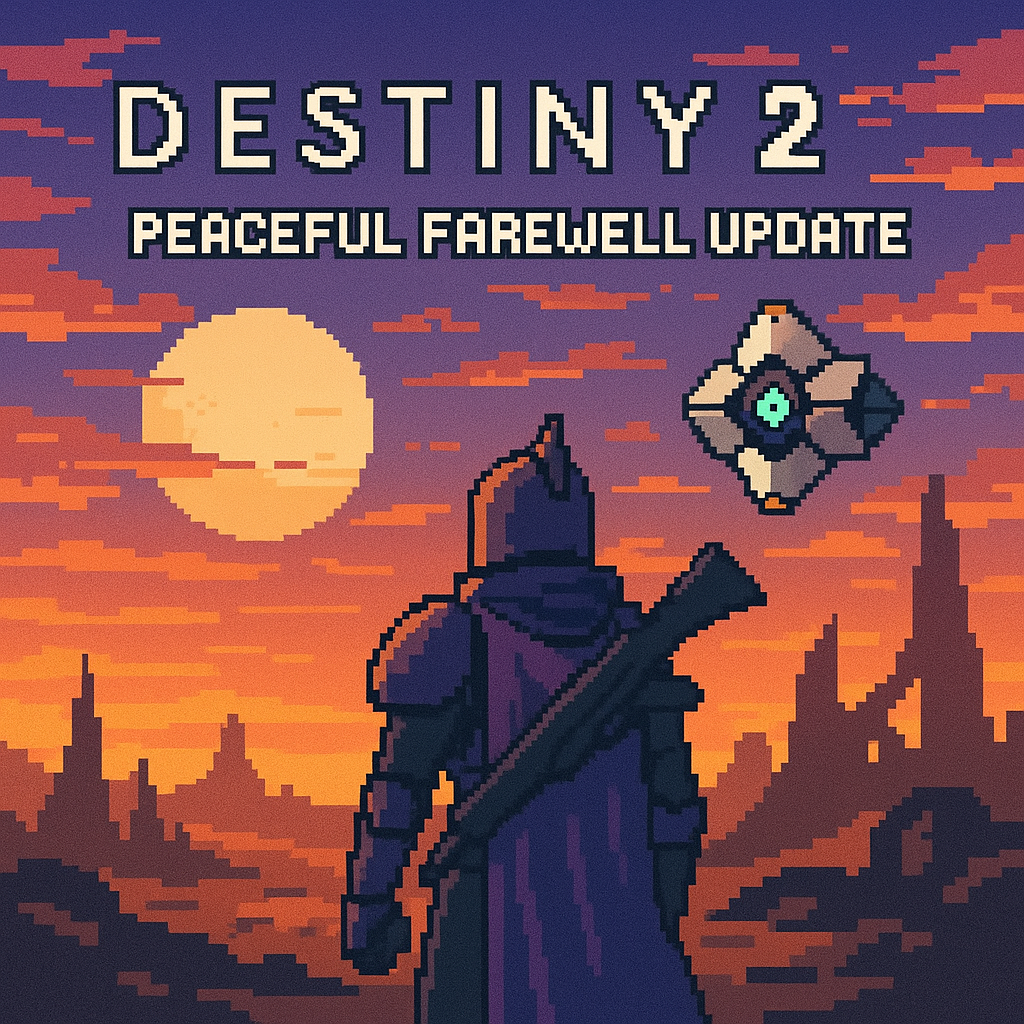
Destiny 2’s Peaceful Farewell Update | Analysis by Brian Moineau

TL;DR

  • Destiny 2’s last trailer tees up Monument of Triumph on June 9, 2026, with Ikora Rey’s “rest now, Guardian” sendoff as Bungie ends active development while keeping servers online for the Last City faithful. [1][2]
  • This is a freeze, not a funeral: Sony booked roughly $765–766 million of Bungie impairments for FY2025 (ended March 31, 2026), so halting Destiny 2’s update treadmill caps burn and preserves goodwill for a long‑tail “collection” product. [4][5]
  • The patch rewires the economy and access model—daily Bright Dust rotations, a single Destiny 2: The Collection SKU, and Sparrow Racing League’s return—signaling a playable museum that’s stable, light‑touch, and still monetizable. [2]

What the source said

Forbes reported on June 5, 2026 that Bungie released what is likely Destiny 2’s final trailer, pairing the June 9 Monument of Triumph update with imagery of the healed Traveler over the Last City and narration from Ikora Rey. The article lists reprised weapons and new armor sets, emphasizes Sparrow Racing League’s return as the “last new mode,” and notes lingering lore threads like “bind the Nine” left unresolved. It captures a tone of elegy and finality while acknowledging players’ hope for a hypothetical Destiny 3 that isn’t greenlit in 2026. [1]

Why it matters

  • Bungie is shifting from “forever updates” to preservation: on May 21, 2026, the studio said Monument of Triumph on June 9, 2026 marks the end of active development for Destiny 2, with servers staying online—echoing Destiny 1’s museum state after Age of Triumph in 2017. That reframes Destiny 2 as an evergreen product, not a growth treadmill. [2][1]
  • The portfolio math is visible in Sony’s filings: across FY2025, Sony recorded about $765–766 million in impairment losses tied to Bungie, including a $204 million hit disclosed in Q2 FY2025. In that light, ending Destiny 2’s live ops looks like risk containment while Bungie incubates new games such as Marathon. [4][5]

Original analysis

Consensus says: “Ending updates for Destiny 2 is a tragedy driven by corporate missteps.” Contrarian read: freezing Destiny 2 now is the least‑bad option that preserves the IP’s cultural equity and stops a cost spiral as engagement slid on PC; in March 2026, Steam concurrency hit all‑time lows per third‑party trackers, a trend that contextualizes Sony’s impairments and Bungie’s pivot. [7][5]

Named‑stakeholder breakdown

  • Bungie: Converts Destiny 2 into a curated museum with a lean maintenance team while staking the studio’s future on “next games.” The blog’s concrete changes—daily Bright Dust rotations, Destiny 2: The Collection, and permanent markdowns—optimize for a low‑friction, long‑tail economy. [2]
  • Sony Interactive Entertainment: Halting live updates caps opex and narrows reputational damage while SIE absorbs ~$765 million of write‑downs, testing whether Marathon or other bets can justify the $3.6 billion Bungie acquisition announced in 2022. [5][4]
  • Competitors (Warframe/Digital Extremes; Ubisoft’s The Division 2): They can court disaffected Guardians, but they also receive a warning about expensive content treadmills; Warframe’s creative director publicly called Destiny 2’s end “unthinkable,” underscoring the shock inside the live‑service cohort. [3]

2x2 framework: How live‑services “end”

  • High trust, Low burn: Curate and freeze (Destiny 2: Monument of Triumph in 2026).
  • High trust, High burn: Reinvent live (FFXIV: A Realm Reborn–style reboot; rare and risky).
  • Low trust, Low burn: Silent maintenance (servers on, minimal comms; reputational rot).
  • Low trust, High burn: Grind on with weak cadence (players churn; money vanishes).

Historical analogue (2017): Destiny 1’s Age of Triumph

  • In March 2017, Bungie closed Destiny 1’s update era with Age of Triumph—a celebration patch with revived raids and a pledge to keep servers on—then shifted momentum to Destiny 2’s September 2017 launch. Monument of Triumph echoes that playbook in 2026, but without a sequel waiting; Bungie frames this as the studio’s “new beginning,” not Destiny’s. Expect the museum to retain a core while attention migrates to whatever Bungie ships next. [1][2]

Back‑of‑envelope calculation (illustrative, not a forecast)

  • Assume a live‑ops Destiny 2 team of 300 developers at a loaded cost of $180,000/year each (salary, benefits, tools) = ~$54,000,000/year.
  • If the freeze reduces to a 60‑person maintenance crew at the same loaded rate = ~$10,800,000/year.
  • Implied opex relief ≈ $43,200,000/year, before savings on contractor art pipelines, external QA, and seasonal marketing; even at ±25%, the order of magnitude explains a freeze after ~$765–766 million in impairments. [5]
  • On revenue, a maintenance‑state Eververse plus a “Collection” bundle can still generate mid‑single‑digit millions annually; the new daily Bright Dust rotations and broader ornament access point to slow‑drip, goodwill‑first monetization. [2]

Why this isn’t just a content funeral

  • The Bungie post reads like product management, not an epitaph: a refreshed Director, Pantheon 2.0, set bonuses across raids/dungeons, Distortions on destinations, and Sparrow Racing League as a permanent pillar, all free for every platform on June 9, 2026. That ships years of asks at once so the final “frozen” state feels generous. [2]
  • PC and console press also confirm an explicit in‑game goodbye rather than a fade‑out—“yes, there’s story; yes, we get to say goodbye”—which gives The Final Shape era emotional closure and tempers petitions for a last‑minute Destiny 3. [6][1]

What others are missing

The endgame is economic design, not lore closure: Bungie reworked the reward economy and access model to minimize weekly FOMO and support tickets—daily Bright Dust rotations, Bright Engram focusing, tiered armor/weapon parity across legacy raids/dungeons, and a single Destiny 2: The Collection SKU with permanent markdowns across Steam, PlayStation, and Xbox. That cocktail compresses balance work into clear tiers, broadens cosmetic access without constant store overhauls, and yields a preservation‑first monetization scheme that can run for years with low staffing and low controversy. [2]

What to watch next

  1. By September 30, 2026, after the “Immortal” title deadline, Destiny 2’s Steam 7‑day average concurrency will be ≥20% below its June 9–16, 2026 7‑day average, and October 2026’s day‑to‑day standard deviation will be lower than any Episode month in 2024–2025 (per SteamCharts or similar trackers). [2]
  2. By December 31, 2026, Sony IR materials will report no new Bungie‑specific impairment charge ≥$50 million beyond the ~$765–766 million recorded for FY2025; any additional write‑down above that threshold would falsify this. [4][5]
  3. By March 31, 2027, Destiny 2: The Collection will either be priced at $29.99 USD MSRP or less on at least two storefronts (Steam, PSN, Xbox), or will include all remaining expansion SKUs at no extra charge inside the bundle. [2]

My take

If you love Destiny, log in on June 9, 2026 and savor Monument of Triumph, because Bungie is closing a 2017–2026 era with uncommon grace. The studio is making the only defensible move after a brutal FY2025: lock an iconic game in a generous, fan‑friendly state and move on from an opex‑heavy treadmill that no longer cleared the bar. Sony’s ~$765 million impairments forced a sober reset; the museum model protects Destiny’s cultural equity while Bungie builds something that actually merits a fresh runway. [2][5]

Sources

  1. Destiny 2’s Last Trailer Ever Is Heartbreaking — Forbes (https://www.forbes.com/sites/paultassi/2026/06/05/destiny-2s-last-trailer-ever-is-heartbreaking/) — Frames the June 9, 2026 trailer, Ikora’s narration, and Sparrow Racing’s return.
  2. Destiny 2: Every End is a New Beginning — Bungie.net (https://www.bungie.net/7/en/News/Article/d2_may_21_2026) — Confirms June 9, 2026 end of active development and details economy changes and The Collection.
  3. Destiny 2 Ending New Content Is “Unthinkable,” Warframe Dev Says — GameSpot (https://www.gamespot.com/articles/destiny-2-ending-new-content-is-unthinkable-warframe-dev-says/) — Provides a peer studio’s on‑record reaction.
  4. FY2025 Q2 Earnings Announcement Q&A — Sony IR (https://www.sony.com/en/SonyInfo/IR/library/presen/er/pdf/25q2_qa.pdf) — Discloses a $204 million impairment tied to Bungie in Q2 FY2025 and related commentary.
  5. Sony records a $766 million impairment loss against Bungie for the 2025 financial year — PC Gamer (https://www.pcgamer.com/gaming-industry/sony-records-a-usd766-million-impairment-loss-against-bungie-for-the-2025-financial-year-a-1-2-punch-of-destiny-2-and-marathon-failing-to-meet-its-expectations/) — Aggregates the ~$765–766 million FY2025 impairment total and Marathon context.
  6. Destiny 2 lead says the final update won’t just fade out — GamesRadar (https://www.gamesradar.com/games/destiny/destiny-2-lead-says-the-final-update-wont-just-fade-out-yes-theres-story-yes-we-get-to-say-goodbye/) — Confirms the “say goodbye” narrative inside Monument of Triumph.
  7. Destiny 2 player counts drop to lowest point ever on Steam — TweakTown (https://www.tweaktown.com/news/110476/destiny-2-player-counts-drop-to-lowest-point-ever-on-steam/index.html) — Documents March 2026 Steam lows to illustrate engagement decline.

Marathon’s Cryo Archive: Weekend Raid | Analysis by Brian Moineau

Marathon's Cryo Archive raid that goes live on March 20, which will only be available on weekends

Marathon's Cryo Archive raid that goes live on March 20, which will only be available on weekends — that sentence alone is enough to make me both excited and mildly suspicious. Bungie has a knack for theatrical reveals, and the studio's latest endgame offering for Marathon leans hard into that tradition: a raid-style PvPvE map packed with puzzles, brutal enemies, and loot that promises to be worth the risk. If you were hoping to dip a toe in this first deck of the UESC Marathon, prepare for structured mayhem and a very specific play window.

Why Cryo Archive feels like a Bungie love letter to raids

Bungie describes Cryo Archive as a "labyrinth of cryopods, medical bays, and storage wings" built around a central hub with six interconnected wings. That layout reads like a checklist for memorable raid design: tight, tense corridors for small-team puzzle solving; larger spaces for spectacular combat; and mechanics that force players to coordinate under pressure. Add in seven vaults containing some of the game's rarest rewards, and you have a recipe that intentionally raises the stakes.

Transitioning from Destiny’s raid DNA to Marathon’s extraction-shooter framework, Bungie blends raid-style puzzles with hardcore extraction mechanics. Players will need Runner Level 25, all six factions unlocked, and a loadout value of at least 5,000 credits to enter — and yes, there’s a one-time Sponsored Kit for lower-stakes first runs. That combination keeps Cryo Archive gated behind both skill and time investment, which should make successful runs feel meaningful.

What to expect when Cryo Archive is live on March 20

  • Map structure: central hub with six wings, encouraging repeated runs to learn paths and vault locations.
  • Loot and rewards: seven vaults hold some of Marathon’s best gear, including items exclusive to the Archive.
  • Difficulty and design: raid-style puzzles, layered mechanics, and heavy UESC (and Runner) opposition — expect a steep learning curve.
  • Entry requirements: Runner Level 25, all six Marathon factions unlocked, and 5,000 credits loadout value (with a sponsored low-stakes kit for newcomers).
  • Availability window: weekends only — Bungie intends Cryo Archive to run like Destiny’s weekend activities, concentrating the player base into specific days.

This weekend-only cadence is deliberate. Bungie has used limited-time windows before to focus players into concentrated, high-stakes events. The benefit is a livelier matchmaking pool and a feeling of occasion; the downside is obvious friction for players with nontraditional schedules.

The weekend-only choice: smart curation or accessibility problem?

On one hand, restricting Cryo Archive to weekends makes sense from a population-management and spectacle perspective. If you want every run to be meaningful and to reduce the risk of half-populated teams, concentrating activity into a predictable window helps. It's the same logic behind Trials-like modes: scarcity creates hype and fosters community coordination.

On the other hand, Bungie’s decision will alienate players who can't play on weekends. Early threads from the Marathon community highlight frustration — shift workers, parents, and folks with weekend commitments worry they’ll be shut out of the first major PvPvE experience. Bungie seems aware of the trade-off; analogues in Destiny offered both exclusive weekend events and alternate opportunities for less-available players. Marathon’s reliance on a Sponsored Kit for a single lower-stakes attempt feels like a modest concession, not a full solution.

How to prepare for your first run

  • Hit the prerequisites early: reach Runner Level 25 and unlock all six factions before March 20.
  • Stock credits: make sure you can meet the 5,000 loadout value, and test gear synergies beforehand.
  • Practice contracts and team roles on other maps to build cohesion.
  • Watch the launch trailer and developer blog to study visual cues and puzzle hints.
  • Form a squad in advance; weekend-only modes reward coordination and planning.

Because Cryo Archive is structured around vaults and puzzles, rehearsing extraction mechanics and communication will pay off. Expect your first few runs to be chaotic — that’s the point — but every failure should teach you something about routing and timing.

The ARG and community hunt that led here

Bungie teased Cryo Archive through an ARG-like set of puzzles and community goals, seeding the map with cryptic messages and mass objectives (including community kill counts) before fully unlocking it. That slow drip built anticipation and gave the community a shared achievement to celebrate when the map finally appeared in the zone menu with a countdown ending March 20.

That approach has double value: it created a narrative around the map and helped ensure the first live weekend would have a ready-made player surge. It’s classic Bungie — design a mystery, encourage community collaboration, then reward the crowd with an exclusive reveal. It works emotionally, even if the timing choices make some players feel left out.

My take

I love the audacity of Cryo Archive. Bungie is leaning into spectacle and difficulty in a way that few modern shooters dare to. The raid-like structure — puzzles, heavy enemies, and exclusive vault loot — promises memorable runs and textbook Bungie drama. But the weekend-only availability is a cliff edge: it can make the experience feel special and concentrated, or it can breed resentment among players who can’t show up on those days. How Bungie balances accessibility with spectacle over the coming months will determine whether Cryo Archive becomes a communal highlight or a source of friction.

Closing thoughts

If you’re planning to dive in, clear your calendar for the first weekend. Study the requirements, line up a team, and savor the learning curve — the Cryo Archive looks built to make victory feel monumental. If you can’t make weekends, keep an eye on Bungie and the community: feedback is loud in those early weeks, and studios do listen when a mode affects a meaningful portion of the player base.

Sources


Related update: We recently published an article that expands on this topic: read the latest post.

Stumbling and Overheating, Most Humanoid Robots Fail to Finish Half Marathon in Beijing – WIRED | Analysis by Brian Moineau

Stumbling and Overheating, Most Humanoid Robots Fail to Finish Half Marathon in Beijing - WIRED | Analysis by Brian Moineau

Title: The Great Robot Race: A Marathon of Dreams, Stumbles, and Overheating Circuits

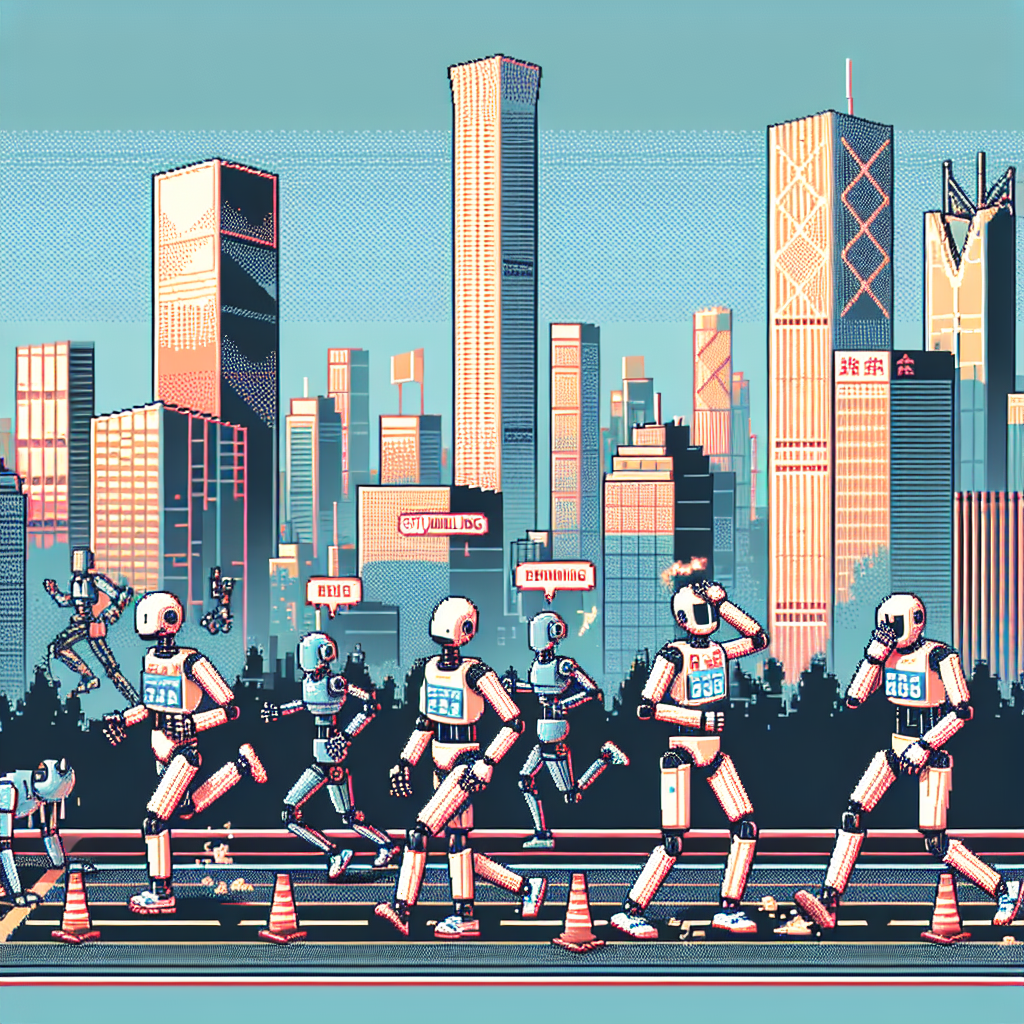
The air was charged with anticipation in Beijing as 21 humanoid robots lined up at the starting line of a half marathon, a spectacle that promised to be a blend of high-tech wizardry and athletic endurance. Yet, as the dust settled, only six of these mechanical marvels managed to cross the finish line. It was a scene reminiscent of an early Olympic event where the spirit of competition was met with unexpected challenges.

This ambitious endeavor was more than just a race; it was a testament to the rapid advancements and the existing limitations in robotics. While the event might not have been a resounding success in terms of completion rates, it certainly highlighted the potential of humanoid robots and the fascinating journey they’re on towards matching, or perhaps even surpassing, human capabilities.

Outrunning Expectations, One Stumble at a Time

In this marathon, the robots encountered hurdles that were less about physical obstacles and more about technical limitations. Issues like overheating and stability plagued many of the participants, serving as a stark reminder of the technological gap that still exists. Yet, this is not a failure—it’s an opportunity to learn and improve.

The race in Beijing is part of a broader narrative where robotics is continually pushing boundaries. In other parts of the world, robots are being deployed for tasks ranging from intricate surgeries to delivering packages. Boston Dynamics’ robots, for instance, have amazed the public with their agility and balance, performing parkour routines that were once the domain of only the most skilled human athletes.

A Reflection of Our Times

The robot marathon echoes broader technological trends, such as the rapid development of AI and machine learning. Just like the robots in Beijing, these technologies are on a journey fraught with trials and incremental successes. Consider the AI models that are being developed to assist with climate change predictions or the algorithms that power autonomous vehicles. Each step forward is accompanied by a stumble or two, but progress is undeniable.

Furthermore, the race is a microcosm of the challenges faced by emerging technologies in integrating seamlessly into daily life. Much like the humanoid robots, innovations like smart home devices, virtual reality, and even electric vehicles have had to overcome initial teething problems before gaining acceptance and reliability.

A Light-Hearted Look at the Future

Despite the challenges, events like the humanoid marathon are crucial. They ignite imagination and inspire innovation. They remind us that the path to technological advancement is not a sprint but a marathon—filled with unexpected turns and hurdles. And isn’t that what makes the race worth running?

As spectators and participants in this age of rapid technological evolution, we must maintain a sense of humor and perspective. After all, even the most adept human athletes have their off days, and so do their robotic counterparts.

Final Thought

In conclusion, the humanoid robot half marathon in Beijing may not have been a flawless display of robotic prowess, but it was an important step forward. It was a celebration of human ingenuity, perseverance, and the relentless pursuit of progress. As technology continues to evolve, perhaps one day humanoid robots will not only complete marathons with ease but also redefine our understanding of what is possible. Until then, we can enjoy the journey, cheer for the underdogs, and marvel at the wonders yet to come.

Read more about AI in Business

Read more about Latest Sports Trends

Read more about Technology Innovations