
When a Historic Trick Isn’t Enough: The Mac Forehand Silver That Set Twitter Ablaze
An electric moment on the big air ramp — a nose-butter triple cork 2160, a trick the world had never officially seen landed in competition — and yet the scoreboard read “silver.” For a few feverish hours on February 17–18, 2026, social feeds filled with accusations, theories, and calls for an investigation. The drama wasn’t just about a medal; it was about what we expect judged sports to reward when history is made in a single airborne heartbeat.
The moment that broke the internet
- Mac Forehand, 24, landed what commentators called a never-before-seen nose-butter triple cork 2160 in the men’s Olympic freeski big air final at Livigno Snow Park. The trick includes three flips and six full rotations — staggering in complexity and execution. (nbcconnecticut.com)
- Forehand’s final-run score (98.25) vaulted him briefly into the lead and ultimately secured him the silver medal with a two-run total of 193.50; Norway’s Tormod Frostad answered with a 98.50 to take gold (199.50). (mediaite.com)
- Social media users latched on to the narrative that a single judge (identified by some as Norwegian) swung the contest, and many demanded an investigation into judging bias. (mediaite.com)
Why fans felt robbed — and why that feeling spread so fast
- Spectacle bias: A trick that “has never been done” naturally reads as definitive proof of superiority to casual viewers. Fans see novelty + clean landing = gold, and feel the scoreboard should follow. (sportscasting.com)
- Lack of scoring literacy: Big air and other freestyle judged events use multiple criteria (difficulty, execution, amplitude, variety, and landing) and combine runs in specific ways (often averaging best scores). To an untrained eye, nuance looks like nitpicking. (nbcboston.com)
- Narrative optics: When the athlete who attempted the historic trick is American and the gold goes to a Norwegian, national loyalties and conspiracy instincts amplify doubt — especially on fast-moving platforms like Twitter. (mediaite.com)
What the athlete actually said
Forehand himself put a plug in the “robbed” narrative. He called out the chorus of “I got robbed” hot takes common to judged sports and reminded people that those inside the sport — the athletes, coaches, and experts — have a clearer sense of what will score. His comments were pragmatic and grounded: judged events have layers of nuance, and outsiders’ instincts don’t always match technical scoring realities. (mediaite.com)
A quick primer on big air scoring (so the controversy makes more sense)
- Most big air finals use the best-two-of-three format or an average of the top two scores, meaning one single jump — however historic — must be paired with another high-scoring run to win overall. (en.wikipedia.org)
- Judges evaluate multiple elements: amplitude (height), technical difficulty (trick complexity), execution (how cleanly it’s landed), and variety across an athlete’s runs. A groundbreaking trick that sacrifices speed, height, or variety elsewhere may not be enough on its own. (nbcboston.com)
- Small margins decide medals. In this case the difference between gold and silver was 1.75 points on a 200-point-style combined scale — tiny in absolute terms but huge in perception. (mediaite.com)
Lessons from the backlash
- Social media speeds outrage, not understanding. Viral clips of single jumps lack the scoring context that explains outcomes.
- Transparency matters. When judged sports clearly communicate how scores are built and why placements change with each run, it reduces the “robbery” narrative.
- Respect athletes’ perspective. Competitors like Forehand are embedded in the sport’s rhythms and often accept judging verdicts even when the public gets emotional — and their calm can help diffuse conspiracy talk. (nbcconnecticut.com)
What this moment means for freeskiing
- Progress is happening on the sport’s technical frontier. Landing a nose-butter triple cork 2160 is a milestone that will be replayed in highlight reels and studied by athletes for years. That advancement matters regardless of medal color. (nbcconnecticut.com)
- Public debates over judging will keep resurfacing as tricks get more complex and margins stay razor-thin. The sport’s growth will depend on preserving both creative risk-taking and scoring credibility. (sportscasting.com)
Key takeaways
- Historic tricks create headlines, but judged competitions reward a combination of runs and multiple scoring criteria. (en.wikipedia.org)
- Outrage on social platforms often reflects emotion more than a full understanding of the rules. (mediaite.com)
- Athletes like Mac Forehand, who acknowledge the sport’s complexity, can help steer the conversation back to performance and progression. (nbcconnecticut.com)
Final thoughts
There’s a raw joy in watching someone push the limits of what’s possible on skis. Mac Forehand’s nose-butter triple cork 2160 was that kind of moment — one that expands the sport’s language. The rowdy reaction online was predictable and, in a way, a tribute to how invested people are in Olympic outcomes. Still, outrage shouldn’t replace context. Judged sports are messy, incremental, and subjective by nature; they’re also where evolution happens. Today the trick becomes legend. Tomorrow someone else will top it — and the cycle continues, scoreboard and all.
Sources
Related update: We recently published an article that expands on this topic: read the latest post.
Related update: We recently published an article that expands on this topic: read the latest post.

When a lightweight world champion meets a YouTuber-turned-boxer: the sparring that turned heads
You expect sparring sessions to be routine—two fighters feeling each other out, testing timing, and poking holes in game plans. But when WBC lightweight champ Shakur Stevenson slipped into the ring with Jake Paul, it wasn't routine. Stevenson walked away surprised, impressed, and maybe a little more respectful than many in boxing had been willing to be. His takeaway? Jake Paul is "better than people would even understand." (sports.yahoo.com)
Why this moment matters
- Jake Paul has been polarizing: entertainer, promoter, and increasingly a serious boxing project. His rise from YouTube boxing spectacles to fights against former pros has invited skepticism and ridicule—but also attention. (en.wikipedia.org)
- Anthony Joshua vs. Jake Paul, a heavyweight match scheduled for December 19, 2025 in Miami, throws that skepticism into the spotlight: one of boxing’s old-guard stars vs. boxing’s new-era disruptor. That clash makes any insight from a respected pro like Stevenson especially relevant. (kaseyacenter.com)
What Stevenson actually said (and why it stings for skeptics)
Stevenson described lining up six or seven rounds with Paul after Paul’s team reached out. His reaction was strikingly candid: he expected a novice, and instead found someone who “is better than people would even understand.” He praised Paul’s commitment—training camps, a coaching setup, instincts to avoid getting hit—and admitted he was impressed. (au.sports.yahoo.com)
Why that matters:
- Coming from an elite boxer who’s competed at world-class levels, calling someone “better than people would even understand” is not casual praise.
- It reframes the narrative: Paul’s progress isn’t just hype or luck. It’s the product of coaching, repetition, and instincts that can be sharpened even if you start late.
The broader context: skill vs. size vs. spectacle
- Technical improvement doesn’t erase the practical realities of a matchup. Stevenson himself noted the huge size/experience gap between Paul and Anthony Joshua and suggested that Joshua should beat Paul on merit. That’s the heart of the debate—can technique plus hard work overcome massive differences in weight, reach, and decades of top-level experience? (au.sports.yahoo.com)
- For boxing fans, this is a two-track conversation:
- The purist track: world titles, traditional career ladders, and respect for the sport’s hierarchy.
- The spectacle track: crossover appeal, paydays, and the reality that unconventional routes can still produce competent fighters—and massive events. The Stevenson sparring story lives at the intersection of both.
Takeaways for fight-night watchers
- Don’t underestimate preparation: Paul’s evolution isn’t a fluke. He’s benefitted from high-level trainers and a full-time approach. Stevenson’s words confirm that Paul’s fundamentals and instincts have improved. (au.sports.yahoo.com)
- Upset odds still lean one way: size, power, and experience matter—especially at heavyweight. Stevenson expects Joshua to win; his praise of Paul doesn’t equate to predicting a shocker. (au.sports.yahoo.com)
- Expect a chess match within a spectacle: even if Joshua is heavily favored, Paul’s confidence and improved skills mean he won’t be a total pushover. That can make for a more interesting, watchable fight than many expect. (espn.com)
My take
Stevenson’s comments are an important corrective to easy mockery. They don’t legitimize every crossover fight, nor do they erase structural differences between fighters who grew up in the pro ranks and fighters who came up later. But they do force a more honest conversation: skill is not binary. Improvement can be real, even if earned unconventionally.
If you care about boxing’s purity, Stevenson’s words should make you less dismissive and more curious: how much can dedicated coaching and high-level sparring shorten the gap? If you care about the sport’s spectacle and business, the encounter underscores why crossover boxing keeps drawing huge audiences—because it produces unexpected, human moments that professional boxing sometimes struggles to deliver.
Final thoughts
This sparring session didn’t crown Paul or dethrone any champions. What it did do is move the conversation forward—from memes and hot takes to a clearer assessment from a respected athlete. That alone is worth paying attention to as the sport wrestles with its future: blending tradition with new, sometimes messy, opportunities.
Sources
Related update: We recently published an article that expands on this topic: read the latest post.
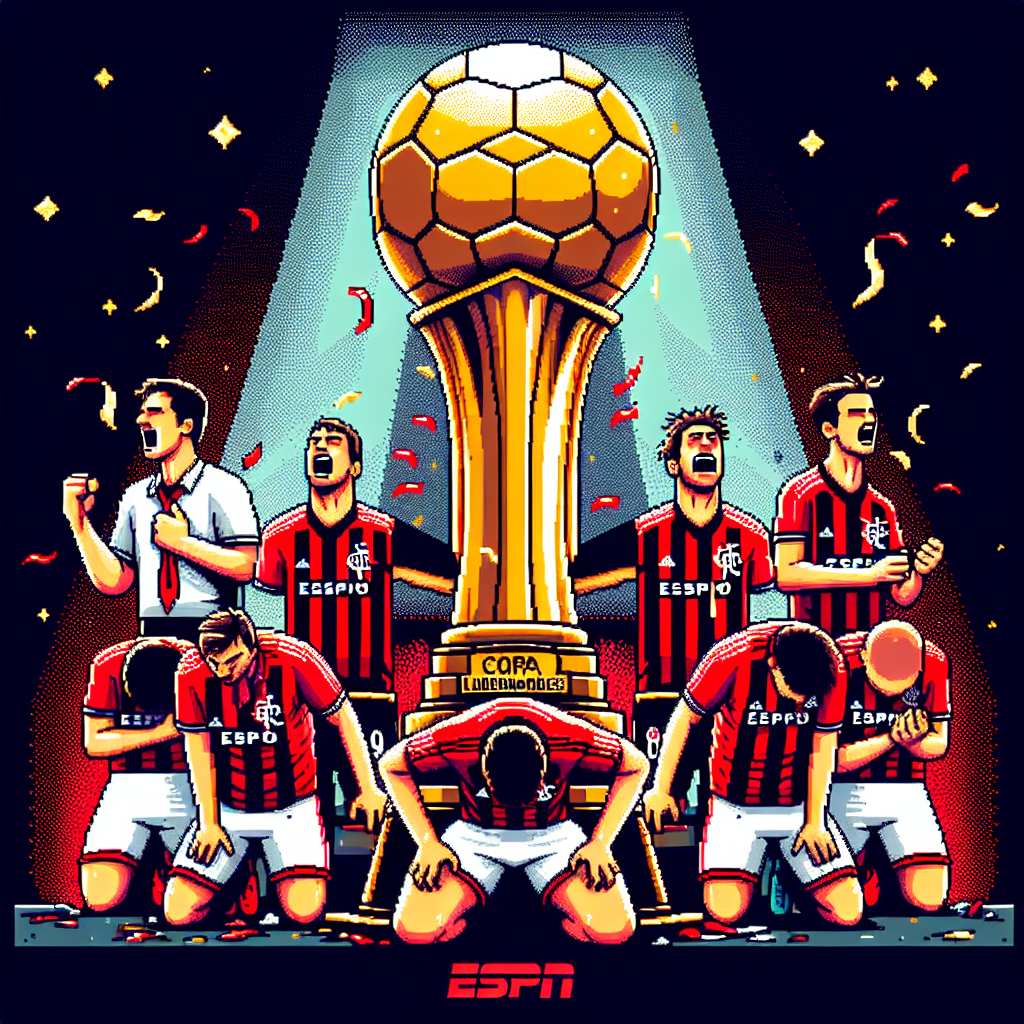
A final of the century — that felt like a slog
There was a promise built into the billing: Flamengo vs Palmeiras, Copa Libertadores final in Lima — football fireworks, raw passion, South America's biggest club prize decided by two of Brazil's best. What we got instead was a war of attrition. Flamengo lifted the trophy after Danilo’s header, but the headlines aren’t just about the winner — they’re about two teams (and a whole league) running on fumes.
Why the game felt tired, not thrilling
- Flamengo and Palmeiras are the elite of Brazilian club football right now — they have carried the Libertadores for years between them. That dominance is impressive, but it comes at a cost: players piling up minutes across club, continental and international windows with barely a pause.
- The final in Lima (a 1–0 win for Flamengo thanks to Danilo’s 67th-minute header) was scrappy: few real chances, plenty of fouls and a sense that both sides were conserving energy rather than risking everything to entertain. The spectacle that some expected — a “final of the century” — never quite arrived. (espn.com)
The scheduling problem in plain English
- Many Flamengo and Palmeiras players were part of national-team squads during recent FIFA windows, then returned to crucial domestic matches almost immediately. Travel, recovery and preparation time evaporated. The result: foggy legs and frayed minds on a neutral pitch in Lima. (espn.com)
- Club success breeds more fixtures: domestic title chases, Libertadores knockout rounds, Super Cups, and the intercontinental calendar (which can send winners to the FIFA Club World Cup or intercontinental friendlies). For the two giants, the season can be a treadmill with barely any breaks. (espn.com)
Moments from the match that screamed fatigue
- The decisive moment itself was a set-piece — a header from a defender — not a flowing, counter-attacking move. Set pieces can win finals, but when open-play chances are scarce, it often signals a midfield that's been ground down. (reuters.com)
- The match saw a high foul count and flashpoints (including a near red-card incident) — classic signs of players stopping the game because they’re not at their sharpest. When reading body language, that added to the feeling this was about survival, not expression. (aljazeera.com)
Bigger picture: what this says about South American football
- Brazil’s clubs have been supremely successful in the Libertadores recently, but dominance masked a structural strain: a calendar that asks too much of the same core of players. The sport’s commercial and sporting incentives (titles, prize money, global exposure) reward success — which then produces the very fixture congestion that saps performance.
- Fans want drama and artistry. Coaches want competitive squads and rotation. Medical teams plead for rest. Right now, the incentives line up to produce more matches and fewer meaningful, high-quality 90 minutes. That tension is the heart of the problem. (espn.com)
What could help (realistically)
- Smarter spacing of international windows and a more player-friendly calendar. That’s easier said than done — FIFA, national associations and confederations need to coordinate, and commercial interests push against calendar reform.
- Deeper squad planning and rotation strategies at clubs, though financial realities mean not every team can stock a high-quality bench.
- Tournament planners could consider timing and travel load when choosing neutral venues and match dates — the spectacle suffers if players are spent before kickoff.
A few quick takeaways
- Flamengo earned the trophy and deserved credit for seeing out the match; Danilo’s header was the decisive moment. (reuters.com)
- The final felt attritional because top Brazilian players are being overused across club, continental and international commitments. (espn.com)
- The pattern of fixture congestion threatens the quality of big matches unless stakeholders — clubs, leagues, confederations and FIFA — take steps to rebalance the calendar. (espn.com)
My take
There’s something poetic about a defender rising to head a trophy-winning goal in a grinding final. But poetry shouldn’t be the default because the rest of the show is spent catching breath. South American club football is richer for having giants like Flamengo and Palmeiras — they bring rivalry, talent and storylines. Still, if we want the Libertadores to be remembered for moments of genius rather than tired resilience, the game needs a little more breathing room. Give the players time, and the spectacle will follow.
Sources
Related update: We recently published an article that expands on this topic: read the latest post.
Related update: We recently published an article that expands on this topic: read the latest post.