Everyday Clothes That Beat Surveillance | Analysis by Brian Moineau

The most effective anti‑surveillance gear might already be in your closet

Intro hook

You’ve seen the flashy anti‑surveillance hoodies and the pixelated face scarves in viral posts — the kind of gear that promises to “break” facial recognition. But the quiet truth, as Samantha Cole reports in 404 Media, is less glamorous and more practical: some of the best ways to evade automated identification are ordinary items people already own, and the cat-and-mouse game between designers and algorithms is changing faster than fashion trends.

Why this matters now

  • Surveillance systems powered by face recognition and other biometrics are no longer lab curiosities. Police departments, immigration authorities, and private companies routinely deploy models trained on billions of images.
  • The tactics that once worked (painted faces, printed patterns) often have a short shelf life. Algorithms evolve, datasets expand, and a design that confused an older model can fail against a current one.
  • Meanwhile, events over the last decade — from the post‑9/11 surveillance build‑out to the explosion of commercial biometric datasets — have created an environment where everyday movement can be tracked and matched by algorithmic tools.

What 404 Media reported

  • The article traces the evolution of anti‑surveillance design from early projects like “CV Dazzle” (high‑contrast face paint and hairstyles meant to confuse early algorithms) to modern interventions.
  • Adam Harvey and others have experimented with a wide range of approaches: adversarial clothing patterns, heat‑obscuring textiles for drones, Faraday pockets for phones, and LED arrays for camera glare.
  • Many commercial anti‑surveillance garments — often expensive and aesthetic — rely on 2D printed patterns that may only briefly succeed against specific systems in controlled conditions.
  • Simple, mainstream items (for example, cloth face masks or sunglasses) can meaningfully reduce recognition accuracy, especially when algorithms aren’t explicitly trained for masked faces or occlusions.

What the research and experts add

  • Masks and other occlusions do impact face recognition accuracy. Government and scientific studies during and after the COVID era showed that masks reduced performance for many algorithms, with variability across models. (NIST and related analyses documented substantial drops in accuracy for masked faces across multiple systems.) (epic.org)
  • Researchers have developed “adversarial masks” — patterned masks specifically optimized to break modern models — and some physical tests show these can dramatically lower match rates in narrow settings. But transferability is a problem: patterns optimized on one model may not work on another, and real‑world lighting, camera angle, and motion complicate things. (arxiv.org)
  • Beyond faces, systems increasingly rely on indirect biometric signals (gait, clothing, body shape, contextual tracking across cameras). Hiding a face doesn’t eliminate those other fingerprints; blending in is often more effective than standing out.

Practical, realistic anti‑surveillance strategies

  • Use ordinary items strategically.
    • Cloth masks and sunglasses: They reduce facial detail and can lower identification accuracy for many models, especially if those models were trained on unmasked faces. (epic.org)
    • Hats, scarves, hoods: Useful for obscuring angles or features; effectiveness varies with camera placement and algorithm robustness.
  • Favor blending over spectacle.
    • High‑contrast, attention‑grabbing patterns can create unique, trackable signatures. In many situations you want to be inconspicuous, not conspicuous.
  • Remember context matters.
    • Surveillance systems often fuse multiple cues (face, gait, time, location). One trick rarely makes you invisible.
  • Protect the data you carry.
    • Faraday pouches for devices, selective disabling of location services, and careful app permissions help reduce digital traces that link you to camera sightings.
  • Consider threat model and legal environment.
    • Different tactics suit different risks. Techniques that help everyday privacy are not the same as methods someone under active legal or state surveillance might need. Laws and local rules (e.g., rules about masking, obstruction) also vary.

The investor’s and designer’s dilemma

  • Anti‑surveillance design sits at an odd intersection of ethics, fashion, and engineering.
    • Designers want usable, attractive products.
    • Security researchers want robust adversarial techniques that generalize across models.
    • Consumers want affordable, practical solutions that won’t mark them as an outlier or get them hassled.
  • The market incentives are weak: a product that works yesterday can be obsolete tomorrow. That makes sustainable funding and broad adoption difficult.

Key points to remember

  • Ordinary clothing items — masks, sunglasses, hats — can still provide meaningful privacy benefits against many facial recognition models. (404media.co)
  • High‑profile adversarial wearables are often brittle: they may fail when algorithms or environmental conditions change. (404media.co)
  • Systems are moving beyond faces: gait, clothing, and cross‑camera linking reduce the protective power of any single tactic.
  • Blending in and reducing digital traces often provide better practical privacy than trying to “beat” recognition with gimmicks.

My take

There’s an appealing romance to specialized anti‑surveillance fashion: it promises the drama of outsmarting surveillance with a bold garment. But the more useful, defensible privacy moves are quieter and more mundane. A cloth mask, a hat pulled low, smart device hygiene, and awareness of how you move through spaces are all things people can use today. Real protection comes from a mix of personal practices and policy: better product choices buy you minutes or hours of anonymity, while public pressure, oversight, and bans on reckless biometric use create lasting impact.

Sources


Related update: We recently published an article that expands on this topic: read the latest post.


Related update: We recently published an article that expands on this topic: read the latest post.

Apple Engineers Teach Factories AI Quality | Analysis by Brian Moineau

Why Apple engineers are checking bacon labels — and why that matters for U.S. manufacturing

The image is deliciously odd: senior Apple engineers hunkered down beside a label press in Vermont, teaching a 54-person label maker how to use cameras and open-source AI to spot slightly off-color bacon packaging before it ships. It’s the kind of moment that makes headlines because it’s unexpected — but the story behind it reveals something more consequential about tech, supply chains, and how large companies can influence manufacturing on the ground.

What happened (the quick version)

  • Apple launched the Apple Manufacturing Academy in Detroit this year in partnership with Michigan State University as part of a broader U.S. manufacturing investment program.
  • Through the Academy and follow-up consultations, Apple engineers have been working with smaller manufacturers — not just Apple suppliers — on practical problems: sensor deployments, predictive maintenance, and computer vision for quality control.
  • A notable example: ImageTek, a small label printer in Vermont, received help creating a computer-vision tool that flagged bacon labels with a wrong tint before they reached a customer. That catch likely saved contracts and revenue. (Reported by WIRED on December 17, 2025.)

A few things that make this worth watching

  • It’s hands-on, real work. This isn’t a glossy PR class where executives talk about strategy; Apple staff are helping with shop-floor problems: cameras, algorithms, Little’s Law to find bottlenecks, and low-cost sensor networks. For many small manufacturers, that level of applied engineering is prohibitively expensive or simply unavailable.
  • The help is practical and tactical, not just theoretical. Small manufacturers described the Apple teams as candid, experienced, and willing to hand off code and guidance rather than locking up IP. That lowers friction for adoption.
  • The timing is strategic. Apple’s program ties into a much larger U.S. investment push (Apple increased its U.S. commitment and opened a server factory in Houston, among other moves). Helping suppliers and adjacent manufacturers strengthens the domestic ecosystem that supports high-tech production.
  • It’s a PR win — and potentially a policy lever. Demonstrating concrete investments in U.S. manufacturing can influence political conversations about tariffs, incentives, and reshoring.

Lessons for small manufacturers

  • Define a clear problem statement. Apple’s Academy reportedly prioritizes companies that can articulate a concrete challenge. That turns vague interest into feasible pilots.
  • Start with affordable pilots. ImageTek’s camera-and-vision setup sits beside the press for now — a low-risk way to prove value before full integration. Polygon expects to spend around $50k for fixes that might otherwise cost ten times as much through traditional consultancies.
  • Data-based decisions beat “muddle through” approaches. Sensors and simple analytics can quickly surface root causes — humidity, worn rollers, timing issues — that manual inspection can miss.

What this means for bigger debates

  • Reshoring isn’t just about moving final assembly. Building resilient supply chains requires investment across tiers — tooling, sensors, software skills, testing culture, and quality processes. Apple’s effort suggests that the “soft infrastructure” of expertise and training matters as much as factory square footage.
  • Large firms can raise the tide, but they won’t (and likely won’t want to) carry every ship. Apple’s engineers can seed capability and show paths; scaling will require equipment vendors, local consultants, community colleges, and public programs.
  • There are potential tensions. Even if Apple hands off code and claims no ownership now, tighter relationships between platform companies and small manufacturers raise questions about dependency, standards, and who benefits from later upgrades or downstream sales.

Examples from the Academy that illuminate the approach

  • ImageTek (Vermont): AI-enabled color-checking on labels prevented a costly quality slip for a food customer.
  • Amtech Electrocircuits (Detroit area): Sensors and analytics to reduce downtime on electronics lines used in agriculture and medicine.
  • Polygon (Indiana): Industrial engineering advice using Little’s Law to map bottlenecks and inexpensive sensor-driven diagnostics to double throughput ambitions.

These are small, specific wins — but they’re the kinds of wins that add up to stronger local competitiveness.

Practical takeaways for manufacturers and policymakers

  • Manufacturers: invest in problem definition, partner with programs that provide both training and hands-on follow-through, and pilot low-cost solutions first.
  • Industry groups and community colleges: scale hands-on curricula that teach applied machine vision, sensors, and basic industrial engineering so more firms don’t have to rely on a single large corporate partner for expertise.
  • Policymakers: incentive programs that combine capital grants with training and technical assistance amplify impact. The “last mile” of deployment is often where public funding can make a difference.

My take

It would be easy to write this off as a cute PR vignette — Apple folks inspecting bacon labels — but that misses the point. The striking detail is not the bacon; it’s the mode of intervention: experienced engineers applying practical, low-cost fixes and coaching teams how to adopt them. That’s the kind of catalytic help small manufacturers often lack. If Apple’s effort scales — through the Academy’s virtual programs, MSU partnership, and other ecosystem players — it could help lower the barriers for many businesses to adopt modern manufacturing methods. That’s not just good for those companies’ bottom lines; it’s how a sustainable, competitive domestic manufacturing base gets rebuilt: one practical fix at a time.

Final thoughts

Technology giants stepping into the training and transformation space changes the game from “let’s talk about reshoring” to “let’s make factories measurably better.” The story of bacon labels is an entertaining hook, but the enduring value will be measured in throughput, contract wins, and a generation of smaller manufacturers who can compete because they were taught how to instrument and measure their own operations. If more big firms follow suit — and if public institutions and local trainers scale these methods — U.S. manufacturing may indeed get a meaningful productivity boost.

Sources

Rising Unemployment Roils Trump’s Economic | Analysis by Brian Moineau

When the jobless rate climbs, a political narrative starts to wobble

There’s a particular hum in Washington when a jobs report walks in slightly off-script: markets twitch, talking heads adjust their tone, and political teams scramble for new soundbites. The headline from mid-December was blunt — the unemployment rate rose, even as the economy added a modest number of jobs — and that small shift has outsized implications for an administration that has made “economic comeback” central to its pitch to voters.

Below I unpack why a rising jobless rate matters politically, what’s driving the softening labor market, and why this is more than just a numbers game.

What happened — the quick version

  • In the latest Labor Department snapshots, the unemployment rate ticked up to the mid-4 percent range (reports around the December jobs release put it at roughly 4.6% for November), while payroll gains were modest. (wsj.com)
  • Revisions and one-off cuts — notably large reductions in federal payrolls earlier in the year — have removed a cushion that previously helped headline job growth. (washingtonpost.com)
  • Other indicators — weaker hiring in manufacturing and finance, slower wage growth, and falling private job openings — point to a labor market that’s cooling rather than collapsing. (businessinsider.com)

Why this stings Trump’s economic messaging

  • The core of the Trump message has been: my policies deliver jobs and rising incomes. Voters notice the jobless rate more than they notice GDP nuance. A rising unemployment rate is a visceral, easy-to-grasp signal that “the economy isn’t working for people.” (politico.com)
  • Politics is about attribution. When unemployment climbs, the incumbent is the default target; opponents and the press will link labor weakness directly to administration choices — tariffs, federal workforce cuts, and policy uncertainty — even if causes are mixed. (americanprogress.org)
  • Messaging mismatch: The White House can point to private-sector gains and labor-force entrants as explanations, but those arguments are weaker if people feel longer job searches, slower pay growth, or layoffs in local industries. Numbers that look small in D.C. spreadsheets translate to real pain on Main Street. (whitehouse.gov)

What’s behind the shift in the labor market

  • Policy headwinds: Tariff uncertainty and trade policy shifts have raised costs for some manufacturers and importers, prompting hiring freezes or cuts in certain sectors. (businessinsider.com)
  • Federal payroll reductions: Large federal workforce cuts earlier in the year removed a steady source of employment and ripple effects into the private firms that depend on government contracts. (washingtonpost.com)
  • Monetary legacy and demand cooling: The Federal Reserve’s earlier cycle of high interest rates and their lagged effects are still tamping down investment and hiring in interest-sensitive sectors. That, plus slower wage growth, reduces hiring incentives. (ft.com)
  • Structural changes: Automation, AI adoption, and shifting sectoral demand mean some occupations face lasting disruption, complicating the short-term picture. (businessinsider.com)

Voter dynamics and the election arithmetic

  • Timing matters. If the labor market continues to weaken heading into an election year, skepticism about economic stewardship becomes a tangible drag. Voters who once prioritized pocketbook improvements are quicker to notice higher joblessness and slower hiring. (politico.com)
  • The administration can still shape the narrative (point to private-sector job creation, rising participation, or short-term payroll gains), but repetition works only so long if local experiences tell a different story. Campaigns that rely on economic credibility are particularly vulnerable to a steady, measurable rise in unemployment. (whitehouse.gov)

What to watch next

  • Monthly Labor Department jobs reports and revisions: small headline changes can have big political effects once they stack into a trend. (wsj.com)
  • Federal employment and contract dynamics: more cuts or restorations will directly affect regions and industries that provide campaign reach. (washingtonpost.com)
  • Wage trends and jobless-duration metrics: growing spell lengths or falling real wages are the signals that sway everyday voters more than the unemployment number alone. (wsj.com)
  • Fed policy shifts: if the Fed moves aggressively on rates, it will change the trajectory of hiring and investment, with clear political consequences. (ft.com)

Quick takeaways

  • A rising unemployment rate punches above its weight politically — it’s shorthand for “economy not delivering.” (wsj.com)
  • Policy choices (tariffs, federal cuts) and lingering monetary effects are combining with structural labor shifts to cool hiring. (americanprogress.org)
  • The administration can frame the data in ways that defend its record, but sustained labor-market deterioration would make persuasive messaging much harder. (politico.com)

My take

Numbers move markets, but narratives move voters. A single uptick in unemployment doesn’t end a presidency. But in politics, perception is cumulative: a steady string of softer labor reports can erode the economic credibility that incumbents depend on. For an administration that’s built a central narrative around jobs and prosperity, the safe play is twofold — stabilize the labor market with clear, targeted policy and lay out an honest, localized story that connects policy moves to tangible results for working people. Spin only stretches so far when someone in your town has been looking for work longer than they used to.

Sources

(Note: URLs above are non-paywalled where available; some outlets may require free registration.)


Related update: We recently published an article that expands on this topic: read the latest post.

Related update: We recently published an article that expands on this topic: read the latest post.
The Era of Forever Layoffs in 2025 | Analysis by Brian Moineau

A slow bleed: 1.1 million layoffs and the rise of “forever layoffs”

The economy is sending mixed signals: corporate profits and soaring stock indexes on one hand, and a steady trickle of pink slips on the other. In 2025, U.S. employers announced roughly 1.17 million job cuts through November — the most since the pandemic year and a level you have to go back to 2009 to match. That “drip, drip” pattern isn't just a statistical quirk; it’s remaking how people experience work and how companies manage labor. (fortune.com)

What’s new: forever layoffs explained

  • “Forever layoffs” describe frequent, small-scale reductions — dozens instead of thousands — that recur throughout the year rather than one headline-grabbing mass layoff. Glassdoor says these rolling cuts now account for a growing share of corporate reductions and have shifted the emotional tenor at work from shock to chronic unease. (fortune.com)
  • Challenger, Gray & Christmas counted about 1,170,821 announced job cuts through November 2025, a 54% increase from the same period in 2024. November’s announced cuts were 71,321, down sharply from October but still historically elevated for the month. (reuters.com)

Why this matters now

  • Psychological effect: small, repeated cuts keep employees anxious in a way a one-time event doesn’t. Glassdoor’s analysis suggests mentions of “layoffs” and “job insecurity” in company reviews are higher now than in March 2020. That sustained anxiety corrodes morale and productivity. (fortune.com)
  • Structural shift: companies are leaning into automation and AI and reorganizing around tools that require fewer people for the same work. Challenger and Glassdoor data show AI and restructuring are explicit drivers of many cuts. (reuters.com)
  • Labor market disconnect: hiring plans through November were the weakest since 2010, with employers announcing far fewer planned hires than layoffs — a recipe for “jobless growth” and weak labor mobility. (fortune.com)

The context: not just tech, not just one sector

  • Technology remains among the hardest-hit private industries, but telecom, retail, food processing, nonprofits, media, and small businesses have all trimmed staff in 2025. The pattern is broad-based, meaning the risk of churn exists in many workplaces. (fortune.com)
  • Federal datasets such as JOLTS suggest the raw count of people separated from jobs may be even higher than announced cuts, underscoring the gap between announced plans and actual labor-market churn. Glassdoor cited JOLTS in noting about 1.7 million separations over the same window, a reminder that announced cuts are a partial view. (fortune.com)

Who wins, who loses

  • Winners: Large firms with balance sheets, scale, and access to capital can restructure without immediate pain and can adopt automation to protect margins. Investors can celebrate efficiency; boards may pat themselves on the back. (fortune.com)
  • Losers: Workers — especially early-career and white-collar employees who once counted on steady upward mobility — face career uncertainty, fewer entry-level roles, and tougher bargaining power. Small businesses, with thin margins, are also vulnerable and have been shedding jobs in aggregate. (fortune.com)

Economic and social implications

  • A K-shaped recovery becomes more entrenched: high earners continue spending while lower-income households pull back, widening inequality and concentrating demand among a narrower consumer group. (fortune.com)
  • Consumer confidence and spending patterns may fragment: if many workers live with chronic job insecurity, durable spending and housing decisions will be delayed — a drag on growth that’s hard to capture in headline GDP figures. (fortune.com)
  • Political pressure grows: sustained layoffs and weak hiring invite policy debates about unemployment insurance, retraining, AI regulation, and labor protections — issues already emerging in 2025 discussions. (reuters.com)

Practical signals to watch in the coming months

  • Hiring plans vs. announced cuts: if the gap narrows because hiring picks up, the worst of the labor-market anxiety may ease. If cuts continue to outpace hires, the “forever” trend is likely to persist. (reuters.com)
  • Sectoral shifts: watch how many announced layoffs explicitly cite AI or automation. That will tell us whether the job losses are cyclical or structural. (reuters.com)
  • Small business payrolls: ADP’s November data showed small businesses bore most November private-sector losses; continued weakness here suggests consumer-facing parts of the economy could weaken further. (fortune.com)

My take

We’re living through a recalibration of corporate labor strategy. The 1.17 million announced cuts through November 2025 are a headline number — but the real story is how layoffs are being delivered: quietly, repeatedly, and often in ways that avoid the reputational cost of mass firings. That makes the phenomenon harder to measure with a single statistic and more corrosive to worker confidence. For policymakers and leaders who care about sustainable growth, the policy challenge is twofold: soften the human cost (through better transitions, training, and safety nets) and shape incentives so investments in people aren’t replaced wholesale by automation that concentrates gains at the top.

Final thoughts

If this pattern holds, we won’t remember 2025 simply as a year of layoffs; we’ll remember it as the year the employment contract changed. The task ahead is to decide whether that change will become a grinding permanent norm or a painful but short-lived rebalancing. Either way, the millions affected this year deserve policies, corporate practices, and community responses that treat transitions as human — not just accounting — problems. (fortune.com)

Sources

Hacking Poker: Exposing Shuffling Machine | Analysis by Brian Moineau

Unraveling the Secrets: How a Journalist Exposed Vulnerabilities in Poker Shuffling Machines

Imagine sitting at a high-stakes poker table, the tension palpable as players nervously eye their chips and each other. Now picture a shuffling machine quietly whirring away in the background, supposedly ensuring fairness and randomness in the game. But what if that very machine could be hacked? Recently, WIRED Senior Writer Andy Greenberg explored this intriguing scenario in an eye-opening article for PokerNews.

The Backstory: Shuffling Machines in Poker

Poker has long been a game of skill and luck, but the introduction of automatic shuffling machines was meant to enhance the game by eliminating human error and speeding up play. These machines promise to deliver a perfectly shuffled deck every time, instilling a sense of trust in players. However, Greenberg’s investigative piece shines a light on the dark side of this technology, revealing vulnerabilities that could be exploited by those looking to cheat.

The story begins with Greenberg’s aim to demonstrate how easily a shuffling machine can be manipulated. By digging deep into the technology behind these devices, he uncovered methods that could potentially allow a savvy individual to gain an unfair advantage at the poker table. This revelation not only challenges the integrity of poker games but also raises questions about the security of other automated systems in various industries.

Key Takeaways

Vulnerabilities Exist: Shuffling machines, designed to ensure fair play, contain weaknesses that can be exploited, posing a risk to the integrity of poker games.

Hacking Demonstration: Greenberg’s hands-on approach illustrates how a journalist can replicate cheating techniques, shedding light on the ease of manipulation.

Implications for Trust: The findings stir concern about the reliance on technology in gambling environments and the potential for abuse, highlighting a need for improved security measures.

Broader Technology Concerns: This investigation serves as a reminder that vulnerabilities in automated systems extend beyond poker, affecting various sectors that utilize similar technologies.

Call for Awareness: As players and stakeholders in the gambling industry, there’s a pressing need to be aware of these vulnerabilities to maintain the integrity of the game.

Conclusion: A Call for Action

Greenberg’s exploration into the vulnerabilities of shuffling machines is not just a fascinating story about poker; it’s a wake-up call for industries reliant on automated technologies. As we continue to integrate advanced systems into our daily lives, understanding their weaknesses becomes critical. For poker enthusiasts and industry professionals alike, it’s essential to remain vigilant and advocate for safer, more secure gaming environments. Perhaps this investigation will prompt a closer look at the systems we often take for granted, ensuring that the thrill of the game remains untarnished.

Sources

– Greenberg, Andy. “Journalist Hacks Card Shuffling Machine to Prove How to Cheat in Poker.” PokerNews. [Link to article] – “The Vulnerabilities of Automated Systems: A Broader Perspective.” WIRED. [Link to article] – “Understanding the Technology Behind Poker Shuffling Machines.” TechRadar. [Link to article]

By shining a light on these vulnerabilities, we can work together to enhance the security of our favorite games and technologies. Whether you’re a poker player or simply a technology enthusiast, staying informed is the best hand you can hold.


Related update: We recently published an article that expands on this topic: read the latest post.
First-of-its-kind Stanford study: AI is starting to have a ‘significant and disproportionate impact’ – Fortune | Analysis by Brian Moineau

First-of-its-kind Stanford study: AI is starting to have a 'significant and disproportionate impact' - Fortune | Analysis by Brian Moineau

AI and the Young Workforce: A New Age of Opportunity or Overhaul?

In a world where technology is evolving faster than you can say "artificial intelligence," a groundbreaking Stanford study has made waves by revealing that AI is starting to have a "significant and disproportionate impact" on young workers aged 22 to 25. The article from Fortune highlights that something shifted in late 2022, particularly affecting those in jobs most exposed to AI. But is this development a harbinger of doom for young professionals, or does it signal a new era filled with opportunity?

The Age of AI: A Double-Edged Sword


Picture this: you're fresh out of college, brimming with ideas and ready to make your mark on the world. You've just landed your first job, perhaps in a field like data analysis, marketing, or customer service—industries ripe for AI intervention. Suddenly, you find yourself competing with, or perhaps even collaborating with, algorithms that can process data faster, predict trends more accurately, and, in some cases, even outshine human creativity.

This isn't the plot of a dystopian novel; it's the reality that many young workers are beginning to face. The Stanford study underscores a significant shift that started in late 2022. A combination of AI advancements and increasing adoption of these technologies by businesses has created a landscape where young professionals must quickly adapt or risk obsolescence.

Adapt or Thrive?


The notion that AI could replace jobs isn't new. However, the speed at which these changes are occurring is unprecedented. According to a 2023 report by PwC, up to 30% of jobs could be at risk of automation by the mid-2030s, with younger workers being particularly vulnerable due to their positions in entry-level roles that are more susceptible to automation.

But let's not get ahead of ourselves. History shows us that technological revolutions often create as many opportunities as they destroy. The Industrial Revolution, for instance, led to urbanization and the rise of new industries. Similarly, AI has the potential to open doors to new career paths that we can hardly imagine today. Take, for example, the burgeoning field of AI ethics—a discipline that hardly existed a decade ago but is now critical as we grapple with AI's societal implications.

The Global Perspective


This phenomenon isn't just confined to Silicon Valley or even the United States. Countries around the world are experiencing similar shifts. In China, AI is being integrated into sectors ranging from healthcare to finance, prompting the government to invest heavily in AI education and training. In Europe, the EU is implementing regulations to ensure ethical AI usage, which could create new roles in compliance and governance.

Moreover, the rise of AI coincides with other global trends, such as remote work and digital nomadism. These shifts offer young workers the flexibility to explore a wider range of opportunities, unhampered by geographical constraints. Platforms like LinkedIn report increasing numbers of job postings that highlight remote work options, indicating that adaptability and a willingness to embrace new technologies are becoming key drivers of career success.

A Final Thought


As AI continues to evolve, the onus is on educational institutions, businesses, and governments to prepare young workers for the future. This preparation involves not only technical training but also fostering soft skills like critical thinking, creativity, and emotional intelligence—areas where humans still have the upper hand over machines.

In closing, while the impact of AI on young workers is indeed significant and disproportionate, it doesn't have to be a cause for alarm. Instead, it can be a call to action for a new generation to embrace change, harness new tools, and carve out innovative pathways in an ever-evolving job market. As we stand on the brink of this new age, the words of author Alvin Toffler ring true: "The illiterate of the 21st century will not be those who cannot read and write, but those who cannot learn, unlearn, and relearn."

Read more about AI in Business

Read more about Latest Sports Trends

Read more about Technology Innovations

AI is already impacting the labor market, starting with young tech workers, Goldman economist says – CNBC | Analysis by Brian Moineau

AI is already impacting the labor market, starting with young tech workers, Goldman economist says - CNBC | Analysis by Brian Moineau

The AI Wave: Navigating Uncharted Waters for Young Tech Workers


In recent years, Artificial Intelligence (AI) has emerged as a transformative force in various sectors, with the tech industry being at the forefront. The allure of AI is undeniable, promising efficiency, innovation, and a future where machines can learn and adapt. However, as with any technological revolution, there are growing pains. According to Goldman Sachs economist Joseph Briggs, unemployment rates among tech workers aged 20 to 30 have surged by three percentage points since the beginning of this year. This statistic, while initially alarming, provides a crucial insight into the evolving landscape of the labor market.

The Double-Edged Sword of Innovation


AI's rapid integration into business operations is reshaping the workforce. Young tech workers, who are often at the cutting edge of technological advancements, find themselves in a paradoxical position. On one hand, they are the architects of the AI-driven future, but on the other, they face the possibility of being replaced by their creations. This paradox is reminiscent of historical technological shifts. For instance, during the Industrial Revolution, machines transformed industries, leading to short-term job displacement but eventually creating more jobs in the long run.

The current scenario draws parallels with other sectors grappling with technological disruption. The retail industry, for example, has seen a dramatic shift towards e-commerce, resulting in the closure of brick-and-mortar stores and a reconfiguration of retail jobs. Similarly, the rise of AI is prompting companies to rethink roles and skills.

A Global Perspective


The impact of AI on the labor market is not confined to Silicon Valley. Across the globe, countries are facing similar challenges. In China, for instance, AI is being leveraged to enhance productivity across various industries, but it also raises concerns about job security. The World Economic Forum has highlighted that by 2025, automation could displace 85 million jobs worldwide, but it also predicts the creation of 97 million new roles. The key lies in reskilling and adapting to new job requirements.

The Role of Education and Policy


To mitigate the growing pains associated with AI integration, there is a pressing need for educational institutions and policymakers to step up. Educational systems must evolve to equip students with skills that are aligned with the future job market. This includes a focus on digital literacy, critical thinking, and adaptability. Policymakers, too, have a role to play in creating a safety net for those affected by job displacement and in fostering an environment conducive to innovation and entrepreneurship.

Embracing Change with Optimism


Despite the challenges, there's a silver lining. History has shown that technological advancements, while initially disruptive, often lead to greater opportunities and prosperity. Young tech workers, with their adaptability and resilience, are well-positioned to seize new opportunities that arise in the evolving landscape.

Joseph Briggs’ insights serve as a reminder of the importance of staying informed and adaptable in a rapidly changing world. As AI continues to shape the future, it’s crucial for workers, businesses, and policymakers to collaborate in navigating these uncharted waters.

Final Thoughts


The future of work will undoubtedly be different from the past, shaped by AI and other technological advancements. While the road ahead may seem daunting, it also offers immense potential for innovation and growth. By embracing change with an open mind and a commitment to continuous learning, young tech workers can turn challenges into opportunities, ensuring their place in the future workforce.

In conclusion, as we stand on the brink of this AI-driven era, let us focus on the potential it holds and the possibilities it offers. After all, the future belongs to those who prepare for it today.

Read more about AI in Business

Read more about Latest Sports Trends

Read more about Technology Innovations

He tried building smartphones in the US over a decade ago. He has advice for companies trying it today – CNN | Analysis by Brian Moineau

He tried building smartphones in the US over a decade ago. He has advice for companies trying it today - CNN | Analysis by Brian Moineau

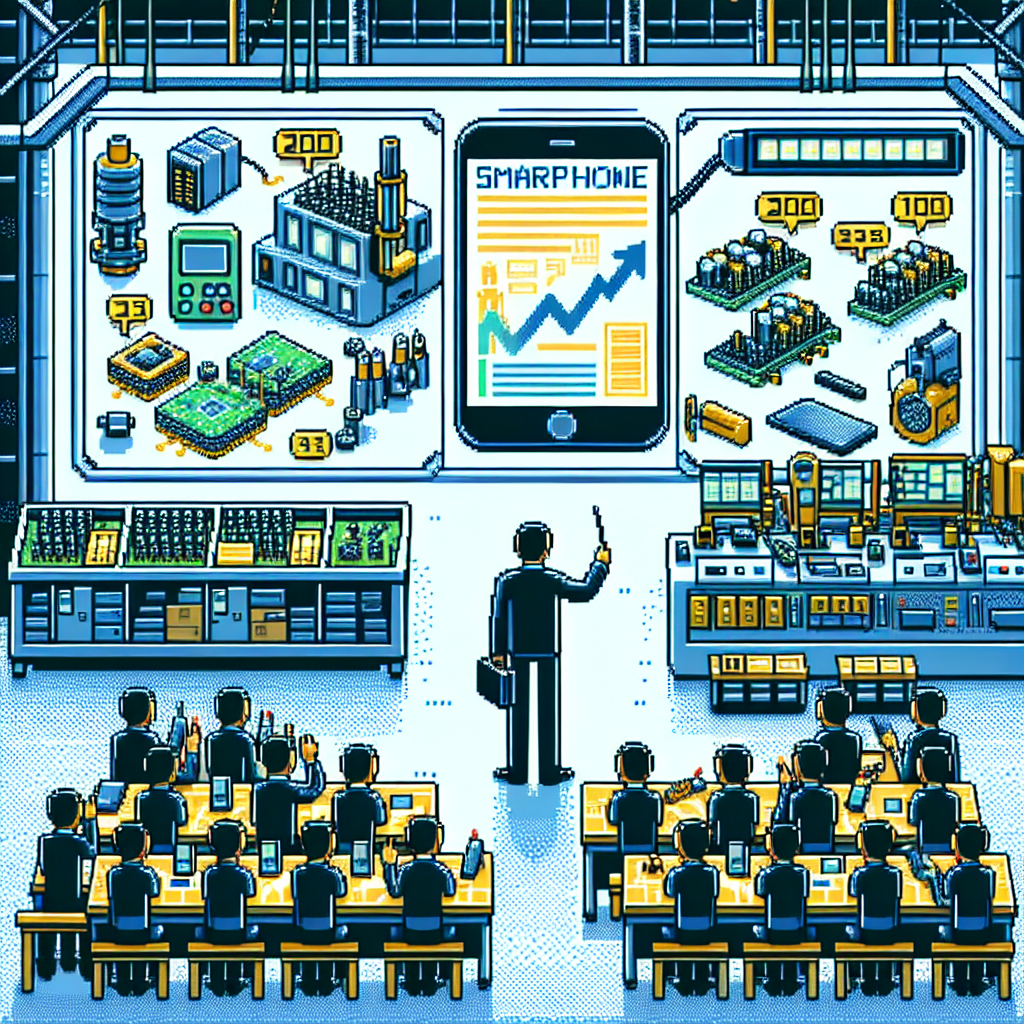
Title: "From the Factory Floor to Your Pocket: The Journey of Making Smartphones in the USA"

In 2013, Motorola made a bold move in the fiercely competitive smartphone market: it decided to manufacture its devices on American soil. This was a time when Apple and Samsung were the reigning champions, and the idea of "Made in the USA" smartphones was both an ambitious and patriotic endeavor. Fast forward to today, and the lessons learned from this venture remain incredibly relevant for companies now considering similar strategies.

Motorola's attempt was centered around the idea of bringing jobs back to the United States while also tapping into a marketing narrative that would appeal to American consumers. The initiative was spearheaded by Dennis Woodside, then CEO of Motorola, who believed that the proximity to the American market could offer advantages like faster delivery times and more customization options for consumers.

While the vision was commendable, the execution faced several hurdles. The cost of labor in the U.S. was significantly higher than in traditional manufacturing hubs like China, and the supply chain infrastructure wasn't as mature for electronics manufacturing domestically. These challenges eventually led to the closure of the Fort Worth, Texas, plant in 2014, just a year after it opened.

Today, as companies like Apple explore the possibility of diversifying their manufacturing locations due to global supply chain disruptions and geopolitical tensions, the Motorola experiment offers valuable insights. Companies are now more cautious and strategic, often opting for a hybrid model that involves partial assembly or specific manufacturing processes in the U.S., while the bulk of production remains overseas.

This push towards local manufacturing is also seen in other industries. For example, Tesla has set up Gigafactories in the U.S. to produce electric vehicles and batteries, largely driven by the need for proximity to the consumer base and the quest for reducing carbon footprints.

The broader economic implications of such moves can't be overlooked. Bringing manufacturing back to the U.S. has the potential to create jobs and stimulate local economies, but it also requires substantial investment in training and infrastructure development. As automation and robotics continue to advance, companies might find a middle ground where high-tech manufacturing processes can offset labor costs.

Dennis Woodside, after his stint at Motorola, went on to hold significant positions in other tech companies, including Dropbox and Impossible Foods. His journey is a testament to the dynamic nature of the tech industry, where innovation and adaptability are key. His experience with Motorola undoubtedly provided him with unique insights into the complexities of global manufacturing and the ever-evolving consumer electronics landscape.

In conclusion, the story of "Made in the USA" smartphones is a fascinating chapter in the history of American manufacturing. It serves as a reminder of the challenges and opportunities that come with such ambitious endeavors. As the world grapples with new economic realities and technological advancements, the lessons from the past can guide the way for future innovations. Whether or not more companies will take the leap remains to be seen, but one thing is certain: the spirit of innovation and resilience continues to drive the industry forward.

Read more about AI in Business

Read more about Latest Sports Trends

Read more about Technology Innovations

Microsoft, OpenAI, and a US Teachers’ Union Are Hatching a Plan to ‘Bring AI into the Classroom’ – WIRED | Analysis by Brian Moineau

Microsoft, OpenAI, and a US Teachers’ Union Are Hatching a Plan to ‘Bring AI into the Classroom’ - WIRED | Analysis by Brian Moineau

Title: Bridging the AI Gap: Bringing Artificial Intelligence to the Classroom

In an era where artificial intelligence (AI) is reshaping industries, economies, and even our daily lives, it's no surprise that education is the next frontier for this transformative technology. A recent article from WIRED highlights an intriguing development in this space: Microsoft, OpenAI, and the American Federation of Teachers have joined forces to create the National Academy for AI Instruction. This initiative aims to equip educators across the United States with the knowledge and tools they need to integrate AI into their teaching practices.

A New Era for Education

The notion of incorporating AI into education isn't just about using high-tech gadgets in the classroom; it's about fundamentally rethinking how we teach and learn. AI can personalize learning experiences, providing students with tailored educational pathways that align with their individual strengths and weaknesses. This personalization could potentially bridge the gap for students who are often left behind in traditional educational settings.

Moreover, AI can automate administrative tasks, allowing teachers to focus more on teaching and less on paperwork. According to a study by McKinsey, teachers spend about 20-40% of their time on activities that could be automated. By freeing up this time, educators can engage more deeply with students, fostering a more interactive and dynamic classroom environment.

Global Connections and Collaborations

This initiative isn't happening in a vacuum. Globally, there is a growing recognition of the need to integrate AI into education systems. Countries like Singapore and Finland are already leading the way, embedding AI into their national curricula to prepare students for a future where AI literacy will be as crucial as traditional literacy.

In the United States, the collaboration between tech giants like Microsoft and organizations like OpenAI represents a significant step forward. OpenAI, known for its groundbreaking work with models like GPT-3, has always positioned AI as a tool for broader societal benefit. This partnership could serve as a model for other countries looking to modernize their education systems.

The Role of Educators

Central to this initiative is empowering teachers. The National Academy for AI Instruction is set to provide educators with the necessary training and resources to confidently bring AI into their classrooms. This is crucial because teachers are the linchpins of any educational reform. By equipping them with the tools and understanding of AI, we ensure that they can guide their students through an increasingly complex world.

Interestingly, this initiative coincides with a broader trend of upskilling in various industries. As AI becomes more prevalent, there's a growing need for workers across sectors to understand and interact with AI technologies. Education is no different, and this initiative could help ensure that the next generation is better prepared for the AI-driven future.

Looking Ahead

The potential of AI in education is vast, but it doesn't come without challenges. Issues around data privacy, algorithmic bias, and the digital divide must be addressed to ensure equitable access to AI-enhanced education. Yet, the collaboration between Microsoft, OpenAI, and the American Federation of Teachers offers a promising blueprint for how these challenges might be navigated.

As we stand on the cusp of this new educational era, it's imperative that stakeholders—educators, technologists, policymakers, and students—work together. By doing so, we can harness the power of AI not just to enhance education, but to transform it into a more inclusive, dynamic, and effective system.

In the words of Satya Nadella, CEO of Microsoft, "AI is the defining technology of our times, and we must ensure that it is used responsibly and equitably." As we bring AI into the classroom, this sentiment will be more important than ever.

Final Thought

AI in education is not just about the technology—it's about creating a future where learning is more accessible, engaging, and effective for all. As we embark on this journey, we must remain vigilant, ensuring that the benefits of AI are shared broadly and equitably. The classroom of tomorrow is taking shape today, and it's up to us to shape it wisely.

Read more about AI in Business

Read more about Latest Sports Trends

Read more about Technology Innovations