
Nobody does petty better than Bill Belichick (and apparently his entourage)
There are athletic rivalries and then there is full-on petty theater — the kind that plays out with perfect timing, pointed symbolism, and a wink that says, “You know exactly what I mean.” On February 8, 2026, Jordon Hudson, longtime girlfriend of Bill Belichick, showed up at the UNC–Duke game wearing an “Orchids of Asia Day Spa” T‑shirt. For anyone who remembers the 2019 Jupiter, Florida, scandal that briefly ensnared Patriots owner Robert Kraft, the shirt was less fashion choice and more mic drop.
This wasn’t subtle. It was theatrical. It was the kind of move that turns a sideline photo into the latest episode of an ongoing narrative: the Belichick–Kraft rift, the Hall of Fame snubs, and a dynasty’s backstage drama playing out on the public stage.
What happened and why it landed
- Jordon Hudson appeared at the UNC–Duke basketball game wearing an Orchids of Asia Day Spa T‑shirt — a brand name associated with the 2019 legal sting that led to charges against Robert Kraft (charges were later dropped). (NBC Sports, Boston.com).
- The timing was striking: the shirt showed up on the eve of Super Bowl LX and shortly after both Belichick and Kraft were passed over for the 2026 Pro Football Hall of Fame class — a moment that has already fueled tension between the two men. (NBC Sports, Boston.com).
- The visual provoked a strong reaction online and in local coverage: some called it hilarious and perfectly petty; others found it in poor taste and unnecessarily provocative (Boston Globe, CBS Sports).
Why this is classic Belichick-level pettiness (even if he didn’t wear the shirt)
- Symbolic payback beats direct confrontation. Belichick’s brand has always been about psychological edge — and this kind of off-field signaling keeps that culture alive without an on-the-record statement.
- It extends a narrative. The Belichick–Kraft story isn’t just about two men — it’s about power, legacy, and how the Patriots dynasty is remembered. A shirt like this is a cheap, viral way of steering public perception.
- Timing is everything. Wearing it around the Super Bowl and after the Hall of Fame snub turns a personal jab into a national talking point.
Context and recent history you should know
- Orchids of Asia Day Spa was at the center of a 2019 investigation in Jupiter, Florida, that led to misdemeanor solicitation charges against several men, including Robert Kraft; those charges were later dropped after legal rulings about the surveillance used in the investigation. (Boston.com, The Boston Globe).
- Bill Belichick coached the Patriots for 24 seasons and built a run of sustained success; tensions with Kraft deepened after Belichick’s 2024 departure from New England and have included public barbs and media narratives that portray each man differently. (NBC Sports coverage).
- Jordon Hudson has previously made headlines for attention-grabbing moments — most notably a T‑shirt referencing Super Bowl LI and a tendency to insert herself into public moments around Belichick — so this move fits an established pattern. (NBC Sports, Boston Globe).
The broader meaning beyond the meme
This isn’t only about an awkward photo op. It’s emblematic of how modern sports drama is performed across platforms, where symbolism and image often carry as much currency as on-field accomplishments.
- Legacy vs. narrative: The two men are now part of how the Patriots dynasty is told. Public spats and visual jabs influence which version of that story gets airtime.
- Media and optics: In the social age, sideline snapshots travel wider and faster than any press release. A single shirt can define stories for days.
- The human element: Personal slights — real or perceived — matter. Whether you see this as justified payback or unnecessary provocation depends on which side of the story you’re on, but the gesture reminds us that sports leadership is personal as well as professional.
A few notable reactions
- Some reporters and fans hailed it as a perfectly timed, witty bit of petty drama — the kind of pop-culture zinger that keeps the Belichick mystique alive.
- Others criticized the move as crude or mean-spirited, arguing it dredged up a painful subject for little more than a viral moment.
- The exchange underlines how public figures weaponize imagery and memory in ways that traditional rivalry never did.
Final thoughts
Whether you laugh at the audacity or wince at the tone, the Orchids T‑shirt is a reminder: petty is a performance art, and Bill Belichick — by personality and proximity — is now a masterclass. In an era when off-field gestures can alter the conversation around legacy, one T‑shirt is enough to keep the feud alive and the headlines rolling.
Would it change anything meaningful about either man’s place in football history? Almost certainly not. But for a fleeting, perfectly petty moment, it gave the public the kind of theater that sports media runs on — a visual one-liner that sums up a much larger, complicated relationship.
Things to remember
- This was a symbolic, public gesture tied to a real 2019 investigation in Florida; the criminal charges referenced were later dismissed.
- The incident feeds into a larger narrative about Belichick’s split from the Patriots and the fraught public relationship between him and Robert Kraft.
- In modern sports, image and timing can be as influential as wins and losses in shaping legacy.
Sources
Related update: We recently published an article that expands on this topic: read the latest post.
Related update: We recently published an article that expands on this topic: read the latest post.
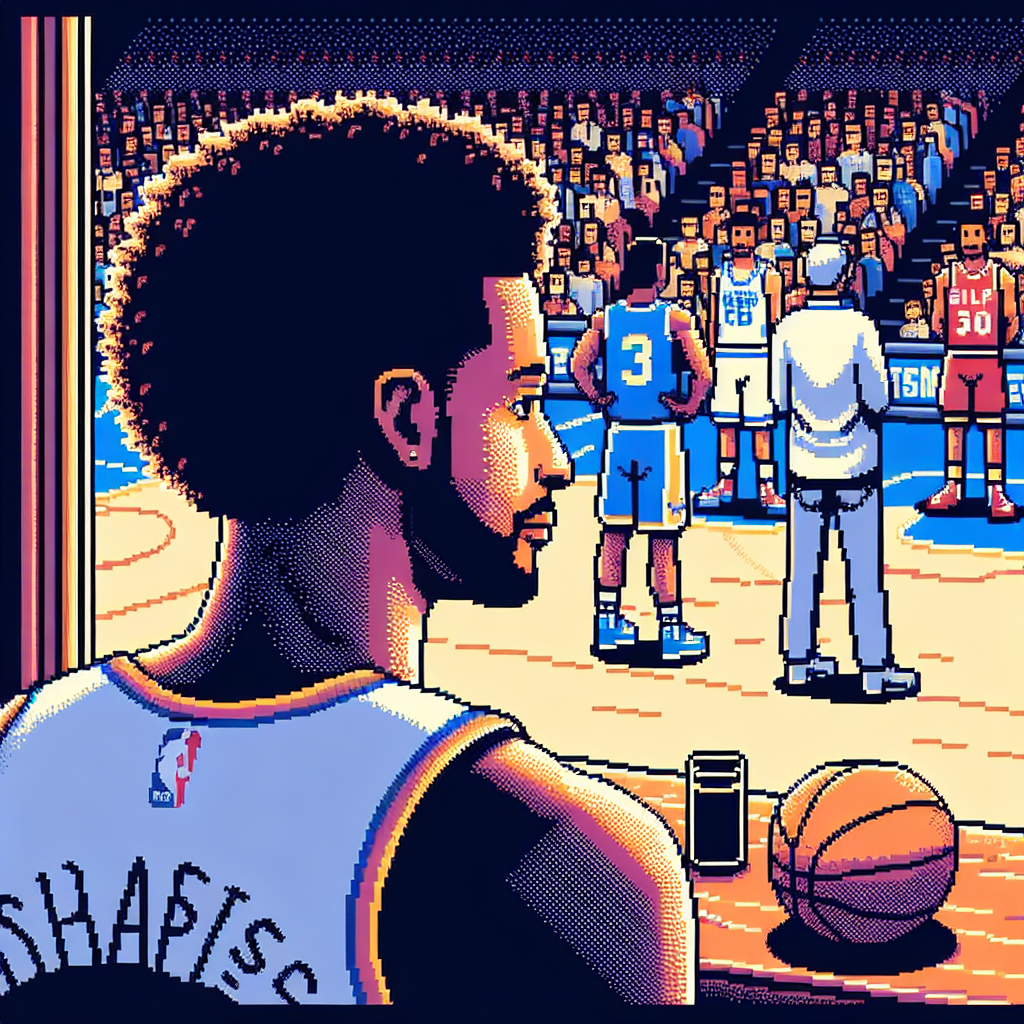
A hometown goodbye? Chris Paul’s quiet hint that an era may be ending
When Chris Paul posted a short highlight reel from his childhood through his Wake Forest days and two decades-plus in the NBA about 90 minutes before the Los Angeles Clippers faced the Charlotte Hornets in Charlotte, it didn’t read like a routine social-media nostalgia drop. The caption — “Back in NC!!! What a ride…Still so much left…GRATEFUL for this last one!!” — carried a tone heavy with gratitude and finality. For a player who has defined the point guard position for a generation, the moment felt like one of those slow-motion exits athletes and fans dread but secretly expect.
Below I unpack the scene, why this matters beyond a single game, and what Paul’s likely farewell tells us about legacy, leadership, and how modern athletes manage the end of a storied career.
Quick snapshots you should know
- The post and video were shared about 90 minutes before tipoff of the Clippers vs. Hornets game in Charlotte, North Carolina.
- Paul, 40, returned to the Clippers on a one-year contract this season and is playing in a greatly reduced role.
- He hails from Winston-Salem and starred at Wake Forest — making a return to North Carolina emotionally significant and a natural setting for a goodbye.
- Media reports and team comments framed the video as a possible hint at retirement; Paul did not discuss his future publicly after the game. (Sources below.)
Why that clip mattered more than highlights
Athletes post highlight reels all the time. What made Paul’s video feel different?
- Timing: Posting on the same day he was playing his final scheduled game in his home state created an unmistakable narrative arc — boy from Winston-Salem returns as an NBA legend.
- Language: “What a ride…Still so much left…GRATEFUL for this last one!!” reads like both gratitude and a gentle closing chapter. It leaves room for emotion without forcing a definitive announcement.
- The career arc: Paul’s résumé — Rookie of the Year, multiple All-Star nods, elite passer and defender, leader of multiple franchises — makes any hint of retirement a national moment. He’s not just any veteran; he’s a generational floor general whose style of play and leadership leaves an outsized imprint.
- The silence that followed: Declining interviews and slipping out quietly after the game amplified the sense that this was a personal moment Paul wanted to hold close rather than stage publicly.
The broader context: what retirement would mean
- A generational shift at point guard: Paul’s combination of court vision, clutch playmaking, and defensive instincts set a template for modern point guards. His likely retirement would mark the true end of an era that included peers like Tony Parker, Deron Williams, and others who shaped the 2005–2015 NBA landscape.
- Legacy beyond stats: Paul’s impact stretches to how teams value leadership, competitive intelligence, and mentorship. He revived careers, elevated young teammates, and frequently served as the identity-anchor for franchises.
- The narrative arc of modern NBA careers: Paul’s possible exit also highlights a modern reality — star players today move through multiple teams, reinvent themselves, and manage public farewells across social platforms rather than in single, orchestrated press conferences.
Moment by moment: what unfolded in Charlotte
- Paul shared the career-spanning video on social media ahead of the Clippers-Hornets matchup in Charlotte, his home state.
- The game played out and Paul, who is in a limited role this season, did not avail himself to media in the postgame window.
- He left the arena quietly and spent time with family — a portrait of a player choosing intimacy over spectacle at a potentially emotional career milestone.
What to expect next
- Official clarity: An explicit retirement announcement could come soon, or Paul may choose to confirm his plans at season’s end. Both paths are common — some athletes retire immediately; others finish the final year on the roster.
- The Hall of Fame discussion: When Paul does step away, his case for the Hall of Fame will be robust — from assist and steal totals to All-NBA and All-Defensive honors and influence on teammates.
- A cascade of tributes: Expect social-media reflections, team retrospectives, and ESPN-style documentaries that will retell Paul’s story through teammates, rivals, and coaches.
A few takeaways
- Paul’s video was more than nostalgia — it read as a controlled, emotionally resonant signal about the twilight of a luminous career.
- The quiet exit in his home state fits a player who has often let his on-court voice lead his narrative off the court.
- Whether he formally announces retirement now or later, the league and basketball culture will feel the absence of his leadership and craft.
Final thoughts
Watching Chris Paul return home — highlight reel, family hugs, a quiet walk out of Spectrum Center — felt like a respectful reminder that sports are as much about people and places as they are about points and assists. If this is the bookend to his playing days, it’s a graceful one: not bombastic, not performative, but deeply human. Paul’s career rewrote how teams think about the point guard position, and the way he may choose to leave — with control, dignity, and an eye toward the next chapter — is fitting for someone who made the game look like chess as much as athletics.
Sources
Related update: We recently published an article that expands on this topic: read the latest post.
Related update: We recently published an article that expands on this topic: read the latest post.
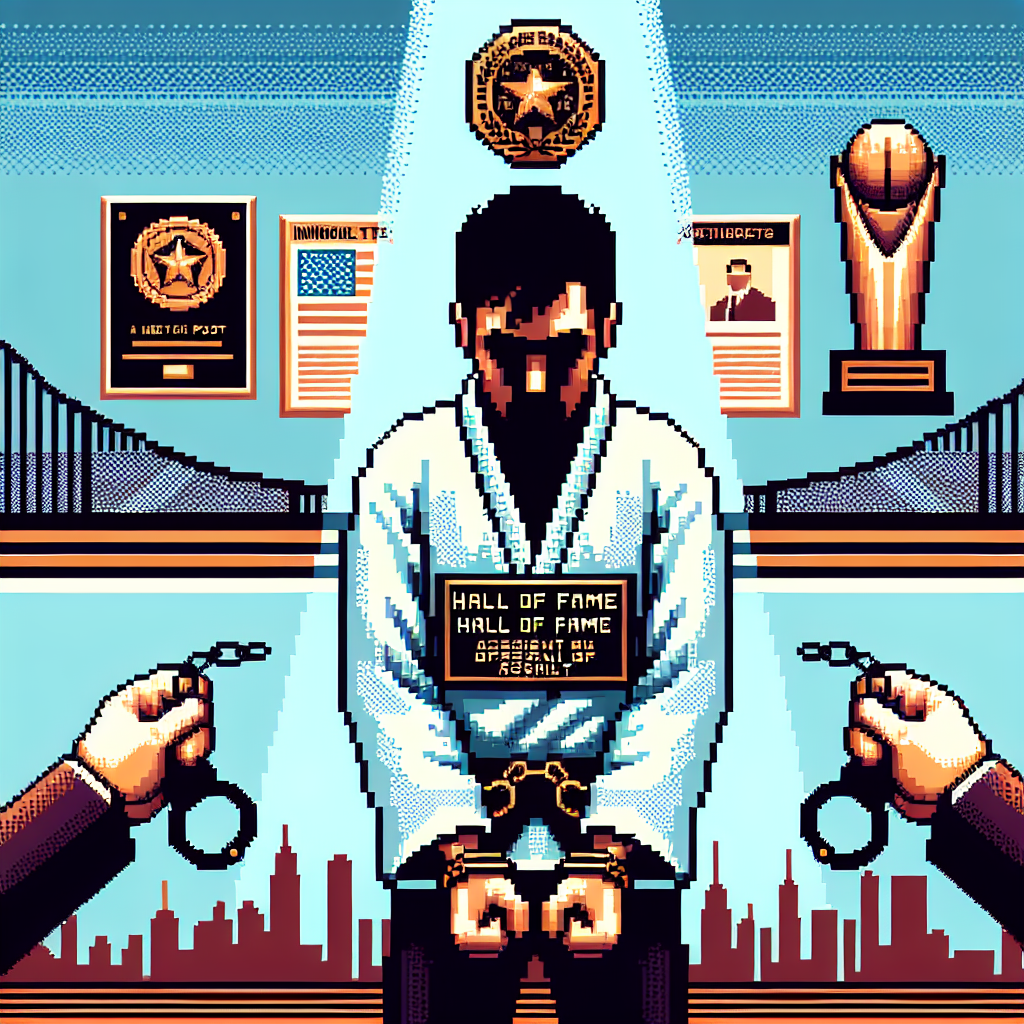
A fallen champion: B.J. Penn’s latest arrest and what it reveals
The image of B.J. Penn — quick, fearless, the first non‑Brazilian to win the World Jiu‑Jitsu Championship black‑belt division and a two‑division UFC champion — is seared into fight fans’ memories. That image is now colliding with a troubling string of real‑world headlines. On the morning of November 4, 2025, police in Hilo say they responded to an assault and later arrested Penn; authorities located him at 11:50 a.m. and took him into custody without incident, charging him with third‑degree assault. The incident adds to a year of repeated legal and mental‑health concerns that have increasingly overshadowed the legacy of one of MMA’s most talented fighters.
Quick context you should know
- The alleged assault occurred in Hilo, Hawai‘i, at about 1:00 a.m. on November 4, 2025, when a 45‑year‑old man reported being punched and kicked and later sought medical care.
- Police say they located Penn on Lehua Street at 11:50 a.m. and arrested him without incident; bail was set at $1,000, which he posted.
- Penn is scheduled to make an initial court appearance on December 2, 2025, in Hilo District Court.
- This is at least the sixth arrest involving Penn during 2025, most incidents tied to family disputes and a restraining order filed by his mother; courts have ordered mental‑health evaluations amid the legal proceedings.
What happened — the facts
- Hawai‘i Island police responded to an assault call early on November 4, 2025. The reported victim told officers he was punched and kicked multiple times before escaping and calling for help.
- The victim later went to Hilo Benioff Medical Center for treatment.
- Officers located Penn at 11:50 a.m., arrested him without incident, charged him with third‑degree assault, and set bail at $1,000. Penn posted bail the same day.
- Local authorities and multiple sports outlets have reported that the case will proceed in December and that it sits alongside several other legal matters involving Penn this year, including family‑related incidents and court orders for mental‑health evaluation. (Sources below.)
Why this matters beyond the headline
- Loss of trust and legacy: Penn’s achievements in MMA are undeniable, but repeated legal troubles risk permanently reshaping public memory of his career. For many athletes, the court of public opinion weighs as heavily as any official record — and patterns of behavior matter.
- Mental health in pro sports: Several reports this year have cited concerns about Penn’s mental state, including claims by family members that he believes relatives have been “replaced” by impostors (a description consistent with Capgras‑like delusions). That raises challenging questions about how legal systems, medical professionals, and sports communities support figures who may be struggling psychologically.
- Accountability and care: Arrests and court dates are part of the legal process, but policymakers and communities must balance accountability with pathways to treatment when illness appears to be a factor.
Takeaways for readers who follow sports and society
- This is not an isolated headline: the November 4 incident fits a pattern of run‑ins and family disputes for Penn in 2025.
- Mental‑health concerns are central to this story; several court actions and media reports reference evaluations and allegations that point beyond simple criminality.
- The legal timeline is concrete: initial hearing set for December 2, 2025, and possible future evaluations or proceedings could shape outcomes.
- For fans and observers, it’s a reminder that athlete legacies are complex — athletic brilliance can coexist with serious personal struggles.
My take
There’s a sad, almost tragic element to watching a once‑dominant athlete unravel in public. B.J. Penn’s career highs — world jiu‑jitsu success, two UFC titles, Hall of Fame induction — are real and impressive. But repeated arrests and the specter of untreated or poorly managed mental illness change the conversation from nostalgia to concern. Ideally, the legal process will ensure safety and accountability for any victim while also directing Penn toward meaningful psychiatric care if that’s needed. For a community that lionizes toughness, this should be a wake‑up call: strength also includes getting help.
Sources
Related update: We recently published an article that expands on this topic: read the latest post.
Related update: We recently published an article that expands on this topic: read the latest post.
Related update: We recently published an article that expands on this topic: read the latest post.