
Why Berkshire’s new boss just named four “forever” stocks — and quietly shrugged at two others
When a company built by Warren Buffett hands the reins to Greg Abel, investors listen. In his first shareholder letter as Berkshire Hathaway’s CEO (published in early March 2026), Abel did more than salute the past — he clarified which holdings he views as “forever” and which ones didn’t make that inner circle. The choices are equal parts reassurance and subtle signal about what matters when stewardship changes but the mandate to preserve value doesn’t.
This matters because Berkshire’s portfolio is enormous, concentrated, and iconic. What the company says about its biggest positions matters for markets and for anyone trying to think long term about durable businesses.
What Abel called “forever” — and why it matters
Abel described four holdings as core, long-term positions Berkshire expects to own for decades:
- Apple
- American Express
- Coca-Cola
- Moody’s
Why those four? The common thread is clarity: strong brand moats, predictable cash flow, management teams Berkshire trusts, and business models that have shown resilience across cycles. Abel’s naming of these companies signals continuity with Buffett’s playbook: identify exceptional businesses, buy sizeable stakes at attractive prices, and hold through time.
A few quick context points:
- These four companies make up a large portion of Berkshire’s equity portfolio — together they’re a center of gravity for the firm’s public-equity bets.
- Apple in particular is massive for Berkshire by market value; Coke and AmEx are classic Buffett examples of consumer and financial moats; Moody’s offers a high-margin, durable niche in credit-rating services.
The two notable omissions
Two of Berkshire’s other very large holdings were notably absent from Abel’s “forever” roster:
That doesn’t mean they’re being sold tomorrow. But omission is itself information. In Bank of America’s case, Berkshire has already trimmed its position significantly in recent quarters, and Buffett historically points to stakes he truly intends to “maintain indefinitely” — the omission hints at reduced conviction or simply a pragmatic reweighting. Chevron remains a huge position but is more exposed to commodity cycles and capital allocation debates than the four Abel singled out.
Why this distinction matters for investors
- Signaling vs. action: Naming a stock as “forever” is not a trade order, but it is a governance signal. It tells shareholders what management views as reliable anchors of capital allocation.
- Style clarity: The four “forever” names reinforce Buffett-era core principles — brands, margins, predictability — while the omitted names underscore that portfolio composition can shift even at a company famous for buy-and-hold.
- Succession risk and continuity: Abel’s list reassures those worried that Berkshire might abandon Buffett’s temperament. It also highlights the open question of who will make day-to-day portfolio choices; Abel inherited stewardship responsibilities but doesn’t have the same public track record as Buffett.
How to think about “forever” stocks for your own portfolio
- “Forever” for Berkshire ≠ forever for every investor. Berkshire’s stake sizes, tax position, and horizon are unique.
- Look for durable cash flows and pricing power, not just nostalgia. Coca-Cola’s brand vs. Chevron’s commodity exposure illustrates the difference.
- Be honest about concentration: Berkshire’s approach is concentrated bets. Most individual investors should balance conviction with diversification.
- Reassess when the business changes, not when the stock price does. Holding forever means monitoring the business — management quality, competitive edge, and capital allocation — not checking charts daily.
A few concrete investor takeaways
- If you admire Buffett-style investing, study why Apple, AmEx, Coke, and Moody’s fit that mold rather than simply copy the tickers.
- Treat the omission of Bank of America and Chevron as a reminder that even blue-chip holdings can be downgraded in conviction.
- For long-term investors, focus on business durability and management incentives; for traders, these signals may matter more for short-term flows than long-term fundamentals.
What this moment reveals about Berkshire itself
- Continuity with adaptation: Abel’s letter emphasizes sticking to durable businesses while acknowledging an evolving portfolio and new capital-allocation dynamics.
- Cash pile and patience: Berkshire still holds massive cash reserves — a tactical advantage if valuations wobble and buying opportunities appear.
- Uncertainty in day-to-day management: With the portfolio’s traditional stewards reshuffled, the market is watching how Berkshire will source new big ideas and allocate capital at scale.
My take
Abel’s naming of four “forever” stocks reads like a careful bridge: it comforts investors who feared a wholesale departure from Buffett’s philosophy, while also hinting that practical decisions — trimming, adding, and pivoting — will continue. For most individual investors, the lesson isn’t to buy these exact names blindly; it’s to adopt Berkshire’s discipline: buy strong businesses with durable advantages and hold them until the story truly changes.
Sources
Related update: We recently published an article that expands on this topic: read the latest post.
Related update: We recently published an article that expands on this topic: read the latest post.

Amazon, AI spending and investor jitters: why one earnings line sent AMZN tumbling
The market hates uncertainty with a passion — but it downright panics when a beloved tech stock promises to spend big on a future that’s still being written. That’s exactly what played out when Amazon’s latest quarter landed: solid revenue, mixed profit signals, and a capital-expenditure plan so large that it turned a routine earnings beat into a sell‑off. Bank of America’s take—still bullish, but cautious—captures the tension investors are wrestling with right now.
What happened (the quick version)
- Amazon reported Q4 revenue that beat expectations and showed healthy AWS growth, but EPS missed by a hair.
- Management guided for softer near‑term margins and flagged much larger capital spending — roughly $200 billion — largely to expand AWS capacity for AI workloads.
- Investors responded badly to the uptick in capex and the prospect of negative free cash flow in 2026, pushing AMZN down sharply in the immediate aftermath.
- Bank of America’s analyst Justin Post stayed with a Buy rating, trimmed some expectations, but argued the long‑run case for AWS-led growth remains intact.
Why the market freaked out
- Big capex = near-term profit pressure. Even when the spending is strategically sensible, huge increases in capital expenditures reduce free cash flow and raise questions about timing of returns.
- AI is a double-edged sword. Hyperscalers (Amazon, Microsoft, Google) all need more data-center capacity to serve enterprise AI demand — but investors want clearer signals that that spending will convert to durable profits, not just capacity that sits idle for quarters.
- Guidance matters now more than ever. A solid top line couldn’t fully offset management’s softer margin outlook and the possibility of negative free cash flow next year.
- Momentum and sentiment amplify moves. When a mega-cap name like Amazon shows a materially higher capex plan, algorithms and tactical funds accelerate selling, which can make a rational re‑pricing into a rout.
Big-picture context
- AWS remains a powerful engine. Revenue growth at AWS is accelerating sequentially (reported ~24% in the quarter), and demand for cloud capacity to run AI models is real and growing.
- The capex is largely targeted at enabling AI workloads — GPUs, racks, cooling, networking — and Amazon argues the capacity will be monetized quickly as customers migrate AI workloads to the cloud.
- This episode isn’t unique to Amazon. Other cloud leaders have also signalled heavy spending on AI infrastructure, and markets have punished multiple names when the path from spend to profit looked murky.
- Analysts are split in tone: most remain positive on the long-term opportunity, though many trimmed near-term targets to account for margin risk and multiple compression.
A few useful lens points
- Time horizon matters. If you’re a trader, margin swings and capex shock news can be reason to sell. If you’re a long-term investor, ask whether the spending can reasonably translate into stronger AWS monetization and durable enterprise customer wins over 2–5 years.
- Unit economics and utilization are key. The market will want to see capacity utilization improving, pricing power on AI inference workloads, and margin recovery once new capacity starts generating revenue.
- Competitive positioning. Amazon’s argument is that AWS’s existing customer base and proprietary silicon (Trainium/Inferentia) give it an edge. But Microsoft, Google, and specialized AI cloud players are competing fiercely — and execution will decide winners.
What Bank of America said (in plain English)
- BofA’s Justin Post kept a Buy rating: he thinks the investment in AWS capacity makes sense given Amazon’s customer base and the size of the AI opportunity.
- He acknowledged margin volatility and the likelihood of negative free cash flow in 2026, so he nudged down his price target modestly — signaling optimism tempered by realism.
- In short: confident on the strategic rationale, cautious about short-term earnings and valuation bumps.
Investor takeaways you can use
- Short term: expect volatility. Earnings‑related capex surprises can trigger large moves. If you’re sensitive to drawdowns, consider trimming or hedging exposure.
- Medium/long term: focus on evidence of monetization — accelerating AWS revenue per share of capacity, higher utilization, or meaningful pricing power for AI services.
- Keep the valuation in view. Even a dominant company needs realistic multiples when growth is uncertain and capex is front‑loaded.
- Watch the cadence of forward guidance and AWS metrics over the next few quarters — those will be the clearest signals for whether this spending is earning its keep.
My take
Amazon is leaning into what could be a generational shift — AI at scale — and that requires infrastructure. The market’s knee‑jerk reaction to big capex is understandable, but it can mask the strategic upside if that capacity is absorbed quickly and leads to differentiated AI offerings. That said, execution risk is real: big spending promises are only as good as utilization and pricing. For long-term investors willing to stomach volatility, this feels like a fundamental question of timing and execution, not a verdict on the company’s addressable market. For short-term traders, the move is a reminder that even quality names can wobble when strategy meets uncertainty.
Signals to watch next
- AWS growth and any commentary on capacity utilization or customer adoption of AI services.
- Amazon’s quarterly guidance for margins and free cash flow timing.
- Competitive moves: GPU supply/demand dynamics, Microsoft/Google pricing, and enterprise AI adoption patterns.
- Concrete product wins that show Amazon converting new capacity into revenue (e.g., large enterprise deals or clear upticks in inference workloads).
Sources
Related update: We recently published an article that expands on this topic: read the latest post.
When dividends take the wheel: why Bank of America thinks payouts matter in 2026
The market’s engines have been different lately. Price gains drove much of the S&P 500’s recent roar, but Bank of America’s research team — led by Savita Subramanian — is flagging a shift: dividend growth may pick up in 2026 and start reclaiming its traditional role in total returns. That’s a signal worth listening to if you own stocks for income, total-return compounding, or simply to reduce reliance on multiple expansion.
Why this matters now
- Bank of America’s strategists argue that valuation expansion (higher price-to-earnings multiples) has been a major driver of recent gains — and that this tailwind may fade. When multiple expansion stalls, dividends become a bigger piece of the returns puzzle. (investing.com)
- BofA projects stronger earnings breadth in 2026, and with payout ratios near historic lows for many firms, it expects dividend growth to rise year over year — providing more cash return to shareholders. (m.in.investing.com)
- CNBC highlighted the same theme in its roundup of stocks with payouts that beat the market, anchoring the media coverage that income-focused investors should watch dividend trends as we move into 2026. (archive.ph)
What Bank of America actually said (in plain language)
- The bank sees 2026 as a year when earnings growth broadens beyond a handful of mega-cap winners. That can support rising dividends across sectors. (m.in.investing.com)
- Historically, dividend contributions to total return were much larger than they’ve been in the past decade; reverting toward that longer-run role would meaningfully lift long-term total returns even if price appreciation is muted. (investing.com)
The investor dilemma: chasing growth vs. locking in cash
- If price returns slow, investors either must accept lower total returns or look to other sources of return — dividends are the obvious alternative.
- High dividend yields can cushion downside and provide deployable cash, but they can also mask company-specific risks (e.g., weak cash flow or one-off payouts).
- The smart move is not to fetishize a yield number; it’s to evaluate payout sustainability: earnings coverage, free cash flow, balance-sheet strength, and management’s capital-allocation priorities.
Sectors and stock types to watch (what typically leads when dividends matter)
- Financials: banks and insurers can boost payouts when earnings and capital tests permit — and Bank of America itself has been growing its dividend in recent quarters, illustrating how a healthy bank can combine buybacks and higher payouts. (investor.bankofamerica.com)
- Energy and commodities: mature producers often return excess cash via dividends when commodity markets cooperate.
- REITs and utilities: by design, these businesses distribute a large share of cash flow and tend to be dividend-heavy.
- Mature consumer and industrial companies: lower-growth, cash-rich firms frequently prioritize steady payouts.
(These are general tendencies; any specific company needs case-by-case scrutiny.)
How to think about building an income-aware portfolio for 2026
- Tilt for quality: prioritize companies with consistent cash flow, conservative payout ratios, and intact balance sheets.
- Check payout drivers: are dividends covered by operating cash flow or propped up by asset sales or one-time events? Coverage matters.
- Diversify across dividend sources: combine REITs, select financials, defensives (consumer staples), and high-quality dividend growers rather than concentrating in one sector.
- Reinvest thoughtfully: if your goal is compounding, dividend reinvestment can materially boost long-term returns — a point BofA emphasizes when prices don’t carry the full return load. (investing.com)
A small list of real-world reminders (not stock picks)
- Even large, well-capitalized banks have increased payouts when capital ratios and stress-test results permitted — showing how regulation and capital policy shape dividend outcomes. (investor.bankofamerica.com)
- Media coverage (CNBC and others) is already flagging individual stocks and groups where payouts “beat the market,” reflecting a broader marketplace focus on income as 2026 approaches. (archive.ph)
What to watch next (concrete signals)
- Corporate payout-ratio revisions and published dividend guidance.
- Federal Reserve and macro signals that affect corporate borrowing costs and capital allocation.
- Quarterly earnings breadth: are more companies showing EPS growth (not just the mega caps)? BofA links rising dividend growth to broader earnings strength. (m.in.investing.com)
My take
Dividends aren’t glamorous, but they’re practical. If Bank of America’s call about rising dividend growth in 2026 proves right, investors who prepare now — by favoring payout sustainability and quality — will be positioned to benefit from steadier cash returns even if headline price gains cool. That doesn’t mean abandoning growth, but it does mean giving dividends their due in portfolio planning.
Sources
Related update: We recently published an article that expands on this topic: read the latest post.
Related update: We recently published an article that expands on this topic: read the latest post.
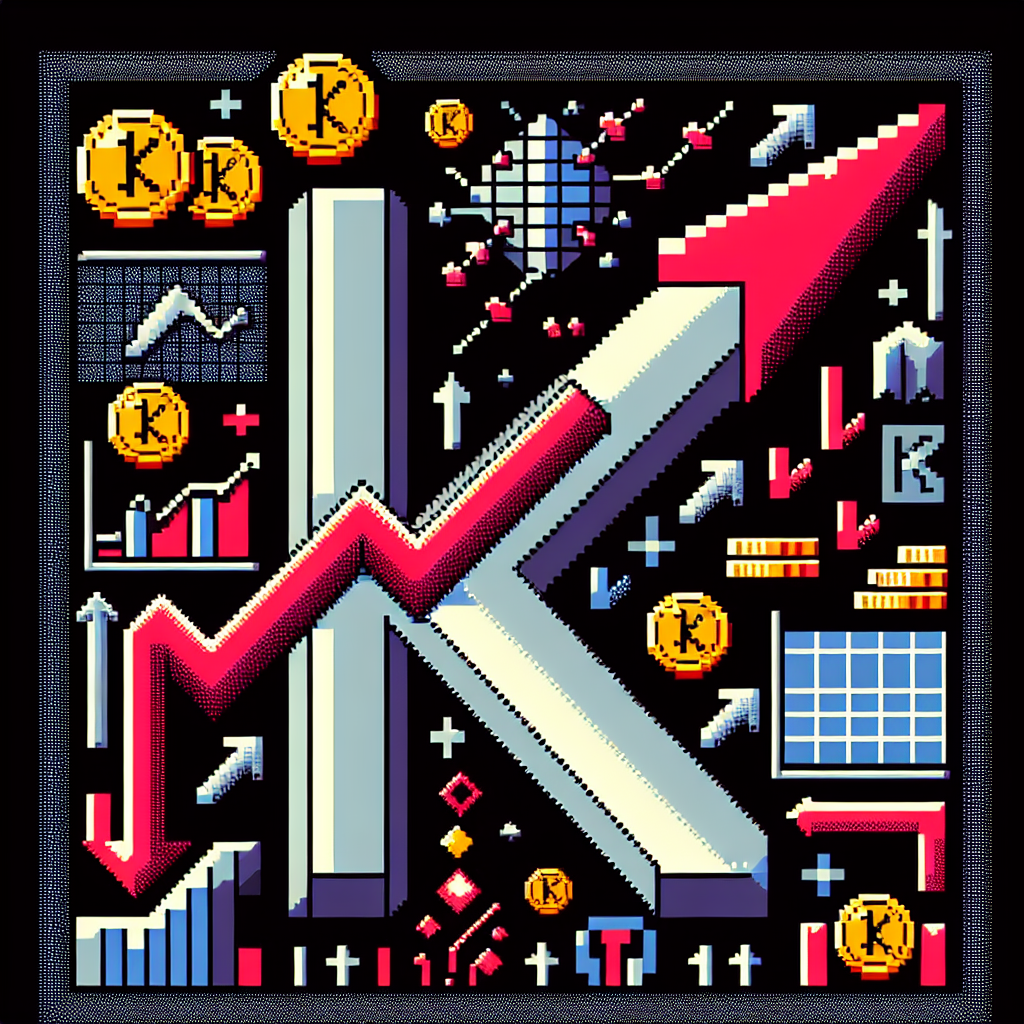
Why everyone’s talking about the “K‑shaped” economy — and why it should make you think twice
You’ve probably heard the phrase “K‑shaped recovery” a few times lately — and not just from economists. It’s showing up in corporate earnings calls, news headlines, and even at kitchen‑table conversations. The image is simple: a K, with one arm shooting up and the other slumping down. But the real story behind that picture is messy, emotional, and getting more relevant to daily life than many of us expected.
What the K really means
- The upper arm of the K represents higher‑income households: incomes, asset values and spending are rising for people who own lots of stocks, real estate or high‑paying jobs tied to tech and finance.
- The lower arm represents lower‑ and middle‑income households: wage growth is weak, price pressure (rent, groceries, energy) bites harder, and many people have less ability to spend or save.
- The result: headline GDP and stock indices can look healthy while large swaths of Americans feel stuck or squeezed.
This isn’t a new concept — economists used “K‑shaped” during the pandemic to describe divergent recoveries. What’s changed is how sharply the split has re‑emerged in 2025 as asset prices and AI‑sector gains lift wealth at the top while pay and hiring cool off for lower‑wage workers.
How we got here: context that matters
- Pandemic-era policies, huge fiscal responses, shifting labor markets and record‑high tech valuations created a period where asset owners got a disproportionate share of the gains.
- In 2023–24 some lower‑wage workers saw real wage improvements, narrowing the gap briefly — but that momentum faded in 2025 as inflation‑adjusted wage growth slowed more for the bottom quartile than for the top.
- The AI boom and heavy corporate investment in data centers and infrastructure have powered big gains for a few companies (and their shareholders) without producing broad wage gains or mass hiring in many sectors.
- Consumer spending overall continues, but a growing share comes from higher‑income households; lower‑income spending lags, which reshuffles which businesses win and which struggle.
Who’s winning and who’s losing
- Winners:
- Households that own stocks and other financial assets. The stock market and gains tied to the AI winners have boosted wealth for the top slice of Americans.
- Companies that sell premium goods and services to affluent buyers. Luxury retail and high‑end travel show resilience even when mass‑market demand softens.
- Losers:
- Lower‑wage workers in retail, hospitality and entry‑level services where hiring and pay growth have cooled.
- Businesses that rely on broad, volume‑based spending by younger and lower‑income consumers (certain fast‑casual restaurants, budget retailers, travel tailored to younger demographics).
Why this pattern matters beyond headlines
- Fragile consumer demand: If lower‑ and middle‑income households pull back sharply, overall spending — and corporate revenue — could fall, potentially causing a feedback loop that hits hiring and investment.
- Policy risks: If policymakers respond by cutting rates or changing tax rules to stoke growth, the effects may again flow unevenly and could widen the gap unless targeted measures accompany them.
- Social and political consequences: Persistent divergence heightens concerns about affordability, social mobility and the role of public policy in redistributing opportunity.
Signals to watch next
- Wage growth by income quartile (are lower‑income wages improving or stagnating?)
- Consumer spending breakdowns by income (is spending concentration at the top growing?)
- Hiring trends in low‑wage industries (is employment cooling or recovering?)
- Corporate capex in AI and how much of that translates into broader hiring
- Stock market concentration vs. household participation (who holds the gains?)
A few practical takeaways
- For workers: Skills and mobility matter. Sectors tied to AI, cloud infrastructure, health care and trade‑sensitive manufacturing may offer different pathways than retail or entry‑level hospitality.
- For savers and investors: Recognize concentration risk. Heavy reliance on a handful of tech winners can be rewarding — and risky — if broader demand softens.
- For businesses: Reassess customer segmentation. Firms that depended on volume from younger or lower‑income consumers may need to tweak pricing, value propositions, or product mix.
- For policymakers: Monitoring and targeted supports (training, childcare, housing affordability) will be essential to prevent a K‑shaped boom from calcifying into longer‑term inequality.
A few numbers that make it real
- Bank of America card data (October 2025) showed higher‑income households’ spending grew noticeably faster than lower‑income households (roughly 2.7% vs. 0.7% year‑over‑year in October).
- Federal Reserve data has long shown stock ownership is heavily concentrated; recent analyses report that the top 10% of households own the vast majority of equities, which amplifies asset‑price gains for the wealthy.
(These figures help explain why stock rallies lift the top arm of the K much more than they lift the bottom.)
My take
We’re living in an economy that can look simultaneously strong and fragile — strong for people whose wealth is tied to rising assets and fragile for those whose day‑to‑day living depends on wages and price stability. The “K” is a useful shorthand, but it’s not destiny. Policy choices, corporate strategies, and investment in people’s skills and safety nets will decide whether that divergence narrows or becomes structural. If you care about sustainable growth that doesn’t leave large groups behind, pay attention to the signals above — and to how policies shift in the next year.
Sources
Related update: We recently published an article that expands on this topic: read the latest post.
Related update: We recently published an article that expands on this topic: read the latest post.