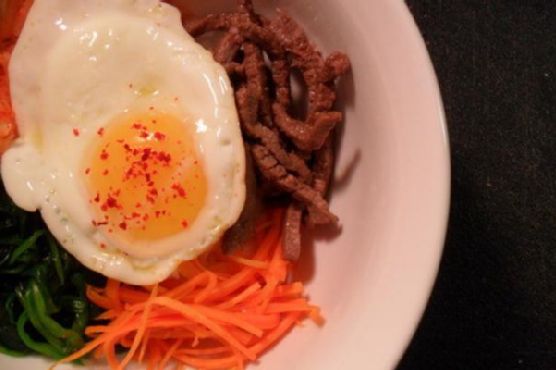
Bibimbab (Korean Rice w Vegetables & Beef) | Made by Meaghan Moineau
Title: Discover the Heartwarming Flavors of Bibimbab: A Korean ClassicDescription: Dive into the rich flavors and vibrant colors of Bibimbab, a beloved Korean dish that brings together a medley of fresh vegetables, savory beef, and perfectly cooked rice. Join us as we explore this deliciously customizable meal, perfect for any palate, and share a nostalgic family memory that highlights its place in our hearts.
---
Bibimbab: A Journey Through Flavor and Memory
Bibimbab, a staple in Korean cuisine, is more than just a dish. It's a tapestry of flavors and textures that unite to create a harmonious and satisfying meal. With its roots steeped in tradition and adaptability to suit any lifestyle, Bibimbab is a culinary delight that welcomes everyone to the table.
Ingredients:
- Carrots, julienned- Cooked white rice
- Eggs
- English cucumber, sliced
- Garlic clove
- Red sprinkle gochugaru (red pepper flakes)
- Red gochujang (red pepper paste)
- Olive oil
- Sesame oil
- Sesame seeds
- Soy sauce
- Fresh spinach
- Sandwich steaks, thinly sliced
Instructions:
1. Prepare the Rice: Cook rice according to package directions and set aside.
2. Prep the Vegetables: Cut the carrots and cucumber into matchstick pieces. Set aside for sautéing.
3. Cook the Spinach: In a large non-stick pan, bring 2 cups of water to a boil. Add spinach and cook until wilted, stirring constantly. Drain and squeeze the spinach dry into a ball.
4. Sauté the Carrots and Garlic: Wipe out the skillet and heat 1 tsp of olive oil over medium-high heat. Add carrots and cook until soft, about 3 minutes. Add garlic and cook until fragrant, about 1 minute. Mix cucumber slices with gochugaru and set aside.
5. Prepare the Spinach Mixture: Combine the spinach with soy sauce and set aside until serving.
6. Cook the Beef: Add thinly sliced beef to the non-stick pan and heat until browned. Wipe down the pan with a napkin.
7. Fry the Eggs: Heat 1 tsp of olive oil in the non-stick pan over medium-high heat. Add eggs and cook until the whites are set, and the yolks remain runny, about 5 minutes.
8. Assemble the Bibimbab: Divide the cooked rice among four bowls. Top with sautéed vegetables, beef, and eggs. Drizzle with sesame oil and sprinkle with sesame seeds. Finish with a dollop of gochujang or Sriracha sauce for a spicy kick.
A Taste of Nostalgia
Growing up, Bibimbab was more than just a meal; it was a family ritual that brought us together on Sunday afternoons. I vividly recall the comforting aroma of sesame oil and the vibrant colors of the vegetables laid out on the kitchen counter. My grandmother, with her gentle hands, would guide us in chopping the vegetables, teaching us the importance of each ingredient and its place in the dish.
As we gathered around the table, each person was given the freedom to craft their perfect bowl, adding a personal touch to the traditional recipe. It was in these moments that I learned the true essence of Bibimbab—its ability to adapt to each individual's taste while still maintaining its core identity. Even today, every bite takes me back to those cherished family gatherings, filled with laughter and stories, binding us together through the simple joy of sharing a meal.
Difficulty Rating: 4/10
Classification: Main Dish
Bibimbab is a dish that invites creativity and personalization, making it a delightful experience for both novice and experienced cooks alike. Its versatility accommodates vegetarians, dieters, health-conscious eaters, and meat-lovers, ensuring that everyone can partake in its deliciousness. So, gather your ingredients, embrace the process, and enjoy the journey of creating your own Bibimbab masterpiece!