Tariff Surge Strains U.S. Midsize Firms | Analysis by Brian Moineau

Tariffs Hit Home: Why U.S. Midsize Firms Are Suddenly Paying the Price

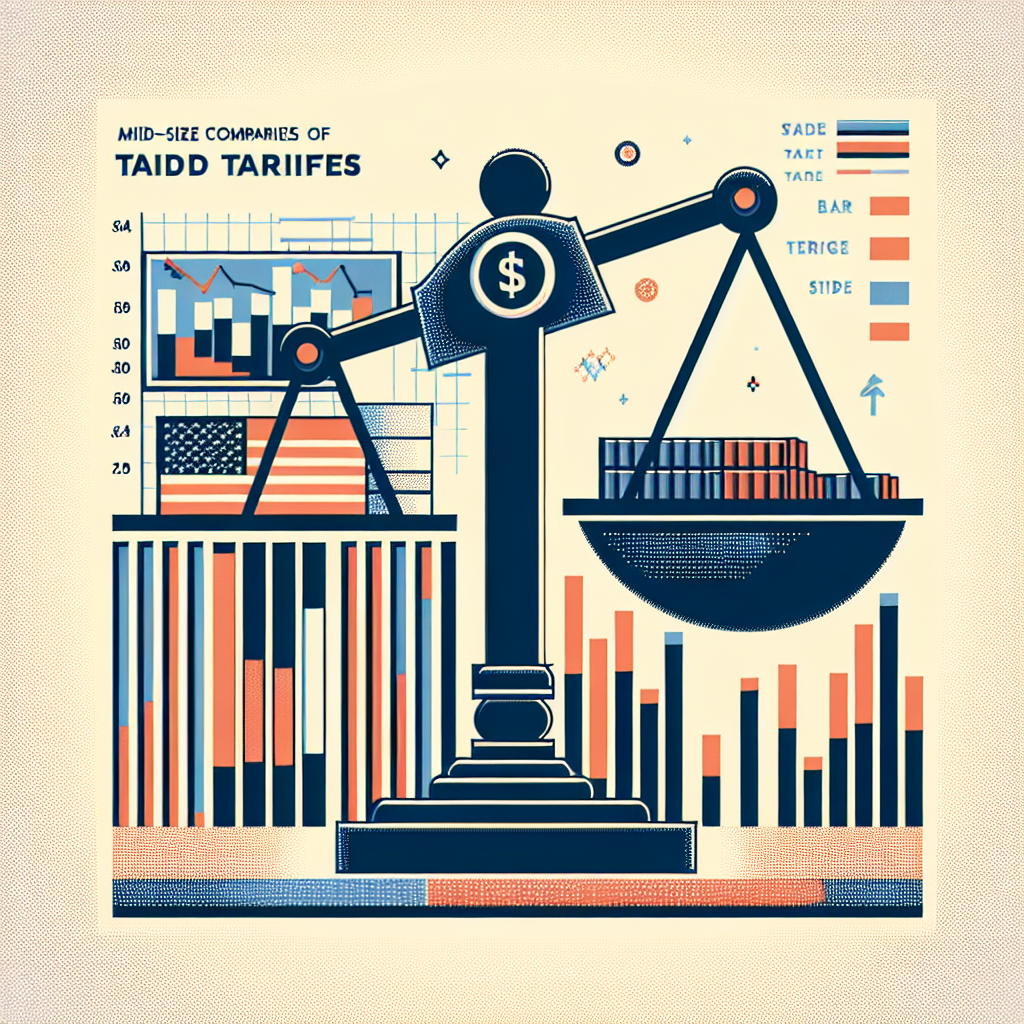
A year ago tariffs were a political slogan. Now they're a line item on balance sheets. New analysis from the JPMorganChase Institute finds that monthly tariff payments by midsized U.S. companies have roughly tripled since early 2025 — and the cost isn’t vanishing overseas. Instead, it’s landing squarely on American businesses, their workers, and ultimately consumers. (jpmorganchase.com)

Why this matters right now

  • Midsize companies — those with roughly $10 million to $1 billion in revenue and under 500 employees — employ tens of millions of Americans and sit at the center of supply chains. A material cost shock for them ripples through local economies.
  • The analysis comes amid a larger policy shift that raised average tariff rates dramatically in 2024–2025 and set off debates about who bears the burden: foreign suppliers, U.S. firms, or American consumers. The evidence is increasingly squarely on the U.S. side. (jpmorganchase.com)

Key points for readers pressed for time

  • Tariff payments by midsize firms tripled on a monthly basis since early 2025. (jpmorganchase.com)
  • The additional burden has been absorbed in ways that harm domestic outcomes: higher consumer prices, compressed corporate margins, or cuts in hiring. (the-journal.com)
  • Some firms are shifting away from direct purchases from China, but it’s unclear whether that reflects true supply-chain reshoring or simple routing through third countries. (jpmorganchase.com)

The economic picture — beyond the headline

The JPMorganChase Institute used payments data to track how middle-market firms actually move money across borders. Their finding — a tripling of tariff outflows — is not just an accounting quirk. It reflects higher effective import taxes that many of these firms cannot easily avoid.

What that looks like on the ground:

  • Retailers and wholesalers, with thin margins, face an especially acute squeeze; some will add markup, passing costs to shoppers. (apnews.com)
  • Other firms will have to choose between accepting lower profits, cutting spending (including on hiring), or finding new suppliers. JPMorganChase’s data show some reduction in direct payments to China, but not enough to indicate a complete reorientation of sourcing. (jpmorganchase.com)

Why the distributional story matters: the policymakers who champion tariffs often frame them as taxes paid by foreign exporters. But multiple studies and payment-data analyses now point the opposite way — tariffs operate as a domestic cost that falls on U.S. businesses and consumers, with the burden concentrated on firms without the scale to absorb or dodge the charge. (apnews.com)

A few concrete numbers to anchor the debate

  • The JPMorganChase Institute previously estimated that tariffs under certain policy scenarios could cost midsize firms roughly $82 billion; the tripling in monthly outflows is a complementary sign of how quickly those costs can materialize. (axios.com)
  • Middle-market firms account for a large share of private-sector employment, so a change equal to a few percent of payroll can meaningfully affect hiring plans. (axios.com)

What firms are likely to do next

  • Pass-through: Where competition allows, retailers and distributors will raise prices. Expect higher consumer prices in affected categories.
  • Substitution: Some firms will seek suppliers in lower-tariff jurisdictions or route goods through third countries — a costly and imperfect fix that may increase lead times and complexity.
  • Absorb: Many midsize firms lack pricing power and will instead accept smaller margins, delay investments, or cut labor costs.
  • Hedge or pre-buy: Larger firms already stockpiled inventory during previous tariff surges; midsize firms can’t always do the same, which leaves them more exposed to sudden rate changes. (jpmorganchase.com)

Broader implications

  • Inflation and politics: Tariffs operate like a tax that can nudge consumer prices upward. Even modest price effects matter politically when households feel pocketbook pain.
  • Supply-chain strategy: The pattern of reduced direct payments to China suggests firms are adapting — but adaptation is slow and costly. Strategic decoupling from a major supplier nation isn’t instantaneous; it takes new contracts, quality checks, and often higher unit costs.
  • Policy design: If the goal is to strengthen U.S. manufacturing, tariffs can help some producers while hurting downstream businesses and consumers. That trade-off underlines why empirical analysis of who actually pays the tariff is crucial to policy debates. (jpmorganchase.com)

My take

Tariffs are a blunt instrument. The new JPMorganChase Institute evidence makes a clear pragmatic point: when you raise the price of imports sharply and quickly, the economic pain shows up inside the country — not neatly absorbed by foreign suppliers. For policymakers who want to protect or grow U.S. industry, that doesn’t mean tariffs are useless, but it does mean they’re incomplete. If the aim is durable domestic job creation and competitiveness, tariffs should be paired with targeted industrial policy: investment in skills, R&D, logistics, and incentives that help midsize firms scale rather than simply shifting costs onto consumers or employees.

Sources


Related update: We recently published an article that expands on this topic: read the latest post.

Instacart’s Algorithm Inflates Grocery | Analysis by Brian Moineau

The grocery price you see might not be the grocery price someone else sees

Imagine loading your cart with the same staples you always buy — eggs, peanut butter, cereal — and watching the total quietly climb depending on who’s logged into the app. That’s the unsettling picture painted by a new investigation into Instacart’s pricing experiments. The findings suggest algorithmic pricing on grocery delivery platforms is no longer hypothetical: it’s affecting the bills people pay for essentials.

Why this matters right now

  • Grocery affordability is a top concern for many households in the U.S., and small percentage differences compound quickly.
  • The findings come from a coordinated investigation by Groundwork Collaborative, Consumer Reports, and labor group More Perfect Union that tested live prices across hundreds of Instacart users in multiple cities.
  • The study’s headline figure — that average pricing variation could cost a four-person household roughly $1,200 a year — is what turned heads and spurred debate about transparency, fairness, and the role of algorithmic experiments in everyday commerce.

What the investigation found

  • Across tests in four U.S. cities, nearly three-quarters of items showed multiple prices to different shoppers for the exact same product at the exact same store and time. (groundworkcollaborative.org)
  • Price differences for individual items were often sizable — the highest price was as much as 23% above the lowest for the same SKU. Examples included peanut butter, deli turkey and eggs. (groundworkcollaborative.org)
  • Average basket totals for identical carts differed by about 7% in the study’s sample. Using Instacart’s own estimates of household grocery spending, that swing could translate to roughly $1,200 extra per year for a household of four exposed to the typical price variance observed. (consumerreports.org)

How it works (the mechanics, in plain language)

  • Instacart and some retailers use dynamic pricing tools and experimentation platforms (including technology Instacart acquired in 2022) to run price tests.
  • These systems can show different “original” or “sale” prices and can test multiple price points simultaneously across users to see what increases purchases or revenue.
  • The troubling element isn’t experimentation per se — price testing exists in physical stores too — but the lack of disclosure and the fact that shoppers trying to comparison-shop or budget are effectively excluded from seeing consistent prices. (consumerreports.org)

Responses and pushback

  • Instacart has acknowledged running pricing experiments in some cases but has asserted it does not use personal or demographic data to set prices and that most retailers do not use their pricing tools. The company also said it had stopped running experiments for some retailers named in coverage. (consumerreports.org)
  • Retail partners gave mixed reactions: some distanced themselves or said they were not involved, while others did not comment. Lawmakers and consumer advocates have seized on the report to call for clearer disclosures or limits on “surveillance pricing.” (consumerreports.org)

Broader implications

  • Algorithmic pricing can amplify existing inequalities if certain groups are more likely to be exposed to higher-priced experiments — even if a company insists it’s not using demographic targeting. The opacity of models and the complexity of A/B tests make oversight difficult. (consumerreports.org)
  • The grocery sector is already under regulatory and public scrutiny for price transparency. States and federal policymakers are beginning to consider rules about algorithmic price disclosures and “surveillance pricing” bans. Expect legislative activity and watchdog attention to grow. (wcvb.com)
  • For consumers, the convenience of home delivery may now come with a hidden premium that is not obvious at checkout.

What shoppers can do now

  • Compare with in-store prices when possible. If an item looks markedly higher in the app, check the store shelf price or call the store before completing a large order. (wcvb.com)
  • Use price-tracking habits: keep receipts, note repeated price differences, and report discrepancies to the retailer or Instacart. Consumer complaints create records that regulators and journalists can use.
  • Consider pickup (if available) or buying directly through a retailer’s own online service when price transparency matters most. Some retailers still control and publish consistent prices on their own platforms. (wcvb.com)

My take

Algorithmic testing can be a useful business tool — it can tune pricing to demand, clear inventory, or optimize promotions. But when the item is a family’s food staples, the ethical and practical bar for transparency should be higher. Consumers budgeting for essentials need predictable, comparable prices. If pricing experiments are going to be run on grocery purchases, they should be disclosed clearly, limited in scope for essentials, and subject to guardrails so that convenience doesn’t become a stealth surcharge.

Sources


Related update: We recently published an article that expands on this topic: read the latest post.

K‑Shaped Recovery: Winners and Losers | Analysis by Brian Moineau

Why everyone’s talking about the “K‑shaped” economy — and why it should make you think twice

You’ve probably heard the phrase “K‑shaped recovery” a few times lately — and not just from economists. It’s showing up in corporate earnings calls, news headlines, and even at kitchen‑table conversations. The image is simple: a K, with one arm shooting up and the other slumping down. But the real story behind that picture is messy, emotional, and getting more relevant to daily life than many of us expected.

What the K really means

  • The upper arm of the K represents higher‑income households: incomes, asset values and spending are rising for people who own lots of stocks, real estate or high‑paying jobs tied to tech and finance.
  • The lower arm represents lower‑ and middle‑income households: wage growth is weak, price pressure (rent, groceries, energy) bites harder, and many people have less ability to spend or save.
  • The result: headline GDP and stock indices can look healthy while large swaths of Americans feel stuck or squeezed.

This isn’t a new concept — economists used “K‑shaped” during the pandemic to describe divergent recoveries. What’s changed is how sharply the split has re‑emerged in 2025 as asset prices and AI‑sector gains lift wealth at the top while pay and hiring cool off for lower‑wage workers.

How we got here: context that matters

  • Pandemic-era policies, huge fiscal responses, shifting labor markets and record‑high tech valuations created a period where asset owners got a disproportionate share of the gains.
  • In 2023–24 some lower‑wage workers saw real wage improvements, narrowing the gap briefly — but that momentum faded in 2025 as inflation‑adjusted wage growth slowed more for the bottom quartile than for the top.
  • The AI boom and heavy corporate investment in data centers and infrastructure have powered big gains for a few companies (and their shareholders) without producing broad wage gains or mass hiring in many sectors.
  • Consumer spending overall continues, but a growing share comes from higher‑income households; lower‑income spending lags, which reshuffles which businesses win and which struggle.

Who’s winning and who’s losing

  • Winners:
    • Households that own stocks and other financial assets. The stock market and gains tied to the AI winners have boosted wealth for the top slice of Americans.
    • Companies that sell premium goods and services to affluent buyers. Luxury retail and high‑end travel show resilience even when mass‑market demand softens.
  • Losers:
    • Lower‑wage workers in retail, hospitality and entry‑level services where hiring and pay growth have cooled.
    • Businesses that rely on broad, volume‑based spending by younger and lower‑income consumers (certain fast‑casual restaurants, budget retailers, travel tailored to younger demographics).

Why this pattern matters beyond headlines

  • Fragile consumer demand: If lower‑ and middle‑income households pull back sharply, overall spending — and corporate revenue — could fall, potentially causing a feedback loop that hits hiring and investment.
  • Policy risks: If policymakers respond by cutting rates or changing tax rules to stoke growth, the effects may again flow unevenly and could widen the gap unless targeted measures accompany them.
  • Social and political consequences: Persistent divergence heightens concerns about affordability, social mobility and the role of public policy in redistributing opportunity.

Signals to watch next

  • Wage growth by income quartile (are lower‑income wages improving or stagnating?)
  • Consumer spending breakdowns by income (is spending concentration at the top growing?)
  • Hiring trends in low‑wage industries (is employment cooling or recovering?)
  • Corporate capex in AI and how much of that translates into broader hiring
  • Stock market concentration vs. household participation (who holds the gains?)

A few practical takeaways

  • For workers: Skills and mobility matter. Sectors tied to AI, cloud infrastructure, health care and trade‑sensitive manufacturing may offer different pathways than retail or entry‑level hospitality.
  • For savers and investors: Recognize concentration risk. Heavy reliance on a handful of tech winners can be rewarding — and risky — if broader demand softens.
  • For businesses: Reassess customer segmentation. Firms that depended on volume from younger or lower‑income consumers may need to tweak pricing, value propositions, or product mix.
  • For policymakers: Monitoring and targeted supports (training, childcare, housing affordability) will be essential to prevent a K‑shaped boom from calcifying into longer‑term inequality.

A few numbers that make it real

  • Bank of America card data (October 2025) showed higher‑income households’ spending grew noticeably faster than lower‑income households (roughly 2.7% vs. 0.7% year‑over‑year in October).
  • Federal Reserve data has long shown stock ownership is heavily concentrated; recent analyses report that the top 10% of households own the vast majority of equities, which amplifies asset‑price gains for the wealthy.
    (These figures help explain why stock rallies lift the top arm of the K much more than they lift the bottom.)

My take

We’re living in an economy that can look simultaneously strong and fragile — strong for people whose wealth is tied to rising assets and fragile for those whose day‑to‑day living depends on wages and price stability. The “K” is a useful shorthand, but it’s not destiny. Policy choices, corporate strategies, and investment in people’s skills and safety nets will decide whether that divergence narrows or becomes structural. If you care about sustainable growth that doesn’t leave large groups behind, pay attention to the signals above — and to how policies shift in the next year.

Sources


Related update: We recently published an article that expands on this topic: read the latest post.


Related update: We recently published an article that expands on this topic: read the latest post.
Best Buy reports modest sales recovery, but says tariffs are complicating its turnaround – CNBC | Analysis by Brian Moineau

Best Buy reports modest sales recovery, but says tariffs are complicating its turnaround - CNBC | Analysis by Brian Moineau

Title: Navigating the Retail Seas: Best Buy's Modest Recovery Amidst Tariff Tides

The retail world is no stranger to the ebbs and flows of economic tides, and Best Buy, the electronics giant, recently reported a modest sales recovery that seems to signal a change in the winds. Surpassing revenue and earnings expectations for its most recent quarter, Best Buy is showcasing a resilience that many other retailers could stand to emulate. But, as the company's leadership wisely notes, the journey is far from over, with the looming specter of tariffs complicating what could otherwise be a smooth turnaround.

The news, originally reported by CNBC, highlights Best Buy's cautious optimism. Despite the positive quarterly results, the company has maintained its full-year forecast, citing tariff uncertainty as a potential storm cloud on the horizon. It's a prudent move, considering the current geopolitical climate where trade tensions can shift as quickly as a wind gust.

Tariffs have been a hot topic globally, with many industries feeling the impact of trade policies, particularly those between the United States and China. Electronics, one of Best Buy's staple offerings, often bear the brunt of these tariffs due to their complex international supply chains. Much like sailors navigating treacherous waters, retailers must be adept at steering their strategies to avoid the rocks of increased costs and reduced consumer spending.

Interestingly, Best Buy's performance can also be seen as a microcosm of the broader retail landscape, which has been experiencing a renaissance of sorts. The pandemic accelerated e-commerce adoption, yet many consumers still value the tactile experience of in-store shopping. This dual demand requires retailers to be agile, offering seamless omnichannel experiences that satisfy both digital and traditional shoppers.

In the wider world of business, parallels can be drawn to companies like Apple and Amazon, who have also had to deftly maneuver through tariff implications. Apple's supply chain, deeply intertwined with Chinese manufacturing, has been particularly vulnerable, driving the company to explore diversification strategies. Meanwhile, Amazon's vast global logistics network gives it some insulation from individual tariff impacts, but it too keeps a watchful eye on trade developments.

Beyond the realm of commerce, tariffs have ripple effects that touch various aspects of society. For instance, educational institutions that rely on imported technology for STEM programs may face budgetary pressures, which in turn affects students' learning experiences. Similarly, small businesses that can't absorb increased costs as easily as larger corporations may pass these on to consumers, leading to broader economic implications.

So, what does this mean for the average consumer? While Best Buy's cautious approach might seem like a corporate strategy discussion far removed from everyday life, it actually serves as a reminder of the interconnectedness of global markets and personal wallets. As tariffs influence product prices, consumers may find themselves making more deliberate purchasing decisions, weighing the value of immediate gratification against potential future costs.

In conclusion, Best Buy's recent performance is a testament to strategic resilience, a quality that is increasingly vital in today's unpredictable economic environment. While tariffs remain a complicating factor, the company's ability to navigate these challenges offers hope not only for its own future but also for the broader retail industry. As we move forward, it will be fascinating to watch how Best Buy and its peers continue to adapt, innovate, and steer through the complexities of global trade. Whether you're a shareholder, a shopper, or simply someone interested in the dynamics of business, there's much to learn from Best Buy's journey. Sail on, Best Buy, sail on.

Read more about AI in Business

Read more about Latest Sports Trends

Read more about Technology Innovations

Coffee sold by major budget retailer recalled in 48 states for potential glass fragments – Syracuse.com | Analysis by Brian Moineau

Coffee sold by major budget retailer recalled in 48 states for potential glass fragments – Syracuse.com | Analysis by Brian Moineau

Coffee and Crunch: When Your Morning Brew Comes with Unexpected Surprises

Picture this: it’s a brisk autumn morning, and you’re reaching for your favorite morning brew to kickstart your day. As you pour that much-needed cup of joe, you can’t help but anticipate the rich aroma and comforting warmth that will soon envelop you. But wait—what’s that crunch? Suddenly, your coffee experience includes an uninvited guest: the dreaded glass fragment. Welcome to the latest installment of “When Good Mornings Go Bad,” brought to you by a beloved budget retailer.

Yes, you read that right. Coffee sold by a major budget retailer has been recalled in 48 states due to the potential presence of glass fragments, as reported by Syracuse.com. Customers who purchased the affected coffee are advised to contact the retailer via phone or email for a full refund. It’s like a plot twist in a suspense novel, except it’s happening right in your kitchen.

Before you panic and toss your entire coffee stash, it’s worth noting that recalls are not uncommon in the food and beverage industry. In fact, they serve as a vital safety net, ensuring that any potential hazards are swiftly addressed. Just last year, a popular brand of frozen berries was recalled due to possible Hepatitis A contamination. And who can forget the infamous romaine lettuce recall of 2018? These incidents, while alarming, highlight the importance of vigilance and prompt action in maintaining consumer safety.

In a world where unexpected surprises are the norm, the glass-in-coffee saga joins a growing list of recent recalls. The fast-food giant Taco Bell recently made headlines for recalling over 2.3 million pounds of seasoned beef over concerns it contained metal shavings. These incidents remind us that even the most established brands can face hiccups in quality control.

But let’s pivot back to our morning cup of coffee. The allure of a budget-friendly brew is undeniable, especially when inflation seems to be the buzzword of the year. With prices soaring from the grocery store aisles to the gas pumps, finding a good deal on your daily caffeine fix can feel like winning the lottery. Yet, as this recall reminds us, sometimes you get what you pay for—and occasionally, a little extra.

As consumers, it’s essential to stay informed and proactive. Checking recall notices, understanding return policies, and keeping an eye on product updates can help prevent any unwanted breakfast surprises. Plus, it’s always a good idea to have a backup plan for your caffeine needs. Perhaps it’s time to finally try that trendy matcha latte or explore the world of herbal teas.

In the grand scheme of things, a coffee recall might seem like a small blip on the radar. But it’s a timely reminder of the importance of quality and safety in the products we consume daily. So, next time you brew your morning coffee, take a moment to appreciate the journey it took to reach your mug—glass-free, of course.

Final Thought:
In a world filled with unpredictability, sometimes even the most mundane routines can surprise us. While a recall might temporarily disrupt your morning ritual, it’s also an opportunity to explore new flavors, support local coffee shops, or even experiment with brewing techniques at home. And remember, in the words of the great Johann Sebastian Bach: “Without my morning coffee, I’m just like a dried-up piece of roast goat.” Here’s to hoping your next cup of coffee is as smooth as your morning playlist. Cheers!

Read more about AI in Business

Read more about Latest Sports Trends

Read more about Technology Innovations


Related update: We recently published an article that expands on this topic: read the latest post.