Steelers’ Next Coach: Continuity or Reset | Analysis by Brian Moineau

The end of an era and the next play: who should the Steelers hire after Mike Tomlin?

The Rooney family just flipped the script on a franchise that has been startlingly stable for decades. Mike Tomlin’s decision to step down after 19 seasons — announced January 13, 2026 — suddenly makes the Pittsburgh Steelers one of the NFL’s rare open head-coaching jobs. If you love Steelers football, this feels like both a hinge moment and a déjà vu: rare, risky and full of possibility.

Why this matters: the Steelers haven’t hired a new head coach since 2007, and they’ve had only three head coaching transitions in nearly six decades. The choice now will say a lot about whether Pittsburgh wants continuity, a reset, or a blend of the two.

What follows is a readable guide to the candidate types being discussed, the priorities the front office should weigh, the hazards involved, and my take on the smartest direction for the franchise.

Quick snapshot of the situation

  • Mike Tomlin stepped down on January 13, 2026 after 19 seasons and a Super Bowl title; the Steelers begin their first coaching search since 2007. (reuters.com)
  • Because Tomlin resigned while still under contract, Pittsburgh retains his rights and could receive compensation if he returns to coaching before his contract ends. (reuters.com)
  • Early chatter around candidates centers on three broad types: young NFL assistants, seasoned coordinators and familiar AFC North names who know the division’s DNA. (steelersdepot.com)

Why this hires matters more than a typical offseason move

  • Stability is part of Pittsburgh’s brand. The Rooney family runs an organization that historically values continuity, identity and culture. Replacing a 19-year steward is not a cosmetic swap — it’s a cultural inflection point.
  • Roster reality will shape the pick. The Steelers have defensive stars, cap considerations, and quarterback uncertainty. Whoever gets the job must balance short-term competitiveness and the longer rebuild or retooling that might be necessary.
  • Optics and fit matter in Pittsburgh. Ownership wants a coach who matches the city’s gritty identity and can navigate a passionate fanbase and demanding regional media.

The categories of candidates you’ll hear about

  • Young assistants and rising coordinators

    • Why they appeal: energy, modern schemes, player relatability and long runway. Pittsburgh fans remember the impact of Cowher and Tomlin — both hires aimed at injecting youth and edge. Names like promising defensive coordinators or scheming NFL assistants fit this mold. (steelersdepot.com)
    • Upside: potential franchise-altering leadership, new ideas, ability to connect with younger players.
    • Risk: inexperience managing staff, game-day choices and heavy media scrutiny.
  • Established coordinators and former head coaches

    • Why they appeal: experience running game plans, staff management and in-season problem solving.
    • Upside: less of a learning curve and greater predictability in Year One.
    • Risk: potential lack of long-term ceiling or resistance to adapt to Pittsburgh’s specific roster needs.
  • AFC North or regional familiar faces

    • Why they appeal: knowledge of divisional rivals, familiarity with the terroir of the league’s toughest division and what it takes to win here.
    • Upside: hit-the-ground-running advantage and credibility in the rivalry-heavy environment.
    • Risk: baggage from previous rivalries, and sometimes lineage doesn’t translate to organizational chemistry.

What the Steelers should prioritize when they interview candidates

  • Vision for the quarterback position
    • The Steelers’ quarterback future is crucial. The coach must present a realistic plan for either developing a young QB or maximizing an experienced one — and be honest about timelines.
  • Defensive identity plus adaptability
    • Pittsburgh’s identity has been defense-first for decades. New leadership should preserve a hard-nosed approach while being flexible schematically to modern offenses.
  • Culture and player development
    • The Rooney family and front office like culture-fit hires. Priority should be placed on a coach who develops talent and communicates well with veterans and rookies alike.
  • Staff-building ability
    • Hiring the right assistants will be as important as the head coach. Look for candidates who can attract quality coordinators and retain key position coaches.
  • Ownership relationship and patience
    • This franchise historically allows its coach time to build. The ideal hire respects that timeline while promising progress and accountability.

Potential pitfalls the Steelers must avoid

  • Chasing a headline name over fit
    • It’s easy to get swept up in media favorites and betting odds. Fit matters more than flash.
  • Overvaluing short-term results
    • A hire made to “win now” without a sustainable plan could backfire, leaving the team in limbo for seasons.
  • Ignoring staff/room continuity
    • Wholesale staff turnover can destabilize roster development. Preserve useful institutional knowledge where possible.

Timeline and process realities

  • Expect a concentrated interview cycle. With Tomlin leaving mid-January, the Steelers and rival teams will move quickly during the coaching carousel, conducting multiple interviews and weighing college and NFL candidates alike. (reuters.com)
  • Because Tomlin is under contract, teams considering him would need to negotiate with Pittsburgh; for the Steelers, that preserves leverage and continuity options if Tomlin changes his mind.

Who’s being talked about (illustrative, not exhaustive)

  • Young defensive coordinators and assistants linked to modern, aggressive defenses.
  • Established coordinators with strong track records in run-defense and pass-rush scheming.
  • College coaches with ties to the region or a track record of developing pro-style systems.
  • Local and AFC North-connected names who know the division’s temper and rivalries. (steelersdepot.com)

My take

Pittsburgh should favor a coach who blends the best parts of Tomlin’s tenure — cultural steadiness, competitive toughness and player-first leadership — while bringing fresh schematic ideas. That means:

  • Prioritize candidates who can show both a clear plan for the quarterback situation and a defensively sound, flexible philosophy.
  • Lean toward a leader who has a record of developing coaches and players rather than someone who demands a roster makeover out of the gate.
  • Be unafraid to take a calculated risk on a younger coordinator if he shows concrete leadership experience, or choose a seasoned coordinator who embraces a multi-year building plan.

This is a rare kind of decision for a rare franchise. The right hire won’t just be about Xs and Os — it will define how the Steelers present themselves to a new era of NFL play and scrutiny.

Final thoughts

Change is uncomfortable, especially in a place where coaches become almost institutional. But transitions are also opportunities to sharpen identity and correct course. Whoever the Rooneys and Omar Khan pick will inherit a proud roster, a tough division and a fanbase that expects grit. The smartest hire will be the one that balances Pittsburgh’s legacy with a credible roadmap for the next five years.

Sources


Related update: We recently published an article that expands on this topic: read the latest post.

McDaniel: Coaching Hot Potato Heating Up | Analysis by Brian Moineau

Mike McDaniel: The Coaching Hot Potato Everyone’s Talking About

The NFL coaching carousel just got a fresh jolt. Mike McDaniel — the creative offensive mind who helmed the Miami Dolphins for four seasons — is suddenly the candidate every team with a vacancy wants to meet. Fired by Miami on January 8, 2026, McDaniel has already been linked to interviews with the Browns, Ravens, Titans, Falcons and even a potential offensive coordinator spot with the Detroit Lions. The optics: teams coveting offensive creativity. The reality: a coach whose résumé is equal parts innovation and unfinished business. (bleacherreport.com)

Why this feels different

  • McDaniel isn't a traditional retread. He built a distinct offensive identity in Miami that produced top‑of‑the‑league yardage in 2022–23 and turned heads for scheme creativity. That track record makes him attractive to clubs that have offensive talent but lack the scheme or culture to unlock it. (bleacherreport.com)
  • He’s young (early 40s), adaptable and already proven in pressurized NFL settings — traits teams covet when they want to modernize quickly rather than retool for multiple seasons. (si.com)
  • But there’s friction: his Dolphins tenure ended after back‑to‑back non‑playoff seasons and a 7–10 finish this past year, raising questions about in‑game adjustments, roster construction and long‑term developmental outcomes. That mixed legacy explains both the demand and the caution. (foxsports.com)

The suitors and the fit — quick takes

  • Cleveland Browns

    • Why it makes sense: Cleveland’s defense remained elite while the offense cratered. The Browns have put out fires at QB and scored just 16.4 points per game in 2025; they need an offensive architect. McDaniel’s schematic ingenuity could revive a talented but underperforming offense. (bleacherreport.com)
    • What to watch: Can he manage QB carousel issues and coach for a roster built more around defensive power than offensive style fits? (bleacherreport.com)
  • Baltimore Ravens

    • Why it makes sense: The Ravens prize creativity and physical play; pairing McDaniel with Baltimore’s offensive pieces could produce something dynamic. But Baltimore also demands in‑game control and toughness on both sides of the ball. (bleacherreport.com)
    • What to watch: Organizational fit — Harbaugh‑era standards and culture could clash with a more free‑wheeling offensive guru.
  • Tennessee Titans and Atlanta Falcons

    • Why it makes sense: Both teams need offensive reinvention and could offer control plus young talent that benefits from inventive scheming. Interviews are opportunities to sell vision. (bleacherreport.com)
  • Detroit Lions (offensive coordinator possibility)

    • Why it makes sense: If teams hesitate to hand him a full HC role right away, a top OC job offers a lower‑risk way to harness McDaniel’s creativity. The Lions reportedly requested such an interview. (bleacherreport.com)

The broader coaching-market story

The ripple effects of Miami’s decision go beyond McDaniel. Miami’s own vacancy has prompted speculation about who could replace him, from internal candidates to experienced names, and underscores how quickly coaching philosophies shift across the league when a head coach with a distinct identity becomes available. Teams juggling talent, quarterback questions and front‑office direction are scanning for someone who can provide both schematic clarity and cultural steadiness. (foxsports.com)

Why some teams will hesitate

  • Track record vs. recent results: McDaniel’s early Miami seasons were offensive showpieces, but the last two years’ underperformance gives hiring committees pause. Experienced GMs often ask whether a coach’s early success is repeatable under changing personnel and heightened defensive planning. (si.com)
  • Organizational stability: Teams with stable front offices may prefer a coach with proven in‑season adjustment history and playoff results. McDaniel’s playoff résumé is limited. (si.com)
  • Fit with roster and QB: A lot hinges on quarterback fit. Some franchises could be excited by McDaniel’s creativity; others will balk if their roster doesn’t match his offensive philosophy.

What McDaniel brings to the table

  • Creative play design and scheme versatility that can unlock mismatches and push pace. (si.com)
  • A modern offensive mindset that appeals to teams aiming to keep pace with league trends. (si.com)
  • Youthful energy and a fresh perspective that can reframe underperforming offenses quickly — if paired with the right personnel and stable front office. (si.com)

A few scenarios to watch

  • Short term: McDaniel lands multiple interviews (already reported), gauges fit and either accepts a high‑upside HC role or chooses an OC post in a stable environment. (bleacherreport.com)
  • Medium term: If hired as HC, success will depend on quarterback play and roster alignment with his scheme; early signs will be offensive efficiency and third‑down production. (si.com)
  • Long term: A win here reestablishes him as a top modern coach; another mediocre stint pushes him into coordinator territory or the “what‑went‑wrong” coaching narratives.

What to watch next (dates and signals)

  • Interview scheduling and team statements: early January interviews were reported; monitor official team press releases and NFL Network reports for confirmed interview dates and any hires. (Reported interviews occurred the week of Jan. 12, 2026.) (bleacherreport.com)
  • How teams describe their HC search priorities: language about culture, QB development, and offensive identity will reveal whether McDaniel is a genuine fit. (foxsports.com)

Final thoughts

Mike McDaniel’s availability is exactly the kind of high‑variance event that makes NFL offseason windows feel electric. He’s an offensive-minded coach with demonstrable strengths and some nagging questions about recent results. For teams that prioritize modern scheming and can align personnel quickly, McDaniel could be a transformative hire. For others, he’s a tantalizing risk. Either way, the next few weeks of interviews will tell us whether clubs value immediate innovation or steadier hands at the helm.

Sources


Related update: We recently published an article that expands on this topic: read the latest post.


Related update: We recently published an article that expands on this topic: read the latest post.

Kiffin Poised to Bolt Before Title Game | Analysis by Brian Moineau

Lane Kiffin, Ole Miss and the late‑season coach carousel: a southern soap opera with a playoff on the line

Hook: Picture this — your team finally breaks through, the College Football Playoff looms, and the man who pulled it together might walk out the door before the confetti can be earned. That’s the story unfolding in Oxford, Mississippi, where Lane Kiffin has Ole Miss playing at its highest level — even as LSU and Florida reportedly circle with enormous offers.

Why this feels different

  • Lane Kiffin isn’t just another hot name. He’s a polarizing, proven offensive architect who has rebuilt Ole Miss into a contender in a short span.
  • The timing — late November, with an Egg Bowl looming and the CFP picture crystallizing — makes this more than a routine coaching shuffle. If Kiffin leaves now, Ole Miss could be without its leader before the Rebels play for the biggest prize in program history.
  • The financial figures being reported (offers in the neighborhood of seven‑figure annual pay and NIL/roster investment pledges) underline how much power boosters and athletic departments will wield in this new era.

The immediate facts (what’s been reported)

  • Ole Miss finished the regular season with a top‑10 CFP ranking and has been playing the best football in program history under Kiffin. Several outlets reported the school as a genuine playoff contender this year. (aol.com)
  • Reports say LSU and Florida have aggressively pursued Kiffin, with LSU allegedly discussing deals worth upward of $90 million over multiple years plus roster/NIL commitments. Ole Miss officials set a public timeline for an announcement after the Egg Bowl (Nov. 29, 2025). (foxnews.com)
  • Kiffin has publicly emphasized his focus on finishing the season, but travel by family members to potential suitors’ locales and the public nature of talks have kept speculation intense. Athletic director statements suggested a decision would be communicated after the rivalry game so the team can concentrate. (wruf.com)

What’s at stake for each party

  • For Ole Miss:
    • A potential national-title window — with Kiffin at the helm — could be irreversibly altered if he departs before the postseason.
    • Program momentum, recruiting, and locker‑room morale could all take a hit midstream.
  • For Kiffin:
    • Career tradeoffs: staying could mean cementing a legacy as the coach who elevated a non‑traditional power to the playoff; leaving could mean accepting greater resources, higher pay, and the prestige of a legacy program (and the pressure that comes with it).
  • For LSU and Florida:
    • Landing Kiffin would be a statement hire — a quick way to restart stalled projects and leverage NIL funds to accelerate roster building.
    • But doing it now risks perceptions of poaching and could invite backlashes from fans and the broader college‑football community.

The bigger picture: why the carousel is symptomatic of the times

  • Money and NIL have blurred old lines. Schools now bid not only on coaches’ salaries but on roster‑building war chests, making shifts more lucrative and more immediate. (sports.yahoo.com)
  • The expanded College Football Playoff and portal/NIL dynamics have created more programs that can credibly dream big — and more reasons for coaches to jump if the resources align.
  • The calendar problem remains: coaching searches happening during postseason weeks create ethical and competitive dilemmas. Voices across the sport have argued for clearer rules to protect players from late‑season disruptions. (aol.com)

Talking points for fans and observers

  • Loyalty vs. careerism: Is it unreasonable to expect a coach to stay through a playoff run when a substantially bigger job appears? Fans will split on whether Kiffin “owes” Ole Miss one more month.
  • Institutional responsibility: Universities that pursue coaches midseason invite scrutiny. Are there changes (timelines, tamper rules, buyout norms) that could reduce drama?
  • Player welfare: The uncertainty affects athletes’ focus, preparation and recruiting. That human element often gets lost in contract numbers and headlines.

What could happen next

  • Kiffin stays through the Egg Bowl and beyond, using the moment to try to capture a program‑defining title.
  • Kiffin accepts an offer and departs after the announced timeline, leaving Ole Miss to appoint an interim and scramble before the playoff.
  • A protracted negotiation or legal complications (buyouts, timing clauses) could create a muddled aftermath that impacts postseason logistics and public perception.

My take

College football has always been a sport of ambitions and second chances, but the current mix of cash, NIL, roster mobility and playoff stakes makes late‑season coaching drama especially corrosive. If the reports are true and a traditional power like LSU or Florida can outbid Ole Miss, the calculus is understandable for a coach’s career. Still, there’s something viscerally off about the idea of a championship bid being upended by a coaching transaction that could have been settled months earlier. Institutions and the NCAA era's new power players should take note: the system currently rewards haste and escalation, not restraint for the sake of competitive integrity.

A few lesser‑seen angles

  • If Kiffin leaves and Ole Miss still makes the playoff, the program’s depth and culture (and the quality of assistants and players he helped attract) could keep them competitive — an underrated aspect of his legacy.
  • For recruits, the uncertainty might swing commitments either away from Ole Miss or toward it (if the program leans on continuity and sells immediate opportunity).
  • A high‑profile hire during this window could force other programs to act quickly, causing a cascade of moves that reshapes several seasons in one week.

Sources

Final note: this is a live story with details changing quickly; the announced timeline (an update expected after the Egg Bowl on Nov. 29, 2025) will likely resolve much of the immediate drama and set the tone for the offseason.


Related update: We recently published an article that expands on this topic: read the latest post.


Related update: We recently published an article that expands on this topic: read the latest post.
Kiffin Frenzy: Eight Power Four Openings | Analysis by Brian Moineau

Coaching chaos and the Kiffin question: who lands the biggest Power Four jobs?

Start with this: college football’s coaching carousel isn’t a sideshow anymore — it’s the main event. From Baton Rouge to Palo Alto, eight marquee openings (LSU, Florida, Auburn, Penn State, Arkansas, UCLA, Oklahoma State, Stanford) have created a scramble for top names, and no one has attracted more attention lately than Lane Kiffin. The intel flowing out of team insiders, media trackers and recruiting networks paints a picture that’s equal parts strategy, theater and ego management.

Quick snapshot of where things stand

  • Lane Kiffin is the most-talked-about name — linked to LSU and Florida while still under contract at Ole Miss and in the middle of a historic season there.
  • Several programs have leaned toward “known commodities” (coaches with Power Four experience) while others are seriously courting dynamic Group-of-Five and coordinator candidates.
  • Some searches feel chaotic (LSU), others are unusually procedural and focused (Auburn), and a few have emerging favorites that weren’t household names six months ago.

What the Kiffin drama means for the carousel

Lane Kiffin’s name acts like a magnet across the market. That does three things:

  • Concentrates interest: Multiple top openings list the same handful of names, which creates bottlenecks. Programs pursuing Kiffin (or other high-profile targets) must have backup plans ready.
  • Drives urgency: Schools that want to get ahead of rivals are accelerating interviews and courting candidates earlier than usual — sometimes before the regular season ends.
  • Raises pay and leverage stakes: Ole Miss appears prepared to spend to keep Kiffin. When one school signals willingness to match or escalate offers, it changes expectations across the board.

Those dynamics help explain why insiders are reporting campus family visits, private flights, and public denials all in the same weekend. It’s messy by design.

The eight openings — a quick tour of intel and fit

  • LSU
    • Picture: A circus of voices and political influence, with resources and expectations sky-high.
    • What programs want: Someone who can recruit elite talent in-state, win big games immediately, and navigate booster/AD/political pressures.
  • Florida
    • Picture: Desperate for stability and a cultural reset after recent turnover.
    • What programs want: A leader who can revive recruiting in Florida and restore an identity on both sides of the ball.
  • Auburn
    • Picture: The search has a small, sensible list and strong local ties shaping the process.
    • What programs want: A connector who can unite boosters, high-school pipelines and the roster.
  • Penn State
    • Picture: Murkier, with coordinator and veteran head-coach names floating in rumor threads.
    • What programs want: Proven head-coaching credibility and continuity without a long rebuild.
  • Arkansas
    • Picture: Quietly aggressive — chasing a mix of up-and-comers and proven assistants.
    • What programs want: A coach who can recruit the region and compete in the gauntlet of the SEC West.
  • UCLA
    • Picture: Looking beyond obvious choices; some Group-of-Five names are gaining traction.
    • What programs want: Recruiting and scheme versatility to win in the Pac-12/Big Ten environment.
  • Oklahoma State
    • Picture: Searching for an offensive identity; a couple of rising coordinators and creative head coaches on their radar.
    • What programs want: A modern offensive mind who can keep the Cowboys competitive in the Big 12.
  • Stanford
    • Picture: Different constraints — academic profile, resources and a unique institutional culture.
    • What programs want: A coach who respects the academic mission while rebuilding competitiveness.

Themes that matter beyond the headlines

  • Bottlenecked candidate lists: When five or six schools chase the same half-dozen coaches, very few will move — so athletic directors must balance star-chasing with realistic fits.
  • Money isn’t the only currency: Institutional fit, family factors, and program-control clauses often tip the scale; recruits and staff also influence decisions in real time.
  • Risk vs. upside calculus: Some ADs prefer an experienced, stable hire; others chase upside — a younger, innovative coach who might reset the program quickly (and riskier).
  • Domino effect: One hire (or refusal) cascades. When a prominent coach accepts or declines, a chain of second- and third-order moves usually follows within days.

Emerging surprises and sleepers

  • Group-of-Five coaches and coordinators are no longer viewed as automatic downgrades — several are legitimately under consideration for Power Four jobs because of record, system fit and recruiting promise.
  • Interim or internal candidates (assistant promoted to interim head coach) are getting legitimate looks where a program values continuity or internal morale.

Search strategies for athletic directors in this cycle

  • Keep contingency plans ready: Don’t let a top target stall your timeline.
  • Manage messaging carefully: Public denials are part of the game — but clarity with staff and players matters more.
  • Protect recruiting momentum: Coaching vacancies that last too long risk damaging next year’s classes.
  • Prioritize fit over flash: The most glamorous hire isn’t always the one that stabilizes a program.

What to watch next (short list)

  • Kiffin’s decision timeline and whether Ole Miss actually follows through on reported matching offers.
  • Any formal interviews or official visits at LSU and Florida that confirm serious pursuit.
  • A hub of movement after bowl season — expect multiple hires to drop in rapid succession, triggering follow-ups across the Power Four.

My take

This coaching carousel is a reminder that college football is storytelling as much as sport. Athletic departments are juggling reputation, recruiting pipelines, donor expectations and the public theater of “who’s next.” The smart hire will be the one that balances immediate scoreboard needs with long-term cultural fit — and can keep the program steady when the spotlight fades. Lane Kiffin’s situation is the perfect microcosm: great short-term upside for any suitor, complicated long-term calculus for both coach and program.

Final thoughts

If you love the drama, this is peak season: names, flights, denials and leaks. If you care about program-building, pay attention to fit and continuity. Once the initial wave of hires settles, the real test begins — measuring who can turn quick fixes into sustained success.

Sources


Related update: We recently published an article that expands on this topic: read the latest post.


Related update: We recently published an article that expands on this topic: read the latest post.
Mike McDaniel finds the one sad positive out of Dolphins’ disastrous start – New York Post | Analysis by Brian Moineau

Mike McDaniel finds the one sad positive out of Dolphins’ disastrous start - New York Post | Analysis by Brian Moineau

Finding Silver Linings in a Sea of Defeat: Mike McDaniel's Optimism Amidst the Dolphins’ Early Struggles

There’s a certain charm in finding a glint of hope when the skies are gray, a skill that Miami Dolphins head coach Mike McDaniel seems to have mastered. Following a crushing defeat at the hands of the Daniel Jones-led Indianapolis Colts, McDaniel managed to uncover a singular, albeit bittersweet, positive from what many fans are calling a disastrous start to the season. While the scoreboard read disaster, McDaniel’s outlook was anything but.

The Game That Wasn’t

The Miami Dolphins, a team with high hopes and a roster to match, found themselves utterly outplayed on the road. The Colts, under the new leadership of Daniel Jones—a quarterback whose journey has been as unpredictable as a Sunday thriller—delivered a performance that left the Dolphins floundering. For Miami, a team that’s been investing heavily in talent and strategy, this was a wake-up call. But even in the wake of such disappointment, McDaniel chose to focus on the one positive thread he could pull from the wreckage.

A Coach with a Vision

For those familiar with Mike McDaniel, this reaction is hardly surprising. Known for his innovative offensive strategies and his knack for player development, McDaniel has always been a glass-half-full kind of guy. His background, which includes a stint with the San Francisco 49ers where he helped orchestrate one of the league’s most dynamic offenses, speaks volumes of his capability and optimism. McDaniel’s approach to coaching is reminiscent of a maestro fine-tuning a symphony—every note, every player, has its place in the grand scheme.

Drawing Parallels

In many ways, McDaniel’s response can be likened to the broader human experience of finding hope in adversity. Consider the tech industry’s recent struggles, with companies facing setbacks due to economic downturns and shifting consumer demands. Yet, amidst these challenges, leaders are finding new avenues for growth and innovation, much like McDaniel is doing on the field. It’s a testament to resilience, a quality that transcends industries and is a cornerstone of success.

A Lesson from the Gridiron

The Dolphins’ loss, while disheartening, serves as a reminder that setbacks are an inherent part of any journey. The key is to find lessons within them, a philosophy McDaniel seems to embrace wholeheartedly. This perspective is not just limited to sports; it’s a valuable life lesson. Whether you’re a student facing academic hurdles, a professional navigating career challenges, or simply someone trying to find their way, there’s always something to be learned from every misstep.

Final Thoughts

As the Dolphins regroup and reflect, fans can take solace in knowing that their team is led by a coach who sees beyond the immediate. Mike McDaniel’s ability to extract a positive from a negative is not just about football; it’s about leadership, growth, and the unwavering belief that better days are ahead. As the season progresses, only time will tell how the Dolphins adapt and overcome. But one thing is certain: with McDaniel at the helm, they’ll be looking for those silver linings every step of the way.

Read more about AI in Business

Read more about Latest Sports Trends

Read more about Technology Innovations

Five ex-Wisconsin women’s basketball players suing former coach for alleged mental abuse – New York Post | Analysis by Brian Moineau

Five ex-Wisconsin women’s basketball players suing former coach for alleged mental abuse - New York Post | Analysis by Brian Moineau

Title: Navigating the Court: When Sports and Legal Battles Collide

In the world of sports, the court is often a place of triumph, teamwork, and tenacity. However, for five former members of the Wisconsin women’s basketball team, the court has taken on a different connotation — one of legal battles and claims of alleged mental abuse. This development has turned the spotlight onto their former coach, Marisa Moseley, as the lawsuit unfolds in federal court.

Marisa Moseley, who took the helm of the Wisconsin women’s basketball team in 2021, was seen as a beacon of hope and rejuvenation for a program that had struggled in recent years. Her tenure as head coach at Boston University, where she led the team to a 45-29 record over three seasons, provided a promising prelude to her arrival at Wisconsin. However, the lawsuit filed by these former players casts a shadow over her tenure and highlights the complexity of the relationships between coaches and athletes.

The Larger Picture: A Balancing Act in Coaching

Coaching, by nature, is a balancing act between pushing athletes to their limits and ensuring their well-being. The stakes are high, especially in collegiate sports, where the pressure to excel is immense. This situation is not unique to Wisconsin. Across the globe, there have been increasing discussions about the mental health of athletes and the role coaches play in either supporting or undermining it.

For instance, the sports world recently witnessed Naomi Osaka's withdrawal from the French Open due to mental health struggles, sparking widespread conversations about the pressures athletes face. Similarly, Simone Biles' decision to prioritize her mental health during the Tokyo Olympics brought much-needed attention to the issue. These instances remind us that while physical prowess is celebrated, mental resilience is equally crucial.

A Broader Cultural Shift

The lawsuit against Coach Moseley reflects a broader cultural shift in how we perceive mental health and authority figures. In past decades, rigorous and sometimes harsh coaching methods were often overlooked or even praised as part of the game. Today, however, there is a growing recognition that mental abuse can be just as damaging as physical harm.

This shift is not limited to sports. In workplaces, schools, and other institutions, there is an increasing demand for accountability and a nurturing environment. This case adds to the ongoing dialogue about what constitutes acceptable behavior and the responsibilities of those in power.

Looking Forward: A Game Plan for Change

As this lawsuit unfolds, it serves as a reminder of the importance of safeguarding the mental health of athletes and maintaining a supportive environment. It also highlights the need for clear guidelines and training for coaches to navigate the fine line between motivation and mistreatment.

For Moseley, this legal battle is undoubtedly a challenging chapter in her career. Regardless of the outcome, it offers an opportunity for reflection and growth — not just for her, but for the entire sports community. As we continue to champion the physical achievements of athletes, let us also champion their mental well-being and strive for a future where the court is a place of both victory and support.

Final Thought: Embracing Change

As the sports world evolves, so too must our understanding of what it means to be a coach and a player. This case is a poignant reminder that while winning is important, the true victory lies in creating an environment where every athlete feels valued, respected, and empowered — both on and off the court.

Read more about AI in Business

Read more about Latest Sports Trends

Read more about Technology Innovations

Khabib Nurmagomedov admits lengthy prep time makes comeback unlikely – MMA Fighting | Analysis by Brian Moineau

Khabib Nurmagomedov admits lengthy prep time makes comeback unlikely - MMA Fighting | Analysis by Brian Moineau

Title: The Eagle's Unlikely Return: Khabib Nurmagomedov and the Long Road Back to the Octagon

In the world of Mixed Martial Arts (MMA), few names have garnered as much respect and admiration as Khabib Nurmagomedov. Known for his unparalleled grappling skills and an undefeated record of 29-0, Khabib has cemented his legacy as one of the greatest fighters in the sport's history. However, as fans speculate about a potential return to the octagon, Khabib himself has downplayed the likelihood of a comeback, citing the extensive preparation time required as a significant deterrent.

In a recent interview, Khabib outlined a hypothetical timetable for a return, highlighting the grueling months of preparation needed to compete at the highest level. For a fighter who has always taken his training seriously, this admission speaks volumes about the dedication and commitment required to excel in MMA. It's not just about stepping back into the ring; it's about immersing oneself in a rigorous training regimen that demands both physical and mental fortitude.

This perspective on preparation time is not unique to Khabib or MMA. Across the sporting world, athletes are increasingly vocal about the dedication it takes to maintain peak performance. Consider tennis legend Serena Williams, who has often spoken about the challenges of returning to form after a hiatus, or NBA superstar LeBron James, who invests heavily in maintaining his body through rigorous training and recovery protocols.

Khabib's reluctance to rush back into competition echoes a broader trend in sports where longevity and health are prioritized over short-term gains. This shift is also evident in football, where players like Lionel Messi and Cristiano Ronaldo have adapted their training and playing styles to extend their careers. The emphasis on preparation and recovery is becoming a universal theme in sports, underscoring a more holistic approach to athletic performance.

Beyond the physical aspects, Khabib's decision is also a testament to his contentment with life outside the octagon. Since retiring in October 2020, following a victory over Justin Gaethje, Khabib has focused on coaching, promoting MMA through his organization, Eagle FC, and spending quality time with his family. It's a reminder that athletes, no matter how successful, have multifaceted lives and aspirations beyond their sport.

Moreover, Khabib's post-retirement endeavors reflect a broader trend of athletes leveraging their platform for entrepreneurship and mentorship. From Michael Jordan's successful business ventures to Tom Brady's foray into media with his production company, athletes are increasingly exploring opportunities beyond their primary careers.

As fans, while we may yearn for the thrilling spectacle of Khabib's return, it's crucial to respect his decision and appreciate the legacy he has already built. The Eagle has soared to unparalleled heights, and whether or not he graces the octagon again, his influence on the sport is indelible.

In conclusion, Khabib Nurmagomedov's admission that a comeback is unlikely due to lengthy prep time serves as a poignant reminder of the sacrifices and dedication required in professional sports. As he navigates this new chapter of his life, Khabib remains an inspiring figure, both inside and outside the octagon. Whether as a fighter, coach, or mentor, his impact on the MMA world will undoubtedly continue to resonate for years to come.

Read more about AI in Business

Read more about Latest Sports Trends

Read more about Technology Innovations

HC accelerator paused; NFL to reimagine program – ESPN | Analysis by Brian Moineau

HC accelerator paused; NFL to reimagine program - ESPN | Analysis by Brian Moineau

Title: Pushing Pause: The NFL’s Accelerator Program and the Road to Diversity

In a world where progress often feels like a constant tug-of-war, the NFL's recent decision to pause its accelerator program designed to increase diversity in key coaching positions is both a significant and telling move. For three years, this initiative has aimed to open doors and break ceilings within a league that, despite its diverse player base, has long struggled with diversity in its coaching ranks. So, what does hitting the pause button really mean, and where do we go from here?

A Brief History of the Accelerator Program


The accelerator program was born out of necessity, a response to the glaring disparity between the diversity of NFL players and their coaching counterparts. While the league's players are approximately 70% Black, the representation in coaching and executive positions has lagged far behind. The program's goal was straightforward: to provide a pipeline and a platform for minority coaches to ascend to key coaching roles, including head coach and coordinator positions.

The NFL's decision to pause the program may seem like a step back at first glance. However, it offers a moment to reflect, reassess, and potentially reimagine a more effective path forward. The pause indicates an opportunity to evaluate what has worked, what hasn't, and how to construct a more robust framework that truly levels the playing field.

Drawing Parallels: The Broader Picture


The NFL's diversity struggles are not unique. Industries worldwide grapple with similar challenges, from tech giants in Silicon Valley to the boardrooms of multinational corporations. A recent McKinsey report emphasized that companies with higher diversity are more likely to outperform their peers. Yet, the climb towards equality and representation remains steep.

Take, for instance, Hollywood's ongoing battle for diversity in film and television. Despite high-profile campaigns like

OscarsSoWhite, progress has been gradual and often met with resistance. Similarly, in politics, calls for greater representation have led to historic moments, such as Kamala Harris becoming the first woman of color to serve as the U.S. Vice President. These instances show that while progress is possible, it often requires a mix of policy, perseverance, and at times, pause and reflection.


The Way Forward for the NFL


As the NFL considers its next steps, looking at other successful models might offer valuable insights. The Rooney Rule, which mandates that teams interview minority candidates for head coaching and senior football operation jobs, was a step in the right direction but has its limitations. It serves as a reminder that policies must evolve to stay effective.

One potential path forward is implementing mentorship programs that pair aspiring coaches with seasoned veterans. This approach can create a culture of inclusion from the ground up, ensuring that diverse voices are not only heard but amplified. Additionally, transparency in hiring processes and criteria can help demystify the path to leadership.

Final Thoughts


The pause on the NFL's accelerator program is a reminder that progress is rarely linear. Sometimes, taking a step back allows for a more significant leap forward. As fans, players, and stakeholders, it's in our collective interest to champion diversity—not as a box to be ticked, but as a vital component of a dynamic and inclusive league.

Ultimately, the NFL's journey toward diversity in coaching positions is far from over. By learning from past challenges and successes, the league can pave the way for a future where the sidelines reflect the diversity of the field. After all, the game is always better when everyone gets a chance to play.

Read more about AI in Business

Read more about Latest Sports Trends

Read more about Technology Innovations

Four takeaways from the Cavs comeback victory over the Knicks – Fear The Sword | Analysis by Brian Moineau

Four takeaways from the Cavs comeback victory over the Knicks - Fear The Sword | Analysis by Brian Moineau

The Art of the Comeback: Lessons from the Cavs' Thrilling Victory Over the Knicks

In a world where everything seems to be a race against time, there's something magical about the Cleveland Cavaliers' recent comeback victory over the New York Knicks. It's a reminder that sometimes, all it takes is a solid half-hour to turn a game—and perhaps even a day—around. In a thrilling display of skill, strategy, and sheer willpower, the Cavs only needed 24 stellar minutes to secure a resounding win against the Knicks, leaving fans both ecstatic and slightly awestruck.

Takeaway 1: The Power of Momentum

Momentum in sports is like catching a wave in surfing—once you're on it, the ride can be exhilarating. The Cavs demonstrated this beautifully. After a sluggish start, Cleveland turned up the heat, showing that the power of momentum is not just a sports cliché but a tangible force. This victory serves as a poignant reminder of the importance of maintaining focus and seizing the moment, whether you're on the court or in an office meeting.

Takeaway 2: Teamwork Makes the Dream Work

Basketball is often seen as a showcase for individual talent, with players like LeBron James and Stephen Curry frequently taking the spotlight. However, the Cavs' victory was a textbook example of how teamwork can be a game-changer. With every player contributing, the team's synergy was palpable. This is reminiscent of the recent NASA Artemis I mission, where collaboration across different sectors and expertise led to a successful launch, proving yet again that cohesive teamwork can achieve remarkable feats.

Takeaway 3: Resilience is Key

The Cavs' performance was a testament to resilience—a trait that has been particularly highlighted in recent times. From frontline workers hustling through the pandemic to communities rebuilding after natural disasters, resilience has been our global mantra. Cleveland's ability to shake off a rough start and charge back into the game mirrors the resilience many have had to muster in their own lives.

Takeaway 4: The Influence of Leadership

Coaching plays an indispensable role in sports, much like leadership in any organization. J.B. Bickerstaff, the Cavs' head coach, has been instrumental in creating a culture of perseverance and adaptability. His leadership style resonates with that of leaders in various fields, who inspire their teams to overcome challenges and strive for excellence. It's a reminder that the right guidance can turn potential into performance.

Final Thought: Beyond the Scoreboard

This game was more than just a win; it was a narrative of hope, teamwork, and tenacity. As the Cavaliers continue their season, they offer lessons that extend beyond basketball, touching on elements of life that matter most. Whether you're a die-hard fan or a casual observer, there's something to be gleaned from their story—a testament to the fact that sometimes, it's not about how you start, but how you finish.

In the grand tapestry of sports and life, the Cavs' comeback is a vibrant thread that encourages us all to keep pushing forward, no matter how daunting the odds may seem. Here's to more exhilarating moments and lessons learned on and off the court!

Read more about AI in Business

Read more about Latest Sports Trends

Read more about Technology Innovations

Xavier hiring Richard Pitino: Musketeers move quickly, hire New Mexico coach after Sean Miller’s departure – CBS Sports | Analysis by Brian Moineau

Xavier hiring Richard Pitino: Musketeers move quickly, hire New Mexico coach after Sean Miller's departure - CBS Sports | Analysis by Brian Moineau

Xavier Makes a Bold Move: Richard Pitino Joins the Musketeers Amidst a Family Rivalry

In a move that has the college basketball world buzzing, Xavier University has swiftly appointed Richard Pitino as their new head coach following Sean Miller's departure. Known for his energetic coaching style and strategic acumen, Pitino, 42, brings a wealth of experience from his 13-year tenure as a Division I head coach. But beyond the basketball court, this hiring adds an intriguing narrative: Richard will now compete directly against his father, Rick Pitino, in the fiercely competitive Big East conference.

Richard Pitino's coaching career has been a fascinating journey. After cutting his teeth as an assistant under his father at Louisville, he quickly ascended the coaching ranks, leading the charge at Florida International and making a significant impact at Minnesota. His most recent stint at New Mexico saw him revitalizing the program with his trademark blend of defensive tenacity and offensive innovation. Now, as he takes the helm at Xavier, fans are eager to see how he will imprint his philosophy on the Musketeers.

The narrative of familial rivalry adds an extra layer of drama to this appointment. Rick Pitino, a legendary figure in college basketball with a Hall of Fame career, currently leads St. John's. The prospect of father and son clashing on the court not only tugs at the heartstrings but also promises electrifying matchups. It's a storyline reminiscent of other famous family duels in sports, like the Harbaugh brothers in the NFL or the Williams sisters in tennis.

In a broader context, the Pitino hiring reflects a trend in the sports world where legacy and lineage play a significant role in shaping careers. It's a testament to the enduring influence of familial ties in professional sports, where names are not just labels but legacies to uphold. This trend extends beyond basketball; for instance, consider the recent surge of second-generation athletes in the NBA, such as Stephen Curry and Klay Thompson, who have carved out their own paths while honoring their fathers' legacies.

As Richard Pitino steps into his new role, he faces the dual challenge of succeeding in one of college basketball's toughest conferences and carving his own niche separate from his father's towering shadow. Yet, if his past is any indication, he's more than capable of rising to the occasion. Xavier fans can expect a dynamic, hard-nosed team under his leadership, one that will undoubtedly make waves in the Big East.

In a world where sports stories often mirror larger societal themes, the Pitino saga at Xavier offers a compelling narrative of legacy, rivalry, and the pursuit of greatness. As the basketball season unfolds, all eyes will be on the Pitinos, not just for their coaching prowess but for the rich tapestry of human interest their story weaves.

Final Thought: In the high-stakes world of college basketball, coaching changes are par for the course. Yet, every so often, a hire transcends the X's and O's, offering a storyline that captivates both diehard fans and casual observers. Richard Pitino's arrival at Xavier is one such moment, promising not only a fresh chapter for the Musketeers but a captivating saga of family, competition, and the relentless pursuit of excellence. As the season tips off, let's savor the drama and celebrate the beauty of sport, where every game is a new tale waiting to be told.

Read more about AI in Business

Read more about Latest Sports Trends

Read more about Technology Innovations

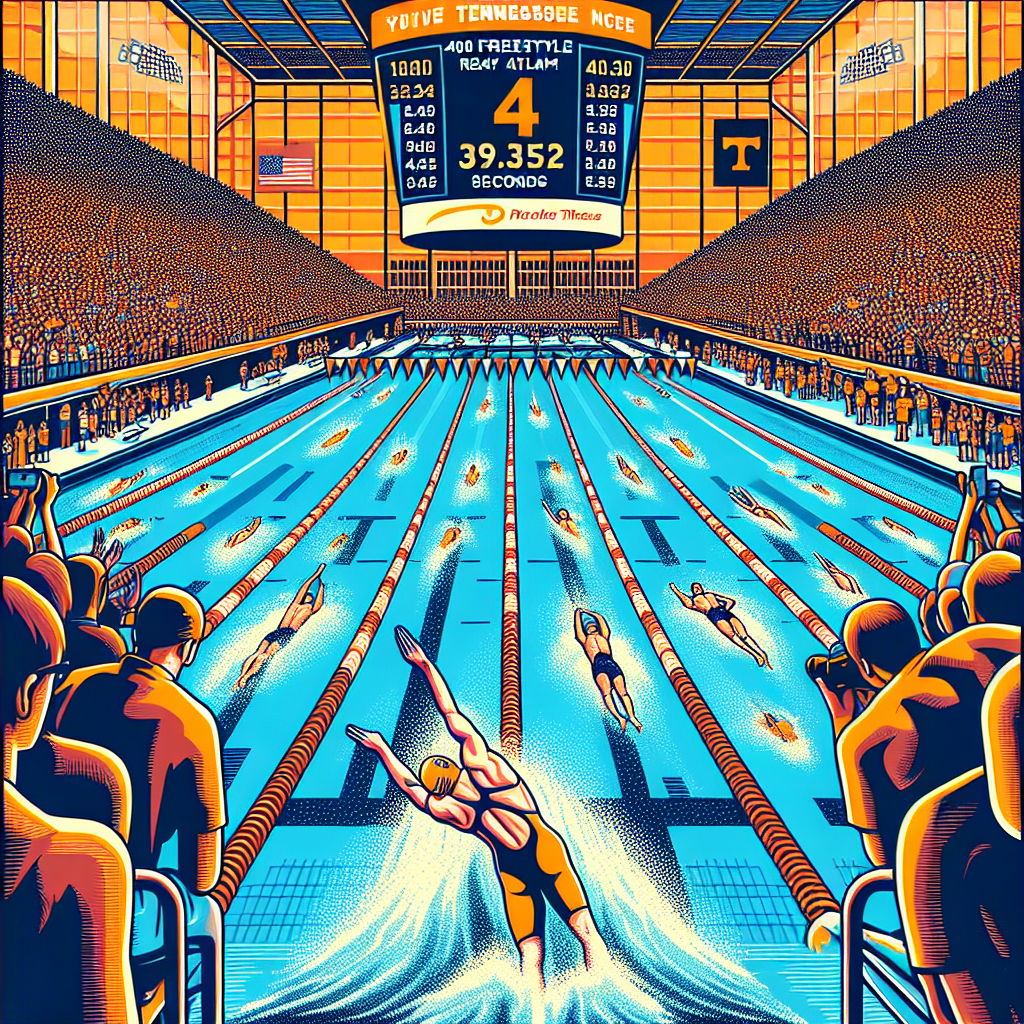
Tennessee breaks NCAA Record in 400 Freestyle Relay, Jordan Crooks Splits 39.52 – SwimSwam | Analysis by Brian Moineau

Tennessee breaks NCAA Record in 400 Freestyle Relay, Jordan Crooks Splits 39.52 - SwimSwam | Analysis by Brian Moineau

**Breaking Waves and Records: Tennessee’s Stellar Performance in the 400 Freestyle Relay**

In the world of competitive swimming, where every millisecond counts, breaking records is akin to rewriting history. Recently, the Tennessee Volunteers swim team carved their name into the annals of NCAA history by setting a new record in the 400 freestyle relay. This achievement was highlighted by a sensational performance from Jordan Crooks, who swam the fastest relay split ever recorded at a blistering 39.52 seconds. It’s a feat that not only elevates the team but also sets a new benchmark for excellence in collegiate swimming.

Jordan Crooks, the linchpin of this historic relay, is rapidly becoming a household name in the swimming community. Known for his exceptional speed and fluid technique, Crooks is a testament to the adage that hard work and dedication yield extraordinary results. His split time of 39.52 seconds is not just a personal best but a beacon for future swimmers aiming to leave their mark.

The Tennessee Volunteers’ new record time of 2:42.41 in the 400 freestyle relay is a testament to the synergy and collective prowess of the team. It’s a reminder of the power of teamwork in achieving seemingly impossible goals. Each swimmer brought their A-game, contributing to a performance that will be remembered for years to come.

This remarkable achievement parallels other significant events in the sports world, where setting new records and achieving firsts are celebrated across disciplines. Consider the recent breakthroughs in technology-driven sports analytics, which are revolutionizing how athletes train and compete. These advancements echo the precision and dedication seen in Tennessee’s swim team, highlighting a broader trend of innovation and excellence across sports.

Jordan Crooks’ achievement brings to mind the inspiring stories of other sports icons who have pushed the boundaries of what is possible. For instance, Usain Bolt’s record-breaking sprints or Michael Phelps’ dominance in the pool during the Olympics serve as reminders of the heights that can be reached with unyielding determination and a touch of genius. Crooks, with his incredible relay split, is on a path that could see him joining the ranks of such legends.

Reflecting on this accomplishment, it’s important to consider the role of coaching and support staff in nurturing talent. Tennessee’s coaching team deserves immense credit for cultivating an environment where athletes can thrive and break barriers. Their strategic guidance and motivational prowess are integral to the team’s success.

In conclusion, Tennessee’s record-breaking performance in the 400 freestyle relay is a celebration of human potential and perseverance. It’s a story that inspires not just swimmers, but anyone striving to achieve greatness in their field. As we cheer on these athletes, let’s also take a moment to appreciate the support networks and innovations that propel them forward. Here’s to more broken records and the relentless pursuit of excellence.

Read more about AI in Business

Read more about Latest Sports Trends

Read more about Technology Innovations

Nebraska Men’s Basketball Embarrassed at Last-Place Penn State – Sports Illustrated | Analysis by Brian Moineau

Nebraska Men's Basketball Embarrassed at Last-Place Penn State - Sports Illustrated | Analysis by Brian Moineau

**Title: Nebraska Men's Basketball: A Rough Night at State College and Lessons in Resilience**

Sports fans, brace yourselves. The Nebraska Cornhuskers' recent trip to State College turned into a night they'd likely prefer to forget. Facing off against the Penn State Nittany Lions, a team that had been laboring through a seven-game losing streak and anchoring the bottom of the Big Ten standings, the Huskers were expected to emerge victorious. However, the outcome was a sobering reminder that in sports, anything can happen, and sometimes, it's not in your favor.

**The Game That Wasn't**

For Nebraska, this was supposed to be a relatively straightforward match-up. On paper, the Nittany Lions seemed like an easy target—struggling and desperate for a win. Yet, the beauty and heartbreak of sports lie in their unpredictability. The Huskers were handed an unexpected defeat, a humbling experience that echoed the classic sports adage: underestimate your opponent at your own peril.

**A Broader Perspective**

If we zoom out a little, this game offers a microcosm of larger life lessons. In an era where uncertainty has become the norm—consider the unpredictability of global markets or the ever-changing dynamics of international relations—it's essential to remember that resilience and adaptability are key. The Huskers' loss could serve as a sports metaphor for the resilience needed in today's world, whether in business, personal growth, or navigating a pandemic-altered landscape.

**The Coaching Factor**

Fred Hoiberg, Nebraska's head coach, knows a thing or two about bouncing back. With a coaching career that spans both the collegiate level and the NBA, Hoiberg's experiences have been a testament to the importance of resilience. His journey has seen its ups and downs, much like this season for Nebraska. His challenge now is to rally his team, instilling in them the belief that a setback is just a setup for a comeback.

**Parallels in the Sports World**

This scenario isn't unique to Nebraska. In the broader sports world, we often witness similar stories. For instance, consider Leicester City's unlikely triumph in the English Premier League in 2016. Their victory defied all odds and reminded us that no team should be underestimated. Similarly, the Huskers can draw inspiration from such stories, using their setback as a stepping stone toward future success.

**Final Thoughts**

While Nebraska's defeat at the hands of Penn State is undoubtedly disappointing for fans and players alike, it's a valuable opportunity for growth and learning. In the world of sports, as in life, challenges and setbacks are inevitable. What defines us is how we respond to them. The Huskers now have the chance to regroup, refocus, and come back stronger.

So, to the Nebraska fans, take heart. Every defeat is a lesson, and every lesson is a step toward future victories. The road ahead may be tough, but with resilience and determination, the Huskers can transform this challenging moment into a catalyst for growth. Keep cheering, keep believing, and remember: the best stories often begin with a little adversity.

Read more about AI in Business

Read more about Latest Sports Trends

Read more about Technology Innovations

2025 college football coaching carousel grades: Rich Rodriguez’s return to West Virginia earns perfect mark – CBS Sports | Analysis by Brian Moineau

2025 college football coaching carousel grades: Rich Rodriguez's return to West Virginia earns perfect mark - CBS Sports | Analysis by Brian Moineau

### Rolling Back the Years: A Light Take on the 2025 College Football Coaching Carousel

Ah, the coaching carousel in college football—it's like the Oscars of the gridiron world, an annual event that never fails to entertain with its unexpected plot twists and star-studded cast. As we look at the 2025 edition, two names jump out with the kind of intrigue that could rival a Hollywood blockbuster: Rich Rodriguez and Bill Belichick. These two coaching titans have taken the plunge into new ventures, and it's already making waves.

#### Rich Rodriguez: A Homecoming Fit for a King

First up, we have Rich Rodriguez, a name that is synonymous with high-octane offenses and a bit of controversy—hey, who doesn't love a good comeback story? With his return to West Virginia, Rodriguez has earned himself a perfect mark, and for good reason. It's as if the Mountaineers have opened a time capsule and brought back the maestro who orchestrated their rise to national prominence in the mid-2000s.

Rodriguez's tenure at West Virginia from 2001-2007 was nothing short of transformative. Under his leadership, the Mountaineers became a force to be reckoned with, culminating in a stunning Sugar Bowl victory in 2006. His innovative spread offense left defenses bewildered and fans thrilled, creating a legacy that still resonates in Morgantown.

But, like any compelling drama, Rodriguez's story had its ups and downs. His departure to Michigan left a bitter taste, but hey, time heals all wounds, right? Fast-forward to 2025, and the prodigal son has returned. It's like a classic rock band reuniting for one last tour—nostalgic, exciting, and filled with promise.

#### Bill Belichick: The NFL Legend Turns Tar Heel

Meanwhile, Bill Belichick's transition to college football at North Carolina has been met with an 'A-' grade. Belichick, the mastermind behind the New England Patriots dynasty, needs no introduction. With six Super Bowl rings and a reputation for turning the mundane into the magical, his move to the collegiate ranks is akin to Shakespeare deciding to dabble in children's literature.

It's a bold move for the Tar Heels, and one that has the college football world buzzing. Belichick's approach is famously meticulous, and his ability to adapt will be put to the test. However, if there's one thing we've learned from his NFL career, it's to never underestimate the man in the hoodie.

His arrival at UNC feels like a chess grandmaster taking up checkers—will his strategic brilliance translate to the college game? Early signs are promising, but as with any great narrative, only time will tell.

#### Connecting the Dots: Football and Beyond

This year's coaching carousel isn't just about football; it mirrors broader trends in the world. Just as companies are pivoting post-pandemic, with leaders taking on new challenges and industries, so too are these coaches embracing fresh opportunities. It's a reminder of the ever-evolving landscape of sports and business alike, where adaptability and vision are key.

Moreover, this shift in coaching dynamics comes at a time when college football itself is undergoing significant changes, with conference realignments and NIL (Name, Image, Likeness) deals reshaping the sport. Coaches like Rodriguez and Belichick are not just navigating a new environment—they're helping redefine it.

#### Final Thoughts

In the grand tapestry of college football, 2025's coaching carousel is a vibrant, unpredictable stroke of genius. Rich Rodriguez's return to West Virginia is a heartwarming homecoming, while Bill Belichick's venture into North Carolina adds a layer of intrigue that only a seasoned legend can provide. As fans, we're in for a season of surprises, strategies, and hopefully, scintillating success.

So here’s to the new chapters in these storied careers—may they be filled with touchdowns, triumphs, and a touch of the unexpected. After all, that's what makes college football, and life, so wonderfully unpredictable.

Read more about AI in Business

Read more about Latest Sports Trends

Read more about Technology Innovations