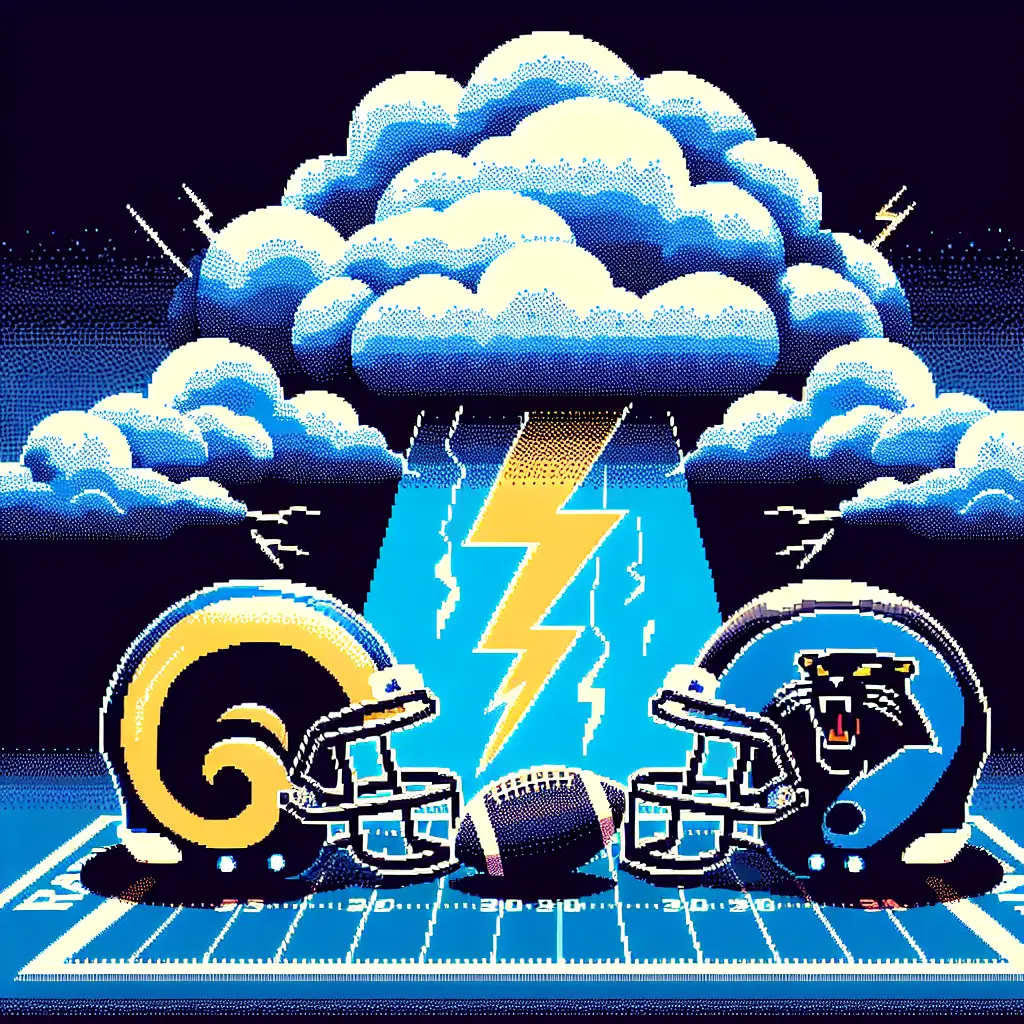
When the calendar says January but the sky says September
The sky over Bank of America Stadium looked like it had missed the memo. On a Saturday that should have felt like the crisp business of playoff football, Charlotte baked and brooded under a midwinter atmosphere more suited to late summer thunderheads. The Rams and Panthers didn’t just play each other — they played the weather, too, with thunderstorms and gusts hovering over kickoff and the NFL’s carefully timed broadcast windows.
Why the weather mattered more than a weather report
- The Rams-Panthers wild-card kickoff was scheduled for 4:30 p.m. ET, with Packers-Bears set to stream at 8:00 p.m. ET. A lightning delay in the early game could push the later streamable game into overlapping territory — something the league can only partially manage (it can shift a kickoff by 10 minutes, per league guidance). (nbcsports.com)
- Forecast models and local meteorologists flagged a solid chance of thunderstorms, gusty winds and sustained precipitation during kickoff and into the second half. That wasn’t just uncomfortable for fans; it changes punt dynamics, the passing game, field footing and coaching calculus in real time. (wral.com)
- Weather narratives aren’t new in football, but they take on outsized importance in the playoffs: a sudden thunder delay can complicate broadcasters’ schedules, strain team routines and turn momentum on its head. NBC Sports flagged the structural issue — two playoff games possibly running at once — as an NFL logistics headache. (nbcsports.com)
Setting the scene: the context that matters
- Playoff stakes: This was Wild Card Weekend — the margin for error is thin and every win, timeout and coaching choice magnifies. Teams plan for wind and rain during the season, but postseason weather can still be a curveball. (nbcsports.com)
- Local forecast consensus: Multiple outlets and meteorologists warned of thunderstorms and gusts up to the mid-30s (mph) with a high probability of precipitation during the afternoon into evening — effectively a recipe for slippery balls and improvised clock management. (wral.com)
- The game’s outcome: Despite the weather tangles and drama, the Rams won a tight one, 34–31, with a last-minute touchdown that ultimately decided the contest. The elements added texture to an already dramatic finish. (reuters.com)
What the weather actually changed on the field
- Quarterback play and play-calling: Rain and wind nudge offenses toward shorter throws, quicker releases and more emphasis on the run game. For teams that rely on timing routes, even slight precipitation can disrupt rhythm — and force mid-drive adjustments. (sports.yahoo.com)
- Special teams volatility: Punting and kicking become lotteries when gusts gust across the stadium. Field position swings and blocked-kick opportunities gain weight in the win probability model. Local forecasts and game-day notes warned fans to watch the punting game. (wral.com)
- Broadcast and scheduling headaches: The NFL’s limited flexibilities — a 10-minute slide for a later kickoff, contingency plans for delays — are blunt instruments when lightning’s involved. If the early game stalls, networks, streaming services and in-stadium operations must improvise, while viewers juggling multiple platforms can miss decisive stretches. (nbcsports.com)
Lessons for fans, teams and broadcasters
- Fans: Pack an umbrella and temper expectations for perfect football weather — and expect possible broadcast delays or overlap. If you’re streaming another game later, be ready for timing shifts. (foxsports.com)
- Teams: Build weather drills into playoff prep. The ability to pivot quickly — shift to quick-game passing, protect against gusts, adjust punt formation — becomes a competitive advantage. (sports.yahoo.com)
- Broadcasters and leagues: This is a reminder that modern scheduling — with linear and streaming rights layered — needs more nimble contingency plans for weather disruptions, especially as extreme-weather patterns become less predictable. The NFL’s 10-minute leeway is useful but limited. (nbcsports.com)
A few memorable in-game moments shaped by the conditions
- Tight finishes feel tighter when a slippery ball makes a contested catch harder, or when a gust sends a kickoff farther than expected. The Rams’ last-minute drive that clinched a 34–31 victory carried extra drama against a backdrop of overcast, wind-swept stands. (reuters.com)
My take
Weather has a way of reminding us that football — even in January’s playoff theater — is played outdoors, subject to the same temperament as any other natural event. The Rams-Panthers game was a small case study in adaptability: teams adjust play-calling, special teams get riskier, and broadcasters juggle time slots. As fans we romanticize the “pure” postseason atmosphere; reality is more interesting. Storms, delays and gusts don’t just change outcomes — they give playoff games their cinematic texture.
Final thoughts
The calendar may say January, but the sky doesn’t check schedules. That mismatch is part of what keeps playoff football compelling. Weather can be an antagonist, an equalizer, and sometimes a plot twist — and this Rams-Panthers wild-card contest had all three. Whether you remember the game for the final drive or the thunderstorms rumbling above, it’s a reminder that in football the elements are always in play.
Sources
-
Rams-Panthers game includes threat of thunderstorms – NBC Sports
https://www.nbcsports.com/nfl/profootballtalk/rumor-mill/news/rams-panthers-game-includes-threat-of-thunderstorms/ (nbcsports.com) -
Gameday forecast: Showers, gusty winds in Charlotte when Panthers play Rams – WRAL
https://www.wral.com/weather/panthers-wild-card-game-forecast-january-2026/ (wral.com) -
Rams survive and advance, defeat Panthers 34-31 – NBC Sports
https://www.nbcsports.com/nfl/profootballtalk/rumor-mill/news/rams-survive-and-advance-defeat-panthers-34-31 (nbcsports.com) -
Matthew Stafford's last-minute TD lifts Rams over Panthers in wild-card game – Reuters
https://www.reuters.com/sports/nfl/matthew-staffords-last-minute-td-pass-lifts-rams-over-panthers-wild-card-game–flm-2026-01-11/ (reuters.com) -
Rams vs Panthers Weather & Odds Watch for Wild Card Weekend – Yahoo Sports
https://sports.yahoo.com/articles/rams-vs-panthers-weather-odds-210700158.html (sports.yahoo.com)
Related update: We recently published an article that expands on this topic: read the latest post.
Related update: We recently published an article that expands on this topic: read the latest post.