Trump’s 10% Credit Cap: Feasible | Analysis by Brian Moineau

Will a 10% Cap on Credit Card Interest Rates Fly? A look at Trump's latest push

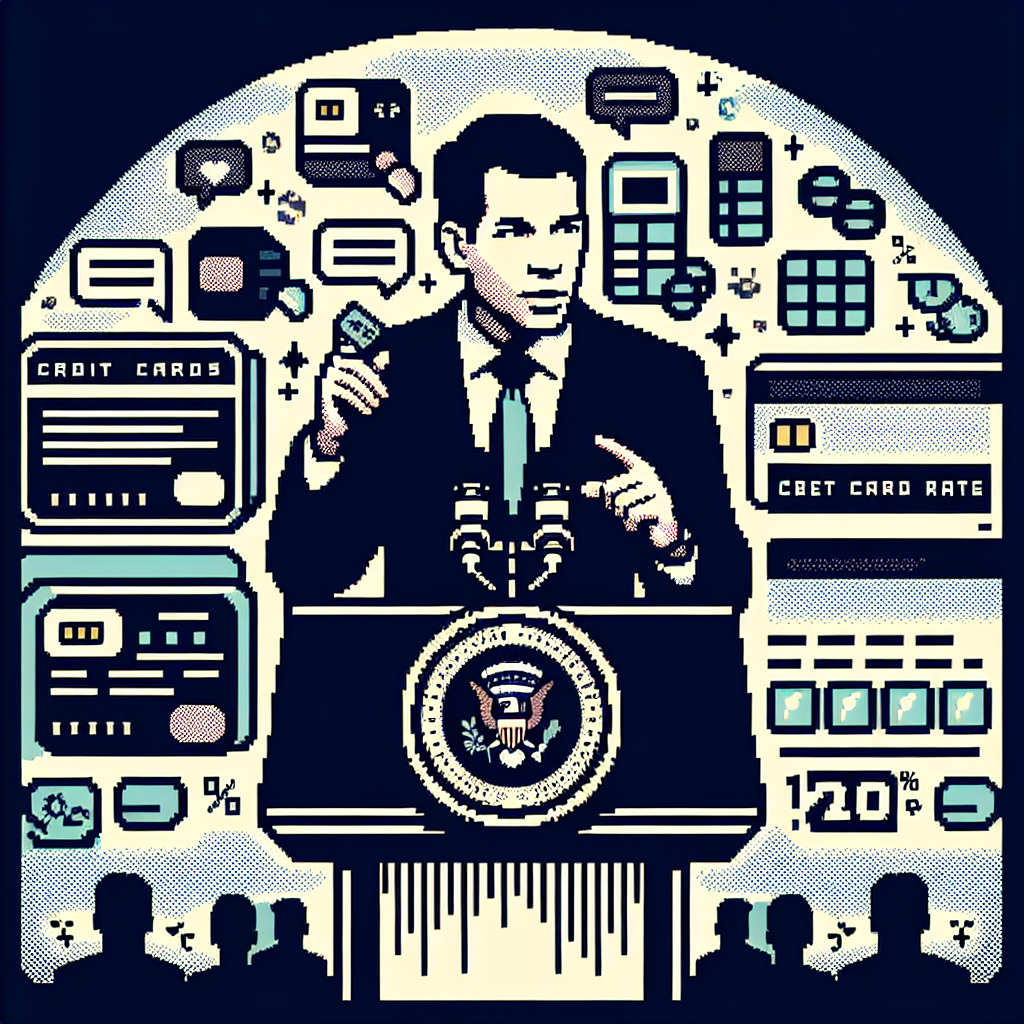
A punchy Truth Social post — and a bold promise: a one-year cap on credit card interest at 10% starting January 20, 2026. It reads like a populist balm for households drowning in high-rate debt, but the announcement raised an immediate and obvious question: how would it actually work? The president offered no enforcement details, no legislative text and no clear path to make banks comply. That gap is where the real story lives.

Why this matters right now

  • U.S. credit card balances and interest burdens are headline issues for many households; credit-card APRs averaged near 20% in recent years.
  • Capping rates at 10% would materially reduce interest payments for millions of cardholders — and compress revenues for card issuers that rely on interest income.
  • Any abrupt regulatory change could alter credit availability, lending pricing models, rewards programs and the broader consumer finance market.

What the announcement said — and what it didn't

  • The president called for a one-year cap at 10% and said it would take effect January 20, 2026. (reuters.com)
  • He did not provide implementing details: no executive order text, no proposed statute, no explanation of enforcement mechanisms, and no guidance about exemptions (e.g., business cards, store cards, secured cards). (reuters.com)

A quick reality check: legal and practical hurdles

  • Federal law and regulatory authority: Major changes to interest-rate limits generally require legislation or changes to existing regulatory rules. An administrative unilateral cap across all card issuers — imposed overnight — would face constitutional, statutory and logistical obstacles. Congress is the usual route for rate caps affecting private contracts. (reuters.com)
  • Market reactions: Banks and card issuers earn substantial net interest income from high-rate cards. A 10% cap would squeeze margins, likely triggering responses such as:
    • Tighter underwriting (fewer cards for lower-score borrowers).
    • Higher fees in other areas (annual fees, origination or late fees).
    • Reduced rewards and perks tied to interchange or interest spread.
    • Potential exit or consolidation in riskier business lines. (washingtonpost.com)
  • Consumer access trade-off: Historical and state examples show interest caps can improve affordability for existing borrowers but may reduce credit access for subprime or thin-file consumers. That trade-off is central to the policy debate. (washingtonpost.com)

Who would win and who might lose

  • Potential winners
    • Existing cardholders who carry balances would likely pay much less interest while the cap is in place.
    • Consumers in the middle of the credit spectrum might see near-term relief if banks keep accounts open and pricing stable.
  • Potential losers
    • Subprime borrowers or applicants with low credit scores could face reduced access as issuers reprice risk or pull back.
    • Investors in major card issuers could see profit hit and volatility in bank stocks.
    • Small merchants and consumers who depend on card rewards could lose benefits if issuers cut programs to offset lost interest revenue. (barrons.com)

Politics and timing

  • The proposal dovetails with political messaging about affordability and “taking on” big financial firms — a resonant theme in an election-year environment. It echoes earlier bipartisan bills and activist pressure from lawmakers such as Senators Bernie Sanders and Josh Hawley, who previously backed a similar 10% idea. (theguardian.com)
  • Industry groups quickly criticized the move, warning of reduced credit access and unintended consequences; some lawmakers praised the idea but noted it requires legislation. The president’s lack of detailed implementation planning drew skepticism from both critics and some supporters. (washingtonpost.com)

What implementation might realistically look like

  • Congressional path: A statute that amends consumer lending rules or establishes a temporary rate cap is the most straightforward legal path — it would require votes in the House and Senate and reconciliation with existing federal and state usury laws. (reuters.com)
  • Regulatory tools: Agencies (e.g., CFPB, Fed, Treasury) can issue rules or guidance, but imposing a across-the-board APR ceiling without Congress is legally risky and likely to be litigated. Any regulatory approach would also need to reconcile federal preemption and state usury regimes.
  • Phased or targeted design: A more politically viable and economically nuanced approach could target specific practices (penalty APRs, junk fees, or certain high-cost “store cards”) rather than a blunt across-the-board APR cap, reducing shock to credit markets.

How consumers should think about it now

  • Short term: Expect headlines, political theater and statements from banks. Actual change — if any — will take time and likely require legislative action or complex regulatory steps.
  • If you carry card debt: Focus on basics — shop rates, consider balance transfers where feasible (watch fees and limits), and prioritize paying down high-interest balances.
  • Watch the details: Any real policy will hinge on exemptions, definitions (APR vs. retroactive rates), and enforcement mechanisms — those details will determine winners, losers and the depth of impact.

My take

The 10% cap is a bold, attention-grabbing proposal that taps real consumer pain around credit-card interest. But without a clear path to implementation, it’s more a political signal than an immediate fix. If policymakers want durable, pro-consumer change, the conversation needs to move from headlines to crafted policy design: targeted statutory language, guardrails to preserve safe access to credit, and attention to how issuers might shift costs. Done thoughtfully, lowering excessive consumer-costs is achievable; done abruptly, it risks pushing vulnerable borrowers into riskier alternatives.

Further reading

  • For reporting on the announcement and early responses, see Reuters and The Guardian (non-paywalled summaries and context). (reuters.com)

Sources


Related update: We recently published an article that expands on this topic: read the latest post.


Related update: We recently published an article that expands on this topic: read the latest post.


Related update: We recently published an article that expands on this topic: read the latest post.

Tech industry tried reducing AI’s pervasive bias. Now Trump wants to end its ‘woke AI’ efforts – AP News | Analysis by Brian Moineau

Tech industry tried reducing AI’s pervasive bias. Now Trump wants to end its ‘woke AI’ efforts – AP News | Analysis by Brian Moineau

Title: Navigating the Crossroads: AI, Bias, and the Quest for Balance

In a world where technology intertwines with every facet of our lives, the journey towards creating equitable AI systems has become a central narrative. Recently, the debate has taken a new turn with former President Donald Trump’s opposition to what he calls “woke AI” efforts, potentially shifting the tech industry’s direction. This development is reminiscent of a world on the brink of a technological crossroads, where the balance between innovation and ethics is more crucial than ever.

Artificial intelligence, once a fantastical concept, is now a tangible part of our everyday lives. From voice-activated assistants to personalized content recommendations, AI’s reach is extensive. However, the technology’s pervasive bias has been a point of contention, as highlighted in a recent article from AP News. The piece discusses how industry leaders, like Google, have made strides towards inclusivity by collaborating with experts, such as sociologist Ellis Monk, to ensure AI products serve a diverse global population. This drive for inclusivity isn’t just a moral imperative but also a business necessity in a world where nearly two-thirds of the population comprises people of color.

Yet, as with many progressive initiatives, resistance has emerged. Former President Trump’s call to end “woke AI” efforts reflects a broader cultural and political pushback against initiatives perceived as overly progressive or pandering to political correctness. This sentiment echoes a recurring theme in global politics, where technological advancements are scrutinized through the lenses of ideological belief.

The tech industry’s battle with bias isn’t new. As AI systems learn from vast datasets, they inadvertently mirror the prejudices embedded in those data. A well-documented example is the facial recognition technology that performs better on lighter skin tones than darker ones. This discrepancy has led to wrongful arrests and misidentifications, stirring public outcry and legislative scrutiny. It’s a reminder of the profound impact AI can have when it fails to account for diversity.

The significance of addressing AI bias extends beyond tech circles. In healthcare, biased algorithms can lead to disparities in treatment recommendations. In finance, they can affect loan approvals. The ripple effect of unaddressed bias in AI systems can perpetuate systemic inequalities, making the quest for fair AI not just a tech issue but a societal one.

Parallel to the tech world, the entertainment industry has faced similar reckonings. Hollywood, for instance, has been under pressure to diversify its storytelling and representation, recognizing the power of media to shape societal norms. The recent success of films like “Black Panther” and “Crazy Rich Asians” showcases the commercial viability of inclusivity, mirroring the tech industry’s realization that diversity drives innovation and growth.

Returning to Ellis Monk, his role in this narrative is crucial. As a sociologist and a voice for inclusivity, his contributions are a testament to the interdisciplinary approach needed to tackle AI bias. His work underscores the importance of blending social sciences with technological development to create systems that are not only efficient but also equitable.

As we stand at this technological crossroads, it’s essential to consider the broader implications of halting efforts to make AI more inclusive. While the debate over “woke AI” continues, it serves as a reminder of the delicate balance between innovation and ethics. The tech industry’s challenge is not just to create smarter systems but to ensure those systems work for everyone.

In conclusion, the journey towards inclusive AI is far from over. It requires a concerted effort from technologists, policymakers, and society at large to navigate the complexities of bias and ensure technology serves as a force for good. As we move forward, let us remember that the true measure of progress is not just in the sophistication of our technology but in its ability to uplift and empower all individuals, regardless of their background.

Read more about AI in Business

Read more about Latest Sports Trends

Read more about Technology Innovations


Related update: We recently published an article that expands on this topic: read the latest post.

Stock Market News Today: Dow Moves Higher; Netflix, Affirm Stocks in Focus — Live Updates – The Wall Street Journal | Analysis by Brian Moineau

Stock Market News Today: Dow Moves Higher; Netflix, Affirm Stocks in Focus — Live Updates - The Wall Street Journal | Analysis by Brian Moineau

Riding the Market Waves: Netflix, Affirm, and the Dow’s Dance

Hello, fellow market watchers and casual financial enthusiasts! Today we embark on a delightful journey through the latest happenings in the stock market, turning our gaze towards the Dow's modest climb and the spotlight on Netflix and Affirm. If you're someone who enjoys the thrill of the stock ticker as much as a gripping Netflix series, this one's for you.

The Dow’s Subtle Ascent

Let's start with the Dow Jones Industrial Average, which recently decided to move a little higher. Picture it as a seasoned marathon runner—pacing itself, knowing when to push, and when to conserve energy. It's not always about dramatic sprints; sometimes, a steady, incremental pace wins the race. Right now, the Dow is just doing its thing, quietly making gains while the world watches.

This uptick might seem like just another blip, but it’s a reminder of the market's resilience. Despite the myriad of global challenges, from geopolitical tensions to economic uncertainties, the market continues to find its footing. It's worth noting that this not-so-dramatic rise comes amidst broader economic narratives, such as the Federal Reserve's ongoing decisions around interest rates, which always have investors holding their breath.

Netflix: More Than Just Binge-Worthy

Now, let’s talk about the streaming giant, Netflix. While we might know Netflix for its ability to make us lose track of time with just one more episode, investors know it for its strategic plays and market influence. Recently, Netflix has been a stock to watch, as it continues to navigate the competitive waters of the streaming world. With new content constantly in the pipeline and strategic moves like venturing into gaming, Netflix is not just sitting back and enjoying its laurels.

Consider how Netflix has changed the entertainment landscape—its aggressive content production strategy, focus on global markets, and innovative storytelling have set new standards. This is akin to its stock performance, where innovation and adaptation remain key to staying relevant and attractive to investors.

Affirm's Affirmation

Then there's Affirm, the buy-now-pay-later (BNPL) service that's been on the radar. In a world where consumer habits are rapidly evolving, Affirm's model has gained traction, particularly among younger generations who seek flexibility in their purchasing power. As Affirm captures market share and continues to grow, its performance is closely watched by investors who see the potential in this evolving sector.

Affirm's story is part of a broader narrative about changing consumer finance trends. The rise of fintech and digital payment solutions illustrates a shift in how people interact with money—traditional banks are no longer the sole players. This sector's dynamism mirrors the innovation-driven growth seen in tech stocks over the past decade.

A World of Connections

Beyond the stock market, these developments are interwoven with broader global themes. For instance, the growing emphasis on digital transformation across industries mirrors the tech-driven strategies of Netflix and Affirm. Additionally, as sustainability and ethical consumerism gain traction, companies that align with these values may find favor with both consumers and investors.

Final Thoughts

In the grand tapestry of the financial world, today's market movements are another thread contributing to a larger narrative of resilience, innovation, and adaptation. Whether you're invested or simply interested, it's fascinating to watch how companies like Netflix and Affirm navigate their unique challenges and opportunities.

As we keep our eyes on the market, let's remember that behind every stock ticker is a story—a story of strategy, ambition, and the pursuit of growth. So, whether you're waiting for the next big market update or the next binge-worthy series, rest assured, there's always something exciting on the horizon. Until next time, happy watching and investing!

Read more about AI in Business

Read more about Latest Sports Trends

Read more about Technology Innovations