Microsofts AI Ultimatum: Humanity First | Analysis by Brian Moineau

When a Tech Giant Says “We’ll Pull the Plug”: Microsoft’s Humanist Spin on Superintelligence

The image is striking: a company with one of the deepest pockets in tech quietly promising to shut down its own creations if they ever become an existential threat. It sounds like science fiction, but over the past few weeks Microsoft’s AI chief, Mustafa Suleyman, has been saying precisely that — and doing it in a way that tries to reframe the whole conversation about advanced AI.

Below I unpack what he said, why it matters, and what the move reveals about where big players want AI to go next.

Why this moment matters

  • Leaders at the largest AI firms are no longer just debating features and market share; they’re arguing about the future of humanity.
  • Microsoft is uniquely positioned: deep cloud, vast compute, a close-but-separate relationship with OpenAI, and now an explicit public pledge to prioritize human safety in its superintelligence ambitions.
  • Suleyman’s language — calling unchecked superintelligence an “anti-goal” and promoting a “humanist superintelligence” instead — reframes the technical race as a values problem, not merely an engineering one.

What Mustafa Suleyman actually said

  • He warned that autonomous superintelligence — systems that can set their own goals and self-improve without human constraint — would be very hard to contain and align with human values.
  • He described such systems as an “anti-goal”: powerful for the sake of power is not a positive vision.
  • Microsoft could halt development if AI risk escalated to a point that threatens humanity; Suleyman framed this as a real responsibility, not PR theater.
  • Rather than chasing unconstrained autonomy, Microsoft says it will pursue a “humanist superintelligence” — designed to be subordinate to human interests, controllable, and explicitly aimed at augmenting people (healthcare, learning, science, productivity).

(Sources linked below reflect his interviews, blog posts, and coverage across outlets.)

The investor and industry dilemma

  • Pressure for performance: Investors and customers expect tangible returns from AI investments (products like Copilot, cloud revenue, optimization). Slowing the pace for safety can be costly.
  • Risk of competitive leak: If one major player decelerates while others keep pushing, the safety-first company may lose market position or influence over standards.
  • Yet reputational and regulatory risk is real: companies seen as reckless invite stricter rules, public backlash, and long-term damage.

Microsoft’s stance reads like a bet that establishing a safety-first brand and norms will pay off — both ethically and strategically — even if it means moving more carefully.

Is Suleyman’s “humanist superintelligence” feasible?

  • Technically, the idea of heavily constrained, human-centered models is plausible: you can limit autonomy, add human-in-the-loop controls, and prioritize interpretability and robustness.
  • The big challenge is alignment at scale: ensuring complex, highly capable systems reliably follow human values in edge cases remains unsolved in research.
  • There’s also the governance question: who decides the threshold for “shut it down”? Internal boards, regulators, or multi-stakeholder panels? The answer matters enormously.

The wider debate: democracy, regulation, and narrative

  • Suleyman’s rhetoric pushes back on two trends: (1) a competitive “whoever builds the smartest system wins” race, and (2) a cultural drift toward anthropomorphizing AIs (calling them conscious or deserving rights).
  • He argues anthropomorphism is dangerous — it can mislead users and blur responsibility. That perspective has supporters and critics across academia and industry.
  • This conversation will influence policy. Public commitments by heavyweight companies make it easier for regulators to design realistic oversight because they signal which controls the industry might accept.

Practical implications for businesses and developers

  • Expect more emphasis on safety engineering, red teams, and orchestration platforms that keep humans in control.
  • Companies building on advanced models will likely face stronger documentation, audit expectations, and questions about fallback/shutdown plans.
  • For developers: design for graceful degradation, explainability, and human oversight. Those are features that will count commercially and legally.

Signs to watch next

  • Specific governance mechanisms from Microsoft: independent audits, kill-switch designs, escalation protocols.
  • How Microsoft defines the threshold for existential risk in operational terms.
  • Reactions from competitors and regulators — cooperation or competitive divergence will reveal whether this is a new norm or a lone ethical stance.
  • Research milestones and whether Microsoft pauses or limits certain capabilities in public models.

A few caveats

  • Promises matter, but incentives and execution matter more. Words don’t equal action unless paired with transparent governance and technical controls.
  • “Shutting down” an advanced model is nontrivial in distributed systems and in ecosystems that mirror models across many deployments.
  • The broader AI ecosystem includes many players (open, academic, state actors). Microsoft’s choice matters — but it cannot by itself eliminate global risk.

Things that give me hope

  • Public-facing commitments like this push the safety conversation into boardrooms and legislatures — a prerequisite for collective action.
  • Building human-first systems can deliver valuable benefits (healthcare, climate, education) while constraining dangerous uses.
  • The debate is maturing: more voices are recognizing that capability progress and safety must be coupled.

Final thoughts

Hearing a major AI leader say “we’ll walk away if it gets too dangerous” is morally reassuring and strategically savvy. It signals a shift from bravado to responsibility. But the hard work lies ahead: translating this ethic into rigorous technical limits, transparent governance, and multilateral agreements so that “pulling the plug” isn’t just a slogan but a real, enforceable safeguard.

We’re in an era where the decisions of a few large firms will shape the technology that shapes everyone’s lives. If Suleyman and Microsoft make good on their stance, they could help create a model where innovation and caution coexist — and that’s a narrative worth following closely.

Quick takeaways

  • Microsoft’s AI head frames unconstrained superintelligence as an “anti-goal” and promotes a “humanist superintelligence.”
  • The company says it would halt development if AI posed an existential risk.
  • The pledge is significant but must be backed by clear governance, technical controls, and broader cooperation to be effective.

Sources

When Halo Becomes a Weapon of Politics | Analysis by Brian Moineau

When a Sci‑Fi Icon Gets Drafted Into Real‑World Violence: Halo, AI and the Cost of Dehumanizing Rhetoric

There’s something gut‑level unnerving about seeing your favorite fictional world repurposed as a weapon. Imagine turning a beloved sci‑fi shooter — a series that millions grew up with — into a rallying cry to “destroy” people in the real world. That’s exactly what happened late October 2025 when U.S. government social posts used AI‑generated images of Halo to promote immigration enforcement, prompting sharp condemnation from the franchise’s original creators.

This post untangles why that matters beyond fandom: the mix of cultural icons, generative AI, and political messaging isn’t just tone‑deaf — it risks normalizing language and imagery that have historically enabled dehumanization.

Key takeaways

    • The Department of Homeland Security and related accounts posted AI‑generated Halo imagery with slogans like “Destroy the Flood,” a clear analogy that equated migrants with the Flood, Halo’s parasitic antagonist.
    • Halo veterans including Marcus Lehto and Jaime Griesemer publicly condemned the posts as “absolutely abhorrent” and “despicable,” arguing the Flood were never intended as an allegory for immigrant populations.
    • The incident spotlights two bigger issues: how generative AI makes it trivially easy to weaponize copyrighted cultural IP for political messaging, and how dehumanizing metaphors (comparing groups to parasites) have dangerous historical resonance.
    • Microsoft — owner of the Halo IP — remained publicly noncommittal at the time, raising questions about corporate responsibility when IP is co‑opted for political ends.

The image, the reaction, and why it hurt

Late October 2025, an X (formerly Twitter) post tied to Homeland Security shared imagery of Spartans — Halo’s armored super‑soldiers — driving a Warthog beneath the Halo ring world with the words “Destroy the Flood” and a recruitment angle for ICE. The Flood, within the Halo lore, are a parasitic scourge: an enemy that strips away identity and consumes worlds.

On the surface it reads like a meme. But the implication was unmistakable: equate migrants with parasitic invaders and you’ve reduced human beings to a threat to be annihilated. That’s why key figures behind Halo were enraged. Marcus Lehto said the co‑option “really makes me sick,” while Jaime Griesemer called the ICE post “despicable” and warned it should offend every Halo fan, regardless of politics. Their responses highlight a core point: creators don’t control every context in which their work appears, but many feel a responsibility to object when their art is used to promote harm.

Why copyrighted IP and generative AI are a combustible mix

    • Generative AI tools can produce plausible, polished imagery quickly, making it easy for actors — state or private — to fabricate visuals that look “official.”
    • Cultural IP carries built‑in emotional and persuasive power. A Master Chief figure is shorthand for heroism, conflict and legitimacy for millions of players; recontextualized, it lends those feelings to the message being pushed.
    • Copyright and trademark law offer some remedies, but enforcement is slow and messy — and companies may choose not to act for political or business reasons. At the time of the incident, Microsoft’s public response was limited, leaving creators and fans to push back in public forums.

Generative AI amplifies asymmetries: anyone with basic tools can create imagery that looks like a brand’s or franchise’s official output, then weaponize it online. That’s why the debate isn’t just about one meme — it’s about how we govern visual truth and the ethical limits of deploying cultural capital in politics.

The deeper danger of dehumanizing metaphors

Describing a human group as “parasites,” “insects,” or “the flood” isn’t new; it’s an old rhetorical device that historically precedes violence. Comparing people to sub‑human entities strips moral complexity and makes extreme measures seem plausible or even righteous. Many commentators pointed out that equating migrants with the Flood echoes dangerous dehumanizing language that has been used before to justify abuses.

This is why creators’ outrage matters beyond fandom: it’s a cultural guardrail. When original storytellers push back, they’re not just protecting brand image; they’re resisting a narrative that turns complex social issues into a binary, extermination‑style frame.

Corporate silence and responsibility

Microsoft — current owner of Halo — reportedly declined to comment beyond minimal statements at the time. That silence fuels frustration. If brand IP is repurposed for political messaging that many view as harmful, stakeholders expect clearer action: takedown requests, public distancing, or at least moral clarity from those who own the rights.

But corporate responses are complicated by legal, political and business calculations. The episode exposes tension between platform enforcement, IP owners, and the public interest — a debate that will only intensify as AI image‑making becomes routine.

A short reflection

We live in a moment when imagery moves fast and the line between fiction and political persuasion blurs easily. Cultural icons are powerful because they belong to communities of fans whose shared meanings are shaped, defended and debated. When those icons get hijacked in ways that dehumanize real people, creators’ and communities’ voices matter — not just for brand protection, but for the health of public discourse.

If you care about the soul of the stuff you love, it’s worth paying attention to how it’s used, and calling out when popular culture is enlisted to justify harm. The Halo incident isn’t only a controversy about a videogame — it’s a warning about how tools and symbols can be misused unless we set clearer norms and faster remedies.

Sources


Related update: We recently published an article that expands on this topic: read the latest post.


Related update: We recently published an article that expands on this topic: read the latest post.


Related update: We recently published an article that expands on this topic: read the latest post.


Related update: We recently published an article that expands on this topic: read the latest post.

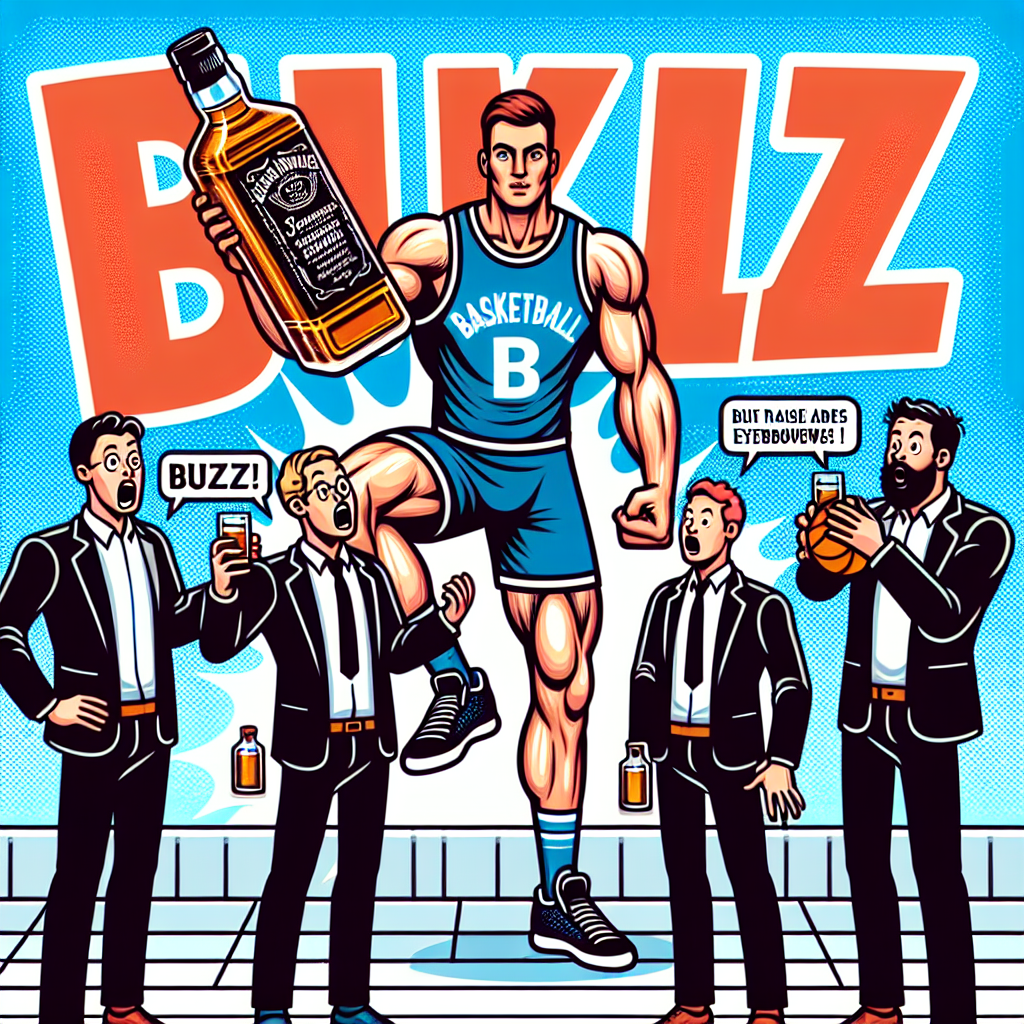
LeBrons Hennessy Ad: Buzz or Controversy? | Analysis by Brian Moineau

LeBron James’ Hennessy Ad: Buzz or Blunder?

When your name is LeBron James, every move you make is scrutinized, celebrated, and sometimes, just a little bit controversial. Recently, the basketball superstar took a bold step into the world of marketing with a new campaign featuring Hennessy, a brand that has long been synonymous with luxury and celebration. While the ad generated a significant amount of buzz, it also raised eyebrows among fans and branding experts alike. So, what exactly happened, and why is this campaign causing such a stir?

The Campaign and Its Context

LeBron’s partnership with Hennessy marks a notable intersection of sports, celebrity, and brand marketing. Hennessy, a name that resonates in the realms of high-end spirits, has often been associated with celebrations, success, and, yes, the hip-hop culture that permeates much of today’s media landscape. LeBron’s involvement with Hennessy isn’t entirely new; he has been seen enjoying the brand on various occasions and has even been linked to it through his extensive network of celebrity friends.

However, this campaign appears to have touched a nerve. While some fans embraced the collaboration as a savvy marketing move that could resonate well with younger audiences, others expressed concern over the implications of promoting alcohol, especially given LeBron’s status as a role model and advocate for health and wellness. Branding experts weighed in, noting that the duality of celebrity endorsements can often lead to mixed messages.

Key Takeaways

Brand Cross-Promotion: LeBron’s campaign with Hennessy highlights the power of celebrity branding, showcasing how collaborations can bridge different markets—sports and luxury spirits, in this case.

Cultural Relevance: The partnership taps into the cultural zeitgeist, particularly within the hip-hop community, where Hennessy has made significant inroads. This relevance can amplify the campaign’s reach among younger demographics.

Mixed Reactions: The ad has sparked debate, with some fans celebrating the bold move while others critique it as irresponsible. This illustrates the fine line brands must walk when leveraging celebrity endorsements.

The Role of Responsibility: With great influence comes great responsibility. LeBron’s status as a role model complicates his relationship with brands like Hennessy, particularly as discussions around alcohol consumption and its implications for youth continue to evolve.

Conversation Starter: Regardless of the opinions surrounding the ad, it has undeniably generated buzz and conversation—an essential goal for any marketing campaign in today’s crowded media landscape.

Conclusion: The Fine Line Between Buzz and Blunder

In the end, LeBron James’ Hennessy ad may just be another example of how the lines between sports, celebrity, and branding continue to blur. While it’s easy to critique the partnership based on individual principles, it’s also essential to recognize that the resulting buzz can often lead to meaningful conversations about responsibility, influence, and modern marketing strategies. As the dust settles, one thing is clear: when it comes to LeBron, there’s never a dull moment!

Sources

– Business Insider: “LeBron James’ Hennessy ad stunt generates buzz, but raises eyebrows among branding experts” [Business Insider](https://www.businessinsider.com/lebron-james-hennessy-ad-stunt-buzz-branding-experts-2023-10)


Related update: We recently published an article that expands on this topic: read the latest post.


Related update: We recently published an article that expands on this topic: read the latest post.


Related update: We recently published an article that expands on this topic: read the latest post.

Big Tech’s “Magnificent Seven” heads into earnings season reeling from Trump turbulence – AP News | Analysis by Brian Moineau

Big Tech’s “Magnificent Seven” heads into earnings season reeling from Trump turbulence - AP News | Analysis by Brian Moineau

Title: Tech Titans Tumble: Navigating Earnings Amid Presidential Turbulence

As the curtain rises on another quarterly earnings season for Big Tech, the industry’s elite—affectionately known as the “Magnificent Seven”—find themselves navigating stormy seas. The unexpected return of Donald Trump to the White House less than 100 days ago has stirred a pot of uncertainty, shaking the very foundations upon which these tech giants stand.

Trump’s political re-entry has reignited conversations around regulation, data privacy, and corporate responsibility. The tech behemoths, including the likes of Apple, Microsoft, and Alphabet, are now bracing for potential policy shifts that could impact everything from tax laws to content moderation standards. It’s a moment reminiscent of the challenges faced during Trump’s first tenure, where tech companies were frequently in the crosshairs for their handling of misinformation and political discourse.

A Magnificent Yet Muddled Seven

The “Magnificent Seven”—a term that conjures images of invincible gunslingers—now face a showdown of a different kind. These corporations are not just battling market expectations but are also contending with a political climate that’s as unpredictable as it is influential. It’s a stark reminder that even the most powerful companies are not immune to the winds of political change.

Take Meta, for instance, which has historically found itself at odds with Trump’s policies and rhetoric. With renewed scrutiny likely on the horizon, the company must carefully balance its platform policies with the free speech principles that Trump champions. Meanwhile, Amazon faces its own set of challenges, with antitrust discussions potentially gaining momentum under the new administration.

Connecting the Dots: Global Ripples

While the focus is firmly on Big Tech’s earnings, it’s essential to recognize the global context. The tech industry’s current quagmire is a microcosm of broader geopolitical tensions. Across the Atlantic, the European Union is ramping up its regulatory framework with the Digital Services Act and Digital Markets Act, aiming to curb the power of tech giants. This global regulatory push underscores the shifting landscape that these companies must navigate.

Moreover, the tech sector’s tribulations are not occurring in isolation. Industries worldwide are grappling with similar issues, from supply chain disruptions to evolving consumer expectations. The automotive industry, for instance, is undergoing a seismic shift towards electric vehicles, with companies like Tesla and Rivian feeling the pressure to innovate amidst regulatory changes and environmental concerns.

Trump’s Influence: A Double-Edged Sword

Donald Trump’s influence on the tech sector is undeniably profound. While his policies may pose challenges, they also offer opportunities for innovation and adaptation. His return has sparked debates about the role of tech in democracy, privacy, and national security. These discussions, though contentious, can drive positive change, encouraging tech companies to refine their strategies and reinforce their commitment to ethical practices.

In a world where tech and politics are inextricably linked, the “Magnificent Seven” must remain agile and resilient. This earnings season is a test not only of financial performance but also of their ability to navigate an ever-evolving landscape.

Final Thoughts

As we watch Big Tech’s earnings unfold, it’s crucial to remember that this is more than just a financial story. It’s a narrative about the intersection of technology, politics, and society. The challenges these companies face are emblematic of a world in flux, where innovation and regulation must find a delicate balance.

Ultimately, the resilience of the “Magnificent Seven” will be measured not just in dollars and cents but in their capacity to adapt, lead, and inspire in a rapidly changing world. Whether they emerge unscathed or not, this earnings season promises to be a defining moment in the saga of Big Tech.

Read more about AI in Business

Read more about Latest Sports Trends

Read more about Technology Innovations