TL;DR
- Garena is building Palworld Online, a mobile‑only MMORPG “reimagining” the hit survival‑collector for iOS and Android, targeted for 2026, with launch timeline details flagged as “coming soon.” [1][2]
- This is not the long‑rumored straight mobile port: Garena’s MMO is one track while Krafton’s separate “Palworld Mobile” port project is another—two different mobile bets that could either compound brand reach or confuse it. [2][6]
- The upside is Southeast Asia and Latin America scale plus free‑to‑play expertise via Free Fire; the risk is fragmentation, muddled progression, and monetization backlash from PC loyalists. [5][7]
What the source said
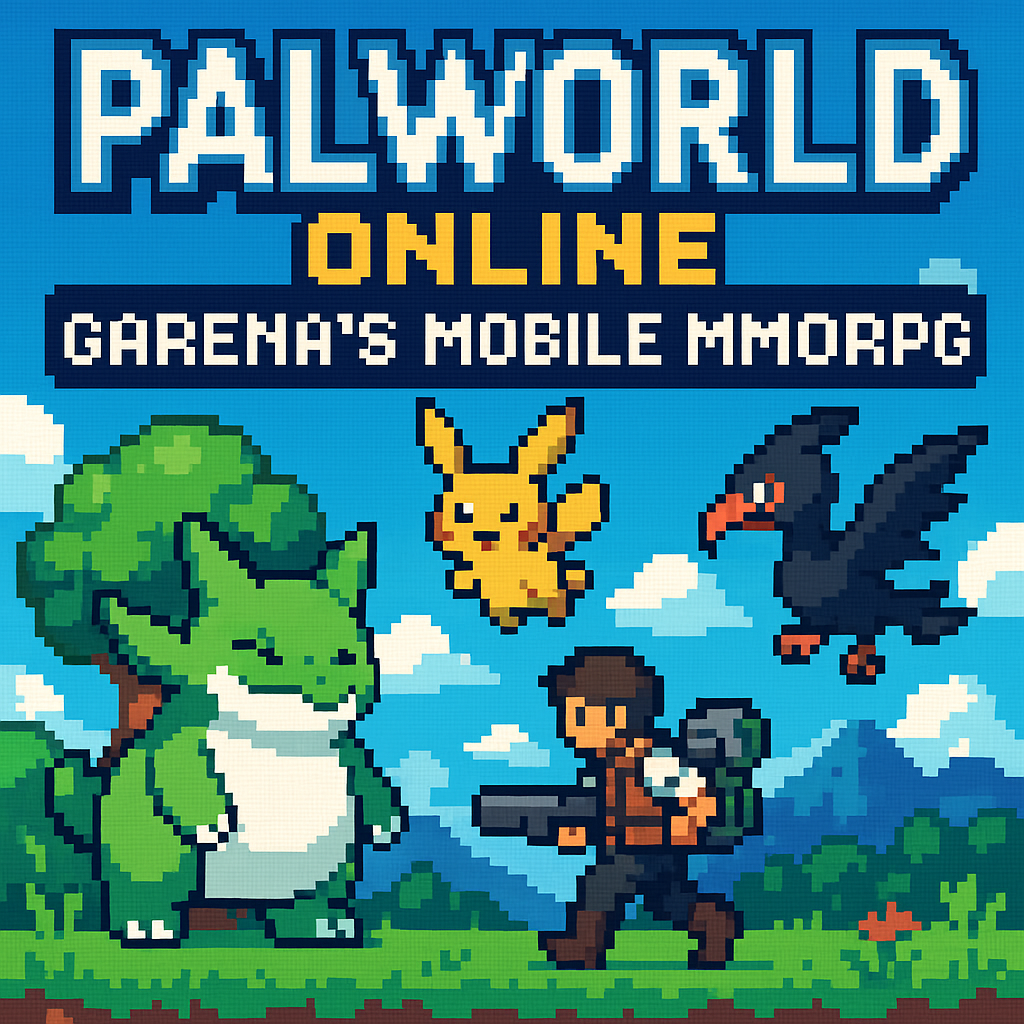
Eurogamer reports that Singapore‑based Garena announced Palworld Online, an officially licensed, mobile‑first MMORPG set in a “seamless open world,” with co‑op progression, PvE/PvP, and roaming world bosses, with no PC or console version mentioned. The announcement cites a new narrative setting and promises to preserve Palworld’s “depth, immersion, and freedom” while optimizing for phones, with the “timeline for its launch” still “coming soon.” Eurogamer highlights comments from Garena president Terry Zhao and Pocketpair CEO Takuro Mizobe, who both emphasize Garena’s mobile live‑ops experience and distribution reach. [1][7]
Why it matters
Two forces collide here: Palworld’s IP momentum and the mobile market’s consolidation around a handful of publishers with live‑ops muscle. Garena sits in that latter camp; Free Fire topped worldwide downloads with 37.1 million installs in January 2025, showing an engine across Indonesia, Brazil, and India that few can match. [5][7]
Stakeholders aren’t just “Palworld fans.” They include Sea Limited investors seeking a fresh tentpole beyond Free Fire; Pocketpair, which now stewards a cross‑media franchise spanning PC/console 1.0 (July 10, 2026), a Bushiroad TCG, and multiple licensed projects; and Apple/Google, for whom another top‑grossing live‑ops title means fresh IAP dollars even as non‑game spend overtook games in 2025. [2][4][8][9]
Original analysis
Contrarian read
- Consensus: “A mobile‑only Palworld MMO will be a gacha‑ridden sideshow that alienates PC players.”
- Counter: The design is segmentation, not cannibalization. Garena’s remit is to manufacture reach in markets where mobile is the default console; the PC/console 1.0 remains Pocketpair’s flagship. The distinct MMO track maximizes regional monetization without contorting the main game for phone constraints. Free Fire’s gravitational pull in SEA/LatAm—37.1 million downloads in January 2025 alone—shows how Garena can inject a new IP into its funnel at continental scale. [2][5][7]
Back‑of‑envelope scenario math
- Known inputs: Palworld surpassed 32 million players one month after launch by Feb 19, 2025—mass awareness that lowers UA costs. [3]
- Hypothesis A (soft‑launch baseline): If Palworld Online’s month‑one install base in Garena’s core markets hits 10% of Free Fire’s January 2025 downloads, that’s ~3.7 million installs. [5]
- Spend model (illustrative, not a forecast):
- Assume 25% Day‑30 MAU/installs, DAU/MAU of 20%, ARPDAU of $0.18 (typical mid‑core target; assumption).
- Month‑one revenue ≈ 3.7m × 25% × 20% × $0.18 × 30 ≈ $10.0m gross; platform 30% cut → ~$7.0m net to publisher/licensor pool before royalties.
- Sensitivity: If ARPDAU rises to $0.25 on events and DAU/MAU to 25%, month‑one gross clears ~$17m; halve either and you trend nearer ~$5m. The message: live‑ops levers, not install count alone, decide unit economics.
Named‑stakeholder breakdown
- Garena (Sea Limited): A second franchise anchor beside Free Fire; if early cohorts monetize, Garena reduces Free Fire concentration risk flagged in Q3 2025 earnings commentary. [7]
- Pocketpair: Royalty stream + regionalization without micromanaging shards, anti‑cheat, and telco/CDN minutiae on mobile; that cash and reach feed the 1.0 live‑ops roadmap and the Palworld Entertainment licensing machine. [2][3][8]
- Krafton: Still developing a separate “Palworld Mobile” adaptation via PUBG Studios; closed alphas ran in Japan and Korea in Dec 2025, so product/brand positioning must avoid “two Palworlds on my phone?” confusion. [6]
- Apple and Google: Another potential top‑grossing live‑ops title in 2026’s charts, with IAP design bounded by platform rules on subscriptions and loot‑box disclosures. [4]
2×2: Where Palworld Online could land
- Axes: Depth (light → deep systems) vs. Friction (low → high session/monetization friction).
- Low depth/low friction: Snackable collectible loops; fast top‑funnel, weak LTV.
- High depth/low friction: The Genshin playbook on mobile—big world, friction‑managed; prized but expensive to run.
- Low depth/high friction: Monetization traps; high churn and brand damage.
- High depth/high friction: “PC MMO on a phone”; risks session fatigue and paywall whiplash.
- Garena’s framing—“preserving depth, immersion, and freedom,” plus co‑op and world bosses—signals intent toward the high‑depth/low‑friction quadrant; execution will prove it. [2]
Comparison table: Palworld on phones in 2026
| Track | Developer/Publisher | What it is | Platforms | Status | Notes |
|---|---|---|---|---|---|
| Palworld Online | Garena (licensed from Pocketpair) | Mobile‑only MMORPG “reimagining” with new narrative, co‑op progression, PvE/PvP, roaming bosses | iOS/Android | Due 2026; launch timing details “coming soon” | Quotes from Garena’s Terry Zhao and Pocketpair’s Takuro Mizobe emphasize mobile‑native tuning and live‑ops expertise. [1][2] |
| Palworld Mobile | Krafton/PUBG Studios (licensed) | Adaptation of the core survival‑collector for mobile | iOS/Android | Closed alpha in JP/KR Dec 2025; ongoing dev | This is not Garena’s MMO; it’s the straight mobile adaptation track. [6] |
| Palworld 1.0 | Pocketpair | Mainline PC/console release | PC, Xbox, PlayStation | Launched July 10, 2026 | Anchors the “premium + DLC/expansion” identity; likely cross‑promos into mobile. [2] |
Historical rhyme
- Diablo Immortal and Genshin showed that “mobile‑first” and “live‑ops heavy” can coexist with core‑gamer IPs when the mobile experience is purpose‑built rather than a squeezed‑down port; Garena’s language suggests it learned that lesson, and cadence plus generosity will matter more than raw scale. [2]
What others are missing
The real story is governance of the Palworld IP across multiple mobile tracks. There are two licensed mobile projects (Garena’s MMO and Krafton’s adaptation) plus a cross‑media push under Palworld Entertainment with Sony Music/Aniplex and a Bushiroad TCG that sold 3.5 million packs soon after launch. That’s a licensing juggernaut—and a coordination challenge. Who owns cosmetic canon, seasonal event lore, and cross‑inventory entitlements when a player moves between Garena’s MMO, Krafton’s port, and PC/console in 2026–2027? Without a clean taxonomy for “what lives where,” Pocketpair risks economy and narrative divergence across regions and games that becomes costly to unwind. [2][6][8][9]
What to watch next
- By Q4 2026, Garena runs a closed beta for Palworld Online in at least two SEA markets—Indonesia and Thailand—with local language support and regional servers.
- By Q1 2027, Pocketpair, Garena, and Krafton publish a joint “Palworld Account” FAQ that specifies whether cosmetics and battle‑pass progress carry across MMO, mobile adaptation, and PC/console.
- By June 30, 2027, Palworld Online hosts at least two co‑branded events with either Free Fire or Shopee in SEA, confirmed via in‑app event banners or official social channels.
My take
I’m bullish on Palworld Online—if Garena keeps friction low and generosity high in SEA and LatAm. Two mobile tracks sound messy, but they de‑risk the brand: the MMO can chase social loops and whales regionally while Krafton courts players who want Palworld‑as‑is on a phone. Pocketpair’s job is brand guardrails and shared login scaffolding; Garena’s job is a patient first year. Nail onboarding, pacing, and co‑op stickiness, and this funds bolder PC/console expansions; push hard monetization too early, and the West drags the brand through fire before the flywheel spins.
Sources
- An officially licensed Palworld MMORPG called Palworld Online has just been announced, and it's coming to iOS and Android later this year — Eurogamer (https://www.eurogamer.net/palworld-online-revealed-mobile-mmorpg) — Baseline announcement, features, and the “timeline for its launch” caveat.
- Palworld Online announced for iOS, Android — Gematsu (https://www.gematsu.com/2026/08/palworld-online-announced-for-ios-android) — Confirms Garena’s role, direct quotes from Garena’s Terry Zhao and Pocketpair’s Takuro Mizobe, and the positioning as a mobile‑native MMO.
- Palworld Blasts Past 32 Million Players — Pocketpair (https://www.pocketpair.jp/en/news/palworld-blasts-past-32-million-players/) — Official player milestone that underpins awareness and UA efficiency assumptions.
- State of Mobile 2026: App Spending Reaches $167 Billion — Sensor Tower (https://sensortower.com/press/press-release-boosted-by-gen-ai-services-consumers-spent-more-money-in-apps-than-games-for-first-time) — Documents that non‑game app spend overtook games in 2025 while reaffirming the overall mobile spend context.
- Top 10 Worldwide Mobile Games by Revenue and Downloads in January 2025 — Sensor Tower (https://sensortower.com/blog/top-10-worldwide-mobile-games-by-revenue-and-downloads-in-january-2025) — Shows Free Fire as the most downloaded game worldwide that month with 37.1 million installs, supporting Garena’s distribution power.
- 팰월드 모바일, 한국·일본에서 클로즈드 알파 테스트 진행 — KRAFTON (https://www.krafton.com/news/press/%ED%8C%B0%EC%9B%94%EB%93%9C-%EB%AA%A8%EB%B0%94%EC%9D%BC-%ED%95%9C%EA%B5%AD%C2%B7%EC%9D%BC%EB%B3%B8%EC%97%90%EC%84%9C-%ED%81%B4%EB%A1%9C%EC%A6%88%EB%93%9C-%EC%95%8C%ED%8C%8C-%ED%85%8C%EC%8A%A4/) — Confirms a separate, non‑Garena mobile project and its December 2025 closed alpha in JP/KR.
- Sea Q3 2025 Earnings Call Transcript — Sea Limited (https://cdn.sea.com/investor/3Q2025/VCQyb53nURvpodOR3CpG/2025.11.11%20Sea%20Third%20Quarter%202025%20Earnings%20Call%20Transcript.pdf) — Highlights Free Fire‑anchored momentum and cross‑media campaigns, reinforcing Garena’s live‑ops chops.
- Palworld Entertainment, Inc. — Palworld (https://palworld.co.jp/en/?target=about) — Details the Pocketpair–Sony Music–Aniplex joint venture that signals aggressive IP licensing expansion.
- Palworld OFFICIAL CARD GAME: 3.5 million packs sold — Bushiroad (https://en.palworld-official-cardgame.com/news/post-4) — Demonstrates immediate cross‑media demand, relevant to monetization runway and brand coordination.
Related update: We recently published an article that expands on this topic: read the latest post.
