When a Power Outage Looks Like Politics: TikTok’s U.S. Glitches and the Trust Test
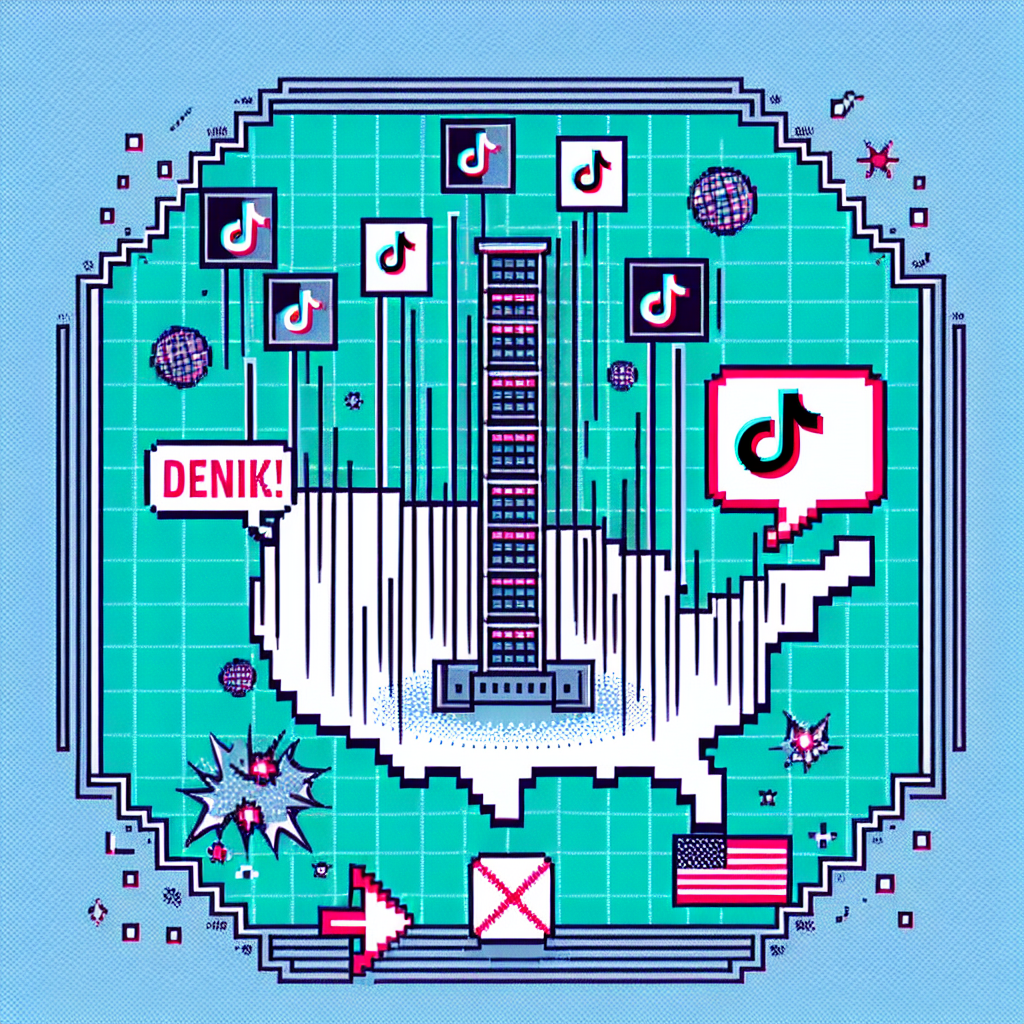
A handful of spinning loading icons turned into a national conversation: were TikTok’s recent U.S. posting problems just a technical headache, or the first sign of politically motivated content suppression under new ownership? The short answer is messy — a weather-related power outage is the proximate cause TikTok and its data-center partner point to, but the timing and stakes make user suspicion inevitable. (investing.com)
Why people noticed — and why the timing matters
- TikTok users across the U.S. reported failures to upload videos, sudden drops in views and engagement, delayed publishing, and content flagged as “Ineligible for Recommendation.” Those symptoms arrived within days of the formation of a new U.S. joint venture that moved much of TikTok’s operations and data oversight stateside. (techcrunch.com)
- The company and Oracle (one of the new venture’s managing investors) say a weather-related power outage at a U.S. data center triggered cascading system failures that hampered posting and recommendation systems — and that they’re working to restore service. (investing.com)
- But because the outage overlapped with politically sensitive events — and came right after the ownership change — many users assumed causation: new owners, new rules, and sudden suppression of certain content. That leap from correlation to accusation is understandable in a polarized media environment. (wired.com)
The technical explanation (in plain language)
- Data centers host the servers that store content, run recommendation systems, and process uploads. When a power outage affects one, services can slow down, requests can time out, and queued operations (like surface-level recommendations) may be lost or delayed. (techcrunch.com)
- Complex platforms typically have redundancy, but real-world outages—especially weather-related ones affecting regional power or networking—can produce “cascading” failures where multiple dependent systems degrade at once. That can look like targeted suppression: a video suddenly shows zero views, a post is routed into review, or search returns odd results. Those are plausible failure modes of infrastructure, not necessarily evidence of deliberate moderation. (techcrunch.com)
The political and trust dimensions
- Ownership change matters. TikTok’s new U.S. joint venture — with Oracle, Silver Lake and MGX as managing investors and ByteDance retaining a minority stake — was explicitly framed as a national-security and data-protection fix. Because that shift was sold as protecting U.S. users’ data and content integrity, anything that looks like content interference becomes a high-suspicion event. (techcrunch.com)
- Political actors amplified concerns. State officials and high-profile voices raised alarms about potential suppression of content critical of political figures or about sensitive events. That political amplification shapes user perception regardless of technical facts. (investing.com)
- The reputational cost is asymmetric: one glitch can undo months (or years) of trust-building. Even if an outage is genuinely technical, the brand hit from a moment perceived as censorship lingers.
What platforms and users can learn from this
- Operational transparency matters. Quick, clear explanations from both the platform and its infrastructure partners — with timelines and concrete remediation steps — reduce the space for speculation. TikTok posted updates about recovery progress and said engagement data remained safe while systems were restored. (techcrunch.com)
- Technical resiliency should be framed as a trust metric. Redundancy, better failover testing, and public incident summaries help show that problems are infrastructural, not editorial.
- Users want verifiable signals. Independent third-party status pages, reproducible outage telemetry (e.g., Cloudflare/DNS data), or audits of moderation logs (where privacy and law allow) are examples of credibility-building tools platforms can use. (cnbc.com)
What this doesn’t settle
- An outage explanation doesn’t erase legitimate long-term worries about who controls recommendation algorithms, moderation policies, and data access. The ownership shift was built to address national-security concerns — but it also changes who sits at the control panel for the platform. That shift deserves continued scrutiny and independent oversight. (techcrunch.com)
- Nor does it mean every future suppression claim is a false alarm. Cloud failures and malfeasance can both happen; the challenge is designing verification systems that shrink false positives and false negatives in public trust.
A few practical tips for creators and everyday users
- If you see sudden drops in views or publishing issues, check official platform status channels first and watch for updates from platform infrastructure partners. (techcrunch.com)
- Back up important content and diversify audiences across platforms — creators learned this lesson earlier in the TikTok ban saga and during past outages. (cnbc.com)
- Hold platforms and new ownership structures accountable for transparency: ask for incident reports, moderation audits where possible, and clearer explanations about algorithm changes.
My take
Timing is everything. A power outage is an ordinary, solvable technical problem — but in the context of a freshly restructured, politically charged ownership story, ordinary problems become extraordinary trust tests. Platforms that want to keep their communities need to treat operational reliability and public trust as two sides of the same coin. Faster fixes matter, yes — but so do pre-committed transparency practices and independent verification so that the next outage doesn’t automatically become a geopolitical headline.
Sources
-
Oracle says data center outage causing issues faced by US TikTok users — Reuters.
https://www.investing.com/news/stock-market-news/oracle-says-data-center-outage-causing-issues-faced-by-us-tiktok-users-4469074 -
TikTok attributes recent glitches to a power outage at a US data center — TechCrunch.
https://techcrunch.com/2026/01/26/tiktok-attributes-recent-glitches-to-a-power-outage-at-a-u-s-data-center/ -
TikTok says it’s still working to recover its U.S. infrastructure — TechCrunch.
https://techcrunch.com/2026/01/27/tiktok-says-its-still-working-to-recover-its-u-s-infrastructure/ -
TikTok Data Center Outage Triggers Trust Crisis for New US Owners — WIRED.
https://www.wired.com/story/tiktok-ice-videos-censorship-allegations-algorithm/ -
TikTok traffic bounces back as creators diversify amid shutdown fears — CNBC.
https://www.cnbc.com/2025/01/31/tiktok-traffic-bounces-back-as-creators-diversify-amid-shutdown-fears.html
Related update: We recently published an article that expands on this topic: read the latest post.
Related update: We recently published an article that expands on this topic: read the latest post.
Related update: We recently published an article that expands on this topic: read the latest post.