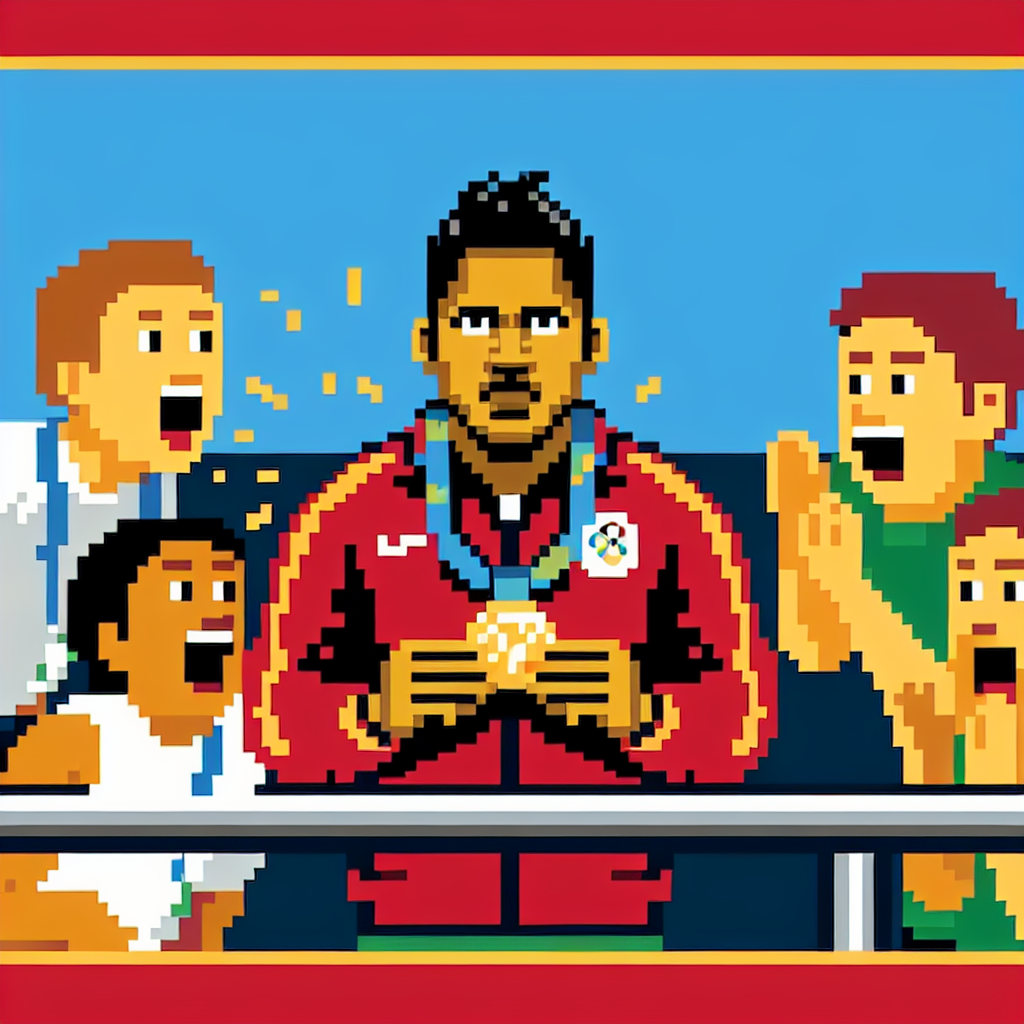
Handle with care: when Olympic medals snap during victory celebrations
There’s a peculiar, heartbreaking kind of silence that follows a split-second of pure joy — the sound of metal clattering onto the ground where only triumph should have landed. At the Milan Cortina 2026 Winter Olympics, that sound cut through the opening weekend as several athletes discovered their medals had come apart mid-celebration. Breezy Johnson, fresh off a downhill-gold high, laughed and then warned teammates: “Don’t jump in them.” It’s a small phrase, but it points to a bigger moment about craftsmanship, symbolism, and how we treat the physical tokens of athletic history.
Why this feels worse than a broken trinket
- Medals are not ordinary souvenirs. They’re the tangible proof of years — often decades — of sacrifice, heartbreak, and single-minded focus.
- The moment of receiving a medal is ritualistic: the anthem, the ribbon, the way it rests against an exhausted chest. When that object fails, it can feel like the ritual itself has been undermined.
- These aren’t mass-market products sold at a stadium kiosk. They are designed, produced, and presented by organizing committees as part of a Games’ legacy. Quality issues therefore reflect on the event as much as they affect the athlete.
What happened in Milan Cortina 2026
- During the opening weekend (February 8–9, 2026), multiple athletes had medals detach from their ribbons or break during celebrations. U.S. skier Breezy Johnson said she was “jumping in excitement” when her medal came loose. German biathlete Justus Strelow saw his bronze fall off and a small clasp piece come away. U.S. figure skater Alysa Liu posted video showing a gold medal detached from its ribbon. Organizers said they were investigating and paying “maximum attention.” (abcnews.go.com)
Not the first time: a pattern of medal-quality headaches
- This isn’t unprecedented. After the Paris 2024 Games, some medals required replacing because athletes complained of tarnishing or corrosion that made the finish look mottled. That issue prompted scrutiny of materials and plating techniques and left athletes uneasy about handing down blemished symbols of achievement. The Milan incidents echo that earlier quality control problem. (washingtonpost.com)
Possible causes (what to consider)
- Design choices: Modern Olympic medals often incorporate complex materials, cutouts, and mixed metals for aesthetic and sustainability reasons. Those design elements can introduce weak points at attachment points or thin sections.
- Manufacturing pressure: Tight timelines, outsourcing, or cost constraints can result in inconsistent finishes or assembly problems — especially when organizers aim to produce thousands of medals on a schedule.
- Attachment hardware: The ribbon-to-medal interface (clasp, loop, soldering) is a mechanical system that must withstand movement, sweat, and ecstatic jostling. Failure there seems to explain several of the recent incidents.
- Celebration behavior: Athletes hug, jump, spin, toss their heads back while shouting. That kinetic energy is part of the medal’s real-world test — sometimes a harsh one.
The human side: reactions that matter as much as fixes
- Athletes’ reactions were lighthearted but pointed: Breezy Johnson joked she’d get it fixed; Alysa Liu quipped about her medal not needing the ribbon. The tone matters — many athletes handled it with humor — but that doesn’t erase the emotional sting for winners who want a flawless moment preserved for life and for family.
- Organizers must act quickly and transparently. Replacing or repairing medals, checking the entire production batch, and explaining corrective measures will help preserve trust. The organizers in Milan Cortina said they were investigating. (abcnews.go.com)
Bigger questions beyond Milan
- What should Olympic organizers prioritize: aesthetics and innovation, or durability and symbolic permanence? Ideally both, but trade-offs happen.
- Are athletes given enough input on the final, wearable design? Some delegations and athletes might push for sturdier attachment hardware or simpler designs that tolerate celebration rituals.
- How will these incidents affect collectors, museums, and the legacy value of medals? A medal that’s damaged immediately risks being viewed as less archival or worthy of display — an odd fate for an object meant to become a family heirloom.
Notes on solutions and fixes
- Short term: repair and replacement for affected athletes, plus immediate inspection of production batches to prevent more failures.
- Medium term: re-examine attachment designs (stronger clasps, reinforced loops), test medals under realistic celebration forces, and adopt stricter quality-control checks before ceremonies.
- Long term: balance creativity and sustainability with mechanical durability. If materials are novel or recycled (a growing trend), manufacturers must anticipate different wear characteristics.
What this moment teaches us
- Objects carry meaning far beyond their material make-up. When a medal breaks, it irritates a communal idea of perfection that surrounds the Olympics: that the pinnacle moment should be flawless.
- Manufacturing and design aren’t abstract processes. They intersect with emotion, memory, and national pride.
- Small things matter in a big spectacle. A clasp failure becomes a PR issue, an emotional footnote, and — for the athlete — an avoidable blemish on a lifetime achievement.
Takeaways for readers and fans
- Celebrate the athletes first — the humans who earned those medals — not the objects. A broken medal doesn’t diminish the victory.
- Expect organizers to move fast: investigate, repair, and communicate. Past incidents (Paris 2024 and now Milan Cortina 2026) make swift action necessary. (washingtonpost.com)
- Appreciate the hidden complexity behind Olympic iconography: design, engineering, and supply chains all have to perform under pressure.
Final thoughts
There’s an irony in witnessing fragile metal fail at the moment it’s supposed to confer permanence. The broken clasp is an invitation to rethink how we treat symbols: more padding in the design process, yes — but also more room for the messy human joy that produced the break in the first place. Let the medals be fixed, let the images be restored, but don’t let these little fractures obscure what the Games are for: the athletes, their work, and the stories they carry home.
Sources
- 'Don't jump in them': Olympic athletes' medals break during celebrations – ABC News (AP). https://abcnews.go.com/Sports/wireStory/dont-jump-olympic-athletes-medals-break-celebrations-129986439.
- 'Don't jump in them': Olympic athletes' medals break during celebrations – The Washington Post (AP). https://www.washingtonpost.com/sports/olympics/2026/02/09/winter-olympics-broken-medals-breezy-johnson-liu/31604b70-05ab-11f1-b196-5e1986b3575c_story.html.
- Winter Olympics 2026: Milano Cortina organisers looking into broken medals after at least four incidents – ABC (Australia). https://www.abc.net.au/news/2026-02-10/winter-olympics-medals-breaking-breezy-johnson-alysa-liu/106325112.
Related update: We recently published an article that expands on this topic: read the latest post.
Related update: We recently published an article that expands on this topic: read the latest post.