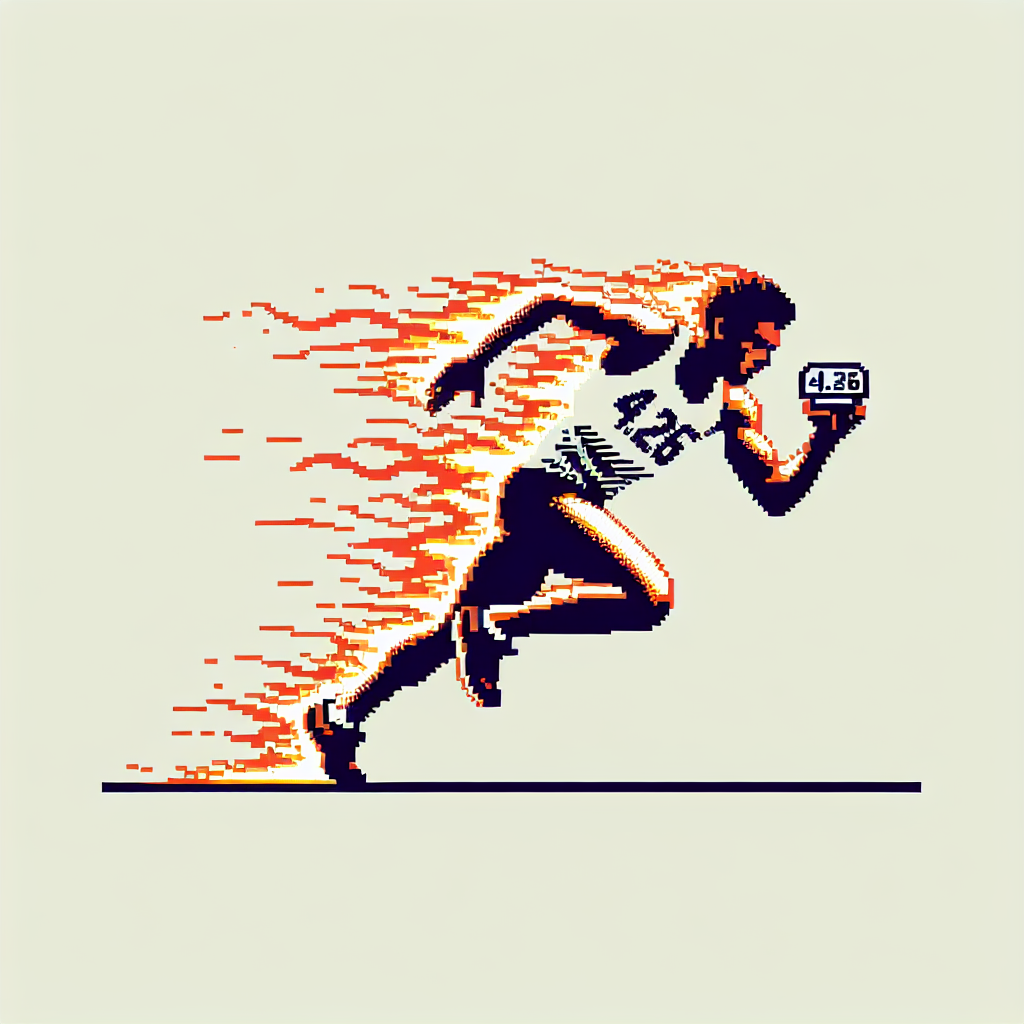
Speed steals the spotlight: Brenen Thompson’s 4.26 40-yard dash and what it really means
You don’t have to be a stats nerd to feel the hair-rise moment when a player explodes out of the blocks at the NFL Combine. Brenen Thompson did exactly that on February 28, 2026 — a blistering 4.26-second 40-yard dash that instantly became the headline of the day. It’s the kind of number that lives forever in highlight reels and draft-room spreadsheets alike. (nbcsports.com)
Why one sprint can sting — and why it often doesn’t
- For receivers, straight-line speed matters more than for most positions. Deep routes, separation on fly patterns, and the ability to turn a short catch into a long one are all magnified by elite speed. Thompson’s run put him in rarefied air among combine performers. (espn.com)
- That said, the 40-yard dash has limits. Most football plays aren’t 40 yards of full-speed, isolated running down a lane. Change-of-direction, route nuance, hands, body control, and football IQ are equal — if not greater — determinants of NFL success. The history of fast-but-not-elite careers (and slower players who became stars) reminds scouts to balance metrics with tape. (nbcsports.com)
A quick snapshot of the run and its context
- Where and when: The performance came at the 2026 NFL Scouting Combine in Indianapolis on February 28, 2026. (espn.com)
- The number: 4.26 seconds — the fastest at the 2026 Combine, and among the fastest in Indianapolis history, sitting very close to the combine record (4.21). (nbcsports.com)
- The player: Brenen Thompson, listed at about 5-foot-9 and 164 pounds on combine measurement, who set school receiving marks at Mississippi State and posted a 1,000-yard season in 2025. (espn.com)
How scouts — and fantasy players — will read this
- Immediate upside: A 4.26 legitimizes Thompson’s role as a vertical threat. It flags him as someone who can stretch defenses, win contested timing routes if paired with the right release technique, and flip field position on a moment’s notice. Teams that prioritize speed in their scheme will take notice. (sportingnews.com)
- Nuance matters: Speed alone won’t mask heavy route-running flaws, small hands, or issues with separation against press coverage. Expect teams to rewatch his college tape for technique on in-breaking routes, contested-catch ability, and how often he converts speed into separation on game-speed routes. (espn.com)
- Draft impact: A top-40 workout like this typically improves a player’s stock — especially for receivers who were already on the board. But where Thompson lands will depend on positional needs, interviews, medical checks, and his full collection of drills (shuttle, three-cone, catching drills). (cbssports.com)
What the 40 doesn’t tell you — and why that’s important
- Route-running and nuance: A receiver’s ability to create separation at five and ten yards — using footwork, timing, and deception — is more predictive of consistent production than raw top speed.
- Play strength and durability: Thompson’s weight (164 pounds at the combine) raises legitimate questions about how he’ll handle physical NFL defensive backs and press coverage, and whether he’ll maintain his health across a pro season. Game tape and medical evaluations will weigh heavily. (espn.com)
- Special teams and versatility: For some players, elite speed becomes a roster-saving asset on kick returns and punt coverage. Teams value multi-role contributors, especially later-round picks.
Speed snapshot
- 4.26 seconds at the 2026 Combine puts Thompson in elite company — a headline-making sprint that can and will move evaluators to reexamine him. (nbcsports.com)
- Historical note: Combine-era leaders like Xavier Worthy (4.21) and John Ross (4.22) show the spectrum of outcomes — blazing time doesn’t guarantee stardom, but it opens doors. (nbcsports.com)
My take
Numbers like Thompson’s 4.26 are a sports lover’s candy: visceral, quantifiable, and instantly memorable. But the real craftsmanship for teams is in converting that pure athleticism into repeatable football plays. If Thompson pairs that speed with improved route nuance, a little added strength, and reliable hands, he could be a matchup nightmare on day one of camps. If he’s purely a straight-line threat, his role will likely trend toward situational downfield plays and special teams. Either way, the run was a statement — one that demands a closer look beyond the stopwatch.
Sources
Related update: We recently published an article that expands on this topic: read the latest post.
Related update: We recently published an article that expands on this topic: read the latest post.
Who Won and Who Lost on Day 2 of the 2026 NFL Combine
The combine is where tape meets timers — and on Day 2 in Indianapolis that collision produced winners and losers in equal measure. Friday’s focus on defensive backs and tight ends turned the spotlight on speed, burst and catch radius, and a handful of prospects answered with headline-making numbers while others left more questions than answers. Here’s a readable take on Chad Reuter’s Day 2 stock report and what it means for the draft board.
Why Day 2 mattered
- Day 2 showcased cornerbacks, safeties and tight ends — positions where physical testing can dramatically reshape projections.
- Athletic testing (40-yard dash, 10-yard splits, vertical/broad jumps) matters, but so do on-field drills and how a player’s testing complements his tape.
- With the draft less than two months away (April 23–25, 2026 in Pittsburgh), a strong combine can vault a mid-round candidate into Day 2 consideration — and a subpar one can push a potential Day 2 pick toward Day 3 or beyond.
Quick hits from the report
- Daylen Everette (Georgia, CB) ran like a man bringing a clipboard: a 4.38 40 with a 1.54 10-yard split, 37.5" vertical, clean ball skills in drills — an eye-opener that could bump him toward Round 2 if teams buy the athletic testing over middling 2025 tape. (NFL.com)
- Kenyon Sadiq (Oregon, TE) posted absurd testing for a tight end: 4.39 40 at 241 pounds and explosive jumps — the sort of numbers that turn a positional projection into a fringe first-round conversation. (NFL.com)
- Conversely, Davison Igbinosun (Ohio State, CB) disappointed in quickness measures and change-of-direction, with a 10-yard split and vertical that left evaluators uneasy about his twitch and hip fluidity. (NFL.com)
- Max Klare (Ohio State, TE) elected not to run or jump, a decision that puts more burden on his pro day to show athletic upside after a season of lower volume. (NFL.com)
- The safety room was deep; Emmanuel McNeil-Warren’s testing was fine but buried by multiple elite showings — a reminder that a solid workout alone sometimes isn’t enough in a stacked group. (NFL.com)
Players who boosted their stock
- Daylen Everette (Georgia, CB)
- Why it matters: Size + speed + ball skills. Even if 2025 tape wasn’t elite, the combine provided measurable upside that teams can project into coverage roles and special teams. A true jump in perceived upside.
- Kenyon Sadiq (Oregon, TE)
- Why it matters: Rare athletic profile for a true Y/T tight end. At 241 pounds with sub-4.4 speed and elite jumping traits, he checks boxes teams love for mismatches and vertical threats.
- John Michael Gyllenborg (Wyoming, TE)
- Why it matters: Measured well and displayed athleticism after a 2025 season hampered by injury — good combine + prior tape = a clearer path into Day 2/Day 1 considerations.
(Notes: Other outlets echoed these risers and flagged more CBs and TEs who stood out; strong performances from guys such as Treydan Stukes and Tacario Davis were also highlighted around the web.) (nfl.com)
Players who took a step back
- Davison Igbinosun (Ohio State, CB)
- The problem: Stiff hips, a 10-yard split and vertical that didn’t sell starter-level quickness. That combination can flatten an inside/outside projection for Day 2 teams. (nfl.com)
- Max Klare (Ohio State, TE)
- The problem: Not testing at the combine hands the narrative control back to teams — and in a deep TE class, missing measurable chances to separate is costly. (nfl.com)
- Emmanuel McNeil-Warren (Toledo, S)
- The problem: Solid testing but overshadowed by elite numbers from several safeties; the result is a plateau rather than a springboard. (nfl.com)
How teams will likely react
- For bigger boards (top-64), measurable athleticism still rules the margins. A player like Sadiq suddenly has first-round buzz because he offers mismatch traits that modern offenses covet.
- For corners and safeties, scheme fit matters. Teams will weigh hip fluidity and short-area quickness more heavily than dash times alone — but poor short-area testing can still knock a player down boards.
- Players who skipped events (like Klare) will be triaged: teams will either bet on tape and medicals or wait for pro-day verification. That uncertainty often pushes a player's value down in the pre-draft market.
What to watch next
- Pro days: Players who didn’t test fully or underwhelmed will get a last chance at their schools. How many will hit new heights on turf they know?
- Positional comparables: As scouts stack TEs and DBs side-by-side, look at route versatility, contested-catch ability and film on third-down reps — combine numbers are context, not destiny.
- Team-specific needs: A borderline prospect can leap into Day 2 if a team with scheme alignment believes the testing matches their plan.
My take
The combine remains a noisy but useful market signal. Day 2’s winners were the players whose testing reinforced a believable NFL role: size, burst and clean hands for TEs; size, speed and explosiveness for DBs. But film still matters. If a prospect runs fast but can’t flip his hips in coverage, teams will downgrade him; if a player posts eye-popping numbers but lacks tape, expect conservative, upside-themed drafting.
In short: Day 2 created compelling narratives — some will hold, some will be revised at pro days and in private visits. For draft-watchers, the best strategy is to let the combine refine — not overwrite — what the tape already told you.
Final thoughts
The combine is where certainty is smoothed into probability. A single 40 time or vertical jump won’t determine a career, but it can change the odds. For prospects like Everette and Sadiq, Friday gave them momentum to carry to team meetings and interviews. For others, it set a clearer, humbler path forward. The next month of pro days and interviews will tell us how many of these movements were seismic and how many were just noise.
Sources
Related update: We recently published an article that expands on this topic: read the latest post.
Related update: We recently published an article that expands on this topic: read the latest post.
A night of high drama at the World Juniors: Sweden rolls, Canada clears the way
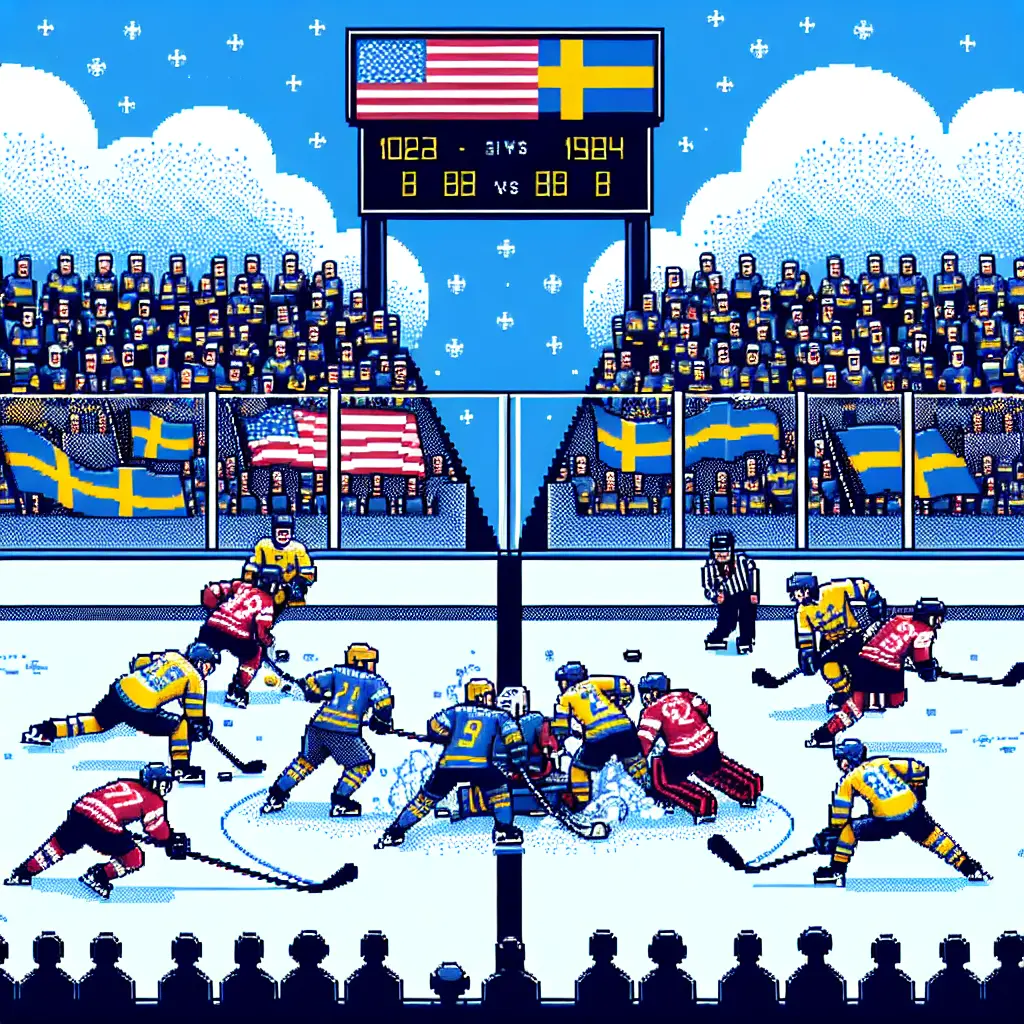
The puck barely left the ice Wednesday night as two of the tournament favorites—Sweden and Canada—put on clinical offensive displays that reshaped group play at the 2026 IIHF World Junior Championship. Sweden’s balanced attack handed the United States a 6-3 loss and finished Group A unbeaten, while Canada leaned on timing and a red-hot Cole Beaudoin to outscore Finland 7-4 and claim first in Group B. If you like speed, finishing and a little junior-level chaos, this was hockey served hot.
Why this matters now
- These games weren’t just group-stage box scores — they set seeding and momentum for the knockout rounds. Sweden’s statement win hands them real control in Group A; Canada’s late goals and depth scoring show a team built for the push toward a medal.
- The World Juniors is where top prospects test themselves under bright lights. Performances here can lift a player’s draft stock and reveal which teams have systems tough enough to survive a seven-game tournament.
What stood out
- Sweden’s two-headed scoring attack: Lucas Pettersson and Eddie Genborg each netted a pair of goals, giving Sweden reliable finishers at key moments. That kind of finishing from the top end makes a team hard to slow down.
- Special teams and short-handed impact: Sweden converted on the power play and even struck short-handed—small margins that widened the gap and exposed lapses in U.S. discipline.
- Canada’s depth production: Cole Beaudoin finished with three points and the Beaudoin–O’Reilly–Desnoyers line provided momentum swings. Multiple contributors (Brady Martin scored twice, Zayne Parekh and Sam O’Reilly each had multi-point nights) underline Canada’s offensive depth.
- Goaltending and timing: Love Harenstram made 28 saves for Sweden in a game where timely saves didn’t steal the outcome but kept the gap manageable. Conversely, netminding inconsistencies and a few defensive miscues cost the U.S. chances to stay close.
Game snapshots
Bigger-picture implications
- Sweden looks like a legitimate gold-medal threat. Unbeaten in group play and with finishers who can convert special-team chances, they’ve staked a claim as a team to fear in the quarters and beyond.
- Canada’s balance matters. Tournament hockey rewards teams that can roll multiple lines and still produce. Their depth scoring reduces the pressure on any single star and helps when matchups get tighter in elimination rounds.
- The U.S. and Finland both have tools to correct course, but the margin for error shrinks in knockout hockey. Discipline and consistency — especially on special teams and defensive-zone coverage — will be critical if either wants to climb the bracket.
Headlines players to watch next
- Lucas Pettersson (Sweden) — timely scoring and a knack for finishing from dangerous areas.
- Eddie Genborg (Sweden) — power-play presence; two-goal nights change games.
- Cole Beaudoin (Canada) — multi-point performances and a reliable scorer on the more physical Canadian forecheck.
- Jack Berglund (Sweden) — playmaking that fuels the top line’s momentum.
My take
The World Juniors keeps delivering the best mix of raw talent and meaningful hockey. Sweden’s 6-3 win over the U.S. felt like more than a group-stage result — it was a reminder that tournament depth and special-teams execution beat sporadic heroics. Canada’s 7-4 victory showed that when a team spreads offense across lines, it becomes very hard to shut down. This tournament still has twists ahead, but after these results, teams that marry discipline with finishing will be the ones lifting trophies.
Sources
Related update: We recently published an article that expands on this topic: read the latest post.
Related update: We recently published an article that expands on this topic: read the latest post.