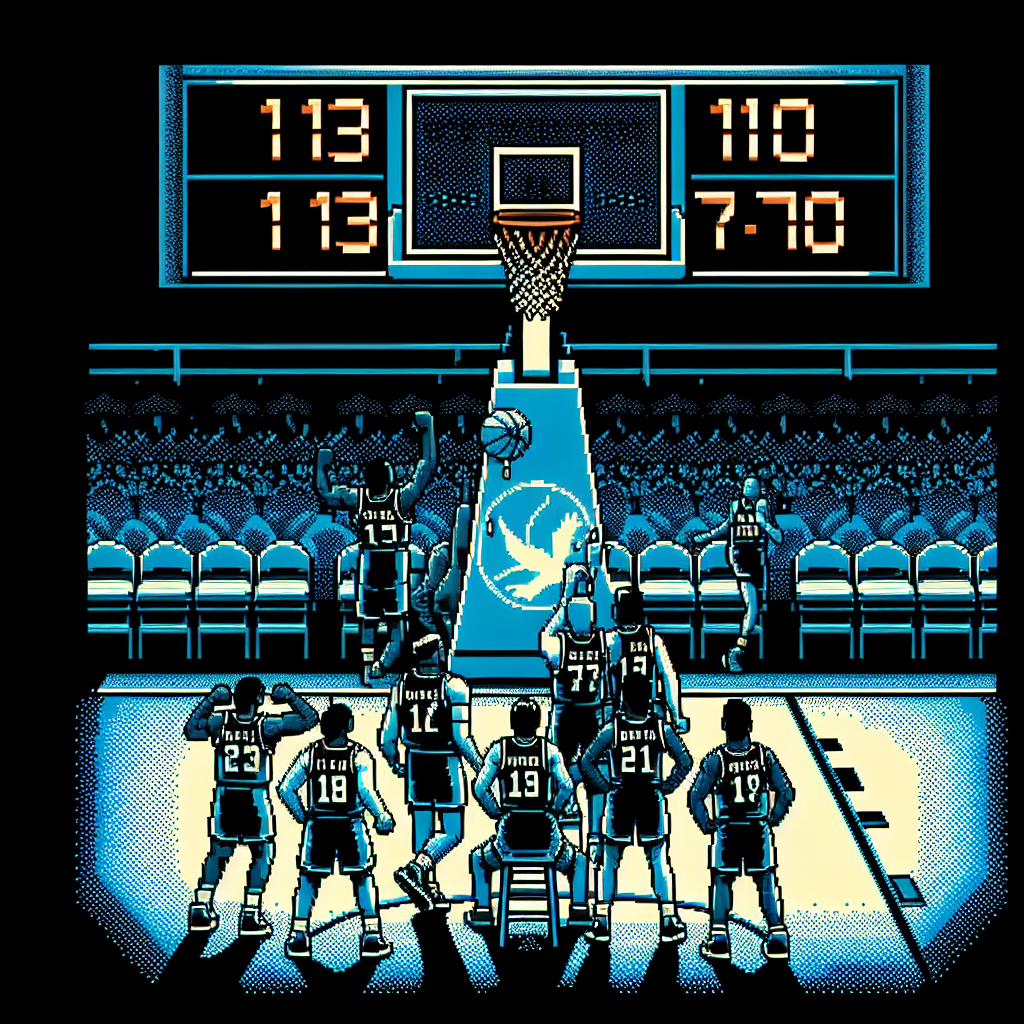
Upsets, Runs and a Freshman Breakout: Stanford 95, North Carolina 90
There are games that feel like a yard-by-yard slog and then there are those where momentum flips so fast you can almost hear the rim rattling from coast to coast. Wednesday night at Maples Pavilion was the latter. Stanford rallied from a double-digit deficit and knocked off No. 14 North Carolina 95–90 on January 14, 2026 — a high-octane, three-heavy affair that left both teams with plenty to chew on.
Why this game mattered
- North Carolina arrived with Top-15 respectability and national expectations; Stanford wanted to prove last season’s upset wasn’t a fluke.
- The result further highlighted defensive concerns for the Tar Heels (particularly perimeter defense and late-game stops).
- For Stanford, the win underscored the rise of a freshman who can carry an offense and the potency of a modern perimeter attack.
What stood out
- Ebuka Okorie’s emergence
- The Stanford freshman exploded for a career-high 36 points and added nine assists. He created off the dribble, got to the line, and kept the Cardinal offense humming when UNC clamped down early. His 36 points set a freshman record for Stanford in a single game and felt like the difference-maker on the final run.
- Heat check: Stanford’s 3-point barrage
- Stanford drained 16 three-pointers on the night — an enormous number against a program that usually takes pride in defending the arc. That barrage erased North Carolina’s cushion and proved decisive down the stretch.
- North Carolina’s collapse from the perimeter
- The Tar Heels made only six threes and went nearly four minutes without a field goal during the decisive stretch. Carolina’s inability to close out on shooters and its struggles at the free-throw line (20-of-32) turned a game they led for large stretches into a nail-biter they ultimately lost.
- Late-game poise and clutch shooting
- Jeremy Dent-Smith hit the go-ahead triple with about a minute left, and Ryan Agarwal’s follow-up three effectively sealed the deal. Stanford found the right shooters in the right moments; UNC could not respond.
Game flow snapshot
- First half: North Carolina built an early 12-point lead behind Henri Veesaar and Caleb Wilson, taking advantage of transition opportunities and efficient looks.
- Second half: UNC extended that advantage to 12 early on, but Stanford chipped away — led by Okorie’s creativity and a hot perimeter stroke from Agarwal and Dent-Smith.
- Final minutes: A 7–0 Stanford run, timely threes, and steady free-throw shooting closed out a classic conference upset.
Breaking down the matchups
- Backcourt battle
- Caleb Wilson and Henri Veesaar combined for 52 points for UNC, but point production alone couldn’t compensate for team defensive lapses. Okorie’s dual threat — scoring and playmaking — forced UNC to alter its rotations and defensive matchups.
- Perimeter defense vs. modern spacing
- Stanford’s success underlined a broader truth: if you don’t respect the three-point line, you’re asking to be burned. UNC’s missing closeouts and the sheer volume of Stanford’s catch-and-shoot opportunities created a mismatch the Tar Heels couldn’t overcome.
- Rebounding and transition
- While not the headline, control of the glass and rebounding position in late possessions shaped the final possessions — Stanford got the offensive rebounds and extra chances that kept pressure on UNC’s defense.
Implications for both teams
- For Stanford
- This win builds confidence for a team that is starting to brand itself as a dangerous ACC opponent when its shooters are hot and Okorie is in rhythm. That combination — a dynamic freshman and multiple reliable shooters — gives Stanford staying power in close games.
- For North Carolina
- The Tar Heels need to address defensive fundamentals: closeouts, rotation communication, and late-game defensive discipline. Free-throw consistency is another nagging issue; making more of those 32 attempts would have swung the scoreboard margin in their favor.
What to watch next
- Can Okorie sustain this level of play against top defenses? Consistency from a freshman is rare, but if he keeps creating, Stanford turns into a real problem for opponents.
- Will UNC tighten perimeter defense and correct late-game lapse patterns? The schedule doesn’t get much kinder; immediate adjustments will be required to avoid a skid.
- Three-point volume: Are we seeing an outlier night or a shift in Stanford’s identity toward “let it fly” when shooters are hot?
My take
This was college basketball in one concentrated blast: star-making performance, momentum swings, and the sort of late-game drama that keeps fans awake. Stanford didn’t just outscore North Carolina — they exposed a set of tactical vulnerabilities (closeouts, late rotations, and free-throw execution) that any smart opponent will exploit. For Carolina, the talent is there — Wilson and Veesaar proved that — but elite teams find ways to stop the bleeding when shots stop falling.
Stanford’s victory feels less like a lucky night and more like a statement: when your freshman can orchestrate and your shooters heat up, even blue-blood programs are beatable.
Sources
-
Stanford’s freshman phenom Ebuka Okorie leads 95-90 win over No. 14 North Carolina — AP / CBS Sports
https://www.cbssports.com/college-basketball/gametracker/recap/NCAAB_20260114_UNC%40STNFRD -
Stanford Shoots Past No. 14 MBB, 95-90 — University of North Carolina Athletics recap
https://goheels.com/news/2026/1/14/mens-basketball-mbb-recap-at-stanford -
Stanford secures electric win over No. 14 Tar Heels — The Stanford Daily
https://stanforddaily.com/2026/01/15/stanford-secures-win-over-tar-heels -
UNC's Poor Defense Proves Fatal Again As Tar Heels Fall To Stanford 95-90 — Tar Heel Times
https://www.tarheeltimes.com/article163805.aspx
Related update: We recently published an article that expands on this topic: read the latest post.