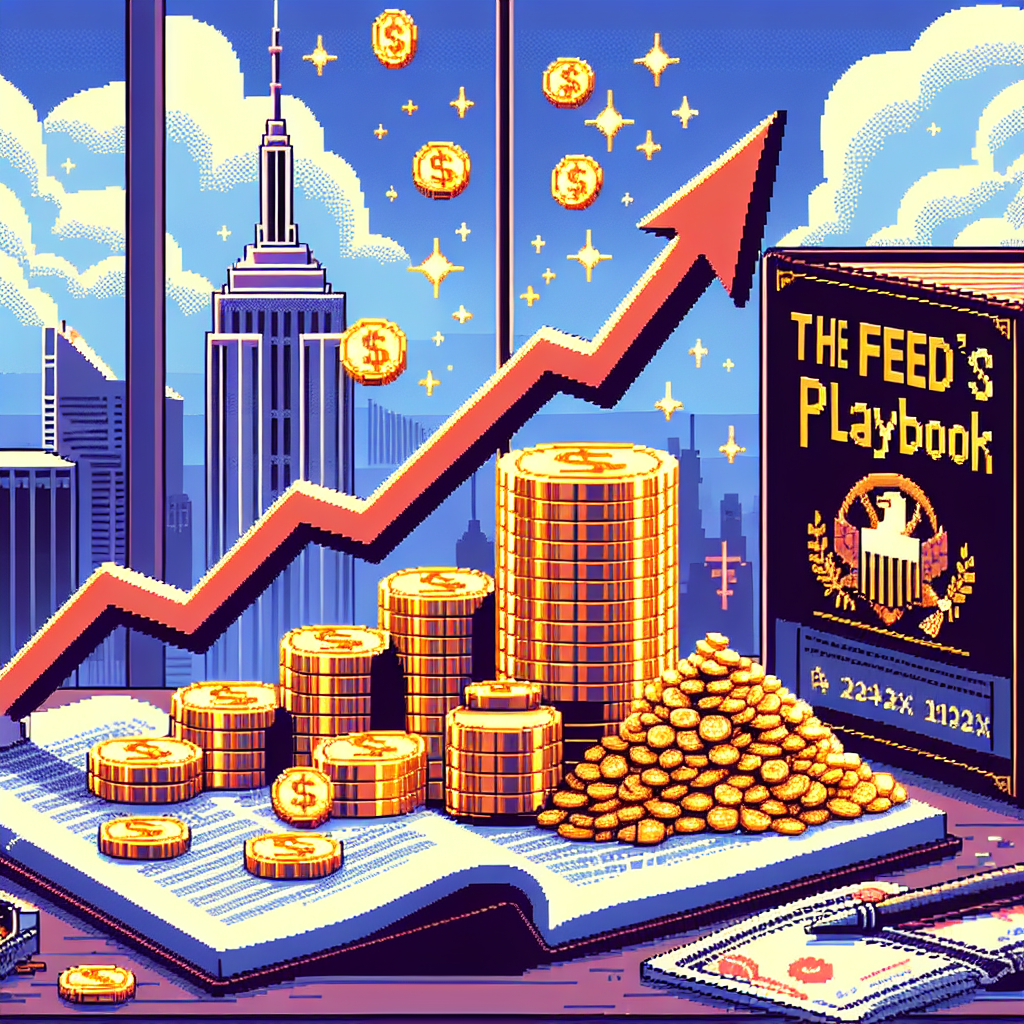
The $14 Trillion US Stock Rally is Seeking a Fed Cut Playbook – Bloomberg.com | Analysis by Brian Moineau

The $14 Trillion US Stock Rally is Seeking a Fed Cut Playbook - Bloomberg.com | Analysis by Brian Moineau

Title: Navigating the Stock Market's $14 Trillion Journey: What Will the Fed Do Next?

As the curtain rises on another pivotal week for the financial world, investors are on the edge of their seats, eagerly anticipating the Federal Reserve's next move. The backdrop? A staggering $14 trillion rally that has propelled U.S. stocks to record highs. But as with any great performance, this rally is approaching an inflection point, with the market eagerly awaiting the Fed's next act: a potential cut in interest rates.

The Plot So Far: A Rally of Epic Proportions

The U.S. stock market has been on an exhilarating ride, reaching new heights and capturing the imagination of investors worldwide. The rally's magnitude is nothing short of spectacular, with $14 trillion added to the value of U.S. stocks. This surge has been driven by a combination of strong corporate earnings, technological innovation, and investor optimism.

But like any good story, there's a twist. As we approach the Federal Reserve's long-awaited monetary policy meeting, investors are at a crossroads. Will the Fed cut interest rates to keep the rally alive, or will they hold steady, introducing uncertainty into the market narrative?

The Fed's Role: The Decision-Makers in the Spotlight

The Federal Reserve, led by Chairman Jerome Powell, finds itself in a familiar yet challenging position. The market's expectations are clear: a rate cut would likely extend this bull market's life, providing a fresh jolt of energy. However, navigating the delicate balance between fostering economic growth and controlling inflation is no small feat.

To get a sense of the Fed's potential moves, it's worth considering their recent history. In 2019, the Fed cut rates three times in response to global economic uncertainties and trade tensions. The move was seen as a preemptive strike to sustain the U.S. economic expansion. Fast forward to today, and while inflation concerns have emerged, the overarching priority remains economic stability.

Connecting the Dots: A Global Perspective

This U.S. stock market rally isn't happening in a vacuum. Across the globe, other central banks are also grappling with similar decisions. The European Central Bank, for instance, has maintained a dovish stance, signaling the possibility of further easing to combat economic slowdown in the Eurozone. Meanwhile, the Bank of Japan continues its ultra-loose monetary policy, battling persistent deflationary pressures.

Moreover, the geopolitical landscape plays a crucial role. Trade relations, particularly between the U.S. and China, have shown signs of improvement, providing a sense of optimism. However, other global tensions, such as the ongoing energy crisis and political uncertainties, continue to cast shadows on the economic horizon.

The Lighter Side: A Financial Soap Opera

As we wait with bated breath for the Fed's decision, it's hard not to see this as a financial soap opera of sorts—complete with twists, turns, and cliffhangers. The stock market's journey has been a rollercoaster, thrilling and sometimes nerve-wracking. Investors, analysts, and everyday folks alike are all part of this unfolding drama, each with their own theories and predictions.

In the spirit of keeping it light, perhaps we can draw a parallel to the world of sports. Just as a coach must decide the best strategy for the big game, the Fed must carefully choose its playbook. Will they opt for an aggressive offense with a rate cut, or play it safe and maintain the status quo? Only time will tell.

Final Thoughts: The Story Continues

As we move forward, one thing is certain: the financial world will be watching closely. The Fed's decision will undoubtedly shape the next chapter of this market rally. Whether you're a seasoned investor or just someone keeping an eye on the headlines, this is a story worth following.

In the grand theater of finance, the Fed's decision is just one act in an ongoing saga. The market will continue to evolve, driven by innovation, global dynamics, and the ever-present human factor of optimism and fear. So, grab your popcorn, sit back, and enjoy the show—it's bound to be an exciting ride.

Read more about AI in Business

Read more about Latest Sports Trends

Read more about Technology Innovations

U.S. International Trade in Goods and Services, July 2025 – Bureau of Economic Analysis (BEA) (.gov) | Analysis by Brian Moineau

U.S. International Trade in Goods and Services, July 2025 - Bureau of Economic Analysis (BEA) (.gov) | Analysis by Brian Moineau

Navigating the Trade Winds: The U.S. Trade Deficit's July 2025 Surge

Ah, the ever-evolving dance of international trade! Just when you think you've caught the rhythm, the tune changes, and you're left trying to catch up. That's precisely what happened in July 2025, as reported by the Bureau of Economic Analysis (BEA). The United States' goods and services deficit reached a staggering $78.3 billion, up $19.2 billion from June's revised figure of $59.1 billion. It's a number that has many economists scratching their heads and businesses reassessing their strategies.

The Big Picture


Before you let the numbers get you down, let's take a step back and look at the broader context. The trade deficit isn't just a standalone figure; it's a snapshot of a much larger global economic picture. With the world slowly recovering from the economic disruptions caused by the COVID-19 pandemic, international trade has been on a rollercoaster ride. Supply chains are still adjusting, and consumer demand is in flux.

In July, the increase in the trade deficit was primarily driven by a rise in imports outpacing exports. The U.S. imported more consumer goods, capital goods, and industrial supplies, reflecting a robust domestic demand. Meanwhile, exports did not experience the same level of growth, partly due to ongoing challenges in the global supply chain and varying recovery rates in different parts of the world.

The Global Tapestry


This jump in the trade deficit isn't happening in isolation. It's intertwined with global economic currents. For instance, the European Union, a major trading partner of the U.S., is navigating its own economic challenges, including energy crises and political shifts. These factors can influence the demand for U.S. exports.

In Asia, China, another key player in global trade, is experiencing a complex economic landscape marked by regulatory changes and geopolitical tensions. These dynamics can impact the flow of goods and services to and from the U.S.

The Dollar Dance


Another interesting angle to consider is the role of the U.S. dollar. A stronger dollar makes imports cheaper and exports more expensive, which can widen the trade deficit. In 2025, the dollar has maintained its strength, partly due to the Federal Reserve's monetary policy decisions. This strength, while beneficial for American consumers purchasing foreign goods, challenges U.S. exporters trying to compete in global markets.

Looking Forward


So, what does this all mean for the future of U.S. trade? The trade deficit is a complex beast, influenced by myriad factors beyond just imports and exports. Policies aimed at boosting domestic production, such as incentives for manufacturing and innovation, could help balance the scales. Additionally, diplomatic efforts to stabilize global trade relations are crucial.

On a lighter note, the ebb and flow of the trade deficit can also be seen as a testament to the interconnectedness of our world. It's a reminder that even as nations strive for self-sufficiency, the global marketplace is a shared space where cooperation and competition coexist.

Final Thoughts


As we sail these trade winds, it's essential to remember that numbers like the trade deficit are just one piece of the economic puzzle. They offer insights, yes, but they also prompt deeper questions about how we engage with the world and what strategies we employ to foster sustainable growth.

In the end, whether you're a business leader, policymaker, or curious global citizen, understanding these shifts in trade dynamics is vital. So, let's keep our eyes on the horizon, ready to adapt and thrive in this ever-changing global economy. As the saying goes, the only constant in life—and trade—is change.

Read more about AI in Business

Read more about Latest Sports Trends

Read more about Technology Innovations