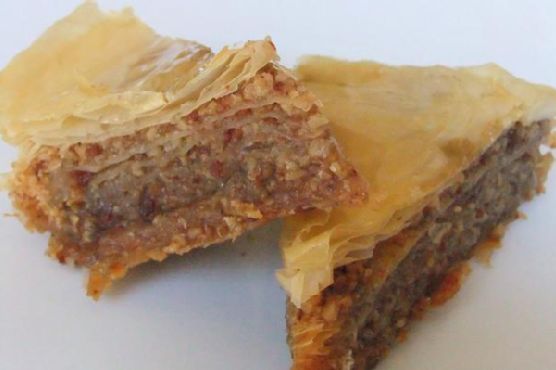
Honeyed Bacon” Baklava | Made by Meaghan Moineau

Honeyed Bacon" Baklava | Made by Meaghan Moineau

Title: Honeyed Bacon Baklava: A Sweet and Savory Fusion of Tradition and Innovation
Description:

Dive into the delightful layers of Honeyed Bacon Baklava—a modern twist on a timeless classic. This recipe blends the richness of walnuts, the sweetness of honey, and the savory goodness of bacon, all wrapped in delicate phyllo pastry. Perfect as a dessert, this dish is sure to impress both traditionalists and adventurous foodies alike. Discover the story behind this unique creation and learn how to make it at home with our detailed guide.


---


Honeyed Bacon Baklava: A Family Tradition with a Twist

There's something magical about the aroma of baklava baking in the oven, its sweet, nutty fragrance filling the kitchen and wafting through the house. For as long as I can remember, baklava has been a staple at our family gatherings. My grandmother would spend hours preparing her signature dessert, layering phyllo dough with precision and love. The final touch was always her secret syrup, drizzled generously over the golden-baked layers.


One autumn afternoon, inspired by both nostalgia and curiosity, I decided to give our beloved baklava a modern twist. The idea of adding bacon—a family favorite—seemed both daring and delicious. I knew it was a risk, but the combination of savory and sweet was too tempting to resist.


Ingredients:

- 2 cups walnuts


- 1/2 cup sugar


- 1 teaspoon ground cinnamon


- 1 package frozen phyllo dough, thawed


- 1 cup butter, melted


- 1 cup honey


- 8 slices of bacon, fried to a crispy stage


Instructions:
1. Prepare the Filling:

In a large bowl of a food processor, add walnuts, crispy bacon, sugar, and cinnamon. Pulse until the mixture is finely chopped and well combined. Set aside.


2. Layer the Phyllo:

Preheat your oven to 300°F (150°C). Cut the phyllo dough into 13" by 9" rectangles. In a greased 13" by 9" baking dish, place one sheet of phyllo and brush it with melted butter. Repeat this process to make five more layers of phyllo, brushing each layer with butter.


3. Assemble the Baklava:

Sprinkle one cup of the walnut-bacon mixture over the phyllo layers. Repeat the layering process three more times, making a total of four layers. Top with the remaining phyllo sheets, brushing each with butter.


4. Cut and Bake:

With a sharp knife, cut just halfway through the layers in a triangle or diamond pattern. Bake in the preheated oven for 1 hour and 25 minutes, or until the top is golden brown.


5. Add the Honey:

In a small saucepan over medium-low heat, warm the honey until it's hot but not boiling. Evenly spoon the hot honey over the hot baklava, ensuring it seeps into the cuts. Allow the baklava to cool in the dish on a wire rack for at least one hour. Cover with foil and let it stand at room temperature until serving.


6. Serve:

To serve, finish cutting through the layers with a sharp knife to form triangles or diamonds.


A Family Memory:

As I served this Honeyed Bacon Baklava at our next family gathering, I was met with curious looks and raised eyebrows. My grandmother, the matriarch of our family traditions, took the first bite. Her eyes widened with surprise, and then a smile broke across her face. "You've done it," she said, her voice full of warmth. "You've taken something old and made it new." The baklava was a hit, a perfect blend of nostalgia and innovation that brought us all together in laughter and shared delight.


Difficulty Rating: 8/10
Classification: Dessert

This Honeyed Bacon Baklava is a delightful challenge for those looking to expand their culinary repertoire. Its blend of flavors and textures will impress at any gathering, offering a unique twist on a beloved classic. Whether you're a seasoned baker or a curious cook, this recipe invites you to explore the delicious intersection of tradition and creativity.
Read more about Appetizers

Read more about Main Dishes

Read more about Desserts

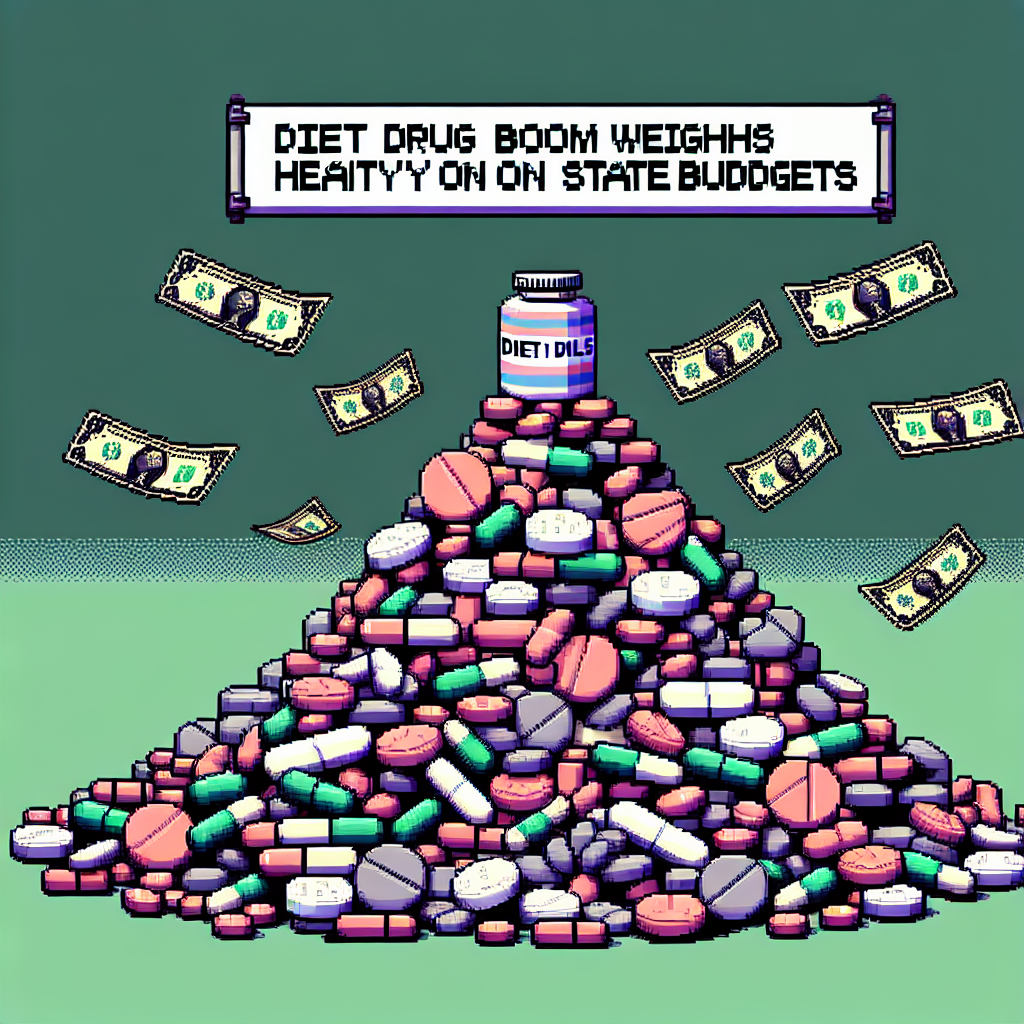
Diet drug boom weighs heavily on state budgets – POLITICO | Analysis by Brian Moineau

Diet drug boom weighs heavily on state budgets - POLITICO | Analysis by Brian Moineau

**Title: Slimming Down State Budgets: The Diet Drug Dilemma**

In the world of healthcare policy, it seems we're constantly juggling an ever-expanding portfolio of public health concerns, each more pressing than the last. The latest conundrum capturing the attention of policymakers nationwide? The financial burden of the diet drug boom. As demand for these medications skyrockets, state budgets are feeling the pinch, prompting a scramble for cost-reducing solutions — or even a reconsideration of coverage altogether.

**The Weighty Issue**

Diet drugs have become the new frontier in the battle against obesity, a leading cause of preventable chronic diseases like diabetes and heart disease. With medications like Ozempic and Wegovy making headlines for their weight-loss potential, it's no wonder that consumer interest and demand have surged. These drugs, originally developed for managing diabetes, have found a secondary market among those seeking a pharmaceutical edge in weight management.

However, this surge in demand is not without consequence. State budgets, already stretched thin by the pandemic's economic impact, are struggling to accommodate the rising costs associated with covering these medications under Medicaid and other public health programs. Some states are even considering dropping coverage to alleviate financial pressure.

**Drawing Parallels**

This situation is reminiscent of other healthcare challenges where rapid advancements and public interest outpaced policy and budgetary readiness. Take, for instance, the early days of the COVID-19 vaccine rollout. Governments worldwide faced logistical and financial hurdles in making vaccines widely available, often leading to difficult decisions about prioritization and funding.

Moreover, the diet drug dilemma is not occurring in isolation. Globally, healthcare systems are grappling with the rising cost of innovative treatments, from gene therapies to biologics. The challenge lies in balancing access to cutting-edge medical interventions with fiscal responsibility — a tightrope act that policymakers must navigate with increasing frequency.

**A Broader Perspective**

Looking beyond the financial implications, the diet drug boom also underscores the importance of addressing the root causes of obesity. While medications offer a promising solution for some, they are not a panacea. Comprehensive public health strategies, including education, access to nutritious foods, and opportunities for physical activity, remain crucial components of any effective obesity intervention.

Additionally, the debate around diet drugs reflects broader societal discussions about health equity. As states consider dropping coverage, there's a risk that these medications become accessible only to those who can afford them, exacerbating existing health disparities. Ensuring equitable access to healthcare, irrespective of income, remains a fundamental challenge and priority.

**Final Thoughts**

As states wrestle with the financial realities of the diet drug boom, there's an opportunity to reimagine healthcare funding and policy. By fostering dialogue between policymakers, healthcare providers, and the communities they serve, innovative solutions can emerge that balance cost with care.

In the end, the goal is not just to manage budgets but to promote healthier populations. By addressing both the symptoms and the causes of obesity, we can work towards a future where the benefits of medical advancements are shared by all, without leaving state budgets in the red.

Read more about AI in Business

Read more about Latest Sports Trends

Read more about Technology Innovations