
Snowed Out: When the NBA Hits the Brakes Because Mother Nature Shows Up
There’s something oddly humbling about a city full of jumbo screens and flight crews pausing because of snow. On January 25, 2026, the NBA postponed two games — Denver vs. Memphis and Dallas vs. Milwaukee — as a massive winter storm made travel unsafe across large swaths of the country. The league, teams and fans all had to reckon with a simple fact: some things are bigger than a game.
What happened (the short version)
- On January 25, 2026, the Denver Nuggets at Memphis Grizzlies game scheduled for FedExForum was postponed due to inclement weather in the Memphis area. The decision came less than three hours before tipoff after snow, sleet and freezing rain made conditions hazardous. (abcnews.go.com)
- The Dallas Mavericks’ trip to Milwaukee for a Sunday-night matchup with the Bucks was also postponed after the Mavericks were unable to complete flights to Milwaukee — despite two attempts — because of the storm and related travel issues. No reschedule dates were announced immediately. (cbssports.com)
Why this matters beyond the box score
- Travel and safety come first: Professional sports operate on tight schedules and expensive logistics, but the league’s decision underscores that player/staff safety and public safety still override TV windows and ticket sales.
- Scheduling ripple effects: Postponements create logistical headaches. Finding mutually available dates on two busy team calendars — particularly late in the season when back-to-backs and arena availability matter — is rarely simple.
- Competitive fairness and rhythm: Teams build routines around game flow. Sudden cancellations can give one team an unexpected rest day or disrupt momentum, which matters in tight playoff races.
- Fan experience and local economies: Last-minute postponements hit ticket holders, arena staff, local vendors and travel-dependent fans who planned around those games.
Scenes and logistics to imagine
- In Memphis, both teams and the officiating crew had already arrived. For fans who’d made plans for a Sunday night outing, the postponement was abrupt but clearly grounded in safety given the wintry mix and refreeze risk on roadways. (abcnews.go.com)
- In Milwaukee, the picture was different: the Mavericks tried twice to make the trip but couldn’t due to flight and de-icing or other operational issues. When teams can’t physically get to the arena, there’s no safe way to carry on with a professional game. (cbssports.com)
A few practical questions fans ask (and brief answers)
- Will the games be rescheduled soon?
- The league typically looks for an open date that fits both teams’ schedules and arena availability. Because schedules are crowded, especially late in January and February, it may take a while. The NBA announced the postponements and said reschedule dates would be announced later. (nba.com)
- What about broadcast and ticket refunds?
- Standard practice: broadcasters adjust programming and teams provide ticket exchange/refund options or reissue tickets for the rescheduled date. Check team and league communications for official details once reschedules are set. (Teams and the NBA handle these logistics directly.)
- Could postponements affect playoff seeding or rust for star players?
- Yes. Even minor disruptions can shift rest cycles and rehabilitation timelines. Coaches and staff must juggle minutes and workloads accordingly.
Broader context: weather, travel, and modern sports
Weather has always been an unpredictable opponent. But modern professional sports leagues run interdependent operations — charter flights, arena crews, broadcast windows and fans’ travel plans — that magnify the effects of any disruption. When a storm like the one on January 25, 2026, forces cancellations, it reveals how tightly choreographed the season is and how many moving parts depend on clear skies and open highways. (theguardian.com)
Key points to remember
- Safety first: League officials postponed the games because travel and local conditions were unsafe.
- Logistics follow: Rescheduling is complicated and may not happen immediately.
- Everyone feels it: Teams, broadcasters, arena workers and fans all face consequences when weather intervenes.
- It’s part of the game’s human element: Even the most high-tech sports world is still subject to nature.
My take
There’s an odd, almost democratic humility in seeing the NBA — a multibillion-dollar enterprise with meticulously planned travel — pause for snow. It’s a reminder that the game is played inside a larger world where safety, infrastructure and community well-being matter more than a perfectly timed TV slot. Fans disappointed by a canceled night can still appreciate that the decision likely prevented unsafe driving, stranded travelers, or worse. The league, teams and supporters all lose a planned moment of shared excitement, but they gain something more durable: the sensible prioritization of people over programming.
Sources
(For the most up-to-date reschedule information, check official team or NBA announcements on their websites or social feeds.)
Related update: We recently published an article that expands on this topic: read the latest post.
Related update: We recently published an article that expands on this topic: read the latest post.
Related update: We recently published an article that expands on this topic: read the latest post.
A wave of closures, from coast to corner store: what the 400‑plus shutdowns mean for Alabama and retail
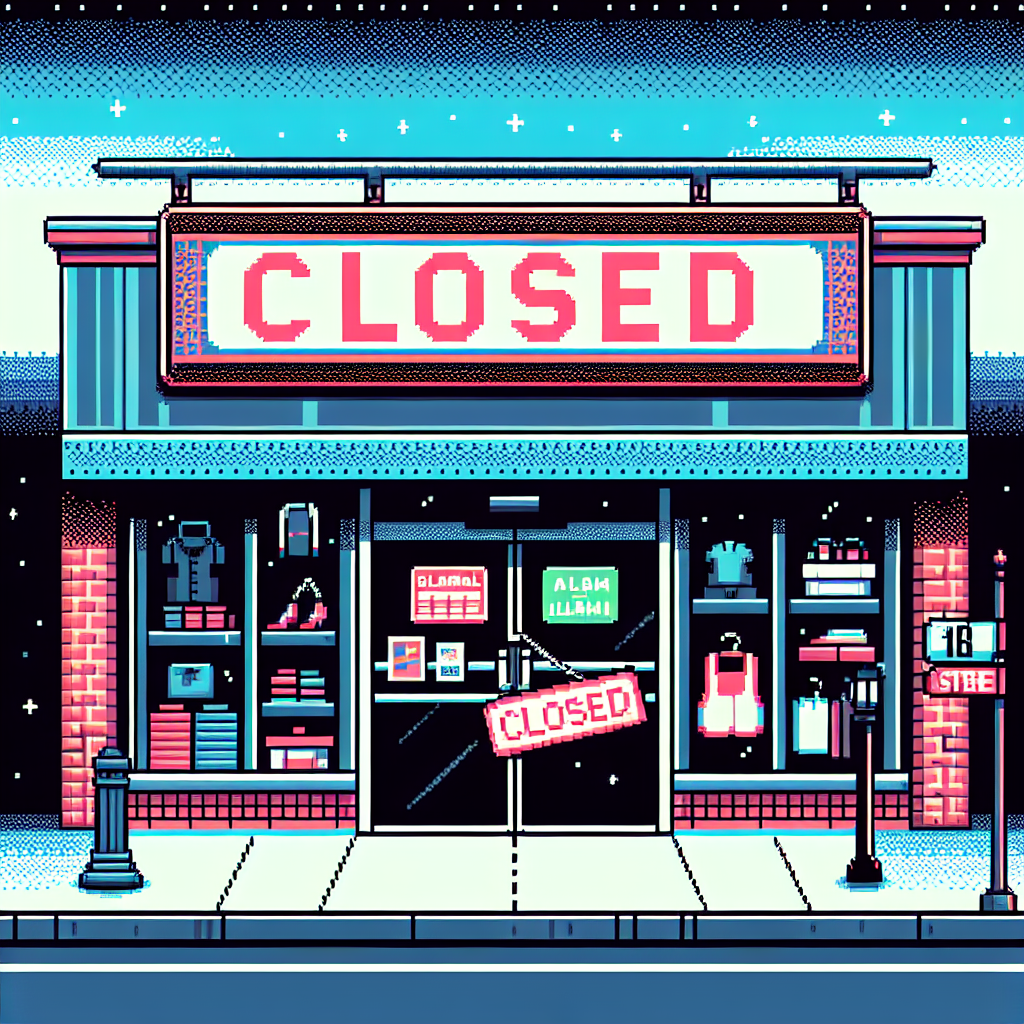
The last few weeks have felt like déjà vu for anyone who remembers the “retail apocalypse” headlines years back. Only this time it’s a single national chain — once a staple in malls and strip centers — quietly pulling the plug on more than 400 locations across the country, including multiple stores here in Alabama. As of January 2026, closures have been reported in 42 states, leaving customers, workers, and local landlords picking up the pieces. (theverge.com)
Why this matters beyond a “store is closing” sign
- A single store closing is a local inconvenience. Hundreds closing at once is a signal.
- These aren’t random one-offs: they’re part of a deliberate retrenchment tied to changing consumer habits, high operating costs, and a strategic pivot by corporate leadership.
- For Alabama towns, the impacts stack: lost jobs, reduced foot traffic for nearby small businesses, and sudden gaps in services — especially in communities where that chain was a primary destination.
Local news roundups picked up on the closures quickly, reporting shuttered locations in cities across Alabama; in many cases, employees received short notices and customers discovered closures when a loved storefront vanished overnight. (patch.com)
What pushed this round of cuts
- Digital consumption. Games, media, and many entertainment purchases have migrated online. The company’s historic advantage — people browsing used games, trading in discs — has eroded. (foxbusiness.com)
- Fiscal pressure and restructuring. The retailer closed hundreds of locations in prior years and warned investors that more closures were coming during the 2025 fiscal year. Management framed this as “portfolio optimization” to cut losses and redirect capital. (techradar.com)
- Real estate realities. Brick‑and‑mortar stores carry rent, staffing, inventory, and utility costs that add up — especially in lower‑traffic mall locations. When sales fall below a certain threshold, a store becomes an obvious closure candidate.
- Corporate incentives and strategy shifts. Public filings and reporting revealed ambitious valuation goals and new investment policies, which, critics argue, may be pushing short‑term maneuvers like aggressive footprint shrinking. (engadget.com)
The human and local economic fallout
- Employees: sudden job losses or transfers. Some staff receive offers to relocate; others face unemployment or part‑time schedules at new nearby employers.
- Small businesses: quieter parking lots and fewer impulse shoppers mean lower incidental sales for cafes, cellphone repair shops, and mall kiosks.
- Real estate owners: a vacant 2,500–4,000 sq. ft. retail box is costly to repurpose quickly. Some landlords can re‑tenant with discount grocers, dollar stores, or fitness brands — but not overnight.
- Consumers: loss of local choices, longer drives for specialty purchases, and fewer community gathering spots. In rural or smaller suburban markets, that narrowing of options hits hardest.
Local reporting suggested that affected Alabama stores varied from urban to suburban, and community reactions ranged from resigned acceptance to active efforts to save beloved locations. (herebirmingham.com)
Bigger picture: what this says about retail in 2026
- Acceleration of digital-first commerce. Even categories that once relied on in-person transactions (preowned goods, collectibles) are finding robust online marketplaces.
- Two retail models are winning: experience-driven stores (where people go for events, demos, social reasons) and ultra‑efficient low‑cost retailers. Traditional specialty chains that relied on frequent physical visits are squeezed from both sides.
- Store count alone is no longer a proxy for health. Companies can trim locations and still focus on profitable hubs, but that often comes at a community cost.
- Local ecosystems matter. Regions that diversify retail options and cultivate destination experiences tend to weather closures better.
Industry coverage across technology and business outlets has framed this latest wave as both a continuity and an escalation of trends we’ve seen for years — not an isolated crisis but a structural reset. (theverge.com)
What Alabama communities can do (practical, immediate steps)
- Track the timeline. If a store is closing in your city, follow local news and the company’s store locator for final days and employee announcements. (yahoo.com)
- Support displaced workers. Encourage local hiring fairs, and push for information from corporate or landlords about severance, job placement, or transfer options.
- Reimagine the space. Municipalities can proactively engage landlords and economic development teams to explore pop‑ups, community markets, or nonprofit use while a long‑term tenant is found.
- Boost local demand. Events, shop‑local campaigns, and bundled promotions with neighboring businesses can help nearby retailers survive reduced foot traffic.
Lessons for shoppers and local leaders
- Physical presence still matters — but it must offer convenience, specialized service, or an experience you can’t easily replicate online.
- Local governments and chambers of commerce should treat large vacancies as economic events, not just real estate problems: rapid response teams make a difference.
- Consumers voting with their wallets can tilt outcomes; but lasting change often needs coordinated local effort.
My take
It’s tempting to read these closures as proof that “retail is dead.” That’s too simple. Retail is being rewritten: fewer stores, smarter locations, more blended digital‑physical experiences. For Alabama communities, this moment is a stress test. Some towns will adapt by filling gaps creatively; others will see longer‑term decline if vacancies linger.
This wave is a reminder that corporate strategies — even those made in faraway boardrooms — have very local consequences. The practical stuff matters: clear communication to workers, honest timelines for landlords, and community plans for reuse. If those pieces fall into place, a closed sign can become the start of something new instead of an endpoint.
Sources
(Links above were used to compile reporting and local context.)
Related update: We recently published an article that expands on this topic: read the latest post.
The squeeze on Main Street: why mom-and-pop shops are hunkering down
There’s a quiet panic in small-business towns across the country. Shop owners are trimming hours, delaying hires, and staring at spreadsheet scenarios that all end the same way — build cash, avoid risk, survive the next shock. The affordability crisis isn’t just about rising grocery bills; it’s a compound threat hitting mom-and-pop shops from every direction: higher import costs, rising payroll and health‑care bills, scarce affordable credit, and employees who are one rent check away from distraction. This is what happens when the cost-of-living crisis collides with a fragile small-business ecosystem.
Why this feels different right now
- Import and input costs have jumped for many small manufacturers and retailers, driven by tariffs and higher shipping costs that squeeze margins. Owners who used to pass only a fraction of price increases onto customers are now forced to choose between less profit and fewer sales. (finance.yahoo.com)
- Lending is available in some forms, but often expensive. Small-term business loans show average rates that are higher than they have been in recent memory, pricing out growth and forcing owners to hoard cash rather than invest. (finance.yahoo.com)
- Payroll and healthcare remain stickier costs. With wages and benefits rising, labor-intensive small businesses—cafés, shops, local manufacturers—face a double bind: pay more to retain staff or risk turnover and service disruption. (finance.yahoo.com)
- The workforce itself is stressed. When employees are worried about housing, groceries, or medical bills they bring that anxiety to work; productivity and customer service suffer. Business owners report distracted staff and a loss of morale that is hard to quantify but easy to feel at the register. (finance.yahoo.com)
Signals from the data and policy landscape
- Banks reported a modest uptick in demand for business loans in late 2024, but lending standards have tightened, and smaller borrowers often see higher effective rates or find themselves steered away from underwriting entirely. That mismatch leaves many Main Street businesses underserved. (reuters.com)
- The Small Business Administration (SBA) has increased small-dollar backing in recent years, which has helped some entrepreneurs access capital. But access remains uneven, and policy shifts or agency reorganizations can change the terrain quickly for small lenders and borrowers. (apnews.com)
What owners are doing (and why it matters)
- Hunkering down: owners are building cash reserves, delaying capital expenditures, and cutting discretionary spending. That preserves survival but stalls growth and job creation. (finance.yahoo.com)
- Shrinking payrolls: some have reduced staff or hours to manage labor costs. That reduces overhead but can also reduce revenue and community vibrancy. (finance.yahoo.com)
- Seeking alternate revenue: pop-up events, online channels, and partnerships can help, but not every business can pivot easily—especially manufacturers and service providers tied to local demand. (finance.yahoo.com)
- Shopping for credit carefully: owners are comparing SBA-backed options, community lenders, and commercial banks, but smaller, mission-driven loans are still scarce in some regions. (sba.gov)
A few human stories that put numbers in perspective
Across different reports, small-business owners say the same thing: uncertainty makes planning impossible. A Massachusetts manufacturer that recently laid off staff described an environment where tariffs and shifting trade policy dent demand overnight, forcing quick cuts and a focus on cash preservation rather than investment. Those individual decisions ripple through local economies—less payroll, fewer local purchases, and a community that slowly tightens its belt. (finance.yahoo.com)
What would help Main Street (practical levers)
- Expand small-dollar lending and streamline access. More predictable, affordable credit for loans under six figures helps owners bridge seasonal gaps and invest in productivity. SBA programs and community lenders can play a role but need scale and stability. (apnews.com)
- Targeted relief for input-cost shocks. Temporary tax credits, tariff adjustments, or subsidized logistics support could blunt abrupt cost spikes for small manufacturers who lack hedging tools used by larger firms. (finance.yahoo.com)
- Workforce support that stabilizes employees’ lives. Expanding access to childcare, emergency savings, and affordable health-care options reduces the non‑work distractions that hit productivity and retention. (finance.yahoo.com)
- Predictable policy environment. Businesses need fewer policy surprises—clearer trade and regulatory signals allow owners to plan hiring and capital expenditures with confidence. (finance.yahoo.com)
A short set of takeaways for readers
- Main Street is resilient but not invincible: small businesses are conserving cash and deferring growth while facing multiple cost pressures. (finance.yahoo.com)
- Credit exists but is uneven: SBA efforts have expanded small-dollar lending, yet many owners still pay high effective rates or face tighter underwriting. (apnews.com)
- The workforce crisis is an affordability crisis: stressed employees reduce productivity, and that compounds business stress. (finance.yahoo.com)
My take
This moment feels like a stress test for the local economy. Policies and markets have nudged mom-and-pop shops into a defensive crouch—and defense is a valid short-term strategy. But if we leave Main Street in that posture too long, we risk losing the entrepreneurial engine that drives jobs and community identity. The right mix of predictable policy, targeted support for credit and inputs, and investments that stabilize workers’ lives could flip a lot of these businesses back from “survive” to “grow.”
Sources
Related update: We recently published an article that expands on this topic: read the latest post.
Related update: We recently published an article that expands on this topic: read the latest post.