Riot’s MMR Reset: What It Means for Climbs | Analysis by Brian Moineau

Why Riot is re-mapping MMR to rank — and why it matters for your climb

When Riot quietly tweaked the way hidden MMR maps to visible ranks, a lot of players felt it immediately: different LP swings, weirder promotion timing, and—if you’re in Iron or Diamond—maybe finally facing opponents who actually match what your rank should mean. Riot’s dev post on March 2, 2026 announced those changes and explained the reasoning: make ranked games feel fairer and more consistent across the entire ladder. This isn’t just technical housekeeping. It’s a nudge at how the whole competitive experience reads to players.

Below I unpack what they changed, why they changed it, who wins (and who doesn’t), and what to expect next for Ranked climbs.

What Riot changed (the short version)

  • Riot adjusted the MMR-to-rank distribution so that the mapping between hidden skill (MMR) and visible rank (Iron → Challenger) better reflects differences in demonstrated ability.
  • At the bottom of the ladder, Iron’s MMR band was shifted so more seasoned-but-struggling players move into Bronze, leaving Iron closer to a true “learning” tier.
  • At the top, the upper Diamond MMRs were pushed into Master’s range to reduce the enormous skill spread inside Diamond and make climbing through Diamond less painful.
  • These shifts widened Master’s MMR range and raised practical LP thresholds for Grandmaster and Challenger, which Riot says they’re monitoring and may adjust before next season.
  • Riot also flagged upcoming work on autofill, role parity, Apex tier duoing, and LP resolution for Master+ games.

(Source: Riot dev post, March 2, 2026.)

Why this matters for players

  • Match quality: Better alignment between MMR and rank should reduce the number of matches where one team contains players who are clearly over- or under-skilled for the division label on their profile.
  • Clarity of skill expectations: If you’re in Gold or Platinum, Riot’s goal is that players within the same rank should share a baseline of game knowledge and macro expectations—making games more predictable for learning and teaching.
  • More meaningful progression: Iron becomes a safer place for real beginners to play without being dominated by veterans who “belong” at higher visible ranks but have stayed in Iron due to LP quirks or alternating demotions/promotions.
  • Harder apex tiers (for now): Master, Grandmaster and Challenger players may see different LP dynamics while Riot balances population vs. MMR spread.

Who benefits and who might feel the friction

  • Beneficiaries

    • Newer players: Iron being more of a true learn-to-play tier can reduce stomps and help new players find teammates with similar fundamentals.
    • Skilled-but-stuck players: People who actually belong in Bronze/low Silver but were trapped in Iron could see more consistent matchmaking.
    • Climbers in Diamond: Narrowing the skill spread within Diamond should make promotions feel more linear and less grindy.
  • Players who may notice pushback

    • Some Master+ players: Wider MMR in Master made LP math shift for Grandmaster/Challenger; Riot is aware and monitoring LP consistency.
    • People used to exploit rank irregularities (smurfs, account sellers): Changes aim to reduce those edge cases, so some old tricks will be less effective.

The broader competitive design thinking

Riot’s changes are a window into how modern competitive systems balance two things that often pull in opposite directions:

  • Psychological progression: Visible ranks and promotions are motivating. Letting players feel upward movement keeps people engaged.
  • Statistical fairness: Matchmaking must pair players of similar demonstrated skill to make games meaningful and teachable.

Too much emphasis on visible progression without aligning the hidden MMR leads to mismatches, confusing LP swings, and a poorer learning environment. Riot’s mapping adjustment is an attempt to reset that balance: keep the motivational benefits of ranks while reducing the mismatch noise.

What to watch next (and practical takeaways)

  • Autofill and role parity tests (noted for 26.4/26.5 rollout) — these directly affect queue fairness and how long you wait to play your chosen role.
  • LP fixes for Master+ — if you play Apex tiers, expect changes aimed at stabilizing +/− LP outcomes.
  • Potential new tier below Iron — Riot hinted they might add a true-stepping-stone tier for fresh players if Iron still isn’t distinct enough.

Practical advice for climbers:

  • Focus on wins, not short-term LP swings. MMR moves your long-term trajectory even when visible LP looks weird.
  • Track average LP gain per win over multiple games—those numbers are the best signal of whether your MMR is above or below your visible rank.
  • If you’re a high-skill player stuck in a low visible rank, expect the system to pull you up faster now that Riot is re-mapping ranges.

A few implementation notes (for context nerds)

  • Riot didn’t change how MMR is calculated per game (it’s still primarily win/loss driven); they changed how that hidden number translates into the visible rank bands.
  • Expanding MMR ranges at the top or shifting bands at the bottom is a blunt tool—effective for population-level fixes, but it requires listening to player data after deployment (which Riot said they’re doing).
  • These changes are iterative. Expect small follow-up patches over the coming months as Riot checks queue times, LP distribution, and player experience signals.

My take

This feels like a long-overdue re-centering. Visible ranks are the social language of League—the badge you and your friends talk about. If that language stops meaningfully matching the players behind the badge, it erodes the ladder’s usefulness for learning and for measuring progress. Riot’s MMR-to-rank re-mapping aims to restore that trust: make ranks informative again, reduce weird LP variance, and give beginners a safer space to learn.

It won’t be perfect overnight—changes like this always create ripple effects—but Riot’s transparency about the goals and the planned follow-ups (autofill, LP fixes, Apex duoing) is a good sign. If you play ranked seriously, keep an eye on your LP per win trends and the Master+/Grandmaster LP behavior Riot said they’ll address.

Sources

Strickland Ends Streak, Calls Out Chimaev | Analysis by Brian Moineau

Sean Strickland’s statement night in Houston: he stops Hernandez and points straight at Khamzat

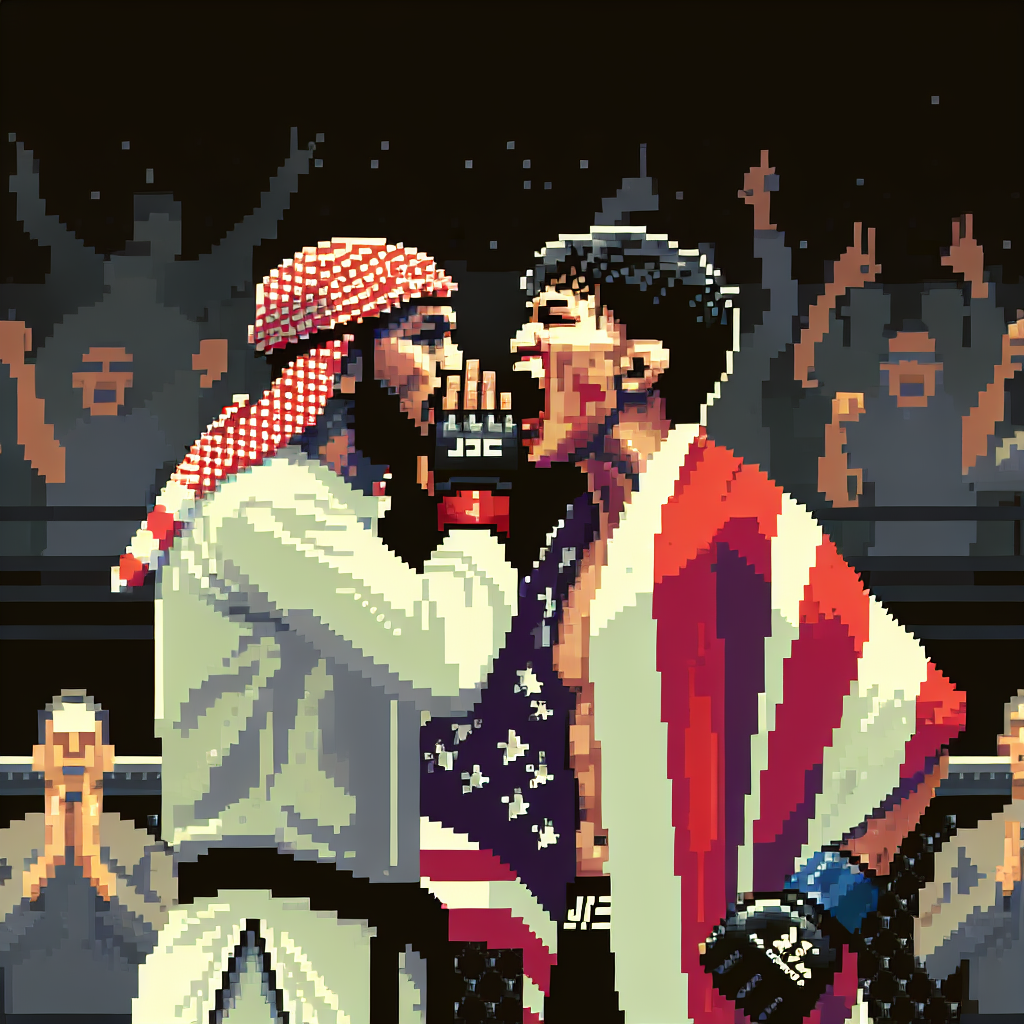
The Toyota Center was electric on February 21, 2026 — not just because Sean Strickland ended Anthony “Fluffy” Hernandez’s eight-fight surge, but because Strickland left the cage making it very clear what he wants next: Khamzat Chimaev. It was a night that felt equal parts tactical clinic, vintage Strickland aggression, and a loud, unapologetic challenge aimed at the division’s top dog.

What happened (quick recap)

  • Event: UFC Fight Night — Houston, Toyota Center.
  • Date: February 21, 2026.
  • Result: Sean Strickland defeated Anthony Hernandez by TKO (strikes) at 2:33 of Round 3.
  • Significance: Stopped Hernandez’s eight-fight winning streak and delivered Strickland’s first finish in several years while staking a claim for a title shot. (ufc.com)

Why this felt bigger than "just another main event"

There are a few layers to the moment:

  • Strickland’s performance wasn’t fluky. He controlled large stretches with his jab, landed a hard body knee early in Round 3 that visibly changed the fight, and followed with precise pressure until the referee stepped in. That combination of discipline and sudden finishing heat reminded fans why he’s still main-event-caliber. (ufc.com)

  • Hernandez was riding real momentum. “Fluffy” had ripped off eight wins — beating names that had him climbing into title-talk territory. Snapping that streak doesn’t just boost Strickland’s résumé; it reshuffles the middleweight pecking order. (mmamania.com)

  • The verbal angle is unavoidable. Strickland didn’t just celebrate — he publicly called out Khamzat Chimaev, re-igniting a rivalry that’s been building in and around the division. That callout turns a single win into a concrete narrative: Strickland wants the title back and wants to do it against the hottest champion in the weight class. (mmafighting.com)

A main-event finish is always headline material — but the timing (after Hernandez’s streak) and the bold callout make this moment meaningful for the entire 185-pound picture.

The matchup implications: could Strickland vs. Chimaev really happen?

There are reasons it’s a tantalizing matchup and reasons to be skeptical.

  • Why it makes sense:

    • Strickland just added a big win to his ledger and is a former champion with name value; the UFC rewards both.
    • Chimaev is the undefeated face of the division and a promotional favorite for big matchups; a fight between two outspoken, polarizing figures sells. (ufc.com)
  • Why it might not be straightforward:

    • Chimaev has flirted with moving weight classes and has his own career path and priorities, which may or may not align with an immediate Strickland defense.
    • The politics of matchmaking — rankings, previous rematches, and other contenders in line — could delay or detour this pairing. (mmafighting.com)

Bottom line: the matchup is plausible and marketable, but not automatic. Promotion, timing, and both fighters’ willingness will determine whether that callout becomes the next big middleweight fight.

What this means for Anthony Hernandez

  • The loss stings — Hernandez’s eight-fight run (dating back to 2020) was real momentum toward a title push. A loss like this bumps him off the immediate path, but it doesn’t erase the body of work that put him there. Expect him to recalibrate, pick a tough but winnable test, and chase a bounce-back run. (mmamania.com)

Quick takeaways from the night

  • Strickland reminded everybody he can still finish fights and do so against top-tier, in-form opponents. (ufc.com)
  • Hernandez’s streak ends, but he remains a dangerous, top-level middleweight with easy paths back into contention. (mmamania.com)
  • The callout to Khamzat Chimaev turns an impressive win into a storyline with title implications — whether or not it happens depends on both fighters and UFC timing. (mmafighting.com)

My take

Strickland’s win was classic: smart boxing, sudden violence, and a headline-ready post-fight demand. He hasn’t been the division’s most consistent finisher, but on this night he showed he still has that dangerous edge — and just as importantly, the appetite to push the division’s narrative. If the UFC wants intrigue (and pay-per-view eyeballs), matching him with Chimaev would be a gas. If Chimaev prefers different routes, though, expect Strickland to keep leaning into big nights and loud demands until the matchup he wants becomes impossible to ignore.

Sources


Related update: We recently published an article that expands on this topic: read the latest post.

Benavidez Dominates Yarde, Targets Ramirez | Analysis by Brian Moineau

David Benavidez pulverizes Anthony Yarde in Riyadh and immediately sets his sights on Zurdo Ramirez

An electric night in Riyadh ended with David “The Monster” Benavidez reminding the boxing world why he’s one of the sport’s most dangerous punchers — and why his plans don’t stop at light heavyweight. In a seventh-round TKO, Benavidez dismantled Anthony Yarde to retain the WBC light-heavyweight crown, then announced a blockbuster move up to cruiserweight to challenge Gilberto “Zurdo” Ramirez. The result was clinical, the post-fight declaration bold, and boxing’s landscape just tilted again.

Quick hits from the night

  • Location: ANB Arena, Riyadh, Saudi Arabia.
  • Result: David Benavidez defeated Anthony Yarde by TKO (7th round).
  • Stakes: Benavidez retained the WBC light-heavyweight title.
  • Immediate announcement: Benavidez said he’ll move up to cruiserweight to face Gilberto “Zurdo” Ramirez on May 2 (reported as being aimed for Las Vegas).
  • Why it matters: Benavidez not only defended his belt but telegraphed ambitions to be a three-division titlist — a storyline that reshapes match-making at 175 and 200+ pounds.

How the fight played out

Benavidez paced himself early, using range and feints to measure Yarde. Once he turned the pressure up, the bout became a textbook display of his strengths: tireless forward momentum, volume punching, and sudden, brutal bursts that left Yarde on the back foot. As the rounds progressed, Benavidez moved from probing jabs to waves of combinations that tested Yarde’s chin and resolve.

The referee stepped in late in round seven after Benavidez had Yarde trapped and unloading. There was controversy in the round — Benavidez landed while Yarde took a knee and was penalized a point — but that did little to change the trajectory. When the stoppage came it felt inevitable: Benavidez had broken the British challenger down with relentless work rate and accuracy.

Why this matters beyond one result

  • Benavidez cemented his status as a top light-heavyweight and a genuine threat to the division’s elite — especially Dmitry Bivol, who holds multiple titles at 175. Benavidez’s size, speed and finishing ability make him a stylistic problem for most top light-heavyweights.
  • The announced jump to fight Gilberto “Zurdo” Ramirez at cruiserweight changes the narrative. If that matchup happens, Benavidez would be testing his power and frame against bigger men, pursuing multi-division legacy. That’s an attention-grabbing, high-reward — and high-risk — career move.
  • For Anthony Yarde, the loss raises questions about taking another elite-level step. He showed heart and moments of effectiveness, but again came undone against sustained pressure from a volume puncher. Yarde’s future at the top level may hinge on how he adjusts to that style or whether he chooses different matchups.
  • Promoters and networks will now juggle bigger picture options: Benavidez vs. Bivol, Benavidez vs. Artur Beterbiev, or Benavidez moving up to Ramirez. Each path has different commercial and sporting implications.

What the numbers and performances suggest

  • Benavidez is undefeated and now has multiple stoppages at light-heavyweight since moving up. His work rate and punch output stood out: not just landing power shots, but chaining combinations that accumulated damage.
  • Yarde remained dangerous in spots — single big shots and flashes of countering ability — but he struggled to consistently create separation or sustain offense against Benavidez’s pressure.
  • The immediate claim that May 2 would host Benavidez vs. Ramirez is significant but still needs contracts and confirmation from both camps and sanctioning bodies. Announcements from a fighter or promoter are one thing; finalized, signed purses and dates are another. The likely stage (Las Vegas) and the involvement of Golden Boy (Ramirez’s promoter) were reported in the aftermath.

Three main takeaways

  • Benavidez is not just a big light-heavy — he’s a relentless pressure fighter with finishing instincts who has arrived as a marquee champion at 175.
  • The proposed move to fight Gilberto “Zurdo” Ramirez could vault Benavidez into a rarefied legacy conversation — if he succeeds against bigger opposition.
  • Matchmaking and title unification at light-heavy could pivot depending on Benavidez’s next move: stay and chase Bivol/Beterbiev, or chase history by moving up.

My take

There’s something unapologetically cinematic about Benavidez’s trajectory: a powerful, aggressive fighter who keeps stepping into progressively bigger rooms. The Yarde win was both a statement and an audition — it said: I’m the kind of champion who doesn’t just keep belts, he seeks harder enemies. Moving to challenge Ramirez at cruiserweight is risky and smart at the same time; risk because size and style differences at 200+ pounds are real, smart because the reward — multi-division status and mainstream buzz — can be enormous.

If Benavidez wants to be remembered as one of the era’s true threats, he has to keep choosing the hardest questions. Tonight he answered one decisively. The next one — against Ramirez or another big name — will tell us whether he’s a two-weight terror or a generational force.

Sources


Related update: We recently published an article that expands on this topic: read the latest post.


Related update: We recently published an article that expands on this topic: read the latest post.