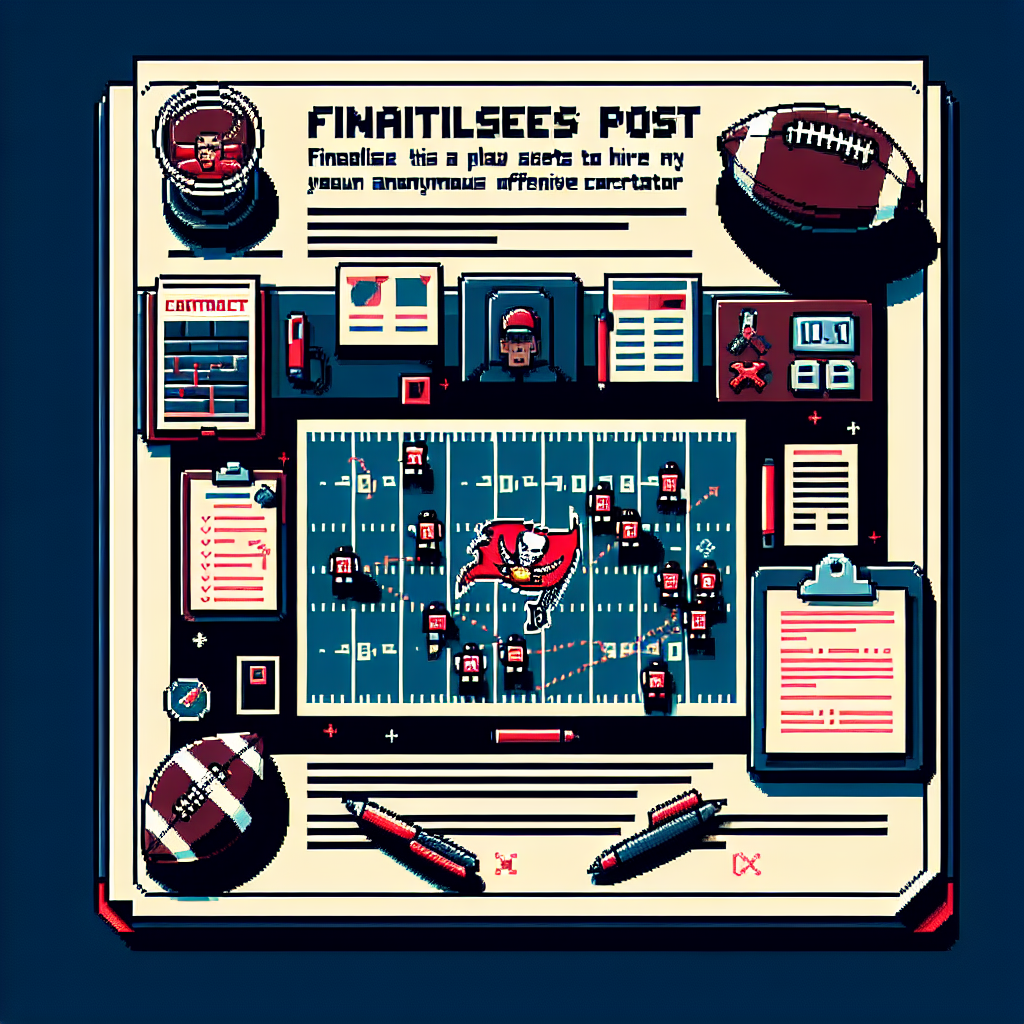
The Buccaneers have found their next offensive coordinator
A familiar face is sliding into the Bucs’ offensive driver’s seat. On January 22, 2026, Tampa Bay moved to finalize a deal to hire Zac Robinson as their new offensive coordinator — a hire that reconnects a coach known for Sean McVay-style concepts with a quarterback (Baker Mayfield) he’s worked with before. This isn’t just another line on a staff sheet; it’s a hinge point for an offense that sputtered in 2025 and is hungry to get back to the efficiency and explosiveness it showed in 2024.
Why this matters right now
- The Buccaneers’ offense dipped from top-5 levels in 2024 to a middle-of-the-pack unit in 2025, prompting a staff reset under head coach Todd Bowles.
- Zac Robinson brings recent play-calling experience (Atlanta Falcons OC, 2024–25) and a background inside the Rams’ offense, the type of scheming many teams covet for quick, versatile passing attacks.
- Baker Mayfield and Robinson have previous working history from the Rams in 2022 — that familiarity could accelerate scheme fit and reduce the friction that often comes with new coordinators.
Quick takeaways
- Robinson is a play-caller with an offensive pedigree linked to Sean McVay’s system and a mixed recent resume in Atlanta (strong total-yard seasons in 2024, regression in 2025).
- Tampa Bay is prioritizing a coordinator who can tailor the scheme to current personnel — Mayfield, Chris Godwin, a sturdy offensive line, and young weapons like Emeka Egbuka and Bucky Irving.
- This is Tampa’s fifth OC in five seasons, highlighting instability at the position; success will depend on clear roles, play-calling consistency, and injury luck.
What Zac Robinson brings (and what to watch)
- Familiar system influences: Robinson’s rise came through Los Angeles under Sean McVay’s coaching staff. Expect spacing, pre-snap motion, and concept-based passing that looks to create easy reads for the QB and leverage matchups.
- Player-first approach: In Atlanta he emphasized tailoring looks to Bijan Robinson’s strengths and maximizing playmakers. In Tampa, that means designing to Baker Mayfield’s strengths — short-to-intermediate timing, quick reads, rollouts and play-action to buy space for receivers.
- Play-calling history: Robinson has called plays in the NFL; that experience is a double-edged sword. When the Falcons clicked, the offense performed well (2024 total yards top-10). When it didn’t, efficiency and scoring slipped (2025). The key for the Bucs will be whether Robinson can avoid the pitfalls that led to that inconsistency.
- Chemistry with Mayfield: The prior Rams connection matters. A coordinator-quarterback rapport can shave weeks off installation, help in-game adjustments, and make the offense more resilient when the playbook needs to be simplified on the fly.
The challenges ahead
- Stability problem: Robinson becomes the fifth offensive coordinator the Buccaneers have hired in five seasons. That revolving door makes continuity — for both players and scheme — difficult.
- Personnel realities: Mike Evans enters free agency status and the receiving corps has young talent but questions remain about consistent separation and health. Robinson must build an identity that fits who’s actually on the field.
- Expectations vs. reality: Tampa Bay’s offense needs a bounce-back, but one coordinator does not fix roster gaps or injuries. Measurable improvement will likely hinge on play-caller freedom, player health, and front-office support in the offseason.
How this could change the Bucs’ offseason and 2026 outlook
- Scheme tweaks over overhaul: Expect Robinson to lean into what worked in 2024 — more emphasis on quick passing game, creative motion, and establishing the run — while installing wrinkles from his Falcons/Rams background.
- Quarterback-centric planning: With Robinson’s prior work with Mayfield, the Bucs might prioritize short-window timing routes, rollouts, and play-action to protect the QB and generate big-play opportunities.
- Coaching staff composition: Robinson’s hire signals Tampa wants an offensive identity that’s modern and adaptable. Look for staff moves (position coaches, pass-game assistants) that mirror that vision.
My take
This hire makes sense on paper: a young, system-savvy play-caller who already knows Baker Mayfield’s tendencies and has experience shaping an NFL offense. The biggest questions aren’t about Robinson’s schematic toolbox — they’re about context. Will the Bucs give him a consistent role and the roster support he needs? Can he avoid repeating the inconsistency that dogged his Falcons tenure? If the front office commits to continuity and the offense stays healthy, Robinson’s familiarity and adaptable approach could spark the kind of rebound Tampa Bay wants. If not, this could be another short chapter in the Bucs’ OC carousel.
Sources
Related update: We recently published an article that expands on this topic: read the latest post.
Related update: We recently published an article that expands on this topic: read the latest post.
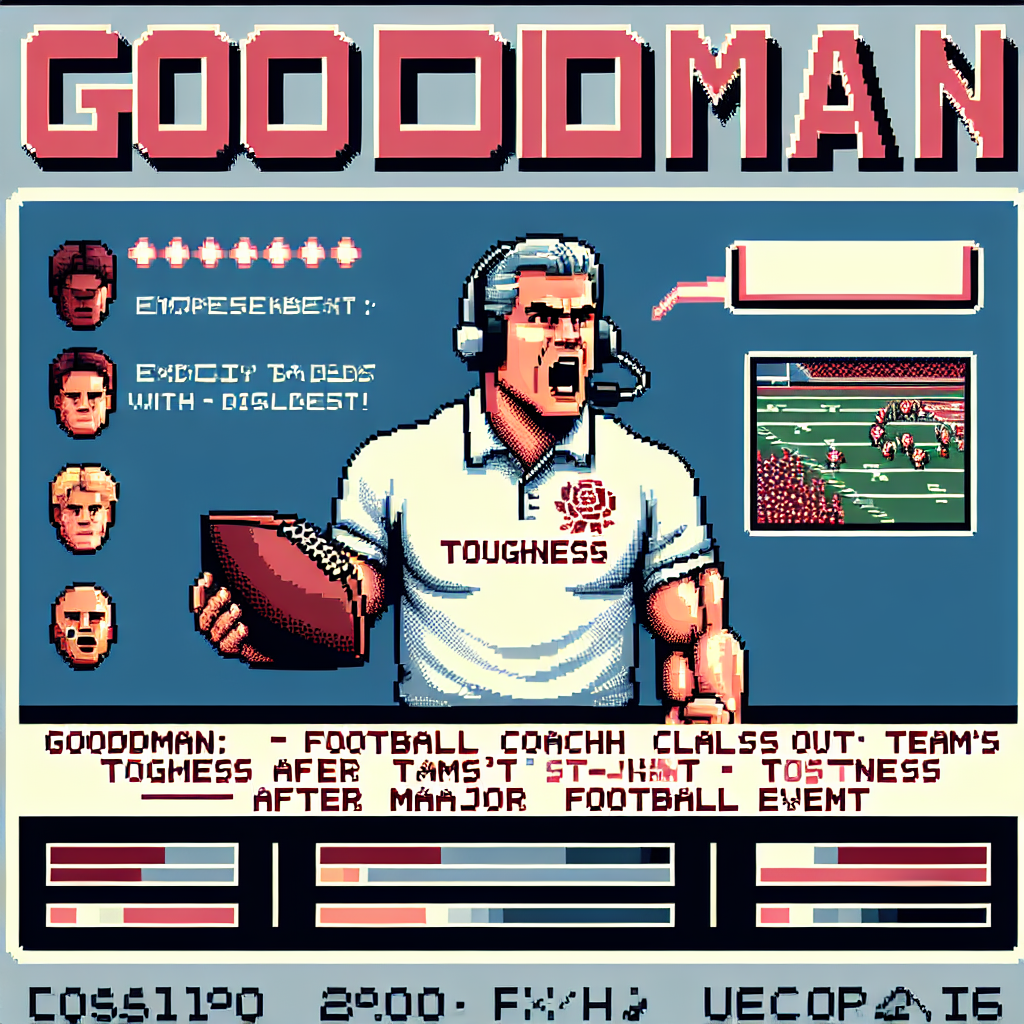
What in the world was Kalen DeBoer thinking on that fourth-down call?
The image is burned in a lot of minds: Alabama lined up to punt from its own 34 on fourth-and-1 in the Rose Bowl, Ty Simpson under center after a timeout, a Wildcat-style shovel pass called — and it fails. Indiana gets a short field, scores, and the game spirals into a 38-3 rout. Curt Cignetti, Indiana’s coach, didn’t just celebrate his team; he took a not-so-subtle jab at Alabama’s identity: this is how you break a program’s will — you run and run until the armor cracks.
Let’s unpack what happened, why the decision landed so badly, and what it might mean for Alabama’s direction under Kalen DeBoer.
The setup: context that matters
- This was the College Football Playoff quarterfinal at the Rose Bowl — the stage is huge and mistakes are amplified.
- Alabama trailed 3-0 at the time. Traditionally, teams would punt in that spot, flip field position, and trust a defense built on physicality to handle the opponent.
- DeBoer’s Alabama this season has been noticeably aggressive on fourth down, gambling often and converting at an impressive clip during the year. That aggressive identity carried into the playoff.
- Curt Cignetti watched the whole sequence and afterward highlighted the old-school, grind-it-out way to beat Alabama: run the ball, wear them down, break their will. He pointed to the running game as the decisive factor in Indiana’s dominance. (archive.vn)
The call itself and why it stung
- Fourth-and-1 at your own 34 is textbook punt territory: even if you convert, you gain a sliver of field position at enormous risk.
- DeBoer dialed a Wildcat shovel pass after lining up in punt formation (with timeouts and a change of formation). The play is creative and has worked for Alabama on other fourth-down gambles this season — but the Rose Bowl felt like a time for prudence. (si.com)
- When the gamble failed, Indiana had a short field and turned it into points. Momentum swung hard, and the game never recovered.
Why the call felt worse than a standard failed gamble:
- It took the ball out of the realm of conservative, historically “Alabama” football (punt/defend/rush).
- It looked, to many observers, like a calculated risk with nothing to gain but pride; the downside was immediate and game-altering.
- DeBoer’s own acknowledgement after the game — “when you fall short, it was the wrong decision” — softened none of the sting. He defended his aggressiveness as belief in his offense and defense, but admitted it backfired. (archive.vn)
Curt Cignetti’s jab and what it signals
- Cignetti praised his team’s physical approach and explicitly contrasted it with what Alabama did: run, wear opponents down, and break wills. His postgame comment — that breaking a team’s will by running the ball is the way to win — landed like a challenge and a coach’s confidence. (archive.vn)
- That comment wasn’t just trash talk. It underscored a theme from the game: Indiana’s toughness on the line and commitment to a grinding identity neutralized Alabama’s creative-but-risky tendencies.
The bigger picture: identity, hiring, and the future
- DeBoer came in as a modern, more “UP-tempo / West Coast / analytics-friendly” type compared to the Nick Saban era. That shift in identity has produced big wins but also moments that test fan patience and program expectations. (washingtonpost.com)
- Goodman’s column framed the fourth-down call as “emblematic” of a larger concern: has Alabama moved away from the kind of physical, field-position-first football that defined its dynasty? And is that change worth it if the program loses some of its traditional edge? (archive.vn)
- One game doesn’t rewrite a coach’s legacy. But playoff losses — especially self-inflicted-looking ones — raise legitimate questions about decision-making in high-leverage moments and whether a new identity is fully rooted.
Why the reaction is so visceral
- Alabama’s brand is expectations. When the Tide isn’t simply better, every unconventional call is scrutinized through the lens of a program used to being “the standard.”
- Fans and columnists aren’t just mad at one play; the shovel pass is shorthand for perceived hubris at a moment that demanded restraint.
- Cignetti’s critique amplified that feeling because it came from the coach who controlled the game plan that exposed Alabama’s flaws. That kind of postgame message cuts deep and sticks in the narrative.
What this means moving forward
- Expect DeBoer (and his staff) to revisit situational decision thresholds. Coaches who gamble must calibrate risk according to stage and opponent.
- The offense will still be creative — that’s part of DeBoer’s appeal — but there will be pressure to demonstrate a tougher, more conservative baseline in short-yardage, field-position-sensitive spots.
- For Indiana, Cignetti’s comments are a statement of identity: physical, relentless, and unapologetically old-school in execution. That identity beat Alabama on a big stage. (crimsonquarry.com)
A quick summary for the short-attention fan
- The fourth-down shovel pass was a high-variance play that backfired in a moment where conservative play was eminently defensible.
- Curt Cignetti used it as a teaching point: wear teams down, and you’ll win the fourth quarter.
- The fallout is less about a single coach’s ego and more about how identity, roster construction, and situational discipline must align at a program with Alabama’s standards.
Final thoughts
Football loves drama; coaches love choices that define them. DeBoer’s aggressiveness delivered wins this season but met its limit in Pasadena. The shovel pass will be replayed, debated, memeified — and then it will do what big coaching moments do: force adjustments. If Alabama wants to reconcile modern creativity with the time-honored “punt-and-pummel” ethos its fans revere, it’ll take more than a press conference apology. It’ll take a roster and a game plan that can absorb and justify those gambles on the sport’s biggest stages.
Notes worth remembering
- One play rarely costs a whole program its soul, but one play can expose where the program still needs tempering.
- Cignetti’s line about “breaking their will” is a useful lens: championships are often won in the trenches, not by flash alone. (archive.vn)
Sources
Related update: We recently published an article that expands on this topic: read the latest post.
Related update: We recently published an article that expands on this topic: read the latest post.

Omarion Hampton is back: what his return means for the Chargers on Monday Night Football
You could feel the pulse in SoFi Stadium even before kickoff: the Chargers activated rookie running back Omarion Hampton for Monday night, and suddenly the backfield — already a talking point this season — looked a little less fragile and a lot more dangerous.
Hampton’s activation from injured reserve, along with Hassan Haskins and Otito Ogbonnia, isn’t just a roster update. It’s a storyline: a first-round rookie who flashed as a three-down back, a group of depth pieces returning at a pivotal point in the playoff race, and a Chargers offense trying to stitch together consistency down the stretch.
Quick snapshot
- Player returning: Omarion Hampton (RB) — activated from injured reserve for Monday night’s game vs. the Eagles.
- Other activations: Hassan Haskins (RB) and Otito Ogbonnia (DL).
- Roster moves: Chargers placed TE Tucker Fisk on IR and made other corresponding moves to open roster spots.
- Hampton’s 2025 numbers before injury: 66 carries, 314 rushing yards, 2 rushing TDs; 20 receptions for 136 yards. (Started first five games before Week 5 ankle fracture.) (nbcsports.com)
Why this matters — the practical angle
-
Instant workload relief: Kimani Vidal and the other backups did admirable work while Hampton was sidelined, but getting your early-down, receiving-capable rookie back changes play-call balance and reduces wear on the rest of the committee. That matters especially late in games and over a playoff push. (nbcsports.com)
-
Passing-game versatility: Hampton wasn’t just a rusher at North Carolina or in his brief NFL action — his 20 catches before the injury showed he can be targeted out of the backfield. That’s valuable with Justin Herbert’s offense, where backs functioning as reliable short-yardage receivers open up play-action and intermediate passing windows. (chargers.com)
-
Depth and scheming: Haskins’ return adds short-yardage and special-teams depth, while Ogbonnia bolsters the defensive line rotation. Together, these activations let Jim Harbaugh and offensive coordinator re-explore personnel packages they relied on earlier in the year. (chargers.com)
The narrative context
Hampton’s rookie arc this year was promising before the ankle fracture. Drafted in the first round, he earned early snaps and a 100-yard game in Week 4 that showcased speed, burst, and receiving feel. Then came injuries — the NFL’s most inevitable antagonist — and a stretch where Los Angeles leaned on late-round and veteran options to keep the ground game moving.
Activating Hampton now is a calculated gamble: he’s had time to heal, the Chargers have cleared a roster spot, and the timing coincides with a crucial part of the season when every win shifts playoff math. It’s both a vote of confidence in the player’s recovery and an admission that the team needs more of what he brings. (chargers.com)
What to watch in his first game back
- Snap share in early downs versus obvious passing situations. If Hampton sees immediate first- and second-down work, the staff trusts him physically and schematically.
- Targeting out of the backfield. Hampton’s receiving snaps will indicate whether the coaching staff plans to reinsert him into three-down packages or keep him more limited.
- Rushing explosiveness and cutting. The ankle injury is the story; how he plants and changes direction will be the eye test that tells whether he’s truly back to form.
- How the Chargers balance carries with Vidal and Haskins. A committee can be effective, but usage balance will affect Hampton’s productivity and the offense’s rhythm.
A roster chess move — bigger-picture implications
-
Playoff impact: This isn’t a blockbuster trade or a free-agent splash, but adding a first-round talent back into the rotation can swing a game or two. In a tight AFC window, that swing could be the difference between home-field hopes and an uphill seed. (nfl.com)
-
Long-term development: For Hampton personally, returning late in the season presents a balance between winning now and developing a body that lasts. The Chargers will need to manage snaps carefully to protect his long-term upside.
What this says about Chargers’ front office and coaching
Bringing Hampton back now signals urgency: Los Angeles is clearly trying to maximize its current roster for a playoff push rather than relying solely on depth or waiting for the offseason. It also reflects the medical staff’s confidence in his rehab and the coaching staff’s appetite to integrate him quickly into game plans. Activating two running backs and a defensive lineman at once is a coordinated answer to roster wear-and-tear — and an implicit bet that these players give the team a better chance to win right now. (chargers.com)
What the numbers suggest
Pre-injury Hampton averaged 4.8 yards per carry and showed an ability to break long runs (including a 54-yard TD in college and early big-play runs as a rookie). Getting even a subset of that explosiveness back helps an offense that thrives on chunk plays and vertical passing — the run game can set up easier throws and fewer third-and-longs. The Chargers’ offense should be more balanced with Hampton available, which helps protect Herbert and the passing game’s rhythm. (chargers.com)
My take
There’s momentum in reunions like this — of promising rookies returning from injury at a pivotal moment. Hampton’s return is both a practical upgrade and an emotional jolt for Chargers fans who watched him flash early in the season. If the medical staff and coaches manage him prudently, he could be the jolt this offense needs to stay competitive in a crowded AFC. Don’t expect him to carry the team single-handedly; expect a strategic reintroduction that aims to amplify what already works while minimizing risk.
Sources
Related update: We recently published an article that expands on this topic: read the latest post.

After the shutout: Why Seattle’s defense earned the headlines — and the offense earned the questions
There’s something delicious about a shutout. It tightens the jaw, raises the volume in the stands, and gives the defense a highlight reel that will live rent-free in Seahawks group chats for days. When Seattle posted its first shutout in a decade — an authoritative 26-0 beating of the Vikings — the scoreboard told one story, and the game tape told another more nuanced one. The defense? Dominant, opportunistic and disciplined. The offense? Uneven, occasionally stagnant, and full of “what ifs.” That’s exactly how The Seattle Times’ Bob Condotta framed his report card after the game. (seattletimes.com)
A quick refresher on what happened
- The Seahawks blanked the Vikings 26-0, forcing multiple turnovers and taking full advantage of short fields. (seattlepi.com)
- Seattle’s defense created the narrative: five takeaways, an interception returned for a long score, and historic stinginess that made the Vikings look out of sync. (seattlepi.com)
- Meanwhile, the offense did enough to win but left room for doubt — drives stalled, inconsistent quarterback play at times, and a unit that didn’t exactly roar even when the defense handed it prime opportunities. Condotta’s grades reflected that split personality. (seattletimes.com)
What jumped out from Condotta’s report card
- Defense: high marks. Condotta emphasized how Seattle’s defensive unit throttled Minnesota’s rhythm, forced turnovers and flipped field position repeatedly. That kind of game can mask offensive flaws — but not erase them. (seattletimes.com)
- Special teams: earned an A. Punts downed inside the 20, consistent coverage and a big return set up scoring chances. Small margins, big impact. (seattletimes.com)
- Offense: uneven grades. The offense manufactured points but didn’t sustain drives with consistency; there were missed opportunities, and at times the Vikings’ defense (or their quarterback situation) still looked more culpable than Seattle’s play calling was praiseworthy. (seattletimes.com)
Why the defense’s performance matters beyond one win
- Turnover margin wins games. Five takeaways isn’t a fluke — it’s a recipe. When the defense can manufacture possessions and pin opponents deep, the margin for error shrinks for the offense. (seattlepi.com)
- Confidence multiplier. Young defensive playmakers — like the linebacker who returned an interception for a touchdown — get a confidence boost that translates into more aggressive, confident play in subsequent weeks. Those plays change how opponents prepare. (seattlepi.com)
- Complementary football. When special teams consistently flip field position and the defense forces turnovers, the offense can afford to be less explosive and still win. But that safety net can also hide problems that will resurface against better opponents. (seattletimes.com)
Where the offense needs to be honest
- Lack of sustained drives. It’s one thing to score off short fields and another to rely on long, methodical drives. The latter is how playoff teams control tempo and conserve the defense. Condotta’s grades suggest the Seahawks didn’t do enough of the former. (seattletimes.com)
- Pressure and protection. Sacks and tackles for loss sap rhythm. When linemen and protections wobble, the playbook shrinks and risk-taking increases — which leads to more punts and stalled series.
- Play-calling balance. Running the ball to keep the defense honest and using play-action to open the field should be staples. Winning off turnovers is great, but relying on it every week is unsustainable. Critics in the postgame coverage noted that the offense wasn’t consistently imposing its will. (seattletimes.com)
Three big questions for the weeks ahead
- Can the offense translate short-field chances into consistent touchdown drives against better defenses?
- Will the offensive line settle its issues to give the QB time and establish a more reliable run game?
- How repeatable was this defensive performance? Can the defense keep producing turnovers against higher-caliber offensive lines and quarterbacks?
What this game means in the bigger picture
This win matters: a shutout is a morale shot, a résumé booster for the defense and a public reminder that the Seahawks are a team that can dominate phases of the game. But Condotta’s grading makes a useful distinction — a great defensive night can paper over offensive problems for a game, maybe two. Over a season, sustainable offensive production is what separates teams that make noise in January from those that disappear. (seattletimes.com)
Final thoughts
A shutout is headline candy, and you should absolutely celebrate it. But if you watched the tape with a critical eye, you saw a team that leaned heavily on turnovers, special teams field position and a defense that refused to blink. That’s a championship-ish formula for a night — but not necessarily a season. If Seattle’s offense can tighten up protection, sustain drives and convert when the defense hands it the ball, this team’s ceiling is high. If not, the defense will keep bailing them out until it can’t. Either way, Condotta’s report card gave us a clear roadmap: praise where it’s due, and fix what’s exposed. (seattletimes.com)
Notes for the stat-minded reader
- The shutout was Seattle’s first since 2015 and came with five takeaways — rare outcomes that heavily skew win probabilities in a single game. (seattlepi.com)
Sources
Related update: We recently published an article that expands on this topic: read the latest post.
Related update: We recently published an article that expands on this topic: read the latest post.