TL;DR
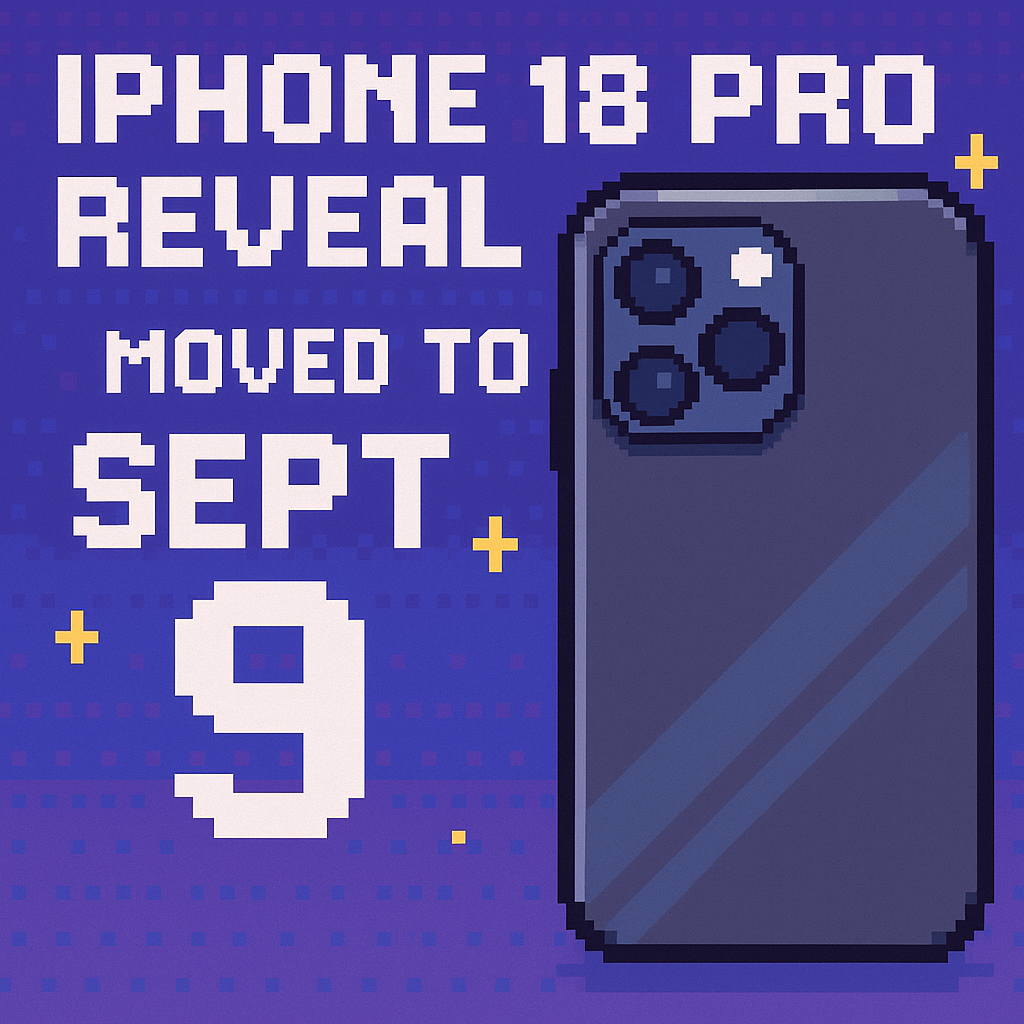
- The iPhone 18 Pro event is tipped for Wednesday, September 9, 2026—Apple’s usual “second Tue/Wed of September,” shifted by U.S. Labor Day on Monday the 7th. [1][3]
- Expect Apple to skip Friday, September 11 for preorders and move to Saturday, September 12, echoing the 2015 iPhone 6s plan. [1][2]
- A Saturday preorder compresses reviews and PR but doesn’t change revenue timing; first deliveries likely land Friday, September 18, which still books into Apple’s fiscal Q4 that ends Saturday, September 26, 2026. [6][3]
What the source said
Forbes reports Apple is aiming for an iPhone 18 Pro keynote on Wednesday, September 9, 2026, a choice influenced by the U.S. Labor Day holiday on Monday, September 7, and consistent with Mark Gurman’s “Power On” guidance. The report says Apple avoids events immediately after a holiday to allow travel and setup, and it predicts preorders will shift off Friday, September 11 to Saturday, September 12, just as they did for the iPhone 6s in 2015. The same piece sketches an iOS 27 public release target of Monday, September 14, with reviewer content rolling out mid‑week after the keynote at Apple Park in Cupertino, California. [1]
Why it matters
Carriers and retailers—specifically AT&T, Verizon, T‑Mobile, Best Buy, and Apple Retail—tie staffing rosters, promo windows, and ad flights to Apple’s exact preorder minute, which has typically been 5:00 a.m. Pacific since 2019. A Saturday switch forces weekend scheduling, revised social spend pacing, and different foot‑traffic patterns in U.S. malls and carrier stores. [5][1]
For press and creators, a Wednesday keynote plus a Saturday preorder erases a weekday from the classic review cadence, cutting hands‑on time and video production windows between September 9 and September 12. That shift elevates the first credible camera and battery tests in influencing color and storage picks during the opening preorder hours. [1]
Original analysis
The calendar logic behind a Sept 9 keynote
- Apple clusters iPhone keynotes around the second Tuesday/Wednesday of September; 2020’s COVID delay was the major recent exception. In 2026, Labor Day falls on Monday, September 7, which makes Wednesday, September 9 a cleaner in‑person or hybrid slot after a one‑day buffer on Tuesday the 8th. That aligns with Gurman’s call and Apple’s 2015 playbook. [1][3][2]
- When September 11 lands on a Friday—as it does in 2026—Apple has precedent for avoiding that preorder date: in 2015, the iPhone 6s/6s Plus opened preorders on Saturday, September 12 at 12:01 a.m. PT. The 25‑year milestone of 9/11 in 2026 strengthens the optics case for a Saturday shift. [2][3]
A quick framework: Optics vs. Operations (2×2)
| Low optics sensitivity | High optics sensitivity | |
|---|---|---|
| Low operations risk | Classic Tuesday event + Friday preorders (typical years). | Tuesday event + Thursday preorders (rare, complicates channel). |
| High operations risk | Wednesday event (post‑holiday) + Friday preorders (normal Labor Day week). | Wednesday event + Saturday preorders (2026’s likely path—avoids 9/11 and eases post‑holiday logistics). |
This year fits “High optics sensitivity/High operations risk” because Labor Day lands Monday, September 7 and Friday is September 11; hence a Wednesday keynote and Saturday preorders. [3]
Back‑of‑envelope math: What a Saturday preorder actually moves
- Since iPhone 11 in 2019, Apple has standardized a 5:00 a.m. PT preorder opening, which sets carrier call‑center staffing and ad‑auction spikes by time zone. [5]
- Shift analysis (modeled): Let D(t) be the preorder demand rate over time t (hours) after open. A Friday→Saturday shift translates D(t) by +24 hours; the integral ∫D(t)dt over the first 90 minutes stays constant, so volume is unchanged while ad‑auction timing and weekend support availability move to Saturday morning.
- 2015 precedent: Popular iPhone 6s SKUs on Apple.com slipped to 2–3 week shipping within hours of Saturday, September 12 preorders, indicating no demand drag from a weekend open. [2]
- Revenue days calc: If on‑sale day is Friday, Sept 18, and Apple recognizes revenue on delivery, days recognized in fiscal Q4 2026 = (Sept 26 − Sept 18) + 1 = 9 calendar days, because Apple’s fiscal year ends on the last Saturday of September. [6][3]
In short: Saturday preorders don’t dent demand; they reallocate the operational load to a weekend and slightly tighten the mid‑September review cycle. Expect busier AppleCare and carrier chat queues on September 12–13, followed by the standard Monday–Thursday logistics sprint for Friday, September 18 deliveries. [5][3]
Named‑stakeholder breakdown
- Apple Retail + AppleCare: Weekend surge in order exceptions and Apple Card financing questions; staffing pivots from a Friday early shift to a Saturday 5:00 a.m. PT open. Net sales effect: neutral; support load: higher on September 12–13. [5]
- Carriers (AT&T, Verizon, T‑Mobile): Rebook store rosters, paid social, and SEM for a Saturday spike; weekend CPMs and CPAs may differ, improving efficiency for upgrade‑driven queries. [1]
- Accessory makers (Belkin, Nomad, Casetify): Saturday preorders shift “will my 2025 case fit?” traffic to the weekend; first‑to‑publish compatibility charts siphon affiliate clicks on September 12.
- Media/Creators (The Verge, MKBHD, WSJ): One fewer weekday between a Wednesday keynote and a Saturday preorder compresses lab testing and B‑roll; outlets with in‑house camera ranges in New York or Cupertino gain an edge. [1]
- Samsung: August Galaxy Z Fold/Flip cycles hit peak coverage in week 32–33; Apple’s week‑37 cadence siphons tech attention just as Korean carriers push late‑summer promos. [4]
Historical analogue: 2015’s 9/11 problem
- 2015: Apple held the keynote on Wednesday, Sept 9; preorders opened Saturday, Sept 12 at 12:01 a.m. PT; many iPhone 6s SKUs slipped to multi‑week shipping by morning. That choreography balanced September 11 optics with full‑throttle demand, a template that cleanly maps to 2026. [2]
Contrarian read
- Consensus: “A Saturday preorder is bad for momentum.”
- Counter: Saturday preorders amplify scarcity theater because more consumers are awake, ready, and posting at 8:00 a.m. local time; the social “got mine” wave hits earlier and snowballs mainstream coverage, as 2015’s rapid sell‑outs demonstrated. [2]
What others are missing
The hinge is the downstream timing on iOS 27 and the review embargo, not the keynote slot itself. A Wednesday, September 9 keynote plus a Saturday, September 12 preorder narrows deep‑dive testing, so first camera and battery calls will steer Saturday’s configuration choices within the first two hours. If Apple ships iOS 27 on Monday, September 14, developers and carriers get three business days—Tue 15, Wed 16, Thu 17—to patch apps and certify eSIM flows before Friday, September 18 deliveries begin. [1][3]
What to watch next
- By Thursday, August 27, 2026, Apple sends media invites confirming a September 9 event at Steve Jobs Theater, with video‑first production and on‑site press in Cupertino. [4]
- On Saturday, September 12, 2026 at 5:00 a.m. PT, preorders open; at least two iPhone 18 Pro Max SKUs on Apple.com US slip to October delivery within two hours. [5]
- On Monday, September 14, 2026 between 8:00–10:00 a.m. PT, Apple releases iOS 27 publicly; Apple’s status page shows elevated download traffic for 6+ hours the same day. [1]
My take
Apple will pick optics over routine and push preorders to Saturday, September 12, 2026. That choice respects the 25‑year anniversary of 9/11, keeps the keynote on a Wednesday rhythm, and turns 5:00 a.m. PT Saturday into a global shopping pulse without affecting recognized revenue in fiscal Q4. If Apple also teases an “Ultra” or foldable concept, the compressed PR window becomes a feature that heightens FOMO and drains rival mindshare that Samsung built in August. [1][4][5][6]
Sources
- iPhone 18 Pro Event Tipped As Apple Shifts Key Release Schedule Date — Forbes (https://www.forbes.com/sites/davidphelan/2026/08/14/iphone-18-pro-event-tipped-as-apple-shifts-key-release-schedule-date/) — Baseline: Sept 9 event expectation, Saturday Sept 12 preorder rationale, iOS 27 timing, and review window.
- ‘Hey Siri’ Event Roundup: iPhone 6s, iPad Pro, New Apple TV and More — MacRumors (https://www.macrumors.com/2015/09/09/apple-september-2015-media-event-roundup/) — Confirms 2015’s Saturday, Sept 12 preorders after a Wednesday keynote and rapid shipping slips.
- Labor Day 2026 in the US — Timeanddate (https://www.timeanddate.com/holidays/us/labor-day#obs) — Verifies Labor Day on Monday, September 7, 2026, anchoring the post‑holiday buffer logic.
- iPhone Ultra and iPhone 18 Pro pre-order date just tipped — Tom’s Guide (https://www.tomsguide.com/phones/iphones/iphone-ultra-and-iphone-18-pro-pre-order-date-just-tipped-heres-when-you-can-get-yours) — Summarizes Gurman’s Wednesday, Sept 9 expectation and outlines the broader product slate.
- iPhone 11 Lineup Has New 5 A.M. Pacific Pre-Order Time on Friday — MacRumors (https://www.macrumors.com/2019/09/10/iphone-11-lineup-5am-preorder-time/) — Establishes Apple’s 5:00 a.m. PT preorder standard since 2019.
- 2015 Form 10‑K — Apple (https://s2.q4cdn.com/470004039/files/doc_financials/2015/annual/2015_Form_10-K_As-filed.pdf) — States Apple recognizes revenue upon delivery and that its fiscal year ends on the last Saturday of September.
Related update: We recently published an article that expands on this topic: read the latest post.
Related update: We recently published an article that expands on this topic: read the latest post.