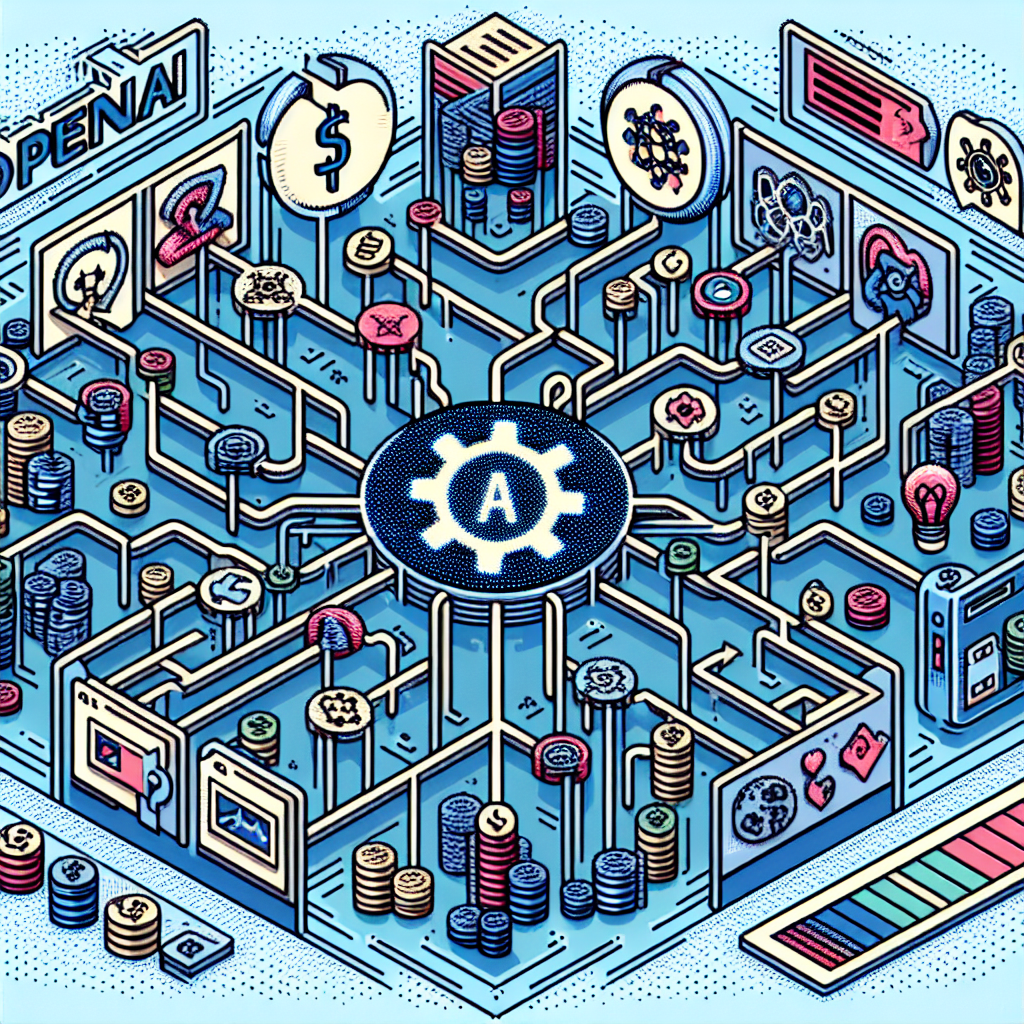
OpenAI: The $1 Trillion AI Dealmaker | Analysis by Brian Moineau

OpenAI: The Epicenter of a $1 Trillion AI Network

In the ever-evolving landscape of artificial intelligence, few stories are as captivating as that of OpenAI. With the launch of ChatGPT, this innovative company has not only changed the way we interact with technology but has also positioned itself as a linchpin in a burgeoning $1 trillion network of deals. But how did OpenAI become the go-to partner for tech giants, and what does this mean for the future of AI? Let’s dive in.

The Rise of OpenAI: A Brief Background

Founded in December 2015, OpenAI set out with a mission to ensure that artificial general intelligence (AGI) benefits all of humanity. Its commitment to safety and ethical considerations in AI has resonated with stakeholders across various industries. However, it was the introduction of ChatGPT in late 2022 that propelled OpenAI into the spotlight. The demand for conversational AI surged, and suddenly, companies recognized the value of integrating OpenAI’s technology into their operations.

Fast forward to today, and OpenAI has entered into strategic partnerships with major players like Microsoft, Google, and others, creating a complex web of financial dependencies. According to a recent Financial Times article, these collaborations have placed OpenAI at the center of a $1 trillion network, significantly shaping the AI ecosystem.

Key Events Shaping OpenAI’s Dominance

1. Strategic Investments: Microsoft’s multibillion-dollar investment in OpenAI has not just provided financial backing; it’s allowed Microsoft to integrate OpenAI’s models into its products, enhancing offerings like Azure and Office 365. This partnership has effectively positioned both companies as leaders in AI solutions.

2. Collaborations and Licensing: OpenAI has entered into licensing agreements with various companies, allowing them to build their own applications on top of OpenAI’s technology. This has created a ripple effect, driving innovation while also generating revenue.

3. Growing Ecosystem: As more companies leverage OpenAI’s capabilities, there’s a growing reliance on its technology, which fosters a network effect. The more companies that use and depend on OpenAI, the stronger its position in the market becomes.

4. Focus on Ethics and Safety: OpenAI’s commitment to ethical AI development has attracted partnerships with organizations that prioritize responsible technology use, further solidifying its reputation in the industry.

5. Market Influence: OpenAI’s leadership in AI technology has led to increased competition, prompting other companies to invest heavily in AI to keep pace. This has created an environment ripe for innovation and growth across the sector.

Key Takeaways

OpenAI has positioned itself as a central player in the AI landscape, signing lucrative partnerships with major tech companies. – Financial dependencies are shaping the future of AI development, creating a network that enhances collaboration and innovation. – Ethics and safety are paramount for OpenAI, attracting partners focused on responsible AI use. – The competitive landscape is evolving, with OpenAI’s influence driving other firms to invest more in AI capabilities.

Reflecting on OpenAI’s Future

As OpenAI continues to extend its reach within the tech industry, its impact on the future of artificial intelligence cannot be overstated. The company’s ability to foster collaboration while emphasizing ethical standards sets a precedent for how AI can be developed and utilized responsibly. The next few years will undoubtedly be pivotal in determining not only OpenAI’s trajectory but also the broader implications of AI technology on society.

With the stakes this high, it’s clear that OpenAI isn’t just a player in the game; it’s becoming the game itself.

Sources

– Financial Times. “How OpenAI put itself at the centre of a $1tn network of deals.” [Financial Times](https://www.ft.com/content/openai-network-deals) – OpenAI Official Website. [OpenAI](https://openai.com) – Microsoft Official Blog. [Microsoft AI](https://blogs.microsoft.com/ai)

By keeping an eye on OpenAI and its network of alliances, we can better understand the transformative power of AI in our everyday lives. Whether you’re a tech enthusiast or a business leader, the unfolding narrative around OpenAI is one to watch closely.


Related update: We recently published an article that expands on this topic: read the latest post.


Citis Bold Move: 25% Stake in Banamex | Analysis by Brian Moineau

Citi’s Strategic Move: Acquiring a 25% Stake in Banamex

In the ever-evolving world of finance, strategic partnerships and acquisitions are key to staying ahead of the curve. Recently, Citi made headlines by announcing its agreement with Fernando Chico Pardo to purchase a 25% equity stake in Banamex, a significant move in the Mexican banking landscape. But what does this mean for Citi, Banamex, and the broader financial sector? Let’s dive into the details.

Context: A Historical Overview of Citi and Banamex

Citi, a global banking giant, serves over 200 million customer accounts across 160 countries, showcasing its vast reach and influence in the financial world. Banamex, or Banco Nacional de México, is one of the largest banks in Mexico and has been a subsidiary of Citi since its acquisition in 2001 for $12.5 billion. However, the landscape of banking is constantly shifting, and Citi’s decision to divest a portion of Banamex signals a strategic repositioning in the market.

In recent years, Citi has focused on streamlining its operations and enhancing its profitability. The decision to enter into an agreement with Chico Pardo, a prominent Mexican businessman with extensive experience in investment and banking, is a clear indication of Citi’s commitment to strengthening Banamex’s local ties while maintaining a significant stake in its operations.

Key Takeaways

Strategic Partnership: Citi’s agreement to sell a 25% stake in Banamex to Fernando Chico Pardo is aimed at enhancing the bank’s local presence and operational efficiency in Mexico.

Local Expertise: Pardo’s extensive experience in the Mexican market is expected to benefit Banamex, leveraging local insights to navigate regulatory landscapes and customer needs.

Citi’s Focus: This move aligns with Citi’s broader strategy to streamline operations and focus on core markets, optimizing resources for better performance.

Investor Confidence: The partnership may boost investor confidence in Banamex, potentially leading to increased investment and growth opportunities in the Mexican banking sector.

Future Outlook: This strategic stake sale could pave the way for further collaborations and innovations within the Mexican financial landscape, enhancing customer services and product offerings.

Concluding Reflection

Citi’s decision to purchase a 25% stake in Banamex through Fernando Chico Pardo is not just a business transaction; it represents a calculated shift towards strengthening local ties and enhancing operational excellence in a highly competitive market. As the banking sector continues to evolve, this partnership could serve as a blueprint for how global banks can successfully navigate local markets while maintaining a global presence. It will be interesting to see how this strategic move unfolds and what it means for both Citi and Banamex in the coming years.

Sources

– Citigroup Announces Agreement with Fernando Chico Pardo to Purchase 25% Equity Stake in Banamex. https://www.citigroup.com/citi/news/2023/221024a.htm

– Citi’s Global Banking Overview. https://www.citigroup.com/citi/about/overview.htm

The Future of Banking in Mexico: Opportunities and Challenges. https://www.worldbank.org/en/news/feature/2023/01/25/the-future-of-banking-in-mexico-opportunities-and-challenges

By staying informed on these developments, we can gain a clearer understanding of the dynamics at play in the global banking sector and how local partnerships can drive growth and innovation.


Related update: We recently published an article that expands on this topic: read the latest post.


Related update: We recently published an article that expands on this topic: read the latest post.


Related update: We recently published an article that expands on this topic: read the latest post.

Affirm Stock Soars 21% After Earnings. Why Wall Street Is Excited. – Barron’s | Analysis by Brian Moineau

Affirm Stock Soars 21% After Earnings. Why Wall Street Is Excited. - Barron's | Analysis by Brian Moineau

Affirm's Meteoric Rise: A Financial Fairy Tale with a Modern Twist

In a world where numbers often speak louder than words, Affirm Holdings Inc. has recently given Wall Street something to cheer about, with its stock soaring an impressive 21% following a robust earnings report. But what exactly is causing this financial frenzy, and why does it matter in the grand tapestry of today's economic landscape?

Affirm, the brainchild of Max Levchin, who also co-founded PayPal, is no stranger to the fintech buzz. As a pioneer in the "buy now, pay later" (BNPL) sector, Affirm empowers consumers to make purchases with the flexibility of installment payments, rather than the traditional credit card model. This approach has not only resonated with a younger, credit-wary demographic but has also tapped into broader shifts in consumer behavior—particularly in a post-pandemic world where financial flexibility is increasingly prized.

The recent surge in Affirm's stock price can be traced back to several key factors highlighted in their earnings report. For starters, Affirm demonstrated a significant increase in both user growth and transaction volume, signaling a robust demand for their services. Additionally, partnerships with major retailers like Amazon have fortified their market presence, providing a substantial boost to their financial performance.

But beyond the numbers, Affirm's success story is emblematic of a larger trend in the fintech industry. The rise of digital payment solutions is reshaping how consumers interact with money, offering convenience and transparency that traditional financial systems often lack. This trend is further amplified by the global push towards cashless societies, a movement accelerated by the COVID-19 pandemic, which has compelled businesses and consumers alike to embrace digital transactions.

Interestingly, Affirm’s ascent aligns with other notable developments in the tech and financial worlds. For instance, the cryptocurrency market, despite its volatility, continues to gain traction as an alternative financial system. Similarly, the ongoing evolution of blockchain technology promises to redefine transactional security and efficiency, potentially influencing how companies like Affirm operate in the future.

Moreover, Affirm’s success offers a glimpse into the evolving narrative of financial inclusivity. By providing alternatives to traditional credit, companies like Affirm are enabling more people to participate in the economy, which is a crucial step towards bridging financial divides.

As we celebrate Affirm's latest triumph, it's worth considering the broader implications. The company's journey underscores the importance of innovation in driving economic growth, while also serving as a reminder that the financial sector is anything but static. In a rapidly changing world, those who adapt and innovate are poised to lead the charge into the future.

In conclusion, Affirm's stock surge is more than just a financial headline—it's a testament to the power of innovation and the shifting paradigms in consumer finance. As Affirm continues to make waves, it'll be fascinating to watch how it navigates the challenges and opportunities that lie ahead. Whether you're an investor, a tech enthusiast, or simply a curious observer, Affirm's story is a compelling chapter in the ongoing saga of financial evolution.

Read more about AI in Business

Read more about Latest Sports Trends

Read more about Technology Innovations

Spirit Airlines raises doubts about its ability to stay in business, months after exiting bankruptcy – CNN | Analysis by Brian Moineau

Spirit Airlines raises doubts about its ability to stay in business, months after exiting bankruptcy - CNN | Analysis by Brian Moineau

Navigating Turbulence: The Bumpy Flight of Spirit Airlines

In the often unpredictable world of aviation, Spirit Airlines finds itself in a precarious situation, echoing the turbulence faced by airlines worldwide. Just months after emerging from the shadow of bankruptcy, Spirit is once again grappling with significant financial challenges, raising doubts about its ability to continue flying high. The airline's recent warning about "going-concern" uncertainties highlights a rough patch amid weak domestic demand and dwindling cash reserves. Let's delve into the current state of Spirit Airlines and draw some parallels to broader industry trends and global happenings.

The Spirit of Resilience

Emerging from bankruptcy is akin to a phoenix rising from the ashes. For Spirit Airlines, this rebirth was supposed to be a new chapter of stability and growth. Yet, the current economic climate has thrown a wrench into those plans. With domestic travel demand not rebounding as expected and operational costs soaring, Spirit is feeling the squeeze. It's a reminder of the aviation industry's vulnerability to external shocks, from economic downturns to fluctuating oil prices and shifting consumer preferences.

Connecting the Dots: Global Aviation Challenges

Spirit's struggles are not happening in isolation. The global aviation industry is navigating a perfect storm of challenges. The COVID-19 pandemic was a seismic event that grounded fleets worldwide, and even as travel restrictions ease, the recovery has been uneven. Airlines are grappling with pilot shortages, increased fuel prices, and changing consumer behaviors. The rise of remote work has altered business travel dynamics, while leisure travel, though recovering, is subject to economic uncertainties.

For instance, British Airways recently faced a summer of discontent with IT failures and staffing shortages disrupting operations. Similarly, American Airlines has been under the microscope for its operational hiccups and customer service woes. These issues underscore the broader industry trend: airlines are in a race to adapt to a new normal, balancing cost-cutting measures with the need to invest in infrastructure and technology.

Spirit in the Context of Competition

Spirit Airlines has long been known for its ultra-low-cost business model, appealing to budget-conscious travelers with no-frills service. However, the very model that attracted passengers in a pre-pandemic world now faces scrutiny. As travelers increasingly demand flexibility and enhanced safety measures, Spirit must evolve to stay competitive. The airline's struggles offer a microcosm of the broader challenge faced by low-cost carriers in a post-pandemic world.

Competitors like Southwest Airlines and JetBlue have also faced their share of challenges but have leveraged customer loyalty and strategic partnerships to maintain stability. JetBlue's recent acquisition of Spirit, which has been a topic of much industry chatter, could be a lifeline for Spirit, offering synergies and expanded market reach.

Lessons from Other Industries

Spirit's financial turbulence is not unique to aviation. The retail industry, for example, has seen giants like JCPenney and Neiman Marcus navigate bankruptcy proceedings, only to emerge and face fresh challenges in a transformed market landscape. The key takeaway? Adaptability and innovation are crucial for survival. Whether it's airlines or retail, businesses must remain agile, embracing digital transformation and understanding shifting consumer expectations.

Final Thoughts

Spirit Airlines' journey is emblematic of the broader challenges facing industries worldwide. As the airline navigates this period of uncertainty, its fate will depend on strategic decisions and adaptability to changing market conditions. Amidst the turbulence, there's an opportunity for Spirit—and indeed the entire aviation industry—to innovate and emerge stronger. As travelers, we can only hope that Spirit, and other airlines, find a way to soar above the challenges, delivering the connectivity and experiences we crave in this interconnected world. Safe travels, Spirit. May you find smoother skies ahead.

Read more about AI in Business

Read more about Latest Sports Trends

Read more about Technology Innovations

All the news from Nintendo’s July 2025 Direct showcase – The Verge | Analysis by Brian Moineau

All the news from Nintendo’s July 2025 Direct showcase - The Verge | Analysis by Brian Moineau

Title: Nintendo’s July 2025 Direct: The Power of Partnerships and the Future of Gaming

Ah, Nintendo Direct showcases! A beloved tradition where gaming enthusiasts gather around their screens, popcorn in one hand and a Joy-Con in the other, eagerly awaiting the latest news to grace the Nintendo universe. This July 31st, 2025, Nintendo held another Partner Direct presentation, focusing on the vibrant array of third-party games slated for the Switch 2. And oh, what a time to be alive for gamers!

The Switch 2, Nintendo's latest foray into the console market, has been making waves since its release. Its hybrid design, reminiscent of the original Switch, bolsters enhanced hardware capabilities that have developers and players alike singing its praises. This Direct was a testament to Nintendo’s commitment to fostering strong relationships with third-party developers, further expanding its already diverse game library.

Third-Party Flourish

The July 2025 Direct was nothing short of a firework display of creativity and innovation. Titles from renowned developers gave fans plenty to look forward to. From RPGs that transport you to fantastical worlds to indie gems that tug at your heartstrings, the showcase highlighted the sheer variety of experiences awaiting Switch 2 owners.

For instance, Ubisoft’s announcement of a new installment in the "Rayman" series had fans buzzing. Rayman, with its whimsical charm and challenging platforming, has always been a staple of fun for all ages. The new game promises to leverage the Switch 2’s capabilities, delivering an experience that is both visually stunning and delightfully engaging.

Moreover, whispers of a collaboration between Nintendo and Sega had the rumor mills working overtime. While details were sparse, the potential for a crossover event or a new entry in the "Sonic" franchise is enough to set any gamer's heart racing. Imagine the joy of seeing Mario and Sonic sharing more than just the Olympic Games stage!

A World of Connections

Nintendo’s focus on third-party collaborations aligns with a larger trend in the tech world: the power of partnerships. Across industries, companies are realizing that collaboration is key to innovation and success. Just look at the partnership between Apple and IBM, which combines Apple’s consumer technology prowess with IBM’s enterprise expertise to create powerful business solutions.

In gaming, partnerships can lead to groundbreaking experiences that might not be possible otherwise. Take the crossover success of "Fortnite" with various franchises, from Marvel to Star Wars. These collaborations have not only expanded the game's universe but have also introduced players to new stories and characters.

Broader Cultural Impact

Nintendo’s Direct also comes at a time when the gaming industry is increasingly recognized for its cultural and artistic significance. The pandemic highlighted gaming as a vital form of social interaction and entertainment. Esports have gained mainstream attention, with players like Kyle "Bugha" Giersdorf becoming household names after winning big at events like Fortnite’s World Cup.

Furthermore, gaming is increasingly seen as a powerful educational tool. Universities are incorporating game design into their curriculums, and educators are using games to teach subjects ranging from history to science. The versatility of gaming is truly astounding, and Nintendo’s commitment to bringing diverse titles to its platform only enriches this landscape.

Final Thoughts

The July 2025 Nintendo Direct was a delightful reminder of the magic that happens when creativity meets collaboration. As fans, we can only be grateful for the myriad of experiences that await us on the Switch 2. Whether you're a veteran gamer or someone who enjoys the occasional escape into a digital world, there’s something for everyone.

So, here’s to Nintendo and its partners: may they continue to push the boundaries of what’s possible in gaming, one Direct at a time. And as we eagerly anticipate the next wave of exciting announcements, let’s remember the joy of sharing these moments with friends and fellow gamers around the world. Happy gaming!

Read more about AI in Business

Read more about Latest Sports Trends

Read more about Technology Innovations

United Airlines plans to return to JFK — again — in new partnership with JetBlue – CNBC | Analysis by Brian Moineau

United Airlines plans to return to JFK — again — in new partnership with JetBlue - CNBC | Analysis by Brian Moineau

Title: United Airlines and JetBlue: A Partnership Ready for Take-Off at JFK

In the ever-turbulent skies of the airline industry, United Airlines and JetBlue have come together like two seasoned pilots, ready to navigate the complex airspace of New York's JFK Airport. As per the latest announcement covered by CNBC, United Airlines is making a return to JFK, this time with a trusty co-pilot, JetBlue, in a partnership that promises to make frequent flyer points as versatile as a Swiss Army knife.

The Friendly Skies Just Got Friendlier


The new collaboration between United Airlines and JetBlue is akin to the Marvel-DC crossover we never knew we needed. By allowing passengers to earn and redeem frequent flyer points across both airlines, this partnership is set to make air travel more rewarding, quite literally. Imagine the possibilities — a family from Boston can fly JetBlue to New York and then hop onto a United flight to explore the wonders of Europe, all while accumulating a treasure trove of points to fund their next adventure.

This move not only signifies a strategic alliance but also highlights the increasing trend of cooperation over competition in the airline industry. It mirrors the recent partnerships like Delta and LATAM or American Airlines and Qatar Airways, where airlines are banding together to enhance their global reach and customer appeal.

JFK: The Comeback Story


For United Airlines, returning to JFK is like an athlete staging a triumphant comeback after a hiatus. After ceasing operations at JFK in 2015, United's return, backed by JetBlue, is a testament to its commitment to reclaim its place in one of the world's busiest airports. JFK, with its bustling terminals and diverse passenger base, is a crucial hub for airlines looking to capture the lucrative transatlantic market. As the airline industry recovers from the pandemic-induced turbulence, strategic moves like this are essential for growth and sustainability.

JetBlue: The Maverick of the Skies


JetBlue, known for its customer-centric approach and innovative services, continues to punch above its weight in the industry. Its alliance with United could be likened to a dynamic duo, with JetBlue's reputation for excellent in-flight experience complementing United's extensive global network. JetBlue's unique position as a low-cost carrier with premium offerings makes it an attractive partner. This partnership could potentially lead to more seamless travel experiences, combining the best of both worlds — comfort and connectivity.

Beyond the Clouds: The Bigger Picture


This partnership comes at a time when the world is seeing significant shifts in how we work and travel. With remote work becoming the norm, the need for flexible travel options is more significant than ever. The global push towards sustainability also adds another layer of complexity, with airlines under pressure to reduce their carbon footprints. While this partnership might not directly address environmental concerns, enhanced cooperation can lead to more efficient operations and potentially greener skies.

Moreover, the collaboration between United and JetBlue sets a precedent for future partnerships, encouraging airlines to think outside the box in their quest for growth and customer satisfaction. It’s a reminder that even in a competitive industry, collaboration can lead to mutual benefits and enhanced experiences for travelers.

Final Thoughts


As United Airlines and JetBlue join forces at JFK, the skies are filled with anticipation and potential. This partnership symbolizes a new era of cooperation in the airline industry, offering travelers more choices and flexibility. In a world where change is the only constant, United and JetBlue have embraced the winds of change, setting a course for a future where the journey is as rewarding as the destination. So, as you plan your next adventure, remember that your frequent flyer points just got a little more powerful, and your travel map, a bit more expansive. Fasten your seatbelts; it's going to be an exciting ride!

---

For more on this partnership, check out the full CNBC article [here](https://www.cnbc.com/2023/10/17/united-airlines-plans-to-return-to-jfk-again-in-new-partnership-with-jetblue.html). Safe travels and happy flying!

Read more about AI in Business

Read more about Latest Sports Trends

Read more about Technology Innovations

Final Fantasy Magic cards are helping protect Hasbro from Trump tariffs – Polygon | Analysis by Brian Moineau

Final Fantasy Magic cards are helping protect Hasbro from Trump tariffs - Polygon | Analysis by Brian Moineau

Title: How Final Fantasy Magic Cards are Casting a Spell of Protection Over Hasbro Amid Trade Turbulence

In the ever-evolving landscape of global trade, where tariffs and international policies often cast shadows over financial forecasts, Hasbro has found an unexpected beacon of hope in the form of Magic: The Gathering cards, specifically those inspired by the legendary Final Fantasy series. According to recent reports, the success of these cards is not only enchanting players but also providing a strategic shield against the looming specter of Trump tariffs.

The Magic of Final Fantasy


Magic: The Gathering has long been a cornerstone of Hasbro's gaming portfolio, captivating millions with its intricate gameplay and vivid lore. The collaboration with the iconic Final Fantasy franchise has only amplified this enchantment, drawing in fans from both worlds. This merger of universes has resulted in a product that is not just a game, but a collector's item—a testament to the power of nostalgia and fandom.

The Final Fantasy series, which celebrated its 30th anniversary a few years back, has a storied legacy of its own. Known for its epic narratives and unforgettable characters, Final Fantasy has influenced gaming culture on a global scale. By aligning with such a beloved brand, Hasbro has tapped into a deep well of fan loyalty, ensuring these Magic cards fly off the shelves faster than a Chocobo can sprint.

Tariffs and Trade Winds


The backdrop to this success story is the complex world of international tariffs. During the Trump administration, tariffs on Chinese imports were a focal point of trade policy, impacting numerous industries, including toys and games. For companies like Hasbro, which rely heavily on international manufacturing, these tariffs posed a significant threat to profit margins.

However, the booming success of the Final Fantasy-themed Magic cards has provided a crucial buffer. This is not just a story about cards and games; it's a tale of strategic adaptation. By capitalizing on popular culture and cross-brand collaborations, Hasbro has managed to sidestep some of the potential financial fallout from these tariffs.

Broader Implications


Hasbro's strategy is a microcosm of a broader trend in the business world where companies are increasingly leveraging popular culture and strategic partnerships to navigate economic challenges. Consider how LEGO has continuously partnered with blockbuster franchises like Star Wars and Harry Potter to stay relevant and profitable. Similarly, Nike's collaborations with sports icons and fashion designers have helped the brand maintain its edge in a competitive market.

Moreover, the success of these Magic cards highlights the enduring power of physical products in a digital age. While digital gaming and e-sports continue to rise, there's something uniquely satisfying about holding a tangible piece of your favorite game or story—an experience that digital versions can't quite replicate.

Final Thoughts


In a world where economic uncertainties and trade policies can change the course of business overnight, Hasbro's success with Final Fantasy Magic cards is a reminder of the power of innovation and adaptability. It underscores the importance of understanding your audience and the potential of strategic partnerships to weather financial storms.

As we look ahead, it's clear that the magic of creativity and collaboration will continue to be a potent force in the business world. Whether you're a fan of Magic: The Gathering, Final Fantasy, or simply a lover of good business strategy, this story offers a compelling glimpse into how companies can thrive amid challenges—one card at a time.

Read more about AI in Business

Read more about Latest Sports Trends

Read more about Technology Innovations

Goodbye, Golden Handcuffs: Inside The Partner Exodus Rippling Across Venture Capital – Forbes

In the fast-paced world of venture capital, the landscape is constantly evolving. And right now, there seems to be a major shake-up happening within the industry. According to a recent Forbes article, a wave of partners are leaving established firms to either join emerging funds or strike out on their own. This trend is causing a ripple effect across the venture capital world, as the old guard makes way for a new generation of investors.

The article paints a picture of "goodbye, golden handcuffs" as these partners break free from the constraints of blue-chip firms and venture out into the unknown. It's a bold move, but one that seems to be paying off for many of these individuals. By joining smaller, more nimble funds or starting their own, they are able to have more control over their investments and potentially reap greater rewards.

One such individual mentioned in the article is Sarah Guo, a former partner at Greylock who recently left to co-found her own firm, Cleo Capital. Guo is described as a rising star in the venture capital world, and her decision to strike out on her own is seen as a bold and calculated move. It will be interesting to see how she navigates the competitive landscape of venture capital and what impact she has on the industry as a whole.

This trend of partners leaving established firms is not unique to the world of venture capital. We've seen similar movements in other industries, such as tech and finance, where talented individuals are choosing to pursue their own ventures or join smaller, more innovative companies. It seems that the allure of independence and the potential for greater success is driving this shift away from traditional corporate structures.

As the old guard makes way for the new, it will be fascinating to see how the venture capital industry evolves. Will these emerging funds and new partnerships bring about a wave of innovation and disruption, or will they struggle to compete with the established players? Only time will tell, but one thing is for certain: change is on the horizon in the world of venture capital.

In conclusion, the partner exodus rippling across venture capital is a sign of the times. As the industry continues to evolve and adapt to new challenges and opportunities, we can expect to see more bold moves from individuals looking to make their mark on the world of investing. It's an exciting time to be a part of the venture capital world, and we can't wait to see what the future holds.

Nvidia shares sink as Chinese AI app DeepSeek spooks US markets – BBC.com

In the world of artificial intelligence, innovation and competition are constantly driving the industry forward. However, recent developments involving Chinese AI app DeepSeek have sent shockwaves through US markets, particularly impacting tech giant Nvidia. As a result, share prices in both US and European firms have taken a hit, reflecting the uncertainty and fear surrounding the potential disruption that DeepSeek could bring to the AI industry.

The rise of DeepSeek represents a growing trend of Chinese tech companies making significant advancements in the field of artificial intelligence. With the backing of the Chinese government and access to vast amounts of data, companies like DeepSeek are quickly becoming major players in the global AI market. This has understandably caused concern among US and European firms, who now face increased competition and potential market share loss.

The situation with DeepSeek highlights the complex dynamics at play in the global tech industry, where geopolitical tensions and economic interests intersect with technological innovation. As the US and China continue to compete for dominance in AI and other emerging technologies, the playing field is constantly shifting, creating winners and losers along the way.

In light of these developments, it is crucial for companies like Nvidia to adapt and evolve in order to stay competitive in the rapidly changing AI landscape. This may involve forming strategic partnerships, investing in research and development, and exploring new market opportunities. By staying agile and responsive to market trends, firms can better position themselves to thrive in the face of disruptive forces like DeepSeek.

Overall, the story of DeepSeek serves as a reminder of the ever-evolving nature of the tech industry and the importance of staying ahead of the curve. As the AI industry continues to grow and evolve, companies must be prepared to navigate the challenges and opportunities that come their way, in order to remain relevant and competitive in the global marketplace.