Sweden Dominates; Canada Clinches Top Spot | Analysis by Brian Moineau

A night of high drama at the World Juniors: Sweden rolls, Canada clears the way

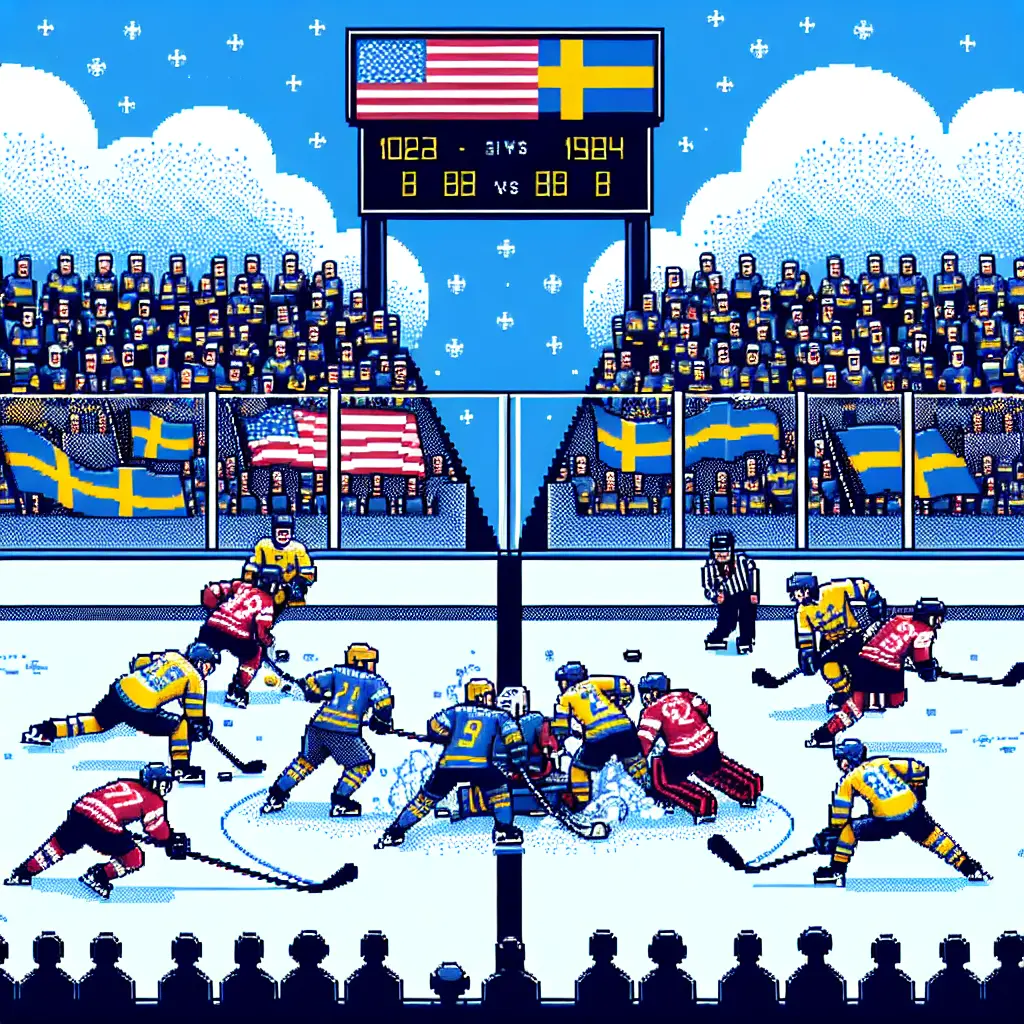
The puck barely left the ice Wednesday night as two of the tournament favorites—Sweden and Canada—put on clinical offensive displays that reshaped group play at the 2026 IIHF World Junior Championship. Sweden’s balanced attack handed the United States a 6-3 loss and finished Group A unbeaten, while Canada leaned on timing and a red-hot Cole Beaudoin to outscore Finland 7-4 and claim first in Group B. If you like speed, finishing and a little junior-level chaos, this was hockey served hot.

Why this matters now

  • These games weren’t just group-stage box scores — they set seeding and momentum for the knockout rounds. Sweden’s statement win hands them real control in Group A; Canada’s late goals and depth scoring show a team built for the push toward a medal.
  • The World Juniors is where top prospects test themselves under bright lights. Performances here can lift a player’s draft stock and reveal which teams have systems tough enough to survive a seven-game tournament.

What stood out

  • Sweden’s two-headed scoring attack: Lucas Pettersson and Eddie Genborg each netted a pair of goals, giving Sweden reliable finishers at key moments. That kind of finishing from the top end makes a team hard to slow down.
  • Special teams and short-handed impact: Sweden converted on the power play and even struck short-handed—small margins that widened the gap and exposed lapses in U.S. discipline.
  • Canada’s depth production: Cole Beaudoin finished with three points and the Beaudoin–O’Reilly–Desnoyers line provided momentum swings. Multiple contributors (Brady Martin scored twice, Zayne Parekh and Sam O’Reilly each had multi-point nights) underline Canada’s offensive depth.
  • Goaltending and timing: Love Harenstram made 28 saves for Sweden in a game where timely saves didn’t steal the outcome but kept the gap manageable. Conversely, netminding inconsistencies and a few defensive miscues cost the U.S. chances to stay close.

Game snapshots

  • Sweden 6, United States 3

    • Sweden controlled the tempo after an early deflection gave them a 1-0 lead. Genborg struck twice on the power play and Pettersson added a short-handed dagger — a momentum killer that turned the game in Sweden’s favor. Jack Berglund’s three assists and some young draft-eligible names setting up plays showed Sweden’s mix of experience and emerging talent. The U.S. battled but could not sustain a full 60-minute effort. (NHL.com recap)
  • Canada 7, Finland 4

    • A wild first period gave way to Canada settling into effective chance creation and finished opportunities. Beaudoin scored twice and assisted once, and Brady Martin added a two-goal night. Finland kept pace at times — Roope Vesterinen and Lasse Boelius chipped in offensively — but Canada’s finishing and a clutch third-period goal margin carried them to top spot in Group B. (NHL.com recap)

Bigger-picture implications

  • Sweden looks like a legitimate gold-medal threat. Unbeaten in group play and with finishers who can convert special-team chances, they’ve staked a claim as a team to fear in the quarters and beyond.
  • Canada’s balance matters. Tournament hockey rewards teams that can roll multiple lines and still produce. Their depth scoring reduces the pressure on any single star and helps when matchups get tighter in elimination rounds.
  • The U.S. and Finland both have tools to correct course, but the margin for error shrinks in knockout hockey. Discipline and consistency — especially on special teams and defensive-zone coverage — will be critical if either wants to climb the bracket.

Headlines players to watch next

  • Lucas Pettersson (Sweden) — timely scoring and a knack for finishing from dangerous areas.
  • Eddie Genborg (Sweden) — power-play presence; two-goal nights change games.
  • Cole Beaudoin (Canada) — multi-point performances and a reliable scorer on the more physical Canadian forecheck.
  • Jack Berglund (Sweden) — playmaking that fuels the top line’s momentum.

My take

The World Juniors keeps delivering the best mix of raw talent and meaningful hockey. Sweden’s 6-3 win over the U.S. felt like more than a group-stage result — it was a reminder that tournament depth and special-teams execution beat sporadic heroics. Canada’s 7-4 victory showed that when a team spreads offense across lines, it becomes very hard to shut down. This tournament still has twists ahead, but after these results, teams that marry discipline with finishing will be the ones lifting trophies.

Sources


Related update: We recently published an article that expands on this topic: read the latest post.


Related update: We recently published an article that expands on this topic: read the latest post.

Sprint to Milan: NHL’s High-Stakes Stretch | Analysis by Brian Moineau

NHL ramps up before the Milan Olympics — a midseason sprint with big storylines

The holiday lull is over and the NHL hits the gas. Between a first-ever Winter Classic in Florida, milestone chases, the World Juniors and the long-awaited return of NHL players to the Olympics, the next six weeks feel like the sport’s own sprint to the finish before Milan. If you love narratives — comebacks, records, outdoor theatrics and international stakes — this stretch is a confection of them all.

What to watch now that play resumes

  • The league begins a concentrated run of games that ends with NHL players heading to the Milano Cortina 2026 Winter Olympics (Feb 6–24, 2026). Expect coaches to juggle short-term playoff pushes with managing minutes for guys bound for the Italian ice. (Dec 25, 2025). (nhl.com)

  • The 2026 Discover NHL Winter Classic lands in Miami on Jan. 2, 2026 — the first NHL outdoor game in Florida. The New York Rangers meet the Florida Panthers at loanDepot park (with the retractable roof planned to be open), and the event brings with it big fan programming and a docuseries look behind the scenes. It’s a sea change in venue thinking and a test of outdoor hockey in a warm-weather market. (nhl.com)

  • Olympic rosters are being finalized (rosters due Dec. 31, 2025). The NHL’s decision to permit its players back into the Olympics for the first time since 2014 reintroduces the high-stakes international element to the season. Watch how teams manage travel, rest and risk. (nhl.com)

  • Keep an eye on milestone chases: Patrick Kane is within striking distance of 500 career goals and a U.S.-born scoring record; Auston Matthews and Steven Stamkos are closing in on franchise and historical goal marks; Anze Kopitar is on track for his 1,500th game. Those narratives deliver emotional moments and shift midseason storylines. (nhl.com)

  • The 2026 IIHF World Junior Championship — hosted partly in Minnesota — features returning U.S. talent and top draft prospects. That tournament can reshape futures and introduce new names to watch as teams plan for both short- and long-term roster construction. (nhl.com)

Why the Winter Classic in Miami matters

This isn’t just another outdoor game. Staging the Winter Classic at loanDepot park does several things at once:

  • Expands the NHL’s brand experiment with non-traditional markets, testing how outdoor spectacle performs in a warm-weather media market.
  • Lets the Panthers showcase a franchise narrative: from recent contenders to an outdoor-stage experiment — a symbolic “arrival” for the club.
  • Offers broadcast and fan-festival opportunities (including Stanley Cup appearances and concerts) that turn a regular-season game into a multi-day event for casual and die-hard fans alike. (nhl.com)

There are operational challenges, too — ice quality, logistics with a retractable roof and late-December weather — but the NHL has leaned into spectacle before and will treat this as a marquee TV moment.

The Olympic wildcard: ice safety and logistics

The NHL’s return to the Olympics carries baggage: organizers must deliver safe, NHL-caliber rinks. Media reports and league statements in December 2025 raised concern about construction timelines for the main Milan arena; the NHL has made participation conditional on safe, playable ice. That dynamic adds an edge to the next two months — teams and players are preparing for Olympic travel, but final assurances are still being watched closely. (nhl.com)

Teams to watch (who might change the narrative)

  • Florida Panthers: Hosting the Winter Classic and balancing superstar returns (e.g., Matthew Tkachuk’s recovery timeline) while sustaining a long playoff window.
  • New York Rangers: A franchise comfortable on outdoor stages and positioned to use the Winter Classic momentum.
  • Detroit Red Wings (Patrick Kane): A veteran chase that draws attention whenever it nears a historic plateau.
  • Toronto Maple Leafs (Auston Matthews): Potential franchise record chase that spikes local and national interest.
  • U.S. World Junior team: A chance to keep winning streaks and cement futures for prospects.

Headlines that can swing momentum

  • Major milestones achieved (500th goal, 1,500th game) become national news and can help teams ride emotional momentum.
  • Olympic roster announcements and any late changes will prompt strategic NHL responses (resting players, minute-management).
  • Outdoor-game weather/ice stories — anything from pure spectacle to operational headaches — will dominate sports media cycles the week of Jan. 2 and Feb. 1.

What fans should expect at home and in the stands

  • Big TV windows with cross-platform coverage and event-style production around the Winter Classic and Stadium Series.
  • Narrative-rich broadcasts: expect heavy features on milestone chase stories and human-interest pieces leading into Olympic rosters.
  • For the casual fan, these events are accessible hooks; for die-hards, they matter for playoff positioning and international bragging rights.

Quick takeaways

  • The NHL’s pre-Olympic stretch is part spectacle (Winter Classic in Miami) and part consequence (Olympic roster and arena readiness).
  • Individual milestones (Kane, Matthews, Kopitar, Stamkos) will punctuate the calendar and shape headlines.
  • The international element — returning NHL players to the Olympics — creates both excitement and logistical uncertainty centered on ice safety in Milan. (nhl.com)

My take

This next block of the season feels like a compressed version of why we love hockey: high-stakes individual stories, team pageantry, and national pride all folded into the same calendar. The Winter Classic in Miami is ambitious and symbolic of the NHL’s appetite to push boundaries. The Olympic return adds real drama — it’s a welcome risk, but only if organizers deliver safe, fair ice. If they do, fans get a rare midseason festival: outdoor glamour, milestone theatrics, and an Olympic curtain call.

Sources


Related update: We recently published an article that expands on this topic: read the latest post.


Related update: We recently published an article that expands on this topic: read the latest post.