Samsung closed the One UI 8 beta to new users in the US after barely a day – 9to5Google | Analysis by Brian Moineau

Samsung closed the One UI 8 beta to new users in the US after barely a day - 9to5Google | Analysis by Brian Moineau

Samsung’s One UI 8 Beta: The Hottest Ticket in Tech Town

When it comes to the tech world, excitement is often measured in the speed of light—or in the case of Samsung's recent One UI 8 beta program, the speed of sign-ups. Imagine the scene: Samsung fans eagerly waiting, fingers poised over their devices, ready to dive into the latest Android-based user interface experience. But before most could even blink, the window to join had slammed shut. Yes, in what can only be described as a tech-world equivalent of a sold-out concert, Samsung's One UI 8 beta program in the US filled up in under a day.

The swift closure of the beta program speaks volumes about the enthusiasm and loyalty of Samsung's user base. It's a testament to the brand's ability to generate buzz and anticipation akin to that of an Apple product launch or a Tesla unveiling. But it also raises questions about access and exclusivity in software testing, a topic that resonates well beyond the confines of this beta program.

A World of Betas


The beta phenomenon isn't new, but its landscape is evolving. Just last year, Google had a similar experience with its Android 13 beta, which filled up with eager participants almost as quickly as it opened. These programs serve as test beds for tech enthusiasts to preview upcoming features and provide feedback, essentially becoming part of the development process. However, the rapid filling of these slots highlights a growing trend: the democratization yet exclusivity of tech innovation.

In a world where digital access is crucial, these beta programs can be a double-edged sword. They offer a taste of the future but can also create a sense of FOMO (fear of missing out) among those who don’t make the cut. It's a balancing act that tech companies need to navigate carefully, especially as they aim to cultivate inclusive communities around their products.

Parallels in Pop Culture


The tech world isn't the only sphere grappling with issues of access and exclusivity. Consider the world of entertainment, where limited-edition sneaker drops and surprise album releases ignite a similar frenzy. Much like Samsung's beta program, these events create a rush to be among the first, highlighting a shared cultural obsession with being ‘in the know’ and ‘ahead of the curve’.

Even in the art world, the recent rise of NFTs (non-fungible tokens) has spurred debates over who gets to own and display digital assets. These conversations around access, value, and exclusivity mirror those happening in the tech industry, reminding us that these issues are universal.

Looking Ahead: Inclusivity in Innovation


As we move forward, it will be interesting to see how companies like Samsung balance the exclusivity of beta programs with the desire to be inclusive. Could a lottery system or tiered access levels provide a fairer distribution of spots in these coveted programs? Or perhaps a rotating schedule that allows more users a chance to participate over time?

Ultimately, the rapid filling of Samsung's One UI 8 beta slots underscores the brand's strong community and the high demand for its innovations. However, it also serves as a reminder that in the fast-paced world of technology, creating opportunities for a broader audience to engage with and shape the future is just as important as the innovations themselves.

Final Thought


While the One UI 8 beta program may have been a blink-and-you-miss-it opportunity, it’s emblematic of a larger trend towards participatory development in tech. As we continue to embrace new innovations, let’s hope for a future where access to the latest tech isn't just about who clicks fastest, but about fostering a diverse and inclusive community of pioneers eager to explore what’s next.

Read more about AI in Business

Read more about Latest Sports Trends

Read more about Technology Innovations

What I learned from a Bambu Labs A1 3D printer, part 2: Upgrades and mistakes – Ars Technica | Analysis by Brian Moineau

What I learned from a Bambu Labs A1 3D printer, part 2: Upgrades and mistakes - Ars Technica | Analysis by Brian Moineau

Title: Beyond the Blueprint: Lessons from Upgrading the Bambu Labs A1 3D Printer

In the ever-evolving realm of technology, where innovation meets creativity, 3D printing stands as a testament to human ingenuity. The journey of enhancing a Bambu Labs A1 3D printer, as detailed in Ars Technica's "What I Learned from a Bambu Labs A1 3D Printer, Part 2: Upgrades and Mistakes," offers a fascinating glimpse into this world. The article explores the nuances of upgrading the A1, shedding light on the intricacies of plastic and the broader lessons learned along the way.

The Art of Plastic: A Tangible Revolution

One of the standout revelations from upgrading the A1 was the diverse nature of plastics used in 3D printing. Plastics, often underestimated, are the unsung heroes of the modern age, molding the framework of countless innovations. From biodegradable PLA to robust ABS, each type of plastic brings its own set of properties and challenges. The process of selecting and printing new parts for the A1 underscored the importance of understanding these materials, not just as elements of creation but as pivotal factors in the success or failure of a project.

This exploration of plastic aligns with the global push towards sustainable alternatives. Companies worldwide are racing to develop eco-friendly materials, reducing the carbon footprint of manufacturing. The European Union, for instance, is investing heavily in bioplastics research, aiming to replace traditional plastics with greener solutions. The lessons from upgrading the A1 mirror this shift, emphasizing the need for conscientious material choices in tech and beyond.

A Symphony of Errors: Embracing Mistakes

No technological journey is complete without its fair share of stumbles. The article candidly acknowledges the mistakes made during the upgrade process, transforming them into valuable learning experiences. This is reminiscent of the iterative design philosophy embraced by tech giants like Google and Apple, where failure is simply a stepping stone to innovation.

In the context of 3D printing, errors often lead to unexpected breakthroughs. The flexibility to print, test, and tweak designs rapidly allows for a trial-and-error approach that fuels creativity. This mindset is not limited to tech but is increasingly being adopted in education and business, where learning from mistakes is encouraged as a pathway to success.

A Broader Connection: The Maker Movement

The journey of upgrading the Bambu Labs A1 is emblematic of the larger Maker Movement, a cultural trend that celebrates DIY and tinkering. Across the globe, makerspaces are popping up, providing tools and resources for hobbyists and professionals alike to bring their ideas to life. This democratization of technology fosters innovation, allowing individuals to contribute to fields as diverse as healthcare, education, and environmental science.

The Maker Movement has also played a crucial role in times of crisis. During the COVID-19 pandemic, makers worldwide rallied to produce PPE and medical supplies, showcasing the power of community-driven innovation. The Bambu Labs A1 journey, with its emphasis on creativity and problem-solving, embodies the spirit of this movement.

Final Thoughts: Crafting the Future

Upgrading a 3D printer like the Bambu Labs A1 is more than a technical endeavor; it's a microcosm of the challenges and triumphs inherent in technological progress. As we continue to push the boundaries of what's possible, the lessons learned from such projects remind us of the importance of material knowledge, the value of mistakes, and the power of community.

In a world increasingly defined by technology, these insights are invaluable. Whether you're a seasoned engineer or a curious hobbyist, the journey of upgrading and learning from a 3D printer offers a roadmap for innovation. So, here's to the makers, the tinkerers, and the dreamers—may your blueprints be bold, your plastic choices wise, and your mistakes enlightening.

Read more about AI in Business

Read more about Latest Sports Trends

Read more about Technology Innovations

Valve CEO Gabe Newell’s Neuralink competitor is expecting its first brain chip this year – The Verge | Analysis by Brian Moineau

Valve CEO Gabe Newell’s Neuralink competitor is expecting its first brain chip this year - The Verge | Analysis by Brian Moineau

Title: Gaming Meets Neuroscience: Gabe Newell's Ambitious Leap into the Brain Chip Arena

In a world where gaming and technology often intertwine, few figures stand as prominently as Gabe Newell, the visionary CEO of Valve Corporation. Known for revolutionizing the gaming industry with platforms like Steam, Newell is now setting his sights on an entirely new frontier: brain-computer interfaces. His company, Starfish Neuroscience, is reportedly preparing to unveil its first brain chip later this year, positioning itself as a competitor to Elon Musk's Neuralink. But what exactly does this mean for both the tech world and the gaming industry as we know it?

Gabe Newell: A Visionary Beyond Gaming


Gabe Newell's journey from a Harvard dropout to one of the most influential figures in gaming is nothing short of extraordinary. After a successful stint at Microsoft, Newell co-founded Valve Corporation, and the company has since become synonymous with innovation in gaming. With titles like "Half-Life" and "Portal," Valve has consistently pushed the boundaries of what games can be. Yet, Newell's ambitions clearly extend beyond virtual landscapes.

With Starfish Neuroscience, Newell aims to make science fiction a reality by directly interfacing brains with computers. This venture isn't just a side project; it represents a potential paradigm shift in how humans interact with technology. It's reminiscent of the leaps in human-computer interaction we've seen from the likes of Apple's Steve Jobs or Microsoft's Bill Gates.

Brain Chips: The Next Big Frontier


The concept of brain-computer interfaces (BCIs) isn't new. Researchers have been exploring this field for decades, and we've seen significant advances in medical applications, particularly for individuals with mobility impairments. However, the potential applications of BCIs extend far beyond healthcare. Imagine a world where gaming becomes a fully immersive experience where the player's thoughts and emotions directly influence the game. This could be the future that Newell is envisioning.

Starfish Neuroscience's brain chip is expected to rival Neuralink, which has made headlines for its ambitious goals and high-profile demonstrations. While Musk's company focuses on medical applications and augmenting human intelligence, Newell's gaming background could bring a unique perspective to the table, potentially integrating BCIs into entertainment and everyday tech applications.

A World of Possibilities and Challenges


While the potential of brain chips is exciting, it's also fraught with ethical and practical challenges. Privacy concerns loom large. If our thoughts can be read by machines, who controls that data? Similarly, the implications of such technology on mental health and societal norms are vast and largely unexplored.

In addition, the timing of Starfish's announcement is noteworthy, as it coincides with a global surge in AI innovation. From OpenAI's advancements in natural language processing to robotics breakthroughs, we are living in an era defined by rapid technological evolution. Newell's entry into the brain chip arena is yet another testament to this trend.

Final Thoughts: A Game Changer?


Gabe Newell's journey from transforming the gaming industry to potentially transforming human-computer interaction is an exciting narrative. While we await the release of Starfish Neuroscience's first brain chip, it's clear that this development could have profound implications. Whether it's creating new gaming experiences or addressing complex medical challenges, the possibilities are endless.

As we stand on the brink of this new technological era, it's essential to approach these innovations with both enthusiasm and caution. After all, the future of brain-computer interfaces will not only redefine technology but also the very fabric of human experience. And if history has taught us anything, it's that visionaries like Gabe Newell often have a way of making the seemingly impossible a reality.

Read more about AI in Business

Read more about Latest Sports Trends

Read more about Technology Innovations

Samsung Galaxy S25 Edge Battery Test Results are out: not as bad as feared – PhoneArena | Analysis by Brian Moineau

Samsung Galaxy S25 Edge Battery Test Results are out: not as bad as feared - PhoneArena | Analysis by Brian Moineau

The Samsung Galaxy S25 Edge: A Battery Surprise That’s Not a Deal-Breaker

In the ever-evolving world of smartphones, where each device iteration promises to outshine its predecessor, the anticipation for the Samsung Galaxy S25 Edge was palpable. The tech community was buzzing, and the biggest question on everyone's mind was: would the Galaxy S25 Edge's smaller battery size be its Achilles' heel? Thankfully, recent battery test results shared by PhoneArena have put some of these fears to rest.

Battery Fears: More Bark Than Bite

When Samsung unveiled the Galaxy S25 Edge, the collective gasp from tech enthusiasts wasn't just about its sleek design or impressive camera capabilities. The concern was squarely focused on its smaller battery. With competing devices boasting ever-larger battery capacities, could the S25 Edge hold its own?

According to the recent tests, the answer is a resounding "yes." While the battery isn't setting any records, it performs admirably, offering respectable longevity that should keep most users satisfied throughout the day. This unexpected resilience is a testament to Samsung's optimization prowess. By fine-tuning software and hardware, they've managed to eke out every ounce of energy efficiency from the device, much like Apple has done with its iPhone series, often criticized for smaller batteries yet praised for their endurance.

A Broader Tech Landscape

The Galaxy S25 Edge's battery situation is a microcosm of a larger trend in technology: achieving more with less. As devices become more compact and powerful, manufacturers are constantly challenged to balance design, performance, and battery life. This equilibrium is reminiscent of the automotive industry, where electric vehicles are pushing boundaries in terms of range and efficiency, despite concerns about battery size and charging infrastructure.

Moreover, as the world becomes more environmentally conscious, the push for smaller, more efficient batteries aligns with global sustainability goals. Samsung's approach with the S25 Edge might well be a nod towards a future where tech companies prioritize not just performance, but also the planet.

Connecting the Dots: Tech and Beyond

It's fascinating to see parallels between the tech industry's challenges and those faced in other sectors. For instance, the fashion industry is grappling with similar issues of innovation and sustainability. Designers are increasingly tasked with creating eco-friendly clothing that doesn't compromise on style or quality. Just as Samsung has optimized the S25 Edge to perform beyond expectations, fashion brands like Stella McCartney are leading the charge in sustainable fashion, proving that eco-consciousness and high performance can coexist.

Final Thoughts

The Samsung Galaxy S25 Edge may not boast the largest battery on the market, but its performance suggests that sometimes, size isn't everything. In a world where efficiency and optimization are becoming key differentiators, this latest offering from Samsung is a reminder that thoughtful engineering can overcome initial skepticism. So, for those worried about battery life being a deal-breaker, rest easy. The Galaxy S25 Edge is more than capable of keeping you powered through your daily adventures, proving once again that good things often come in small packages.

Read more about AI in Business

Read more about Latest Sports Trends

Read more about Technology Innovations

Uber forecasts upbeat second quarter on steady ride-hailing, delivery demand – Yahoo Finance | Analysis by Brian Moineau

Uber forecasts upbeat second quarter on steady ride-hailing, delivery demand - Yahoo Finance | Analysis by Brian Moineau

Riding the Wave: Uber's Resilient Journey Through Slow Growth and Bright Horizons

There's a timeless saying that goes, "It's not about the destination, it's about the journey." For Uber, this couldn't be more accurate. Despite a recent report from Reuters highlighting Uber's slowest revenue growth since the pandemic's onset due to sluggish U.S. travel demand, the company remains optimistic about its second-quarter prospects. Let's dive into how Uber is navigating these choppy waters and why there's still plenty of reason for optimism.

The Road So Far: A Pandemic Perspective

Since its inception, Uber has evolved from a scrappy startup to a global giant, fundamentally reshaping urban transportation worldwide. However, like many businesses, the pandemic threw a wrench into its well-oiled machine. With people staying home and travel restrictions in place, Uber experienced a downturn that would challenge any company. Yet, it harnessed this period to innovate and expand its services, particularly in the delivery sector, where it found a robust demand as people leaned into the convenience of having everything from food to groceries delivered to their doorsteps.

The recent report from Reuters paints a picture of a company facing slower growth in its core ride-hailing business. Some might see this as a red flag, but let's not forget that the industry—and indeed, the world—is still finding its footing post-pandemic. While U.S. travel demand may be sluggish, it's crucial to recognize that Uber's ride-hailing business is still a cornerstone of modern transportation, and challenges often pave the way for innovation.

Global Connections: A Changing Landscape

Interestingly, Uber's story mirrors that of other sectors in our rapidly changing world. Consider the broader tech industry, where companies like Zoom experienced a meteoric rise during the pandemic, only to face a recalibration as the world returned to normalcy. Similarly, Uber is witnessing a shift in consumer behavior, with more people opting for local travel and delivery services over long-distance rides.

Moreover, Uber's steady demand in its delivery segment underscores a broader trend: the growing importance of convenience in our daily lives. As reported by The New York Times, the pandemic has forever changed consumer habits, accelerating the adoption of e-commerce and delivery services. Uber's strategic expansion into these areas positions it well to ride this wave of change, even as it tackles challenges in its core business.

The Road Ahead: Optimism and Opportunity

Uber's optimism about its second-quarter outlook isn't unfounded. The company's innovative spirit and adaptability have been its hallmarks, and there's every indication that it will continue to evolve. With an eye on sustainability, Uber is also advancing its electric vehicle initiatives, aiming to have every car on its platform be electric by 2040. This not only aligns with global sustainability goals but also caters to a growing demographic of environmentally conscious consumers.

Furthermore, their exploration of autonomous vehicles, as highlighted by CNBC, could redefine ride-hailing in the coming years, presenting new opportunities for growth and efficiency.

Final Thoughts: A Journey Worth Watching

In the grand narrative of business, Uber's story is one of resilience and reinvention. While the road may be bumpy at times, the company's ability to adapt and innovate ensures it's far from a static tale. As Uber gears up for its second quarter, buoyed by steady demand in new areas, it remains a compelling case study of how businesses can thrive amidst uncertainty.

So, whether you're a loyal Uber user or just an observer of the tech world, keep an eye on Uber's journey. It's a ride that's likely to take us to unexpected and exciting places. After all, in the world of Uber, the journey is just as exhilarating as the destination.

Read more about AI in Business

Read more about Latest Sports Trends

Read more about Technology Innovations

OpenAI reverses course, says its nonprofit will remain in control of its business operations – TechCrunch | Analysis by Brian Moineau

OpenAI reverses course, says its nonprofit will remain in control of its business operations - TechCrunch | Analysis by Brian Moineau

Title: OpenAI's Nonprofit U-Turn: A Reaffirmation of Mission Over Margin

In a surprising yet enlightening turn of events, OpenAI has decided that its nonprofit arm will continue to steer its business operations. This decision reverses their previous announcement to transition to a for-profit model. As a technology enthusiast and a keen observer of corporate ethics, I find this development not only intriguing but also a significant moment in the ongoing dialogue between innovation and responsibility.

A Nonprofit Heart in a For-Profit World

The tech world is no stranger to the seductive allure of profit maximization. From startups dreaming of unicorn status to established giants expanding their empires, the focus often tilts towards financial growth. However, OpenAI's decision to remain under the guidance of its nonprofit wing signals a commitment to its foundational values. This choice is a refreshing reminder that technology can indeed serve humanity without being shackled by the relentless pursuit of profit.

OpenAI's mission, as many might recall, is to ensure that artificial general intelligence (AGI) benefits all of humanity. By choosing to uphold nonprofit control, OpenAI reinforces its dedication to ethical AI development, prioritizing safety and accessibility over financial gain. This decision aligns with the broader movement towards ethical AI, which has gained momentum as concerns about data privacy, surveillance, and bias continue to mount.

The Broader Context: Tech with a Conscience

OpenAI's reaffirmation of its nonprofit roots comes at a time when the tech industry is grappling with ethical dilemmas. Companies like Google and Facebook have faced criticism over data privacy and the spread of misinformation, prompting a reevaluation of their roles in society. Meanwhile, initiatives like the European Union's AI Act are pushing for regulations that prioritize transparency and accountability in AI development.

This shift towards ethical considerations in tech is not limited to AI. The conversation around sustainable business practices has also reached other sectors. For instance, companies like Patagonia and Ben & Jerry's are renowned for integrating social responsibility into their business models, proving that profit and purpose can coexist.

OpenAI in the Larger AI Landscape

OpenAI's decision to maintain nonprofit control is not just about ethics; it's also about leadership in the AI space. The AI field is fiercely competitive, with players like Alphabet's DeepMind and China's Baidu making significant strides. By holding onto its nonprofit ethos, OpenAI sets itself apart, not just as a leader in AI innovation but as a beacon for ethical AI development.

The decision also has implications for the broader AI research community. OpenAI's commitment to open access and collaboration has already contributed to significant advancements in the field. By maintaining its nonprofit structure, it ensures that these contributions remain aligned with the public good rather than being driven by proprietary interests.

Final Thoughts

OpenAI's choice to keep its nonprofit organization in charge of business operations is a bold statement in favor of mission over margin. In an era where technology's impact on society is under intense scrutiny, this decision serves as a timely reminder that the purpose of innovation should ultimately be to enhance the human experience.

As we continue to navigate the complex landscape of technological advancement, it's heartening to see a major player like OpenAI prioritize ethical considerations over financial imperatives. This move not only strengthens OpenAI's position as a leader in the AI field but also sets a precedent for other companies to follow. In the end, it's a reminder that technology, at its best, is about people, not profits.

Read more about AI in Business

Read more about Latest Sports Trends

Read more about Technology Innovations

I swapped my ThinkPad for a MacBook Air M4, and it’s spoiled work laptops for me – ZDNET | Analysis by Brian Moineau

I swapped my ThinkPad for a MacBook Air M4, and it's spoiled work laptops for me - ZDNET | Analysis by Brian Moineau

Title: Trading Laptops: The MacBook Air M4 Experience

In the realm of technology, where every year brings a new wave of devices promising faster speeds and sleeker designs, it's easy to get lost in the noise. Yet, when I swapped my trusty ThinkPad for the newly released MacBook Air M4, it wasn't just another upgrade—it was a revelation. This transition has not only transformed my work laptop expectations but also offered a fresh perspective on the evolving landscape of technology.

The MacBook Air M4, Apple's 2025 marvel, has taken the best of its predecessors and elevated it to new heights. It's like Apple took a page from the classic nursery rhyme and decided to make the thin even thinner, the light even lighter, and the fast even faster. With the M4 chip, it feels like handling a device that's not just a tool, but an extension of my creative and productive self. The seamless integration and optimization of performance make it a joy to use, and that's not something I say lightly after years of keyboard clacking on a ThinkPad.

ThinkPads have always had a reputation for being the stalwart bastions of business laptops—reliable, robust, and ready to take on the corporate battlefield. They're like the reliable old friend who always has your back during a meeting. But, after experiencing the MacBook Air M4, it's like discovering a new friend who not only has your back but also brings new ideas, inspiration, and a touch of elegance to the table.

The world is witnessing a technological renaissance, with AI and machine learning becoming integral to the way we work and live. The MacBook Air M4's performance is a testament to this, showcasing how devices are evolving to meet the demands of an increasingly connected and automated world. The fluidity with which it handles complex tasks is reminiscent of how AI tools like ChatGPT are transforming the way we interact with technology—making it more intuitive, efficient, and capable of understanding our needs before we even articulate them.

In a broader context, this leap in laptop technology parallels significant movements in other fields. Take, for instance, the automotive industry's shift towards electric vehicles. Companies like Tesla are not just manufacturing cars; they're creating experiences. In a similar vein, Apple isn't merely producing laptops; it's crafting tools that redefine user engagement and productivity.

Another fascinating connection is with the world of sports—particularly how athletes like Tom Brady or Serena Williams have redefined their fields not just through skill, but through constant evolution and adaptation. In technology, we see a similar pattern: devices that continually push boundaries rather than resting on past laurels.

In conclusion, the MacBook Air M4 isn't just a new gadget; it's a glimpse into the future of personal computing. It's a testament to how far laptops have come and a hint at where they're headed. Whether you're a die-hard Apple fan or a devoted ThinkPad user, there's no denying that the M4 sets a new benchmark. So, as we embrace this new wave of technology, let's remain excited for the possibilities it brings and open to the changes it invites. After all, in this fast-paced digital world, the only constant is evolution.

Final Thought: As I adjust to my newfound love for the MacBook Air M4, I'm reminded that sometimes, change isn't just good—it's necessary. It pushes us out of our comfort zones and into a world of innovation and possibility. Here's to embracing the future, one sleek, powerful device at a time.

Read more about AI in Business

Read more about Latest Sports Trends

Read more about Technology Innovations

Stumbling and Overheating, Most Humanoid Robots Fail to Finish Half Marathon in Beijing – WIRED | Analysis by Brian Moineau

Stumbling and Overheating, Most Humanoid Robots Fail to Finish Half Marathon in Beijing - WIRED | Analysis by Brian Moineau

Title: The Great Robot Race: A Marathon of Dreams, Stumbles, and Overheating Circuits

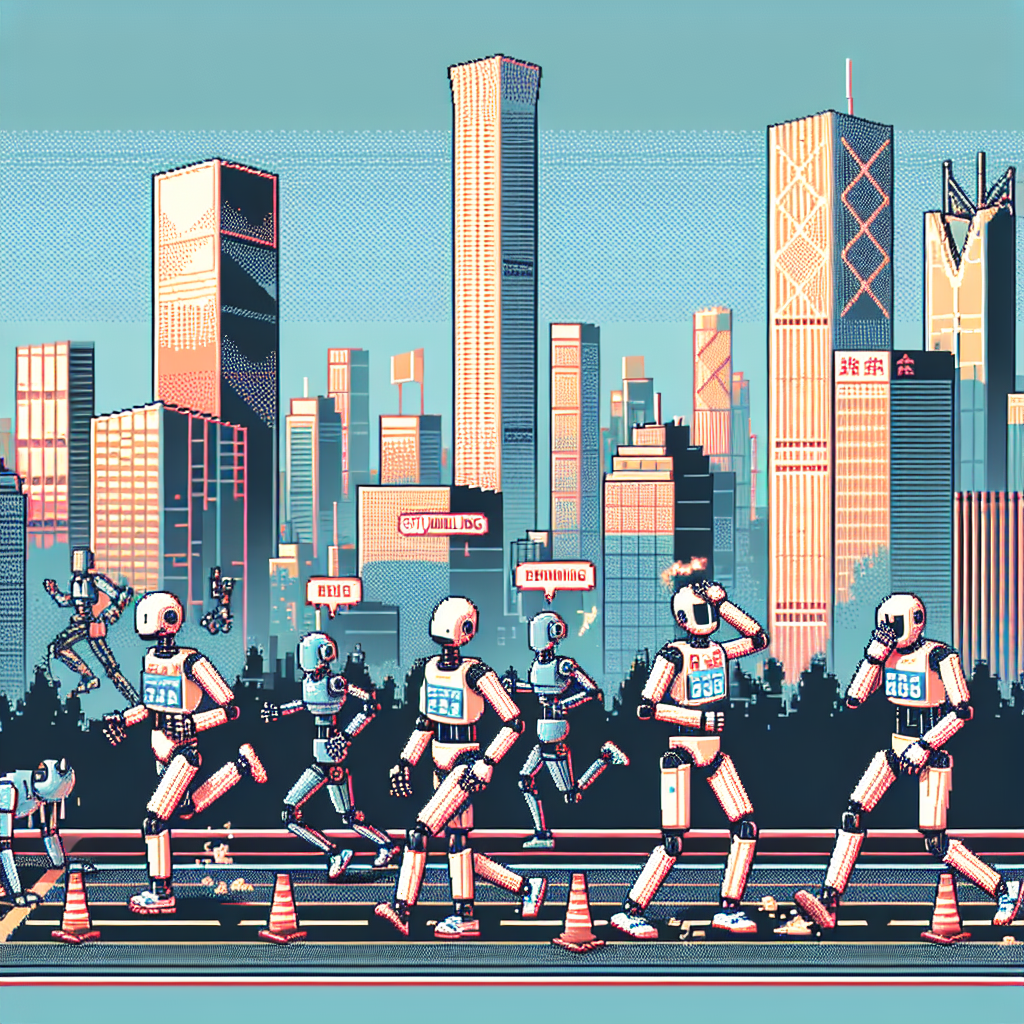
The air was charged with anticipation in Beijing as 21 humanoid robots lined up at the starting line of a half marathon, a spectacle that promised to be a blend of high-tech wizardry and athletic endurance. Yet, as the dust settled, only six of these mechanical marvels managed to cross the finish line. It was a scene reminiscent of an early Olympic event where the spirit of competition was met with unexpected challenges.

This ambitious endeavor was more than just a race; it was a testament to the rapid advancements and the existing limitations in robotics. While the event might not have been a resounding success in terms of completion rates, it certainly highlighted the potential of humanoid robots and the fascinating journey they’re on towards matching, or perhaps even surpassing, human capabilities.

Outrunning Expectations, One Stumble at a Time

In this marathon, the robots encountered hurdles that were less about physical obstacles and more about technical limitations. Issues like overheating and stability plagued many of the participants, serving as a stark reminder of the technological gap that still exists. Yet, this is not a failure—it’s an opportunity to learn and improve.

The race in Beijing is part of a broader narrative where robotics is continually pushing boundaries. In other parts of the world, robots are being deployed for tasks ranging from intricate surgeries to delivering packages. Boston Dynamics’ robots, for instance, have amazed the public with their agility and balance, performing parkour routines that were once the domain of only the most skilled human athletes.

A Reflection of Our Times

The robot marathon echoes broader technological trends, such as the rapid development of AI and machine learning. Just like the robots in Beijing, these technologies are on a journey fraught with trials and incremental successes. Consider the AI models that are being developed to assist with climate change predictions or the algorithms that power autonomous vehicles. Each step forward is accompanied by a stumble or two, but progress is undeniable.

Furthermore, the race is a microcosm of the challenges faced by emerging technologies in integrating seamlessly into daily life. Much like the humanoid robots, innovations like smart home devices, virtual reality, and even electric vehicles have had to overcome initial teething problems before gaining acceptance and reliability.

A Light-Hearted Look at the Future

Despite the challenges, events like the humanoid marathon are crucial. They ignite imagination and inspire innovation. They remind us that the path to technological advancement is not a sprint but a marathon—filled with unexpected turns and hurdles. And isn’t that what makes the race worth running?

As spectators and participants in this age of rapid technological evolution, we must maintain a sense of humor and perspective. After all, even the most adept human athletes have their off days, and so do their robotic counterparts.

Final Thought

In conclusion, the humanoid robot half marathon in Beijing may not have been a flawless display of robotic prowess, but it was an important step forward. It was a celebration of human ingenuity, perseverance, and the relentless pursuit of progress. As technology continues to evolve, perhaps one day humanoid robots will not only complete marathons with ease but also redefine our understanding of what is possible. Until then, we can enjoy the journey, cheer for the underdogs, and marvel at the wonders yet to come.

Read more about AI in Business

Read more about Latest Sports Trends

Read more about Technology Innovations

Watches and Wonders: 45 New Watches You Missed from Grand Seiko, TAG Heuer and More – Gear Patrol | Analysis by Brian Moineau

Watches and Wonders: 45 New Watches You Missed from Grand Seiko, TAG Heuer and More – Gear Patrol | Analysis by Brian Moineau

Title: Time Well Spent: A Playful Peek into Watches and Wonders 2025

*Tick-tock, tick-tock.* That’s the sound of time marching on, but in the world of high-end horology, it’s more like *tick-tock-glitter-sparkle*. The Watches and Wonders 2025 event in Geneva was nothing short of a glittering gala for timepiece enthusiasts. If you missed it, don’t worry—we’ve got you covered with a roundup of the most dazzling debuts from the likes of Grand Seiko, TAG Heuer, and more.

Every year, Watches and Wonders is akin to the Oscars for watch aficionados. Brands pull out all the stops, unveiling creations that are not just instruments for telling time, but masterpieces that tell stories. This year was no exception, with 45 new watches making their grand entrance under the spotlight.

Grand Seiko’s Grand Entrance

Grand Seiko, known for its dedication to precision and beauty, stepped onto the stage with a collection that marries tradition with innovation. This brand, which has been quietly perfecting its craft since 1960, showcased pieces that blend its signature Spring Drive technology with designs that pay homage to nature’s beauty. It’s a reminder that while technology races forward, there’s always room for a nod to the natural world—a theme that’s increasingly relevant as we navigate the challenges of climate change.

TAG Heuer’s Time to Shine

Meanwhile, TAG Heuer brought the heat with watches that pack a punch of sporty elegance. Known for its avant-garde design and association with motorsports, TAG Heuer’s newest releases capture the thrill of speed and precision. It’s a timely (pun intended) reflection on our society’s love affair with racing, from Formula 1 circuits to the rise of electric vehicle grand prix events like Formula E.

The World Beyond Watches

Interestingly, while these watchmakers are crafting pieces that measure every second, the world outside is also racing against time on various fronts. Whether it’s the countdown to achieving sustainability goals or the ticking clock of technological advancements, the theme of time is universally resonant.

The watch industry itself is not immune to the pressures of modernity. As we see a rise in smartwatches and tech-driven wearables, traditional watchmakers are compelled to innovate while preserving the art of horology. This delicate balance mirrors larger societal trends—where industries must adapt but also hold onto their roots.

Final Thoughts

Watches and Wonders 2025 was not just a showcase of horological artistry; it was a celebration of time itself. As we admire these incredible timepieces, we are reminded to cherish the moments they mark. Whether you’re a watch enthusiast or someone who simply appreciates the beauty of craftsmanship, these releases offer something for everyone.

In a world where time often feels like a luxury, there’s something profoundly satisfying about a well-crafted watch. So, whether you’re in the market for a new timepiece or just admiring from afar, remember: the best moments in life are often the ones we take the time to appreciate.

*Time well spent, indeed.*

Read more about AI in Business

Read more about Latest Sports Trends

Read more about Technology Innovations


Related update: We recently published an article that expands on this topic: read the latest post.

Todd Bowles: We’ll see if the team that wins the overtime toss can run out the clock – NBC Sports | Analysis by Brian Moineau

Todd Bowles: We’ll see if the team that wins the overtime toss can run out the clock - NBC Sports | Analysis by Brian Moineau

The Great Overtime Debate: A Balancing Act in the NFL and Beyond

In the ever-evolving world of sports, change is the only constant. The NFL, a league synonymous with intense competition and strategic innovation, recently made headlines with a tweak to its overtime rules. As reported by NBC Sports, the league's 32 owners voted to ensure that both teams get a possession in overtime, a rule aimed at enhancing fairness and excitement in these high-stakes moments. However, they stopped short of extending regular-season overtime to 15 minutes, a format currently reserved for the playoffs. This decision reflects a broader balancing act between maintaining the integrity of the game and managing player safety—a topic that resonates far beyond the gridiron.

At the heart of this discussion is Todd Bowles, the head coach of the Tampa Bay Buccaneers, who succinctly put it: “We’ll see if the team that wins the overtime toss can run out the clock.” His statement underscores the tactical shifts that this rule change might inspire. Bowles, known for his defensive acumen and calm demeanor, embodies the strategic depth required to navigate these new waters. His approach might very well set a precedent for how teams manage their resources and tempo in the extra period.

This decision by the NFL owners is reminiscent of many debates across various sports and industries. For instance, in Major League Baseball, the introduction of the pitch clock was a move to make games quicker without compromising the sport’s essence. Similarly, the introduction of VAR in soccer was aimed at ensuring fairness, though it has sparked its own debates regarding the flow of the game. These changes, much like the NFL's overtime rules, are part of a larger narrative of adaptation and evolution, attempting to strike a balance between tradition and modernity.

The NFL's choice not to extend regular-season overtime also highlights a growing awareness of player welfare. With increasing scrutiny on the physical toll that professional sports take on athletes, this decision aligns with a broader trend of prioritizing long-term health over short-term entertainment. The league's move mirrors initiatives in other sports, such as the NBA’s load management strategies and the NHL’s concussion protocols, all aimed at ensuring that athletes can perform at their best for as long as possible.

Moreover, this discussion finds parallels in the business world, where companies are constantly balancing innovation with employee well-being. The trend toward flexible work hours and remote work options, accelerated by the pandemic, mirrors the NFL’s attempt to balance game integrity with player health. Just as businesses are learning that a happy, healthy workforce is a more productive one, sports leagues are recognizing the value of preserving their athletes' health for the longevity of their careers and the quality of the sport.

In conclusion, the NFL's latest decision on overtime rules is more than just a tweak in game mechanics; it's a reflection of the league's adaptability and its commitment to fairness and safety. As Todd Bowles and his Buccaneers prepare to navigate these new rules, fans and analysts alike will be watching to see how this change influences the dynamics of the game. Whether it's on the field or in the boardroom, the lesson is clear: Change is inevitable, but with thoughtful consideration and strategic planning, it can lead to a better, more balanced future.

Read more about AI in Business

Read more about Latest Sports Trends

Read more about Technology Innovations