Ben Ogden Breaks 50‑Year U.S. Drought | Analysis by Brian Moineau

A silver sprint that rewrites 50 years of U.S. cross‑country history

Ben Ogden stood on the snow, chest heaving, medal around his neck — and for a moment the neat, long drought of American men on the Olympic cross‑country podium felt like something that could be folded up and put away. Ogden, a 25‑year‑old Vermonter, skied powerful and smart in the men's sprint classic at the 2026 Milan‑Cortina Winter Olympics, finishing just behind Norway’s Johannes Høsflot Klæbo and delivering the first Olympic medal for a U.S. man in cross‑country skiing since Bill Koch’s silver in 1976.

Why this medal matters

  • It ends a 50‑year silence for U.S. men in Olympic cross‑country skiing (Bill Koch, Innsbruck, 1976 → Ben Ogden, Milan‑Cortina, February 10, 2026).
  • It’s a symbolic bridge between two Vermont stories: Koch’s legacy and Ogden’s rise through local youth leagues and New England trails.
  • Beyond nostalgia, it signals real momentum: American skiers — men and women — are increasingly competitive in sprint formats on the world stage.

The race in a sentence

Ogden qualified second, moved through quarterfinals and semis with composure, and in the final put in a strong classic‑technique sprint (3:40.61) that left him 0.87 seconds behind Klæbo’s winning 3:39.74 — fast enough for silver and history.

Backstory and context

  • Ben Ogden grew up in Vermont’s tight cross‑country community, coming up through the Bill Koch Youth Ski League and training on the same trails that shaped previous generations.
  • The sprint event is short, tactical and brutal: racers blast through qualification time trials and then jockey through multiple head‑to‑head heats (quarters, semis, final). It rewards not only speed but positioning, recovery and razor‑sharp technique.
  • For much of the 20th century and into the 2000s the U.S. was an also‑ran in men’s Olympic cross‑country. The breakthrough of U.S. women in the 2010s (Jesse Diggins, Kikkan Randall) helped reset expectations; Ogden’s medal now continues that upward arc for the men.
  • Johannes H. Klæbo remains a benchmark: the Norwegian’s sprint dominance and tactical savvy make him the toughest rival to beat in any championship race.

What this could mean going forward

  • Increased visibility and investment: Olympic medals change narratives. Ogden’s silver can boost youth enrollment, sponsorship interest, and funding for U.S. cross‑country programs — especially in classic technique and sprint development.
  • A confidence ripple for teammates: American men like Gus Schumacher and J.C. Schoonmaker, and the women already competitive at global level, may race with a new belief that podiums are repeatable, not accidental.
  • Tactical evolution: American programs may lean more into sprint‑specific training — starts, explosive power, heat‑recovery protocols — while still keeping the aerobic base that the sport demands.

Quick highlights

  • Event: Men’s sprint classic, Tesero (Val di Fiemme), Milan‑Cortina 2026.
  • Medalists: Gold — Johannes H. Klæbo (NOR); Silver — Ben Ogden (USA); Bronze — Oskar Opstad Vike (NOR).
  • Ogden’s time: 3:40.61. Klæbo’s winning time: 3:39.74.
  • Historic note: First U.S. men’s cross‑country Olympic medal since Bill Koch’s 1976 silver.

A human moment

Ogden’s podium celebration — including a backflip he’d promised his 15‑year‑old self he would do if he ever made an Olympic podium — underlined that this was as much a personal milestone as a national one. There’s an intimate, almost poetic thread here: a Vermont kid who grew up tracing the trails of an earlier American medalist now stands where Koch once stood. For small skiing communities, that’s catnip — a reminder that elite sport still has room for neighborhood roots.

My take

This silver feels less like an isolated surprise and more like a punctuation mark on a sentence that’s been building for years: U.S. cross‑country skiing is no longer content with incremental improvement — it’s chasing podiums. Ogden’s medal should be treated as a beginning, not an endpoint. If leaders in U.S. Ski & Snowboard and grassroots programs capitalize on the moment with coaching resources and youth outreach, we may be looking at the start of a sustained American presence in sprint events for the next decade.

Sources


Related update: We recently published an article that expands on this topic: read the latest post.



Related update: We recently published an article that expands on this topic: read the latest post.
Sixty Super Bowls: The Last Pilgrimage | Analysis by Brian Moineau

Sixty Sundays: The friends who’ve never missed a Super Bowl

From $8 seats to $8,000 trips, the Super Bowl has changed almost as much as the men who’ve watched every single one. This year Don Crisman, Gregory Eaton and Tom Henschel — three friends in their 80s — made the pilgrimage again, closing a chapter that began on January 15, 1967. For two of them, this pilgrimage may be the last.

A hook: why this story matters beyond football

There’s something quietly heroic about a ritual kept for six decades: it’s not just about touchdowns or halftime shows, it’s about continuity in a world that keeps speeding up. These men are living archives of the event that became America’s unofficial holiday. Their story asks a simple question: what do we owe our rituals — and to whom?

What happened this year

  • Don Crisman (Maine), Gregory Eaton (Michigan) and Tom Henschel (Florida) attended Super Bowl LX, preserving a streak that began with the very first AFL-NFL World Championship Game in 1967.
  • Crisman, nearly 90, and Henschel, 84 and recovering from a stroke, said this year will likely be their last trip. Eaton, 86, plans to go as long as he can.
  • The trio — once part of a larger “never missed” club that included media members and staff — are now essentially the living end of an era, having scaled back travel from weeklong stays to short trips focused only on the game. (apnews.com)

A little context: how the Super Bowl and fandom evolved

  • The first two championship games were called the AFL-NFL World Championship Game; “Super Bowl” became the common name almost by accident and then by marketing success.
  • Early Super Bowls felt different: cheaper tickets, smaller media machines, less corporate spectacle. Henschel remembers paying $12 for a ticket in 1969. Today, attending the game — travel, lodging, ticket markups — can run into the thousands. (apnews.com)
  • Over 60 editions, the Super Bowl transformed from a championship to a cultural event: halftime megashows, global advertising, and multi-day corporate campus takeovers around host cities.

Why their streak is about more than numbers

  • Ritual and friendship: The three men speak less about specific plays and more about the habit of showing up together. Their annual meetups, brunches and shared travels turned a sporting event into a social anchor.
  • Memory and changing America: Through their eyes you can trace social shifts — from stadium integration and the first Black winning quarterback to the commercialization of sports.
  • The cost of dedication: Their scaling back — shorter stays, tighter budgets — mirrors how the Super Bowl itself has become more expensive and logistically challenging. For them, the decision to continue is a personal calculus of mobility, finances, and how much the ritual still feeds their joy. (washingtonpost.com)

What this says about fandom and aging

  • Traditions adapt. Where once they’d spend a week soaking in the host city, now it’s three or four days and mostly the game. That’s not resignation — it’s pragmatism.
  • The emotional weight of a final trip: Saying “this might be my last” reframes the game as a milestone rather than an event. It’s the closing of a long-running story that others helped write.
  • Public memory vs. private ritual: The Super Bowl is public spectacle; their streak is private devotion made public. It reminds us that the biggest cultural events are made meaningful by countless small, consistent acts of attendance and attention.

Takeaways for readers

  • Small rituals accumulate into identity: attending once is memorable; attending 60 times becomes a life’s thread.
  • Cultural institutions age with us: as the NFL and its marquee event get bigger and pricier, the people who built the memory bank adapt — or fade away.
  • There’s dignity in ending things on your own terms: both Crisman and Henschel acknowledge limits and choose a graceful exit rather than forcing the habit beyond its meaningfulness. (apnews.com)

My take

The story of Crisman, Eaton and Henschel reads like a human-scale novel about time: the highs, the losses, the friendships that outlast careers and changing cities. Sports often give us a truncated narrative — winners and losers — but this trio shows the richer arc: persistence, memory, and the quiet decision to step back when the ritual stops serving who you are. It’s easy to romanticize “never missed” streaks, but the more interesting, humane moment is watching people choose how to end them.

Sources

(Links were checked on February 7, 2026.)


Related update: We recently published an article that expands on this topic: read the latest post.


Related update: We recently published an article that expands on this topic: read the latest post.

The Quiet Gesture: Mendoza Dad Stays | Analysis by Brian Moineau

A quiet gesture that said everything: Why Fernando Mendoza’s dad stayed seated during the CFP title night

There are moments in sports that need no commentary — a single image, a small action, a split-second decision that carries a lifetime of meaning. During Indiana’s College Football Playoff national championship win, while confetti fell and cameras swarmed the field, one simple choice by Fernando Mendoza’s father captured as much attention as any touchdown: he stayed seated beside his wife. For a generation raised on highlight reels and mic’d-up celebrations, that stillness felt like its own kind of celebration.

Why he stayed seated

  • Fernando Mendoza told reporters the decision is deliberate: his father never stands at games so his mother, Elsa — who has lived with multiple sclerosis for many years and now uses a wheelchair — has an unobstructed view.
  • It’s a practical, daily kindness that became a visible symbol during the national championship: a reminder that support can be quiet, consistent, and profoundly public without fanfare. (si.com)

The scene and the stakes

  • The moment came after Indiana’s 27–21 victory over Miami on January 19, 2026, a result that capped a perfect 16–0 season and the program’s first national title.
  • Cameras caught Fernando kneeling to embrace his mother on the field and then hugging his father — the family tableau that followed the final whistle made the simple act of sitting together feel cinematic. Fans and media quickly picked up on the family’s dynamic and the tender reasoning behind it. (people.com)

Why that small choice resonates beyond the stadium

  • It reframes what “being there” means. In a culture that often equates presence with exuberance, Mendoza Sr.’s choice is a reminder that presence can be attentiveness — a daily accommodation born of love and necessity.
  • It humanizes elite athletes. Mendoza’s on‑field heroics are headline material, but the image of a family tending to each other in plain sight helps fans connect on a deeper level.
  • It lifts the conversation about caregiving into view. Multiple sclerosis and other chronic conditions touch millions of families. The Mendoza family’s public gratitude and visible accommodations subtly amplify that reality and the dignity of caregiving. (people.com)

Lessons from one seat in the stands

  • Small habits tell big stories: the things families do every day — trading places, holding hands, staying seated so someone else can see — are powerful narratives when we slow down to notice.
  • Public platforms can humanize private struggles: championship stages and national television gave an intimate family practice a wide audience, and the reaction showed people were hungry for that kind of humanity.
  • Visibility matters: when public figures show the real contours of family life, the conversation about accessibility, accommodation, and caregiving gets a wider, more compassionate hearing.

A few takeaways for fans and fellow humans

  • Actions matter more than spectacle. A quiet, thoughtful gesture can be as meaningful as the loudest celebration.
  • Empathy scales — seeing someone make room (literally) for their loved one invites us all to consider how we make space in our own lives.
  • Celebrations are for everyone. The best moments in sport are those where victory is shared, not staged.

My take

The image of Fernando kneeling with his mom and then embracing his dad — who had been sitting the whole time — felt like a small redemption of what sports are supposed to be about: community and connection. Mendoza’s father didn’t stand to avoid blocking Elsa’s view; he sat to make sure she was included. In a season filled with buzzer-beaters, viral interviews, and Heisman buzz, that quiet choice cut to the core of what makes the Mendoza story stick: family before finish line.

Sources


Related update: We recently published an article that expands on this topic: read the latest post.


Related update: We recently published an article that expands on this topic: read the latest post.

Rockstar Grants Terminally Ill Fan Early | Analysis by Brian Moineau

A small, human moment amid the hype: Rockstar helps a terminally ill fan play GTA 6 early

Imagine waiting years for a game you love, only to be told you might not live long enough to play it. For one devoted fan, that dread became painfully real late last year — and the gaming world quietly rallied. What started as a heartfelt LinkedIn plea led to Rockstar Games stepping in and arranging early access to Grand Theft Auto VI so a terminally ill fan could experience the game before its official launch. The story is equal parts tender and revealing about how big studios can (and sometimes do) bend their secrecy rules for compassion. (gadgets360.com)

Why this matters beyond a single act of kindness

  • It humanizes studios that often exist behind layers of PR and NDAs.
  • It shows how gaming communities and industry connections can move fast when the situation is personal.
  • It raises questions about exceptions to secrecy and how companies balance confidentiality with empathy. (pcgamer.com)

The arc of the story

  • In December 2025, Anthony Armstrong — a UI integrator at Ubisoft Toronto — posted on LinkedIn on behalf of a family member who had been given a prognosis of roughly 6–12 months after a cancer diagnosis. He asked, respectfully and aware of non-disclosure constraints, whether Rockstar (which has a studio nearby) could arrange a private playtest so his relative could see GTA 6 before launch. (gadgets360.com)
  • The post gained traction. Armstrong later updated it to say Take-Two’s CEO Strauss Zelnick had been in touch and that “great news” had followed after conversations with Rockstar — implying the company was working out a private arrangement. Details remain private, likely under NDA. (gadgets360.com)
  • Grand Theft Auto VI is scheduled for release on November 19, 2026, so this kind of early access is highly unusual because Rockstar tightly controls pre-release builds. Still, this isn’t an unprecedented gesture in games: similar one-off exceptions have been reported before with other studios and titles. (gamesradar.com)

What this says about the industry

There’s a habit in journalism of framing large studios as faceless corporations, and sometimes that’s accurate — but moments like this cut through the corporate veil. A few takeaways:

  • Big companies can make private, compassionate decisions without broad policy changes. That’s good for the person involved, but it also means these acts rely on individual discretion rather than systemic approaches to empathy. (pcgamer.com)
  • The story underscores the power of networks. Armstrong’s public appeal reached people inside the industry and the publisher’s leadership quickly — a reminder that platforms like LinkedIn can, in rare cases, become conduits for real-world help. (gadgets360.com)
  • It also highlights the tension between secrecy and goodwill. Rockstar is famously secretive about GTA 6; making exceptions risks leaks, legal exposure, and precedent — which is likely why any session would be tightly controlled, under NDA, and handled privately. (pcgamer.com)

A pattern, not an anomaly

This isn’t a one-off in the wider ecosystem of gaming. Recent years have seen developers and publishers make exceptions to help terminally ill fans experience highly anticipated titles early or visit studios for special events. Those actions tend to be small, private, and warmly received — and they become news precisely because they run counter to the usual, impersonal image of big studios. (pcgamer.com)

Things to keep in mind

  • Most of what we know comes from Armstrong’s posts and reporting that followed; Rockstar and Take-Two have not published a detailed public statement about the arrangement. That means some details (exact timing, location, whether the session was in-person or a controlled remote arrangement) remain private. (gadgets360.com)
  • The wider debate — should companies create formal programs to help fans in crisis? — is worth having. One-off compassion is meaningful; institutionalizing that compassion would make it fairer and less dependent on chance or who knows whom. (pcgamer.com)

My take

There’s an understandable fascination with big releases and splashy marketing, but this story is a gentle reminder of why games matter beyond sales figures and review scores. They’re part of people’s lives and memories. Rockstar’s move — whatever the exact mechanics behind it — is a small, humane pivot in an industry that can feel very corporate. I hope studios take note: compassion doesn’t have to be a PR line. It can be a policy. That kind of thinking would turn isolated, heartwarming moments into predictable, equitable support for players who need it most.

Sources

(Note: Eurogamer’s site is referenced in some roundups but was not accessible for direct linking at the time of writing; the reporting above synthesizes Armstrong’s public posts and subsequent reporting by multiple outlets.)


Related update: We recently published an article that expands on this topic: read the latest post.


Related update: We recently published an article that expands on this topic: read the latest post.

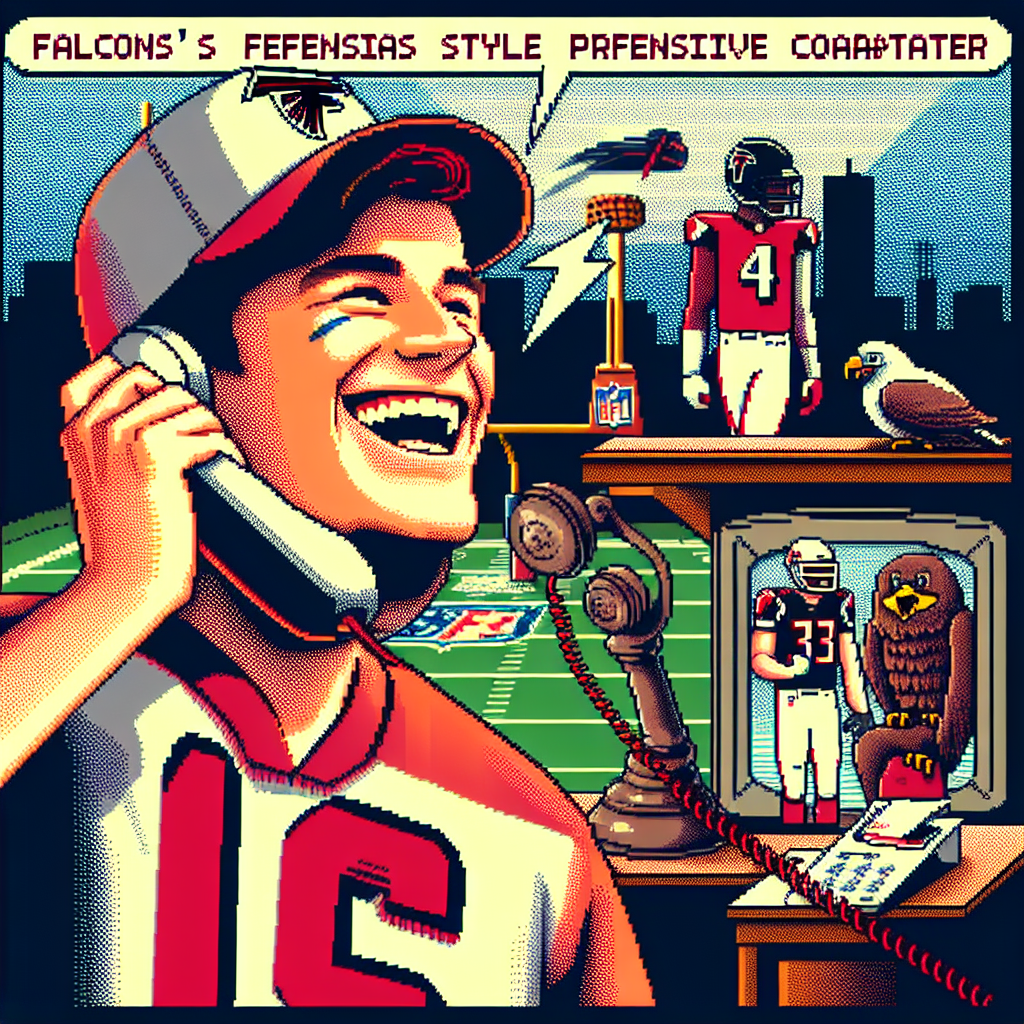
Falcons defensive coordinator Jeff Ulbrich’s son was behind the Shedeur Sanders prank call – NBC Sports | Analysis by Brian Moineau

Falcons defensive coordinator Jeff Ulbrich's son was behind the Shedeur Sanders prank call - NBC Sports | Analysis by Brian Moineau

Prank Calls, Football, and the Art of Not Taking Life Too Seriously


Ah, the world of sports! A realm where serious athletic pursuits often collide with moments of delightful absurdity. In a recent twist that's sure to bring a chuckle, the son of Atlanta Falcons defensive coordinator Jeff Ulbrich found himself in the spotlight, albeit for a reason far removed from on-field heroics. It turns out that Ulbrich's son was the mastermind behind a prank call directed at none other than Shedeur Sanders, a rising star in college football and son of the legendary Deion Sanders.

The Falcons, known for their strategic plays and intense training, had to momentarily swap their playbooks for a statement clarifying the situation. While they might have hoped for a quiet week before their next game, this unexpected surge of attention reminds us all that even in the high-pressure world of professional sports, a little levity can go a long way.

The Players Involved


Let's take a moment to appreciate the central figures of this story. Jeff Ulbrich, who has been a pivotal part of the Falcons' coaching staff, is renowned for his defensive acumen and commitment to nurturing young talent. His son, although not a football player himself, certainly seems to have inherited his father's knack for making an impact—albeit in a more mischievous manner.

On the receiving end of this prank call was Shedeur Sanders, who, despite his young age, has already made significant waves in college football. As the quarterback for the Colorado Buffaloes, he’s been following in his father's footsteps with impressive performances. Deion Sanders, known for his charisma and flair both on and off the field, might even appreciate the humor in such an unexpected twist, given his own penchant for showmanship.

The Broader Picture


This incident isn't just a football anecdote; it serves as a reminder of the human side of sports. In a world where athletes and coaches often face immense pressure to perform, moments of humor and light-heartedness are invaluable. It echoes other instances in sports where off-field antics have momentarily stolen the spotlight. Think back to the time when Rob Gronkowski, the NFL's beloved "Gronk," crashed a press conference with WWE-style antics, or when Shaquille O’Neal broke out his dance moves during a halftime show. These moments remind us that sports figures are not just athletes but individuals with personalities that extend beyond their professional personas.

The Final Whistle


As we chuckle at this tale of a prank call gone viral, it's worth considering the role of humor in our daily lives. Whether it's in sports, work, or personal relationships, moments of levity can diffuse tension and foster a sense of camaraderie. So, here's to Jeff Ulbrich's son for inadvertently reminding us all to not take life too seriously. In the high-stakes world of professional sports, that might just be the most important play of all.

In the end, whether you're a Falcons fan, a Colorado Buffaloes supporter, or just someone who enjoys a good sports story, this tale of a prank call serves as a fun interlude that underscores the unpredictability and joy of the sporting world. Here's to more pranks, more laughter, and more sportsmanship.

Read more about AI in Business

Read more about Latest Sports Trends

Read more about Technology Innovations

‘It’s quite embarrassing’: China-bound United flight turns around after pilot forgets passport – CNN | Analysis by Brian Moineau

‘It’s quite embarrassing’: China-bound United flight turns around after pilot forgets passport - CNN | Analysis by Brian Moineau

Title: Passport Problems: The Unplanned Adventure of a China-Bound United Flight

In a world where the unexpected has become the new norm, a recent United Airlines incident provided a dose of humor in the skies that left both passengers and the aviation community chuckling. A China-bound United flight had to make an unexpected U-turn after the pilot realized he had forgotten his passport. Yes, even seasoned professionals can have those facepalm moments!

This comical incident unfolded when the pilot of the United flight bound for China from San Francisco discovered mid-flight that he had left his passport behind. Now, while forgetting a passport is a common traveler's nightmare, it's not something you'd expect from the person flying the plane. Yet, here we are, reminded that pilots are human too, and susceptible to the occasional slip-up.

A Light-Hearted Lesson in Preparedness

This story certainly resonates with anyone who has ever experienced that sinking feeling of realizing they've left something crucial at home. Missing a flight because of a forgotten passport or boarding pass is an unfortunate rite of passage for many travelers. The difference here is that, for most of us, the consequence is a missed flight, not a plane full of passengers making an unexpected return to the departure airport!

The incident is reminiscent of a similar situation in 2019 when the German Chancellor, Angela Merkel, had to turn back on her way to the G20 summit in Argentina due to a technical issue with her government aircraft. While Merkel's experience was due to technical difficulties, both stories highlight the fact that sometimes, no matter how prepared or experienced one is, life has its own plans.

The Human Side of Aviation

While the incident may be embarrassing for the pilot, it serves as a reminder of the human side of aviation. Pilots, much like the rest of us, juggle numerous responsibilities and face pressure to perform flawlessly. Yet, they too can have an off day. This light-hearted mishap offers a moment of levity and a reminder to double-check our essentials before heading out.

Aviation in the Age of Uncertainty

This event occurs at a time when the aviation industry is navigating a complex post-pandemic landscape. Airlines are adapting to new travel norms, fluctuating passenger numbers, and ever-changing regulations. The pilot's forgotten passport is a trivial matter in the grand scheme of things, but it underscores the unpredictability that defines today's travel experience.

Connecting the Dots Globally

On a broader scale, this incident is a metaphor for the unpredictability that the world is currently experiencing. From geopolitical tensions to climate change, the global community faces numerous challenges that require adaptability and resilience. Just as the passengers on the United flight had to adjust to the unexpected turn of events, so too must nations and individuals navigate the twists and turns of our rapidly changing world.

Final Thoughts

In the end, the story of the United flight's unplanned detour is a light-hearted reminder that even in high-stakes environments, the occasional human error is inevitable. It brings a smile to our faces and serves as a gentle nudge to always check our pockets (or cockpit) before embarking on a journey.

As the aviation industry continues to soar into the future, one can only hope that both pilots and passengers remember the all-important travel mantra: "Passport, boarding pass, wallet, keys." Let this be a lesson to us all, that while we can’t control everything, we can certainly try to be a little more prepared. Safe travels!

Read more about AI in Business

Read more about Latest Sports Trends

Read more about Technology Innovations