TL;DR
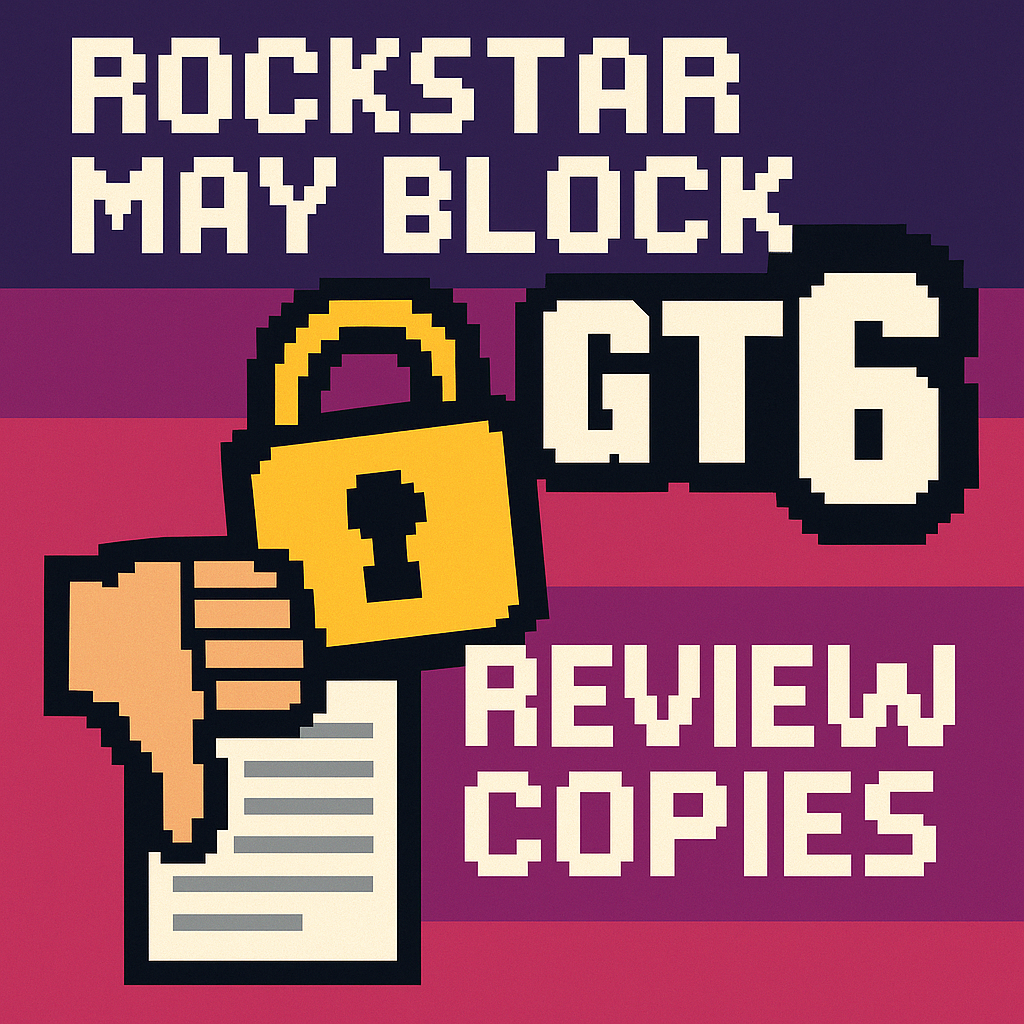
- Rockstar is reportedly planning zero GTA 6 review copies, corralling press into supervised preview “camps” to kill leaks; that flips the usual blockbuster playbook on its head. [1]
- The trade is simple: sacrifice some trust and day‑one transparency to avoid a repeat of the 2022 breach that spilled 90+ clips—an event UK courts tied to Lapsus$ hacker Arion Kurtaj. [3]
- If Rockstar hits a November 19, 2026 target date used here for modeling, the math says it can stomach a short‑term PR hit; a 5% wobble on a GTA‑scale opening is pocket change next to the cost of another megaleak. [5]
What the source said
Insider Gaming reports that Rockstar Games and Take‑Two do not plan to distribute traditional GTA 6 review codes. According to Brazilian journalist Pedro Henrique Lutti Lippe (speaking on the X do Controle podcast), press access would occur only at a controlled location under Rockstar supervision—no keys “in the wild.” The stated rationale is leak prevention ahead of what could be the biggest entertainment launch of the 2020s. The site notes this would diverge from the industry’s standard review process and from Rockstar’s own 2018 Red Dead Redemption 2 playbook. [1][6]
Why it matters
Two groups feel this most: buyers and the gatekeepers who usually shape pre‑release narratives. Players on PS5 and Xbox Series X/S won’t get the usual wave of day‑one independent performance checks; they’ll be buying on brand, marketing, and curated impressions. Meanwhile, outlets like IGN, GameSpot, Eurogamer, and The Verge lose their biggest traffic event of the decade if there’s no at‑home review cycle before launch.
For Rockstar and Take‑Two, the calculus is asymmetric. Another pre‑launch breach like the 2022 Lapsus$ incident would spoil story beats, trigger takedowns, and force reactive marketing. For a holiday 2026 target (e.g., mid‑November), maintaining control between now and launch may be worth more than a clean OpenCritic page on day zero. [3][2]
Original analysis
Contrarian read
- Consensus: Withholding GTA 6 review copies harms consumer trust and risks another Cyberpunk‑style backlash.
- My argument: For a monolith like GTA, withholding review codes is rational risk management, not consumer‑hostile obfuscation.
Evidence
- Rockstar’s highest‑probability downside isn’t “mixed reviews”—it’s leaks. A UK jury found Lapsus$ member Arion Kurtaj guilty of hacking Rockstar; a court later handed him an indefinite hospital order, explicitly citing the GTA 6 breach in 2022. That episode created months of narrative drag. A second pre‑launch leak would be costlier than a day‑one review drought. [3]
- Review restriction does not equal deception. In 2018, Red Dead Redemption 2 reviews landed the day before launch under embargo, proving Rockstar can—and historically did—enable robust critique while protecting spoilers. If they pivot now, it’s a response to a changed threat model, not an attempt to hide a shaky game. [6]
- The Cyberpunk comparison is overused and inaccurate here. CD Projekt distributed PC codes while holding back console review access and restricting footage in 2020, contributing to a perception gap and an eventual Sony delisting. Rockstar’s rumored plan is platform‑agnostic and leak‑driven, not cherry‑picking a “good” SKU. [4]
Back‑of‑envelope math
- Floor for opening revenue: GTA V did $1.0B in three days in 2013, before cross‑gen, before streaming reach exploded. Assume GTA 6 merely matches that floor in 2026 (a conservative stance). [5]
- Suppose scrapping at‑home pre‑release reviews dents day‑three revenue by 5% due to cautious buyers. 5% of $1.0B ≈ $50M.
- “Rockstar Summer Camp” costs: Fly 300 press/creators to two secure hubs (Los Angeles + London) for 3 days. Assume $2,500 travel, $1,000 lodging, $500 per diem + $2,000 per‑head venue/security/IT = ~$6,000 per person → $1.8M. Double it for redundancy/contingency → ~$3.6M.
- Even if controlled previews recover only a fraction of lost trust, you’re still trading a hypothetical $50M downside for a dramatically lower chance of a nine‑figure brand hit from another leak. The expected‑value math favors control.
2x2: Review‑access strategy for mega‑launches
- Open + Low risk: Example—RDR2 (2018) with at‑home codes and a day‑before embargo; upside is credibility and day‑one Metacritic clarity; downside is leak exposure. [6]
- Open + High risk: Rare for story‑heavy tentpoles; upside is maximum transparency; downside is spoiler catastrophe.
- Supervised + Low risk: Annualized franchises using limited betas or hands‑on; upside is message control with goodwill; downside is “stage‑managed” criticism.
- Supervised + High risk: Example—GTA 6 rumor (no take‑home codes; secure events); upside is leak mitigation on the most breached Rockstar IP of the decade; downside is trust drag and influencer dominance. [1][3]
Named‑stakeholder breakdown
- Rockstar/Take‑Two: Reduces leak vectors through 2026; accepts louder “wait for performance verdicts” messaging before any mid‑November street date. [1][3]
- Sony/Microsoft: If no pre‑launch reviews, store placement leans on brand and pre‑orders on PS5 and Xbox Series X/S; both still benefit from a tentpole that can move hardware in Q4 2026.
- Press outlets: Lose the biggest SEO event of 2026 unless Rockstar’s “camp” yields deep, linkable coverage; may pivot to service journalism (settings, performance tips) during launch week.
- Influencers/streamers: Win by default. If embargoes lift at launch, livestreams set the first 24‑hour narrative on Twitch and YouTube.
- Retailers (Best Buy, Amazon, GameStop): Pre‑order spikes remain strong; returns risk rises if early performance discourse skews negative after launch day.
- Players: Fewer independent tech assessments before purchase; upside is fewer story spoilers and a lower chance of stumbling into leaked content in August–October 2026.
Historical analogue
- Cyberpunk 2077 (December 2020) is the useful cautionary tale: PC‑only review codes + strict footage rules masked last‑gen console performance, leading to refunds and a PlayStation Store delisting. Rockstar’s rumored approach addresses a different problem—leaks—by eliminating at‑home pre‑release builds entirely. If anything, the Cyberpunk fiasco argues for avoiding fragmented, SKU‑selective review access. [4][5]
Bottom line: For almost any other game, I’d call this anti‑consumer. For GTA 6—an IP with a documented 2022 breach and a holiday 2026 target—“no review codes” is a defensible, if spiky, strategy. [3]
What others are missing
The power shift from critics to streamers if GTA 6 launches without at‑home reviews. In 2018, RDR2’s pre‑launch embargo drop let written reviews set tone and context before midnight. If that window disappears in 2026, Twitch and YouTube creators will dominate the first 12 hours of sentiment, and their incentives skew to spectacle, not verification. That changes which bugs get surfaced, which performance issues trend, and which missions become cultural touchpoints; it also forces Rockstar’s first post‑launch patch cadence to be judged live on stream, not filtered through a week of controlled code testing. [6]
What to watch next
By July 2026, Rockstar will run at least two multi‑day, invite‑only GTA 6 preview events (one in North America, one in Europe) with escorted play sessions and no external capture. [1]
In the week of a mid‑November 2026 launch (for example, November 17–23, 2026), the first wave of major outlet “reviews” will publish as impressions or “in‑progress” pieces, with final scores arriving 3–7 days later after retail playtime. [6]
If any unauthorized pre‑release footage appears between September and November 2026, Rockstar will issue rapid DMCA takedowns within hours, explicitly referencing the 2022 breach in filings—signaling zero tolerance ahead of launch. [3]
My take
Rockstar is choosing certainty over goodwill, and I think they’re right—for this one product. GTA 6 will sell whether it’s crowned or crucified in week one. The only existential threat before a mid‑November 2026 launch is another leak that hijacks the conversation. Kill the risk, own the calendar, and let the game speak at launch; just don’t get cute with platform‑selective access or post‑hoc NDAs, which burned CD Projekt in 2020. [4]
Sources
[1] GTA 6 Review Copies Won’t Be Distributed, It’s Claimed — Insider Gaming (https://insider-gaming.com/gta-6-review-copes-codes-wont-be-sent-claim/) — Reports Pedro Henrique Lutti Lippe’s claim that Rockstar/Take‑Two won’t send review codes and will host supervised preview events.
[2] OpenCritic — FAQ and methodology (https://opencritic.com/faq) — Explains how day‑one averages and embargo timing affect score visibility.
[3] Lapsus$: GTA 6 hacker handed indefinite hospital order — BBC News (https://feeds.bbci.co.uk/news/technology-67663128) — Confirms Arion Kurtaj’s conviction and sentence tied to the Rockstar/GTA 6 breach.
[4] With Cyberpunk 2077’s review restrictions, CD PROJEKT RED played the system — Windows Central (https://www.windowscentral.com/cyberpunk-2077s-review-restrictions-cd-projekt-red-played-system) — Documents PC‑only review codes, strict NDAs, and the fallout that shaped the modern “review restriction” debate.
[5] Grand Theft Auto V Worldwide Sales Surpass $1 Billion in First Three Days — Take‑Two Interactive IR (https://ir.take2games.com/node/16191/pdf) — Establishes the $1B/3‑day benchmark used in the back‑of‑envelope calculation.
[6] Red Dead Redemption 2 Reviews Have Arrived — GameSpot (https://www.gamespot.com/articles/red-dead-redemption-2-reviews-have-arrived/1100-6462746/) — Shows Rockstar’s 2018 blueprint: at‑home review codes under a strict embargo the day before launch.