
Marina F1 Free-Run: Spectacle and Mayhem | Analysis by Brian Moineau

When a Free F1 Showrun Became a Neighborhood Free-for-All

The roar of an F1 engine turned a Sunday in the Marina into a magnet for tens of thousands — and for a few hours the neighborhood looked less like a carefully managed showcase and more like the edges of a music festival that never got its permits. Red Bull’s free Showrun on February 21, 2026, delivered high-speed spectacle and social-media moments: donuts, skids, and an extra helping of chaos as people climbed roofs, trespassed onto private property, and — yes — urinated in yards. San Francisco police ultimately reported no arrests and called the event “extremely safe,” but neighbors’ accounts and local reporting tell a messier story about planning, public space, and how cities host blockbuster events.

Why everyone showed up (and why that matters)

  • Free access + Formula 1 hype = huge turnout. The Red Bull Showrun in the Marina was advertised as an open, public showcase featuring real F1 cars and drivers, which lowered barriers for attendance and raised expectations for spectacle.
  • The Marina is visually perfect for an F1 promo: waterfront views, a straight stretch of road (Marina Blvd.), and dense urban population nearby. That makes it attractive for organizers — and irresistible for thousands of onlookers.
  • What was missing was infrastructure: elevated viewing platforms, adequate restroom and trash facilities, clear crowd flows, and more visible, active crowd control — all the details that turn a pop-up spectacle into a safely run public event.

Neighborhood accounts vs. official line

  • Residents describe roof-climbing, trampling of landscaping, broken tiles and planters, damaged windows, and people relieving themselves on private property. Multiple accounts to local outlets said the scale of the crowd overwhelmed nearby streets and left behind visible damage. (sfstandard.com)
  • SFPD’s public statement to The San Francisco Standard: “Overall, the event was extremely safe, and there were no major public safety incidents.” The department said it responded to calls but made no arrests. That contrast — a calm official assessment versus vivid resident complaints — is at the heart of the controversy. (sfstandard.com)
  • Social media and neighborhood threads amplified the sense that planning and resource allocation were insufficient: limited policing presence at critical choke points, overwhelmed cell service, and a lack of amenities and signage. (reddit.com)

The mayor’s role and optics

  • Mayor Daniel Lurie donned a branded suit and appeared in promotional clips, a move some called a PR-friendly photo op. He later characterized such disruptions as part of the city’s comeback momentum. That framing — prioritize big events and accept some inconveniences — sits uneasily with residents who faced property damage and sanitation issues. (sfstandard.com)
  • When city officials embrace headline events, they also inherit responsibility for ensuring public-safety planning and neighborhood protections. The lack of clear pre-event coordination and post-event accountability has drawn criticism from local supervisors and community leaders. (sfstandard.com)

What went wrong — and what could have helped

  • Insufficient crowd management: no visible, phased entry points or dedicated bleachers meant people improvised with ladders, signs, balconies, and roofs.
  • Not enough public services: portable toilets, trash capacity, first-aid stations, and on-the-ground marshals were reportedly minimal or poorly signposted.
  • Communications and coordination gaps: residents said they received little advance notice and saw a limited on-site presence of city leadership directing logistics.
  • Traffic and emergency access: gridlock stretched across multiple neighborhoods, raising real concerns about ambulance access and urgent response capability. (axios.com)

Takeaway bullets

  • The formula for a successful free public spectacle requires as much logistics as it does hype — sightlines, sanitation, crowd flows, and emergency planning matter.
  • Official assessments that focus on arrests or major incidents don’t always capture the everyday harms neighbors experience (property damage, unsanitary conditions, feeling unheard).
  • High-profile events offer civic benefits — economic activity, tourism, global visibility — but those must be balanced with advance planning and local protections.
  • City leaders and promoters share responsibility: one provides the platform and visibility, the other must ensure the neighborhood survives the afterparty intact.

My take

Large-scale urban events are a test of civic muscle. The Marina Showrun proved that excitement and spectacle are easy to manufacture; the harder part is engineering for tens of thousands of unpredictable humans in a tight space. Calling the day “extremely safe” because there were no arrests feels incomplete. Safety isn’t just arrests avoided — it’s protecting property, ensuring sanitary conditions, preserving access for emergencies, and leaving neighborhoods as intact as they were before the party.

If San Francisco wants the benefits of world-class, headline-making events, the city needs to match that ambition with event infrastructure: meaningful advance coordination with neighbors, clear sightline solutions (paid or free elevated platforms), designated stewarding crews, and contingencies for crowd overflow. Otherwise the story repeats: thrillers on camera, headaches at home.

Sources


Related update: We recently published an article that expands on this topic: read the latest post.


Related update: We recently published an article that expands on this topic: read the latest post.

Related update: We recently published an article that expands on this topic: read the latest post.

Airo Trains Bring 2026 Cascades Upgrade | Analysis by Brian Moineau

A new ride for the Pacific Northwest: Amtrak’s Airo trains arrive in 2026

Imagine settling into a comfy seat, the Cascades rolling by outside panoramic windows, your phone quietly charging at a USB port while onboard Wi‑Fi handles the heavy lifting. That image is about to become routine for travelers between Eugene, Portland, Seattle and Vancouver, B.C. — Amtrak’s sleek new Airo trainsets are set to debut on the Amtrak Cascades line in 2026.

This post sketches what the Airo rollout means for Cascades riders, why the timing matters, and what to watch for as the Pacific Northwest becomes the first region to get these next‑generation trains.

Why this feels like an inflection point

  • The Cascades corridor is one of the country’s most scenic and increasingly busy regional routes. Riders have long wanted more comfort, reliability, and amenities that match modern expectations.
  • Airo is part of a wider Amtrak fleet modernization program — 83 trainsets are planned nationwide — funded in part by the federal Infrastructure Investment and Jobs Act.
  • The Cascades is slated to be the first route to receive Airo trainsets; eight Cascades trainsets and two new locomotives are expected to arrive and enter service during 2026. That makes the Pacific Northwest a testing ground of sorts for how modern equipment changes everyday travel.

What makes the Airo trains different

  • Modern interiors designed for comfort:
    • Panoramic windows and more table seating ideal for the scenic I‑5 corridor.
    • Ergonomic seats, larger tray tables, water bottle holders, and seatback tablet holders.
  • Better connectivity and convenience:
    • Individual power outlets and USB ports at seats; onboard 5G/Wi‑Fi to keep passengers connected.
    • Digital information screens showing speed, stops and connections.
  • Accessibility and hygiene upgrades:
    • Automated boarding steps to help at mixed‑height platforms.
    • Touchless restroom controls and updated restroom layouts.
  • Food and regional identity:
    • Redesigned café cars with Northwest‑inspired menu items, self‑service options, and alcohol service.
    • New Cascades liveries: evergreen, cream and mocha with Cascade Range graphics (Mount Hood and Mount Rainier).
  • Environmental and performance improvements:
    • Engines and systems built to reduce particulate emissions in diesel mode (Amtrak cites up to 90% lower particulate emissions in some modes).
    • Top technical speed is 125 mph, though on Cascades where tracks are shared with freight, operating speeds will remain limited by track conditions and rules (often 79 mph without significant track upgrades).

Why Cascades first — and what that means for riders

  • Manufacturing and testing sequencing: Siemens-built trainsets for the Cascades were among the first to roll off production lines and undergo testing (including in Pueblo and on the Northeast Corridor), so the region will see the earliest revenue service.
  • Maintenance facilities and readiness: Seattle and other cities have seen investment in new or upgraded maintenance yards so the new equipment can be supported locally — a practical necessity before full deployment.
  • Real-world constraints: Even with Airo’s 125 mph capability, actual running speeds depend on track upgrades, signaling, and agreements with freight railroads. So riders should expect a smoother, more comfortable journey more than dramatic time savings immediately — unless parallel infrastructure projects accelerate.

How this affects typical Cascades trips

  • Commuters and day‑trippers: More reliable equipment and better onboard amenities make train travel a more attractive alternative to driving or flying between Portland and Seattle.
  • Tourists and leisure travelers: Panoramic windows and more table seating enhance the scenic experience, making the Cascades a stronger tourism draw.
  • Cyclists and multi‑modal travelers: Local Cascades policies already support bike riders (reserved bike rack spaces on trains). Airo’s redesigned baggage/café layouts may change how easy it is to bring bikes — check the Cascades bike policy when booking.
  • Cross‑border travel to Vancouver, B.C.: Resumption and reliability of international trips will depend on border policies and schedules, but the new trains should improve the travel experience when service runs.

What to watch between now and rollout

  • Service announcements and exact entry‑into‑service dates from Amtrak and Amtrak Cascades (trainsets must complete testing and inspections).
  • Local station and yard upgrades that could affect schedules or temporary disruptions.
  • Any updates from Amtrak’s inspector reports about facility readiness; fleet rollout plans sometimes shift as facilities are completed and crews are trained.
  • Ticketing and reservation changes as Airo capacity comes online — new seating maps, café offerings, or bike reservation rules could appear.

Key points to remember

  • The Airo fleet is scheduled to begin service on Amtrak Cascades in 2026, with eight Cascades trainsets planned that year.
  • Riders should expect improved comfort, connectivity, and regional food options rather than large immediate speed gains on the Cascades corridor.
  • Long‑term benefits are substantial: environmental improvements, more consistent equipment, and a model for expanding modern train service nationwide.

My take

This is a feel‑good moment for Pacific Northwest travelers: a tangible upgrade to the daily experience of rail travel, not just a branding refresh. The Airo trains bring amenities passengers expect in 2026 — better connectivity, cleaner operations, and interior design that respects both commuter and scenic‑route needs. But the full promise — faster trips and transformative service growth — still hinges on track, signaling, and freight‑rail negotiations. For now, expect a nicer, more modern ride that makes the Cascades corridor more competitive with driving and flying.

Sources


Related update: We recently published an article that expands on this topic: read the latest post.

NBA Games Postponed as Storm Grounds | Analysis by Brian Moineau

Snowed Out: When the NBA Hits the Brakes Because Mother Nature Shows Up

There’s something oddly humbling about a city full of jumbo screens and flight crews pausing because of snow. On January 25, 2026, the NBA postponed two games — Denver vs. Memphis and Dallas vs. Milwaukee — as a massive winter storm made travel unsafe across large swaths of the country. The league, teams and fans all had to reckon with a simple fact: some things are bigger than a game.

What happened (the short version)

  • On January 25, 2026, the Denver Nuggets at Memphis Grizzlies game scheduled for FedExForum was postponed due to inclement weather in the Memphis area. The decision came less than three hours before tipoff after snow, sleet and freezing rain made conditions hazardous. (abcnews.go.com)
  • The Dallas Mavericks’ trip to Milwaukee for a Sunday-night matchup with the Bucks was also postponed after the Mavericks were unable to complete flights to Milwaukee — despite two attempts — because of the storm and related travel issues. No reschedule dates were announced immediately. (cbssports.com)

Why this matters beyond the box score

  • Travel and safety come first: Professional sports operate on tight schedules and expensive logistics, but the league’s decision underscores that player/staff safety and public safety still override TV windows and ticket sales.
  • Scheduling ripple effects: Postponements create logistical headaches. Finding mutually available dates on two busy team calendars — particularly late in the season when back-to-backs and arena availability matter — is rarely simple.
  • Competitive fairness and rhythm: Teams build routines around game flow. Sudden cancellations can give one team an unexpected rest day or disrupt momentum, which matters in tight playoff races.
  • Fan experience and local economies: Last-minute postponements hit ticket holders, arena staff, local vendors and travel-dependent fans who planned around those games.

Scenes and logistics to imagine

  • In Memphis, both teams and the officiating crew had already arrived. For fans who’d made plans for a Sunday night outing, the postponement was abrupt but clearly grounded in safety given the wintry mix and refreeze risk on roadways. (abcnews.go.com)
  • In Milwaukee, the picture was different: the Mavericks tried twice to make the trip but couldn’t due to flight and de-icing or other operational issues. When teams can’t physically get to the arena, there’s no safe way to carry on with a professional game. (cbssports.com)

A few practical questions fans ask (and brief answers)

  • Will the games be rescheduled soon?
    • The league typically looks for an open date that fits both teams’ schedules and arena availability. Because schedules are crowded, especially late in January and February, it may take a while. The NBA announced the postponements and said reschedule dates would be announced later. (nba.com)
  • What about broadcast and ticket refunds?
    • Standard practice: broadcasters adjust programming and teams provide ticket exchange/refund options or reissue tickets for the rescheduled date. Check team and league communications for official details once reschedules are set. (Teams and the NBA handle these logistics directly.)
  • Could postponements affect playoff seeding or rust for star players?
    • Yes. Even minor disruptions can shift rest cycles and rehabilitation timelines. Coaches and staff must juggle minutes and workloads accordingly.

Broader context: weather, travel, and modern sports

Weather has always been an unpredictable opponent. But modern professional sports leagues run interdependent operations — charter flights, arena crews, broadcast windows and fans’ travel plans — that magnify the effects of any disruption. When a storm like the one on January 25, 2026, forces cancellations, it reveals how tightly choreographed the season is and how many moving parts depend on clear skies and open highways. (theguardian.com)

Key points to remember

  • Safety first: League officials postponed the games because travel and local conditions were unsafe.
  • Logistics follow: Rescheduling is complicated and may not happen immediately.
  • Everyone feels it: Teams, broadcasters, arena workers and fans all face consequences when weather intervenes.
  • It’s part of the game’s human element: Even the most high-tech sports world is still subject to nature.

My take

There’s an odd, almost democratic humility in seeing the NBA — a multibillion-dollar enterprise with meticulously planned travel — pause for snow. It’s a reminder that the game is played inside a larger world where safety, infrastructure and community well-being matter more than a perfectly timed TV slot. Fans disappointed by a canceled night can still appreciate that the decision likely prevented unsafe driving, stranded travelers, or worse. The league, teams and supporters all lose a planned moment of shared excitement, but they gain something more durable: the sensible prioritization of people over programming.

Sources

(For the most up-to-date reschedule information, check official team or NBA announcements on their websites or social feeds.)


Related update: We recently published an article that expands on this topic: read the latest post.

Related update: We recently published an article that expands on this topic: read the latest post.


Related update: We recently published an article that expands on this topic: read the latest post.
Shutdown Grounds Flights, Strains Economy | Analysis by Brian Moineau

The weekend of scratched plans: Why hundreds of U.S. flights were canceled during the government shutdown

It started like many travel headaches — a delayed text from an airline and a half-empty boarding gate — but this weekend’s cancellations felt bigger, stranger and more structural. Across dozens of the nation’s busiest hubs, airlines removed hundreds (and then thousands) of scheduled departures as federal airspace managers throttled traffic amid a federal government shutdown. For travelers, freight customers and local businesses, the ripple effects were immediate. For policy wonks and industry insiders, the move underscored how fragile a tightly timed system becomes when essential workers aren’t getting paid.

What happened — the short version

  • The Federal Aviation Administration directed a staged reduction of flights at 40 high‑volume U.S. airports, beginning with smaller cuts and moving toward a 10% slowdown at those hubs if the shutdown persisted. (apnews.com)
  • Airlines canceled more than 1,000 flights on the first full day of the FAA reductions and again on the second day, according to flight-tracking services and media reports. The cuts were concentrated at major airports such as Atlanta, Chicago, Dallas, Denver, Los Angeles and Newark. (apnews.com)
  • The FAA said the reductions were intended to relieve pressure on air traffic controllers, many of whom have been working without pay and were showing signs of strain. Transportation Department officials pointed to safety‑related trends (incursions, spacing and fatigue concerns) as part of the rationale. (abcnews.go.com)

Why the FAA and airlines took this step

  • Safety margin: Air traffic control is a tightly choreographed operation. As controllers missed shifts, worked unpaid overtime or took second jobs, the FAA judged that a reduction in traffic at the busiest airports was necessary to preserve safe spacing and reduce workload spikes. (abcnews.go.com)
  • Predictability and resource management: Rather than a chaotic scramble the FAA set phased percentage targets (starting lower, then scaling up) that let airlines plan which flights to cut and how to rebook passengers. That approach reduces overnight chaos but still forces inconvenient cancellations. (apnews.com)
  • Protecting system resilience: The agency framed the move as temporary triage — aimed at keeping the system functional if the labor strain continued — but it also served as a warning that deeper, longer shutdown impacts could cascade into more severe disruptions. (washingtonpost.com)

Who felt it the most

  • Leisure travelers with tight itineraries and connecting flights were hit hard first; some rebooked quickly, others had to scramble for hotels or alternate routes. (pbs.org)
  • Regional and short-haul routes tended to take the brunt of cuts as carriers prioritized longer domestic and international service. That meant smaller cities and secondary markets saw disproportionate impact. (apnews.com)
  • Freight and supply chains: Major air cargo hubs reported strain, and analysts warned of knock-on effects for shipments ahead of busy retail periods. Local businesses that rely on just-in-time deliveries could see costs or delays rise. (apnews.com)

Practical advice for travelers (what to do if your flight is affected)

  • Check flight status directly with your airline and FlightAware or similar trackers; airlines have been auto‑rebooking many passengers and offering refunds for canceled trips. (pbs.org)
  • Consider flexibility: If your schedule allows, look for later rebookings, alternate airports nearby, or land‑and‑drive options — rental demand spiked in some markets as travelers switched to road trips. (apnews.com)
  • Prepare for added time and cost: Last‑minute hotels, rental cars and alternate transportation can add expense. Keep receipts and documentation — refunds or reimbursements may be available depending on carrier policy and your travel insurance. (pbs.org)

Broader implications

  • Labor, morale and safety: The shutdown put a spotlight on the human side of aviation operations. Controllers working long unpaid hours raised both morale and safety concerns; the FAA’s reduction was as much about preventing system overload as it was about immediate cancellations. (abcnews.go.com)
  • Economic spillovers: If reductions continue into key travel periods, the effects could cascade into tourism, holiday travel, retail and shipping — a reminder that government gridlock can quickly translate into real economic friction. (apnews.com)
  • Policy and accountability: The episode may lead to renewed calls for contingency measures that protect pay for essential workers during funding gaps, or for legislative fixes that prevent essential‑worker furloughs from being an instrument of negotiation. (washingtonpost.com)

Quick checklist before heading to the airport

  • Check your airline’s status and emails or texts for automatic rebooking notices. (pbs.org)
  • Know refund rules: some airlines offered refunds even on nonrefundable tickets while the reductions were underway. (apnews.com)
  • Have backup options: alternate airports, different days, or ground travel routes mapped out. (apnews.com)

Final thoughts

Air travel runs on timing, trust and layers of redundancy. When one layer — the payroll and well‑being of the people who manage our skyways — gets stretched to a breaking point, the whole system can’t just keep going as usual. The FAA’s phased cuts were a blunt instrument designed to protect safety and predictability, but they also exposed how quickly everyday travel can become fragile when policy stalemates affect frontline workers. For travelers it was an unwelcome reminder: monitor flights closely, expect the unexpected, and pack a little more patience.

Sources


Related update: We recently published an article that expands on this topic: read the latest post.
Teslas Robotaxi Claims: Reality Check Time | Analysis by Brian Moineau

Tesla’s Robotaxi Claims: A Closer Look at Reality vs. Hype

Tesla has always been a company that thrives on innovation and bold claims. From electric vehicles that redefine what it means to drive, to promises of autonomous driving that seem to leap straight out of a sci-fi movie, the company has consistently pushed the envelope. But recent reports suggest that Tesla’s latest claim—launching a ride-hailing service in San Francisco using Robotaxi technology—might be more smoke and mirrors than actual reality. Let’s dive into what’s really going on.

Context: The Rise and Hype of Autonomous Driving

The concept of autonomous vehicles has captured the imagination of consumers and investors alike for years now. Companies like Tesla, Waymo, and Uber have been racing to develop self-driving technology, each claiming to be on the verge of a breakthrough. Tesla, led by the charismatic Elon Musk, has often touted its Full Self-Driving (FSD) capabilities, claiming that its cars are just a software update away from full autonomy.

However, the reality is far less clear-cut. While Tesla has made strides in developing its FSD technology, it is still classified as a Level 2 driver-assistance system. This means that, despite its impressive capabilities, human intervention is still necessary. The recent claim about launching a Robotaxi service in San Francisco has raised eyebrows, as many experts point out that Tesla has yet to roll out fully autonomous taxis anywhere in California.

What’s the Real Story Behind Tesla’s Robotaxi Claims?

In a recent article by Electrek, it was reported that Tesla is attempting to create an illusion for investors, suggesting that it has already launched a ride-hailing service powered by its Robotaxi technology. The truth is, there are significant regulatory and technological hurdles that stand in the way of such a service becoming a reality. California has stringent regulations for autonomous vehicles, and Tesla’s current offerings do not meet the requirements for fully autonomous operation.

Furthermore, the competition in the autonomous vehicle space is fierce. Companies like Waymo and Cruise are already testing their self-driving services in limited areas, but they face the same hurdles as Tesla. This makes it imperative for Tesla to clarify its position and capabilities—especially as it seeks further investment and market share.

Key Takeaways

Misleading Claims: Tesla’s announcement about a Robotaxi service may not reflect the current state of its technology and regulatory approval. – Current Technology Level: As of now, Tesla’s Full Self-Driving is classified as Level 2, requiring human oversight. – Regulatory Hurdles: California’s strict regulations on autonomous vehicles make it challenging for companies to launch fully autonomous ride-hailing services. – Investor Caution: Potential investors should approach Tesla’s claims with a discerning eye, as the realities of autonomous technology are still evolving. – Competition is Fierce: Other companies in the autonomous vehicle space, like Waymo and Cruise, are also navigating the complexities of regulations and technology.

Conclusion: A Call for Transparency

As exciting as the prospect of Robotaxis is, it’s essential for companies like Tesla to maintain honesty and transparency in their communications. Misleading claims can erode trust among consumers and investors alike. While the dream of fully autonomous vehicles is still alive, we must ground our expectations in the current realities of technology and regulation. As we navigate this rapidly changing landscape, let’s keep our eyes on the road ahead—both literally and figuratively.

Sources

– “Tesla is trying to deceive investors into thinking it has San Francisco Robotaxis – Electrek.” Electrek. [link](https://electrek.co/2023/10/19/tesla-trying-deceive-investors-sf-robotaxis/) – “The Truth About Tesla’s Full Self-Driving.” MotorTrend. [link](https://www.motortrend.com/news/tesla-full-self-driving-truth/)

By understanding the nuances of Tesla’s claims and the broader context of autonomous vehicle technology, we can appreciate the potential while remaining cautious of the hype.


Related update: We recently published an article that expands on this topic: read the latest post.


Related update: We recently published an article that expands on this topic: read the latest post.


Related update: We recently published an article that expands on this topic: read the latest post.

Waymos Robotaxi Incident Raises Safety | Analysis by Brian Moineau

Waymo’s Robotaxi Incident: A Wake-Up Call for Autonomous Driving Safety

Imagine stepping out of your home, hailing a ride, and watching as a sleek robotaxi pulls up to whisk you away—all without a human driver at the wheel. This is the future that companies like Waymo are working hard to create. However, recent events have cast a shadow on this vision. Earlier this month, in Atlanta, Georgia, a Waymo robotaxi was observed driving around a stopped school bus, igniting concerns about the safety and reliability of autonomous vehicles.

Background on Waymo’s Journey

Waymo, a subsidiary of Alphabet Inc., has been a pioneer in the autonomous vehicle space for years. With extensive testing and a fleet of robotaxis operating in select cities, the company has touted the safety and efficiency of its self-driving technology. However, as with any innovative technology, there are growing pains. The incident involving the robotaxi and the school bus raises critical questions about the current state of autonomous driving technology and the regulatory frameworks that govern it.

In the aftermath of the incident, Waymo quickly responded by updating the software in its vehicles. This swift action demonstrates the company’s commitment to addressing potential issues, but it also highlights the challenges that come with integrating cutting-edge technology into everyday life.

Regulators Take Notice

Following the incident, regulators have stepped in to investigate. The scrutiny from governing bodies is a necessary part of ensuring that autonomous vehicles operate safely in public spaces. As these vehicles become more prevalent, it’s vital that they adhere to strict safety standards, especially when it comes to scenarios like navigating around school buses, which are often filled with children.

Waymo’s incident is not an isolated case but part of a broader conversation about the maturity of autonomous driving technology. With more companies entering the space, the need for clear regulations and safety protocols has never been more pressing.

Key Takeaways

Regulatory Scrutiny: The incident has prompted regulators to investigate Waymo’s practices, emphasizing the need for oversight in the autonomous vehicle sector. – Software Updates: Waymo has already rolled out a software update to address the issue, showcasing the importance of continuous improvements in technology. – Public Safety Concerns: The event raises valid concerns about the safety of autonomous vehicles, particularly in scenarios involving vulnerable road users like schoolchildren. – Industry Implications: As more autonomous vehicles hit the roads, incidents like this will shape public perception and regulatory measures that govern their operations. – Future of Autonomous Driving: This incident serves as a reminder that while the future of transportation is promising, it comes with responsibilities that need unwavering attention.

Concluding Reflection

The Waymo robotaxi incident is more than just a blip on the radar; it’s a critical moment in the evolution of autonomous driving technology. As we push toward a future where self-driving vehicles become the norm, we must prioritize safety and accountability. The consequences of overlooking these elements can be dire, not just for the companies involved but for society as a whole. Moving forward, we need to foster a collaborative environment where innovation and safety go hand in hand, ensuring that our roads are safe for everyone.

Sources

– TechCrunch: [Regulators probe Waymo after its robotaxi drove around a stopped school bus](https://techcrunch.com/2023/10/15/waymo-robotaxi-school-bus/)

By staying informed and engaged in discussions around autonomous vehicle safety, we can help shape a future that not only embraces innovation but also safeguards our communities.


Related update: We recently published an article that expands on this topic: read the latest post.


Related update: We recently published an article that expands on this topic: read the latest post.


Related update: We recently published an article that expands on this topic: read the latest post.


Related update: We recently published an article that expands on this topic: read the latest post.

Affordable EVs: Teslas Game-Changing Shift | Analysis by Brian Moineau

Exploring Tesla’s Affordable EVs: The Shift Towards Accessible Electric Cars

If you’ve been following the electric vehicle (EV) market, you know that Tesla has long been a household name synonymous with innovation and luxury. But recently, the buzz has shifted gears with the launch of their more affordable models—the Model Y and Model 3 Standard. This move comes after years of anticipation and has ignited conversations about the future of electric cars in the United States. Are these new offerings enough to convince the skeptics? Let’s dive into the latest developments and explore what else is available for those seeking budget-friendly electric vehicles.

Context: The Evolving Electric Vehicle Landscape

Tesla has dominated the EV conversation for years, with its cutting-edge technology and sleek designs. However, the price point of many of its vehicles has often been a barrier to entry for the average consumer. Elon Musk has teased the prospect of more affordable models for quite some time, and with the recent launch of the Model Y and 3 Standard, it seems that Tesla is finally delivering on that promise.

As consumers become increasingly aware of climate change and the need for sustainable transportation, the demand for affordable electric vehicles has surged. According to recent reports, the U.S. electric vehicle market is projected to grow significantly in the coming years, making it essential for manufacturers, including Tesla, to cater to a wider audience.

With the introduction of these new models, Tesla aims to capture a larger share of the market and encourage more drivers to make the switch from gas to electric. But what if Tesla’s offerings don’t quite match your budget or needs? Luckily, there are plenty of other affordable electric cars available in the market.

Key Takeaways

Tesla’s New Affordable Models: The launch of the Model Y and Model 3 Standard aims to make electric vehicles more accessible to consumers who previously found Tesla’s pricing prohibitive.

Growing EV Market: The U.S. electric vehicle market is expected to expand rapidly, with increased consumer interest in sustainable transportation options.

Variety of Options: If Tesla’s affordable models aren’t quite what you’re looking for, there are numerous other budget-friendly electric cars available in the U.S. that combine performance with value.

Consumer Awareness: The need for sustainable choices is driving demand for EVs, making it crucial for automakers to innovate and provide affordable solutions.

Future of Mobility: The introduction of more affordable EVs could be a game-changer in the transition toward a more sustainable future, influencing consumer behavior and automotive trends.

Concluding Reflection

Tesla’s recent foray into affordable electric vehicles marks a significant step forward not only for the company but for the entire EV industry. As we witness the landscape of electric mobility evolve, it’s essential to recognize the increasing variety of options available to consumers. Whether you’re drawn to the Tesla brand or exploring other alternatives, the future of electric vehicles is bright and more accessible than ever. This shift could ultimately lead to a greener, more sustainable world, one electric car at a time.

Sources

– Business Insider. “Not sold on Tesla’s affordable EVs? Here are all the cheapest electric cars for sale in the US.” [Business Insider](https://www.businessinsider.com/cheapest-electric-cars-us-tesla-affordable-evs-2023-10)

Now is the perfect time to explore your options and find an electric vehicle that fits your lifestyle and budget. Happy driving!


Related update: We recently published an article that expands on this topic: read the latest post.


Related update: We recently published an article that expands on this topic: read the latest post.


Related update: We recently published an article that expands on this topic: read the latest post.

New ranking knocks Portland airport off its pedestal – OregonLive.com | Analysis by Brian Moineau

New ranking knocks Portland airport off its pedestal - OregonLive.com | Analysis by Brian Moineau

Title: Portland International Airport: A Fall from Grace or Just a Bump in the Runway?

Ah, Portland International Airport (PDX), the beloved gateway to the Pacific Northwest, known for its iconic carpet design, local brew offerings, and, of course, that unmistakable roof. For years, PDX has been the darling of airport rankings, consistently lauded for its efficiency, amenities, and welcoming atmosphere. But in a recent twist of fate, J.D. Power's latest report has knocked PDX off its pedestal, and no, it wasn’t because of the carpet this time—it turns out, they’re not as enamored with PDX’s beloved roof.

Now, if you're scratching your head wondering how a roof could play such a pivotal role in an airport's ranking, you're not alone. It seems even the most beautiful overhead architecture couldn't sway J.D. Power's evaluators this time around. But let's take a step back and put this into perspective.

A Global Shift in Airport Expectations

Across the globe, airports are evolving into more than just transit hubs. They're becoming microcosms of the cities they serve, offering unique cultural experiences, cutting-edge technology, and an array of services to keep the modern traveler entertained and stress-free. Just look at Singapore's Changi Airport, complete with a butterfly garden and a stunning indoor waterfall, or South Korea’s Incheon International, with its ice skating rink and traditional cultural performances.

In this competitive climate, even a well-loved airport like PDX needs to innovate continually. The recent dip in rankings might be less about what PDX is doing wrong and more about what other airports are doing right. Many are investing heavily in sustainability, passenger experience enhancements, and digital solutions to streamline the travel process.

A Reflection of Broader Trends

The shift in PDX's ranking could also reflect broader trends in travel and consumer expectations. As more travelers demand seamless experiences, airports are under pressure to integrate technology at every touchpoint. For instance, biometric boarding processes, AI-driven customer service, and enhanced mobile applications are becoming the norm.

Moreover, environmental sustainability is a growing concern. Airports like San Francisco International have made strides in achieving zero-waste goals and utilizing carbon-neutral construction practices. Portland, a city known for its environmental consciousness, might be expected to lead in this area.

The Portland Spirit

But let's not be too quick to dismiss PDX. Much like the city it serves, Portland International Airport has a unique charm that goes beyond rankings. It’s the little things—the local art displays, the food carts offering a taste of Portland’s diverse culinary scene, and yes, that quirky carpet pattern that became a cultural icon in its own right.

Portland has always marched to the beat of its own drum. It's a city that values creativity and authenticity, and PDX embodies these traits. While it may not have a butterfly garden or an indoor waterfall, it offers a sense of place that few airports can match.

Final Thoughts: A Call to Action

So, what does the future hold for PDX? Perhaps this recent ranking dip is a call to action—a reminder that even beloved institutions must evolve to meet the changing needs of their patrons. With Portland’s spirit of innovation and community engagement, it's easy to believe that PDX will rise to the challenge, maybe even with a roof redesign that captures the hearts of J.D. Power’s evaluators next time around.

In the end, while rankings can guide expectations, they don’t define the essence of a place. PDX remains a favorite for many travelers, not just for its amenities but for the welcoming embrace it offers as the gateway to a city known for its vibrant culture, natural beauty, and eclectic charm. Here's to the future of PDX—may it fly high once again!

Read more about AI in Business

Read more about Latest Sports Trends

Read more about Technology Innovations

FRONTIER, AMERICA’S LOW FARE AIRLINE, COMMITS TO BEING THE #1 LOW FARE CARRIER IN THE TOP 20 U.S. METROS – Frontier Airlines | Analysis by Brian Moineau

FRONTIER, AMERICA’S LOW FARE AIRLINE, COMMITS TO BEING THE #1 LOW FARE CARRIER IN THE TOP 20 U.S. METROS – Frontier Airlines | Analysis by Brian Moineau

Flying High on a Budget: Frontier Airlines’ Ambitious Plan to Conquer the Skies

In a world where frugality often feels like a forgotten virtue, Frontier Airlines is stepping up to remind us that affordable travel is not just a dream but a mission. Announced on August 26, 2025, Frontier Airlines, trading under Nasdaq: ULCC, has set its sights on becoming the number one low-fare carrier in the top 20 U.S. metro areas. With an audacious plan to add 20 new routes, Frontier is not only expanding its wings but also pledging to keep our wallets from feeling too light.

The Frontier Spirit: Low Fares, High Hopes

Frontier Airlines, headquartered in Denver, Colorado, has long been known as the go-to airline for budget-conscious travelers. But what does it mean to commit to being the top low-fare carrier in the biggest metro areas across the United States? Essentially, it’s a promise to provide accessible air travel without compromising on the essentials. The airline plans to achieve this by slashing unnecessary frills and focusing on what truly matters to travelers: getting from point A to point B safely and affordably.

The move comes at a time when the aviation industry is bouncing back from the depths of the COVID-19 pandemic. With more people eager to travel, airlines like Frontier are capitalizing on pent-up demand and a renewed enthusiasm for exploration. According to the International Air Transport Association (IATA), global air travel is expected to fully recover to pre-pandemic levels by 2024, making Frontier’s timing both strategic and opportune.

A Competitive Sky

The race to dominate the low-fare market is nothing short of fierce. With competitors like Spirit Airlines and Southwest Airlines also vying for budget travelers, Frontier’s strategy will need to be as nimble as it is bold. In fact, the recent merger between Spirit and JetBlue has made headlines, shaking up the low-cost carrier landscape and pushing Frontier to up its game.

But Frontier seems ready for the challenge. The airline’s CEO, Barry Biffle, has been vocal about the importance of maintaining low costs while expanding the network. This approach not only attracts cost-conscious flyers but also builds loyalty in a market where price often trumps brand allegiance.

Global Connections

Frontier’s expansion is part of a larger trend of democratizing air travel across the world. In Europe, for instance, Ryanair and EasyJet have successfully made air travel accessible to millions by perfecting the low-cost model. Meanwhile, in Asia, airlines like AirAsia have revolutionized the way people think about flying on a budget. Frontier’s commitment to affordability aligns with this global shift, emphasizing that air travel should not be a luxury, but a possibility for all.

Final Thoughts: The Sky’s the Limit

Frontier Airlines’ bold commitment to being the top low-fare carrier in the top 20 U.S. metros is more than just a business move—it’s a declaration of intent to make travel accessible to everyone. In a world that often feels divided, the ability to explore new places and connect with others is invaluable. Whether you’re a seasoned traveler or someone just dipping their toes into the world of air travel, Frontier is making sure the sky truly is the limit, without breaking the bank.

So, next time you’re planning a getaway, consider the little airline that could. Who knows? With Frontier’s expanding reach, your dream destination might just be a ticket away—at a price that leaves room in your budget for a few extra souvenirs. Safe travels!

Read more about AI in Business

Read more about Latest Sports Trends

Read more about Technology Innovations


Related update: We recently published an article that expands on this topic: read the latest post.

Southwest Airlines’ new policy will affect plus-size travelers. Here’s how – ABC News | Analysis by Brian Moineau

Southwest Airlines' new policy will affect plus-size travelers. Here's how - ABC News | Analysis by Brian Moineau

Flying High: Navigating the Skies with Southwest Airlines' New Policy

Ah, the joy of air travel. The thrill of soaring above the clouds, the delight of tiny complimentary snacks, and now, the latest wrinkle in the flight plan: Southwest Airlines' new policy for plus-size travelers.

In a move that's already creating quite a buzz, Southwest Airlines has announced that passengers who are unable to fit within the armrests of a single seat will be required to purchase an additional seat in advance. This policy is designed to ensure comfort and safety for all passengers, but it's also sparking conversations about fairness, inclusivity, and the ever-evolving landscape of air travel.

Navigating the Skies: A Balancing Act

Southwest's decision comes at a time when airlines are continually striving to balance passenger comfort with operational efficiency. The topic of space on airplanes has been a hot-button issue for years, as airlines have faced criticism for shrinking seat sizes while increasing passenger loads. The International Air Transport Association (IATA) has long advocated for standard seat dimensions to ensure passenger comfort, yet airlines often have the final say.

This new policy from Southwest may seem like a step backward to some, but the airline argues that it is necessary for ensuring all passengers have a comfortable and safe experience. It's worth noting that Southwest has long been known for its customer-friendly policies, including no change fees and free checked bags, which sets it apart from many of its competitors. This new policy, though, puts them in line with several other airlines that have similar requirements, such as American Airlines and Delta.

A Wider Context: Inclusivity in Travel

The broader discussion of inclusivity in travel is not limited to the skies. Across the globe, industries are grappling with how to accommodate people of all sizes and abilities. For instance, the fashion industry has been making strides by introducing plus-size models and more inclusive clothing lines. Similarly, theme parks like Disney have been updating their ride designs to accommodate larger guests.

This shift towards inclusivity is crucial, but it also highlights the challenges businesses face in implementing these changes. Companies must balance financial realities with the moral imperative to be inclusive. Southwest's new policy is a reminder of the ongoing struggle to find this equilibrium.

Soaring Forward: The Future of Air Travel

As we navigate these skies of change, it’s important to remember that air travel, like any other industry, is in a constant state of evolution. Policies will continue to adapt as societal norms shift and as we all strive for a more inclusive world.

While Southwest’s policy may be a point of contention for some, it also serves as a catalyst for broader discussions about inclusivity, comfort, and fairness. As travelers, we should remain engaged in these conversations, advocating for policies that respect and accommodate everyone.

Final Thoughts

As we pack our bags and head to the airport, let’s keep in mind that the skies belong to all of us. Whether you're a frequent flyer or an occasional traveler, each journey is a chance to reflect on how we can make the world a more welcoming place for everyone. Who knows? Maybe the next time you're wedged between two armrests, you'll be inspired to launch the next big idea in inclusive travel. Until then, happy flying!

Read more about AI in Business

Read more about Latest Sports Trends

Read more about Technology Innovations

TSA bans new item from travelers’ checked luggage – SFGATE | Analysis by Brian Moineau

TSA bans new item from travelers' checked luggage - SFGATE | Analysis by Brian Moineau

Title: TSA’s Latest Ban: A Curling Iron Catastrophe or Safety Sensation?

In a surprising twist that’s sure to ruffle a few hairstyles, the Transportation Security Administration (TSA) has announced a ban on hot hair care tools like curling irons and flat irons from travelers' checked luggage. While this move might initially seem like a bad hair day waiting to happen, it’s actually part of a broader effort to ensure safety and security in air travel—a mission that the TSA takes very seriously.

For those globetrotting fashionistas who rely on their trusty curling irons to maintain those perfect beach waves or sleek, straight styles while on the go, this news might feel like a personal attack. But before you start waving a protest sign made of bobby pins, let’s take a moment to understand the rationale and explore the bigger picture.

Why the Ban?

The TSA's decision to prohibit these styling tools in checked luggage is rooted in safety concerns. Curling irons and flat irons, particularly those that use butane, have been deemed potential fire hazards. Butane irons, which are popular for their cordless convenience, can ignite under certain conditions, posing a risk to the safety of an aircraft.

This isn't the first time the TSA has made headlines with a ban that leaves travelers scratching their heads. Remember the great liquid ban of 2006? While initially met with widespread confusion and frustration, over time, travelers adapted. Similarly, it’s likely that this new rule will soon become just another accepted part of the airport security ritual.

A Broader Context of Safety and Security

The TSA's ban on hair tools is part of a broader trend of increasing security measures in public spaces. In recent years, there’s been a notable rise in regulations aimed at ensuring public safety, from heightened cybersecurity measures to increased security at sporting events and concerts. This correlates with a growing awareness and need for safety in a world that often feels unpredictable.

For example, major events like the Super Bowl and the Olympics have seen ramped-up security protocols, with technology playing a crucial role. Drones, facial recognition, and advanced scanning technologies are becoming commonplace as organizers strive to protect attendees from potential threats.

A Global Perspective

Travelers in Europe and other parts of the world have also experienced similar restrictions. The European Union Aviation Safety Agency (EASA) has stringent rules regarding the transport of potentially hazardous items. This global trend underscores a shared responsibility among nations to prioritize passenger safety.

Moreover, this initiative coincides with the broader environmental movement that encourages individuals to reconsider their consumption habits. As more people become conscious of their carbon footprint, travel trends are shifting towards minimalism and sustainability. Perhaps this TSA ruling might inadvertently encourage travelers to embrace a more natural look, promoting a new wave of travel-friendly beauty trends that require less energy and fewer tools.

Final Thoughts

While the TSA’s ban on hot hair tools in checked luggage might initially seem like a hair-raising inconvenience, it reflects a necessary step in the ongoing journey to ensure passenger safety. As travelers, adaptability is key. So, as we navigate this new rule, perhaps it’s an opportunity to explore new styling techniques, embrace natural looks, or simply enjoy a bit more space in our luggage for those “must-have” souvenirs.

In the grand tapestry of travel, this is but a small adjustment. As the world evolves and security measures continue to tighten, let’s keep our sense of humor intact and remember that sometimes, a little change is the secret ingredient to a great adventure. Safe travels, and may your hair always be fabulous, even at 35,000 feet!

Read more about AI in Business

Read more about Latest Sports Trends

Read more about Technology Innovations

Shocking plunge by Southwest flight from Southern California was to avoid another aircraft – KHON2 | Analysis by Brian Moineau

Shocking plunge by Southwest flight from Southern California was to avoid another aircraft - KHON2 | Analysis by Brian Moineau

Title: Navigating the Friendly Skies: A Heart-Pounding Plunge and the Art of Aerial Evasion

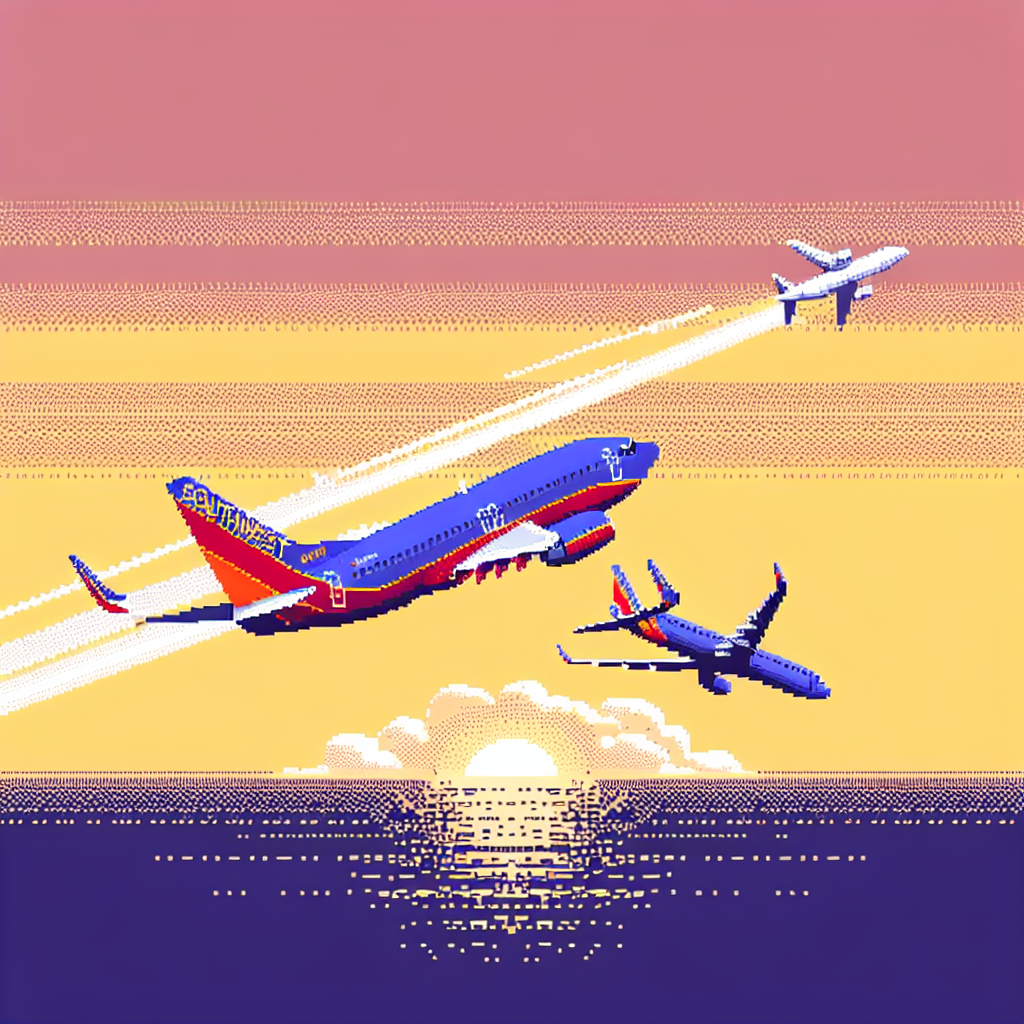
In a world where the everyday hustle and bustle often turns mundane, sometimes life throws a curveball—or in this case, a dramatic plunge—that jolts us into awareness. Recently, passengers aboard a Southwest Airlines flight from Southern California experienced just that, a heart-stopping descent to avoid a potential mid-air collision. As the Boeing 737 jet dropped hundreds of feet in mere seconds, it was a stark reminder of both the marvels and the perils of modern aviation.

When Skies Get Unfriendly: A Close Call Over Las Vegas

The incident unfolded as the aircraft was nearing its final destination, Las Vegas—a city synonymous with high stakes and adrenaline. But this time, the thrill wasn’t on the Strip. As the pilot informed passengers, the rapid descent was a maneuver to avert an oncoming aircraft. While the specifics remain under investigation, this event highlights the intricate ballet of air traffic control and pilot expertise that keeps millions of travelers safe each day.

A Glimpse Behind the Cockpit Curtain

Pilots, often seen as the stoic figures behind the cockpit door, are no strangers to handling pressure. This incident serves as a testament to their training and quick thinking. The Federal Aviation Administration (FAA) mandates rigorous training protocols to prepare pilots for such scenarios, ensuring that even when skies turn turbulent, those at the helm are equipped to navigate with precision.

Connecting the Dots: Aviation Safety in Perspective

This near-miss brings to mind other significant advancements and challenges in aviation safety. It echoes the ongoing commitment of organizations like the FAA and International Air Transport Association (IATA) to enhance safety measures and technology. Recent developments, such as the implementation of new collision-avoidance systems and improved air traffic management, are part of a global effort to minimize incidents like this.

From the Skies to the Streets: Parallels in Safety and Innovation

While aviation grapples with its unique set of challenges, parallels can be drawn to the automotive industry. The push for self-driving cars and advanced driver-assistance systems mirrors the aviation industry's quest for safer, more efficient travel. Both sectors are navigating the delicate balance between embracing innovation and ensuring safety, a dance that requires precision, foresight, and collaboration.

Final Thoughts: The Unseen Heroes of the Skies

As passengers disembarked safely in Las Vegas, likely with a newfound appreciation for solid ground, it's worth acknowledging the unsung heroes of aviation—the pilots, air traffic controllers, and engineers who work tirelessly behind the scenes. Their expertise and commitment ensure that, even when faced with the unexpected, the journey continues safely.

In a world where news of miraculous landings and close calls can quickly become just another headline, this incident serves as a reminder of the complexity and wonder of flight. As we look to the future, with advancements in technology and evolving safety protocols, one thing remains constant: the sky, vast and unpredictable, will always be a frontier of human ingenuity and courage.

Read more about AI in Business

Read more about Latest Sports Trends

Read more about Technology Innovations

Elon Musk says Tesla will start adding vehicles it doesn’t directly own into its robotaxi network next year – Fortune | Analysis by Brian Moineau

Elon Musk says Tesla will start adding vehicles it doesn’t directly own into its robotaxi network next year - Fortune | Analysis by Brian Moineau

Cruisin’ into the Future: Tesla’s Bold Leap into the Robotaxi World


In a move that is sure to make waves in the automotive and tech industries, Tesla is gearing up to expand its robotaxi network by adding vehicles it doesn’t directly own starting next year. This ambitious announcement, made by none other than the enigmatic Elon Musk, highlights Tesla’s ongoing efforts to remove safety drivers from the passenger seats and extend its reach into new cities. The Austin-based electric vehicle (EV) giant is driving forward at full throttle, but what does this mean for the future of transportation and our daily commute?

Tesla’s venture into the robotaxi realm isn’t just about innovation; it’s about revolutionizing how we perceive urban mobility. Imagine a city where the streets are lined with autonomous vehicles, zipping passengers from point A to point B with precision, efficiency, and minimal human intervention. This vision is tantalizingly close, thanks to the tireless pursuit of technological advancement by companies like Tesla.

Elon Musk: The Man Behind the Wheel


Elon Musk, Tesla’s CEO, is no stranger to bold proclamations and ambitious timelines. Known for his trailblazing leadership in the realms of space exploration with SpaceX, renewable energy with SolarCity, and now autonomous driving with Tesla, Musk’s influence is undeniable. However, his journey has not been without controversy. From his outspoken presence on social media to the fluctuating stock prices of Tesla, Musk is a figure who attracts both admiration and criticism in equal measure.

Despite the challenges, Musk’s vision for a sustainable, technologically advanced future remains steadfast. His commitment to Tesla’s mission—accelerating the world’s transition to sustainable energy—continues to drive the company’s innovations. The introduction of privately owned vehicles into the robotaxi network is yet another testament to Musk’s relentless pursuit of progress.

The Bigger Picture: Autonomous Driving Across the Globe


Tesla’s robotaxi initiative is part of a larger global movement towards autonomous vehicles. Companies like Waymo, Uber, and Cruise are also vying for a slice of the autonomous pie, each bringing their unique approach to the table. The race to perfect self-driving technology is fierce, with regulatory hurdles and safety concerns acting as significant roadblocks.

Globally, cities are grappling with the challenge of integrating these technologies into existing transportation frameworks. In places like San Francisco and Phoenix, autonomous vehicles are already being tested on public roads, offering a glimpse into the future of urban transportation. The potential benefits are enormous: reduced traffic congestion, lower emissions, and increased accessibility for those unable to drive.

Connecting the Dots: Tesla and the World


Tesla’s announcement comes at a time when the world is increasingly focused on sustainability and innovation. The recent surge in electric vehicle sales, spurred by rising fuel prices and environmental concerns, underscores a broader shift towards cleaner energy solutions. As countries strive to meet climate goals and reduce carbon footprints, Tesla’s initiatives align closely with these global priorities.

Moreover, the expansion of the robotaxi network could have significant economic implications. By potentially reducing the cost of transportation and creating new business opportunities, Tesla is poised to reshape urban economies and labor markets.

Final Thoughts: On the Road to Tomorrow


As we stand on the brink of a transportation revolution, it’s clear that the road ahead is filled with both opportunities and challenges. Tesla’s move to incorporate privately owned vehicles into its robotaxi network marks a significant step forward in the march towards autonomy.

While the journey may be fraught with obstacles—from regulatory hurdles to technological limitations—the destination promises a future where transportation is smarter, greener, and more accessible. So, buckle up and enjoy the ride, because the future of commuting is just around the corner.

Read more about AI in Business

Read more about Latest Sports Trends

Read more about Technology Innovations

Trump and GOP’s tax bill would sell off USPS’s brand-new EVs – The Washington Post | Analysis by Brian Moineau

Trump and GOP’s tax bill would sell off USPS’s brand-new EVs - The Washington Post | Analysis by Brian Moineau

Charging Forward or Shifting Gears? The USPS's Electric Vehicle Journey

In a world increasingly driven by sustainable choices and environmental consciousness, the buzz around electric vehicles (EVs) has intensified. From Tesla's pioneering electric roadsters to massive shifts in public transport systems, the global narrative is clear: the road ahead is electric. Yet, amidst this transformation, a curious subplot unfolds in the United States regarding the Postal Service's venture into EVs.

A recent article from The Washington Post highlights a surprising twist in U.S. policy—a proposal tucked within former President Donald Trump's tax and immigration package that aims to reverse the Postal Service's significant investment in electric vehicles. This move, if enacted, would see billions of dollars in EV investments undone, effectively selling off the USPS's fleet of brand-new electric vehicles.

The Context: Trump and the GOP's Stance

Donald Trump, a figure who continues to evoke polarizing views across the political spectrum, has always maintained a complex relationship with environmental policies. During his presidency, Trump's administration rolled back numerous environmental regulations, citing economic burdens and a preference for energy independence. His latest package, which includes this proposal, seems to echo that sentiment by prioritizing short-term fiscal strategies over long-term sustainability goals.

The GOP's backing of this proposal highlights a broader debate within the party over the balance between economic pragmatism and environmental progress. While some members advocate for renewable energy and technological advancements, others remain skeptical, wary of the costs and potential disruptions to traditional industries.

The Bigger Picture: Global EV Momentum

Globally, the momentum for electric vehicles is undeniable. Countries like Norway have set ambitious targets, with EVs making up more than half of all new car sales. China, too, is racing ahead with significant investments in EV infrastructure and production. The European Union has committed to reducing greenhouse gas emissions by shifting to electric transport. In this context, the USPS's initial move towards EVs was seen as a step in the right direction, aligning the United States with global trends.

However, the proposed rollback raises questions about America's role in this global movement. While the private sector, led by companies like Rivian and GM, continues to push forward, government initiatives like the USPS's EV investment are crucial for comprehensive national progress.

Lessons from the Past and Future Possibilities

Looking back, the history of technological advancement is rife with stories of resistance and eventual acceptance. The automobile itself, once a disruptor to horse-drawn carriages, faced skepticism and regulatory hurdles. Similarly, as we stand on the brink of an electric revolution, resistance is not unexpected.

Yet, the path forward requires not just technological readiness but also political will and public support. The USPS's electric vehicle initiative was not just about modernizing a fleet; it was a statement of intent, a nod to environmental responsibility, and a step towards reducing the carbon footprint of a national institution.

Final Thoughts

In the end, whether the USPS will charge forward with its electric ambitions or shift gears due to political maneuvers remains to be seen. The proposal to sell off the EV fleet serves as a reminder of the delicate dance between progress and politics—a dance that often determines the pace of innovation.

As the world watches and waits, one thing is clear: the conversation about sustainability, technology, and governance is far from over. It’s a conversation that requires voices from all corners, advocating for a future where our actions today define the landscapes of tomorrow. The road ahead may be winding, but the destination—an environmentally responsible future—remains a worthwhile pursuit.

Read more about AI in Business

Read more about Latest Sports Trends

Read more about Technology Innovations

Uber forecasts upbeat second quarter on steady ride-hailing, delivery demand – Yahoo Finance | Analysis by Brian Moineau

Uber forecasts upbeat second quarter on steady ride-hailing, delivery demand - Yahoo Finance | Analysis by Brian Moineau

Riding the Wave: Uber's Resilient Journey Through Slow Growth and Bright Horizons

There's a timeless saying that goes, "It's not about the destination, it's about the journey." For Uber, this couldn't be more accurate. Despite a recent report from Reuters highlighting Uber's slowest revenue growth since the pandemic's onset due to sluggish U.S. travel demand, the company remains optimistic about its second-quarter prospects. Let's dive into how Uber is navigating these choppy waters and why there's still plenty of reason for optimism.

The Road So Far: A Pandemic Perspective

Since its inception, Uber has evolved from a scrappy startup to a global giant, fundamentally reshaping urban transportation worldwide. However, like many businesses, the pandemic threw a wrench into its well-oiled machine. With people staying home and travel restrictions in place, Uber experienced a downturn that would challenge any company. Yet, it harnessed this period to innovate and expand its services, particularly in the delivery sector, where it found a robust demand as people leaned into the convenience of having everything from food to groceries delivered to their doorsteps.

The recent report from Reuters paints a picture of a company facing slower growth in its core ride-hailing business. Some might see this as a red flag, but let's not forget that the industry—and indeed, the world—is still finding its footing post-pandemic. While U.S. travel demand may be sluggish, it's crucial to recognize that Uber's ride-hailing business is still a cornerstone of modern transportation, and challenges often pave the way for innovation.

Global Connections: A Changing Landscape

Interestingly, Uber's story mirrors that of other sectors in our rapidly changing world. Consider the broader tech industry, where companies like Zoom experienced a meteoric rise during the pandemic, only to face a recalibration as the world returned to normalcy. Similarly, Uber is witnessing a shift in consumer behavior, with more people opting for local travel and delivery services over long-distance rides.

Moreover, Uber's steady demand in its delivery segment underscores a broader trend: the growing importance of convenience in our daily lives. As reported by The New York Times, the pandemic has forever changed consumer habits, accelerating the adoption of e-commerce and delivery services. Uber's strategic expansion into these areas positions it well to ride this wave of change, even as it tackles challenges in its core business.

The Road Ahead: Optimism and Opportunity

Uber's optimism about its second-quarter outlook isn't unfounded. The company's innovative spirit and adaptability have been its hallmarks, and there's every indication that it will continue to evolve. With an eye on sustainability, Uber is also advancing its electric vehicle initiatives, aiming to have every car on its platform be electric by 2040. This not only aligns with global sustainability goals but also caters to a growing demographic of environmentally conscious consumers.

Furthermore, their exploration of autonomous vehicles, as highlighted by CNBC, could redefine ride-hailing in the coming years, presenting new opportunities for growth and efficiency.

Final Thoughts: A Journey Worth Watching

In the grand narrative of business, Uber's story is one of resilience and reinvention. While the road may be bumpy at times, the company's ability to adapt and innovate ensures it's far from a static tale. As Uber gears up for its second quarter, buoyed by steady demand in new areas, it remains a compelling case study of how businesses can thrive amidst uncertainty.

So, whether you're a loyal Uber user or just an observer of the tech world, keep an eye on Uber's journey. It's a ride that's likely to take us to unexpected and exciting places. After all, in the world of Uber, the journey is just as exhilarating as the destination.

Read more about AI in Business

Read more about Latest Sports Trends

Read more about Technology Innovations