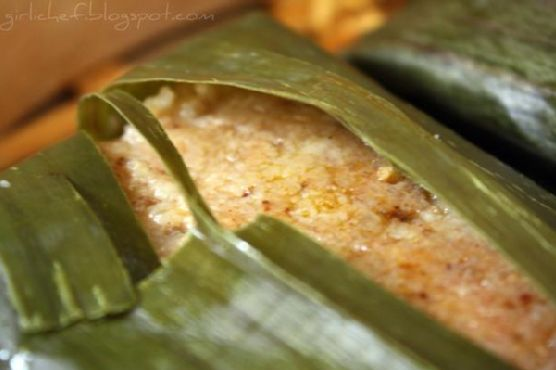
Salmon In Banana Leaf | Made by Meaghan Moineau

Salmon In Banana Leaf

Intro

One of my fondest childhood memories involves the warm, fragrant aroma of banana leaves wafting through our kitchen. My grandmother would prepare delectable dishes wrapped in these leaves, each one a little parcel of love and flavor. Her kitchen was a symphony of sounds and scents, with the sizzle of searing meat and the soothing, earthy smell of banana leaves blending together in perfect harmony. Today, I want to share a recipe that echoes those nostalgic memories while adding a modern twist: Salmon in Banana Leaf. This dish combines the rich, buttery texture of salmon with a medley of fragrant spices, all wrapped up in the comforting embrace of a banana leaf. Whether you’re new to this culinary technique or revisiting an old favorite, this recipe is sure to become a cherished part of your repertoire.

Why You’ll Love It

This recipe is a celebration of flavors and textures, bringing together a unique blend of ingredients that will tantalize your taste buds. The use of banana leaves not only infuses the salmon with a subtle, earthy aroma but also keeps it incredibly moist and tender. The marinade is a harmonious mix of sweet, spicy, and savory elements, creating a complex flavor profile that complements the natural richness of the salmon. Plus, the presentation is stunning, making it perfect for a dinner party or a special occasion. This dish is not only a feast for the palate but also a feast for the eyes.

Ingredients

  • Banana leaves
  • Cinnamon
  • Fennel seed
  • Fish sauce
  • Garlic
  • Ginger
  • Peach preserves
  • Red chiles
  • Rice
  • Rice wine vinegar
  • Salmon steaks
  • Scallions
  • Sesame oil
  • Soy sauce
  • Star anise
  • Tahini
  • Vegetable oil

Instructions

  1. Begin by mixing all of your marinade ingredients together and pouring it over the salmon in a big baggy or container. Marinate under refrigeration for at least half an hour or up to 2 hours.
  2. While the salmon is marinating, put all of your scented rice powder ingredients into a spice grinder and pulse until everything is coarsely ground. Remember, you want a few larger crumbles of rice for mouth-feel!
  3. Remove the salmon from the marinade (discarding any leftover marinade) and coat it with some of the scented rice powder on each side. You won’t use it all with just the 2 pieces of salmon. Save some for another time.
  4. Lay your banana leaves out flat. Place one salmon fillet in the center of each leaf. Fold one side over the salmon. Fold the opposite side over that, then both ends to make a little package.
  5. Place salmon packets in a steamer basket over boiling water.
  6. Put all of the marinade ingredients into a small sauce pot or alternately, a microwave-safe dish and bring to a heat. Whisk everything together, and it’s ready to serve.
  7. After 10-13 minutes, salmon will be finished. Flip the smooth side of the banana leaves up and make a slit through them to serve.
  8. Serve with Chinese noodles, corn, and the dipping sauce.

Tips

When working with banana leaves, it’s important to soften them slightly before use. You can do this by briefly passing them over an open flame or soaking them in hot water for a few minutes. This makes them more pliable and easier to wrap around the salmon.

Variations & Substitutions

If you can’t find banana leaves, parchment paper or aluminum foil can be used as an alternative wrapping. For a different flavor profile, try using orange marmalade instead of peach preserves, or swap out the fennel seed for coriander seeds. If you’d like a spicier kick, increase the amount of red chiles or add a splash of hot sauce to the marinade.

Storage

Leftover salmon can be stored in an airtight container in the refrigerator for up to 2 days. To reheat, steam the salmon in its banana leaf wrapping until warmed through, or gently heat in the oven at a low temperature. Avoid microwaving, as it can cause the salmon to become dry and rubbery.

FAQ

Can I use frozen salmon for this recipe?

Yes, you can use frozen salmon, but make sure to fully thaw it before marinating. This ensures that the marinade penetrates the fish effectively and that it cooks evenly.

What can I serve with Salmon in Banana Leaf?

This dish pairs beautifully with a variety of sides. Consider serving it with steamed jasmine rice, a fresh cucumber salad, or stir-fried vegetables. The dipping sauce also complements a range of accompaniments.

Is banana leaf edible?

While banana leaves are not typically consumed, they impart a lovely aroma and flavor to the food they encase. They are removed before eating, similar to the husks around tamales.

Nutrition

This dish is rich in omega-3 fatty acids and protein, thanks to the salmon. The use of spices and banana leaves adds flavor without additional calories, making it a heart-healthy and satisfying meal. For those watching their sodium intake, consider using a low-sodium soy sauce in the marinade.

Conclusion

Salmon in Banana Leaf is a dish that brings together the best of both tradition and innovation. It’s an opportunity to experiment with new flavors while paying homage to techniques that have been cherished for generations. Whether you’re sharing it with family or serving it at an elegant dinner party, this recipe is sure to impress and delight. So, gather your ingredients, embrace the process, and savor the delicious results. Happy cooking!

Related update: Salmon In Banana Leaf

Related update: Beef Braised In Red Wine
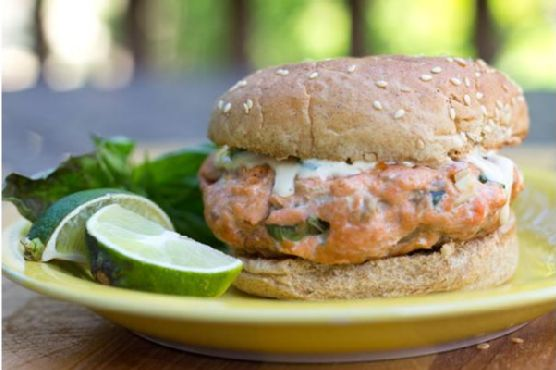
Asian Salmon Burgers With Tangy Ginger Lime Sauce | Made by Meaghan Moineau

Asian Salmon Burgers With Tangy Ginger Lime Sauce

Intro

There’s something undeniably comforting about sinking your teeth into a well-crafted burger. For me, it brings back fond memories of summer evenings spent with my family in our backyard. My father, the grill master, would whip up his signature dishes, and one day, he introduced us to these delightful Asian Salmon Burgers. The combination of fresh salmon with a tangy ginger lime sauce became an instant favorite. Today, I’m excited to share this family recipe with you all, hoping it brings the same joy and deliciousness to your home as it did to ours.

Why You’ll Love It

These Asian Salmon Burgers are not just another burger recipe. They are a delightful fusion of flavors and textures that will tantalize your taste buds. The fresh salmon, rich with omega-3 fatty acids, brings a tender and juicy bite, while the ginger lime sauce adds a perfect zing that complements the savory burger. Whether you’re looking for a healthy alternative to traditional beef burgers or simply want to try something new, these salmon burgers are a must-try!

Ingredients

  • 4 burger buns
  • 1/4 cup fresh basil, chopped
  • 2 cloves garlic, minced
  • 2 green onions, finely sliced
  • 1 lime, juiced
  • 1/2 cup mayonnaise
  • 2 tablespoons oyster sauce
  • 1 teaspoon powdered ginger
  • 1 pound salmon, skin removed
  • 2 tablespoons sesame oil
  • 1/4 cup sour cream
  • 2 tablespoons soy sauce

Instructions

  1. Cut the salmon into large hunks and run it through a food processor until no large pieces remain.
  2. Add to the salmon the soy sauce, garlic, ginger, oyster sauce, green onion, and basil.
  3. Combine ingredients well and form 4 large patties from the mixture.
  4. Heat up the sesame oil in a large frying pan on medium-high heat and add in the patties.
  5. Cook for about 10 minutes, flipping once halfway through.
  6. To make the sauce, mix the mayonnaise, sour cream, lime juice, and a pinch of ginger until smooth.
  7. Pour a spoonful of sauce over the top of the finished salmon burger and serve inside a toasted bun.

Tips

For the best results, use fresh salmon. It enhances the flavor and texture of the burger. If you don’t have a food processor, you can finely chop the salmon with a sharp knife. Be sure to toast your buns for extra flavor and crunch. Lastly, don’t overcook the salmon patties; they should be juicy and slightly pink in the center.

Variations & Substitutions

If you want to switch things up, consider using shrimp instead of salmon for a different seafood twist. You can also add some heat by including a teaspoon of sriracha or chili flakes to the sauce. For a gluten-free option, serve the patties on lettuce wraps instead of buns. If you prefer a different herb, cilantro works wonderfully in place of basil.

Storage

These salmon burgers are best enjoyed fresh, but if you have leftovers, store the patties in an airtight container in the refrigerator for up to 2 days. The sauce can be refrigerated separately in a small container. To reheat, gently warm the patties in a skillet over low heat until heated through.

FAQ

Can I freeze the salmon patties?

Yes, you can freeze the uncooked salmon patties. Place them on a baking sheet lined with parchment paper and freeze until solid. Once frozen, transfer the patties to a freezer-safe bag or container. They can be stored for up to 3 months. Thaw in the refrigerator before cooking.

What can I serve with these salmon burgers?

These burgers pair wonderfully with a light and fresh salad, sweet potato fries, or a simple coleslaw. You can also serve them with grilled vegetables for a wholesome meal.

Nutrition

This recipe provides a nutritious meal option rich in protein and omega-3 fatty acids, which are beneficial for heart health. Salmon is also a great source of vitamin D and B vitamins. Remember to adjust portion sizes to fit your dietary needs.

Conclusion

These Asian Salmon Burgers with Tangy Ginger Lime Sauce are a delicious way to enjoy a healthy and satisfying meal. With their vibrant flavors and simple preparation, they make an excellent choice for family dinners or entertaining guests. I hope you enjoy making and savoring these burgers as much as my family has over the years. Bon appétit!

Related update: Asian Salmon Burgers With Tangy Ginger Lime Sauce

Related update: Avocado Nests

“Lost” Star Daniel Dae Kim Just Called Out The “Overcorrection” In “Ethnic-Specific Casting,” And He Did Not Stutter – BuzzFeed | Analysis by Brian Moineau

“Lost” Star Daniel Dae Kim Just Called Out The “Overcorrection” In “Ethnic-Specific Casting,” And He Did Not Stutter - BuzzFeed | Analysis by Brian Moineau

Title: Navigating the Nuance: Daniel Dae Kim on Ethnic-Specific Casting in Hollywood

In a recent interview with BuzzFeed, Daniel Dae Kim, famed for his role in "Lost," deftly tackled the complex issue of ethnic-specific casting in Hollywood. His insights have sparked widespread admiration across social media, leaving many, including myself, marveling at his articulation of a deeply nuanced topic.

Daniel Dae Kim's commentary highlighted what he perceives as an "overcorrection" in Hollywood's casting practices. He acknowledged the industry's efforts to rectify historical underrepresentation but cautioned against swinging too far in the opposite direction. His thoughtful analysis reminds us of the delicate balance between authenticity and inclusivity—a balance that Hollywood, and indeed other industries, must strive to achieve.

Kim's perspective is particularly relevant in today's cultural landscape, where conversations about representation and diversity are front and center. His remarks call to mind similar discussions in other sectors, such as the tech industry's ongoing struggle with diversity. Just as Hollywood has been called out for its casting choices, tech giants have faced scrutiny over their predominantly homogenous workforces. Both industries are grappling with how to implement meaningful change without veering into tokenism or performative diversity.

Outside of his insightful interviews, Daniel Dae Kim is known for his advocacy work, particularly in support of Asian American and Pacific Islander (AAPI) communities. He has consistently used his platform to speak out against anti-Asian hate, especially in light of the pandemic's exacerbation of racial tensions. His commitment to these causes adds weight to his words on casting and representation—he speaks not just as an actor but as a genuine advocate for change.

Kim's reflections also invite us to consider the broader implications of representation in media. As audiences, we have a role to play in supporting diverse stories and voices. The success of films like "Black Panther" and "Crazy Rich Asians" demonstrated that there is a significant audience for stories that reflect the diversity of the real world. These films' box office triumphs challenge the outdated notion that diverse casts are a financial risk.

In the end, Daniel Dae Kim's commentary is a reminder of the power of nuance in discussions about representation. His ability to acknowledge progress while advocating for thoughtful, balanced approaches is a model for how we can engage with complex issues. As Hollywood—and other industries—continue to evolve, it is voices like Kim's that will help guide the way forward.

Final Thought: As we navigate these conversations, let's remember that progress is a journey, not a destination. By championing nuanced dialogue and meaningful representation, we can work towards a media landscape that truly reflects the diversity of our world.

Read more about AI in Business

Read more about Latest Sports Trends

Read more about Technology Innovations