January Playoff, September Sky Drama | Analysis by Brian Moineau

When the calendar says January but the sky says September

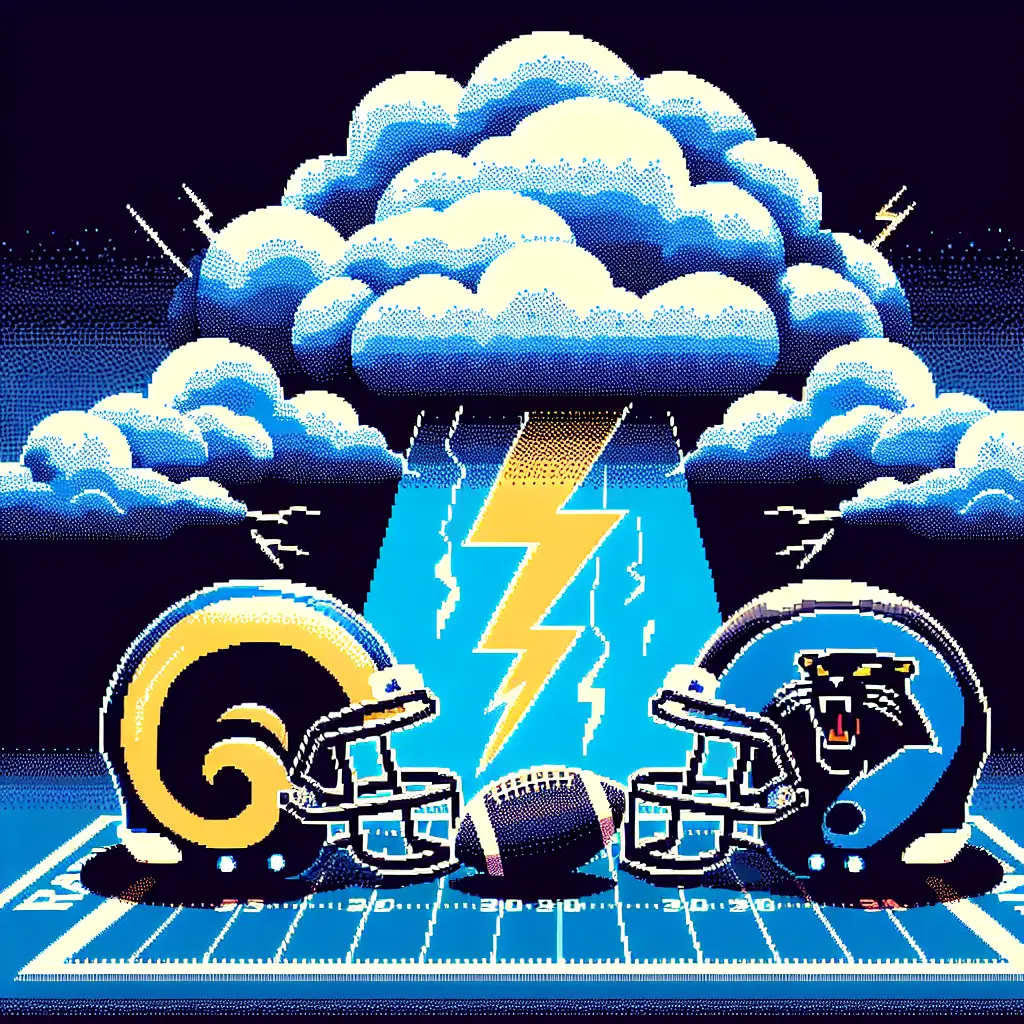
The sky over Bank of America Stadium looked like it had missed the memo. On a Saturday that should have felt like the crisp business of playoff football, Charlotte baked and brooded under a midwinter atmosphere more suited to late summer thunderheads. The Rams and Panthers didn’t just play each other — they played the weather, too, with thunderstorms and gusts hovering over kickoff and the NFL’s carefully timed broadcast windows.

Why the weather mattered more than a weather report

  • The Rams-Panthers wild-card kickoff was scheduled for 4:30 p.m. ET, with Packers-Bears set to stream at 8:00 p.m. ET. A lightning delay in the early game could push the later streamable game into overlapping territory — something the league can only partially manage (it can shift a kickoff by 10 minutes, per league guidance). (nbcsports.com)
  • Forecast models and local meteorologists flagged a solid chance of thunderstorms, gusty winds and sustained precipitation during kickoff and into the second half. That wasn’t just uncomfortable for fans; it changes punt dynamics, the passing game, field footing and coaching calculus in real time. (wral.com)
  • Weather narratives aren’t new in football, but they take on outsized importance in the playoffs: a sudden thunder delay can complicate broadcasters’ schedules, strain team routines and turn momentum on its head. NBC Sports flagged the structural issue — two playoff games possibly running at once — as an NFL logistics headache. (nbcsports.com)

Setting the scene: the context that matters

  • Playoff stakes: This was Wild Card Weekend — the margin for error is thin and every win, timeout and coaching choice magnifies. Teams plan for wind and rain during the season, but postseason weather can still be a curveball. (nbcsports.com)
  • Local forecast consensus: Multiple outlets and meteorologists warned of thunderstorms and gusts up to the mid-30s (mph) with a high probability of precipitation during the afternoon into evening — effectively a recipe for slippery balls and improvised clock management. (wral.com)
  • The game’s outcome: Despite the weather tangles and drama, the Rams won a tight one, 34–31, with a last-minute touchdown that ultimately decided the contest. The elements added texture to an already dramatic finish. (reuters.com)

What the weather actually changed on the field

  • Quarterback play and play-calling: Rain and wind nudge offenses toward shorter throws, quicker releases and more emphasis on the run game. For teams that rely on timing routes, even slight precipitation can disrupt rhythm — and force mid-drive adjustments. (sports.yahoo.com)
  • Special teams volatility: Punting and kicking become lotteries when gusts gust across the stadium. Field position swings and blocked-kick opportunities gain weight in the win probability model. Local forecasts and game-day notes warned fans to watch the punting game. (wral.com)
  • Broadcast and scheduling headaches: The NFL’s limited flexibilities — a 10-minute slide for a later kickoff, contingency plans for delays — are blunt instruments when lightning’s involved. If the early game stalls, networks, streaming services and in-stadium operations must improvise, while viewers juggling multiple platforms can miss decisive stretches. (nbcsports.com)

Lessons for fans, teams and broadcasters

  • Fans: Pack an umbrella and temper expectations for perfect football weather — and expect possible broadcast delays or overlap. If you’re streaming another game later, be ready for timing shifts. (foxsports.com)
  • Teams: Build weather drills into playoff prep. The ability to pivot quickly — shift to quick-game passing, protect against gusts, adjust punt formation — becomes a competitive advantage. (sports.yahoo.com)
  • Broadcasters and leagues: This is a reminder that modern scheduling — with linear and streaming rights layered — needs more nimble contingency plans for weather disruptions, especially as extreme-weather patterns become less predictable. The NFL’s 10-minute leeway is useful but limited. (nbcsports.com)

A few memorable in-game moments shaped by the conditions

  • Tight finishes feel tighter when a slippery ball makes a contested catch harder, or when a gust sends a kickoff farther than expected. The Rams’ last-minute drive that clinched a 34–31 victory carried extra drama against a backdrop of overcast, wind-swept stands. (reuters.com)

My take

Weather has a way of reminding us that football — even in January’s playoff theater — is played outdoors, subject to the same temperament as any other natural event. The Rams-Panthers game was a small case study in adaptability: teams adjust play-calling, special teams get riskier, and broadcasters juggle time slots. As fans we romanticize the “pure” postseason atmosphere; reality is more interesting. Storms, delays and gusts don’t just change outcomes — they give playoff games their cinematic texture.

Final thoughts

The calendar may say January, but the sky doesn’t check schedules. That mismatch is part of what keeps playoff football compelling. Weather can be an antagonist, an equalizer, and sometimes a plot twist — and this Rams-Panthers wild-card contest had all three. Whether you remember the game for the final drive or the thunderstorms rumbling above, it’s a reminder that in football the elements are always in play.

Sources


Related update: We recently published an article that expands on this topic: read the latest post.


Related update: We recently published an article that expands on this topic: read the latest post.

Stevenson: Jake Paul is Surprisingly | Analysis by Brian Moineau

When a lightweight world champion meets a YouTuber-turned-boxer: the sparring that turned heads

You expect sparring sessions to be routine—two fighters feeling each other out, testing timing, and poking holes in game plans. But when WBC lightweight champ Shakur Stevenson slipped into the ring with Jake Paul, it wasn't routine. Stevenson walked away surprised, impressed, and maybe a little more respectful than many in boxing had been willing to be. His takeaway? Jake Paul is "better than people would even understand." (sports.yahoo.com)

Why this moment matters

  • Jake Paul has been polarizing: entertainer, promoter, and increasingly a serious boxing project. His rise from YouTube boxing spectacles to fights against former pros has invited skepticism and ridicule—but also attention. (en.wikipedia.org)
  • Anthony Joshua vs. Jake Paul, a heavyweight match scheduled for December 19, 2025 in Miami, throws that skepticism into the spotlight: one of boxing’s old-guard stars vs. boxing’s new-era disruptor. That clash makes any insight from a respected pro like Stevenson especially relevant. (kaseyacenter.com)

What Stevenson actually said (and why it stings for skeptics)

Stevenson described lining up six or seven rounds with Paul after Paul’s team reached out. His reaction was strikingly candid: he expected a novice, and instead found someone who “is better than people would even understand.” He praised Paul’s commitment—training camps, a coaching setup, instincts to avoid getting hit—and admitted he was impressed. (au.sports.yahoo.com)

Why that matters:

  • Coming from an elite boxer who’s competed at world-class levels, calling someone “better than people would even understand” is not casual praise.
  • It reframes the narrative: Paul’s progress isn’t just hype or luck. It’s the product of coaching, repetition, and instincts that can be sharpened even if you start late.

The broader context: skill vs. size vs. spectacle

  • Technical improvement doesn’t erase the practical realities of a matchup. Stevenson himself noted the huge size/experience gap between Paul and Anthony Joshua and suggested that Joshua should beat Paul on merit. That’s the heart of the debate—can technique plus hard work overcome massive differences in weight, reach, and decades of top-level experience? (au.sports.yahoo.com)
  • For boxing fans, this is a two-track conversation:
    1. The purist track: world titles, traditional career ladders, and respect for the sport’s hierarchy.
    2. The spectacle track: crossover appeal, paydays, and the reality that unconventional routes can still produce competent fighters—and massive events. The Stevenson sparring story lives at the intersection of both.

Takeaways for fight-night watchers

  • Don’t underestimate preparation: Paul’s evolution isn’t a fluke. He’s benefitted from high-level trainers and a full-time approach. Stevenson’s words confirm that Paul’s fundamentals and instincts have improved. (au.sports.yahoo.com)
  • Upset odds still lean one way: size, power, and experience matter—especially at heavyweight. Stevenson expects Joshua to win; his praise of Paul doesn’t equate to predicting a shocker. (au.sports.yahoo.com)
  • Expect a chess match within a spectacle: even if Joshua is heavily favored, Paul’s confidence and improved skills mean he won’t be a total pushover. That can make for a more interesting, watchable fight than many expect. (espn.com)

My take

Stevenson’s comments are an important corrective to easy mockery. They don’t legitimize every crossover fight, nor do they erase structural differences between fighters who grew up in the pro ranks and fighters who came up later. But they do force a more honest conversation: skill is not binary. Improvement can be real, even if earned unconventionally.

If you care about boxing’s purity, Stevenson’s words should make you less dismissive and more curious: how much can dedicated coaching and high-level sparring shorten the gap? If you care about the sport’s spectacle and business, the encounter underscores why crossover boxing keeps drawing huge audiences—because it produces unexpected, human moments that professional boxing sometimes struggles to deliver.

Final thoughts

This sparring session didn’t crown Paul or dethrone any champions. What it did do is move the conversation forward—from memes and hot takes to a clearer assessment from a respected athlete. That alone is worth paying attention to as the sport wrestles with its future: blending tradition with new, sometimes messy, opportunities.

Sources


Related update: We recently published an article that expands on this topic: read the latest post.

Prada, Kolhapuri Deal Sparks IP Debate | Analysis by Brian Moineau

A luxury sandal, a centuries‑old craft, and the price of inspiration

Prada's decision to sell a limited run of "Made in India" Kolhapuri‑style sandals for about $930 has reignited a conversation the fashion world keeps circling back to: where does inspiration end and appropriation begin? What started this year as a pair of tan leather sandals on a Milan runway—briefly billed as simply "leather footwear"—became a flashpoint after Indian artisans and commentators pointed out the clear resemblance to Kolhapuri chappals, the handmade sandals from Maharashtra and Karnataka. Prada has since acknowledged the Indian roots of the design and struck a deal to make 2,000 pairs in collaboration with state‑backed artisan bodies, with plans to sell them globally in February 2026. (feeds.bbci.co.uk)

Quick takeaways

  • Prada showcased sandals in Milan that closely resembled traditional Kolhapuri chappals, prompting accusations of cultural appropriation. (feeds.bbci.co.uk)
  • The brand responded by acknowledging the inspiration and signing agreements with two Indian, state‑backed leather development corporations to produce a limited run made in India — 2,000 pairs priced at roughly €800–€930 each — for global sale in February 2026. (reuters.com)
  • The collaboration promises artisan training, short residencies at Prada's academy, and an investment Prada says will run into "several million euros," but questions remain about profit sharing, pricing parity, and long‑term benefits for the craftspeople. (reuters.com)

Why this matters beyond a single product drop

Kolhapuri chappals are not a trendy motif invented last season. They have a long cultural history, a specific geographic origin (GI protection in India since 2019), and are made by artisans from marginalised communities who rely on this craft for livelihoods. When a global luxury house reproduces that aesthetic and ships it out of context—then prices it at nearly 100 times the local market value—voices in India rightly asked for attribution, accountability and a share of the upside. The debate touches on:

  • Cultural heritage and intellectual property: designs tied to communities and places raise questions about recognition and rights. (dw.com)
  • Economic fairness: local Kolhapuri chappals sell for a few dollars in India; Prada’s versions are priced like collectible luxury items. That gap fuels the sense of extraction. (livemint.com)
  • The power dynamics of taste: global brands can amplify or erase origin stories depending on how they choose to tell them. (feeds.bbci.co.uk)

What Prada has done — and what's still missing

The facts Prada and its critics are pointing to are straightforward:

  • Prada publicly acknowledged the Indian inspiration after the backlash and entered talks with local bodies. (feeds.bbci.co.uk)
  • It signed memoranda of understanding with two government‑linked leather industry corporations in Maharashtra and Karnataka to produce 2,000 pairs locally and to run training programs and exchanges. Prada says the project spans three years and includes artisan residencies in Italy. (reuters.com)
  • The launch is slated for February 2026 across 40 Prada stores and online, with each pair priced around €800–€930 (about $930). (reuters.com)

But several sticky issues remain:

  • Profit sharing and pricing: early reporting indicates artisans are being paid better for production work, yet initial agreements reportedly do not include a formal profit‑sharing clause. That leaves open whether artisans will see long‑term revenue proportional to the value their craft helps create. (timesofindia.indiatimes.com)
  • Attribution vs. agency: attribution alone—acknowledging that a design was inspired by Kolhapuri chappals—is not the same as centring the artisans’ perspectives or ceding decision‑making power about how their craft is represented and sold. (dw.com)
  • Scale and authenticity: producing luxury variants for a global market can raise interest and demand, but it can also shift the meaning of a craft and price out local buyers unless carefully managed. (livemint.com)

A timeline to keep in mind

  • June 2025: Prada presented sandals during Milan Fashion Week that reminded many observers of Kolhapuri chappals; social media outcry and industry criticism followed. (feeds.bbci.co.uk)
  • July–December 2025: Prada acknowledged the Indian inspiration and entered talks with Indian artisan bodies and the Maharashtra Chamber of Commerce. Reporting over late 2025 shows the company formalising agreements and planning the limited run and training programs. (feeds.bbci.co.uk)
  • February 2026: Planned global sale of the 2,000 "Made in India" sandals through 40 Prada stores and Prada.com. (reuters.com)

(Those are the dates reported by news outlets; some implementation details and legal agreements may be updated as the project proceeds.)

The broader industry lesson

Big fashion houses will continue to find inspiration in global crafts; the issue is governance. Brands can handle cultural sources in ways that either replicate extractive patterns or help sustain cultural economies. Meaningful models often include:

  • Co‑design and co‑ownership models that give artisans a seat at the table.
  • Transparent, long‑term revenue arrangements (royalties, profit‑shares, co‑brands).
  • Capacity building that respects local production rhythms and markets, not just upscale retooling for export. (timesofindia.indiatimes.com)

Prada’s announced training programs and residencies are notable steps — they could be transformative if implemented with clear, enforceable commitments to artisans’ economic rights and community representation. Without legally binding profit‑share or co‑ownership terms, though, such initiatives risk being framed as goodwill optics rather than structural change. (timesofindia.indiatimes.com)

My take

This moment is a test case. The optics of a heritage craft going from village markets to luxury boutiques—priced at hundreds of times its local value—will always make people uneasy. What matters is whether this ends as a story of appropriation amended with PR, or as a genuine transfer of value and visibility to the communities who stewarded the craft for generations. Prada’s move toward collaboration is better than silence or denial, but the proof will be in published, enforceable terms: transparent payments, profit‑sharing, design credit, and meaningful decision‑making by artisans and their organisations.

If brands want to borrow cultural capital, they must be prepared to share economic capital and power too. That’s not just ethical—it's smart business for a future in which consumers increasingly expect provenance, fairness, and traceability.

Final thoughts

Heritage crafts entering the global luxury ecosystem can create opportunity, but only when reciprocity is institutionalised rather than optional. We should watch the Prada‑Kolhapuri rollout closely between now and February 2026: will the partnership deliver durable income, training that translates into demand for local makers, and formal obligations to share value? If the answer is yes, this could be a model; if not, it will be another reminder that apology and attribution without structural change aren’t enough.

Sources

(Where paywalls or regional access apply, I prioritized reporting from Reuters and BBC for clarity and accessibility.)