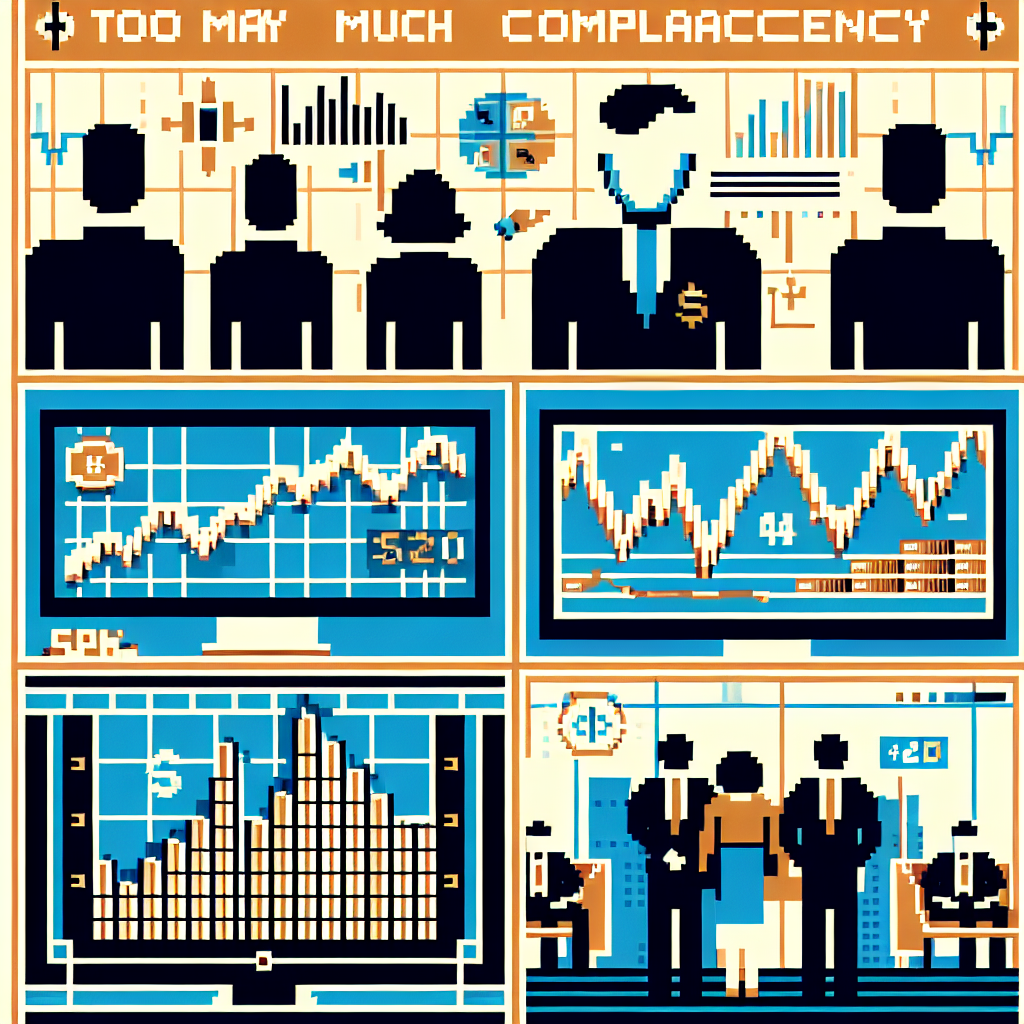
Markets are Too Calm — and That’s the Problem, Says Jamie Dimon
There’s a peculiar kind of silence in markets right now — one that sounds less like confidence and more like complacency. That was the blunt message from JPMorgan CEO Jamie Dimon in recent interviews and appearances: asset prices are high, credit spreads are tight, and investors seem to be shrugging off a long list of risks. When one of Wall Street’s most prominent risk-watchers warns that “people feel pretty good,” it’s worth listening.
What happened and why it matters
- Jamie Dimon has repeatedly warned investors that markets are underestimating risk — from rising inflation to geopolitical flashpoints and stretched credit conditions.
- His comments have come in public forums (investor days, conferences, TV interviews) over the past year as global headlines — tariffs, geopolitical clashes, and credit concerns — made rounds. Recent press coverage highlighted his concern that markets are acting complacently even after shocks such as renewed geopolitical tensions that lifted oil prices. (marketwatch.com)
Why this matters:
- Complacency can mask the build-up of systemic risk: elevated valuations and narrow credit spreads mean there is less cushion when a real shock hits.
- If inflation reaccelerates or a credit cycle worsens, central banks may have less room to respond without causing deeper market dislocations. Dimon explicitly flagged higher inflation risk and a potentially “worse than normal” credit cycle as threats. (benzinga.com)
The investor dilemma: optimism vs. realism
- Markets have rallied and volatility has fallen — and with that recovery comes a tendency to treat downside scenarios as unlikely. That’s the classic optimism bias at work.
- Dimon’s argument is the opposite: when valuations look rich and policy levers are constrained (big deficits, limited central-bank flexibility), the probability of a sharper correction or a prolonged tougher patch rises. (cnbc.com)
Practical implications:
- Earnings expectations may still be too sanguine. If profits disappoint, equity multiples could compress. (cnbc.com)
- Credit markets are deceptively calm. Narrow spreads don’t reflect borrower weakness or a future tightening in liquidity conditions. (benzinga.com)
Signs that Dimon’s warning isn’t just noise
- Historical precedent: periods of sustained policy stimulus and low rates have pushed asset prices up before sharp corrections followed (think pre-2008 dynamics). Dimon has drawn attention to how many market participants today lack firsthand experience with a real credit cycle. (benzinga.com)
- Market reactions to geopolitical events have been muted compared with price moves in commodities (e.g., oil spikes), suggesting investors are selectively ignoring channels that can feed into inflation. Recent coverage showed oil moving while stocks barely flinched. (marketwatch.com)
How investors (and policymakers) might respond
- Reassess risk budgets:
- Expect lower forward returns if valuations are high — adjust position sizing accordingly.
- Stress-test portfolios for higher inflation, wider credit spreads, and slower growth.
- Watch liquidity and credit indicators closely:
- Monitor funding costs, loan defaults, covenant loosening, and secondary-market liquidity as early warning signs.
- Factor geopolitics into scenario planning:
- Energy shocks, trade disruptions, and cyber/terror risks can transmit rapidly into inflation and supply chain stress.
- For policymakers: communicate limits. Central banks and fiscal authorities should be candid about trade-offs and constraints to avoid fostering false reassurance.
Quick wins for individual investors
- Trim concentrated positions and rebalance toward diversified exposures.
- Maintain a short list of high-quality, liquid assets to lean on if markets reprice.
- Consider inflation-protected instruments or real assets as partial hedges if inflation risk appears underpriced.
- Avoid chasing yield in low-quality credit just because spreads are narrow.
What the coverage shows (context)
- MarketWatch highlighted Dimon’s recent comments noting the disconnect between oil moves and muted equity reactions after a geopolitical spike. (marketwatch.com)
- CNBC and Bloomberg have traced Dimon’s warnings back through 2025, where he flagged tariffs, deficits, and complacent central banks as sources of risk. (cnbc.com)
- Analysts and commentators pick up the framing that many market participants haven’t lived through a deep credit downturn and may underestimate how fast conditions can change. (benzinga.com)
My read of those sources: Dimon isn’t trying to be a constant Cassandra. He’s reminding an upbeat market that risk is asymmetric right now — upside may be limited while downside remains meaningful.
A few sharper questions worth watching
- Will inflation settle back near policymakers’ targets, or will renewed energy or supply shocks re-accelerate prices?
- How would central banks respond if inflation and growth diverged (stagflation)?
- Are credit standards loosening quietly in leveraged lending or other pockets that could transmit losses rapidly?
- How do fiscal dynamics (large deficits) limit policy options in a stress scenario?
Final thoughts
Complacency is seductive: calm markets feel good and reward short-term risk-taking. But markets don’t owe investors perpetually rising prices. Jamie Dimon’s warnings are a useful reality check — not a prediction of imminent doom, but a call to re-evaluate assumptions. For investors, that means humility, active risk management, and scenario planning for outcomes that the market currently underprices.
Sources
Related update: We recently published an article that expands on this topic: read the latest post.
When Ford turned Godzilla into Megazilla: a friendly explainer
You know that feeling when a factory truck engine moonlights as a hot-rod hero? Ford did exactly that. The Godzilla V8 started life as a burly, no-nonsense 7.3‑liter powerplant for Super Duty trucks — built for durability and torque — and Ford Performance then took that same basic architecture and forged it into Megazilla: a high-performance crate engine aimed at builders who want big displacement with even bigger attitude.
Below I break down what’s actually different between the two, why those differences matter, and whether the price jump is justifiable for different kinds of projects.
Quick highlights
- Godzilla = the stock 7.3L truck engine: reliable, simple, tuned for longevity and towing.
- Megazilla = a factory-built high-performance version of the same 7.3L platform with upgraded internals, heads, and a larger throttle body — roughly +180–185 hp and a huge torque bump.
- Megazilla is sold as a crate engine and carries a much higher price and competition-use positioning compared with the more utilitarian Godzilla.
Why people care: the setup and the story
When Ford introduced the Godzilla 7.3L (around 2020), it wasn’t trying to win a horsepower war. It was offering a big-displacement pushrod V8 for heavy-duty trucks that favors durability, serviceability, and broad torque. That engine’s cast‑iron block, simple cam‑in‑block pushrod layout, and conservative internals made it ideal for work trucks.
Enter Megazilla: Ford Performance saw a platform with tons of potential and built a crate engine that keeps the block and displacement but swaps in stronger internals and performance cylinder heads to make a thoroughly different animal — one aimed at hot rods, track cars, desert rigs, and high‑power builds.
Key technical differences
- Displacement and block
- Both are 7.3 liters with the same cast‑iron block — the shared foundation is part of what makes this transition possible.
- Internals
- Godzilla: production truck internals (hypereutectic pistons or similar factory pieces, powdered‑metal connecting rods in the standard form).
- Megazilla: forged Mahle pistons, forged Callies H‑beam connecting rods, and other beefed‑up hardware to handle much higher rpm and power.
- Cylinder heads and breathing
- Megazilla gets CNC‑ported, higher‑flow heads and a larger throttle body (reported ~92 mm vs the Godzilla’s ~80 mm) plus a low‑profile intake to improve airflow.
- Cam and valve train
- The Megazilla’s cam and valve gear are tuned for more aggressive timing and higher powerband compared with the truck tune.
- Power and torque (real-world, factory figures)
- Godzilla (stock truck tune): ~430 hp and about 475 lb‑ft (varies slightly by model year/tune).
- Megazilla (naturally aspirated crate engine): ~615 hp and roughly 638 lb‑ft of torque (peak and usable torque is much broader).
- Forced‑induction option
- Ford and aftermarket builders have pushed the platform even further — Ford Performance later offered a supercharged “Megazilla 2.0” that can exceed 1,000 hp for competition use.
- Legality and intended use
- Godzilla is a production, emissions‑compliant engine used in Super Duty trucks.
- Megazilla crate engines are positioned for builds; higher‑output or supercharged variants are often flagged for competition or off‑road use (non‑street legal in some configurations).
The numbers that catch attention
- Horsepower delta: Megazilla ≈ 615 hp vs Godzilla ≈ 430 hp — roughly +180–185 hp.
- Torque delta: Megazilla peaks around the mid‑600s lb‑ft vs Godzilla’s mid‑400s — a dramatic increase and much more usable across the rev range.
- Price delta: Godzilla crate engines or production installations are available for much less (Godzilla crate pricing has been listed in the low‑$9k range historically), whereas Ford listed the Megazilla crate engine at around $22,995 when it went on sale — a sizable premium for the performance hardware and turn‑key nature.
So, is the Megazilla “worth it”?
- For hot‑rod builders, race teams, desert racers, or anyone who wants a straight, factory‑supported path to big, reliable NA V8 power — yes, Megazilla is compelling. It removes much of the guesswork and fabrication required to push a truck engine to these numbers.
- For truck owners who prioritize towing, longevity, and emissions compliance, the stock Godzilla is the practical choice. It’s lighter on wallet, proven in work use, and fully road‑legal in production trucks.
- For budget-minded tuners, some may prefer buying a Godzilla crate engine and upgrading specific components themselves; that can be cheaper but takes time, expertise, and risk.
My take
There’s something deliciously irreverent about Ford turning a cast‑iron truck V8 into a crate engine with supercar‑level horsepower. Megazilla isn’t just “more Godzilla”; it’s a factory‑built answer to a specific demand: builders wanting a big‑bore, durable V8 that’s already optimized for high power. The price is steep, but for many it’s the convenience, reliability, and Ford Performance backing that seal the deal.
If you’re building a trophy truck, a track monster, or a high‑power restomod and your budget isn’t shy, Megazilla is a turnkey shortcut to headline numbers. If you’re after a straightforward, workaday V8 that won’t get you arrested or exceed emissions limits, Godzilla remains an elegant and sensible choice.
Sources
Related update: We recently published an article that expands on this topic: read the latest post.
Related update: We recently published an article that expands on this topic: read the latest post.
Related update: We recently published an article that expands on this topic: read the latest post.
Why everyone’s talking about the “K‑shaped” economy — and why it should make you think twice
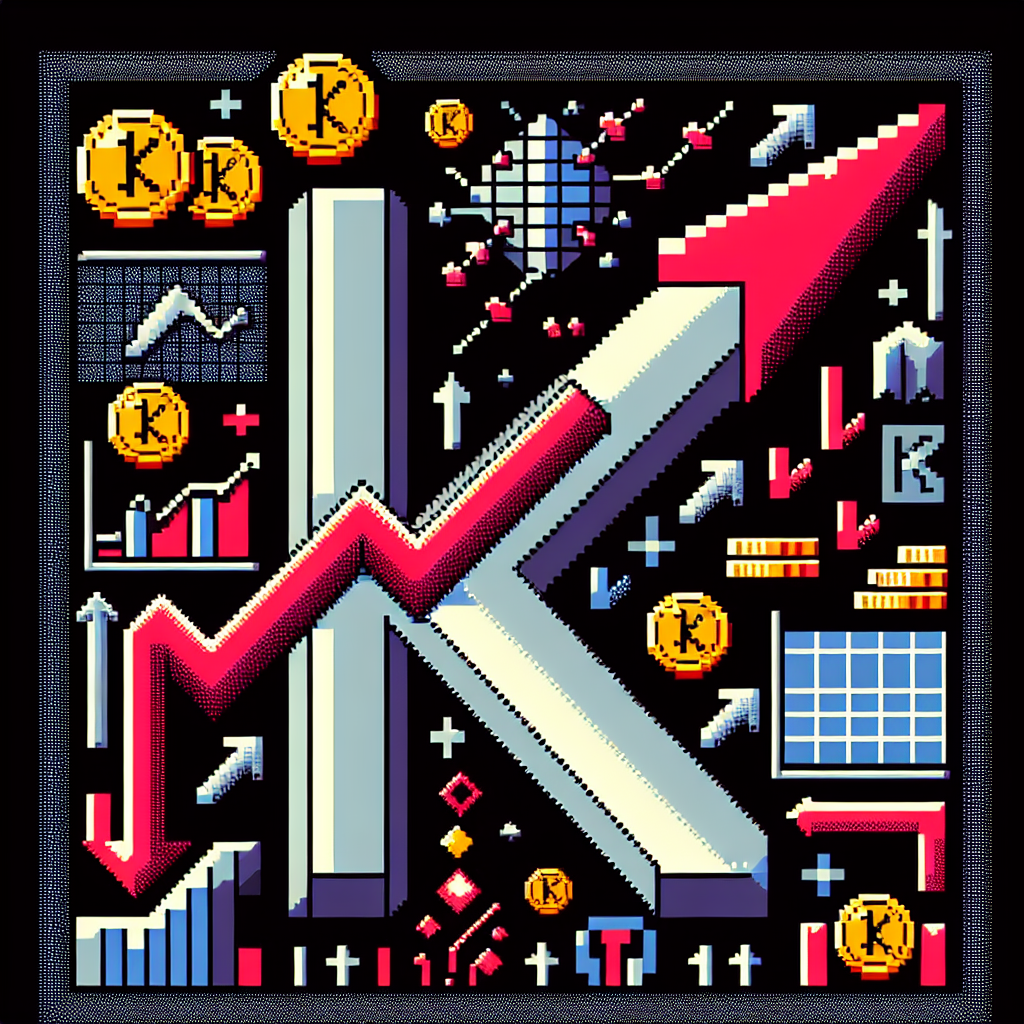
You’ve probably heard the phrase “K‑shaped recovery” a few times lately — and not just from economists. It’s showing up in corporate earnings calls, news headlines, and even at kitchen‑table conversations. The image is simple: a K, with one arm shooting up and the other slumping down. But the real story behind that picture is messy, emotional, and getting more relevant to daily life than many of us expected.
What the K really means
- The upper arm of the K represents higher‑income households: incomes, asset values and spending are rising for people who own lots of stocks, real estate or high‑paying jobs tied to tech and finance.
- The lower arm represents lower‑ and middle‑income households: wage growth is weak, price pressure (rent, groceries, energy) bites harder, and many people have less ability to spend or save.
- The result: headline GDP and stock indices can look healthy while large swaths of Americans feel stuck or squeezed.
This isn’t a new concept — economists used “K‑shaped” during the pandemic to describe divergent recoveries. What’s changed is how sharply the split has re‑emerged in 2025 as asset prices and AI‑sector gains lift wealth at the top while pay and hiring cool off for lower‑wage workers.
How we got here: context that matters
- Pandemic-era policies, huge fiscal responses, shifting labor markets and record‑high tech valuations created a period where asset owners got a disproportionate share of the gains.
- In 2023–24 some lower‑wage workers saw real wage improvements, narrowing the gap briefly — but that momentum faded in 2025 as inflation‑adjusted wage growth slowed more for the bottom quartile than for the top.
- The AI boom and heavy corporate investment in data centers and infrastructure have powered big gains for a few companies (and their shareholders) without producing broad wage gains or mass hiring in many sectors.
- Consumer spending overall continues, but a growing share comes from higher‑income households; lower‑income spending lags, which reshuffles which businesses win and which struggle.
Who’s winning and who’s losing
- Winners:
- Households that own stocks and other financial assets. The stock market and gains tied to the AI winners have boosted wealth for the top slice of Americans.
- Companies that sell premium goods and services to affluent buyers. Luxury retail and high‑end travel show resilience even when mass‑market demand softens.
- Losers:
- Lower‑wage workers in retail, hospitality and entry‑level services where hiring and pay growth have cooled.
- Businesses that rely on broad, volume‑based spending by younger and lower‑income consumers (certain fast‑casual restaurants, budget retailers, travel tailored to younger demographics).
Why this pattern matters beyond headlines
- Fragile consumer demand: If lower‑ and middle‑income households pull back sharply, overall spending — and corporate revenue — could fall, potentially causing a feedback loop that hits hiring and investment.
- Policy risks: If policymakers respond by cutting rates or changing tax rules to stoke growth, the effects may again flow unevenly and could widen the gap unless targeted measures accompany them.
- Social and political consequences: Persistent divergence heightens concerns about affordability, social mobility and the role of public policy in redistributing opportunity.
Signals to watch next
- Wage growth by income quartile (are lower‑income wages improving or stagnating?)
- Consumer spending breakdowns by income (is spending concentration at the top growing?)
- Hiring trends in low‑wage industries (is employment cooling or recovering?)
- Corporate capex in AI and how much of that translates into broader hiring
- Stock market concentration vs. household participation (who holds the gains?)
A few practical takeaways
- For workers: Skills and mobility matter. Sectors tied to AI, cloud infrastructure, health care and trade‑sensitive manufacturing may offer different pathways than retail or entry‑level hospitality.
- For savers and investors: Recognize concentration risk. Heavy reliance on a handful of tech winners can be rewarding — and risky — if broader demand softens.
- For businesses: Reassess customer segmentation. Firms that depended on volume from younger or lower‑income consumers may need to tweak pricing, value propositions, or product mix.
- For policymakers: Monitoring and targeted supports (training, childcare, housing affordability) will be essential to prevent a K‑shaped boom from calcifying into longer‑term inequality.
A few numbers that make it real
- Bank of America card data (October 2025) showed higher‑income households’ spending grew noticeably faster than lower‑income households (roughly 2.7% vs. 0.7% year‑over‑year in October).
- Federal Reserve data has long shown stock ownership is heavily concentrated; recent analyses report that the top 10% of households own the vast majority of equities, which amplifies asset‑price gains for the wealthy.
(These figures help explain why stock rallies lift the top arm of the K much more than they lift the bottom.)
My take
We’re living in an economy that can look simultaneously strong and fragile — strong for people whose wealth is tied to rising assets and fragile for those whose day‑to‑day living depends on wages and price stability. The “K” is a useful shorthand, but it’s not destiny. Policy choices, corporate strategies, and investment in people’s skills and safety nets will decide whether that divergence narrows or becomes structural. If you care about sustainable growth that doesn’t leave large groups behind, pay attention to the signals above — and to how policies shift in the next year.
Sources
Related update: We recently published an article that expands on this topic: read the latest post.
Related update: We recently published an article that expands on this topic: read the latest post.