
Day 2 NFL Combine Winners and Losers | Analysis by Brian Moineau

Who Won and Who Lost on Day 2 of the 2026 NFL Combine

The combine is where tape meets timers — and on Day 2 in Indianapolis that collision produced winners and losers in equal measure. Friday’s focus on defensive backs and tight ends turned the spotlight on speed, burst and catch radius, and a handful of prospects answered with headline-making numbers while others left more questions than answers. Here’s a readable take on Chad Reuter’s Day 2 stock report and what it means for the draft board.

Why Day 2 mattered

  • Day 2 showcased cornerbacks, safeties and tight ends — positions where physical testing can dramatically reshape projections.
  • Athletic testing (40-yard dash, 10-yard splits, vertical/broad jumps) matters, but so do on-field drills and how a player’s testing complements his tape.
  • With the draft less than two months away (April 23–25, 2026 in Pittsburgh), a strong combine can vault a mid-round candidate into Day 2 consideration — and a subpar one can push a potential Day 2 pick toward Day 3 or beyond.

Quick hits from the report

  • Daylen Everette (Georgia, CB) ran like a man bringing a clipboard: a 4.38 40 with a 1.54 10-yard split, 37.5" vertical, clean ball skills in drills — an eye-opener that could bump him toward Round 2 if teams buy the athletic testing over middling 2025 tape. (NFL.com)
  • Kenyon Sadiq (Oregon, TE) posted absurd testing for a tight end: 4.39 40 at 241 pounds and explosive jumps — the sort of numbers that turn a positional projection into a fringe first-round conversation. (NFL.com)
  • Conversely, Davison Igbinosun (Ohio State, CB) disappointed in quickness measures and change-of-direction, with a 10-yard split and vertical that left evaluators uneasy about his twitch and hip fluidity. (NFL.com)
  • Max Klare (Ohio State, TE) elected not to run or jump, a decision that puts more burden on his pro day to show athletic upside after a season of lower volume. (NFL.com)
  • The safety room was deep; Emmanuel McNeil-Warren’s testing was fine but buried by multiple elite showings — a reminder that a solid workout alone sometimes isn’t enough in a stacked group. (NFL.com)

Players who boosted their stock

  • Daylen Everette (Georgia, CB)
    • Why it matters: Size + speed + ball skills. Even if 2025 tape wasn’t elite, the combine provided measurable upside that teams can project into coverage roles and special teams. A true jump in perceived upside.
  • Kenyon Sadiq (Oregon, TE)
    • Why it matters: Rare athletic profile for a true Y/T tight end. At 241 pounds with sub-4.4 speed and elite jumping traits, he checks boxes teams love for mismatches and vertical threats.
  • John Michael Gyllenborg (Wyoming, TE)
    • Why it matters: Measured well and displayed athleticism after a 2025 season hampered by injury — good combine + prior tape = a clearer path into Day 2/Day 1 considerations.

(Notes: Other outlets echoed these risers and flagged more CBs and TEs who stood out; strong performances from guys such as Treydan Stukes and Tacario Davis were also highlighted around the web.) (nfl.com)

Players who took a step back

  • Davison Igbinosun (Ohio State, CB)
    • The problem: Stiff hips, a 10-yard split and vertical that didn’t sell starter-level quickness. That combination can flatten an inside/outside projection for Day 2 teams. (nfl.com)
  • Max Klare (Ohio State, TE)
    • The problem: Not testing at the combine hands the narrative control back to teams — and in a deep TE class, missing measurable chances to separate is costly. (nfl.com)
  • Emmanuel McNeil-Warren (Toledo, S)
    • The problem: Solid testing but overshadowed by elite numbers from several safeties; the result is a plateau rather than a springboard. (nfl.com)

How teams will likely react

  • For bigger boards (top-64), measurable athleticism still rules the margins. A player like Sadiq suddenly has first-round buzz because he offers mismatch traits that modern offenses covet.
  • For corners and safeties, scheme fit matters. Teams will weigh hip fluidity and short-area quickness more heavily than dash times alone — but poor short-area testing can still knock a player down boards.
  • Players who skipped events (like Klare) will be triaged: teams will either bet on tape and medicals or wait for pro-day verification. That uncertainty often pushes a player's value down in the pre-draft market.

What to watch next

  • Pro days: Players who didn’t test fully or underwhelmed will get a last chance at their schools. How many will hit new heights on turf they know?
  • Positional comparables: As scouts stack TEs and DBs side-by-side, look at route versatility, contested-catch ability and film on third-down reps — combine numbers are context, not destiny.
  • Team-specific needs: A borderline prospect can leap into Day 2 if a team with scheme alignment believes the testing matches their plan.

My take

The combine remains a noisy but useful market signal. Day 2’s winners were the players whose testing reinforced a believable NFL role: size, burst and clean hands for TEs; size, speed and explosiveness for DBs. But film still matters. If a prospect runs fast but can’t flip his hips in coverage, teams will downgrade him; if a player posts eye-popping numbers but lacks tape, expect conservative, upside-themed drafting.

In short: Day 2 created compelling narratives — some will hold, some will be revised at pro days and in private visits. For draft-watchers, the best strategy is to let the combine refine — not overwrite — what the tape already told you.

Final thoughts

The combine is where certainty is smoothed into probability. A single 40 time or vertical jump won’t determine a career, but it can change the odds. For prospects like Everette and Sadiq, Friday gave them momentum to carry to team meetings and interviews. For others, it set a clearer, humbler path forward. The next month of pro days and interviews will tell us how many of these movements were seismic and how many were just noise.

Sources


Related update: We recently published an article that expands on this topic: read the latest post.


Related update: We recently published an article that expands on this topic: read the latest post.

Sweden Dominates; Canada Clinches Top Spot | Analysis by Brian Moineau

A night of high drama at the World Juniors: Sweden rolls, Canada clears the way

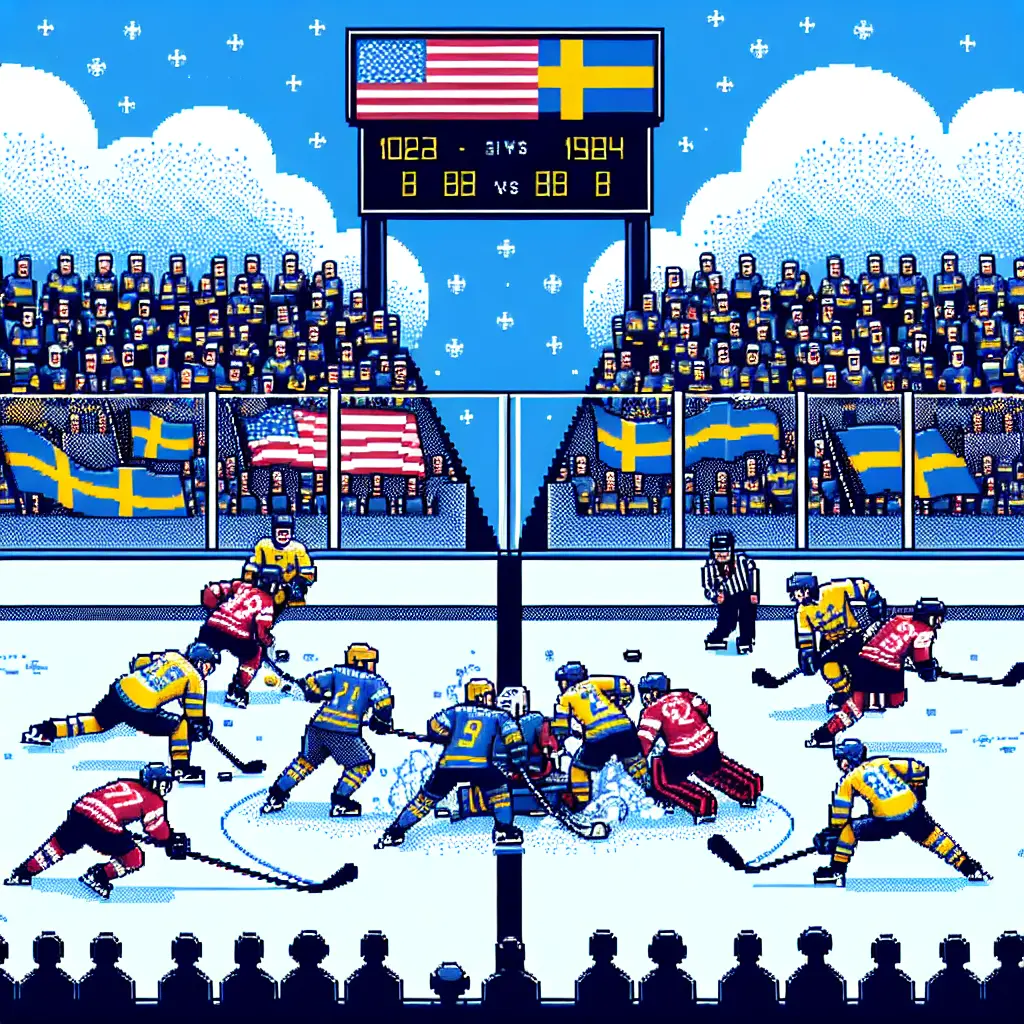
The puck barely left the ice Wednesday night as two of the tournament favorites—Sweden and Canada—put on clinical offensive displays that reshaped group play at the 2026 IIHF World Junior Championship. Sweden’s balanced attack handed the United States a 6-3 loss and finished Group A unbeaten, while Canada leaned on timing and a red-hot Cole Beaudoin to outscore Finland 7-4 and claim first in Group B. If you like speed, finishing and a little junior-level chaos, this was hockey served hot.

Why this matters now

  • These games weren’t just group-stage box scores — they set seeding and momentum for the knockout rounds. Sweden’s statement win hands them real control in Group A; Canada’s late goals and depth scoring show a team built for the push toward a medal.
  • The World Juniors is where top prospects test themselves under bright lights. Performances here can lift a player’s draft stock and reveal which teams have systems tough enough to survive a seven-game tournament.

What stood out

  • Sweden’s two-headed scoring attack: Lucas Pettersson and Eddie Genborg each netted a pair of goals, giving Sweden reliable finishers at key moments. That kind of finishing from the top end makes a team hard to slow down.
  • Special teams and short-handed impact: Sweden converted on the power play and even struck short-handed—small margins that widened the gap and exposed lapses in U.S. discipline.
  • Canada’s depth production: Cole Beaudoin finished with three points and the Beaudoin–O’Reilly–Desnoyers line provided momentum swings. Multiple contributors (Brady Martin scored twice, Zayne Parekh and Sam O’Reilly each had multi-point nights) underline Canada’s offensive depth.
  • Goaltending and timing: Love Harenstram made 28 saves for Sweden in a game where timely saves didn’t steal the outcome but kept the gap manageable. Conversely, netminding inconsistencies and a few defensive miscues cost the U.S. chances to stay close.

Game snapshots

  • Sweden 6, United States 3

    • Sweden controlled the tempo after an early deflection gave them a 1-0 lead. Genborg struck twice on the power play and Pettersson added a short-handed dagger — a momentum killer that turned the game in Sweden’s favor. Jack Berglund’s three assists and some young draft-eligible names setting up plays showed Sweden’s mix of experience and emerging talent. The U.S. battled but could not sustain a full 60-minute effort. (NHL.com recap)
  • Canada 7, Finland 4

    • A wild first period gave way to Canada settling into effective chance creation and finished opportunities. Beaudoin scored twice and assisted once, and Brady Martin added a two-goal night. Finland kept pace at times — Roope Vesterinen and Lasse Boelius chipped in offensively — but Canada’s finishing and a clutch third-period goal margin carried them to top spot in Group B. (NHL.com recap)

Bigger-picture implications

  • Sweden looks like a legitimate gold-medal threat. Unbeaten in group play and with finishers who can convert special-team chances, they’ve staked a claim as a team to fear in the quarters and beyond.
  • Canada’s balance matters. Tournament hockey rewards teams that can roll multiple lines and still produce. Their depth scoring reduces the pressure on any single star and helps when matchups get tighter in elimination rounds.
  • The U.S. and Finland both have tools to correct course, but the margin for error shrinks in knockout hockey. Discipline and consistency — especially on special teams and defensive-zone coverage — will be critical if either wants to climb the bracket.

Headlines players to watch next

  • Lucas Pettersson (Sweden) — timely scoring and a knack for finishing from dangerous areas.
  • Eddie Genborg (Sweden) — power-play presence; two-goal nights change games.
  • Cole Beaudoin (Canada) — multi-point performances and a reliable scorer on the more physical Canadian forecheck.
  • Jack Berglund (Sweden) — playmaking that fuels the top line’s momentum.

My take

The World Juniors keeps delivering the best mix of raw talent and meaningful hockey. Sweden’s 6-3 win over the U.S. felt like more than a group-stage result — it was a reminder that tournament depth and special-teams execution beat sporadic heroics. Canada’s 7-4 victory showed that when a team spreads offense across lines, it becomes very hard to shut down. This tournament still has twists ahead, but after these results, teams that marry discipline with finishing will be the ones lifting trophies.

Sources


Related update: We recently published an article that expands on this topic: read the latest post.


Related update: We recently published an article that expands on this topic: read the latest post.

Rangers Reset: Semien Traded for Nimmo | Analysis by Brian Moineau

A changing of the guard: Marcus Semien heads to the Mets, Brandon Nimmo to Texas

Baseball trades always come with a little drama — nostalgia for what was, curiosity about what’s next, and an inventory of both dollars and intangibles changing hands. The Rangers’ decision to send Marcus Semien to the New York Mets in exchange for outfielder Brandon Nimmo (plus cash) feels like all of that wrapped into one roster-clearing, future-facing move.

A hook: why this trade stopped me

Semien signed a seven-year, $175 million deal with Texas before the 2022 season and spent four seasons anchoring the middle infield. That kind of commitment usually signals a long-term identity: this is “our” player, our leader on and off the field. Trading him now — while he still has three years left on that deal and fresh off another Gold Glove — signals the Rangers are more interested in reshaping their roster and payroll structure than preserving continuity for its own sake.

What happened — the essentials

  • Marcus Semien, 35, goes to the New York Mets.
  • The Rangers receive Brandon Nimmo (32) and cash considerations in return.
  • Semien had signed a seven-year, $175 million contract with Texas before 2022 and spent four seasons there.
  • Nimmo waived his no‑trade clause to facilitate the deal and still has several years left on his extension with a significant salary commitment.

(Details and reporting on the transaction appeared across major outlets on Nov. 23–24, 2025.)

Why the Rangers made the move

  • Roster reset: Texas went all‑in around the Corey Seager–Semien middle infield earlier in the decade and won the franchise’s first World Series in 2023. But the team has been trying to translate that into sustained contention. Moving Semien frees the Rangers to reshape that core and allocate roster spots and playing time differently.
  • Payroll flexibility and timelines: Semien still carries guaranteed money for multiple seasons. Swapping him for Nimmo — plus cash considerations flowing the other way in some versions of the deal — changes positional needs and the mix of guaranteed salary; it might also be a bid to balance present competitiveness with longer-term roster flexibility.
  • Defensive and clubhouse value for New York: Semien is still an elite defender up the middle. For the Mets, adding a sure-handed, veteran presence at second base improves run prevention and covers holes the team wants to fix without waiting for development.

What the Mets gain (and gamble on)

  • Improved run prevention: Marcus Semien remains one of the better defensive middle infielders in baseball — the kind of player who can cut opponent scoring and stabilize an infield.
  • Veteran leadership: Semien brings championship experience and steady daily play. For a Mets roster that has chased pitching and run prevention, that’s a natural fit.
  • Offense is a question mark: Semien’s best offensive years were earlier in the decade (notably 2019 and 2021). His production dipped in recent seasons, so the Mets are betting that his defense and remaining offensive tools provide enough net value to justify the acquisition.

What the Rangers get (and what they’re counting on)

  • A left-handed outfielder with pop and on-base skills: Nimmo is a steady, well-regarded presence who has produced strong counting numbers in recent seasons. He offers a different offensive profile than Semien.
  • A clubhouse change and lineup shuffle: Nimmo's addition shifts lineup construction — more emphasis on outfield defense and plate discipline, less on middle‑infield offense. It also gives the Rangers the flexibility to explore internal options or free agency for middle infielders.
  • A longer-term contract to manage: Nimmo still has years left on his deal, meaning the Rangers are swapping one multi-year commitment for another with different timing and risk.

Bigger picture: what this says about both teams

  • The Rangers are moving from nostalgia toward pragmatism. Even players who helped deliver a championship aren’t immune to strategic retooling when the front office believes a different mix gives the best chance to return to the postseason.
  • The Mets are prioritizing run prevention and veteran stability. They signaled that defense up the middle and reliable at-bats are worth trading a longtime fan favorite to try to improve their short-term chances.

A few things to watch next season

  • Who plays second in Texas? Semien’s departure opens the door to prospects, trade market pickups, or internal solutions. How the Rangers replace his defense will be telling.
  • How Semien ages in New York. Can he remain a defensive anchor while providing enough offense to help the Mets push for a playoff spot?
  • Nimmo’s role in Arlington. Will the Rangers get consistent production from him in the middle of the lineup, and how will his contract years affect future roster moves?

What I’m taking away

Trades like this are rarely purely about on-field performance. They’re chess moves that account for payroll, contract horizons, clubhouse culture, and a team’s timeline for contention. Moving Marcus Semien — a recent World Series contributor and $175 million signee — is a clear statement from the Rangers: they’re willing to reconfigure the pieces that brought them success to chase a different path forward. The Mets, meanwhile, are saying they want a veteran defensive upgrade now rather than waiting for a longer, riskier rebuild in the infield.

This deal won’t be judged in headlines; it will be judged in April and September — in runs saved, clubhouse cohesion, and whether either front office got the long-term math right. Either way, it reminds us why the offseason is the most fascinating part of baseball: fortunes (and fan feelings) can pivot on a single phone call.

Final thoughts

Baseball’s churn can feel merciless — beloved players move, fan rituals shift, and narratives reset. But that churn is also the sport’s creative engine. The Semien–Nimmo swap reshapes two contenders and sets the table for another season of surprises. Expect emotions in the short term, and analytic verdicts in the long term.

Sources


Related update: We recently published an article that expands on this topic: read the latest post.


Related update: We recently published an article that expands on this topic: read the latest post.

Yankees Considering Starts For Ben Rice At Catcher – MLB Trade Rumors | Analysis by Brian Moineau

Yankees Considering Starts For Ben Rice At Catcher - MLB Trade Rumors | Analysis by Brian Moineau

Title: Catching Opportunity: Ben Rice's Potential Big Break with the Yankees

The New York Yankees are no strangers to making headlines, and this time they're stirring the pot with a potential move that could shake things up: giving Ben Rice a shot behind the plate. With Giancarlo Stanton inching closer to his return, the Yankees are reportedly considering Rice for some starting opportunities as catcher. This move could be a game-changer for both the team and the young player himself.

Who is Ben Rice?


For those who might not be familiar, Ben Rice is one of those promising talents that quietly builds up steam in the minor leagues. Drafted in the 12th round by the Yankees in 2021, Rice has been honing his skills with the Double-A Somerset Patriots. His offensive numbers are encouraging; he's shown an ability to hit for average and power, a combination that’s increasingly rare in catchers. Plus, his defensive skills have been steadily improving, making him a well-rounded prospect.

Why Now?


The Yankees are in a bit of a transitional phase, juggling injuries and looking for sparks of energy to help them maintain momentum in the highly competitive AL East. Giancarlo Stanton's return is highly anticipated, but his presence also means shifting some of the lineup dynamics. The Yankees have always been about flexibility and maximizing potential, and giving Rice a chance could be a strategic move to bolster both offense and defense.

A Broader Perspective


Rice's potential start for the Yankees isn't just about one player stepping up; it's a reflection of a broader trend in sports and life—embracing the unexpected. Much like how businesses globally have adapted to remote work during the pandemic, sports teams are continually evolving, finding new ways to utilize talent effectively. This situation is reminiscent of the Boston Red Sox's decision to give Mookie Betts an opportunity to shine in the outfield, which proved to be a franchise-defining moment.

The Importance of Opportunity


Opportunities like these are what dreams are made of for athletes like Rice. It’s a chance to prove himself on one of the biggest stages in baseball. If he can seize this moment, he could solidify his spot on the roster and perhaps even become a key player for the Yankees in the coming seasons. This is similar to how businesses leverage emerging talent to innovate and stay ahead of the curve.

Final Thoughts


Whether you’re a die-hard Yankees fan or simply a lover of baseball, the potential for Ben Rice to step into a starting catcher role is exciting. It's a reminder of the unpredictability and dynamism of sports. As the season progresses and Stanton makes his return, keep an eye on how the Yankees utilize their roster. Who knows, Ben Rice might just be the next big thing to watch in Major League Baseball.

In the spirit of embracing change and new opportunities, let's hope this potential move leads to success both for Ben Rice and the Yankees. After all, in sports as in life, sometimes taking a chance is all it takes to hit a home run.

Read more about AI in Business

Read more about Latest Sports Trends

Read more about Technology Innovations