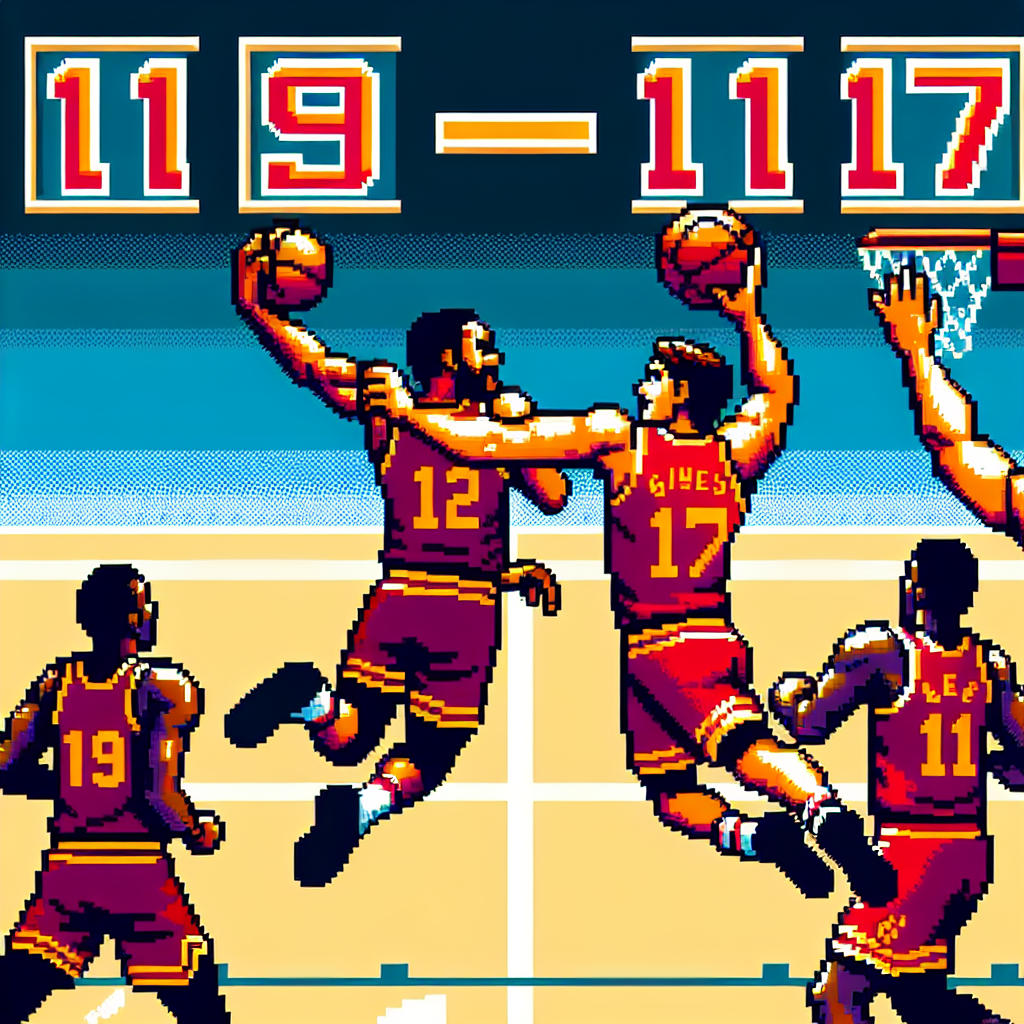
A thriller in Denver: Mitchell and Harden seal a statement road win for the Cavs
There are games that feel like a turning point — the kind that leave you buzzing on the flight home and convinced you just watched a team discover a new gear. Monday night’s 119-117 Cleveland win over the Denver Nuggets at Ball Arena was one of those games. Donovan Mitchell’s late composure and James Harden’s improbable step-back three turned what looked like another uphill battle into a punctuation mark on a long, successful road trip.
Hook: the scene in the final minute
With 32 seconds left, the Cavs trailed and the scoreboard read tension, not confidence. Harden — in just his second game with Cleveland — drilled a contested, step-back three to knot the game at 117. Then, with .9 seconds remaining, Mitchell drew a foul on Jamal Murray and calmly sank two free throws. Cue pandemonium: Cavaliers 119, Nuggets 117, and an exhale that felt like the whole roster owed it to the fans.
Why this mattered beyond two points
- This wasn’t just another win on the road. It was the finish of a five-game Western road trip that Cleveland completed with grit and poise.
- Harden’s arrival (acquired Feb. 4) has not been incremental — it’s reshaped Cleveland’s late-game profile and playmaking in a matter of nights.
- Beating the reigning-champion-core Nuggets in Denver is no small feat; Nikola Jokic still posted a triple-double, but the Cavs answered with balanced star power and timely defense.
The context: what Kenny Atkinson meant when he said he “knew what Cleveland was up against”
Cavs coach Kenny Atkinson’s comment before the game underlined the obvious: Denver is heavy on experience, size and playoff toughness. Nikola Jokic is a walking mismatch, Jamal Murray can hit shots from anywhere, and the Nuggets have a playoff DNA that pushes opponents to the brink. Atkinson’s warning wasn’t fear — it was respect. He knew his team would have to absorb pressure, survive runs, and then impose its own late-game identity. That’s exactly what Cleveland did.
- Cleveland leaned on Donovan Mitchell’s fearless creation: 32 points and 10 assists, including the free throws that decided the game. Mitchell is still the team’s engine.
- Jarrett Allen was a force inside (22 points, 13 rebounds), providing finishing and rim protection against a tough matchup.
- Harden brought spacing, craft and a veteran cold-bloodedness that altered the Nuggets’ end-of-game calculus.
Key observations from the game
- Late-game duo work: Mitchell and Harden already look like a complementary clutch pairing — Mitchell creates and finishes, Harden spaces, rebounds and makes plays under pressure.
- Depth and role clarity: Beyond the stars, guys like Jarrett Allen and the role players stepped up at crucial moments, which is crucial for playoff durability.
- Defense still matters: Jokic still had a triple-double (22/14/11), but turnovers and missed outside shots by Denver opened the window for Cleveland’s comeback.
- Coaching and adjustments: Atkinson’s game plan navigated Denver’s threats and kept the Cavs composed in the final possessions — a small coaching win that matters down the stretch of a season.
Memorable sequence (play-by-play feel)
- Cavs claw back from an 11-point deficit in the fourth after methodical offense and strong interior play.
- Allen’s lob dunk off Mitchell’s pass swung momentum and tightened the gap.
- Harden’s step-back three with 32 seconds left — contested, improbable, and perfectly timed — tied the game.
- Mitchell drew the foul with under a second remaining and hit both free throws. Jokic missed a buzzer-beating three. Final: 119-117.
What this suggests about Cleveland’s trajectory
This game isn’t a silver bullet, but it is the kind of chemistry-accelerator win that elevates belief. Harden’s addition was always about more than numbers — it was about late-game gravity and veteran instincts. When those traits combine with Mitchell’s explosiveness and Allen’s interior presence, the Cavs look like a multi-dimensional team capable of surviving hostile environments and closing out tight games. If they want to be taken seriously in the conference picture, wins like this are how they prove it.
My take
If you asked me which Cavs snapshot I’d frame from the last few nights, it’d be Harden stepping back with a hand in his face and Mitchell calmly sinking the pressure shots. The roster shifts this month were dramatic, but chemistry sometimes happens in a single play — and Cleveland got a handful of them in Denver. That’s the sort of game that can cement trust between new teammates, and between a team and its coach. Atkinson said he knew what they were up against; what he might not have known is how quickly this group would start answering that challenge.
Final thoughts
Wins like this do more than pad the standings. They teach a roster how to win together under duress. The Cavs leave Denver with a narrow road victory, renewed momentum, and a clearer sense of identity that could matter when the real stakes arrive in the spring.
Sources
Related update: We recently published an article that expands on this topic: read the latest post.
Related update: We recently published an article that expands on this topic: read the latest post.

Upsets, Runs and a Freshman Breakout: Stanford 95, North Carolina 90
There are games that feel like a yard-by-yard slog and then there are those where momentum flips so fast you can almost hear the rim rattling from coast to coast. Wednesday night at Maples Pavilion was the latter. Stanford rallied from a double-digit deficit and knocked off No. 14 North Carolina 95–90 on January 14, 2026 — a high-octane, three-heavy affair that left both teams with plenty to chew on.
Why this game mattered
- North Carolina arrived with Top-15 respectability and national expectations; Stanford wanted to prove last season’s upset wasn’t a fluke.
- The result further highlighted defensive concerns for the Tar Heels (particularly perimeter defense and late-game stops).
- For Stanford, the win underscored the rise of a freshman who can carry an offense and the potency of a modern perimeter attack.
What stood out
- Ebuka Okorie’s emergence
- The Stanford freshman exploded for a career-high 36 points and added nine assists. He created off the dribble, got to the line, and kept the Cardinal offense humming when UNC clamped down early. His 36 points set a freshman record for Stanford in a single game and felt like the difference-maker on the final run.
- Heat check: Stanford’s 3-point barrage
- Stanford drained 16 three-pointers on the night — an enormous number against a program that usually takes pride in defending the arc. That barrage erased North Carolina’s cushion and proved decisive down the stretch.
- North Carolina’s collapse from the perimeter
- The Tar Heels made only six threes and went nearly four minutes without a field goal during the decisive stretch. Carolina’s inability to close out on shooters and its struggles at the free-throw line (20-of-32) turned a game they led for large stretches into a nail-biter they ultimately lost.
- Late-game poise and clutch shooting
- Jeremy Dent-Smith hit the go-ahead triple with about a minute left, and Ryan Agarwal’s follow-up three effectively sealed the deal. Stanford found the right shooters in the right moments; UNC could not respond.
Game flow snapshot
- First half: North Carolina built an early 12-point lead behind Henri Veesaar and Caleb Wilson, taking advantage of transition opportunities and efficient looks.
- Second half: UNC extended that advantage to 12 early on, but Stanford chipped away — led by Okorie’s creativity and a hot perimeter stroke from Agarwal and Dent-Smith.
- Final minutes: A 7–0 Stanford run, timely threes, and steady free-throw shooting closed out a classic conference upset.
Breaking down the matchups
- Backcourt battle
- Caleb Wilson and Henri Veesaar combined for 52 points for UNC, but point production alone couldn’t compensate for team defensive lapses. Okorie’s dual threat — scoring and playmaking — forced UNC to alter its rotations and defensive matchups.
- Perimeter defense vs. modern spacing
- Stanford’s success underlined a broader truth: if you don’t respect the three-point line, you’re asking to be burned. UNC’s missing closeouts and the sheer volume of Stanford’s catch-and-shoot opportunities created a mismatch the Tar Heels couldn’t overcome.
- Rebounding and transition
- While not the headline, control of the glass and rebounding position in late possessions shaped the final possessions — Stanford got the offensive rebounds and extra chances that kept pressure on UNC’s defense.
Implications for both teams
- For Stanford
- This win builds confidence for a team that is starting to brand itself as a dangerous ACC opponent when its shooters are hot and Okorie is in rhythm. That combination — a dynamic freshman and multiple reliable shooters — gives Stanford staying power in close games.
- For North Carolina
- The Tar Heels need to address defensive fundamentals: closeouts, rotation communication, and late-game defensive discipline. Free-throw consistency is another nagging issue; making more of those 32 attempts would have swung the scoreboard margin in their favor.
What to watch next
- Can Okorie sustain this level of play against top defenses? Consistency from a freshman is rare, but if he keeps creating, Stanford turns into a real problem for opponents.
- Will UNC tighten perimeter defense and correct late-game lapse patterns? The schedule doesn’t get much kinder; immediate adjustments will be required to avoid a skid.
- Three-point volume: Are we seeing an outlier night or a shift in Stanford’s identity toward “let it fly” when shooters are hot?
My take
This was college basketball in one concentrated blast: star-making performance, momentum swings, and the sort of late-game drama that keeps fans awake. Stanford didn’t just outscore North Carolina — they exposed a set of tactical vulnerabilities (closeouts, late rotations, and free-throw execution) that any smart opponent will exploit. For Carolina, the talent is there — Wilson and Veesaar proved that — but elite teams find ways to stop the bleeding when shots stop falling.
Stanford’s victory feels less like a lucky night and more like a statement: when your freshman can orchestrate and your shooters heat up, even blue-blood programs are beatable.
Sources
Related update: We recently published an article that expands on this topic: read the latest post.

When the roof fell a little: BYU’s loss to Texas Tech and what it means
There’s a particular kind of silence that settles in the Marriott Center when a win streak finally snaps — the collective inhale of a crowd that thought they had the momentum, followed by the slow realization that the game slipped away. That’s exactly the feeling from BYU’s 72-67 loss to Texas Tech on Jan. 7, 2025: a tight contest that unraveled in a few brutal minutes and left more questions than answers. (deseret.com)
A quick snapshot
- Final score: Texas Tech 72, BYU 67.
- The loss ended BYU’s 14-game home winning streak at the Marriott Center. (espn.com)
- Texas Tech’s trio (Elijah Hawkins, Darrion Williams, Chance McMillian) combined to shoot the lights out and did the damage late. BYU’s defense struggled to close possessions in the final stretch. (deseret.com)
Why this game stings
-
The timing. BYU took a one-point lead with 6:50 to play and then watched Texas Tech score on six of the next seven possessions over about four minutes. That stretch turned a winnable game into a gap BYU couldn’t erase. It wasn’t a season-defining collapse, but it was a reminder: good teams close possessions when it matters. (deseret.com)
-
The three-point dagger. Texas Tech shot over 40% from deep in the second half, and Elijah Hawkins hit six threes en route to a 22-point night. When an opponent’s shooters get hot in a hostile arena, defenses need answers — and BYU didn’t have enough of them that night. (deseret.com)
-
Free throws and finishing. The box score tells part of the story: missed free throws and a relatively cold perimeter night from BYU contributed to the final five-point margin. Those are small margins that add up fast in close conference games. (deseret.com)
Three honest takeaways
-
BYU’s late-game defense needs to be more disciplined under pressure. A good defensive stop or two in that 6:50–3:00 window changes the narrative; instead the Red Raiders found rhythm and BYU lost theirs. (deseret.com)
-
Production from role players matters. Egor Demin flashed playmaking (12 points, six assists) but shot 4-of-12 and still looks like a work-in-progress offensively. When freshmen or secondary scorers are inconsistent, the burden shifts and defenses can key on the top options. (deseret.com)
-
This is a useful reality check — not a derailment. BYU had been riding a wave of confidence at home; losing a close game to a quality Texas Tech squad exposes areas to tighten up but does not erase everything the team has done well. Use the loss to get better, not as proof everything is broken. (deseret.com)
What to watch next
-
How Kevin Young’s squad responds in practice — specifically late-possession defense, switching on screens, and free-throw focus. Those micro-details are the quickest fixes and the ones that flip close games in your favor.
-
Egor Demin’s development. He showed flashes of a facilitator who can create for others; turning those flashes into consistent scoring and smarter defensive reads will pay dividends.
-
Bench scoring and rebounding balance. If the Cougars can get consistent minutes and reliability from their second unit, close games will tilt back their way.
A few bright spots amid the disappointment
-
BYU still competed; this wasn’t a blowout. Fousseyni Traore led the effort and the team had stretches where it looked the part. Those moments are building blocks.
-
The loss provides clearer diagnostic data than a comfortable win would. When things go wrong in specific ways — poor late-game defense, missed freebies, an opponent heating up from deep — coaches and players have precise problems to solve.
Final thoughts
Losing the home streak and a close game to a quality opponent stings — and it should. But it’s also a moment: a reminder that margins are small in Big 12 play and that growth often comes from tightening details. BYU’s season isn’t defined by one loss; it’s defined by how the team learns and adjusts. If the Cougars use this like film study fuel rather than a hangover, the Marriott Center will feel a lot different next time Texas Tech rolls into town. (deseret.com)
Further reading
- BYU’s official game recap. (byucougars.com)
- Deseret News’ three takeaways piece that framed the defensive breakdown and player notes. (deseret.com)
- AP/ESPN recap with box score and play-by-play detail. (espn.com)
Sources
Related update: We recently published an article that expands on this topic: read the latest post.
Related update: We recently published an article that expands on this topic: read the latest post.

A comeback for the ages: Blazers end Thunder’s last unbeaten run
An electric night at the Moda Center turned into a reminder that no lead is truly safe in the modern NBA. On Wednesday, the Portland Trail Blazers erased a 22-point first-quarter deficit to beat the Oklahoma City Thunder 121–119 — and in the process handed the defending champions their first loss of the season. What looked like a runaway game for OKC early became a pulse-pounding finish, and the league’s last unbeaten tag came tumbling down.
Why this game mattered
- The Thunder entered the night as the NBA’s final undefeated team, riding an 8–0 start.
- Portland’s comeback was dramatic — down by 22 in the first quarter and never leading until late in the fourth.
- The win snapped Portland’s long losing stretch to Oklahoma City and injected life into a Blazers squad looking to reestablish itself.
Game snapshot
- Final score: Portland Trail Blazers 121, Oklahoma City Thunder 119.
- Key performers:
- Deni Avdija: 26 points, 10 rebounds, 9 assists (nearly a triple-double).
- Jrue Holiday: 22 points, clutch free throws down the stretch.
- Shai Gilgeous-Alexander: 35 points, 9 rebounds for Oklahoma City.
- Turning point: A decisive 9–0 run by Portland late in the fourth quarter flipped momentum and gave the Blazers their first lead with about six minutes remaining.
- Closing drama: With 0.6 seconds left and trailing by three, Isaiah Joe was fouled on what replay showed to be a three-point attempt; his toe was on the arc, so he shot two free throws, making one and intentionally missing the second. OKC’s last-second tip-in did not connect.
The comeback in context
Comebacks like this are more than just a single-game thrill — they tell you about identity. Portland’s rally showcased:
- Veteran leadership: Jrue Holiday’s late-game poise (and free-throw composure) was textbook.
- Balanced attack: Avdija’s near-triple-double hinted at how Portland can create mismatches without relying on a single superstar.
- Tactical adjustments: After a brutal opening quarter (41–21 in OKC’s favor), Portland tightened rotations, leaned into 3-point shooting and stretched OKC’s defense by mixing lineups.
For Oklahoma City, the result is a harsh reminder that depth, availability and game management matter. OKC was missing several contributors, and while Shai was spectacular (35 points), basketball is a team product — and Portland out-executed them when it mattered.
What this says about both teams
- Portland: This win can be a turning point. Overcoming a 22-point deficit requires belief and execution; if the Blazers can bottle that resilience, they’ll be dangerous in stretches this season. For a young roster still finding its identity, veteran calm and role-player contributions are enormous positives.
- Oklahoma City: The Thunder remain talented and dangerous — the early-season buzz was earned. But this loss highlights potential vulnerability when rotations are thin and key role players are absent. It’s also a reminder that hot starts can be fragile and that game management in the fourth quarter remains crucial.
Moments that will linger
- Avdija’s late surge and efficiency from the line (he finished 15-of-16 at the stripe in the game) — impact beyond the box score.
- Holiday’s late-game shotmaking and free throws that ultimately sealed the win.
- The razor-thin ending where a toe on the arc and an intentional miss determined whether the Thunder would force overtime.
Takeaways worth remembering
- Upsets and comeback wins can reshape a team’s narrative quickly; momentum swings matter in a long season.
- Star scoring (Shai’s 35) is vital, but basketball still rewards depth and situational execution.
- The Thunder’s loss is not a collapse so much as a cautionary note about availability and closing out games; for Portland, it’s evidence they can compete with top teams when everything clicks.
My take
There’s a special electricity when a team erases a massive deficit and wins in dramatic fashion — it glue-s everything: coaching decisions, veteran steadiness, role players stepping up. Portland’s victory wasn’t a fluke; it was a full-team effort with timely shooting and defensive stops. For Oklahoma City, this game will sting, but the core is still elite. Expect both teams to take lessons from this one — Portland for confidence, Oklahoma City for course correction.
Sources
Related update: We recently published an article that expands on this topic: read the latest post.
Related update: We recently published an article that expands on this topic: read the latest post.