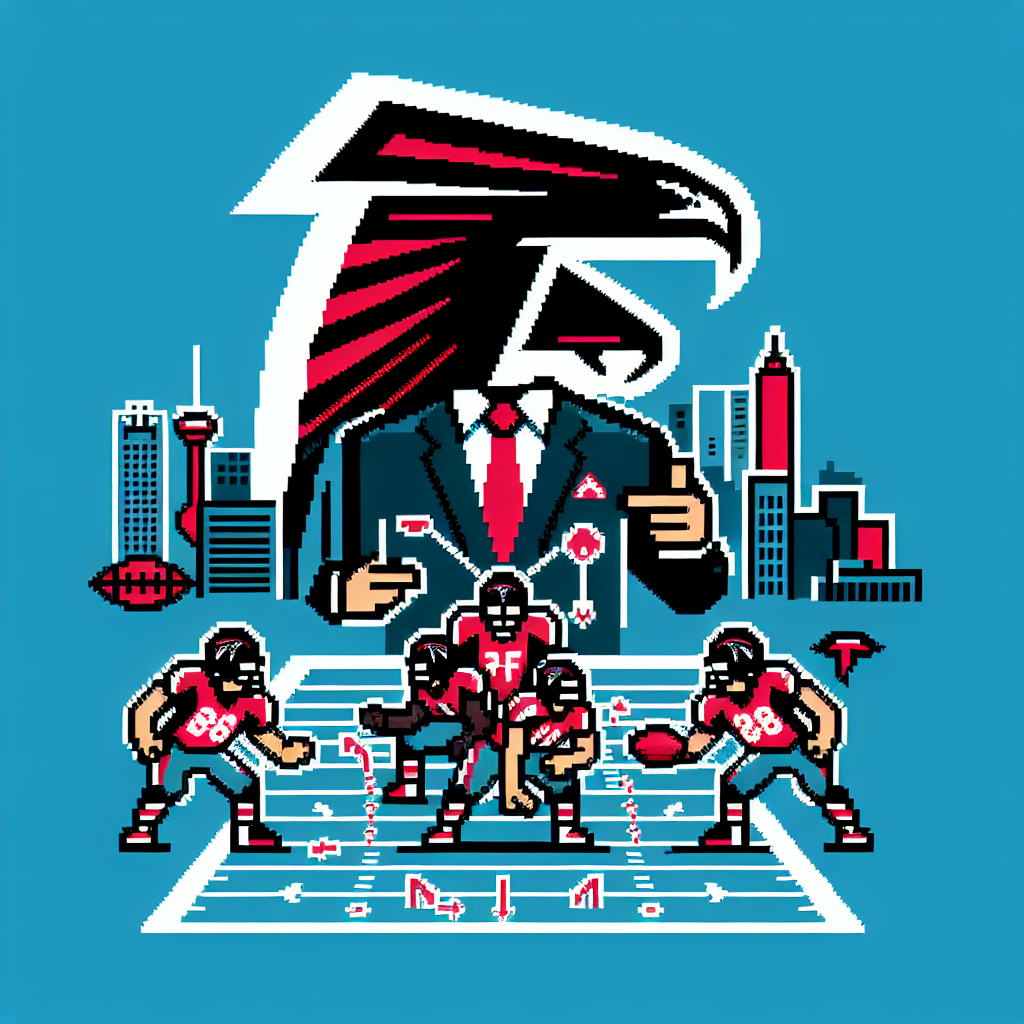
When continuity meets change: Why the Falcons kept Jeff Ulbrich after hiring Kevin Stefanski
A crisp weekend in Atlanta brought big headlines: Kevin Stefanski was introduced as the Falcons’ new head coach on January 17, 2026 — and two days later the franchise quietly made another important decision. Jeff Ulbrich, the architect behind Atlanta’s sudden pass-rush renaissance, will stay on as defensive coordinator under Stefanski on a new three‑year deal. The pairing is one part bold reset and one part deliberate continuity — and that mix could define the next chapter for the Falcons. (atlantafalcons.com)
Why this matters right now
- The Falcons hired Kevin Stefanski as head coach on January 17, 2026, handing him the keys to a roster with clear weapons but lingering questions at quarterback and continuity questions on staff. (atlantafalcons.com)
- Ulbrich’s defense produced a franchise‑record 57 sacks in 2025 and improved Atlanta’s pass rush from a chronic weakness into a clear strength — a turnaround that owner Arthur Blank and new leadership wanted to preserve. Keeping Ulbrich preserves momentum on that side of the ball. (espn.com)
- Stefanski comes from an offensive, run‑centric background; retaining Ulbrich signals a two‑pronged approach: refresh the offense while keeping the defensive foundation intact. (atlantafalcons.com)
The narrative at play
Think of the Falcons’ offseason so far as a chess move followed by a safety blanket. Atlanta hired a coach known for play‑calling discipline, offensive structure and quarterback management. Stefanski’s résumé includes two AP Coach of the Year awards and sustained emphasis on a physical rushing attack. That’s the chess move — a clear directional choice for the offense and culture. (atlantafalcons.com)
Keeping Jeff Ulbrich is the safety blanket. Ulbrich’s 2025 defense flipped a stubborn team weakness into a real asset: younger edge rushers like James Pearce Jr. and Jalon Walker broke out, and the unit posted numbers that made opponents respect Atlanta’s ability to pressure quarterbacks. Owner and new president-level leadership preferred not to hit the reset button on a defense that finally looked like it had identity and upward trajectory. (espn.com)
What this could mean on the field
- Defensive identity stays: With Ulbrich in place, expect the Falcons to keep aggressive pass-rush concepts and continue prioritizing edge development. That helps simplify defensive planning while Stefanski installs his offensive concepts. (espn.com)
- Offense refresh under Stefanski: Stefanski will likely bring trusted assistants and an emphasis on a strong rushing foundation and clean QB mechanics; how he meshes with Atlanta’s quarterback situation (Kirk Cousins vs. Michael Penix Jr. recovery timeline) will be a key storyline. (atlantafalcons.com)
- Balance of power in the building: Retaining Ulbrich — with a new three‑year contract reported — suggests owner and president want collaboration, not wholesale staff purge. That can speed up roster construction and offseason program planning. (nbcsports.com)
Things to watch this offseason
- Which Stefanski assistants follow him to Atlanta, and how their offensive philosophy integrates with the existing roster and Bijan Robinson’s skill set. (atlantafalcons.com)
- How the Falcons manage the QB timeline for Michael Penix Jr.’s recovery versus a potential veteran plan — Stefanski’s past experience with rotating quarterbacks is relevant context. (theguardian.com)
- Whether Ulbrich’s defensive scheme remains the same or is adapted to better complement Stefanski’s offensive tempo and personnel demands. (espn.com)
Notes on fit and risk
- The upside: Continuity on defense buys Stefanski breathing room to implement offensive systems without sacrificing recent defensive gains. Young pass-rushers already on the roster give Ulbrich real tools to build with. (espn.com)
- The risk: If Stefanski and Ulbrich’s philosophies clash in practice planning, game planning, or personnel priorities — especially in how draft/FA resources are allocated between offense and defense — the “best of both worlds” approach could devolve into mixed messaging. Alignment up front will be essential. (atlantafalcons.com)
My take
This move reads as savvy and pragmatic. The Falcons could have made a clean sweep and risked losing the defensive momentum that finally emerged in 2025. Instead, they paired a proven offensive-minded head coach with the defensive architect who gave them a sudden identity. Success won’t be automatic — quarterback clarity and staff alignment are the heavy lifts — but the franchise has at least given itself a real shot at stabilizing both sides of the ball. If Stefanski and Ulbrich can coordinate a coherent plan that values complementary strengths, the Falcons might be building toward consistency instead of another reboot.
Final thoughts
Coaching changes are often loud and disruptive. The quiet, deliberate retention of Jeff Ulbrich after hiring Kevin Stefanski suggests Atlanta’s leadership prefers a hybrid approach: change where they need it most (offense/head coach) and continuity where it actually worked (defense). That’s a promising formula — provided everyone is rowing the same way.
Sources
Related update: We recently published an article that expands on this topic: read the latest post.
Related update: We recently published an article that expands on this topic: read the latest post.

Lamar Jackson vs. Brian Flores: A Blitzing Chess Match in Week 10
The noise at U.S. Bank Stadium, the hum of horns, and the flash of purple on every sideline — Week 10 brings more than a matchup. It’s another test of development for Lamar Jackson, who’ll face a Vikings defense built to pester quarterbacks with one of the league’s heaviest blitzing diets under defensive coordinator Brian Flores. Four years after Jackson’s difficult night in Miami against a Flores scheme that leaned on repeated pressure, the storyline is no longer just about survival — it’s about how much he’s grown.
Why this matchup matters
- Brian Flores has been aggressive in his approach to pressure quarterbacks, and his Vikings have blitzed at one of the highest rates in the league this season.
- Jackson’s growth against blitz-heavy fronts has been a clear theme of the last two seasons: quicker reads, more accurate intermediate throws, and better decisions when the pocket collapses.
- The Ravens offense must execute silent, crisp communication (U.S. Bank is famously loud), quick-release passing concepts, and creative protections to blunt Minnesota’s attack.
The backstory: Miami, 2021 and the turning point
On Nov. 11, 2021, Lamar Jackson endured one of the roughest outings of his career when Brian Flores — then coaching Miami — dialed up obsessive blitz packages. Jackson faced an extraordinary number of defensive-back blitzes and the Dolphins’ pressure scheme disrupted his rhythm, resulting in a low-scoring outing for Baltimore. That game is often referenced in discussions about how opposing coaches can try to force Jackson into uncomfortable, tight-pocket situations.
What’s different now is clear: Jackson isn’t the same young quarterback from 2021. He and the Ravens have refined the offense, improved protection schemes, and added a more reliable receiving corps and intermediate passing game to punish over-aggression.
How Jackson has evolved against the blitz
- Faster reads and streamlined progressions — Jackson takes what the defense gives, often getting the ball out quickly to exploit vacated zones.
- Improved intermediate accuracy — rather than trying to force deep shots when pressure arrives, Jackson’s comfort throwing between the numbers and to tight ends/hot reads has improved.
- Mobility as a complement, not crutch — his legs threaten scrambling lanes and buy time, but the offense now emphasizes quick passes and spacing to neutralize blitzing defenders.
Recent game data and reporting show Jackson performing at a high level against blitzes since 2024: strong passer ratings, positive expected points added (EPA), and favorable touchdown-to-interception numbers when teams send extra rushers. That’s not luck — it’s a combination of offensive coaching, scheme tweaks, and Jackson’s own growth in processing pressure.
What the Vikings will do (and why it works)
- High blitz rate: Minnesota ranks among the league leaders in blitz percentage, often sending different personnel and looks to disguise where pressure is coming from.
- Scheme variety: Flores mixes man and zone pressures, DB blitzes and linebacker stunts, aiming to create confusion pre-snap and force communication errors.
- Situational aggression: The Vikings leverage crowd noise and situational pressure (early downs, third-and-medium) to try to get the Ravens off rhythm.
If Flores can consistently beat Baltimore’s protections or force false starts/communication breakdowns in the loud U.S. Bank environment, the blitzes will pay dividends. But high-volume blitzing leaves vulnerabilities — namely soft middle zones, quick-developing hot routes, and fewer players in deep coverage.
Keys for the Ravens to neutralize the blitz
-
Quick game and timing throws
- Emphasize screens, slants, and two- to five-step drop timing routes so Jackson can release before pressure arrives.
-
Maximize pre-snap alignment and silent signals
- With U.S. Bank’s noise, crisp visuals and hand signals are essential so the offense isn’t misaligned when the snap comes.
-
Use personnel and motion to reveal blitzes
- Motion and formation shifts can identify where pressure is likely to originate and let Jackson adjust protections or the play-call.
-
Trust the intermediate passing game and short-area separations
- Tight ends and slot receivers can punish linebackers vacating zones when they pour rushers.
-
Keep the edge threat contained
- If the Ravens can prevent immediate edge pressure, Jackson has more room to manipulate the pocket or find the hot option.
What to watch during the game
- How often Flores sends DB/linebacker blitzes compared to zone pressure.
- Jackson’s pre-snap cadence: are the Ravens using silent signals successfully?
- Third-down conversions against blitz looks — will Lamar complete quick, high-value throws?
- Which matchups Vikings linebackers or safeties struggle to cover in space after blitzes are sent.
A few tactical matchups that could decide the game
- Lamar vs. disguised pressure — his ability to diagnose and adjust is crucial.
- Mark Andrews / slot targets vs. blitzing linebackers — exploiting vacated zones could be the margin.
- Ravens offensive line communication vs. raw blitz frequency — minimizing stunts and unexpected free rushers.
My take
This isn’t simply a rematch of a bad night in 2021. It’s an important measuring point for Lamar Jackson’s development as an all-weather, pressure-resistant QB. The Vikings will bring noise — literal and schematic — but the Ravens offense has more tools now: a cleaner intermediate passing game, clearer pre-snap signaling, and a quarterback who has repeatedly shown he can turn blitzing aggression into opportunity.
If Baltimore executes quick, decisive plays and avoids self-inflicted mental errors in a loud stadium, Jackson should turn this blitz-heavy test into an advantage. If Minnesota’s pressure creates confusion up front or forces turnovers, the game tilts the other way. It’s a chess match built on timing, discipline, and the ability to turn heat into holes.
Highlights to remember
- Flores’ blitz-heavy identity is the central storyline.
- Jackson’s growth against pressure has been real and measurable.
- Execution in communication, quick passing, and exploiting vacated zones will likely determine the outcome.
Final thoughts
Football at this level is a continuous evolution. Lamar Jackson’s journey from the difficult night in 2021 to now shows how an elite athlete and a responsive coaching staff can adapt and turn an opposing strength into an exploitable pattern. Week 10 will be a fresh evaluation — not because the past dictates the future, but because it frames the adjustments both teams bring to the field.
Sources
Related update: We recently published an article that expands on this topic: read the latest post.
Related update: We recently published an article that expands on this topic: read the latest post.
Hey there, Hokie fans! Have you heard the news? Virginia Tech has made a big move by bringing in Sam Siefkes from the Arizona Cardinals to be our new defensive coordinator. According to sources, Siefkes has some serious chops when it comes to stopping offenses, and that's exactly what we need here in Blacksburg.
I don't know about you, but I'm excited to see what Siefkes can bring to the table for our defense. With his background in coaching linebackers for the Cardinals, he's sure to have some fresh ideas and strategies to help our team dominate on the field.
And it's always a good sign when the coach of the team you're taking someone from has nothing but good things to say. Arizona coach Jonathan Gannon praised Siefkes for his "unbelievable knowledge" of defense, which bodes well for us as we head into the next season.
So, here's to hoping that Siefkes can help lead our defense to new heights and bring some much-needed success to our beloved Hokies. Welcome to Virginia Tech, Coach Siefkes - we can't wait to see what you'll bring to the table! Let's go, Hokies! 🦃🏈 #HokieNation #DefendTheDen