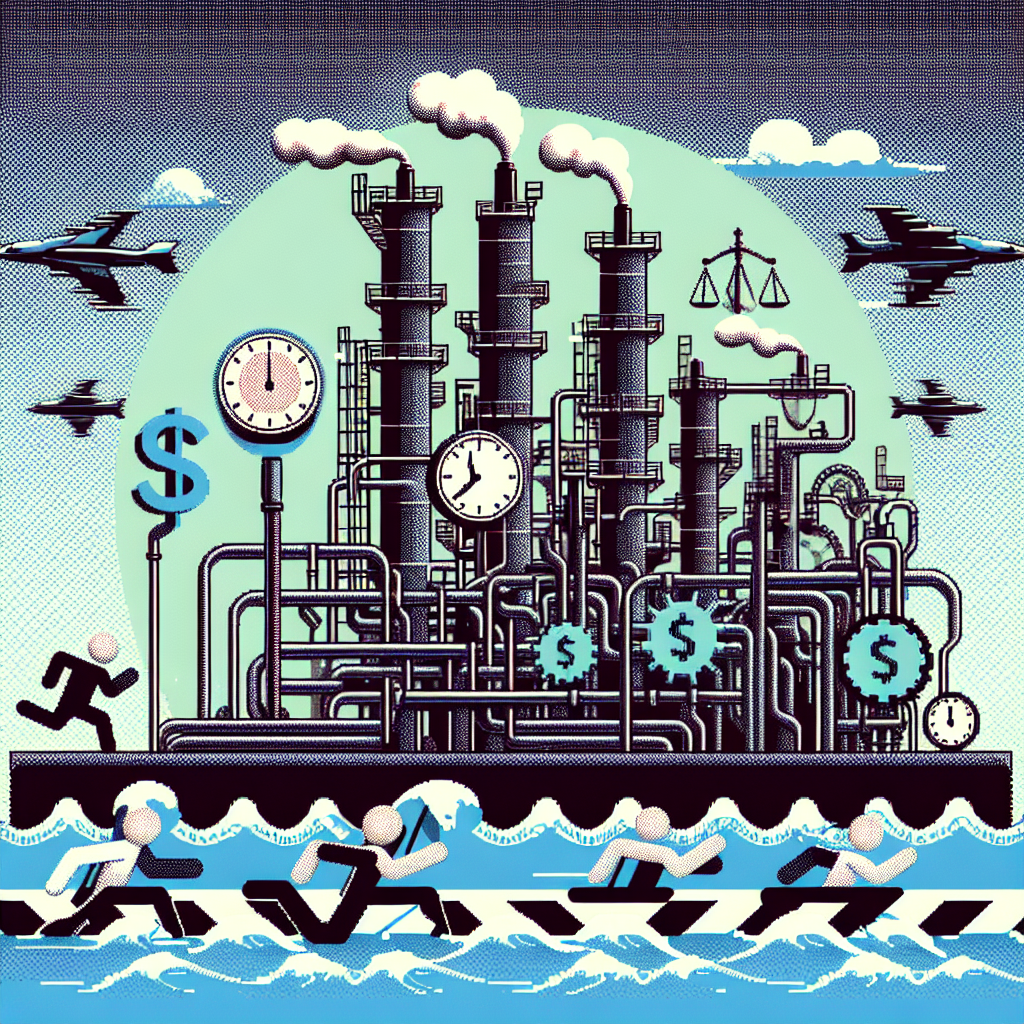
LNG Windfall Faces Uncertain Future | Analysis by Brian Moineau

When War Fuels Profits: The Complicated Future of LNG

The sentence "Liquefied natural gas’s reputation as a secure and affordable fuel is taking a hit" has more truth to it today than it did a few years ago. What began as a geopolitical lifeline for Europe after Russia’s 2022 invasion of Ukraine — and a revenue windfall for exporters — has exposed LNG’s fragility: prices spike, supply chains fray, and long-term demand becomes uncertain. The upshot is that LNG producers are enjoying near-term profits, but the industry now faces a host of strategic, political, and environmental headwinds. (iea.org)

Why LNG looked like the answer

After 2022, European countries urgently needed alternatives to Russian pipeline gas. The flexibility of global LNG markets allowed cargoes to be rerouted quickly, turning LNG into a stopgap baseload that kept factories humming and homes warm. For exporters — especially the U.S. — that scramble translated into full terminals, higher spot premiums, and big cash flows. Policy choices and geopolitical pressure made LNG both strategic and profitable almost overnight. (iea.org)

The problem statement: Liquefied natural gas’s reputation as a secure and affordable fuel is taking a hit

The core problem is straightforward: security of supply does not equal price stability. When Europe pivoted away from piped Russian gas, it created fierce competition for LNG cargoes worldwide. That competition pushed prices higher and more volatile, exposing consumers — and governments — to swings that undercut the "affordable" part of LNG’s promise. Meanwhile, producers face reputational and regulatory risks as climate policy tightens and critics argue that rapid expansion of LNG locks in emissions. (iea.org)

  • Short-term: higher prices and strong margins for exporters.
  • Medium-term: more supply coming online, which could flip margins lower.
  • Long-term: policy and climate goals may reduce demand or change contract structures.

The investor dilemma

Investors and companies have to choose between doubling down on LNG capacity or pivoting toward lower-carbon alternatives. Several forces shape that choice:

  • New projects require multi‑decade capital and rely on expectations of steady demand. But demand may ebb if Europe accelerates renewables and storage or if LNG prices become politically intolerable. (bcg.com)
  • Buyers are wary of "take-or-pay" long-term contracts after seeing spot-driven volatility. That raises financing costs and complicates project economics. (iea.org)
  • Political and regulatory risk is rising: domestic policymakers debate export limits and environmental impacts, while importing regions consider decarbonization roadmaps. (apnews.com)

Put simply: cash flows today look great, but the horizon is foggy.

Geopolitics keeps reshaping the market

Russia’s reduction of pipeline flows to Europe forced a rebalancing of global gas trade. Europe dramatically increased LNG imports, squeezing global cargoes and altering trade patterns between North America, Asia, and Europe. That rebalancing created winners and losers: U.S. exporters and some Asian suppliers picked up market share, while energy-strained developing countries felt price pain. At the same time, Russia and other players are trying to rebuild or redirect export capacities, which could shift the balance again. (iea.org)

This is not a one-off shock. Policy moves, diplomatic deals, and even the resumption or expansion of pipeline projects can flip demand and prices quickly. Energy security decisions are now political decisions with commercial consequences.

Market dynamics: oversupply risk meets stubborn demand-side uncertainty

Analysts warn of a familiar cycle: a supply shock drives investment in new capacity, which later risks producing an oversupply just as demand growth slows. Several indicators matter:

  • Planned liquefaction capacity worldwide has grown as producers rushed to fill the post‑2022 demand gap. If growth in LNG-consuming sectors slows — because of efficiency, electrification, or renewables — prices could fall. (spglobal.com)
  • Contract structures are shifting: more short-term and spot trade increases liquidity but also volatility, complicating project financing that traditionally relied on long-term contracts. (iea.org)

So the market might move from "super‑charged profits" to "squeezed returns" within a few years, depending on how supply additions and policy responses play out.

Who bears the biggest risk?

  • Consumers in import-dependent countries face price and supply volatility.
  • Export-dependent regions and workers face boom‑and‑bust cycles tied to global politics.
  • Investors and project financiers risk stranded assets if policy and market shifts accelerate decarbonization. (bcg.com)

A practical path forward

The industry — and policymakers — should pursue a three‑pronged approach:

  1. Stabilize contracts: blend long-term offtakes with flexible clauses that reflect volatility.
  2. Invest in infrastructure resilience: more regas terminals, storage, and interconnectors reduce single-point vulnerabilities.
  3. Align with climate goals: couple LNG projects with emissions mitigation (methane controls, carbon management) and credible transition plans to reduce political risk. (iea.org)

Those steps won’t erase the trade-offs, but they can make LNG a more credible bridge fuel rather than a political flashpoint.

Final reflections

LNG’s post‑2022 profit story is real — but it’s also a warning. Short-term gains have not resolved long-term questions about affordability, security, and climate alignment. The market has become more liquid and more political at once, and that makes forecasting harder for everyone: policymakers, buyers, and producers.

If LNG is to remain a useful part of the energy mix, it needs to be managed as part of a broader strategy — one that admits volatility, hedges risks, and accelerates decarbonization where feasible. Otherwise, today's profits could be tomorrow’s stranded assets and political headaches. (iea.org)

What to remember

  • LNG brought relief and profits after 2022, but price stability and reputational strength have weakened. (iea.org)
  • The market now faces a tug-of-war: more supply coming online versus demand uncertainty from policy and clean-energy transitions. (spglobal.com)
  • Smart contracting, resilient infrastructure, and climate-aligned investments will determine whether LNG is a transitional ally or a short-lived bonanza.

Sources


Related update: We recently published an article that expands on this topic: read the latest post.


Related update: We recently published an article that expands on this topic: read the latest post.

Wind Power Momentum Outsmarts Politics | Analysis by Brian Moineau

Wind power will continue to grow, despite Trump administration's attempts to halt renewable energy

Wind power will continue to grow, despite Trump administration's attempts to halt renewable energy — that’s the striking conclusion experts keep repeating as policy fights and court battles play out. Even when federal decisions pause leases or revoke permits, the economics, demand for electricity, and state-level commitments are pushing wind forward. This is a story of momentum meeting politics: project pipelines wobble, but the larger forces that favor wind keep nudging the industry ahead.

Why the headlines matter

Over the past year, the federal government has taken aggressive steps to pause or reverse wind-energy approvals — from suspending offshore wind leases to attempting broad orders halting wind projects on federal lands and waters. Those moves grabbed headlines and rattled developers, workers and coastal communities that were banking on new jobs and tax revenue.

Yet courts, market signals, and practical realities complicate a simple narrative of “government stops renewables.” Federal judges have struck down some orders as arbitrary and unlawful, supply chains are recovering, and corporate buyers and utilities still sign long-term power contracts. As a result, many experts say policy attacks will slow growth but not stop it.

The forces driving wind growth

  • Strong economics. Costs for wind generation — especially onshore wind and increasingly larger, more efficient offshore turbines — have fallen dramatically in the past decade. Investors and utilities chase cheaper electricity, and wind often delivers.
  • Rising electricity demand. Data centers, manufacturing, and electrification of transport and heating are increasing power needs. That demand creates more room for new wind capacity.
  • State and corporate commitments. Many states maintain clean-energy mandates or targets, and corporations sign renewable energy deals to reduce emissions. These commitments create predictable demand that underpins projects.
  • Legal and institutional checks. Courts and regulatory processes have sometimes blocked or slowed administration attempts to cancel projects, allowing many developments to proceed.

Together, these factors create “institutional inertia” toward renewables. Policies can nudge the pace, but they rarely rewrite market fundamentals overnight.

Political headwinds, real and immediate

That said, the Trump administration’s actions are not symbolic fluff — they carry real consequences.

  • Offshore projects face uniquely acute uncertainty when federal leases and permitting are paused. Developers delay construction and contracts become harder to finance.
  • Revoking permits after years of review can spook private investors, increasing perceived political risk and the cost of capital for future projects.
  • Short-term job losses and supply-chain impacts are already occurring in some regions where construction stalled.

Therefore, while wind’s trajectory stays upward in many scenarios, the path will be bumpier and more expensive if federal resistance persists.

Wind power will continue to grow, despite Trump administration's attempts to halt renewable energy: the evidence

Several recent developments back the experts’ optimism:

  • Federal court rulings have overturned at least one broad executive order aimed at halting wind development, citing legal problems. That creates precedent and slows administration efforts to unilaterally stop projects. (Source: ABC News and AP reporting.)
  • Industry data and independent analysts project continued additions to wind capacity because demand and economics remain favorable. (Source: NPR and industry analyses.)
  • Major companies and state utilities continue signing long-term power purchase agreements (PPAs) and investing in transmission upgrades that favor large-scale renewables over the long run.

These elements mean the industry can absorb political blows and still expand — though not without friction.

The investor dilemma

Investors now face a calculus of navigating political risk versus long-term returns.

  • Short-term: Uncertainty can raise financing costs, stall projects, and shift investor appetite to regions or technologies perceived as safer.
  • Long-term: The global trend — falling costs, electrification, and corporate demand — makes wind an attractive asset class over decades.

Consequently, many institutional investors diversify geographically and across technologies, while developers seek stronger contractual protections to insulate projects from policy whiplash.

Regional resilience and uneven impacts

Not all parts of the wind industry are affected equally.

  • Onshore wind: Generally more resilient because it’s cheaper to build and benefits from state-level policies.
  • Offshore wind: More vulnerable due to greater reliance on federal leases, maritime approvals and larger upfront capital commitments.
  • State-led markets (e.g., those with binding Renewable Portfolio Standards) continue to provide secure pipelines even if federal policy is hostile.

Thus, the administration’s moves shift the distribution of growth rather than erase it.

What to watch next

  • Legal outcomes: Continued court challenges will shape whether federal attempts to pause projects hold or collapse.
  • State policy responses: Some states may accelerate their own permitting and incentive programs to counter federal pushback.
  • Corporate procurement: Large buyers — tech companies, utilities, manufacturers — can lock in projects through PPAs, effectively bypassing political obstacles.
  • Financing trends: If capital remains available at scale, many projects can continue despite federal uncertainty.

Together, these indicators will reveal whether the industry merely slows or pivots and accelerates in other directions.

Key points to remember

  • Policy shocks can delay projects and raise costs, but they rarely reverse structural demand and cost advantages.
  • Offshore wind is most exposed to federal actions; onshore wind and state-led initiatives are comparatively robust.
  • Investors, utilities, and corporations play a decisive role — their commitments can counterbalance federal resistance.
  • Court rulings have already checked some federal actions, underscoring the importance of legal and institutional constraints.

My take

Politics will always be part of the energy story, but remember that energy systems are built on economics and demand as much as policy. When cheaper, scalable technologies meet growing electricity needs, momentum becomes hard to stop. The Trump administration’s efforts may reshape timelines, create regional winners and losers, and raise costs — but the structural tailwinds behind wind power remain strong. Expect a more complex, contested transition rather than an abrupt reversal.

Sources


Related update: We recently published an article that expands on this topic: read the latest post.


Related update: We recently published an article that expands on this topic: read the latest post.

“They’re Crushing Us Completely”: China’s Offshore Wind Revolution Builds Thirty Five Megawatt Monsters While America Falls Behind – Energy Reporters | Analysis by Brian Moineau

“They’re Crushing Us Completely”: China’s Offshore Wind Revolution Builds Thirty Five Megawatt Monsters While America Falls Behind – Energy Reporters | Analysis by Brian Moineau

Title: Riding the Wind: China’s Offshore Wind Revolution and America’s Lagging Efforts

In recent years, the global race for renewable energy dominance has intensified, and China has emerged as a formidable contender, particularly in the realm of offshore wind energy. According to a recent article by Energy Reporters, China is not just participating in this race—they’re setting the pace with the creation of massive 35-megawatt offshore wind turbines. While the United States has made strides in renewable energy, particularly solar power, it seems to be stumbling in the offshore wind arena, much to the chagrin of energy enthusiasts and environmentalists alike.

China’s Offshore Wind Revolution

China’s ambitious leap into offshore wind energy is not just a testament to its engineering prowess but also a reflection of its strategic focus on sustainable development. The country’s latest 35-megawatt offshore wind turbines are colossal, both in size and energy output. These turbines are part of China’s broader vision to reduce its carbon footprint, a goal that has been underscored by its commitment to peak carbon emissions before 2030 and achieve carbon neutrality by 2060.

China’s success can be attributed to a combination of supportive government policies, substantial investment in research and development, and a domestic manufacturing sector capable of producing the necessary components at scale. This approach has not only fueled advancements in technology but has also stimulated economic growth and job creation within the renewable energy sector.

America’s Offshore Wind Challenges

On the flip side, the United States, despite its vast coastlines and technological capabilities, has been slow to capitalize on offshore wind opportunities. Regulatory hurdles, fragmented energy policies, and a relatively nascent domestic supply chain have hindered progress. While projects like the Vineyard Wind off the coast of Massachusetts signal the beginning of a shift, the U.S. is still playing catch-up. According to a report by the International Energy Agency (IEA), America will need to accelerate its efforts to harness the potential of offshore wind if it hopes to close the gap with China.

A Global Perspective

The contrast between China and the United States in offshore wind development is reflective of broader global trends in renewable energy. For instance, Europe has long been a leader in offshore wind, with countries like the UK, Germany, and Denmark setting benchmarks for others to follow. The European Union’s Green Deal and its ambitious targets for carbon neutrality have spurred significant investments in wind energy, serving as a model for others.

Beyond wind energy, the global shift towards renewables is also evident in burgeoning solar markets in India and Australia and advancements in battery storage technology. These efforts collectively highlight the world’s pivot towards sustainable energy solutions amid the growing urgency of climate change.

Final Thoughts

China’s offshore wind revolution serves as both an inspiration and a wake-up call. It underscores the importance of strategic investment, government support, and innovation in driving energy transitions. For the United States, the challenge is not just to catch up but to leapfrog—to leverage its technological and economic strengths to build a robust offshore wind sector that can compete on a global scale.

As the winds of change continue to blow, the world’s energy future will be defined by those who can harness the power of innovation and sustainability. While the race is far from over, it’s clear that the leaders of tomorrow’s energy landscape will be those who invest wisely today. In the spirit of healthy competition, perhaps it’s time for America to dust off its proverbial running shoes and get back in the race.

Read more about AI in Business

Read more about Latest Sports Trends

Read more about Technology Innovations


Related update: We recently published an article that expands on this topic: read the latest post.


Related update: We recently published an article that expands on this topic: read the latest post.