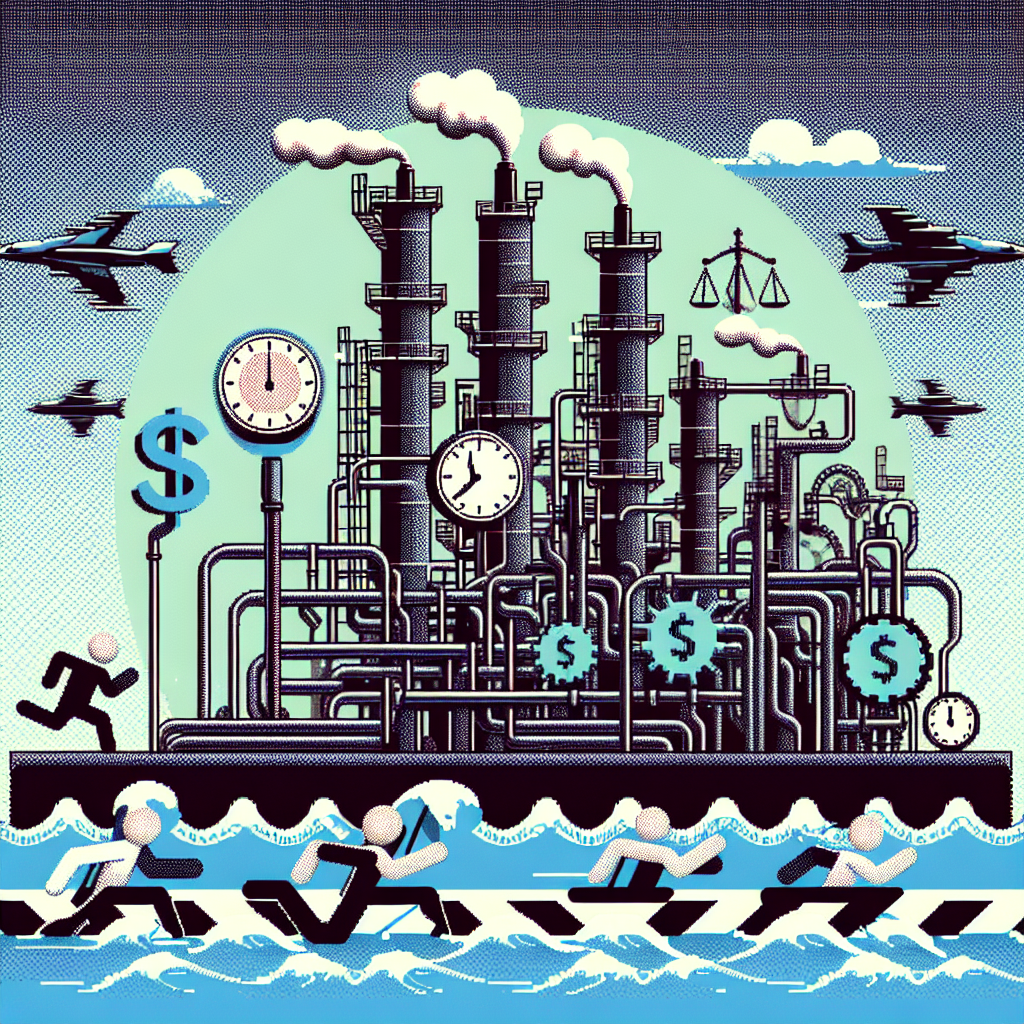
When War Fuels Profits: The Complicated Future of LNG
The sentence "Liquefied natural gas’s reputation as a secure and affordable fuel is taking a hit" has more truth to it today than it did a few years ago. What began as a geopolitical lifeline for Europe after Russia’s 2022 invasion of Ukraine — and a revenue windfall for exporters — has exposed LNG’s fragility: prices spike, supply chains fray, and long-term demand becomes uncertain. The upshot is that LNG producers are enjoying near-term profits, but the industry now faces a host of strategic, political, and environmental headwinds. (iea.org)
Why LNG looked like the answer
After 2022, European countries urgently needed alternatives to Russian pipeline gas. The flexibility of global LNG markets allowed cargoes to be rerouted quickly, turning LNG into a stopgap baseload that kept factories humming and homes warm. For exporters — especially the U.S. — that scramble translated into full terminals, higher spot premiums, and big cash flows. Policy choices and geopolitical pressure made LNG both strategic and profitable almost overnight. (iea.org)
The problem statement: Liquefied natural gas’s reputation as a secure and affordable fuel is taking a hit
The core problem is straightforward: security of supply does not equal price stability. When Europe pivoted away from piped Russian gas, it created fierce competition for LNG cargoes worldwide. That competition pushed prices higher and more volatile, exposing consumers — and governments — to swings that undercut the "affordable" part of LNG’s promise. Meanwhile, producers face reputational and regulatory risks as climate policy tightens and critics argue that rapid expansion of LNG locks in emissions. (iea.org)
- Short-term: higher prices and strong margins for exporters.
- Medium-term: more supply coming online, which could flip margins lower.
- Long-term: policy and climate goals may reduce demand or change contract structures.
The investor dilemma
Investors and companies have to choose between doubling down on LNG capacity or pivoting toward lower-carbon alternatives. Several forces shape that choice:
- New projects require multi‑decade capital and rely on expectations of steady demand. But demand may ebb if Europe accelerates renewables and storage or if LNG prices become politically intolerable. (bcg.com)
- Buyers are wary of "take-or-pay" long-term contracts after seeing spot-driven volatility. That raises financing costs and complicates project economics. (iea.org)
- Political and regulatory risk is rising: domestic policymakers debate export limits and environmental impacts, while importing regions consider decarbonization roadmaps. (apnews.com)
Put simply: cash flows today look great, but the horizon is foggy.
Geopolitics keeps reshaping the market
Russia’s reduction of pipeline flows to Europe forced a rebalancing of global gas trade. Europe dramatically increased LNG imports, squeezing global cargoes and altering trade patterns between North America, Asia, and Europe. That rebalancing created winners and losers: U.S. exporters and some Asian suppliers picked up market share, while energy-strained developing countries felt price pain. At the same time, Russia and other players are trying to rebuild or redirect export capacities, which could shift the balance again. (iea.org)
This is not a one-off shock. Policy moves, diplomatic deals, and even the resumption or expansion of pipeline projects can flip demand and prices quickly. Energy security decisions are now political decisions with commercial consequences.
Market dynamics: oversupply risk meets stubborn demand-side uncertainty
Analysts warn of a familiar cycle: a supply shock drives investment in new capacity, which later risks producing an oversupply just as demand growth slows. Several indicators matter:
- Planned liquefaction capacity worldwide has grown as producers rushed to fill the post‑2022 demand gap. If growth in LNG-consuming sectors slows — because of efficiency, electrification, or renewables — prices could fall. (spglobal.com)
- Contract structures are shifting: more short-term and spot trade increases liquidity but also volatility, complicating project financing that traditionally relied on long-term contracts. (iea.org)
So the market might move from "super‑charged profits" to "squeezed returns" within a few years, depending on how supply additions and policy responses play out.
Who bears the biggest risk?
- Consumers in import-dependent countries face price and supply volatility.
- Export-dependent regions and workers face boom‑and‑bust cycles tied to global politics.
- Investors and project financiers risk stranded assets if policy and market shifts accelerate decarbonization. (bcg.com)
A practical path forward
The industry — and policymakers — should pursue a three‑pronged approach:
- Stabilize contracts: blend long-term offtakes with flexible clauses that reflect volatility.
- Invest in infrastructure resilience: more regas terminals, storage, and interconnectors reduce single-point vulnerabilities.
- Align with climate goals: couple LNG projects with emissions mitigation (methane controls, carbon management) and credible transition plans to reduce political risk. (iea.org)
Those steps won’t erase the trade-offs, but they can make LNG a more credible bridge fuel rather than a political flashpoint.
Final reflections
LNG’s post‑2022 profit story is real — but it’s also a warning. Short-term gains have not resolved long-term questions about affordability, security, and climate alignment. The market has become more liquid and more political at once, and that makes forecasting harder for everyone: policymakers, buyers, and producers.
If LNG is to remain a useful part of the energy mix, it needs to be managed as part of a broader strategy — one that admits volatility, hedges risks, and accelerates decarbonization where feasible. Otherwise, today's profits could be tomorrow’s stranded assets and political headaches. (iea.org)
What to remember
- LNG brought relief and profits after 2022, but price stability and reputational strength have weakened. (iea.org)
- The market now faces a tug-of-war: more supply coming online versus demand uncertainty from policy and clean-energy transitions. (spglobal.com)
- Smart contracting, resilient infrastructure, and climate-aligned investments will determine whether LNG is a transitional ally or a short-lived bonanza.
Sources
-
International Energy Agency — "Secure gas and LNG value chains call for greater international co‑operation". https://www.iea.org/commentaries/secure-gas-and-lng-value-chains-call-for-greater-international-co-operation. (iea.org)
-
Boston Consulting Group — "Lessons from Energy Crisis Due to the War in Ukraine". https://www.bcg.com/publications/2023/lessons-from-energy-crisis-due-to-war-in-ukraine. (bcg.com)
-
S&P Global — "US LNG Exports at Risk: Potential Unwinding of Sanctions on Russian Natural Gas". https://www.spglobal.com/en/research-insights/special-reports/us-lng-exports-at-risk-potential-unwinding-of-sanctions-on-russian-natural-gas. (spglobal.com)
-
Associated Press — "Energy chief Granholm warns against 'unfettered exports' of liquefied natural gas". https://apnews.com/article/625e8e2dfa0a98d81267ff2609b132c9. (apnews.com)
-
New Lines Institute — "Russia Is Capitalizing On Rising LNG Demand and Shifting Geopolitics". https://newlinesinstitute.org/geo-economics/russia-is-capitalizing-on-rising-lng-demand-and-shifting-geopolitics/. (newlinesinstitute.org)
Related update: We recently published an article that expands on this topic: read the latest post.
Related update: We recently published an article that expands on this topic: read the latest post.