Paramount Cuts After Skydance Merger | Analysis by Brian Moineau

Paramount Layoffs After Skydance Merger: What Happened and Why It Matters

Introduction — a quick hook
Paramount has begun a sweeping round of layoffs that reach across CBS Entertainment, Paramount+, MTV and other properties — a major consolidation move that follows its recent merger with Skydance. For employees, viewers and creators, the cuts signal a new era of cost-focused consolidation at one of Hollywood’s biggest media houses.

What’s going on (context and background)
In August 2025 Skydance and Paramount completed a high-profile merger that combined Skydance’s production muscle with Paramount’s legacy TV and streaming businesses. Within weeks, new leadership set out a plan to reduce overlap, streamline operations and cut costs — a process that culminated in layoffs that began in late October 2025.

The first wave eliminated roughly 1,000 roles across multiple divisions, with company statements and reporting indicating the total reduction will be about 2,000 jobs (around 10% of the combined workforce) once subsequent rounds are complete. A memo from CEO David Ellison framed the cuts as part of restructuring after the merger; outside reporting has also described a broader target of substantial cost savings as Paramount refocuses priorities under the Skydance-led management team.

Why this matters

  • It affects major content and distribution units: staff reductions touch broadcast (CBS), streaming (Paramount+), youth and music networks (MTV) and other cable and studio operations — meaning decisions about programming, development and day-to-day operations could change.
  • Industry ripple effects: large-scale layoffs immediately alter project staffing, timelines and freelance opportunities and can influence what kinds of shows and formats get greenlit.
  • Strategic repositioning: the move signals that the new leadership is prioritizing efficiency and margin improvement, which may change long-term creative strategy (fewer, higher-budget tentpoles vs. broader slates; more franchise-focused content; emphasis on profitable streaming models).

Key takeaways

  • Paramount Skydance has begun mass layoffs following the August 2025 merger; about 1,000 jobs were cut in the first wave and roughly 2,000 jobs in total are expected. (October 2025 reporting.)
  • Cuts span CBS Entertainment, Paramount+, MTV and other divisions — not limited to a single business unit.
  • The layoffs are part of a broader cost-cutting and restructuring plan under new CEO David Ellison aimed at eliminating overlap and realigning the combined company.
  • Industry consequences include potential delays or cancellations of projects, shifts in commissioning strategy, and reduced staffing for news, production and development teams.
  • This is consistent with typical post-merger consolidation, but the scale and timing mean the effects will be widely felt across creative and corporate ranks.

Scannable snapshot: who’s affected and what to watch

  • Affected groups: corporate staff, production and development teams, cable network personnel, and some news and streaming operations.
  • Near-term risks: halted projects, fewer development deals, hiring freezes, and an increase in freelance competition.
  • What to watch next: official company disclosures (quarterly earnings and SEC filings), statements from division leaders (CBS, Paramount+), and follow-up reporting on which teams and shows are most impacted.

Short concluding reflection
Mergers promise scale and new capabilities, but they also bring hard choices. The Paramount–Skydance layoffs are a stark reminder that corporate consolidation often translates into sharper editorial and staffing decisions on the ground. For viewers, the biggest question will be whether these cuts narrow the range of original voices and experimentation on air and on streaming — and for the industry, whether the refocused Paramount produces a smaller slate of more concentrated hits or a leaner, but less diverse offering.

Sources


Related update: We recently published an article that expands on this topic: read the latest post.
Ellisons Bold Move for Warner Bros | Analysis by Brian Moineau

David Ellison’s Pursuit of Warner Bros. Discovery: The Trump Card in Play

In the fast-paced world of Hollywood, where mergers and acquisitions often feel more like a high-stakes game of poker, one name is making headlines: David Ellison. The CEO of Skydance Media is reportedly undeterred in his pursuit of Warner Bros. Discovery (WBD), despite facing rebuffs on his initial offers. But what sets Ellison apart in this high-stakes game? Could it be that he holds a “Trump card”—literally?

Context and Background

The media landscape has been shifting dramatically in recent years, with major players like Warner Bros. Discovery navigating financial challenges and strategic pivots. As they look to stabilize their footing, the prospect of an acquisition or merger becomes not just a possibility but a necessity for growth and sustainability. Enter David Ellison, a name synonymous with ambitious storytelling and groundbreaking projects.

Ellison’s Skydance has made waves with blockbuster hits and innovative partnerships, positioning him as a serious contender in the acquisition arena. According to insiders, his allies argue that he is the only buyer who could pass muster with regulators from the Trump administration. This is a key factor, as regulatory scrutiny can make or break deals in today’s climate, especially in an industry that’s constantly under the microscope for its consolidation trends.

What makes this situation even more intriguing is Ellison’s resilience. Despite being rebuffed three times by WBD, sources say he remains undeterred, suggesting a level of tenacity that’s becoming increasingly rare. In a business where rejection is often part of the game, Ellison’s persistence could be what ultimately sets him apart.

Key Takeaways

David Ellison’s Tenacity: Despite three rejections from Warner Bros. Discovery, he continues to pursue the deal with unwavering determination. – Regulatory Landscape: Ellison’s connections and understanding of regulatory nuances may give him an edge over other potential buyers. – Industry Shifts: The media landscape is constantly evolving, making strategic acquisitions crucial for survival and growth. – The Importance of Relationships: Building alliances and having the right connections can significantly influence the outcome of high-stakes negotiations.

Conclusion

As the battle for Warner Bros. Discovery unfolds, David Ellison’s pursuit serves as a reminder of the complex dynamics at play in the entertainment industry. His persistence, coupled with a keen understanding of the regulatory environment, positions him as a formidable player in this game. Whether or not he ultimately secures a deal, Ellison’s journey is a testament to the ever-evolving landscape of media and the strategic maneuvers that define it.

In an industry where change is the only constant, staying adaptable and resilient is key. If nothing else, Ellison’s determination reminds us that sometimes, the most significant victories come from the willingness to keep playing the game—even when the odds seem stacked against you.

Sources

– CNN Business. “David Ellison may have a ‘Trump card’ — literally — in Warner Bros. Discovery pursuit.” [CNN](https://www.cnn.com/2023/business) (Please replace with a direct link to the article for accurate referencing).

By focusing on the strategic implications of Ellison’s pursuit and the broader trends in the media industry, this blog post aims to engage readers while optimizing for search visibility, making it an informative read for anyone interested in the future of entertainment.


Related update: We recently published an article that expands on this topic: read the latest post.

Princess Peach’s Voice Actor Has Been Replaced After 18 Years – Nintendo Life | Analysis by Brian Moineau

Princess Peach's Voice Actor Has Been Replaced After 18 Years - Nintendo Life | Analysis by Brian Moineau

A New Chapter for Princess Peach: Reflecting on Change in Gaming and Beyond


In a surprising twist of fate, our beloved Princess Peach is getting a new voice after 18 years. The news that Nintendo has decided to replace Jen Taylor, the long-time voice behind both Princess Peach and Toad, has sent ripples through the gaming community, prompting a mix of nostalgia and curiosity about what's next.

Jen Taylor's contribution to the world of Nintendo is nothing short of iconic. For nearly two decades, her voice has been synonymous with the Mushroom Kingdom's most regal resident. From her first appearance as Peach in "Mario Golf: Toadstool Tour" to her endearing portrayal of Toad, Jen's vocal talents have brought these characters to life in ways that have captivated audiences worldwide. Her ability to convey Peach's charm and Toad's endearing quirks has left an indelible mark on the franchise.

In the broader context of entertainment, this change highlights how characters and their portrayals evolve over time. Much like when Daniel Craig hung up his tuxedo as James Bond or when Doctor Who regenerates into a new actor, these transitions are both a challenge and an opportunity. They remind us that while change can be unsettling, it also opens doors to fresh interpretations and new stories.

From Hollywood to Hyrule, the world of entertainment is no stranger to such shifts. Consider the recent announcement of Hugh Jackman reprising his role as Wolverine in the Marvel Cinematic Universe. Fans rejoiced at the familiar face, but it also sparked discussions about the future of the character and the potential for new narratives. Similarly, the casting of a new voice for Princess Peach invites excitement and speculation about how this change might influence future Mario games and the character's development.

Outside the realm of gaming, the concept of change is equally poignant. In a world that's evolving faster than ever, adaptability is key. Whether it's the tech industry rolling out new AI advancements or companies embracing remote work, change remains the only constant. This sentiment resonates with Nintendo's decision to refresh its iconic characters—embracing change while respecting the legacy.

So, who will be the new voice of Princess Peach? While the answer remains a mystery for now, the anticipation is palpable. Will they bring a fresh energy or perhaps a nuanced depth to the character? Only time will tell, but one thing is certain: fans will be listening with open ears and hearts.

In conclusion, the changing of the guard for Princess Peach's voice is a reminder of the fluid nature of storytelling and character development. As we bid farewell to Jen Taylor’s era, we also welcome the potential for new adventures and interpretations. Just like in life, in gaming, it's not the end of the story but merely the beginning of a new chapter. So, let's embrace this change and look forward to the new tales waiting to be told. After all, in the immortal words of Mario himself, "Let's-a go!"

Read more about AI in Business

Read more about Latest Sports Trends

Read more about Technology Innovations

Players Have Too Many Options to Spend $80 on a Video Game – Bloomberg.com | Analysis by Brian Moineau

Players Have Too Many Options to Spend $80 on a Video Game - Bloomberg.com | Analysis by Brian Moineau

Title: Navigating the Gaming Landscape: $80 Games vs. Budget Masterpieces

The gaming industry is undergoing a seismic shift, as evidenced by the latest report from Bloomberg, "Players Have Too Many Options to Spend $80 on a Video Game." This headline is a nod to the growing trend of budget-friendly titles outperforming their pricier counterparts, a scenario that’s causing even industry giants like Xbox to rethink their strategies. With Xbox announcing a price hike on their premier titles, the debate over value versus cost in gaming has never been more relevant.

For years, we've been conditioned to equate higher cost with higher quality. However, the recent surge in acclaim for budget games is challenging that notion. Titles like "Hades," "Celeste," and "Among Us" have captured the hearts of millions without the hefty price tag. These games prove that creativity, compelling storytelling, and innovative gameplay can trump high-end graphics and massive marketing budgets.

This shift isn't just happening in isolation. It mirrors broader trends in the entertainment industry where value perception is being redefined. Take, for instance, the indie film surge and the rise of streaming platforms. Movies made with a fraction of traditional Hollywood budgets are garnering critical acclaim and audience adoration. Similarly, platforms like Netflix and Disney+ have redefined how we value and consume content, often favoring creative storytelling over blockbuster budgets.

The discussion extends beyond entertainment into the world of technology and consumption as a whole. For example, consider the rise of sustainable fashion brands that prioritize ethics and quality over mass-produced luxury items. Consumers are increasingly demanding transparency and authenticity, whether that's in the clothes they wear or the games they play.

Returning to the realm of gaming, this trend of budget success stories is also a reflection of the changing demographics of gamers. The average gamer today is more diverse than ever, with varying tastes and financial capabilities. This diversity has paved the way for a broader spectrum of games, catering to niche markets that large-scale titles often overlook.

While Xbox's decision to raise prices might initially seem counterintuitive, it can also be seen as a strategic move within this complex landscape. By doing so, Xbox could be signaling a commitment to providing premium experiences, banking on the loyalty of hardcore fans willing to pay for cutting-edge technology and exclusive content.

In the grand tapestry of gaming history, this moment might be viewed as a turning point. As players, we have the privilege—and challenge—of navigating an ever-expanding universe of options. The secret to making the most of it? Embrace the exploration. Try that quirky indie game everyone's talking about, or dive into a big-budget adventure if it promises the experience you're seeking.

In closing, the gaming world is rich with possibilities, and there's something for everyone. Whether you’re a budget-conscious adventurer or a loyal fan of high-end exclusives, the choice is yours. As the industry continues to evolve, it’s clear that the value of a game is no longer solely determined by its price tag. Instead, it’s about the joy, challenge, and memories it can offer players around the globe. So, ready your controllers and let's see where this exciting journey takes us next.

Read more about AI in Business

Read more about Latest Sports Trends

Read more about Technology Innovations

Nintendo Switch 2 Flips The Switch On $80 And $90 Games – Forbes | Analysis by Brian Moineau

Nintendo Switch 2 Flips The Switch On $80 And $90 Games - Forbes | Analysis by Brian Moineau

Title: Nintendo Switch 2: Flipping the Script on Gaming Prices

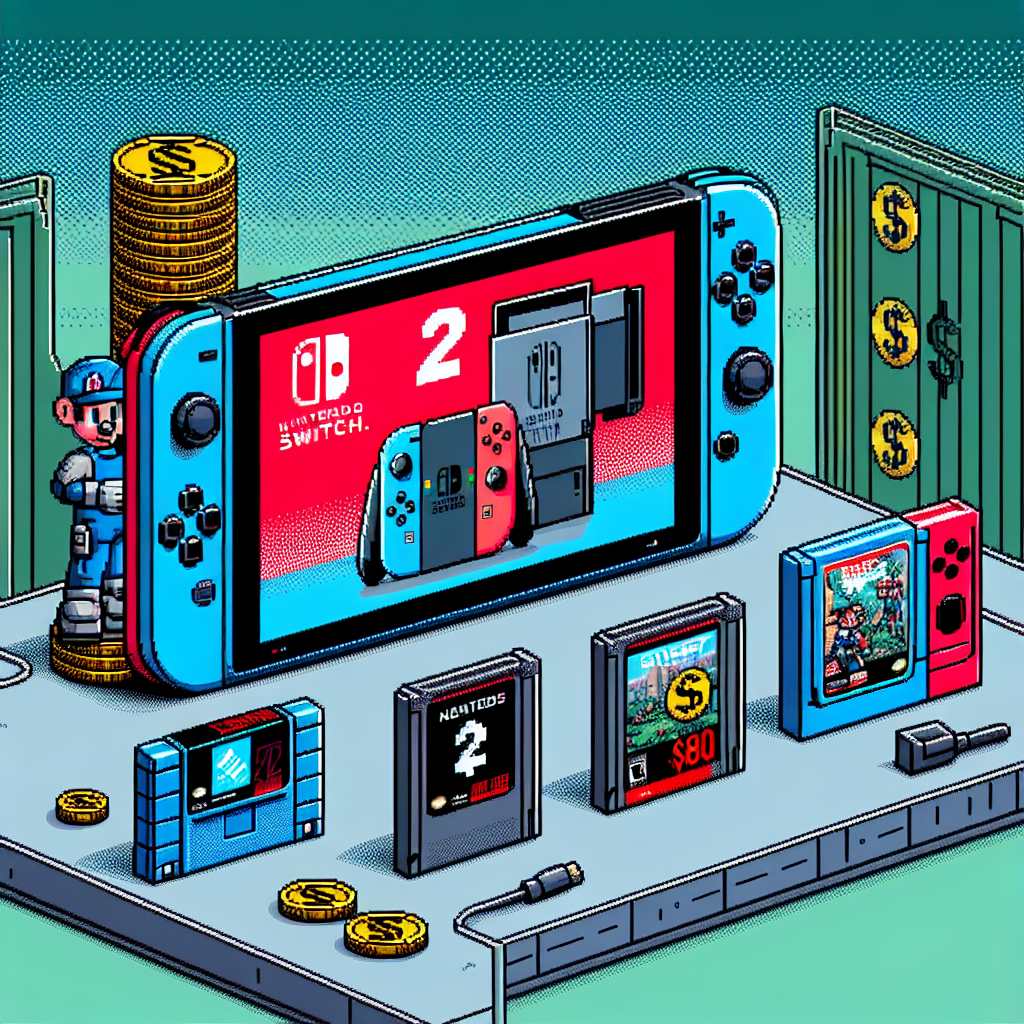
Nintendo has always been a name synonymous with nostalgia, innovation, and family-friendly fun. From the days of the NES to the revolutionary Wii, and now to the versatile Switch, Nintendo has consistently reinvented itself to stay at the forefront of the gaming world. However, with the announcement of the Nintendo Switch 2 and its pricing strategy, it seems the company is making another bold move—this time with game pricing.

Sticker Shock or Strategic Shift?

The news that "Mario Kart World" is being listed at $80 on Nintendo’s website and other storefronts pricing digital copies at 80€ and physical ones at 90€ might have caused a double-take among fans. But is this really a surprise? The gaming industry has been inching towards higher price points for a while now. Sony and Microsoft have already set a precedent with some of their AAA titles priced at $70. As development costs rise and games become more immersive and complex, it seems inevitable that prices would follow suit.

Why the Price Hike?

There’s no denying that developing games today is an expensive affair. With the demand for high-quality graphics, expansive worlds, and engaging storylines, the resources required have skyrocketed. The Switch 2, with its rumored enhanced capabilities, could be a game-changer (pun intended) in terms of what developers can create, and these advanced experiences don't come cheap.

Moreover, the shift towards digital purchases has changed the landscape. Physical copies have traditionally been priced higher due to production costs. With digital platforms gaining traction, this pricing model is being reevaluated. Interestingly, the physical copy of "Mario Kart World" is priced higher, possibly to reflect the continued costs associated with producing cartridges.

Global Pricing Trends and Consumer Behavior

This pricing model also reflects broader global trends. Inflation and currency variations mean that prices can differ significantly across regions. The U.S. might see an $80 game, while the same game in Europe might cost 80€, accounting for these economic differences. It’s a delicate balance between covering costs and remaining accessible to a global audience.

Additionally, Nintendo's move could be seen as testing the waters. With a loyal fan base and a proven track record of delivering quality, the company might be gauging consumer willingness to pay premium prices for premium experiences. It's a risky strategy, but if anyone can pull it off, it's Nintendo.

The Bigger Picture

Beyond the gaming world, this shift in pricing reflects a broader trend of increasing costs in entertainment. The film industry, for example, is seeing similar trends with blockbuster movies and streaming services offering exclusive, high-budget content at a premium. As entertainment becomes more immersive, the cost of creating these experiences inevitably rises.

Final Thoughts

While the initial reaction to Nintendo's pricing strategy for the Switch 2 might be one of shock, it's important to view it in the context of industry-wide trends and the evolving nature of entertainment. Nintendo has always been a trendsetter, and this could very well be another step in reshaping the gaming landscape.

For gamers, the question remains: is the experience worth the price? Only time will tell if Nintendo's gamble pays off. But one thing is for sure, in the world of gaming, change is the only constant, and Nintendo is once again at the forefront, flipping the switch on traditional pricing models.

As we eagerly await more details and the eventual release of the Switch 2, it's a reminder that in gaming, as in life, innovation often comes with a cost. Let’s hope it’s a price worth paying for the adventures that await.

Read more about AI in Business

Read more about Latest Sports Trends

Read more about Technology Innovations