
AI Aristocracy: How Wealth Locks Power | Analysis by Brian Moineau

The new aristocracy: how AI is minting a class of "Have-Lots" — and why Washington helps keep them that way

AI isn't just rearranging industries. It's rearranging who gets the upside. Over the past two years, the winners of the AI boom have stopped being a diffuse set of tech founders and turned into a concentrated, politically powerful cohort — the "Have-Lots." They're not just richer; they're increasingly invested in preserving the political and regulatory status quo that lets their gains compound. That matters for jobs, markets, and the future of U.S. policymaking.

At a glance

  • The AI era has created a distinct elite — the Have-Lots — whose wealth rose far faster than the rest of the country in 2025.
  • Their advantage comes from outsized equity positions, privileged access to private deals, and close ties to government.
  • That concentration of money and influence makes policy outcomes (taxes, regulation, export controls, procurement) more likely to favor continuity over disruption.
  • The political consequence: an intensifying split between those who feel left behind and those who are financially insulated, which fuels polarization and public distrust.

Why "Have-Lots" are different this time

We’ve seen wealth concentration before, but AI is amplifying two key dynamics:

  • Ownership leverage. AI value accrues heavily to the owners of critical IP, compute infrastructure, and data. A few companies and their insiders hold disproportionate slices of these assets — and their equity rewards are exponential when AI markets run hot.
  • Private-market exclusivity. Much of the biggest early AI upside lives in private financings, venture rounds, and exclusive partnerships. Regular retail investors and most households simply can't access the same terms or allocations.
  • Policy proximity. The largest AI players are now deeply embedded in Washington — through advisory roles, executive meetings, and lobbying — giving them influence over trade rules, export controls, procurement decisions, and the pace of regulation.

Axios framed the story as three economies — Have-Nots, Haves, and Have-Lots — and showed how 2025 became a banner year for a narrow group of ultra-wealthy Americans tied to AI and tech. The result: a class that benefits from market booms and tends to favor stability in the institutions that enabled their gains. (axios.com)

How money becomes political staying power

Money buys more than yachts. It buys lobbying, think tanks, campaign influence, and the ability to hire teams that translate business goals into policy narratives. A few mechanisms to watch:

  • Lobbying and regulatory capture. Tech companies and large investors spend heavily on lobbying and hire former officials who understand how to shape rulemaking. That raises the cost (and political friction) for hard-curtailing policies.
  • Strategic philanthropy and media influence. Big donations to policy institutes and universities can alter the research and messaging ecosystems, steering public debate toward industry-friendly framings.
  • Access to procurement and export levers. Large AI firms can influence government purchasing decisions and negotiate carve-outs or implementation details that advantage incumbents. When export controls are on the table, these firms lobby for interpretations that preserve critical markets.
  • Defensive investment strategies. The Have-Lots aren't just earning more — they're investing to fortify advantages (exclusive funds, acquisitions, cross-border deals) that make it harder for challengers to scale.

Real-world markers of this dynamic were visible in 2025: outsized gains for several tech founders and investors tied to AI, and public reports of deepening ties between major AI companies and government officials. Those links make changes to the rules — from tougher wealth taxes to stringent antitrust enforcement — both politically and technically harder to push through. (axios.com)

What it means for average Americans and markets

  • Wealth inequality meets political inertia. When the richest segment accumulates both capital and influence, reform that would rebalance outcomes becomes more difficult. That leaves many households feeling the economy is working against them even when headline GDP and markets climb.
  • Labor displacement and retraining get politicized. Workers worried about AI-driven job loss will look for policy fixes. If those fixes threaten concentrated interests, pushback and gridlock are likely.
  • Market distortions. Concentration of AI capital can inflate a narrow set of winners (chipmakers, cloud infra, platform owners) while starving broader innovation in complementary areas. That can deepen sectoral risk even as headline indices rise.
  • Policy unpredictability. The tug-of-war between populist pressures and elite influence can produce swings — intermittent regulation, targeted carve-outs, or transactional interventions — rather than coherent long-term strategy.

Where policymakers might push back (and the headwinds)

  • Wealth and corporate taxation. Targeted tax changes could blunt accumulation, but they face political, legal, and lobbying resistance — especially if the Have-Lots effectively argue that higher taxes will slow innovation or capital investment.
  • Antitrust and competition policy. Strengthening antitrust tools could lower concentration, yet enforcement takes time and expertise, and the enforcement agencies often duel with well-resourced legal teams.
  • Procurement reform and open access. Government can favor open standards and wider procurement rules, but incumbents lobby to maintain advantageous arrangements.
  • Democratizing access to AI gains. Proposals to expand employee equity, broaden retail access to private markets, or invest in public AI infrastructure could help, but they require political coalitions that cut across partisan lines — a tall order in the current climate.

Axios and reporting elsewhere highlight that many of the Have-Lots actively prefer the current mix of regulation and government interaction because it preserves their returns and strategic position. That creates a structural incentive to resist reforms that would meaningfully redistribute AI-driven gains. (axios.com)

My take

We’re at a crossroads where technological change is colliding with political economy. The Have-Lots are not just a distributional outcome — they're a political force. If the U.S. wants AI broadly to raise living standards rather than concentrate windfalls, the policy conversation needs both humility (tech evolves fast) and muscle (policy and public institutions must adapt faster).

That will mean designing pragmatic, durable interventions: smarter tax code adjustments, stronger competition enforcement, transparent procurement that favors open systems, and public investments in training and AI infrastructure that broaden participation. None are magic bullets, but together they can slow the drift toward a permanently bifurcated economy.

Final thoughts

We can admire the innovation that produced AI — and still question who gets the upside. Right now, the Have-Lots have structural advantages that let them lock in gains and political protections. If that trend continues unchecked, it will shape not only markets, but the public’s faith in institutions. The policy challenge is to make the rewards of AI less gated and the rules of the game more inclusive — a task that will require both political courage and technical nuance.

Sources


Related update: We recently published an article that expands on this topic: read the latest post.

Related update: We recently published an article that expands on this topic: read the latest post.

Rotated AM5 MicroATX Workstation | Analysis by Brian Moineau

Small board, big ambitions: ASUS Pro WS B850M-ACE SE brings workstation features to microATX AM5 builds

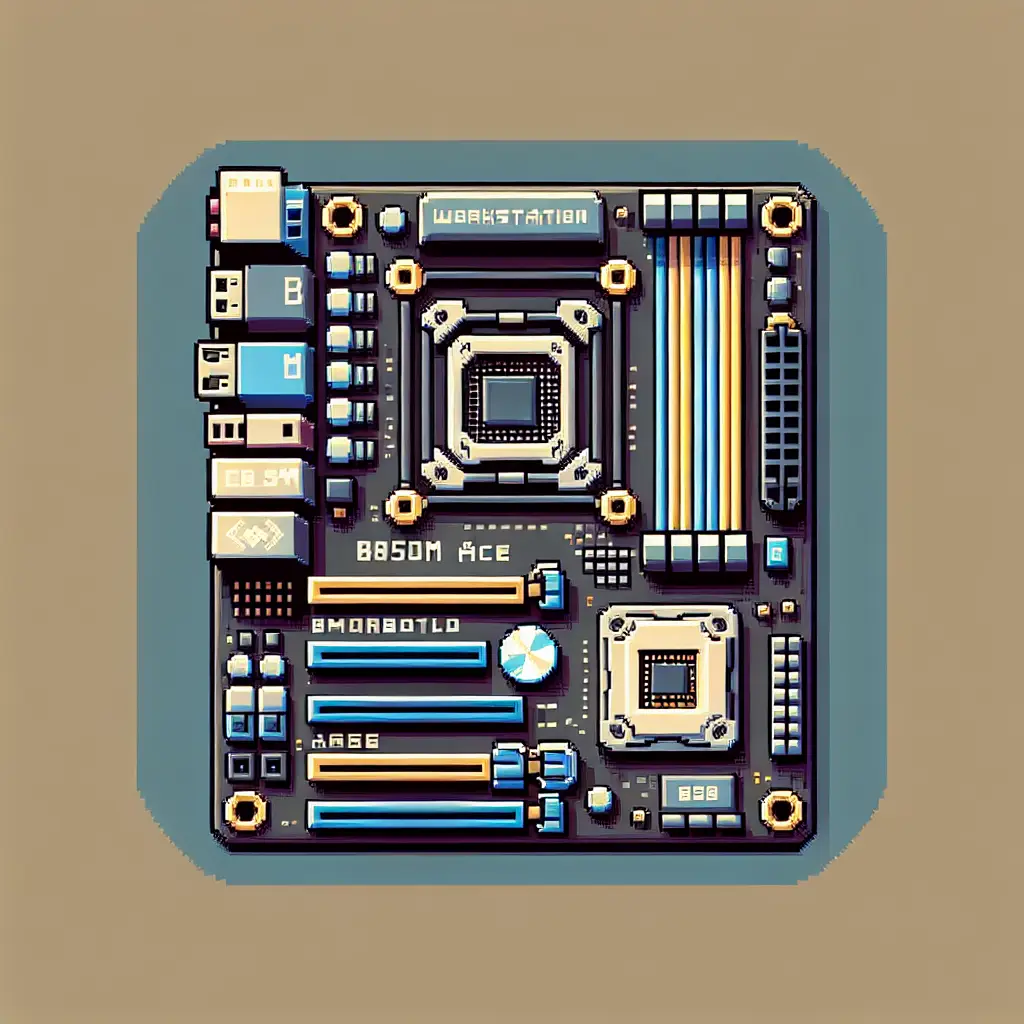
The first time you see the Pro WS B850M-ACE SE you do a double-take — the AM5 socket and the DIMM banks are rotated 90°, giving this microATX board an unconventional layout. That visual oddity is a clue: ASUS didn’t just squeeze desktop features into a smaller footprint. They rethought layout and connectivity to make a compact, IT-friendly workstation that pulls a surprising amount of pro-level hardware into a 244 × 244 mm package.

Below I unpack what makes this board interesting, who it’s for, and why that rotated socket matters beyond aesthetics.

Why this release matters now

  • AMD’s AM5 platform continues to expand from mainstream desktop into workstation and server-adjacent use. The B850 chipset fills a sweet spot for builders who want modern AM5 features without an E-ATX footprint.
  • ASUS targeted this board at compact workstations and small business servers by adding features you usually see on larger or server boards: onboard BMC with IPMI, a U.2 connector, dual high-speed Ethernet (10 Gb + 2.5 Gb), and PCIe 5.0 support.
  • With increasing demand for AI/ML inference at the edge and compact creator rigs, dense connectivity (fast NVMe, multi-Gb networking, remote management) matters as much as raw CPU core count.

Eye-catching specs at a glance

  • Form factor: microATX (244 × 244 mm).
  • Socket/chipset: AM5 with AMD B850 chipset — supports Ryzen 7000/8000/9000 and EPYC 4005 series.
  • Memory: 4 × DDR5 DIMM slots, up to 256 GB, EXPO support (OC up to high speeds).
  • Expansion/storage: PCIe 5.0 x16 primary slot, two M.2 slots (one PCIe 5.0 x4), MCIO support and an onboard U.2 connector.
  • Networking: onboard 10 Gb Ethernet + 2.5 Gb Ethernet, plus a dedicated 1 Gb IPMI/BMC port.
  • Management: onboard BMC (AST2600) with IPMI and ASUS Control Center Express for remote monitoring.
  • Extras: front USB-C 20 Gbps header, robust 8+2+1 power stages, 24/7 reliability testing.

(Full tech details on the ASUS product page linked below.)

The rotated socket: what it does and why ASUS might have chosen it

  • Space optimization: Rotating the CPU socket (and thus orienting the memory slots along a different axis) rearranges the board’s internal real estate. That allows ASUS to add server-grade features — BMC circuitry, a U.2 connector, MCIO, additional LAN ports — without pushing the layout beyond a microATX size.
  • Cooler compatibility trade-offs: Most aftermarket coolers assume the CPU orientation found on ATX boards. While standard AIOs and many air coolers will still fit, tight builds or unusual bracket designs could encounter clearance issues. Builders should check cooler compatibility against the board’s layout.
  • Cable routing and case fit: The rotated layout changes cable and fan header positions relative to case panels. For compact workstations and bespoke small-form-factor enclosures, that can be an advantage (shorter NVMe/MCIO traces, better airflow zoning) — just confirm the case supports the positioning.
  • Serviceability and pro usage: For IT/enterprise customers, being able to cram more I/O and remote management into a smaller board is a net win; the rotated layout is a practical compromise to prioritize features over standard orientation.

Who should consider the Pro WS B850M-ACE SE

  • Small business or home lab admins who need remote management (IPMI) but prefer a compact chassis. The onboard BMC and dedicated management NIC let you monitor and administer systems headlessly.
  • Creators and AI/ML hobbyists who want high-bandwidth storage (PCIe 5.0 M.2, MCIO, U.2) and multi-gig networking in a small desktop/workstation build.
  • Builders constrained by space who still want PCIe 5.0 graphics or accelerators plus enterprise-grade connectivity.
  • Not ideal for people who want plug-and-play compatibility with every consumer cooler or who insist on standard ATX layout expectations without checking clearances first.

Trade-offs and things to check before buying

  • Cooler fit: verify your CPU cooler (air or AIO bracket) supports the rotated socket or has enough clearance.
  • Case compatibility: microATX cases vary; double-check standoff alignment, IO shield area, and whether front-panel USB-C routing lines up.
  • U.2 vs modern NVMe priorities: U.2 remains useful for certain enterprise SSDs and hot-swap setups, but many consumer builds will rely primarily on M.2 drives. If you need U.2 specifically, this board is unusually accommodating for its size.
  • Remote management complexity: IPMI/BMC is powerful for IT, but it introduces additional configuration and potential security considerations; treat the BMC interface like any network-facing admin service.

How this fits into the broader AM5 & workstation landscape

ASUS is signaling that AM5 isn’t just for full-size enthusiast motherboards. By putting server-grade features into microATX format, they’re acknowledging a market trend: people want workstation capabilities in smaller form factors for edge inference, compact studios, and dense deployments. Expect more OEMs and board makers to explore similar compromises — squeezing IPMI, multi-gig networking, and industrial storage interfaces into smaller boards — especially as AI workloads demand fast local storage and network throughput.

My take

This is one of those “clever engineering” products: it doesn’t radically change performance specs for consumers, but it democratizes workstation features into a compact footprint that actually makes sense for modern workflows. The rotated socket is a pragmatic design choice rather than a gimmick — it unlocks space for the features that matter to IT and pro users. If you’re building a small workstation with remote management or need industrial storage support in a microATX box, this board is worth a close look. If you’re purely a gaming consumer who swaps coolers and cards frequently, the unusual layout means extra homework before purchase.

Practical buying notes

  • Expect pricing to be above typical consumer microATX boards because of the embedded BMC, 10 GbE, and industrial connectors. Retail listings show it in the workstation price band.
  • Verify BIOS compatibility with your chosen Ryzen or EPYC 4005 CPU (ASUS lists supported families; check the support page for CPU compatibility).
  • For IT deployments, plan for BMC security (firmware updates, network segmentation, credential management).

Final thoughts

ASUS’s Pro WS B850M-ACE SE is a tidy example of product differentiation: same AM5 ecosystem, but a different set of priorities. It’s a microATX motherboard built for professionals who need remote management, industrial storage options and high-speed networking without the bulk of a larger board. The rotated socket is simply the engineering price paid to make all that fit — a smart trade for the intended audience, and a sign that motherboards will keep evolving in form as well as function.

Sources


Related update: We recently published an article that expands on this topic: read the latest post.


Related update: We recently published an article that expands on this topic: read the latest post.
Nvidia’s China Chip Move: Big Profit | Analysis by Brian Moineau

A late present under the tree: Why Nvidia’s potential China chip push matters more than holiday cheer

Imagine waking up after the holidays to learn a company you already loved just found a way to add billions to next year’s revenue outlook — and the market’s mood changes overnight. That’s the vibe around Nvidia right now, after multiple reports in late December 2025 that it has sounded out Taiwan Semiconductor Manufacturing Co. (TSMC) to ramp up production of its H200 AI chips to meet surging Chinese demand.

This isn’t just another supply-chain footnote. It’s a story that ties together geopolitics, export policy, product lifecycle management, and the very real question investors keep asking: can Nvidia keep turning AI momentum into sustainable profits?

Why this news grabbed headlines

  • Reuters reported on December 31, 2025 that Nvidia has asked TSMC about boosting H200 output because Chinese technology firms have reportedly placed more than 2 million H200 orders for 2026, while Nvidia’s on-hand inventory sits near 700,000 units. (reuters.com)
  • The H200 is a high-performance Hopper-architecture GPU built on TSMC’s 4nm process and is positioned well above the H20 variants previously permitted for China. The potential sales could recapture some of the revenue Nvidia lost during export restrictions and inventory writedowns earlier in the year. (reuters.com)
  • The reports are sourced to anonymous insiders and Reuters’ coverage makes clear regulatory and approval steps — particularly in China and via U.S. licensing — remain unresolved. That means upside exists, but risks and execution hurdles are material. (reuters.com)

Quick snapshot of the backdrop

  • 2025 saw Nvidia enjoy strong AI-driven gains early in the year (the stock rose substantially year-to-date), but the second half cooled as investors worried about growth sustainability, supply constraints, and geopolitically driven trade frictions. (aol.com)
  • U.S. export policy earlier in 2025 had constrained Nvidia’s ability to ship its most powerful chips into China; the company developed China-specific variants (like H20) to address that market. Later policy shifts introduced limited pathways for H200 shipments under license and with fees, reopening a big demand pool. (investing.com)
  • Chinese hyperscalers and internet firms — reportedly including ByteDance-sized buyers — are aggressively expanding AI infrastructure spending, making China an addressable and lucrative market if regulatory approvals and supply can be aligned. (reuters.com)

What this could mean for Nvidia (and investors)

  • Near-term revenue relief: Filling a 2-million-unit order book (even partially) at H200 price points would be a multi-billion-dollar revenue boost that could help reverse the inventory write-downs Nvidia took earlier and improve near-term cash flow. (reuters.com)
  • Supply balancing act: Ramping H200 production while launching/expanding Blackwell and Rubin series chips globally requires careful capacity planning. Prioritizing one market could tighten supply elsewhere and affect pricing and customer relationships. (investing.com)
  • Regulatory and political risk: Even with U.S. approvals loosening in specific ways, shipments to China still require licenses and potentially conditions (tariffs, bundling with domestic chips, or limits). Beijing’s own approval pathways could further complicate delivery. Execution risk is high. (reuters.com)
  • Valuation sensitivity: Markets have already priced a lot of AI optimism into Nvidia. Concrete evidence that China demand translates into recognized sales and margin recovery would justify further re-rating; conversely, delays or regulatory blocks could trigger renewed volatility. (finance.yahoo.com)

A few practical scenarios to watch in early 2026

  • Official confirmations: Nvidia or TSMC comments confirming new H200 production orders or schedules would materially reduce uncertainty.
  • Regulatory signals: U.S. Commerce Department license approvals and any Chinese import approvals (or conditions) will be immediate market catalysts.
  • Delivery timing: Reports that initial shipments will arrive before the Lunar New Year (mid-February 2026) would accelerate revenue recognition expectations — but failure to meet such timing would raise execution questions. (investing.com)

Points investors should keep top of mind

  • This story is a high-upside, high-uncertainty event: the potential gains are real, but so are regulatory and supply risks.
  • Nvidia’s strategic play is logical: retain developer mindshare in China and prevent customers from migrating to domestic alternatives while also protecting global product roadmaps.
  • Market reaction will depend on the clarity of confirmations — rumors lift sentiment, but confirmed orders and deliveries move the needle on fundamentals.

Final thoughts

Nvidia sounding out TSMC to boost H200 output is the kind of development that can flip a narrative: from “AI hype run” to “execution that converts enormous demand into actual revenue.” Still, investors should treat late-December reports as the start of a story, not the ending. The coming weeks — regulatory approvals, official company statements, and any first shipment confirmations — will be the proof points that determine whether this “late Christmas gift” truly arrives or remains an exciting, but unrealized, possibility.

If you’re following Nvidia for its AI leadership and revenue upside, watch the supply-and-regulatory milestones closely. They’ll tell you whether this is a material new chapter in the company’s growth or another tantalizing but tentative headline.

Sources

Taiwan Raid on Intel Exec Stokes Chip | Analysis by Brian Moineau

A high-stakes hire, seized laptops, and the geopolitics of chips

An image of a pair of agents quietly removing computers from an executive’s home feels like a spy novel — until you remember this is about the tiny transistors that run the modern world. In late November 2025, Taiwan prosecutors executed search warrants at the homes of Wei-Jen Lo, a recently rehired Intel executive and former long-time TSMC senior vice president. Investigators seized computers, USB drives and other materials as part of a probe launched after TSMC sued Lo, alleging possible transfer or misuse of trade secrets. (investing.com)

Why this feels bigger than a garden‑variety employment dispute

  • TSMC (Taiwan Semiconductor Manufacturing Company) isn’t just any supplier — it’s the world’s dominant advanced contract chipmaker, steward of production know‑how for the most cutting-edge process nodes. The executive at the center of the case played senior roles in scaling multiple advanced nodes, which is why TSMC framed the move as a major risk to trade secrets. (reuters.com)
  • Taiwan’s prosecutors have flagged potential violations under not just trade‑secret laws but also the National Security Act, signaling this could be treated as more than a commercial case and touching state-level technology protections. (taipeitimes.com)
  • Intel has publicly defended the hire and denied any evidence of wrongdoing while asserting it enforces strict policies to prevent misuse of third‑party IP. The firm also emphasized the return of seasoned talent as part of its engineering push. (reuters.com)

These elements turn a personnel dispute into a flashpoint where corporate law, national security, and the shifting geopolitics of supply chains intersect.

The context you need to know

  • Talent moves are a normal — even healthy — part of technology ecosystems. Senior engineers and managers often switch firms, carrying experience and institutional knowledge. But when that knowledge concerns microfabrication techniques that took billions of dollars and decades to perfect, the stakes rise. (reuters.com)
  • Taiwan treats certain semiconductor capabilities as strategic. Protecting advanced-node process knowledge is bound up with national economic and security interests; authorities have tools to investigate and seize assets when those boundaries are thought to be crossed. (taipeitimes.com)
  • The global chip race is intensifying: the U.S. has moved to underwrite domestic foundry capacity, and Intel — under new leadership and with renewed government attention — is positioning itself to scale foundry operations at home. That broader backdrop makes any transfer of advanced manufacturing know‑how politically sensitive. (washingtonpost.com)

What this could mean geopolitically and for investors

  • If authorities determine that trade secrets were transferred or that export of certain technologies violated Taiwanese rules, the case could result in injunctions, asset seizures, or stricter controls on how Taiwanese talent and know‑how are allowed to work abroad. That would ripple through global supply chains. (investing.com)
  • There’s also an awkward overlay in the United States. In 2025 the U.S. federal government became a major financial backer of Intel through CHIPS‑related investments and — as reported in public coverage — acquired a significant equity stake. That makes any legal controversy involving Intel and Taiwanese technology suppliers more politically visible, and could complicate diplomatic and commercial channels if the dispute escalates. (cnbc.com)
  • For investors, the short‑term impacts might show up as volatility in chip‑sector stocks and concerns about supply continuity. For customers and partners, the case raises questions about the permissible flow of people and IP across borders in a time of strategic decoupling.

What to watch next

  • Court filings and prosecutorial statements in Taiwan for specifics on the allegations (what secrets are at issue, whether intent or actual transfer is alleged). (reuters.com)
  • Official actions beyond evidence seizures: will Taiwan restrict certain talent movements or add licensing requirements for technologies considered “core” under the National Security Act? (taipeitimes.com)
  • Intel’s and TSMC’s legal filings and public statements for how aggressively each side pursues remedies and defenses; and any U.S. government commentary given the country’s financial ties to Intel. (reuters.com)

A few practical implications

  • For the semiconductor industry: expect heightened diligence in hiring senior process engineers who worked at advanced‑node fabs, and more emphasis on contractual protections and compliance checks.
  • For governments: a reminder that industrial policy, national security, and human capital policy are converging — and that managing that intersection will require clearer frameworks around mobility and IP protection.
  • For engineers and executives: the case underscores the need to document provenance of work, abide by contractual obligations, and get counsel when moving between firms with overlapping technical footprints.

My take

This episode is a warning the industry has been circling for years: in a world where leading-edge chipmaking is both commercially vital and geopolitically sensitive, the movement of people can’t be seen as merely HR. It’s also a test of institutions — courts, regulators, and corporate compliance regimes — to respond without chilling beneficial knowledge exchange. The right balance would protect legitimate trade secrets and national interests while preserving the healthy flow of talent that drives innovation.

Whether this particular matter becomes a landmark legal precedent or a quickly resolved corporate spat depends on the facts investigators unearth and the legal theories pursued. Either way, it’s another illustration of how microelectronics — measured in nanometers — now shapes macro policy.

Points to keep in mind

  • At this stage the seizure of devices and the lawsuit are part of an investigation; criminal charges were not immediately filed when news broke. (investing.com)
  • The broader story sits at the intersection of corporate IP law, national security frameworks in Taiwan, and the geopolitics of semiconductor industrial policy — especially given the U.S. government’s elevated financial role with Intel. (washingtonpost.com)

Sources


Related update: We recently published an article that expands on this topic: read the latest post.

Can Nvidia Reclaim the AI Throne Today? | Analysis by Brian Moineau

Nvidia lost its throne — for now. Can it get it back?

Everyone loves a story with a king, a challenger and a battlefield you can see from space. In 2023–2024, Nvidia played the role of that king in markets: GPUs, AI training, data-center megadeals, and a market-cap narrative few could touch. But by the time earnings rolled around this year, the tone was different. Nvidia still powers much of today's generative-AI engine, yet investor attention has tilted toward other names — Broadcom, AMD and software-heavy infrastructure plays — leaving Nvidia “no longer the most popular AI trade,” as headlines put it.

This piece sketches why that cooling happened, what Nvidia still has working in its favor, and what it would take to reclaim the crown.

What changed — the short version

  • Valuation fatigue: Nvidia’s meteoric run priced near-perfection into the stock. When guidance or growth showed any sign of slowing, traders rotated.
  • Competition and alternatives: AMD’s data-center push and Broadcom’s optics and networking play offer investors different ways to access AI growth without Nvidia’s valuation premium.
  • Geopolitics and China exposure: U.S. export controls constrained parts of Nvidia’s China business, introducing a real — and visible — revenue loss.
  • Sector rotation: Investors hunting “safer” or differentiated AI exposures leaned into companies with recurring software or networking revenues rather than pure GPU plays.

Why this matters now (context and background)

  • Nvidia’s GPUs are still the backbone of most large-scale training and inference installations, and the company’s ecosystems (CUDA, software stacks, partnerships) are deep and sticky.
  • But markets aren’t just about fundamentals; they’re about narratives and expectations. Nvidia’s story became "priced for perfection," so anything less than blowout guidance could send the stock elsewhere.
  • Meanwhile, rivals aren’t just knockoffs. AMD’s MI-series accelerators and Broadcom’s move into AI networking, accelerators and integrated solutions give cloud builders and enterprises credible alternatives — and different margin/growth profiles that some investors prefer.

Signals that Nvidia can still fight back

  • Enduring technical lead: For many high-end training tasks and advanced models, Nvidia GPUs remain best-in-class. That technical moat is hard to erode overnight.
  • Software and ecosystem lock-in: CUDA, cuDNN and Nvidia’s software stack create switching friction that favours long-term share retention.
  • Strong demand backdrop: Large cloud providers and hyperscalers continue to expand AI capacity; when demand is this structural, winners keep winning.
  • Product cadence: Nvidia’s roadmap (new architectures and system products) can reset expectations if they deliver step-change performance or cost advantages.

What Nvidia needs to do to reclaim investor excitement

  • Deliver consistent, credible guidance: Beats matter, but so does proof that growth is sustainable beyond a quarter.
  • Reduce geopolitical uncertainty: Either by restoring China access (if policy allows) or by clearly articulating alternative growth paths that offset China headwinds.
  • Show margin resiliency and diversification: Investors will be more comfortable if Nvidia demonstrates it can grow without relying solely on hyper-growth multiples tied to a single product category.
  • Highlight software/revenues or recurring services: Anything that lowers the volatility of revenue expectations helps the valuation story.

The investor dilemma

  • Are you buying the market-share leader (Nvidia) at a premium and trusting the moat, or picking up cheaper, differentiated exposures (Broadcom, AMD, others) that might capture the next leg of AI spend?
  • Long-term believers value Nvidia’s platform and ecosystem advantages. Traders looking for near-term performance or lower multiples have legitimate reasons to favor alternatives.

A few takeaway scenarios

  • If Nvidia continues to post strong, unambiguous growth and guides confidently, institutional flows could reconcentrate and sentiment would likely flip back in its favor.
  • If rivals close the performance or ecosystem gap while Nvidia’s growth or guidance softens, the market could keep reallocating capital away from a single-name concentration risk.
  • Geopolitics — especially U.S.–China tech policy — is a wildcard. A policy easing that restores a sizable portion of China demand would be materially positive; further restrictions could accelerate diversification away from Nvidia.

My take

Nvidia didn’t lose because its tech failed — it lost some of the market’s patience. High expectations breed higher sensitivity to any hint of deceleration, and investors naturally explore alternatives that seem to offer similar upside with different risk profiles. That said, Nvidia’s combination of chips, software and customer relationships is still a heavyweight advantage. Reclaiming the crown isn’t impossible; it requires predictable execution, transparent guidance and progress on the geopolitical front. Long-term investors who believe AI is a multi-decade structural shift still have a clear reason to watch Nvidia closely — but the era of unquestioned dominance is over. The next chapter will be about execution, diversification and whether the market’s narrative can rewrite itself.

Useful signals to watch next

  • Quarterly revenue and data-center trends versus guidance.
  • Market-share updates in GPUs and any measurable gain by competitors.
  • Announcements tying Nvidia hardware to recurring software or cloud offerings.
  • Changes in U.S. export policy or meaningful alternative China channels.
  • Large hyperscaler capex patterns and disclosed vendor choices.

Where I leaned for this view

  • Coverage of Nvidia’s recent earnings and the market reaction — showing why the “priced-for-perfection” narrative matters.
  • Reporting on export constraints and the macro/geopolitical context that undercut some growth expectations.
  • Analysis of the competitive landscape (AMD, Broadcom and cloud providers) and how investors rotate among different ways to access AI upside.

Sources


Related update: We recently published an article that expands on this topic: read the latest post.

AMD Poised to Surge in AI Data Centers | Analysis by Brian Moineau

AMD says data-center demand will accelerate growth — and investors are listening

The future of computing is loudly and clearly answerable to one question: who builds the chips that train and run generative AI? Advanced Micro Devices (AMD) just put its stake in the ground. At its recent analyst day and in follow-up reporting, the company projected steep growth driven by data-center products — a bold claim that signals AMD sees itself moving from a strong No. 2 into a much bigger role in the AI infrastructure race.

The hook: numbers that change the narrative

  • AMD told investors it expects its data-center revenue to jump substantially over the next three to five years, with company leaders forecasting a much larger share of overall sales coming from servers and AI accelerators. (reuters.com)
  • Executives pointed to accelerating demand for Instinct GPUs and EPYC CPUs — the hardware that runs AI training clusters and inference services — and said the market for data-center chips could expand toward a trillion-dollar opportunity. (reuters.com)

Those are headline-sized claims. But the context underneath matters: AMD is not just bragging about past growth (which was impressive); it’s forecasting multi-year acceleration and mapping product roadmaps and customer wins to those forecasts.

Where AMD stands today

  • AMD has been growing quickly in data-center revenue, fueled by both EPYC CPUs (server processors) and Instinct GPUs (AI accelerators). Recent quarters showed double- to triple-digit year-over-year increases in that segment. (cnbc.com)
  • The company’s latest AI accelerators (Instinct MI350 and upcoming MI400 series) are being positioned as competitive with high-end Nvidia GPUs for many training and inference workloads — and some large customers are reportedly testing or committing to AMD hardware. (cnbc.com)
  • AMD faces headwinds too: U.S. export controls and China exposure can hit near-term revenue and margins, and Nvidia still holds a dominant share of the AI training market. AMD’s management acknowledges these risks and factors them into guidance. (reuters.com)

Why this matters beyond earnings

  • Market structure: AI data centers require an ecosystem — chips, software stacks, interconnects, cooling, and the trust of hyperscalers. If AMD can pair competitive silicon with software and partner momentum, the market can become materially more competitive. (reuters.com)
  • Pricing and profit pools: Nvidia’s premium pricing has driven enormous margins. If AMD proves parity across relevant workloads, it could force price competition or capture share without the steep margin premium — changing the economics for cloud providers and AI companies. (investopedia.com)
  • Customer concentration: Big deals (for example, multi-year commitments from major AI model builders) can validate AMD’s roadmap and materially uplift revenues — but they also concentrate dependence on a handful of hyperscalers. That’s both opportunity and risk. (reuters.com)

What to watch next

  • Product cadence: Can AMD deliver the MI400 family and other roadmap milestones on time and at scale? Performance leadership or a strong price/performance story would reinforce management’s projections. (investopedia.com)
  • Customer wins: Announcements or confirmations from top cloud providers and model builders matter more than benchmarks. Real deployments at scale signal sustainable demand. (cnbc.com)
  • Regulation and geopolitics: Export controls to China have already been cited as a multi-billion-dollar headwind; monitoring policy shifts is essential for any realistic growth scenario. (reuters.com)
  • Margins and unit economics: Growth is attractive — but whether it translates to durable profit expansion depends on pricing power, product mix (CPUs vs GPUs), and supply-chain efficiency. (reuters.com)

Quick snapshot for the busy reader

  • AMD projects strong acceleration in data-center revenue over the next 3–5 years and sees a much larger total addressable market for AI data-center chips. (reuters.com)
  • The company’s recent quarters already show robust data-center growth, led by both CPUs and GPUs, but execution and geopolitical risks remain. (cnbc.com)
  • If AMD converts roadmap performance into large-scale customer deployments, it could reshape competitive dynamics with Nvidia — though Nvidia still leads in market share and ecosystem traction. (investopedia.com)

My take

AMD’s public confidence is no accident — the company has engineered real technical gains and is landing design wins. But the transition from “challenger with momentum” to “sustained market leader or strong duopolist” requires more than a few impressive chips. It needs timely product delivery, scalable manufacturing, deep software and partner integration, and diversification of customers so a single deal or policy shift doesn’t derail the thesis.

In short: the numbers and product roadmap make AMD a story worth following closely. The company’s optimism is credible; the path to that optimistic future is still narrow and requires disciplined execution.

Sources


Related update: We recently published an article that expands on this topic: read the latest post.


Related update: We recently published an article that expands on this topic: read the latest post.

Chinas Rare Earths Strategy Shakes Global | Analysis by Brian Moineau

China’s Rare-Earths Power Move: A Strategic Shift in Global Trade

In a world increasingly defined by technology and innovation, the battle for resources that fuel these advancements has become more intense. Recently, China made headlines with its latest power move in the rare-earths market, sending shockwaves through U.S. policymakers and business leaders alike. This situation is more than just a trade dispute; it’s a strategic maneuver that could redefine the relationship between two of the world’s largest economies.

The Context: Rare Earths and Global Trade Dynamics

Rare earth elements play a crucial role in the production of advanced technologies, ranging from smartphones to electric vehicles. Despite their name, these elements are not particularly rare in terms of abundance; rather, they are challenging to extract and process economically. For years, China has dominated the global supply of these materials, producing about 60% of the world’s rare earths.

The recent decision by Beijing to impose export controls on these critical minerals is seen as a power play aimed at the United States. Analysts suggest that these restrictions are not merely about protecting domestic resources; they are strategically designed to pressure the U.S. into reconsidering its own restrictions on advanced computer chip sales to China. This tit-for-tat dynamic highlights a growing trend where economic policies are increasingly intertwined with national security interests.

The Background: A Long-Term Strategy

It’s essential to understand that this move by China did not happen overnight. The groundwork for this strategic positioning has been laid over the years, as the Chinese government has invested heavily in its rare-earths processing capabilities while simultaneously working to consolidate control over the supply chain. This proactive approach has allowed China to leverage its position to influence global markets and diplomatic relations.

Moreover, the U.S. has been aware of its dependency on Chinese rare earths for some time now. Efforts to establish domestic sources and diversify supply chains have been ongoing, but progress has been slow. The recent export controls have only amplified the urgency of these initiatives, forcing U.S. lawmakers and businesses to rethink their strategies in the face of an increasingly assertive China.

Key Takeaways

Strategic Maneuvering: China’s export controls on rare earths are a calculated move aimed at influencing U.S. technology policies, particularly regarding computer chips. – Supply Chain Vulnerabilities: The U.S. is heavily reliant on Chinese rare earths, highlighting vulnerabilities in its supply chains that could have significant economic and national security implications. – Long-Term Planning: China’s dominance in the rare-earths market is the result of years of strategic investment and consolidation, showcasing the importance of foresight in resource management. – Global Impact: The fallout from this power move extends beyond the U.S.-China relationship, affecting global markets, technology sectors, and international trade dynamics.

Conclusion: The Road Ahead

As the world watches this unfolding drama, it’s clear that the conflict over rare earths is more than just a trade dispute—it’s a reflection of the broader geopolitical landscape. The implications of China’s recent actions will likely reverberate across industries and borders, prompting a reevaluation of how nations approach resource management and international cooperation. For the U.S., the path forward involves not just addressing immediate supply chain vulnerabilities, but also fostering innovation and resilience in the face of global competition.

Sources

– The Washington Post: [China’s rare-earths power move jolted Trump but was years in the making](https://www.washingtonpost.com/business/china-rare-earths-export-controls/2023/08/09/rare-earths-power-move/) – Reuters: [China’s Rare Earths Strategy: What You Need to Know](https://www.reuters.com/business/chinas-rare-earths-strategy-what-you-need-know-2023-08-10/) – BBC News: [Understanding Rare Earth Elements](https://www.bbc.com/news/business-58239072)

By keeping an eye on these developments, we can better understand the intricate dance of global power dynamics and its implications for the future of technology and trade.


Related update: We recently published an article that expands on this topic: read the latest post.


Related update: We recently published an article that expands on this topic: read the latest post.