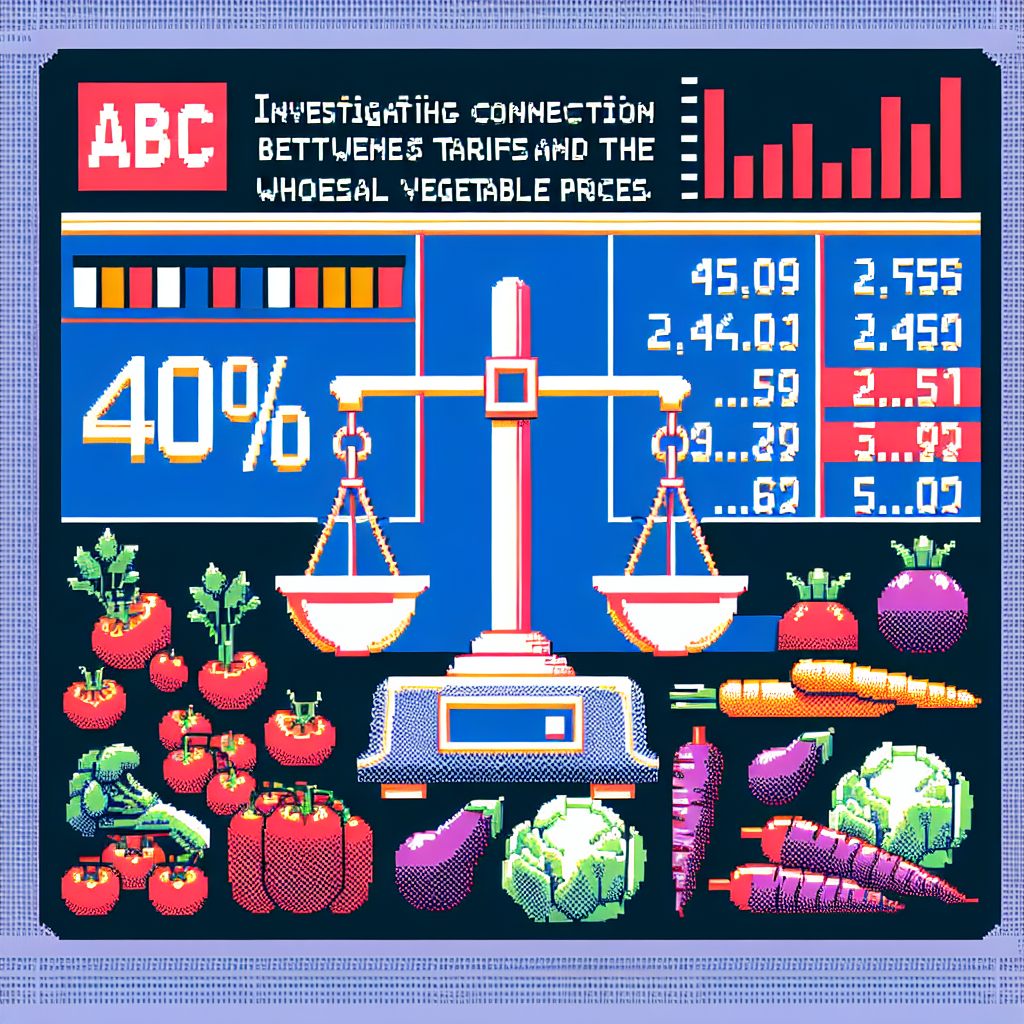
Are tariffs to blame for nearly 40% spike in wholesale vegetable prices? Experts weigh in – ABC News | Analysis by Brian Moineau

Are tariffs to blame for nearly 40% spike in wholesale vegetable prices? Experts weigh in – ABC News | Analysis by Brian Moineau

Title: Veggie Tales: Are Tariffs Turning Our Salads Into Pricey Delicacies?

Hello, dear readers! Today, we’re diving into a topic that’s spicing up dinner conversations and sprouting concerns among both consumers and economists alike. If the latest headline from ABC News is any indication, “Are tariffs to blame for nearly 40% spike in wholesale vegetable prices? Experts weigh in,” there’s quite a lot to chew on.

Now, let’s be honest. We all have a love-hate relationship with vegetables. They’re the unsung heroes of our plates, and while we may not always appreciate a broccoli floret or a spinach leaf, they’re vital for our health. But what happens when these leafy greens and vibrant veggies start costing as much as a prime rib? That’s the question at the heart of this article, and a 40% spike in wholesale prices is enough to raise eyebrows—and grocery bills!

The Tariff Tango

So, what’s driving this price surge? According to some experts, tariffs might be the culprits. Tariffs, for those of us who skipped that day in economics class, are taxes imposed on imported goods. They’re intended to protect domestic industries, but sometimes, they can create a ripple effect that leads to higher consumer costs.

In recent years, tariffs have been a hot topic globally. Remember the U.S.-China trade war? That wasn’t just a headline; it was a major economic event that had repercussions on everything from electronics to agriculture. And while the U.S. has been trying to untangle itself from this tariff web, the effects linger, like the aroma of garlic on your fingers after a good meal prep session.

A Global Green Crunch

But it’s not just tariffs causing our veggie woes. Climate change, labor shortages, and supply chain disruptions are all playing supporting roles in this drama. From droughts in California—America’s salad bowl—to unpredictable weather patterns across Europe, Mother Nature has been less than cooperative. A report from the United Nations’ Food and Agriculture Organization notes that extreme weather has significantly impacted global food production, making it a challenging time for farmers and consumers alike.

Moreover, the COVID-19 pandemic has thrown a wrench in the works, affecting labor markets and transportation networks. Remember when certain items seemed to vanish from store shelves faster than you could say “toilet paper”? Similar disruptions have hit the agricultural sector, complicating the journey from farm to table.

The Global Context

This isn’t just a U.S. problem. Across the pond, the United Kingdom has been grappling with its own set of challenges. Brexit has introduced new tariff barriers and regulatory hurdles, leading to increased costs and shortages. It’s a classic case of “you don’t know what you’ve got until it’s gone”—or in this case, until it’s more expensive.

Final Thoughts: From Farm to Table, and Beyond

So, what’s the takeaway here? As consumers, we might need to brace ourselves for a continued rollercoaster ride in grocery store prices. While tariffs are certainly a piece of the puzzle, they’re just one part of a complex global picture. It’s a reminder of how interconnected our world is and how local policies can have far-reaching effects.

In the meantime, perhaps it’s time to embrace creative cooking—exploring seasonal produce, starting a small home garden, or participating in community-supported agriculture programs. Not only could this help ease the sting of rising prices, but it also brings us closer to the food we eat and the people who grow it.

Here’s hoping for smoother trails and greener pastures ahead. Until next time, may your produce be plentiful and your meals delightful!

Read more about AI in Business

Read more about Latest Sports Trends

Read more about Technology Innovations


Related update: We recently published an article that expands on this topic: read the latest post.

Why oil prices are falling, and what it means for the economy – NPR | Analysis by Brian Moineau

Why oil prices are falling, and what it means for the economy - NPR | Analysis by Brian Moineau

Title: The Ripple Effect of Falling Oil Prices: A Win for Consumers, a Challenge for Oil Companies

As we ride the rollercoaster of global economics, one of the more thrilling aspects has been the recent plunge in oil prices. For many, it's akin to finding a hidden stash of cash in the pockets of last winter's coat. Yet, while consumers revel in the unexpected boon, oil companies are left adjusting their belts. This dichotomy paints an interesting picture of the global economy and its interconnectedness, as highlighted in a recent NPR article, "Why oil prices are falling, and what it means for the economy."

The Mechanics Behind the Drop

Several factors have contributed to this drop in oil prices. One major player is the ongoing saga of global tariffs, which have injected uncertainty into the economy. As countries grapple with the implications of tariffs, oil demand has wavered, leading to a decrease in prices. Simultaneously, OPEC's decision to increase oil production has flooded the market with more barrels, further driving down costs. It's a classic tale of supply and demand, with the scales tipping in favor of supply.

But this isn't just a simple supply-and-demand story. The global oil market is a complex beast, influenced by geopolitical tensions, technological advancements, and environmental considerations. For instance, the rise of renewable energy sources and electric vehicles is reshaping energy consumption patterns, adding another layer to the oil price narrative.

Consumers in the Driver's Seat

For everyday consumers, this dip in oil prices is a welcome relief. Lower prices at the pump mean more disposable income for travel, shopping, or saving for a rainy day. It's a small victory in a world where the cost of living seems to perpetually climb. Moreover, industries reliant on fuel, such as airlines and transportation companies, can also enjoy reduced operational costs, which may trickle down to consumers as well.

Oil Companies Feeling the Heat

On the flip side, oil companies are navigating choppy waters. Lower prices mean tighter profit margins, and for some, it could mean scaling back operations or delaying new projects. This is where the economic ripple effect becomes apparent. Reduced profits can lead to job cuts in the sector, impacting local economies, particularly in regions heavily reliant on oil production.

Yet, this isn't the first time the oil industry has faced such challenges. Historically, the sector has shown resilience, adapting through innovation and strategic shifts. Diversification into renewable energy and investing in technology to improve efficiency are some avenues companies might explore to weather this storm.

Global Implications

The fluctuating oil prices are not happening in isolation. They are intertwined with broader global issues, such as the ongoing climate change debate and the push for sustainable energy solutions. As nations strive to meet climate goals, the pressure on traditional energy sources mounts, influencing policy decisions and consumer behavior.

Furthermore, the dynamics of oil prices also affect geopolitical alliances and conflicts. Countries heavily dependent on oil revenues must strategize to maintain economic stability, sometimes leading to shifts in foreign policy and trade relations.

Final Thoughts

In the grand tapestry of global economics, the fall in oil prices is but one thread. It highlights the delicate balance between consumer benefits and industry challenges, showcasing the interconnected nature of modern economies. As we move forward, the key will be adaptability—both for consumers enjoying the current relief and for companies strategizing for long-term sustainability.

The oil price saga is a reminder of the ever-changing nature of global economics, where today's advantage can quickly become tomorrow's challenge. As we watch this story unfold, the focus should remain on innovation and collaboration, ensuring that the benefits and challenges are shared across the board. Let's keep our eyes on the horizon, ready for the next chapter in this economic adventure.

Read more about AI in Business

Read more about Latest Sports Trends

Read more about Technology Innovations

Opinion: Trump has made it (almost) impossible for Powell to cut interest rates – MarketWatch | Analysis by Brian Moineau

Opinion: Trump has made it (almost) impossible for Powell to cut interest rates - MarketWatch | Analysis by Brian Moineau

Title: The Unlikely Dance of Politics and Economics: Trump, Powell, and the Interest Rate Riddle

In the world of economics, the dance between politics and monetary policy often resembles a chaotic tango where partners step on each other's toes more frequently than they glide gracefully across the floor. One of the most recent and riveting performances in this ongoing saga is the complex dynamic between former President Donald Trump and Federal Reserve Chairman Jerome Powell. The MarketWatch article, "Opinion: Trump has made it (almost) impossible for Powell to cut interest rates," highlights this intricate relationship and its implications for the global economy.

Trump, a businessman-turned-politician known for his charismatic yet brash style, has always been a figure of controversy. His presidency was marked by a series of unprecedented moves, not the least of which was his frequent public criticism of the Federal Reserve and its chairman, Jerome Powell. Traditionally, the Fed operates independently of political pressures to ensure unbiased economic stewardship. However, Trump's vocal discontent with interest rate policies during his tenure has made it challenging for Powell to maneuver effectively, particularly in terms of cutting rates.

The heart of the matter lies in the Fed's independence, a cornerstone of its credibility with investors. Historically, bond investors have relied on the Fed's ability to make decisions free from political influence, akin to trusting an experienced captain to steer a ship through turbulent waters without interference from the passengers. Yet, as the MarketWatch article suggests, Trump's approach has shaken this trust, leading to concerns over future bond market stability. After all, few are eager to invest in a system where decisions might be swayed by political whims, much like few would volunteer to set fire to their money.

This situation is not just an isolated economic issue; it reflects broader global trends where political figures increasingly influence institutions traditionally designed to be independent. Take, for instance, the global rise of populist leaders who challenge established norms and institutions, creating ripple effects in financial markets worldwide. Whether it's Brexit's impact on the UK economy or political shifts in countries like Brazil and India, the interplay between political decision-making and economic policy is a recurring theme.

While Powell has maintained a steady hand despite the pressures, the broader implications of this Trump-induced challenge are worth considering. An independent central bank is not just a luxury; it's a necessity for maintaining economic stability and investor confidence. Without it, the economy risks becoming a vessel tossed about by the ever-changing winds of political fortune.

In reflecting on this dynamic, one cannot help but wonder about the future of economic policy-making in an increasingly politicized world. Trump may no longer reside in the White House, but the precedent set during his administration could influence how future leaders interact with economic institutions.

As we ponder these developments, it's clear that the relationship between politics and economics will continue to be a dance of complexity and unpredictability. In the end, the challenge for future policymakers, much like Powell, will be to navigate this dance with grace and determination, ensuring that economic decisions remain rooted in sound principles rather than political expediency.

Final Thought: In a world where political and economic landscapes are ever-evolving, maintaining the independence of institutions like the Federal Reserve is more crucial than ever. As citizens and investors, understanding this balance helps us appreciate the intricate dance between politics and economics, reminding us that while leaders may come and go, the principles of sound governance should remain steadfast.

Read more about AI in Business

Read more about Latest Sports Trends

Read more about Technology Innovations

10-year Treasury yield slides as Trump tariffs take effect – CNBC | Analysis by Brian Moineau

10-year Treasury yield slides as Trump tariffs take effect - CNBC | Analysis by Brian Moineau

**Title: The Ripple Effects of Tariffs: A Lighthearted Dive into the 10-Year Treasury Yield Dip**

Ah, the world of economics—a place where news about Treasury yields can make headlines alongside pop stars and viral TikTok dances. Today, we're diving into a topic that might seem dry on the surface but is actually brimming with intrigue and global significance: the recent dip in the 10-year Treasury yield following President Donald Trump's tariffs taking effect on goods from Mexico and Canada.

**The Tariff Tango**

On a seemingly ordinary Tuesday, President Trump decided to spice things up by implementing a 25% tariff on goods from our neighbors to the north and south. This move, in true geopolitical fashion, sent ripples through the financial waters, notably causing the 10-year Treasury yield to slide. For those not fluent in econ-speak, Treasury yields are a bit like the mood ring of the economy—they reflect investor confidence, or lack thereof, in economic growth and stability.

Now, if you're wondering why these tariffs are such a big deal, let's take a step back. Tariffs are essentially taxes on imported goods, and while they might sound like a great way to encourage domestic production, they can also lead to higher prices for consumers and strained international relations. Think of it as a dance where one partner suddenly decides to change the choreography—everyone else has to adjust, and not everyone is happy about it.

**A Global Stage**

The impact of these tariffs isn't confined to the U.S., Mexico, and Canada. In today's interconnected world, economic changes can have far-reaching effects. For instance, consider how the European Union might react, given its own trade considerations with the U.S. or how China, already in a trade tussle with the U.S., might view these developments. It's a bit like a global game of Jenga, where every move has the potential to shift the entire structure.

Meanwhile, across the pond, the United Kingdom is navigating its post-Brexit reality, dealing with its own trade challenges. The timing of these tariffs adds another layer of complexity to an already intricate global economic tapestry.

**A Nod to Trump**

Love him or loathe him, Donald Trump has a knack for keeping things interesting. His approach to policy-making often resembles a reality TV show—unexpected twists, dramatic moments, and plenty of opinions. And while his methods may be unconventional, they undeniably keep the world engaged.

**Final Thoughts**

In the grand theater of global economics, every action has a reaction, and President Trump's tariffs are no exception. Whether these tariffs will achieve their intended goals or lead to further economic complications remains to be seen. But one thing is for sure: they have sparked conversations, debates, and plenty of speculation.

As we watch the 10-year Treasury yield's dance and the world's response to these tariffs, let's remember the interconnectedness that defines our modern era. In a world where the flutter of a butterfly's wings can cause a storm halfway across the globe, every economic decision is part of a larger story. So, keep an eye on those Treasury yields—they might just be telling us more than we realize.

Read more about AI in Business

Read more about Latest Sports Trends

Read more about Technology Innovations