
LSU Shocks No. 2 Texas in PMAC Win | Analysis by Brian Moineau

Upset at the PMAC: LSU Topples No. 2 Texas, 70–65

The Pete Maravich Assembly Center was electric — sold out, loud and pulsing with that particular kind of belief that only a packed college arena can generate. On January 11, 2026, LSU’s women’s basketball team fed off that energy and delivered a signature victory: a 70–65 win over No. 2 Texas. It wasn’t a blowout highlight reel, but a gritty, full-team performance that felt like the kind of game that can define a season.

Why this mattered

  • Beating a top-two team at home changes perception. LSU’s 70–65 victory over an 18–0 Texas squad isn’t just one in the win column — it’s a statement that LSU can compete with the nation’s elite.
  • Momentum and confidence are contagious. LSU had stumbled recently; this win provides a reset and shows resilience under Kim Mulkey’s leadership.
  • The SEC shook a little bit. Texas remains a program to respect, but conference standings and March narratives are subtly different after a home upset like this.

The game in moments

  • Slow first quarter, competitive first half: The teams traded baskets early and the first quarter ended tied 11–11. LSU closed the half with a buzzer-beater by Jada Richard to carry a five-point lead (30–25) into halftime. (LSU finished the half shooting 12-of-31.)
  • Second-half toughness: LSU stretched its lead in the third and managed the Longhorns’ late rally in the fourth. Texas chipped away — including a 13–3 run that put the pressure on — but LSU hit the critical plays down the stretch to hold on.
  • Paint and boards won it: LSU’s ability to rebound and convert inside proved decisive. The Tigers won the rebounding battle and limited Texas’s second-chance opportunities at key moments.
  • Standouts: Mikaylah Williams led LSU with 20 points on 7-of-13 shooting and two 3s. For Texas, Madison Booker poured in 24 points (10-of-16), and Kyla Oldacre posted a 16/16 double-double in a losing effort.

Takeaways for fans and followers

  • This was a full-team effort, not a one-player miracle. Multiple Tigers contributed double-figure scoring and timely defense.
  • LSU’s home-court energy is real. A sold-out PMAC was a tangible advantage and the Tigers used it to control momentum at crucial stretches.
  • Texas remains a top program — their late surge showed why they’re ranked — but LSU exposed vulnerabilities and earned a resume-boosting win that will matter on selection Sunday and in the polls.

Impact on both teams

  • LSU: The win moves the Tigers to 16–2 and restores confidence after a couple of SEC stumbles. It validates Kim Mulkey’s message about toughness and should galvanize the roster for the stretch run.
  • Texas: Falling to 18–1 halts an undefeated run and answers some questions about how the Longhorns respond to adversity away from home. They still have depth, star scoring and an elite resume, but this loss will give opponents hope and scouting material.

My take

Upsets like this boil down to more than X’s and O’s — they’re about identity and belief. LSU didn’t just outscore Texas; they played with a renewed edge and grabbed extra possessions when it mattered. That kind of win can be transformative, especially in a league as deep and competitive as the SEC. If LSU builds on this and tightens a few loose moments, they’ve shown they can be a dangerous team in March. And for Texas, the loss is a reminder that dominant records bring targets — and the best teams respond by learning fast.

Sources


Related update: We recently published an article that expands on this topic: read the latest post.



Related update: We recently published an article that expands on this topic: read the latest post.
Saints Choose Cade York Over Justin Tucker | Analysis by Brian Moineau

When a Kickoff Workout Became a Story: Saints Try Justin Tucker, Sign Cade York Instead

Justin Tucker got a workout with the New Orleans Saints — but the club ultimately signed Cade York to replace Blake Grupe. What looked like a dramatic midseason audition for the best kicker of the last decade instead turned into a reminder that talent, timing, and off-field context all matter as much as the swing of a leg.

Why the moment mattered

  • The Saints were reeling from a shaky kicking performance: Blake Grupe missed two field goals in a recent loss, and New Orleans decided to explore alternatives.
  • Justin Tucker is the marquee name — one of the most accurate kickers in NFL history, a record-holder and routine game-winner — but he arrived with baggage. In 2025 he served a 10-game suspension under the NFL’s personal conduct policy and had been released by the Baltimore Ravens earlier in the year.
  • Cade York, a former LSU kicker who’s bounced around the league, earned the immediate opportunity: the team signed him to the practice squad and will have him compete for the job.

Quick snapshot of the situation

  • Saints’ change: Blake Grupe will be released; Cade York was signed to the practice squad on November 25, 2025. (nbcsports.com)
  • Justin Tucker worked out for the Saints but was not signed. His first workout since a 10-game suspension did not overcome the off-field concerns the team weighed. (reuters.com)
  • Cade York’s résumé: a 2022 college pedigree (LSU) and multiple short stints with NFL teams; his career pro FG percentage and experience make him an experienced journeyman choice to bridge the gap. (nbcsports.com)

What the Saints likely weighed

  • Performance vs. reputation
    • Tucker’s on-field résumé is elite, but teams now factor in public perception, locker-room dynamics, and league discipline when making signings.
  • Short-term stability
    • The Saints needed a quick, low-friction fix while evaluating options; a younger, less controversial kicker who can be coached and slotted into a competition is attractive.
  • Media and fan reaction
    • Bringing Tucker aboard would have been headline-grabbing and polarizing. Signing York keeps the focus on on-field competition rather than off-field headlines.

Why Cade York makes pragmatic sense

  • Familiarity with high-pressure environments: He kicked at LSU and has remained in NFL orbit, which matters when you need someone who can step in quickly.
  • Low immediate risk: York on the practice squad gives the Saints time to evaluate him against Charlie Smyth and avoid the optics and complications of signing a high-profile player with recent suspension history.
  • Roster flexibility: The Saints can still reassess later in the season — if performance or circumstances change, the team can pivot.

What this says about the NFL today

  • Talent alone isn’t always enough. Teams are balancing winning now with organizational values, PR risks, and league discipline.
  • High-profile players returning from suspension face an uphill climb to find landing spots, regardless of past excellence.
  • The kicker market remains volatile — one missed kick can change a job, and teams are willing to cycle through options rather than commit immediately to headline-grabbing names.

Takeaways for fans and casual observers

  • Signing York is a low-drag, short-term move; it keeps the Saints focused on play and competition rather than off-field headlines. (nbcsports.com)
  • Tucker’s workout showed he’s still sought after for his talent, but broader considerations influenced the Saints’ decision. (reuters.com)
  • The episode highlights how teams manage risk and optics in real time during a season that already stretches rosters thin.

My take

There’s something bittersweet about this one. On pure kicking merit, Justin Tucker would make a lot of teams better overnight. But the NFL isn’t a vacuum: reputational issues, league discipline, and timing change the calculus. For the Saints, signing Cade York feels like the sensible, cautious move — it buys time, limits distractions, and puts the job back into a competition rather than a headline. For Tucker, the audition with New Orleans signals he’s still in the conversation; whether he finds a home likely depends on timing, team willingness to accept the baggage, and how the rest of the season unfolds.

Sources


Related update: We recently published an article that expands on this topic: read the latest post.


Related update: We recently published an article that expands on this topic: read the latest post.

Kiffin Poised to Bolt Before Title Game | Analysis by Brian Moineau

Lane Kiffin, Ole Miss and the late‑season coach carousel: a southern soap opera with a playoff on the line

Hook: Picture this — your team finally breaks through, the College Football Playoff looms, and the man who pulled it together might walk out the door before the confetti can be earned. That’s the story unfolding in Oxford, Mississippi, where Lane Kiffin has Ole Miss playing at its highest level — even as LSU and Florida reportedly circle with enormous offers.

Why this feels different

  • Lane Kiffin isn’t just another hot name. He’s a polarizing, proven offensive architect who has rebuilt Ole Miss into a contender in a short span.
  • The timing — late November, with an Egg Bowl looming and the CFP picture crystallizing — makes this more than a routine coaching shuffle. If Kiffin leaves now, Ole Miss could be without its leader before the Rebels play for the biggest prize in program history.
  • The financial figures being reported (offers in the neighborhood of seven‑figure annual pay and NIL/roster investment pledges) underline how much power boosters and athletic departments will wield in this new era.

The immediate facts (what’s been reported)

  • Ole Miss finished the regular season with a top‑10 CFP ranking and has been playing the best football in program history under Kiffin. Several outlets reported the school as a genuine playoff contender this year. (aol.com)
  • Reports say LSU and Florida have aggressively pursued Kiffin, with LSU allegedly discussing deals worth upward of $90 million over multiple years plus roster/NIL commitments. Ole Miss officials set a public timeline for an announcement after the Egg Bowl (Nov. 29, 2025). (foxnews.com)
  • Kiffin has publicly emphasized his focus on finishing the season, but travel by family members to potential suitors’ locales and the public nature of talks have kept speculation intense. Athletic director statements suggested a decision would be communicated after the rivalry game so the team can concentrate. (wruf.com)

What’s at stake for each party

  • For Ole Miss:
    • A potential national-title window — with Kiffin at the helm — could be irreversibly altered if he departs before the postseason.
    • Program momentum, recruiting, and locker‑room morale could all take a hit midstream.
  • For Kiffin:
    • Career tradeoffs: staying could mean cementing a legacy as the coach who elevated a non‑traditional power to the playoff; leaving could mean accepting greater resources, higher pay, and the prestige of a legacy program (and the pressure that comes with it).
  • For LSU and Florida:
    • Landing Kiffin would be a statement hire — a quick way to restart stalled projects and leverage NIL funds to accelerate roster building.
    • But doing it now risks perceptions of poaching and could invite backlashes from fans and the broader college‑football community.

The bigger picture: why the carousel is symptomatic of the times

  • Money and NIL have blurred old lines. Schools now bid not only on coaches’ salaries but on roster‑building war chests, making shifts more lucrative and more immediate. (sports.yahoo.com)
  • The expanded College Football Playoff and portal/NIL dynamics have created more programs that can credibly dream big — and more reasons for coaches to jump if the resources align.
  • The calendar problem remains: coaching searches happening during postseason weeks create ethical and competitive dilemmas. Voices across the sport have argued for clearer rules to protect players from late‑season disruptions. (aol.com)

Talking points for fans and observers

  • Loyalty vs. careerism: Is it unreasonable to expect a coach to stay through a playoff run when a substantially bigger job appears? Fans will split on whether Kiffin “owes” Ole Miss one more month.
  • Institutional responsibility: Universities that pursue coaches midseason invite scrutiny. Are there changes (timelines, tamper rules, buyout norms) that could reduce drama?
  • Player welfare: The uncertainty affects athletes’ focus, preparation and recruiting. That human element often gets lost in contract numbers and headlines.

What could happen next

  • Kiffin stays through the Egg Bowl and beyond, using the moment to try to capture a program‑defining title.
  • Kiffin accepts an offer and departs after the announced timeline, leaving Ole Miss to appoint an interim and scramble before the playoff.
  • A protracted negotiation or legal complications (buyouts, timing clauses) could create a muddled aftermath that impacts postseason logistics and public perception.

My take

College football has always been a sport of ambitions and second chances, but the current mix of cash, NIL, roster mobility and playoff stakes makes late‑season coaching drama especially corrosive. If the reports are true and a traditional power like LSU or Florida can outbid Ole Miss, the calculus is understandable for a coach’s career. Still, there’s something viscerally off about the idea of a championship bid being upended by a coaching transaction that could have been settled months earlier. Institutions and the NCAA era's new power players should take note: the system currently rewards haste and escalation, not restraint for the sake of competitive integrity.

A few lesser‑seen angles

  • If Kiffin leaves and Ole Miss still makes the playoff, the program’s depth and culture (and the quality of assistants and players he helped attract) could keep them competitive — an underrated aspect of his legacy.
  • For recruits, the uncertainty might swing commitments either away from Ole Miss or toward it (if the program leans on continuity and sells immediate opportunity).
  • A high‑profile hire during this window could force other programs to act quickly, causing a cascade of moves that reshapes several seasons in one week.

Sources

Final note: this is a live story with details changing quickly; the announced timeline (an update expected after the Egg Bowl on Nov. 29, 2025) will likely resolve much of the immediate drama and set the tone for the offseason.


Related update: We recently published an article that expands on this topic: read the latest post.


Related update: We recently published an article that expands on this topic: read the latest post.

Kiffin Frenzy: Eight Power Four Openings | Analysis by Brian Moineau

Coaching chaos and the Kiffin question: who lands the biggest Power Four jobs?

Start with this: college football’s coaching carousel isn’t a sideshow anymore — it’s the main event. From Baton Rouge to Palo Alto, eight marquee openings (LSU, Florida, Auburn, Penn State, Arkansas, UCLA, Oklahoma State, Stanford) have created a scramble for top names, and no one has attracted more attention lately than Lane Kiffin. The intel flowing out of team insiders, media trackers and recruiting networks paints a picture that’s equal parts strategy, theater and ego management.

Quick snapshot of where things stand

  • Lane Kiffin is the most-talked-about name — linked to LSU and Florida while still under contract at Ole Miss and in the middle of a historic season there.
  • Several programs have leaned toward “known commodities” (coaches with Power Four experience) while others are seriously courting dynamic Group-of-Five and coordinator candidates.
  • Some searches feel chaotic (LSU), others are unusually procedural and focused (Auburn), and a few have emerging favorites that weren’t household names six months ago.

What the Kiffin drama means for the carousel

Lane Kiffin’s name acts like a magnet across the market. That does three things:

  • Concentrates interest: Multiple top openings list the same handful of names, which creates bottlenecks. Programs pursuing Kiffin (or other high-profile targets) must have backup plans ready.
  • Drives urgency: Schools that want to get ahead of rivals are accelerating interviews and courting candidates earlier than usual — sometimes before the regular season ends.
  • Raises pay and leverage stakes: Ole Miss appears prepared to spend to keep Kiffin. When one school signals willingness to match or escalate offers, it changes expectations across the board.

Those dynamics help explain why insiders are reporting campus family visits, private flights, and public denials all in the same weekend. It’s messy by design.

The eight openings — a quick tour of intel and fit

  • LSU
    • Picture: A circus of voices and political influence, with resources and expectations sky-high.
    • What programs want: Someone who can recruit elite talent in-state, win big games immediately, and navigate booster/AD/political pressures.
  • Florida
    • Picture: Desperate for stability and a cultural reset after recent turnover.
    • What programs want: A leader who can revive recruiting in Florida and restore an identity on both sides of the ball.
  • Auburn
    • Picture: The search has a small, sensible list and strong local ties shaping the process.
    • What programs want: A connector who can unite boosters, high-school pipelines and the roster.
  • Penn State
    • Picture: Murkier, with coordinator and veteran head-coach names floating in rumor threads.
    • What programs want: Proven head-coaching credibility and continuity without a long rebuild.
  • Arkansas
    • Picture: Quietly aggressive — chasing a mix of up-and-comers and proven assistants.
    • What programs want: A coach who can recruit the region and compete in the gauntlet of the SEC West.
  • UCLA
    • Picture: Looking beyond obvious choices; some Group-of-Five names are gaining traction.
    • What programs want: Recruiting and scheme versatility to win in the Pac-12/Big Ten environment.
  • Oklahoma State
    • Picture: Searching for an offensive identity; a couple of rising coordinators and creative head coaches on their radar.
    • What programs want: A modern offensive mind who can keep the Cowboys competitive in the Big 12.
  • Stanford
    • Picture: Different constraints — academic profile, resources and a unique institutional culture.
    • What programs want: A coach who respects the academic mission while rebuilding competitiveness.

Themes that matter beyond the headlines

  • Bottlenecked candidate lists: When five or six schools chase the same half-dozen coaches, very few will move — so athletic directors must balance star-chasing with realistic fits.
  • Money isn’t the only currency: Institutional fit, family factors, and program-control clauses often tip the scale; recruits and staff also influence decisions in real time.
  • Risk vs. upside calculus: Some ADs prefer an experienced, stable hire; others chase upside — a younger, innovative coach who might reset the program quickly (and riskier).
  • Domino effect: One hire (or refusal) cascades. When a prominent coach accepts or declines, a chain of second- and third-order moves usually follows within days.

Emerging surprises and sleepers

  • Group-of-Five coaches and coordinators are no longer viewed as automatic downgrades — several are legitimately under consideration for Power Four jobs because of record, system fit and recruiting promise.
  • Interim or internal candidates (assistant promoted to interim head coach) are getting legitimate looks where a program values continuity or internal morale.

Search strategies for athletic directors in this cycle

  • Keep contingency plans ready: Don’t let a top target stall your timeline.
  • Manage messaging carefully: Public denials are part of the game — but clarity with staff and players matters more.
  • Protect recruiting momentum: Coaching vacancies that last too long risk damaging next year’s classes.
  • Prioritize fit over flash: The most glamorous hire isn’t always the one that stabilizes a program.

What to watch next (short list)

  • Kiffin’s decision timeline and whether Ole Miss actually follows through on reported matching offers.
  • Any formal interviews or official visits at LSU and Florida that confirm serious pursuit.
  • A hub of movement after bowl season — expect multiple hires to drop in rapid succession, triggering follow-ups across the Power Four.

My take

This coaching carousel is a reminder that college football is storytelling as much as sport. Athletic departments are juggling reputation, recruiting pipelines, donor expectations and the public theater of “who’s next.” The smart hire will be the one that balances immediate scoreboard needs with long-term cultural fit — and can keep the program steady when the spotlight fades. Lane Kiffin’s situation is the perfect microcosm: great short-term upside for any suitor, complicated long-term calculus for both coach and program.

Final thoughts

If you love the drama, this is peak season: names, flights, denials and leaks. If you care about program-building, pay attention to fit and continuity. Once the initial wave of hires settles, the real test begins — measuring who can turn quick fixes into sustained success.

Sources


Related update: We recently published an article that expands on this topic: read the latest post.


Related update: We recently published an article that expands on this topic: read the latest post.

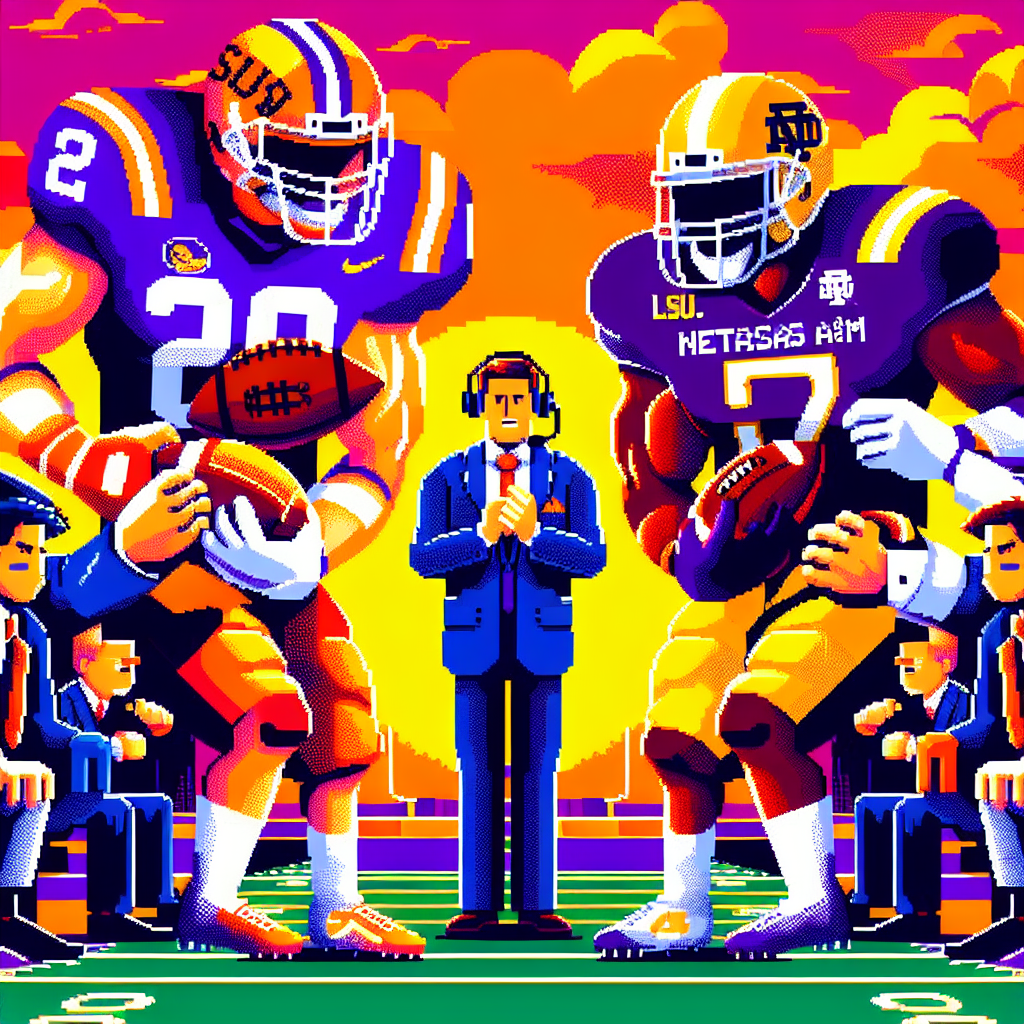
The Six Pack: Picks for Florida vs. LSU, Notre Dame vs. Texas A&M and Tom Fornelli’s lock for Week 3 – CBS Sports | Analysis by Brian Moineau

The Six Pack: Picks for Florida vs. LSU, Notre Dame vs. Texas A&M and Tom Fornelli's lock for Week 3 - CBS Sports | Analysis by Brian Moineau

Trust the Process: Navigating Week 3 of the 2025 College Football Season

Ah, college football season—where Saturdays are reserved for tailgates, face paint, and the sweet symphony of marching bands. As we dive into Week 3, fans and pundits alike are turning their attention to some tantalizing matchups that promise both fireworks and upsets. Let’s dissect the top picks for this week, focusing on the Florida vs. LSU face-off, the Notre Dame vs. Texas A&M showdown, and the ever-reliable Tom Fornelli's lock of the week.

Florida vs. LSU: A Clash of Titans

The Florida Gators and LSU Tigers have a storied rivalry, rooted in a history of thrilling games and nail-biting finishes. As the Gators travel to the bayou, their eyes set squarely on reclaiming past glories, one can’t help but marvel at the coaching prowess of Billy Napier. Having taken over the helm in 2022, Napier has transformed Florida into a formidable force, blending innovative offensive schemes with a rock-solid defense. On the flip side, LSU’s Brian Kelly, who took charge in 2021, has steadily built a powerhouse team that thrives on unpredictability. This game promises to be a tactical chess match, a true testament to the strategic minds of these two coaches.

Notre Dame vs. Texas A&M: Tradition Meets Tenacity

Moving onto the Notre Dame Fighting Irish and Texas A&M Aggies, this matchup is a classic clash of tradition versus tenacity. Notre Dame, with its rich history and legion of devoted fans, is a team that never shies away from the big stage. Marcus Freeman, now in his fourth year as head coach, has instilled a sense of discipline and resilience in his squad. Meanwhile, Texas A&M, under the leadership of Jimbo Fisher, continues to rise through the ranks, challenging the traditional powerhouses with their aggressive playing style and robust recruiting. This game is not just a contest of skill, but also a battle of wills, with both teams eager to make a statement.

Tom Fornelli's Lock of the Week

For those who follow the betting lines, Tom Fornelli has become something of a sage in the world of college football picks. His lock for this week, though not disclosed in this article, often carries the weight of meticulous research and an uncanny knack for spotting trends before they happen. If you’re a betting person, keeping an eye on Fornelli’s insights might just give you the edge you need.

Football, Life, and the World Beyond

As we immerse ourselves in the excitement of college football, it's fascinating to draw parallels with the world beyond the gridiron. Whether it's the strategic maneuvering seen in global politics, the intense competition in the tech industry, or even the rivalry between streaming platforms vying for our attention, the essence of competition and the pursuit of excellence is universal.

Final Thoughts

As Week 3 unfolds, let’s embrace the unpredictability that makes college football so captivating. Whether your team is on the rise or in the rebuilding phase, remember that every game is an opportunity—an opportunity to learn, to grow, and to prove oneself. So, grab your lucky jersey, settle into your favorite spot on the couch, and trust the process. After all, in the world of sports and beyond, it's not just about the destination, but the exhilarating journey along the way.

Read more about AI in Business

Read more about Latest Sports Trends

Read more about Technology Innovations