Bevacqua vs. Yormark: Notre Dame Fallout | Analysis by Brian Moineau

Notre Dame’s Public Meltdown and the Cost of Burning Bridges

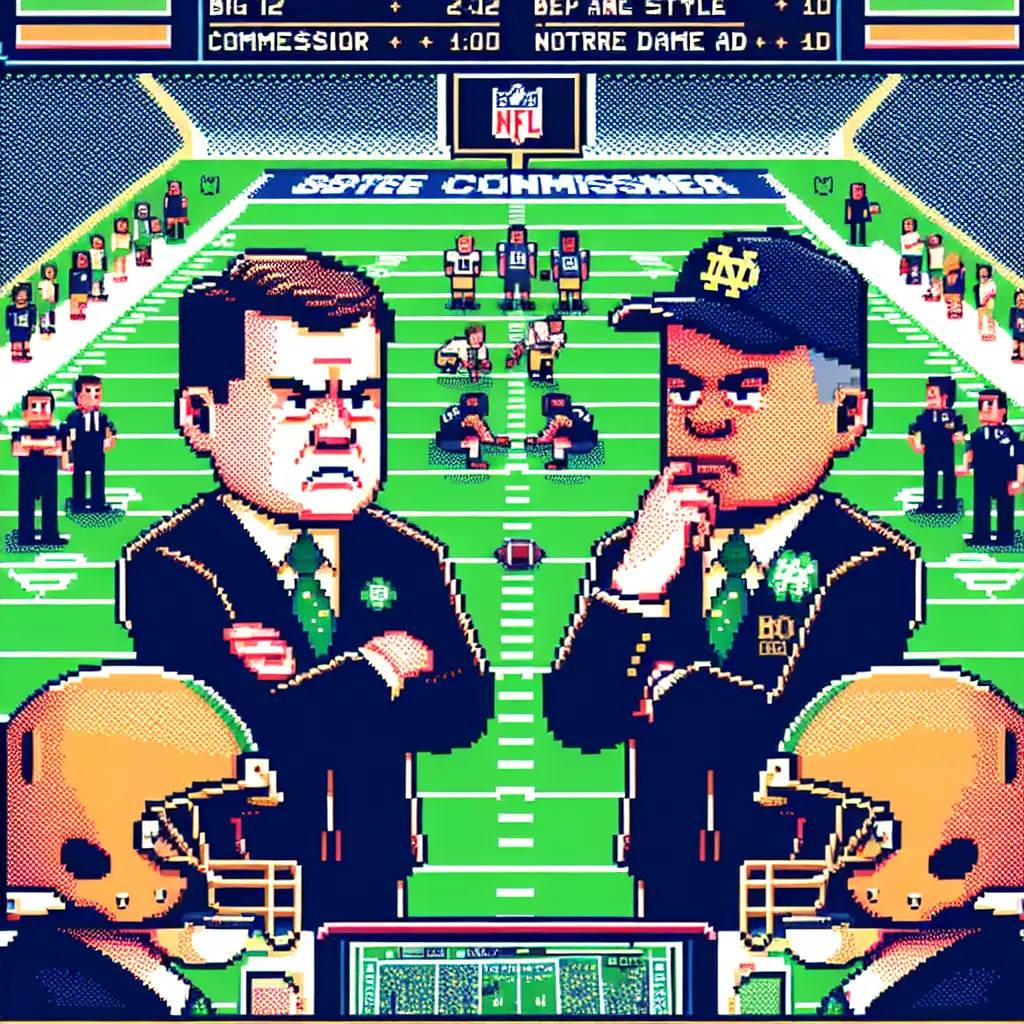
The college-football offseason rarely delivers on drama like a rivalry game — yet here we are: Notre Dame’s athletic director, Pete Bevacqua, publicly calling out the ACC after the Fighting Irish were left out of the 2025 College Football Playoff, and Big 12 commissioner Brett Yormark answering back by calling Bevacqua’s actions “egregious.” The exchange is more than headline fodder. It’s a study in modern power dynamics in college sports: brand protection, conference alliances, and the long memory of favors.

Why this row matters more than just pride

  • Notre Dame is unique: football independent in practice but tied to the ACC in most sports and scheduling agreements. Its network of relationships matters more than ever in an expanded 12-team playoff world.
  • Public finger-pointing isn’t just awkward — it can cost future scheduling, revenue, and political capital when the sport’s power players make decisions about expansion, access, and TV money.
  • Brett Yormark’s rebuke highlights an important theme: institutions that benefit from alliances don’t always get to publicly scold their partners without consequences.

What happened (plain and simple)

  • After the CFP selection favored Miami over Notre Dame (Miami had the head-to-head win), Pete Bevacqua publicly criticized the ACC, accusing it of undermining Notre Dame’s case by pushing Miami in league messaging and social media.
  • Notre Dame officials also signaled the relationship with the ACC had been “strained,” and Bevacqua suggested the league’s actions did “permanent damage.”
  • At the Sports Business Journal Intercollegiate Athletics Forum, Big 12 commissioner Brett Yormark called Bevacqua’s conduct “egregious” and “totally out of bounds,” noting the ACC had “saved” Notre Dame during the COVID-19 season in 2020 by giving them a full conference schedule and access to the conference championship.
  • The episode opened talk of potential reprisals from other athletic directors (scheduling aversion), and renewed speculation about where Notre Dame fits in the evolving conference landscape. (bleacherreport.com)

A closer look at the players and incentives

  • Pete Bevacqua (Notre Dame AD)

    • Incentives: Protect Notre Dame’s brand, fight for access to the playoff and its financial upside, and signal to fans and donors that the program will push back.
    • Risk: Alienating conference allies, compromising behind-the-scenes relationships that matter for scheduling and future political support.
  • Jim Phillips (ACC commissioner)

    • Incentives: Advocate for all ACC members and preserve the league’s credibility when promoting its teams.
    • Risk: Accusations of favoritism, even if the league was acting within normal advocacy duties.
  • Brett Yormark (Big 12 commissioner)

    • Incentives: Defend conference solidarity and discourage public feuds that could destabilize the broader system.
    • Risk: Appearing partisan or discouraging legitimate transparency about selection processes.

Bigger context: governance, memory, and leverage

  • College sports is a relationship economy. Conferences and independents trade scheduling, revenue sharing, and access. Publicly criticizing a partner is not just emotional — it’s strategic malpractice if you need that partner again.
  • Yormark’s point about the 2020 season is a reminder: favors are remembered. The ACC allowed Notre Dame a 10-game conference slate in COVID-impacted 2020; that accommodation had long-term competitive consequences and built goodwill.
  • The CFP’s expanded format and the myriad memorandums and understandings that govern access mean that political capital and perceived fairness matter almost as much as wins and losses.

Key takeaways

  • Publicly calling out a partner rarely wins loyalty; it often costs leverage.
  • Short-term PR satisfaction (rallying the fanbase) can come with long-term strategic losses (fewer high-quality opponents, strained negotiations).
  • Transparency in selection criteria is crucial — but the way institutions air grievances matters just as much as the grievance itself.
  • The Notre Dame–ACC–CFP spat is a microcosm of college sports’ transition: bigger stakes, more politics, and less room for emotional outbursts without consequences.

My take

Bevacqua’s frustration is understandable — missing the CFP stings, and athletic directors are tasked with fiercely protecting institutional interests. But stewardship in college athletics requires a balance between defending your program and preserving the relationships that make future success possible. Publicly accusing a conference partner of undermining you burns trust. Yormark’s rebuke isn’t just rhetorical theater; it’s a reminder that in the post-expansion era, relationships are currency. Notre Dame’s leadership needed a different channel: a private, strategic response that preserved options rather than narrowed them.

Sources


Related update: We recently published an article that expands on this topic: read the latest post.
Related update: We recently published an article that expands on this topic: read the latest post.

USC vs. Notre Dame: A Rivalry at Risk | Analysis by Brian Moineau

The USC-Notre Dame Rivalry: A Century of Passion and Memories

As the leaves begin to turn and football season kicks into full gear, one of college football’s most storied rivalries looms on the horizon: the clash between the University of Southern California (USC) and the University of Notre Dame. This rivalry, steeped in tradition and history, is more than just a matchup; it’s a celebration of athleticism, school spirit, and unforgettable moments. However, it’s facing an uncertain future, and that’s a conversation worth having.

A Rich History of Competition

The USC-Notre Dame rivalry dates back to 1926 and has since produced some of college football’s most thrilling games. These two powerhouse programs have battled it out on the gridiron for over a century, creating memories that resonate with fans and players alike. From the electric atmosphere of packed stadiums to legendary performances by athletes like Reggie Bush, the rivalry has showcased the very best of college football.

However, as the landscape of college athletics evolves with conference realignment and the introduction of the College Football Playoff, the future of this historic rivalry hangs in the balance. Will the USC-Notre Dame matchup remain a staple of college football, or will it fade into obscurity like so many other traditions?

Memorable Moments That Defined the Rivalry

Throughout the years, the USC-Notre Dame rivalry has produced unforgettable moments that are etched into the annals of college football history. Who could forget Reggie Bush’s spectacular 2005 performance, where he dazzled fans with his explosive plays and showcased why he was a Heisman Trophy winner? Or the dramatic finishes that left fans on the edge of their seats, such as the 1974 game where USC’s last-second touchdown secured a thrilling victory.

These games have brought together generations of fans, with families often divided in their loyalties. The intensity of the rivalry not only fuels the players on the field but also ignites the passion of the fans who support their teams through thick and thin.

Key Takeaways

Historical Significance: The USC-Notre Dame rivalry has spanned over 95 years, making it one of the longest-running rivalries in college football. – Iconic Games: From Reggie Bush’s legendary performances to nail-biting finishes, this rivalry has produced countless memorable moments. – Evolving Landscape: As college football faces changes in conference alignments and playoff structures, the future of this cherished rivalry is uncertain. – Fan Passion: The intensity of the rivalry ignites fierce loyalty among fans, often dividing families and communities. – Cultural Impact: The USC-Notre Dame games transcend football, representing a unique cultural intersection of tradition, competition, and camaraderie.

Reflecting on the Rivalry’s Future

As we look forward to the upcoming seasons, it’s crucial to cherish the moments that define the USC-Notre Dame rivalry. Whether it’s the thrill of a last-minute touchdown or the camaraderie shared among fans, this rivalry embodies the spirit of college football. It’s a reminder of why we love this sport in the first place.

Let’s hope that the powers that be recognize the importance of preserving this historic matchup, allowing future generations to experience the excitement and camaraderie that comes with every USC-Notre Dame game.

Sources

– ESPN: [From train rides to Reggie Bush: The best games in the USC-Notre Dame rivalry](https://www.espn.com/college-football/story/_/id/32547669/best-games-usc-notre-dame-rivalry)

In the world of sports, some rivalries are built on a foundation of history, passion, and unforgettable moments. The USC-Notre Dame rivalry is one such treasure that deserves to be celebrated for years to come.


Related update: We recently published an article that expands on this topic: read the latest post.


Related update: We recently published an article that expands on this topic: read the latest post.

Predicting Every 2025 College Football Game for Power 4 and Notre Dame – Sports Illustrated | Analysis by Brian Moineau

Predicting Every 2025 College Football Game for Power 4 and Notre Dame – Sports Illustrated | Analysis by Brian Moineau

Title: Predicting College Football’s Future: The 2025 Season Forecast

Ah, the thrill of college football predictions! It’s a ritual as old as the game itself, a dance of statistics, history, and, let’s face it, a sprinkle of pure luck. Sports Illustrated has taken up the challenge with its ambitious venture of predicting every 2025 college football game for the Power 4 conferences and Notre Dame. That’s 68 teams, from Week Zero through to rivalry weekend, meticulously forecasted for your reading pleasure.

The Art of Prediction

Predicting the future is a bold endeavor, much like attempting to guess the next viral TikTok dance or the outcome of the latest Supreme Court case. Yet, there’s something irresistibly exciting about trying to foresee which teams will rise to glory and which will falter. This process is not unlike the world of meteorology, where patterns, past data, and a touch of intuition can lead to surprisingly accurate forecasts—or spectacularly off-base ones.

A Glimpse Into the Future

In this detailed projection, each team’s journey through the season is laid out, game by game. Imagine the anticipation of fans as they dissect these forecasts, dreaming of victories and dreading potential defeats. For instance, how will the Ohio State Buckeyes fare against their historic rivals, the Michigan Wolverines, in this speculative future? Or, how might Notre Dame navigate its independent schedule to maintain its storied legacy?

The Bigger Picture

This exercise in future-gazing isn’t just about football. It’s a reflection of the broader human experience—our desire to understand, predict, and, in some ways, control the uncertain world around us. In this, college football stands as a microcosm of life, full of unexpected turns, exhilarating victories, and humbling losses.

Connections Beyond the Field

The unpredictability of sports mirrors today’s rapidly changing world. Consider the parallels with climate change discussions, where scientists and policymakers strive to predict and mitigate future impacts based on current data. Or the tech industry, where companies like Apple and Samsung constantly predict consumer trends to stay ahead in the market. Both fields, like sports forecasting, rely on a mixture of data analysis and human intuition.

The Coaches and Players

Behind every prediction are the coaches and players whose hard work, strategy, and passion define the season. Take Alabama’s Nick Saban, a maestro of the game whose legacy continues to grow. Or Clemson’s Dabo Swinney, whose optimism and innovative approach have turned his team into perennial contenders. These leaders must constantly adapt, much like CEOs steering their companies through turbulent markets.

Final Thoughts

Whether you view these predictions as gospel or mere entertainment, they undeniably add a layer of intrigue to the offseason. As we await the 2025 season, let’s remember that in both sports and life, the journey is as significant as the destination. So, here’s to the fans, the players, the coaches, and the analysts—may your predictions be ever in your favor, or at the very least, may they spark spirited discussions over a cold beverage.

Ultimately, the beauty of college football—and life itself—lies in its unpredictability. So, buckle up and enjoy the ride, because as any seasoned fan will tell you, anything can happen once the whistle blows.

Read more about AI in Business

Read more about Latest Sports Trends

Read more about Technology Innovations


Related update: We recently published an article that expands on this topic: read the latest post.