Cloud Fragility: Azure Outage Wake-Up Call | Analysis by Brian Moineau

The day the cloud hiccupped: why the Azure outage matters for everyone who trusts “the cloud”Introduction — a quick hook
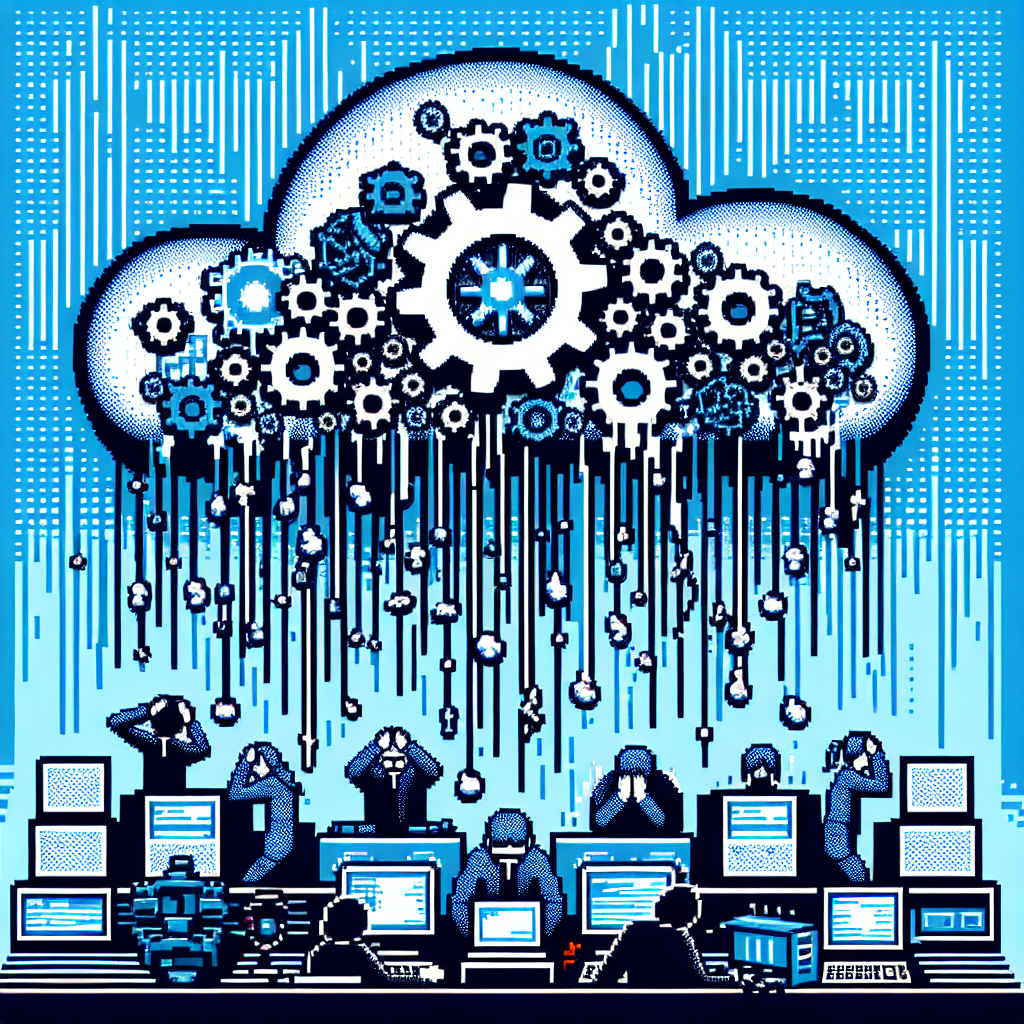
On October 29, 2025, Microsoft Azure — the backbone for everything from enterprise apps to Xbox and Minecraft — suffered a major outage that knocked services offline for hours. It wasn’t just an isolated blip: coming less than two weeks after a large AWS disruption, it’s a reminder that the modern internet depends on a handful of cloud giants, and when they stumble, the effects ripple far and wide.

What happened (context and background)

  • The outage: Microsoft traced the disruption to an “inadvertent configuration change” in Azure’s Front Door (its global content and application delivery network). That change produced widespread errors, latency and downtime across Azure-hosted services and Microsoft’s own consumer offerings. Microsoft described rolling back recent configurations to find a “last known good” state and reported recovery beginning in the afternoon of October 29, 2025. (wired.com)
  • Scope and impact: Downdetector and media reports showed spikes of tens of thousands of user reports; enterprises, airlines, telcos and gaming platforms all reported interruptions. For many organizations, critical workflows — check-ins at airports, corporate email, payment flows, game servers — were affected for hours. (reuters.com)
  • The bigger pattern: This failure came on the heels of a major AWS outage just days earlier. Two large outages in short order highlighted that cloud “hyperscalers” (AWS, Azure, Google Cloud) do a lot of heavy lifting for the internet — and that concentration creates systemic risk. Security and infrastructure experts called the incidents evidence of a brittle, over-dependent digital ecosystem. (wired.com)

Why this matters

— beyond the headlines

  • Centralization of critical infrastructure: A small number of providers run a large share of the world’s cloud workloads. That reduces redundancy at the infrastructure layer even when individual customers use multiple cloud services.
  • Cascading dependencies: A single provider outage can cascade through supply chains, third-party services, and customer systems that assume those cloud primitives are always available.
  • Configuration risk: The Azure incident reportedly began with a configuration change. Human or automation errors in configuration management remain one of the most common single points of failure in complex cloud systems.
  • Rising stakes with AI and real-time services: As businesses put more of their mission-critical systems, real-time APIs, and AI stacks in the cloud, outages have bigger economic and safety implications.

Key takeaways

  • Cloud concentration is convenience — and systemic risk. Relying on a handful of hyperscalers reduces costs and friction but increases the chance of widespread disruption.
  • Redundancy needs to be multi-dimensional. Multi-cloud isn’t a silver bullet; true resilience requires diversity of providers, regions, CDNs, and careful architecture to avoid single points of failure.
  • Operational practices matter: flawless configuration management, rigorous change control, and staged rollbacks are essential — but not infallible.
  • Prepare for the long tail: even after “mitigation,” some customers may face lingering issues. Incident recovery can be messy and incomplete for hours or days.
  • Transparency and post-incident analysis help everyone learn. Clear post-mortems, timelines, and fixes improve trust and enable better preventive design.

Practical resilience tips for teams (brief)

  • Identify critical dependencies (auth, payment, CDN, DNS, messaging) and map which cloud services they use.
  • Design graceful degradation paths: cached content, offline modes, and fallback providers for non-critical features.
  • Test failover regularly and run chaos engineering experiments to validate real-world responses.
  • Keep a communications plan: customers and internal teams need timely, actionable updates during incidents.

Concluding reflection
Cloud platforms have done enormous good — they let small teams build global services, accelerate innovation, and lower costs. But the October 29, 2025 Azure outage is a sober reminder: outsourcing infrastructure doesn’t outsource systemic risk. As we continue to push more of the world into the cloud (and into AI systems that depend on it), resilience must be an engineering and business priority, not an afterthought. The question for companies and policymakers alike isn’t whether the cloud will fail again — it’s how we design systems, contracts and regulations so those failures cause the least possible harm.

Sources


Related update: We recently published an article that expands on this topic: read the latest post.


Related update: We recently published an article that expands on this topic: read the latest post.

Are tariffs to blame for nearly 40% spike in wholesale vegetable prices? Experts weigh in – ABC News | Analysis by Brian Moineau

Are tariffs to blame for nearly 40% spike in wholesale vegetable prices? Experts weigh in – ABC News | Analysis by Brian Moineau

Title: Veggie Tales: Are Tariffs Turning Our Salads Into Pricey Delicacies?

Hello, dear readers! Today, we’re diving into a topic that’s spicing up dinner conversations and sprouting concerns among both consumers and economists alike. If the latest headline from ABC News is any indication, “Are tariffs to blame for nearly 40% spike in wholesale vegetable prices? Experts weigh in,” there’s quite a lot to chew on.

Now, let’s be honest. We all have a love-hate relationship with vegetables. They’re the unsung heroes of our plates, and while we may not always appreciate a broccoli floret or a spinach leaf, they’re vital for our health. But what happens when these leafy greens and vibrant veggies start costing as much as a prime rib? That’s the question at the heart of this article, and a 40% spike in wholesale prices is enough to raise eyebrows—and grocery bills!

The Tariff Tango

So, what’s driving this price surge? According to some experts, tariffs might be the culprits. Tariffs, for those of us who skipped that day in economics class, are taxes imposed on imported goods. They’re intended to protect domestic industries, but sometimes, they can create a ripple effect that leads to higher consumer costs.

In recent years, tariffs have been a hot topic globally. Remember the U.S.-China trade war? That wasn’t just a headline; it was a major economic event that had repercussions on everything from electronics to agriculture. And while the U.S. has been trying to untangle itself from this tariff web, the effects linger, like the aroma of garlic on your fingers after a good meal prep session.

A Global Green Crunch

But it’s not just tariffs causing our veggie woes. Climate change, labor shortages, and supply chain disruptions are all playing supporting roles in this drama. From droughts in California—America’s salad bowl—to unpredictable weather patterns across Europe, Mother Nature has been less than cooperative. A report from the United Nations’ Food and Agriculture Organization notes that extreme weather has significantly impacted global food production, making it a challenging time for farmers and consumers alike.

Moreover, the COVID-19 pandemic has thrown a wrench in the works, affecting labor markets and transportation networks. Remember when certain items seemed to vanish from store shelves faster than you could say “toilet paper”? Similar disruptions have hit the agricultural sector, complicating the journey from farm to table.

The Global Context

This isn’t just a U.S. problem. Across the pond, the United Kingdom has been grappling with its own set of challenges. Brexit has introduced new tariff barriers and regulatory hurdles, leading to increased costs and shortages. It’s a classic case of “you don’t know what you’ve got until it’s gone”—or in this case, until it’s more expensive.

Final Thoughts: From Farm to Table, and Beyond

So, what’s the takeaway here? As consumers, we might need to brace ourselves for a continued rollercoaster ride in grocery store prices. While tariffs are certainly a piece of the puzzle, they’re just one part of a complex global picture. It’s a reminder of how interconnected our world is and how local policies can have far-reaching effects.

In the meantime, perhaps it’s time to embrace creative cooking—exploring seasonal produce, starting a small home garden, or participating in community-supported agriculture programs. Not only could this help ease the sting of rising prices, but it also brings us closer to the food we eat and the people who grow it.

Here’s hoping for smoother trails and greener pastures ahead. Until next time, may your produce be plentiful and your meals delightful!

Read more about AI in Business

Read more about Latest Sports Trends

Read more about Technology Innovations


Related update: We recently published an article that expands on this topic: read the latest post.

Orioles Acquire Alex Jackson From Yankees – MLB Trade Rumors | Analysis by Brian Moineau

Orioles Acquire Alex Jackson From Yankees - MLB Trade Rumors | Analysis by Brian Moineau

Title: Catching New Opportunities: Orioles' Strategic Move with Alex Jackson

In the ever-dynamic world of Major League Baseball, where strategy and spontaneity often go hand-in-hand, the Baltimore Orioles have made a savvy move by acquiring catcher Alex Jackson from the New York Yankees. This trade comes at a critical time after the potential injury of their star catcher, Gary Sanchez, and reflects a strategic pivot that highlights both foresight and adaptability.

A Closer Look at Alex Jackson

Alex Jackson, while not a household name like some of his contemporaries, brings a unique blend of youthful energy and potential to the Orioles. Originally a first-round pick by the Seattle Mariners in the 2014 MLB Draft, Jackson’s career has seen him traverse several teams, showcasing his adaptability and resilience. While his batting stats might not dazzle at first glance, Jackson's defensive skills and versatility behind the plate make him a valuable asset for the Orioles, especially in a pinch.

Jackson's journey is reminiscent of the stories of perseverance seen in many sports narratives. Much like the popular Netflix documentary series "Last Chance U," which highlights athletes striving for their moment in the spotlight, Jackson represents the underdog spirit. His move to the Orioles could very well be his "last chance" to solidify his place in the MLB and make a notable impact.

The Orioles' Strategic Depth

This trade is also a testament to the Orioles' strategic planning and depth management. In baseball, as in life, having a backup plan is critical. With Gary Sanchez potentially sidelined, the Orioles needed to act quickly to fill the void and maintain their competitive edge. By securing Jackson, they ensure that the team remains robust behind the plate, which is crucial as the season progresses.

This decision aligns with a broader trend in sports and business – the importance of depth and contingency planning. In an era where the unexpected is the new normal, whether in sports, business, or global events, those who prepare for a range of scenarios often come out on top. The Orioles’ proactive approach is a case study in strategic foresight, highlighting the importance of adaptability in a rapidly changing world.

Drawing Parallels Beyond the Diamond

This trade can also be seen as a microcosm of larger global dynamics. Consider the global supply chain disruptions that have been a hallmark of the post-pandemic world. Just as companies have had to pivot and adapt to new suppliers or logistics strategies, sports teams like the Orioles must adjust to unforeseen challenges, like player injuries, with agility and speed.

Moreover, Jackson’s move from the Yankees to the Orioles is a reminder of the fluidity and interconnectedness present in many facets of life today. It highlights how talent and opportunity often transcend boundaries, whether those are between teams, industries, or even countries.

Final Thoughts

As the Orioles welcome Alex Jackson into their fold, this transaction serves as a reminder of the intricate dance of strategy, opportunity, and resilience that defines professional sports. Jackson’s journey and the Orioles’ strategic maneuvering underscore the importance of being prepared for the unexpected and embracing new chances with open arms.

For Orioles fans and baseball enthusiasts alike, this trade adds another layer of interest to the season. It’s a fresh chapter for Alex Jackson, a chance for him to shine and contribute to his new team’s success. As the season unfolds, we’ll be watching closely to see how this new addition impacts the Orioles’ trajectory, and perhaps, how Jackson seizes his moment in the spotlight.

Read more about AI in Business

Read more about Latest Sports Trends

Read more about Technology Innovations

Dollar Tree raises red flag about unexpected customer behavior – TheStreet | Analysis by Brian Moineau

Dollar Tree raises red flag about unexpected customer behavior - TheStreet | Analysis by Brian Moineau

Unpacking the Dollar Tree Dilemma: A Lighthearted Dive into Consumer Curiosities


In the ever-evolving world of retail, where trends can shift as quickly as a TikTok dance craze, Dollar Tree has recently raised an intriguing red flag concerning unexpected customer behavior. While the original article from TheStreet might have approached this topic from a business-centric perspective, let's take a moment to explore this retail conundrum with a touch of whimsy and broader context.

The Dollar Tree Phenomenon: More Than Just a Store


Dollar Tree isn't just a discount haven; it's a cultural staple. For many, it's the place where you can find everything from party supplies to the oddly satisfying array of seasonal decorations. However, this beloved budget-friendly chain is witnessing a shift in customer behavior that's got them scratching their heads.

Whether it's customers buying in bulk or opting for items they wouldn't have considered before, these changes could be a reflection of broader economic uncertainties. With inflationary pressures still lingering in many parts of the world, consumers are more price-conscious than ever. It's interesting to see how Dollar Tree, a store that thrives on the allure of affordability, is responding to these shifts.

Retail Therapy Meets Real World Challenges


This trend isn't occurring in isolation. Across the retail landscape, companies are grappling with changing consumer habits. For instance, during the pandemic, we saw a surge in online shopping—a habit that many have retained. Similarly, the rise of "frugal living" influencers on platforms like Instagram and YouTube has encouraged shoppers to be more discerning about their purchases, seeking value in every dollar spent.

In contrast, luxury brands are also seeing shifts. While Dollar Tree customers might be focused on stretching their dollars, high-end retailers are catering to a different kind of consumer: one who is looking for quality over quantity, thereby creating a fascinating dichotomy in consumer behavior.

Connections to the Wider World


Looking beyond the retail shelves, these shifts in consumer behavior can also be linked to larger global events. Economic slowdowns in major markets, geopolitical tensions, and supply chain disruptions have all played a role in shaping how and where people spend their money. In the U.S., for example, the fluctuating job market and housing concerns have tightened budgets for many households.

Moreover, environmental consciousness is another factor influencing shopping habits. More consumers are now opting for sustainable products, which often means buying less but buying better. This could explain why some are turning to Dollar Tree for essentials while saving up for eco-friendly splurges elsewhere.

Final Thoughts: The Future of Frugality


Dollar Tree's red flag might be an indication of changing times, but it's also a testament to the resilience of consumers. In an era where adaptability is key, both retailers and shoppers are finding new ways to navigate the economic landscape. As we look to the future, it will be fascinating to see how Dollar Tree and its counterparts continue to adapt to these evolving consumer behaviors.

So, next time you find yourself wandering the aisles of a Dollar Tree, remember: each purchase is not just a transaction but a reflection of broader trends and personal priorities. Who knew a dollar store could hold such profound insights?

Read more about AI in Business

Read more about Latest Sports Trends

Read more about Technology Innovations

Japan inflation comes in at 3.6%, surpasses BOJ target for three straight years – CNBC | Analysis by Brian Moineau

Japan inflation comes in at 3.6%, surpasses BOJ target for three straight years - CNBC | Analysis by Brian Moineau

Japan's Inflation Odyssey: The Land of the Rising Prices

Japan, a nation renowned for its cherry blossoms, cutting-edge technology, and rich cultural tapestry, is now also notable for its inflation rates surpassing the Bank of Japan's (BOJ) target for three consecutive years. According to a recent CNBC report, Japan's inflation grew 3.6% year on year in March, marking a significant departure from the BOJ's long-standing 2% target. But what does this mean for Japan and the global economic landscape?

The Inflation Conundrum

For years, Japan grappled with deflation—a persistent decline in prices that stymied economic growth and stifled consumer spending. The BOJ's 2% inflation target was established as a remedy, intended to stimulate the economy by encouraging spending and investment. However, overshooting this target presents its own set of challenges.

The current 3.6% inflation rate, while modest compared to the double-digit figures seen in some other parts of the world (such as Argentina, where inflation exceeded 100% in 2023), is significant for Japan. It suggests that the country's economy is heating up faster than anticipated. This raises the question: how will policymakers respond to this continued rise in prices?

A Global Perspective

Japan's inflationary pressures are not occurring in isolation. Around the world, countries are grappling with the economic ripple effects of the COVID-19 pandemic, supply chain disruptions, and geopolitical tensions. For instance, the war in Ukraine has led to increased energy prices globally, affecting nations far beyond Europe. Similarly, the U.S. has experienced rising inflation rates, prompting the Federal Reserve to increase interest rates—a potential move Japan might consider, though it could have complex implications for its economy.

Interestingly, in an era where many countries are tightening monetary policy to combat inflation, Japan's approach has remained relatively accommodative. The BOJ continues to maintain low interest rates, prioritizing economic growth and stability over aggressive inflation control. This divergence in strategy highlights the unique economic landscape in Japan, where decades of economic stagnation have fostered a cautious approach to monetary policy adjustments.

Cultural and Economic Impacts

For the average Japanese citizen, rising inflation can have tangible impacts on daily life. From increased grocery bills to higher costs for everyday goods and services, the effects of inflation are felt most acutely by consumers. Yet, there is also a cultural dimension at play. Japan's aging population and shrinking workforce present additional economic challenges, leading to debates about immigration policies, workforce participation, and technological innovation as potential solutions.

A Lighthearted View

Despite the serious economic implications, there's an opportunity to find some levity in the situation. As Japan continues to navigate these inflationary waters, perhaps it's time for some creative thinking. Imagine a world where inflation is met with humor—where economists become stand-up comedians, turning complex economic theories into punchlines, and where inflation indices are humorously compared to sumo wrestling matches, with the yen battling it out on the global stage.

Final Thoughts

Japan's inflation journey is a testament to the complexities of managing an economy in a rapidly changing world. While the 3.6% inflation rate surpasses the BOJ's target, it also reflects broader global trends and challenges. As Japan charts its course forward, balancing growth and stability will be key. And who knows, maybe a little humor along the way will provide the resilience needed to weather the economic storms.

For more insights on Japan's economic landscape, check out the full [CNBC article](https://www.cnbc.com).

Read more about AI in Business

Read more about Latest Sports Trends

Read more about Technology Innovations

5 Things to Know Before the Stock Market Opens – Investopedia | Analysis by Brian Moineau

5 Things to Know Before the Stock Market Opens - Investopedia | Analysis by Brian Moineau

Title: Navigating the Market Waves: What to Watch as the Stock Market Opens

Hello, market enthusiasts and casual observers alike! Today, we’re diving into the ever-fascinating world of stock markets, where fortunes can change faster than the latest TikTok trend. Our focal point is a recent article from Investopedia titled "5 Things to Know Before the Stock Market Opens," which offers a glimpse into the market's mood as we await the Federal Reserve's next move and ponder Nvidia's latest stock shuffle.

Federal Reserve’s Interest-Rate Decision: The Elephant in the Room

First up, the Federal Reserve's looming interest-rate decision is akin to the season finale of your favorite show—everyone's speculating about what's next. As U.S. stock futures inch higher, investors are holding their collective breath awaiting remarks from Fed Chair Jerome Powell. The Fed’s decisions have a ripple effect, impacting everything from mortgage rates to the cost of your favorite artisanal avocado toast.

In recent months, Powell has been a steady hand on the economic tiller, navigating inflationary pressures and economic turbulence. His ability to communicate complex economic policies in layman’s terms has earned him accolades, though some critics argue his policies are too conservative.

Nvidia's Rollercoaster: A Tech Titan's Journey

Then there's Nvidia, a titan in the tech world known for its cutting-edge graphics processing units (GPUs). After CEO Jensen Huang's remarks, the company's shares took a dip, but they’re now recovering modestly. This is a testament to the market's sometimes fickle nature, where a single statement can send stocks on a wild ride. Huang, known for his visionary insights and bold leadership, has been a guiding force behind Nvidia's innovations. However, even the most respected CEOs can't escape the occasional market jitters.

Nvidia's journey is a reminder of the broader tech industry’s challenges and triumphs. As AI and machine learning continue to evolve, companies like Nvidia are at the forefront, driving change and sometimes facing the volatile whims of investor sentiment.

Broader Market Trends and Global Connections

On a global scale, markets are interconnected like never before. As we see fluctuations in the U.S., similar trends can ripple across Europe, Asia, and beyond. Recently, geopolitical tensions and supply chain disruptions have added layers of complexity to market predictions. Yet, amidst these challenges, opportunities abound for savvy investors who can navigate the uncertainty.

Interestingly, the stock market's ebbs and flows often mirror societal trends. Just as people are adapting to hybrid work models and digital transformations, markets are adjusting to new economic realities. The rise of retail investors, using platforms like Robinhood, has democratized stock trading, bringing new voices into the financial conversation.

Final Thoughts: The Art of Staying Informed

As we keep an eye on the Fed's decisions and Nvidia's trajectory, remember that knowledge is power. Whether you're a seasoned investor or just dipping your toes into the market waters, staying informed is your best strategy. So, read up, stay curious, and remember—markets may rise and fall, but the quest for understanding is a constant adventure.

In this ever-evolving economic landscape, the key is to remain adaptable and open to new insights. After all, in the world of stocks, as in life, change is the only constant. Happy trading, everyone!

Read more about AI in Business

Read more about Latest Sports Trends

Read more about Technology Innovations

US stocks drop after Trump says he won’t rule out a recession – CNN | Analysis by Brian Moineau

US stocks drop after Trump says he won’t rule out a recession - CNN | Analysis by Brian Moineau

**Navigating the Economic Seas: When Stocks Dip and Leaders Speak**

Ah, the stock market—a wondrous ocean of opportunity, tumult, and, occasionally, a bit of seasickness. On a recent Monday, investors awoke to a sharp decline in US stocks. The culprit? A Sunday interview with former President Donald Trump, who suggested the US might face “a period of transition” and didn’t rule out the possibility of a recession. When a former leader of the free world makes such statements, it’s like a lighthouse signaling rough seas ahead, and investors understandably adjust their sails.

Now, before we all start stockpiling canned goods and gold bars, let's take a broader look at what's going on. Economic transitions and market fluctuations are part and parcel of the financial landscape—like the ebb and flow of tides. Trump's comments, while impactful, are just one piece of a larger puzzle.

Firstly, let's address the elephant in the room: the "R" word—recession. It's not exactly a term that inspires confidence, but it's also not the apocalypse. Recessions are natural parts of economic cycles. Historically, they have been followed by periods of growth and recovery. For instance, the recession that followed the 2008 financial crisis led to a lengthy bull market that lasted over a decade.

Trump's remarks come at a time when the global economy is already dealing with several stressors. The ongoing ramifications of the COVID-19 pandemic, supply chain disruptions, and geopolitical tensions, like those between Russia and Ukraine, have all been contributing factors to economic uncertainty. These elements are reminding us that the world is an interconnected web, where a tug on one thread can ripple across the globe.

Additionally, let's look at the Federal Reserve's role in this equation. The Fed, under the leadership of Jerome Powell, has been navigating these choppy waters with monetary policy adjustments, such as interest rate hikes aimed at curbing inflation. While these moves are necessary, they are also part of why investors feel a bit queasy. Higher interest rates can mean higher borrowing costs, which can slow down economic growth—hence the recession fears.

But let's not forget the resilience of markets and economies. Remember when Brexit was supposed to herald the end of the world? Or when the US-China trade war seemed an insurmountable hurdle? Markets have a way of adapting, recalibrating, and ultimately, growing.

As for Trump, love him or loathe him, his words carry weight. His presidency was marked by significant economic events, including tax reforms and trade negotiations. While no longer in office, his commentary still resonates and stirs the financial seas.

So, what’s a savvy investor to do in times like these? Perhaps the best course of action is to stay informed but not be swayed by every headline. Diversification remains a timeless strategy, and keeping a long-term perspective can help weather the storms. As Warren Buffett wisely advises, "Be fearful when others are greedy, and greedy when others are fearful."

In closing, while the stock market may have experienced a dip, it’s important to keep our eyes on the horizon. Economic cycles come and go, but the human spirit of innovation and resilience remains steadfast. Whether it’s through green energy advances, technological breakthroughs, or global cooperation, the world has a way of righting itself, even when the seas are rough.

So, fellow sailors of the market, let’s adjust our sails, keep a steady hand on the tiller, and ride out the waves with optimism. After all, calm seas never made skilled sailors.

Read more about AI in Business

Read more about Latest Sports Trends

Read more about Technology Innovations