A buzzer beater that rewrote a 27-year script
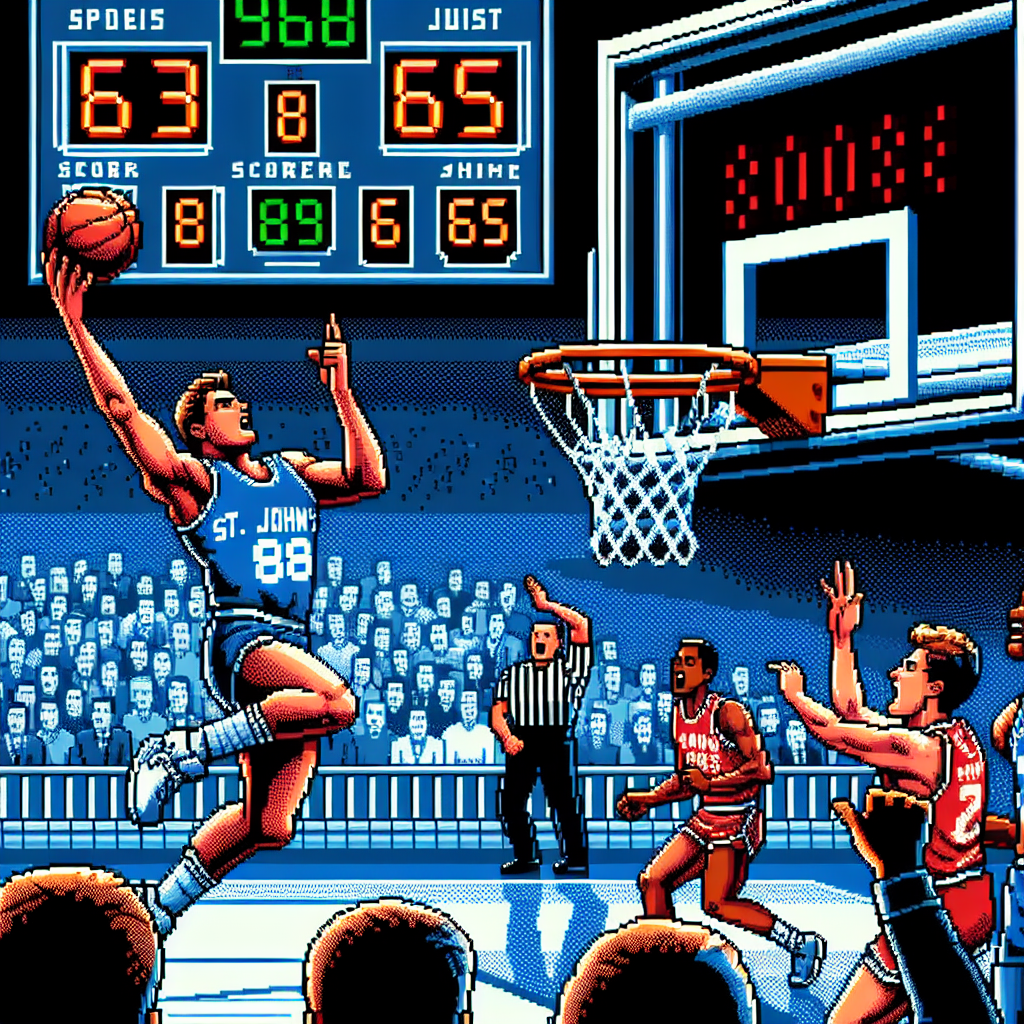
Dylan Darling hit a driving layup at the buzzer — his only basket of the game — and with that single, decisive act St. John’s sent the Red Storm back to the Sweet 16 for the first time since 1999. It was the kind of March Madness moment that feels both improbable and inevitable: a player who’d struggled all night collecting himself, taking the shot he’d called for himself, and flipping a frantic game into legend.
There was more than drama on the line. St. John’s blew a 13-point lead in the final minutes, Kansas clawed back, and two Hall of Fame coaches — Rick Pitino and Bill Self — faced off in another chapter of college basketball history. In the end, it wasn’t the star-heavy stat line or the late free throws that decided the game. It was a gutsy decision and an old-fashioned finish.
What happened — the play, the comeback, the context
With 3.9 seconds left in a tie game, St. John’s had possession at midcourt. Dylan Darling, who had missed his first four field-goal attempts, decided he wanted the ball. He attacked the rim, banked a right-handed layup in — the only bucket he’d make all night — and was swarmed by teammates and fans as the final horn sounded.
Earlier, the Johnnies built a 13-point cushion, spearheaded by Zuby Ejiofor and Bryce Hopkins, each scoring 18 points. But late-game defense faltered, Kansas tightened the screws, and the momentum shifted hard. Still, when it mattered most, Pitino’s team made the play that counted.
This result sends St. John’s (30-6) into the Sweet 16 and marks a turning point for a program that has been rebuilding its national reputation under Pitino. For Kansas, a program used to deep tournament runs, the loss is another early exit that will invite questions about execution in pressure moments.
Why the finish matters beyond the highlight
- It capped a narrative arc. St. John’s began the season with questions and has grown into a resilient, physical squad. Returning to the second weekend of the NCAA Tournament ends a drought that stretched back to the late 1990s.
- It highlights team identity. The Johnnies’ season has been defined by defense, toughness, and complementary scoring. Darling’s heroics came after Ejiofor and Hopkins carried much of the load, showing the depth and buy-in of the roster.
- It underscores the human element of March. Tournament basketball rewards confidence and decisiveness. Darling’s choice to “want the ball” despite cold shooting exemplifies the blend of bravado and belief that fuels postseason lore.
Darling’s shot: confidence over logic
Statistically, Darling had no business being the focal point at the end. He was 0-for-4 from the floor and had struggled to find rhythm. Yet he called for the play, attacked decisively, and used the element of surprise — and maybe a coach’s trust — to generate the game-winner.
That tension between form and faith is what makes moments like this addictive. Coaches will tell you to ride your hot hand; sometimes you ride the cold hand because the player displays poise. Pitino’s public praise afterward — amused and proud — captured that balance: a coach who trusts his players, even when the numbers argue otherwise.
The coaching subplot: Pitino vs. Self, generations and storylines
This matchup also offered a novelty: Rick Pitino and Bill Self, both Hall of Famers and long-time adversaries in the sport, squared off in March Madness for only the second time. The game felt like a passing-of-eras piece of theater — older, decorated minds coaching youthful, hungry rosters in a tournament where reputations are both used and remade.
Pitino’s St. John’s has steadily rebuilt credibility; this win fast-forwards the program’s narrative. Meanwhile, Kansas will have to recalibrate, asking how a late collapse and a buzzer-beater can be prevented next season.
Momentum and what comes next for St. John’s
Advancing to the Sweet 16 isn’t just a headline. It’s a recruiting boost, a program-defining weekend, and an emotional release for a fan base that has waited nearly three decades. The Red Storm now have a chance to prove this win wasn’t a singular moment but part of a sustainable rise.
That said, Sweet 16 matchups are pressure-cooker affairs. Opponents will study how St. John’s navigated late-game chaos and will test whether Darling’s heroics are repeatable clutch or a one-night miracle. The team’s interior strength with Ejiofor and the scoring of Hopkins give them a foundation, but consistency — especially in closing minutes — will be the true test.
Lessons from the chaos
- Momentum can swing violently. A 13-point lead evaporated; timeout usage, fouling strategy, and defensive focus in the final minutes matter more than a lead’s size.
- Leadership shows in unlikely ways. Darling’s willingness to take the decisive shot speaks to the culture Pitino has fostered: players confident to make decisions when the lights are brightest.
- March rewards belief. Upsets and buzzer-beaters are not anomalies as much as they are the product of preparation matched with nerve.
Final thoughts
There’s a reason March Madness is shorthand for unpredictability. On any given night, the player with the quiet stat line can become the story’s center with a single play. Darling’s buzzer-beating layup will be replayed, GIF’d, and tattooed into the memories of St. John’s fans for years. But beyond the spectacle is a reminder: tournaments are built on moments of daring, and sometimes the bravest thing is to keep believing in yourself when the numbers say otherwise.
No matter how long a program waits, a single play can rewrite its narrative. For St. John’s, that rewiring happened in 3.9 seconds.
What to remember
- St. John’s returned to the Sweet 16 for the first time since 1999.
- Zuby Ejiofor and Bryce Hopkins each scored 18 points and anchored the game before Darling’s finish.
- Dylan Darling’s driving layup at the buzzer was his only field goal of the night.
- The win highlights team depth, coaching trust, and the mercurial magic of March.
Sources
-
Dylan Darling hits driving layup at buzzer, St. John's beats Kansas 67-65 in March Madness thriller — AP News
https://apnews.com/article/582c32938cdf14d2bf0454059f9e10a6 -
St. John's vs. Kansas game thread and fan reaction — Reddit (game threads and postgame discussion)
https://www.reddit.com/r/CollegeBasketball/comments/1s113i0/post_game_thread_5_st_johns_defeats_4_kansas_6765/ -
St. John's season coverage and context (Big East tourney recap) — KSAT Sports
https://www.ksat.com/sports/2026/03/15/ejiofor-leads-no-13-st-johns-to-72-52-rout-of-no-6-uconn-for-2nd-straight-big-east-tourney-title/
Related update: We recently published an article that expands on this topic: read the latest post.
Related update: We recently published an article that expands on this topic: read the latest post.