Big East Rivalry Returns for Final Four | Analysis by Brian Moineau

An old Big East rivalry renewed — and a trip to the Final Four on the line

UConn women vs Notre Dame live: Winner advances to Final Four — that headline says it all, and it couldn’t feel more rightful. Two programs that built modern women’s college basketball out of grit, guard play and championship expectations met again with a Final Four berth dangling like the ultimate prize. The rivalry between Connecticut and Notre Dame has texture: shared history, coaching mind games, and moments that have rewritten the sport’s narrative. Tonight, it’s about legacy meeting the present.

Why this matchup still matters

First, some context. UConn and Notre Dame spent decades as Big East neighbors before conference realignment scattered schedules and storylines. Even after moving to different leagues, their games remained marquee events — partly because of the coaches (think Geno Auriemma and Muffet McGraw’s era), partly because both programs produced stars and teams that routinely chased national titles.

Now, fast-forward to this NCAA Tournament meeting: both teams arrived having earned respect all season — UConn undefeated for long stretches and Notre Dame battle-tested in the ACC. The stakes could not be higher: win and you’re in the Final Four; lose and a season’s dream evaporates.

Transitioning to the present matters because this matchup is more than a single-elimination game. It’s a referendum on program identity. Will UConn’s trademark offensive movement and depth carry the day? Or will Notre Dame’s defense and tenacity, plus their knack for rising in big moments, flip the script?

The storylines to watch

  • Momentum and roster balance. UConn’s run this season has combined veteran leadership with standout guard play. Notre Dame counters with disciplined execution and players who show up late in games.
  • Coaching chess. Geno Auriemma’s adjustments and Notre Dame’s game-planning are both historically elite. When these two meet, the halftime tweaks often decide the outcome.
  • Matchup edges. Inside-out combinations, transition defense, and who controls the glass will be decisive. Small advantages — a timely steal, an offensive rebound, a cold shooting stretch — become the difference in knockout play.
  • The rivalry factor. Pressure magnifies when history is present. Players feel it; crowd and media feed it. That emotional element occasionally births surprising performances.

UConn women vs Notre Dame live: what the numbers hint at

Looking at recent results, UConn carried a dominant regular-season performance that included a convincing win over Notre Dame earlier this year. That game underscored the Huskies’ firepower and cohesion. Notre Dame, however, has shown the habit of peaking in tournament settings — and in prior seasons they’ve been the kind of team that can flip momentum with defensive stops and efficient scoring.

Statistically, UConn’s offense tends to generate high-percentage looks through ball movement and cutting. Notre Dame’s defense thrives on contesting shots and forcing turnovers that create transition opportunities. So expect an ebb and flow where possession-by-possession execution matters more than flashy plays.

Transitioning from numbers to intangibles: experience in late-game situations and bench depth could tilt things. In elimination games, reliable secondary scorers and bench minutes that don’t collapse are invaluable.

Players to keep your eye on

  • UConn’s lead guards and veterans who initiate the offense and set tempo.
  • Notre Dame’s primary ball handlers and defensive stoppers who can take over possession play.
  • Role players: the midrange shooters and rebounders who quietly determine whether a team can sustain a run or weather adversity.

These are the types of contributors who don’t always make the highlight reels but dictate the narrative by the end of regulation.

How the game might unfold

Expect UConn to push to create early rhythm, using motion and quick passes to manufacture open shots. Notre Dame will likely be willing to trade baskets if it means keeping their defense intact and waiting for late-game opportunities.

If UConn builds an early lead, Notre Dame’s comeback history says not to count them out. Conversely, if Notre Dame controls transition and the boards, UConn will have to shorten the game and rely on halfcourt efficiency.

Either way, this game should deliver texture: momentum swings, coaching adjustments, and a finish that could hinge on free throws and defensive discipline.

What this means beyond one game

The immediate prize is obvious — a Final Four berth. But these games reverberate. For recruits, alumni, and program reputation, a win here reinforces national standing. For the sport, a classic between two blue-blood programs renews interest, media attention, and the sense that women’s college basketball still produces the kind of drama fans hunger for.

Moreover, the match highlights how old rivalries remain relevant even after conference shifts. They carry history into modern narratives and remind us that college sports are about continuity as much as change.

Key takeaways

  • Rivalry + stakes = heightened drama; this matchup is built for a classic.
  • UConn’s offense versus Notre Dame’s defense frames the tactical battle.
  • Depth, late-game poise, and coaching adjustments will probably decide the outcome.
  • A win has program-level effects beyond a single season — Final Four access is a platform for legacy.

My take

There’s an emotional tug when two former conference foes meet with so much on the line. The history adds a flavor you don’t get in neutral matchups. While UConn’s regular-season dominance makes them feel like favorites on paper, Notre Dame’s tournament savvy makes them dangerous. Ultimately, I expect a tight game decided in the last five minutes — maybe even by a single possession. That’s the kind of contest that turns moments into memories and players into folklore.

Sources


Related update: We recently published an article that expands on this topic: read the latest post.
Related update: We recently published an article that expands on this topic: read the latest post.
Illini End 21-Year Wait, Reach Final Four | Analysis by Brian Moineau

A long wait ends: Illini advance to Final Four and bring March Madness back to Champaign

Twenty-one years is a long time to keep a city waiting, but on March 28, 2026 the Illini advance to Final Four dreams became reality. Freshman Keaton Wagler and sophomore Andrej Stojakovic took over in the second half, Illinois turned the game into a physical frontcourt statement and the result was a 71-59 win over Big Ten rival Iowa that sent Brad Underwood’s team to Indianapolis for the first time since 2005.

The headline feels right: this was a team effort with a storybook twist. Wagler’s aggressiveness inside, Stojakovic’s steady finishing and a brutal rebounding edge combined to flip a game that felt jittery in the first half. If you were an Illini fan, you felt the tension, then the swing, and finally the catharsis.

Why this game mattered

  • It ended a 21-year Final Four drought for Illinois (last appearance: 2005).
  • The win came in the South Region final of the NCAA Tournament — essentially the Elite Eight — and booked Illinois a spot in the national semifinals in Indianapolis.
  • The Illini leaned on size, toughness and second-half execution rather than outside shooting, a style that suggests a different blueprint for deep tournament runs.

The context matters. Illinois arrived in Houston with a roster that blends Eastern European bigs (the so-called “Balkan Bloc”) with high-upside guards. For much of the season they’ve been able to bully opponents on the glass and punish teams that can’t match their length. Against Iowa, that advantage was the defining factor: Illinois outrebounded the Hawkeyes 38-21 and outscored them 40-12 in the paint. Those numbers tell the story of a team that used its identity to win when shots weren’t falling.

Illini advance to Final Four: how the second half unfolded

The first half was a little chaotic. Iowa opened with energy and a double-digit lead early; the Toyota Center added its own weirdness with a buzzer malfunction and a dead jumbotron. Still, Illinois trailed by only four at halftime despite an awful night from long range (3-for-17).

Then the Illini flipped the script. Key elements:

  • Keaton Wagler’s interior aggression: The freshman finished with 25 points and imposed himself at the rim, especially in the second half when Illinois needed a closer.
  • Andrej Stojakovic’s balance and toughness: The guard — with a famous basketball pedigree — scored 17 and did the little things that mattered: drawing attention, finishing drives and keeping the offense calm.
  • Dominance on the glass: Tomislav and Zvonimir Ivisic, plus David Mirkovic, helped create 16 offensive rebounds and constant second-chance pressure.
  • Defensive adjustments: Illinois tightened its paint defense and forced tougher looks from Iowa’s perimeter creators late.

A late run — led by the Ivisic twins’ interior presence and a Wagler bucket in the lane — swung the lead to seven with under five minutes remaining. From there Illinois closed the door, converting trips to the line and converting offensive rebounds into points.

What this team represents beyond the scoreboard

Illinois’ run isn’t just a flash of March magic. It’s a validation of a program identity built around size, toughness and smart recruiting. Brad Underwood’s emphasis on international and particularly Eastern European recruiting has paid off in the postseason: the Ivisic twins and David Mirkovic gave Illinois a distinct physical profile that few teams could match.

At the same time, Keaton Wagler’s breakout as a freshman shows that Illinois can mix youth and expectation. Wagler’s poise — called “tougher than nails” by his coach — and his South Region Most Outstanding Player honor suggest he’s ready for a big stage.

There’s also a narrative arc: Andrej Stojakovic, son of former NBA All-Star Peja Stojakovic, coming into his own on a national stage; a program reconnecting with a storied past; and a fanbase finally getting the Final Four party it’s been dreaming about for more than two decades.

Matchup implications and what to watch next

Heading into the Final Four, Illinois will face a different kind of test. The field’s other participants include teams with elite guard play and different tempo preferences. Illinois’ keys for the national semifinals:

  • Control the glass. Continue the rebounding pressure that turned this game.
  • Avoid foul trouble and free-throw regression. Physical teams have to stay out of foul trouble to sustain defensive intensity.
  • Find efficient ways to score when the perimeter isn’t falling. Against Iowa, Illinois leaned on interior offense and offensive rebounds; that formula must translate against other top opponents.
  • Stay composed against late-game chaos. Tournament games create moments of noise; this team showed resilience in Houston and will need it in Indianapolis.

If Illinois can keep imposing its physical style while getting steady production from Wagler and Stojakovic, they’ll be dangerous. The Final Four stage rewards teams that know who they are — and this Illinois team seems to.

Moments that mattered

  • Wagler’s second-half buckets that blended power and calmness.
  • The Ivisic twins’ alley-oop and hook shots that punctuated the run.
  • A sustained rebounding beatdown — the Illini finished with 38 boards to Iowa’s 21.
  • A late sequence where offensive rebounding turned into a multi-possession lead and sealed the game.

Those are the plays that will live on highlight reels, but they also highlight the team’s character: persistent, physically imposing, and decisively clutch when the margin tightened.

Final thoughts

There’s an old-school quality to this Illinois squad — a team that doesn’t rely on one superstar threes-and-dribble iso but rather pounds the glass, shares the ball, and grinds out possessions. That approach has a timelessness that fits the tournament: physical teams with depth and discipline often do well in April.

The weight of a 21-year wait has been lifted. The Illini advance to Final Four not as a surprise but as a logical payoff for a roster built with a plan — and for a coaching staff willing to lean into a distinctive identity. Whether they can take the next two wins and end the program’s national-title drought remains to be seen. For now, Champaign gets to celebrate a team that returned the Final Four to Illinois, and the rest of college basketball gets to watch how this rugged, international-flavored roster handles the sport’s brightest stage.

A few quick takeaways

  • Keaton Wagler (25 points) and Andrej Stojakovic (17) paced Illinois in the second half.
  • Illinois dominated the paint and the boards — outscoring Iowa 40-12 in the paint and outrebounding them 38-21.
  • The win sends Illinois to its first Final Four since 2005, marking a major milestone for the program and its fans.

Sources


Related update: We recently published an article that expands on this topic: read the latest post.


Related update: We recently published an article that expands on this topic: read the latest post.

Darling’s Buzzer Beater Sends St. John’s | Analysis by Brian Moineau

A buzzer beater that rewrote a 27-year script

Dylan Darling hit a driving layup at the buzzer — his only basket of the game — and with that single, decisive act St. John’s sent the Red Storm back to the Sweet 16 for the first time since 1999. It was the kind of March Madness moment that feels both improbable and inevitable: a player who’d struggled all night collecting himself, taking the shot he’d called for himself, and flipping a frantic game into legend.

There was more than drama on the line. St. John’s blew a 13-point lead in the final minutes, Kansas clawed back, and two Hall of Fame coaches — Rick Pitino and Bill Self — faced off in another chapter of college basketball history. In the end, it wasn’t the star-heavy stat line or the late free throws that decided the game. It was a gutsy decision and an old-fashioned finish.

What happened — the play, the comeback, the context

With 3.9 seconds left in a tie game, St. John’s had possession at midcourt. Dylan Darling, who had missed his first four field-goal attempts, decided he wanted the ball. He attacked the rim, banked a right-handed layup in — the only bucket he’d make all night — and was swarmed by teammates and fans as the final horn sounded.

Earlier, the Johnnies built a 13-point cushion, spearheaded by Zuby Ejiofor and Bryce Hopkins, each scoring 18 points. But late-game defense faltered, Kansas tightened the screws, and the momentum shifted hard. Still, when it mattered most, Pitino’s team made the play that counted.

This result sends St. John’s (30-6) into the Sweet 16 and marks a turning point for a program that has been rebuilding its national reputation under Pitino. For Kansas, a program used to deep tournament runs, the loss is another early exit that will invite questions about execution in pressure moments.

Why the finish matters beyond the highlight

  • It capped a narrative arc. St. John’s began the season with questions and has grown into a resilient, physical squad. Returning to the second weekend of the NCAA Tournament ends a drought that stretched back to the late 1990s.
  • It highlights team identity. The Johnnies’ season has been defined by defense, toughness, and complementary scoring. Darling’s heroics came after Ejiofor and Hopkins carried much of the load, showing the depth and buy-in of the roster.
  • It underscores the human element of March. Tournament basketball rewards confidence and decisiveness. Darling’s choice to “want the ball” despite cold shooting exemplifies the blend of bravado and belief that fuels postseason lore.

Darling’s shot: confidence over logic

Statistically, Darling had no business being the focal point at the end. He was 0-for-4 from the floor and had struggled to find rhythm. Yet he called for the play, attacked decisively, and used the element of surprise — and maybe a coach’s trust — to generate the game-winner.

That tension between form and faith is what makes moments like this addictive. Coaches will tell you to ride your hot hand; sometimes you ride the cold hand because the player displays poise. Pitino’s public praise afterward — amused and proud — captured that balance: a coach who trusts his players, even when the numbers argue otherwise.

The coaching subplot: Pitino vs. Self, generations and storylines

This matchup also offered a novelty: Rick Pitino and Bill Self, both Hall of Famers and long-time adversaries in the sport, squared off in March Madness for only the second time. The game felt like a passing-of-eras piece of theater — older, decorated minds coaching youthful, hungry rosters in a tournament where reputations are both used and remade.

Pitino’s St. John’s has steadily rebuilt credibility; this win fast-forwards the program’s narrative. Meanwhile, Kansas will have to recalibrate, asking how a late collapse and a buzzer-beater can be prevented next season.

Momentum and what comes next for St. John’s

Advancing to the Sweet 16 isn’t just a headline. It’s a recruiting boost, a program-defining weekend, and an emotional release for a fan base that has waited nearly three decades. The Red Storm now have a chance to prove this win wasn’t a singular moment but part of a sustainable rise.

That said, Sweet 16 matchups are pressure-cooker affairs. Opponents will study how St. John’s navigated late-game chaos and will test whether Darling’s heroics are repeatable clutch or a one-night miracle. The team’s interior strength with Ejiofor and the scoring of Hopkins give them a foundation, but consistency — especially in closing minutes — will be the true test.

Lessons from the chaos

  • Momentum can swing violently. A 13-point lead evaporated; timeout usage, fouling strategy, and defensive focus in the final minutes matter more than a lead’s size.
  • Leadership shows in unlikely ways. Darling’s willingness to take the decisive shot speaks to the culture Pitino has fostered: players confident to make decisions when the lights are brightest.
  • March rewards belief. Upsets and buzzer-beaters are not anomalies as much as they are the product of preparation matched with nerve.

Final thoughts

There’s a reason March Madness is shorthand for unpredictability. On any given night, the player with the quiet stat line can become the story’s center with a single play. Darling’s buzzer-beating layup will be replayed, GIF’d, and tattooed into the memories of St. John’s fans for years. But beyond the spectacle is a reminder: tournaments are built on moments of daring, and sometimes the bravest thing is to keep believing in yourself when the numbers say otherwise.

No matter how long a program waits, a single play can rewrite its narrative. For St. John’s, that rewiring happened in 3.9 seconds.

What to remember

  • St. John’s returned to the Sweet 16 for the first time since 1999.
  • Zuby Ejiofor and Bryce Hopkins each scored 18 points and anchored the game before Darling’s finish.
  • Dylan Darling’s driving layup at the buzzer was his only field goal of the night.
  • The win highlights team depth, coaching trust, and the mercurial magic of March.

Sources


Related update: We recently published an article that expands on this topic: read the latest post.


Related update: We recently published an article that expands on this topic: read the latest post.

UCF vs UCLA: March Madness Upset Alert | Analysis by Brian Moineau

UCF vs UCLA predictions, picks and odds — a look at the March 20 matchup

Friday night’s first-round tilt between UCF and UCLA had the kind of March tension that turns casual viewers into bracket-doomers. Read our UCF vs UCLA predictions, picks and odds for their NCAA Tournament game on Friday, March 20 and you’ll see why: a matchup of contrasting styles, a few matchup advantages that matter, and a finish that left both teams and brackets breathing heavy.

Why this matchup mattered

UCF came in as a plucky 10-seed with athletic wings and the kind of press-and-transition offense that can flip a game on a single surge. UCLA, a 7-seed, offered length, shooting and interior size — more of a grind-it-out blueprint that can punish careless possessions.

The betting market treated UCLA as the favorite, but 7 vs. 10 is the classic “sleep on at your own peril” line. On neutral floors in March, small edges — offensive rebounding, turnover rate, free-throw performance late — decide games. That made this one an interesting spread-and-total puzzle for bettors and bracket-watchers alike. (reddit.com)

Key points that shaped pregame thinking:

  • UCLA’s frontcourt size and outside shooting could stretch UCF’s defense and make offensive rebounding a contest. (utsports.com)
  • UCF’s tempo and ability to force turnovers could create chaos if UCLA wasn’t disciplined with the ball. (reddit.com)

Quick takeaways before we dig in

  • UCLA’s size and shooting made them the safer spread play on paper.
  • UCF’s transition game and press created upset potential, especially if UCLA turned it over late.
  • The matchup favored the team that controlled tempo and cleaned the glass.

The tactical matchup that mattered

UCF’s identity is speed and disruption. They want to get the ball into the open court, attack closeouts and manufacture extra possessions through steals and offensive rebounds. That’s the easiest way for a mid-major 10-seed to make life miserable for a Power Five team on a neutral court.

UCLA counters with length — bigger wings and forwards who can contest drives, rebound on both ends and pop from deep. If the Bruins handled ball pressure and avoided quick turnovers, the floor leveled toward their methodical offense. A team like UCLA can turn a frantic UCF attack into a half-court slog, where size and shot selection decide the margin. (utsports.com)

Transition vs. structure was the story in the paint, too. UCF would try to run into gaps and finish early; UCLA would seek to slow it, grind possessions and cash late-clock looks. Whoever won the rebound battle would have an outsized influence on the final line.

From the betting perspective

Oddsmakers typically price a game like this with the favorite only a few points ahead — enough to reflect talent and size, but not so large that an upset feels impossible. Public money and tournament narratives can nudge lines late; if bettors suddenly favored a style mismatch, the spread can tighten or widen before tip.

Before the game, many models and handicappers leaned to UCLA to cover — not necessarily because UCF lacked talent, but because the Bruins’ two-way length and offensive efficiency on high-value shots (pick-and-roll finishes, post touches) created a subtle advantage. That made UCLA the default on spread boards while UCF remained the appealing underdog for contrarian bettors. (reddit.com)

How the game actually unfolded

This one delivered a tense finish worthy of bracket chatter. UCLA escaped with a 75–71 win — a four-point margin that lines up with the idea that seeds were close but style wins matter. The final minutes were a test of execution: free throws, turnovers and a few critical rebounds. It was the kind of game that validates both the spread and the upset narrative — UCLA covered, but UCF kept it dangerously close. (reddit.com)

Highlights that decided it:

  • UCLA’s ability to make enough shots late and avoid a turnover-driven collapse.
  • UCF’s resilience — they kept pace and forced contested shots late but couldn’t quite overtake the Bruins.

My pick explained

If I were writing this pick before tip, I’d have favored UCLA to cover by a small margin, leaning on:

  • Superior size on the front line to combat UCF’s small-ball rebounding runs.
  • Consistent perimeter shooting from UCLA’s guards and wings, which punishes over-aggression on defense.
  • Coaching and late-game discipline in close possessions.

That said, I’d have also highlighted a small same-game parlay or prop action for UCF: a player prop on steals/assists or bench scoring — a hedge for bettors who wanted exposure to the upset feel. The matchup was close enough that a modest hedge made sense. (utsports.com)

The lines and the lessons

  • Betting lesson: lines reflect more than records; matchup fit and rebound/turnover profiles often swing first-round outcomes.
  • Bracket lesson: 7/10 seeds are fertile upset territory. If you’ve got a 10-seed in your bracket, don’t blindly bench them — watch how they force tempo and attack the glass.
  • Coaching lesson: late-game discipline — secure free throws, smart timeouts, and limiting live-ball turnovers — wins these games.

Final thoughts

March games like UCLA vs UCF remind us why the tournament is both predictable and wildly chaotic. Talent and size often carry the day, but pace, pressure and a few timely plays make every game feel like a swing-state election: small margins, big consequences. UCLA’s victory fit the expected script, but UCF’s run-through-the-arc competitiveness was the exact reason 10-seeds keep bracket-makers awake.

If you’re filling out future brackets or sizing bets for tournament nights, lean into matchup research more than pure seed logic. Look at rebound rates, turnover tendencies, and how teams respond to pressure — those hidden edges turn favorites into vulnerable picks.

Sources


Related update: We recently published an article that expands on this topic: read the latest post.


Related update: We recently published an article that expands on this topic: read the latest post.

J’Wan Roberts Embodies Houston’s Discipline Mantra to Seal Final Four Win With Clutch Free Throws – Sports Illustrated | Analysis by Brian Moineau

J’Wan Roberts Embodies Houston’s Discipline Mantra to Seal Final Four Win With Clutch Free Throws - Sports Illustrated | Analysis by Brian Moineau

Title: J’Wan Roberts: The Quintessential Cougar of Discipline

In a scene straight out of a sports drama, J’Wan Roberts stood at the free-throw line with the weight of Houston’s hopes resting on his shoulders. The Cougars, who have historically faced their share of NCAA tournament disappointments, were staring down a familiar foe in Duke. Yet, in a game that was both extraordinary and rooted in their ordinary discipline, Roberts delivered, sealing a Final Four victory with icy composure.

The Houston Cougars have long been synonymous with basketball excellence, yet their path has been peppered with heartbreaking near-misses and lessons in resilience. This year, however, Coach Kelvin Sampson’s mantra of discipline and grit has been embodied by none other than Roberts, whose clutch free throws epitomized the team’s unwavering focus. It’s a narrative that’s become all too familiar in sports: the quiet determination of an underdog who rises to the occasion at the most critical moment.

But Roberts is not just a hero for the highlights reel. His journey is a testament to perseverance and the power of preparation. Growing up in a competitive environment, he learned early on the importance of consistency and hard work. These values have been further instilled by the Cougars’ training ethos, which emphasizes discipline both on and off the court. In a world where flashy plays often steal the spotlight, Roberts reminds us that sometimes, the most unassuming plays can be game-changers.

Beyond the basketball court, Roberts’ story resonates with current global happenings where discipline and resilience are paramount. Consider the recent push for mental health awareness, a movement advocating for the same kind of mental toughness and preparation that athletes like Roberts display. In a broader sense, his performance echoes the resilience seen in various fields, from healthcare workers persevering through a pandemic to scientists relentlessly pursuing breakthroughs.

In sports, as in life, it's not always about the grand gestures but the quiet moments of steadfastness. Roberts’ free throws were a simple act in the grand scheme of a basketball game, yet they carried the weight of lessons learned and the promise of new beginnings.

The Cougars’ victory over Duke is a chapter in a larger narrative of a team that thrives on turning ordinary discipline into extraordinary success. It’s a reminder that in sports, as in life, those who prepare and persevere are often the ones who emerge victorious.

As we celebrate this triumph, let us also honor the spirit of J’Wan Roberts—a player who personifies the heart of a Cougar and the soul of a champion. His story is a beacon of hope for anyone who believes in the power of discipline and the promise of redemption.

Final Thought:

In the ever-evolving landscape of sports, where unpredictability reigns supreme, the tale of J’Wan Roberts and the Houston Cougars serves as a compelling reminder that discipline and preparation are timeless virtues. As we look forward to future tournaments and new heroes, let us carry this lesson forward: success is often born from the ordinary, nurtured by resilience, and realized in the extraordinary moments of life.

Read more about AI in Business

Read more about Latest Sports Trends

Read more about Technology Innovations

Duke back in Elite 8 behind Flagg’s 30-point clinic – ESPN | Analysis by Brian Moineau

Duke back in Elite 8 behind Flagg's 30-point clinic - ESPN | Analysis by Brian Moineau

Duke's Destined Dance: Cooper Flagg Leads Blue Devils Back to the Elite Eight

In the world of college basketball, few programs boast the storied legacy of the Duke Blue Devils. Known for their relentless pursuit of excellence, they’ve once again stamped their ticket to the Elite Eight, thanks to a dazzling performance by freshman phenom Cooper Flagg. In a high-octane matchup against Arizona, Flagg lit up the court with a jaw-dropping 30-point performance, supplemented by 6 rebounds, 7 assists, and 3 blocks, leading Duke to a thrilling 100-93 victory.

To put Flagg’s performance into perspective, it's worth noting that this isn’t just any ordinary freshman we’re talking about. Hailing from the basketball-rich state of Maine, Flagg has been turning heads ever since he set foot on campus. His court vision, tenacity, and ability to control the game have drawn comparisons to Duke legends like Grant Hill and Zion Williamson. Flagg's recent showing not only ignites excitement among Duke fans but also elevates the conversation about his potential future in the NBA.

Beyond the stats, Flagg's play embodies a blend of old-school fundamentals with a modern twist. His ability to not only score but also facilitate and defend at a high level makes him a triple threat on the hardwood. Watching him orchestrate Duke’s offense with such poise and confidence is reminiscent of a maestro commanding an orchestra, each play a symphony of athletic prowess and strategic brilliance.

Flagg’s performance comes at a time when the sports world is buzzing with young talent making waves across various disciplines. Just as Coco Gauff took the tennis world by storm with her resilience and skill, Cooper Flagg is carving his niche in college basketball, proving that age is but a number when it comes to talent and determination.

In the broader context, Duke’s return to the Elite Eight marks their second consecutive appearance, a testament to the program’s enduring tradition of excellence. Under the guidance of head coach Jon Scheyer, who is swiftly making a name for himself as a worthy successor to the legendary Mike Krzyzewski, the Blue Devils are once again a force to be reckoned with in the NCAA tournament. Scheyer’s emphasis on fostering a team-oriented culture, combined with his strategic acumen, has been pivotal in Duke’s successful season thus far.

As we revel in Duke's triumph, let’s not forget the other exciting developments in the world of sports. The ongoing NBA season has seen a dramatic shift in power dynamics with rising stars challenging seasoned veterans, while the world of soccer is abuzz with anticipation as teams prepare for upcoming international competitions.

In conclusion, Cooper Flagg’s performance is a reminder of the exhilarating unpredictability of sports. It’s a world where hard work meets opportunity, where young talents rise to the occasion, and where history is written with each passing game. As Duke marches on in the tournament, one can only wonder what other feats of brilliance await us on this thrilling journey through March Madness. Here's to more unforgettable moments on the court and beyond!

Read more about AI in Business

Read more about Latest Sports Trends

Read more about Technology Innovations

Ranking every women’s Sweet 16 matchup: Duke vs. North Carolina among the most interesting games to watch – CBS Sports | Analysis by Brian Moineau

Ranking every women's Sweet 16 matchup: Duke vs. North Carolina among the most interesting games to watch - CBS Sports | Analysis by Brian Moineau

Sweet 16 Showdown: A Dance of Drama, Rivalry, and Redemption

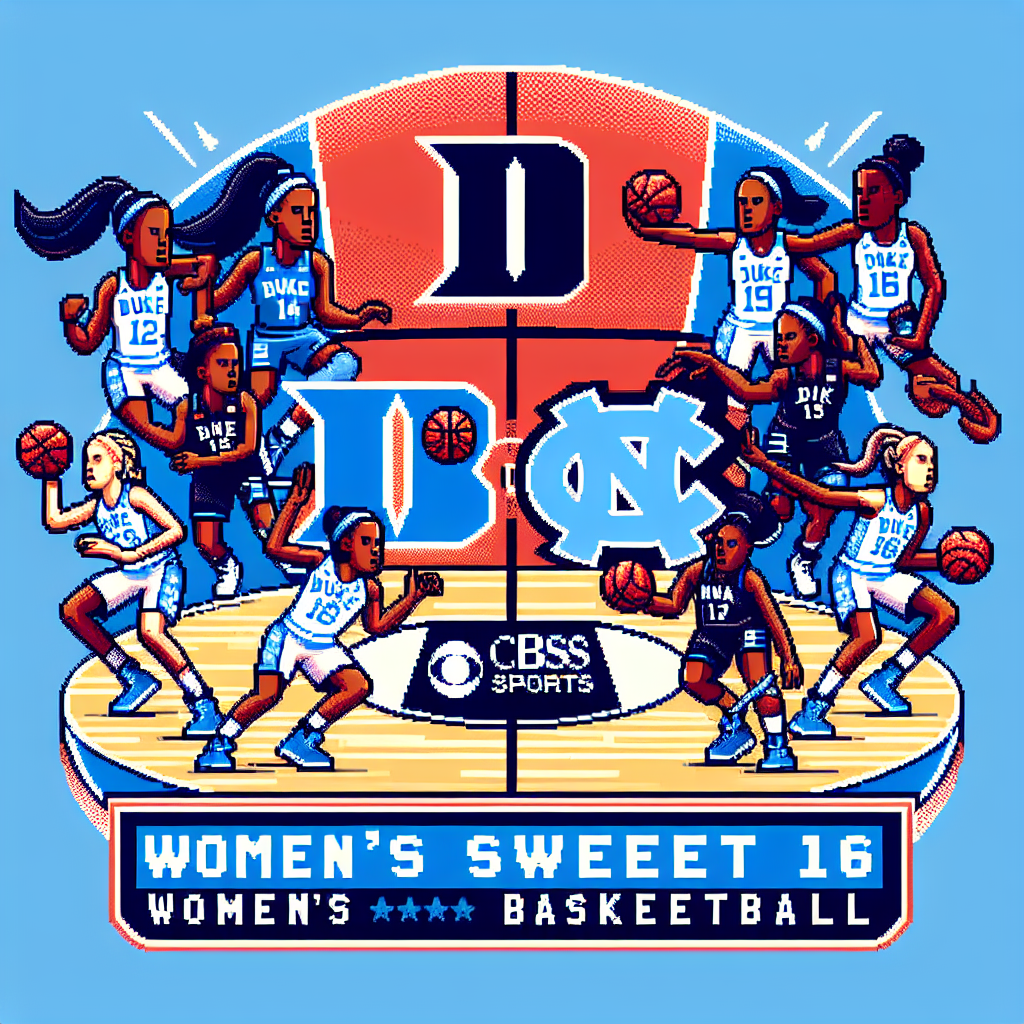
March Madness is upon us, and this year's women's Sweet 16 promises to be nothing short of a thriller. With storylines that could rival a Shakespearean play, the third round is set to deliver drama, excitement, and some good old-fashioned rivalry. The CBS Sports article highlights these matchups, particularly the tantalizing face-off between Duke and North Carolina, a rivalry that has defined college basketball for decades.

The Art of Rivalry: Duke vs. North Carolina

The Duke-North Carolina rivalry is one of the most storied in college sports, transcending the game itself to become a cultural phenomenon. This year's Sweet 16 encounter is no exception. Both teams have carved out impressive paths to get here, showcasing talent, grit, and determination. Duke, under the guidance of Coach Kara Lawson, has been a force to reckon with. Lawson, a former WNBA champion and Olympic gold medalist, has imbued her team with her winning mentality and tactical acumen. Her journey from player to coach is a testament to the evolution of women in sports, breaking barriers and setting new standards.

North Carolina, led by Coach Courtney Banghart, brings a blend of youthful exuberance and seasoned strategy. Banghart, with her Ivy League roots and a reputation for building strong teams, has turned the Tar Heels into a formidable contender. Her focus on developing players both on and off the court is a refreshing take in the competitive sports landscape.

Beyond the Court: Echoes of Change

This Sweet 16 isn't just about basketball; it's a reflection of broader societal movements. The increasing visibility and competitiveness of women's sports mirror the ongoing push for gender equality across various sectors. The WNBA, for instance, has seen a surge in popularity and viewership, thanks in part to players like Sue Bird and Diana Taurasi, who have become icons not just in sports but as advocates for social justice. The current NCAA tournament is another step forward in showcasing the talent and tenacity of women athletes, inspiring future generations to dream big.

Moreover, the intense rivalries and passionate fanbases remind us of the power of sports to unite and inspire. In a world that often feels divided, events like March Madness provide a common ground where differences are set aside, and the love for the game takes center stage.

Final Thoughts: The Sweet Symphony of the Sweet 16

As we gear up for these riveting matchups, it's important to savor the moments of triumph and heartbreak, the unexpected upsets, and the last-minute heroics. The women's Sweet 16 is not just a series of games; it's a celebration of talent, perseverance, and the indomitable spirit of competition. Whether you're rooting for Duke, North Carolina, or any of the other teams in this thrilling chapter of March Madness, one thing is certain: the journey will be as rewarding as the destination. So grab your popcorn, settle in, and let the sweet symphony of the Sweet 16 play on.

Read more about AI in Business

Read more about Latest Sports Trends

Read more about Technology Innovations