The $14 Trillion US Stock Rally is Seeking a Fed Cut Playbook – Bloomberg.com | Analysis by Brian Moineau

The $14 Trillion US Stock Rally is Seeking a Fed Cut Playbook - Bloomberg.com | Analysis by Brian Moineau

Title: Navigating the Stock Market's $14 Trillion Journey: What Will the Fed Do Next?

As the curtain rises on another pivotal week for the financial world, investors are on the edge of their seats, eagerly anticipating the Federal Reserve's next move. The backdrop? A staggering $14 trillion rally that has propelled U.S. stocks to record highs. But as with any great performance, this rally is approaching an inflection point, with the market eagerly awaiting the Fed's next act: a potential cut in interest rates.

The Plot So Far: A Rally of Epic Proportions

The U.S. stock market has been on an exhilarating ride, reaching new heights and capturing the imagination of investors worldwide. The rally's magnitude is nothing short of spectacular, with $14 trillion added to the value of U.S. stocks. This surge has been driven by a combination of strong corporate earnings, technological innovation, and investor optimism.

But like any good story, there's a twist. As we approach the Federal Reserve's long-awaited monetary policy meeting, investors are at a crossroads. Will the Fed cut interest rates to keep the rally alive, or will they hold steady, introducing uncertainty into the market narrative?

The Fed's Role: The Decision-Makers in the Spotlight

The Federal Reserve, led by Chairman Jerome Powell, finds itself in a familiar yet challenging position. The market's expectations are clear: a rate cut would likely extend this bull market's life, providing a fresh jolt of energy. However, navigating the delicate balance between fostering economic growth and controlling inflation is no small feat.

To get a sense of the Fed's potential moves, it's worth considering their recent history. In 2019, the Fed cut rates three times in response to global economic uncertainties and trade tensions. The move was seen as a preemptive strike to sustain the U.S. economic expansion. Fast forward to today, and while inflation concerns have emerged, the overarching priority remains economic stability.

Connecting the Dots: A Global Perspective

This U.S. stock market rally isn't happening in a vacuum. Across the globe, other central banks are also grappling with similar decisions. The European Central Bank, for instance, has maintained a dovish stance, signaling the possibility of further easing to combat economic slowdown in the Eurozone. Meanwhile, the Bank of Japan continues its ultra-loose monetary policy, battling persistent deflationary pressures.

Moreover, the geopolitical landscape plays a crucial role. Trade relations, particularly between the U.S. and China, have shown signs of improvement, providing a sense of optimism. However, other global tensions, such as the ongoing energy crisis and political uncertainties, continue to cast shadows on the economic horizon.

The Lighter Side: A Financial Soap Opera

As we wait with bated breath for the Fed's decision, it's hard not to see this as a financial soap opera of sorts—complete with twists, turns, and cliffhangers. The stock market's journey has been a rollercoaster, thrilling and sometimes nerve-wracking. Investors, analysts, and everyday folks alike are all part of this unfolding drama, each with their own theories and predictions.

In the spirit of keeping it light, perhaps we can draw a parallel to the world of sports. Just as a coach must decide the best strategy for the big game, the Fed must carefully choose its playbook. Will they opt for an aggressive offense with a rate cut, or play it safe and maintain the status quo? Only time will tell.

Final Thoughts: The Story Continues

As we move forward, one thing is certain: the financial world will be watching closely. The Fed's decision will undoubtedly shape the next chapter of this market rally. Whether you're a seasoned investor or just someone keeping an eye on the headlines, this is a story worth following.

In the grand theater of finance, the Fed's decision is just one act in an ongoing saga. The market will continue to evolve, driven by innovation, global dynamics, and the ever-present human factor of optimism and fear. So, grab your popcorn, sit back, and enjoy the show—it's bound to be an exciting ride.

Read more about AI in Business

Read more about Latest Sports Trends

Read more about Technology Innovations

Experts Alarmed by China’s Enormous Army of Robots – futurism.com | Analysis by Brian Moineau

Experts Alarmed by China's Enormous Army of Robots - futurism.com | Analysis by Brian Moineau

Title: China's Great Wall of Robots: Should We Be Alarmed or Impressed?

In a world where technology advances faster than you can say "artificial intelligence," China's latest robotic feat is both impressive and a tad unsettling. According to a recent Business article on futurism.com, China's manufacturing prowess has reached new heights, with over 276,000 robots coming online between 2022 and 2023. If you think that's a lot of robots, you're not alone—experts are sounding the alarm about this massive technological deployment.

What's Happening in China?


China has long been a global manufacturing hub, but its recent leap in robotics is setting new benchmarks. The country is now home to what can only be described as an army of robots, designed to outpace the rest of the world in production efficiency. While automation in manufacturing isn't new—think assembly lines and conveyor belts—China's scale of adoption is unprecedented. This raises an intriguing question: Is China leading us into a robotic utopia or a dystopian future?

The Global Robotics Race


China's rapid expansion in robotics isn't happening in a vacuum. As nations around the globe strive for technological innovation, robotics has become a key area of focus. For example, the United States has been exploring the use of AI and robotics in sectors like healthcare and defense. Meanwhile, Europe is making strides in ethical AI and sustainable automation, aiming to balance technological advancement with social responsibility.

The question of ethics is particularly pertinent. As robots take on more roles traditionally performed by humans, concerns about job displacement and privacy are mounting. According to a report by the World Economic Forum, "The Future of Jobs," automation could displace 85 million jobs by 2025, while also creating 97 million new roles. The challenge lies in ensuring that the workforce is prepared for this shift, and that the robots are used ethically and responsibly.

Connections to the Broader World


China's robotic revolution is part of a broader narrative about the changing nature of work and society. In the tech industry, giants like Amazon and Tesla are heavily investing in robotics to enhance operational efficiency. Even small startups are getting in on the action, using robots for everything from food delivery to elder care.

The rapid growth of robotics also ties into global supply chain dynamics. The COVID-19 pandemic exposed vulnerabilities in traditional supply chains, prompting companies to seek more resilient, automated solutions. China's robotics boom can be seen as a strategic move to fortify its position in global manufacturing and supply chain management.

A Final Thought


So, should we be alarmed or impressed by China's enormous army of robots? Perhaps a bit of both. On one hand, the scale and speed of China's robotic deployment is a testament to human ingenuity and the relentless pursuit of progress. On the other hand, it serves as a cautionary tale about the need for ethical considerations and global cooperation in the age of automation.

As we stand on the brink of a new robotic era, it's crucial to remember that technology should serve humanity, not the other way around. Whether China's robotic revolution leads to a brighter future or a more challenging one will depend on how we navigate this brave new world. In the meantime, let's keep our eyes on the horizon—and perhaps, just a little bit on the robots.

Read more about AI in Business

Read more about Latest Sports Trends

Read more about Technology Innovations

Japan inflation comes in at 3.6%, surpasses BOJ target for three straight years – CNBC | Analysis by Brian Moineau

Japan inflation comes in at 3.6%, surpasses BOJ target for three straight years - CNBC | Analysis by Brian Moineau

Japan's Inflation Odyssey: The Land of the Rising Prices

Japan, a nation renowned for its cherry blossoms, cutting-edge technology, and rich cultural tapestry, is now also notable for its inflation rates surpassing the Bank of Japan's (BOJ) target for three consecutive years. According to a recent CNBC report, Japan's inflation grew 3.6% year on year in March, marking a significant departure from the BOJ's long-standing 2% target. But what does this mean for Japan and the global economic landscape?

The Inflation Conundrum

For years, Japan grappled with deflation—a persistent decline in prices that stymied economic growth and stifled consumer spending. The BOJ's 2% inflation target was established as a remedy, intended to stimulate the economy by encouraging spending and investment. However, overshooting this target presents its own set of challenges.

The current 3.6% inflation rate, while modest compared to the double-digit figures seen in some other parts of the world (such as Argentina, where inflation exceeded 100% in 2023), is significant for Japan. It suggests that the country's economy is heating up faster than anticipated. This raises the question: how will policymakers respond to this continued rise in prices?

A Global Perspective

Japan's inflationary pressures are not occurring in isolation. Around the world, countries are grappling with the economic ripple effects of the COVID-19 pandemic, supply chain disruptions, and geopolitical tensions. For instance, the war in Ukraine has led to increased energy prices globally, affecting nations far beyond Europe. Similarly, the U.S. has experienced rising inflation rates, prompting the Federal Reserve to increase interest rates—a potential move Japan might consider, though it could have complex implications for its economy.

Interestingly, in an era where many countries are tightening monetary policy to combat inflation, Japan's approach has remained relatively accommodative. The BOJ continues to maintain low interest rates, prioritizing economic growth and stability over aggressive inflation control. This divergence in strategy highlights the unique economic landscape in Japan, where decades of economic stagnation have fostered a cautious approach to monetary policy adjustments.

Cultural and Economic Impacts

For the average Japanese citizen, rising inflation can have tangible impacts on daily life. From increased grocery bills to higher costs for everyday goods and services, the effects of inflation are felt most acutely by consumers. Yet, there is also a cultural dimension at play. Japan's aging population and shrinking workforce present additional economic challenges, leading to debates about immigration policies, workforce participation, and technological innovation as potential solutions.

A Lighthearted View

Despite the serious economic implications, there's an opportunity to find some levity in the situation. As Japan continues to navigate these inflationary waters, perhaps it's time for some creative thinking. Imagine a world where inflation is met with humor—where economists become stand-up comedians, turning complex economic theories into punchlines, and where inflation indices are humorously compared to sumo wrestling matches, with the yen battling it out on the global stage.

Final Thoughts

Japan's inflation journey is a testament to the complexities of managing an economy in a rapidly changing world. While the 3.6% inflation rate surpasses the BOJ's target, it also reflects broader global trends and challenges. As Japan charts its course forward, balancing growth and stability will be key. And who knows, maybe a little humor along the way will provide the resilience needed to weather the economic storms.

For more insights on Japan's economic landscape, check out the full [CNBC article](https://www.cnbc.com).

Read more about AI in Business

Read more about Latest Sports Trends

Read more about Technology Innovations

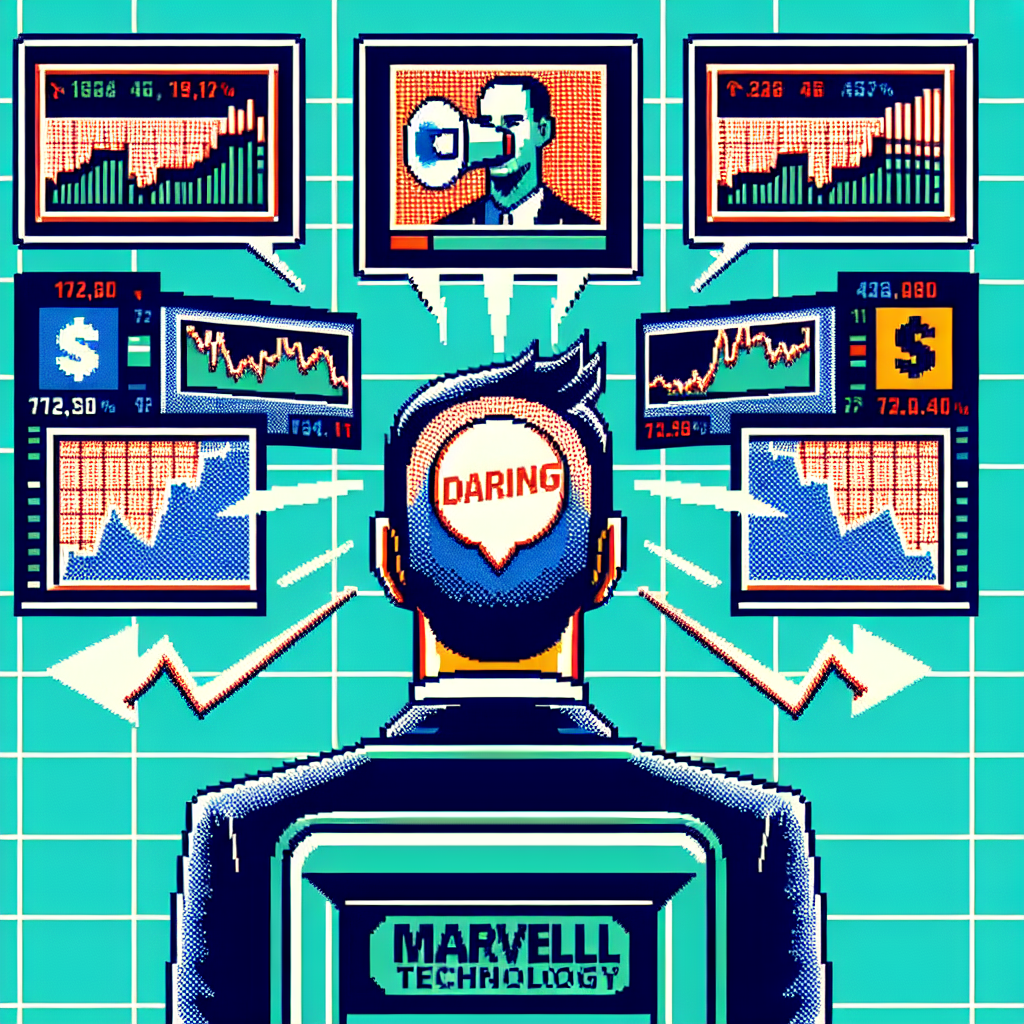
Fund manager’s bold words on Marvell stock turn heads – TheStreet | Analysis by Brian Moineau

Fund manager’s bold words on Marvell stock turn heads - TheStreet | Analysis by Brian Moineau

**Turning Heads and Turning Pages: Marvell Technology's Bold Leap into the Future**

In the fast-paced world of technology and finance, headlines are often dominated by bold predictions and daring moves. Recently, a fund manager's outspoken remarks about Marvell Technology's stock have stirred the pot, sparking curiosity among investors and tech enthusiasts alike. With AI-chip producers like Marvell at the frontier of technological innovation, it's no surprise that their stocks are under the microscope. But what lies ahead for Marvell, and why should we care?

**Marvell’s Marvelous Momentum**

Marvell Technology, a key player in the semiconductor industry, has been making waves with its focus on AI chips. As the demand for AI-driven solutions continues to skyrocket, companies that power these technologies are positioned for potential growth. The fund manager’s comments, as highlighted in TheStreet's article, suggest a bullish outlook for Marvell, predicting that their stock could soar thanks to their strategic positioning in the AI-chip market.

This optimism isn't unfounded. Marvell has consistently demonstrated innovation and adaptability, crucial traits in an industry that evolves at lightning speed. Their commitment to advancing AI technology aligns well with the broader trend of increased AI adoption across various sectors, from healthcare to automotive.

**AI's Expanding Universe**

The excitement surrounding AI technology isn't confined to Marvell alone. Globally, AI is revolutionizing industries by enhancing efficiency, driving innovation, and creating new opportunities. For instance, in the automotive sector, AI is pivotal in developing autonomous vehicles. In healthcare, it's being used to improve diagnostics and personalize patient care. The financial world is no exception, with AI algorithms transforming trading strategies and risk management.

With AI’s potential seemingly limitless, companies like Marvell that provide the foundational technology are in a prime position to benefit. Their success doesn't just impact stockholders; it plays a role in the global narrative of technological advancement.

**The Bigger Picture: Tech and Society**

Beyond the numbers and market predictions lies a deeper conversation about technology's role in society. As companies like Marvell push the boundaries of what's possible, ethical considerations and regulatory frameworks become increasingly important. Ensuring that AI advancements benefit society as a whole, while addressing concerns such as data privacy and algorithmic bias, is crucial.

Moreover, the geopolitical landscape surrounding semiconductor production adds another layer of complexity. With ongoing tensions and trade considerations, the semiconductor industry is at the heart of global economic discussions, influencing everything from international relations to local economies.

**Final Thoughts**

In a world where technology is the driving force behind societal change, companies like Marvell are not just participants but leaders. Their journey, as highlighted by the fund manager's bold predictions, is a testament to the dynamic nature of the tech industry. While the stock market will always have its ups and downs, the underlying story is one of innovation and progress.

As we watch Marvell’s next moves, let’s keep in mind the broader implications of their success. It’s not just about the stock price; it’s about the future of technology and its impact on our world. So, whether you're an investor, a tech enthusiast, or simply a curious observer, Marvell's story is one to follow closely. After all, in the world of tech, today’s bold predictions could be tomorrow’s reality.

Read more about AI in Business

Read more about Latest Sports Trends

Read more about Technology Innovations

5 Things to Know Before the Stock Market Opens – Investopedia | Analysis by Brian Moineau

5 Things to Know Before the Stock Market Opens - Investopedia | Analysis by Brian Moineau

### Watching the Markets Unfold: January Jobs Report and Amazon's Revenue Outlook

Ah, the stock market—an arena where numbers dance like confetti on the trading floor and investors clutch their morning coffee a little tighter. Today, we're peering through the looking glass at the U.S. stock futures, which are tiptoeing around as investors eagerly await the January jobs report. This report is anticipated to show a deceleration in growth, with unemployment rates holding steady like an overcaffeinated yoga instructor maintaining a perfect tree pose. Meanwhile, Amazon’s shares are experiencing a bit of a nosedive after their revenue projections failed to ignite Wall Street’s enthusiasm. Let’s dive into how these elements are playing out and what else is stirring in the broader economic landscape.

#### The Calm Before the Jobs Report Storm

First on the docket is the January jobs report, a monthly ritual that sends ripples through the financial world. Economists are predicting slower growth, which isn't exactly a surprise given the economic tea leaves we've been reading lately. The Federal Reserve's interest rate hikes, aimed at taming inflation, are part of this intricate dance, as they often lead to a cooling effect on economic expansion. Yet, the unemployment rate is expected to stay put, which could suggest that while hiring is slowing, layoffs aren't spiking—a silver lining, perhaps.

For some context, this report comes on the heels of diverse economic signals. Take, for instance, the tech sector, which has seen companies like Meta and Microsoft announce substantial layoffs recently. These moves are often framed as necessary adjustments to post-pandemic realities, but they also highlight a sector in flux, trying to recalibrate its workforce amid shifting demands.

#### Amazon's Revenue Outlook: A Bumpy Road Ahead

Switching gears to Amazon, the e-commerce behemoth is feeling the heat after its revenue outlook didn't quite match the market's lofty expectations. Shares took a hit, reflecting investor anxiety over the company's future growth prospects. Amazon's predicament is a microcosm of broader challenges facing the retail sector, particularly in navigating supply chain disruptions and changing consumer behaviors in a post-pandemic world.

Interestingly, Amazon's situation isn't happening in a vacuum. Retailers across the globe are grappling with similar issues. For instance, in the UK, companies are facing the dual challenge of inflation and a cost-of-living crisis, leading to cautious consumer spending. This global context underscores the interconnectedness of today's economy, where a hiccup in one region can echo in another.

#### Connecting the Dots: The Global Economic Tapestry

Beyond the immediate headlines, these developments are threads in a larger tapestry of global economic trends. The stock market's response to the jobs report and Amazon's outlook serves as a barometer for investor sentiment in a world still adjusting to pandemic aftershocks. Moreover, these elements connect to broader concerns such as sustainable growth and technological innovation.

In China, for instance, the recent reopening after stringent COVID-19 lockdowns is expected to inject some vitality into the global economy. How this plays out will be crucial, especially for companies like Amazon that are deeply embedded in the international supply chain. Additionally, as countries invest in green technologies, the push for sustainability could redefine industries and reshape the future job market.

#### Final Thoughts

In the grand scheme of things, today's market musings remind us of the intricate dance that is global economics. As investors scrutinize the numbers and make their moves, it's essential to remember that markets are not just about profits and losses—they're about people, innovations, and the endless quest for balance in an ever-changing world.

So, as you sip your coffee and watch the ticker, take a moment to appreciate the complex, interconnected world we live in. After all, the markets may be unpredictable, but they're also a reflection of our shared journey through uncharted waters. Let’s see where the tide takes us next.

Read more about AI in Business

Read more about Latest Sports Trends

Read more about Technology Innovations